
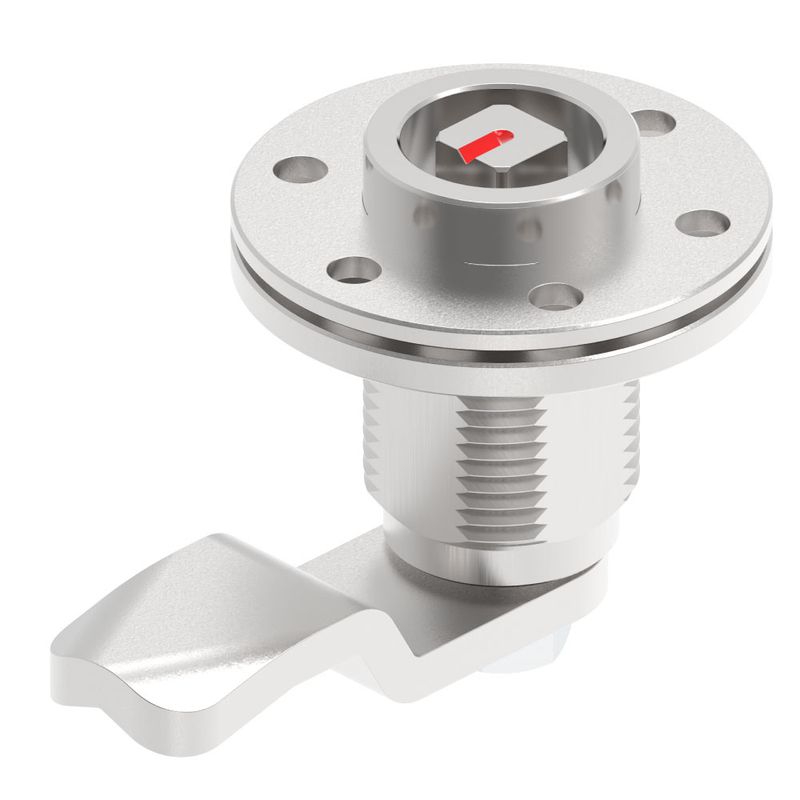
C3-1345 Railway Compression Lock
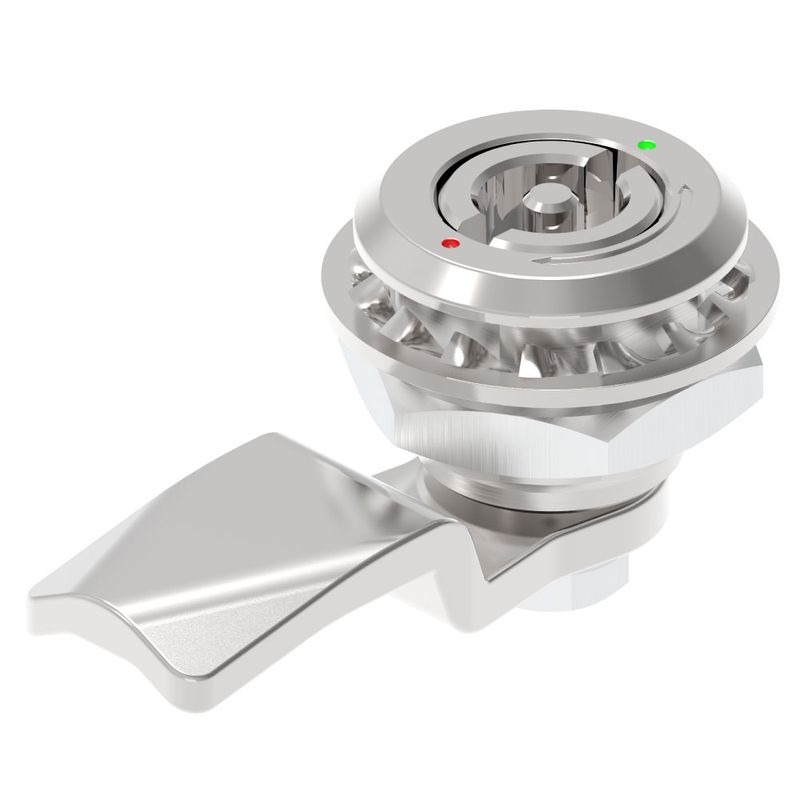
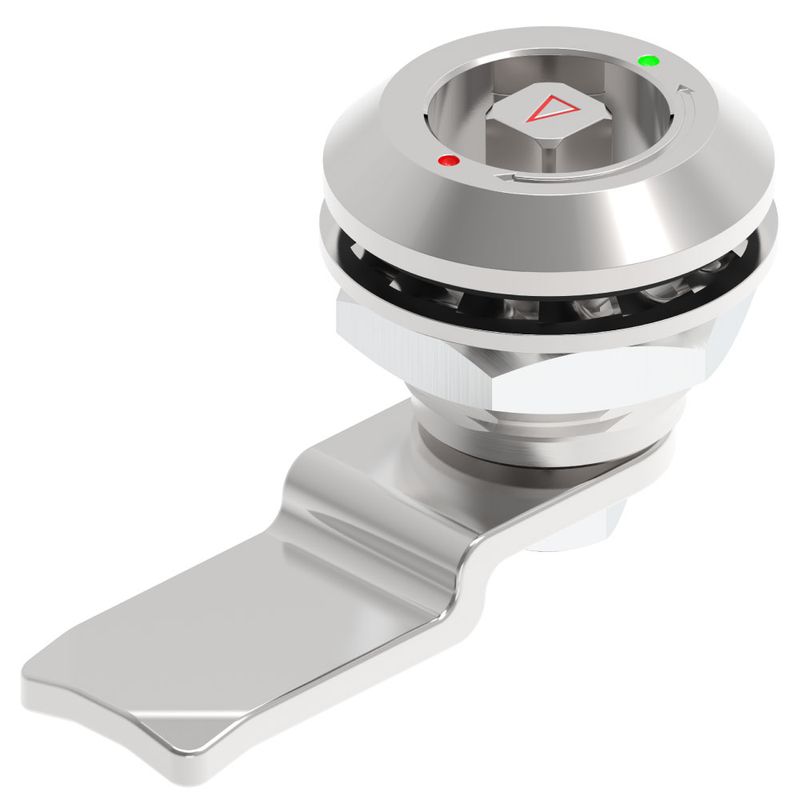
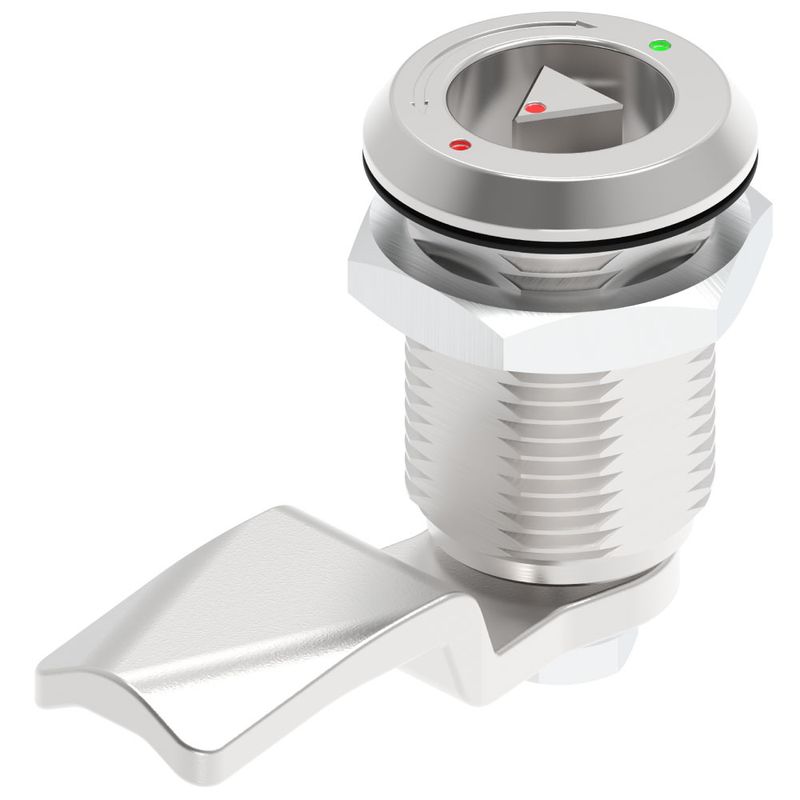
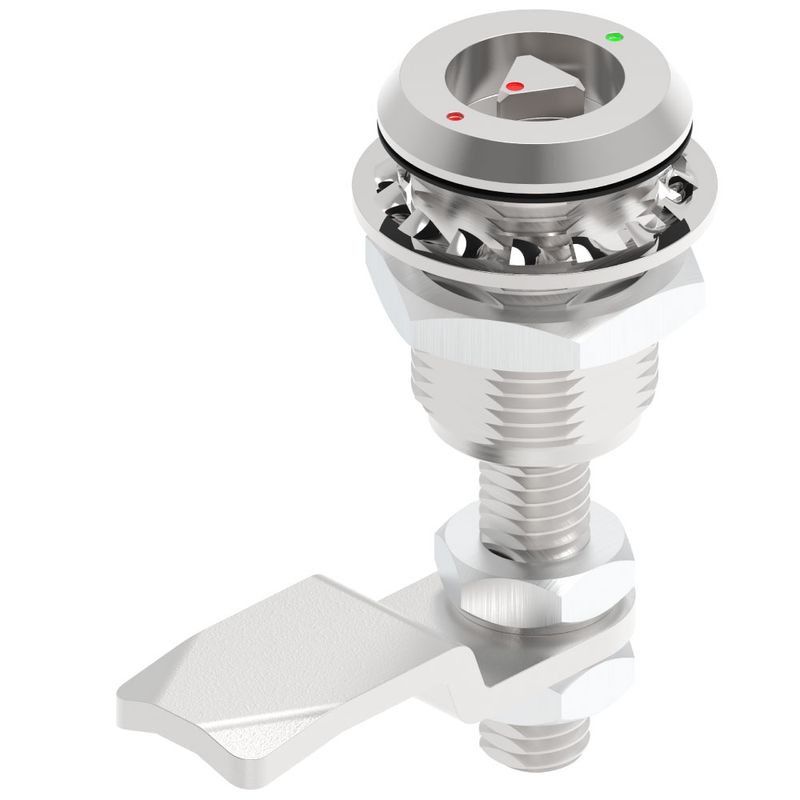
This is a back-mounted compression lock developed for railway vehicles and high-vibration industrial equipment. It features a rear installation structure, dual-position locking components, and a compression locking mechanism, providing stable axial clamping force while securing the door panel. The design enhances the lock body’s resistance to rotation and loosening, addressing the challenges of long-term vibration, impact, and frequent operational environments. Unlike conventional rotating locks that rely on a single mounting nut, this product is equipped with two sets of circular positioning locking components on the back of the door panel. One set is responsible for positioning and preventing rotation of the lock body, while the other set is used for securing it. Once installed and tightened, the positioning holes on both discs align correspondingly, further mechanically securing the lock body, making it resistant to rotation, loosening, or misalignment in long-term vibration and impact conditions. The lock body is mounted from the back of the door panel, keeping the front of the equipment clean, low-profile, and resistant to damage, with only the tool-driven area exposed. The lock tongue is located inside the door panel and rotates to the back of the door frame or latch during the locking process, further tightening the door panel through the compression mechanism, thereby enhancing the stability of the compression between the door panel and the sealing strip. This structure is particularly suitable for applications requiring high resistance to vibration, loosening, and reliable locking of door panels, such as electrical enclosures for railway vehicles, equipment compartments, maintenance doors, under-car equipment boxes, and other similar environments.
- Hole Size: M22*20mm
- Material: Main Body SUS304
- Protection Level: IP65
- Neutral Salt Spray Test: Up to 3000h
- Compliance Standards: DIN EN / IEC 61373, IEC / EN 60529.
- Application Scenarios: High-speed train equipment cabinets, EMU equipment cabinets, subway vehicles, light rail vehicles, urban rail vehicles, railway locomotives, undercarriage equipment boxes, vehicle skirts, roof equipment compartments, HVAC maintenance doors, electrical control cabinets, battery equipment cabinets, braking system equipment boxes, traction system equipment boxes, auxiliary power equipment cabinets, external maintenance covers of the vehicle body, internal technical equipment cabinets, wall panel maintenance openings, ceiling maintenance openings.
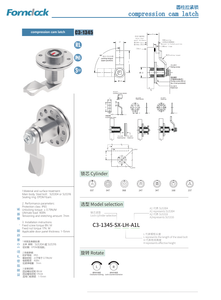
Detailed Specifications
| Image | Model | Lock Cylinder Specification | Locking Height and Length | Material | Download |
|---|---|---|---|---|---|
| C3-1345-347-LH-A1 | Custom lock cylinder | Customizable to any size | SUS304/316 optional |
FAQ
Can you send samples?
Yes, we can provide a few free samples for the customer, but we hope that the shipping cost can be covered by you.
Does ForndLock offer custom Compression Lock OEM/ODM?
Yes, we support customization of materials, structures, surface treatments, lock cylinder types, and markings for Compression Locks to meet project requirements.
What is the minimum order quantity?
The general minimum order quantity is 200 PCS, but if stock is sufficient, flexible supply can be provided according to actual demand, with no minimum order quantity restrictions.
What is the purpose of red and green markings?
It allows maintenance personnel to directly identify the locking status from the front of the lock. Under normal design, green indicates that the lock is fully locked and compressed, while red indicates that it is open or not fully secured, thereby reducing the risk of missing unlocked door panels during inspections.
What are the functions of the two circular components on the back?
One is primarily used for positioning and limiting the rotation of the lock body, while the other is used for clamping and securing. Together, they enhance the stability of the connection between the lock body and the door panel.
Can other railway tool lock cylinders be replaced?
Yes. The configuration can be tailored to project requirements with square, triangular, double-tooth, or other railway-specific tool drive forms to meet the access management needs of different operators, vehicle manufacturers, and maintenance systems.
Why are there so many holes designed on the disc?
These holes are used to provide multiple mechanical fixing positions. Once the installation angle is determined, the corresponding hole position can be selected for locking, thereby enhancing anti-rotation and anti-loosening protection.
What data is required from customers when selecting a model?
It is recommended to provide door thickness, the locking distance from the door panel to the door frame, the direction of the lock tongue, the length of the lock tongue, the required compression stroke, the unlocking direction, the specifications of the tool lock cylinder, as well as IP, vibration, and corrosion resistance requirements.
Related Products
Railway Compression Lock
C1-1427 Railway Compression Lock
Railway Compression Lock
C2-1416 Railway Compression Lock
Railway Compression Lock
C2-1515 Railway Compression Lock
Railway Compression Lock
C2-1518 Railway Compression Lock
Railway Compression Lock
C3-1522 Railway Compression Lock
Railway Compression Lock
C3-1523 Railway Compression Lock