How to Select Railway Locks: Fire, Vibration and Fitment Requirements
Specifying a railway lock requires looking beyond standard industrial latches. Two standards fundamentally change what the hardware must be made of and how it must work — EN 45545, which dictates which materials are even allowed on board, and EN IEC 61373, which dictates whether the lock stays closed at 300 km/h over rough track. Latch types, fitment specs and common mistakes all trace back to these two standards. At ForndLock, we supply locks and access hardware for railway vehicle builders and their enclosure partners. These are the criteria our engineers apply when reviewing a railway lock specification.
What Defines a Railway Lock? EN 45545 Fire Requirements and Material Selection
What EN 45545-2 actually constrains
EN 45545-2 is not a test the lock "passes" as a finished unit in most cases — it governs the fire reaction performance of the materials and components the lock is built from: flame spread, heat release, smoke density, and toxicity of fumes. Tunnel safety protocols focus on smoke density and gas toxicity, as inhalation hazards precede flame propagation during an underground fire.
The practical consequences for material selection:
Material / Component | EN 45545-2 Constraint | Engineering Consequence |
304 / 316L stainless steel | Inherently compliant (non-combustible, low smoke) | Default choice for housings, cams, fasteners |
Zinc die-cast housings | Limited by coating and mass; requires validated flame-retardant finish | Allowed in many interior zones; verify per hazard level |
Polymer inserts / gaskets | Must be flame-retardant, low-smoke, low-toxicity | LSZH-grade gaskets only; standard EPDM is a risk |
Surface coatings | Must not add fuel load or toxic emissions | Powder coat chemistry matters, not just color |
For a deeper comparison of stainless steel grades in high-corrosion or washdown environments, see our 304 vs 316 stainless steel guide.
Do not confuse EN 45545-2 with EN 45545-3
This is the most common specification error we correct. EN 45545-3 covers fire barriers — walls, doors, and partitions that must resist flame passage for a rated duration (E15, E30, E60). An ordinary compartment latch is tested to 45545-2 material classes (Hazard Level HL1–HL3); it is not an "E60 lock." If your project genuinely needs a barrier function, that is a door-system rating involving the whole leaf, seal, and frame — not a claim to staple onto a railway compression latch.
EN IEC 61373 Shock and Vibration: How Railway Locks Resist Loosening
The test categories and what they simulate
EN IEC 61373 classifies equipment by mounting location. Category 1 applies to items bolted directly to the car body or bogie zone and demands the most severe random vibration plus shock spectra; Category 2 covers equipment inside equipment cases; Category 3 applies to items cushioned by substantial damping. Underfloor boxes and rooftop hatches live in Category 1 territory — hardware there sees sustained random vibration layered with track-induced shock events that walk ordinary fasteners loose within weeks.
The mechanics of staying shut
Three design mechanisms separate railway-grade locks from cabinet hardware:
1. Two-stage compression. A railway compression latch first rotates the cam to engagement, then converts further rotation into axial pull that preloads the gasket. The stored preload absorbs vibration energy instead of letting it work the latch free.
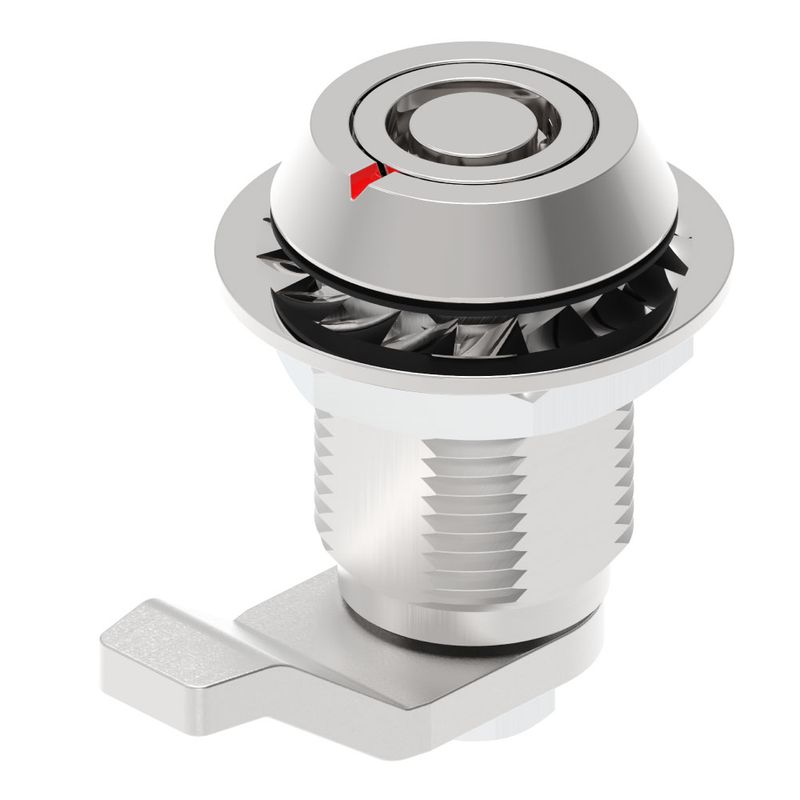
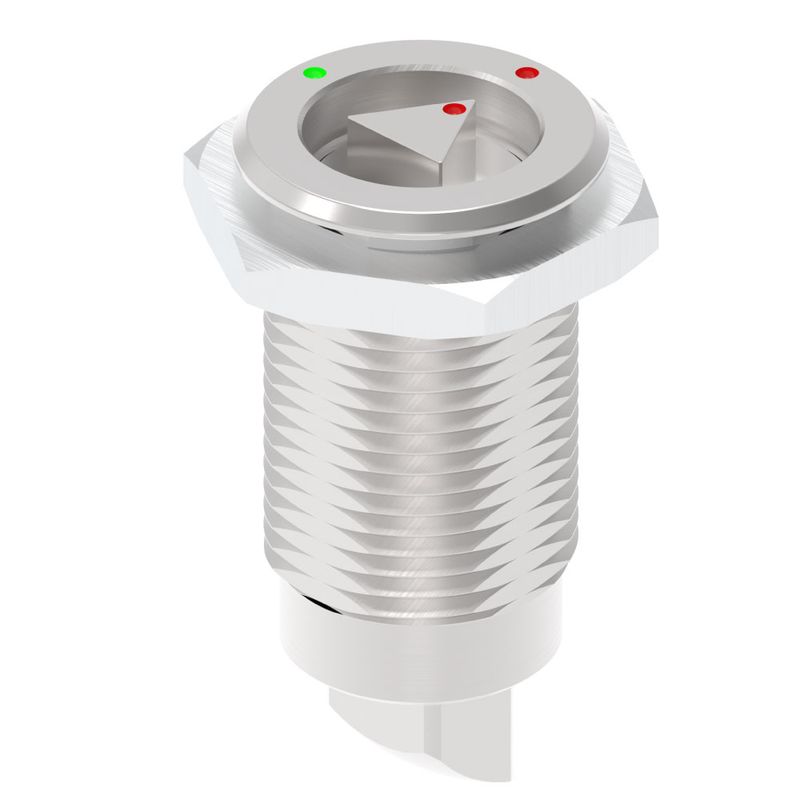
2. Spring-loaded slam engagement. Slam latches use a spring-preloaded tongue that snaps over the striker and resists bounce-back. Our B-1715 railway impact lock uses exactly this push-to-close logic for equipment cabinets, rooftop hatches, and air-conditioning maintenance covers.
3. Positive retention under load. For heavier panels, rotary latches grip a fixed pin and hold preload continuously. Our 3000-10 vertical-drive rotary lock maintains stable locking under loads up to 3300 N — the level of pin load an underfloor equipment door generates in a severe braking event.
Railway Latch Types: Compression Latches, Quarter-Turns, Slam Latches, and T-Handles
No single mechanism covers a train. Interior ceiling panels, underfloor containers, and driver's cab enclosures all impose different forces, clearances, and access frequencies. The matrix below maps the four dominant types to their railway roles, with matched ForndLock products:
Latch Type | Structure & Sealing | Maintenance Profile | Railway Position | ForndLock Product | Product Image |
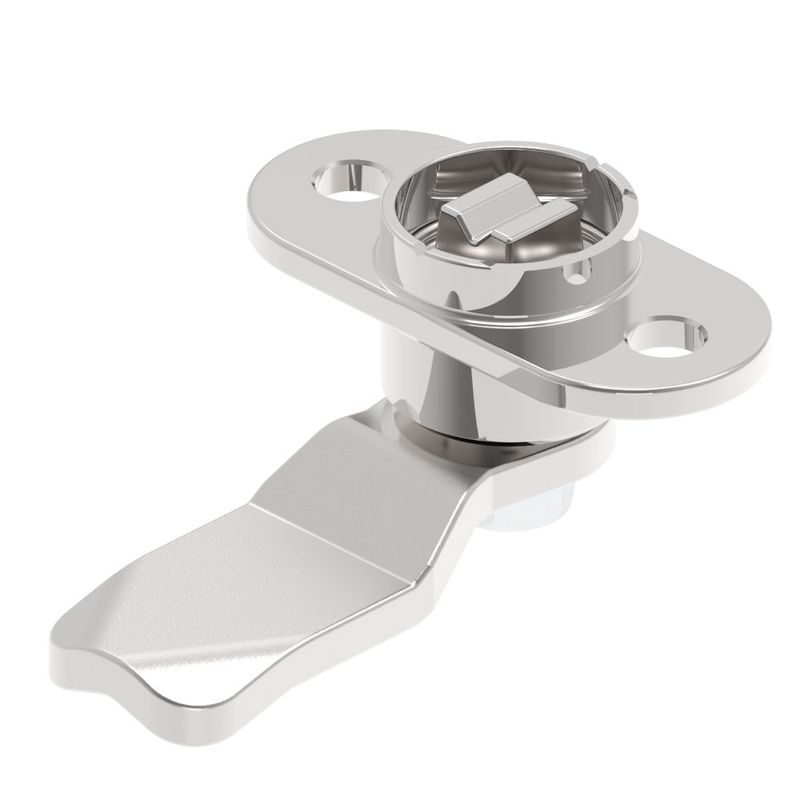
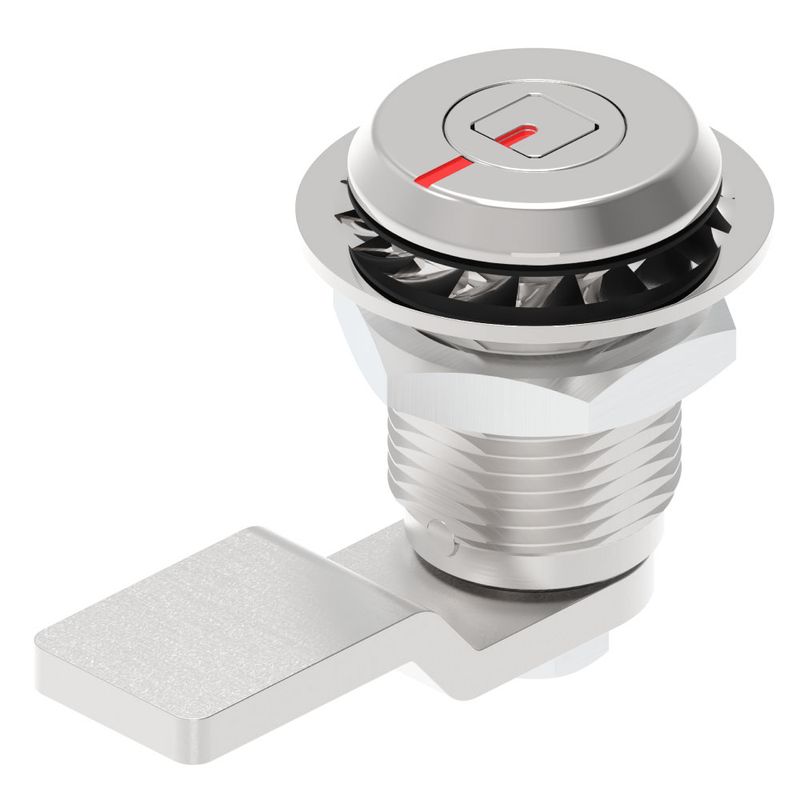
Compression latch | Quarter-turn + axial pull; best gasket preload | Low; visual open indicators possible | Gasketed exterior panels, electrical enclosures | B-1202-118 wing-handle cam (90° rotary, gasket compression) |
 |
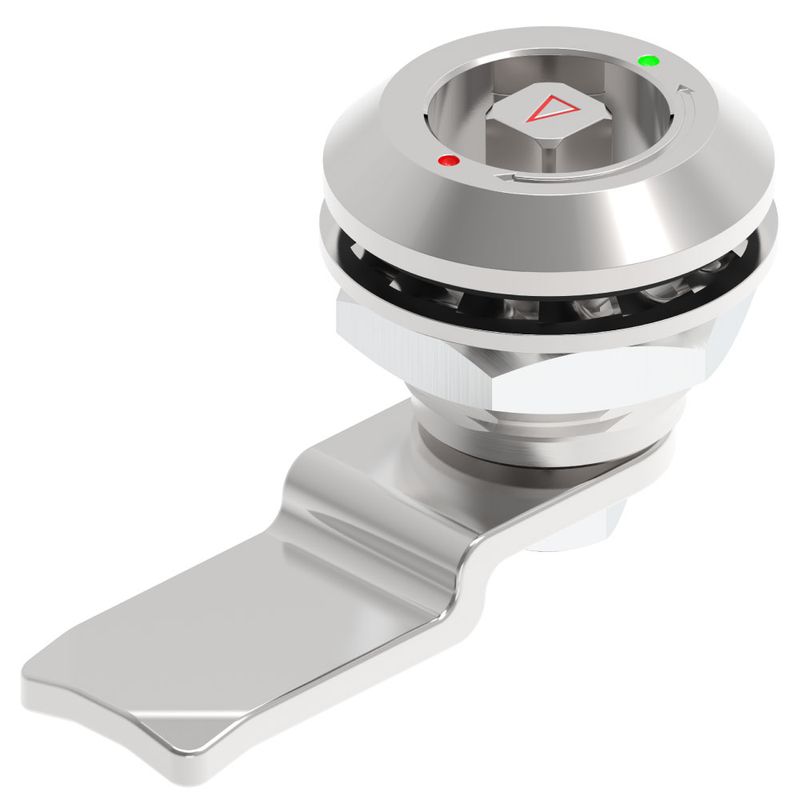
Quarter-turn | Direct 90° cam rotation; moderate seal | Lowest; tool or key actuation | Interior panels, galley cabinets, display housings | B-1413-037 L-handle quarter-turn (padlock-compatible) |
 |
Slam latch | Spring tongue, push-to-close; moderate seal | Low; no latch alignment needed | Frequently accessed cabinets, rooftop hatches |
 | |
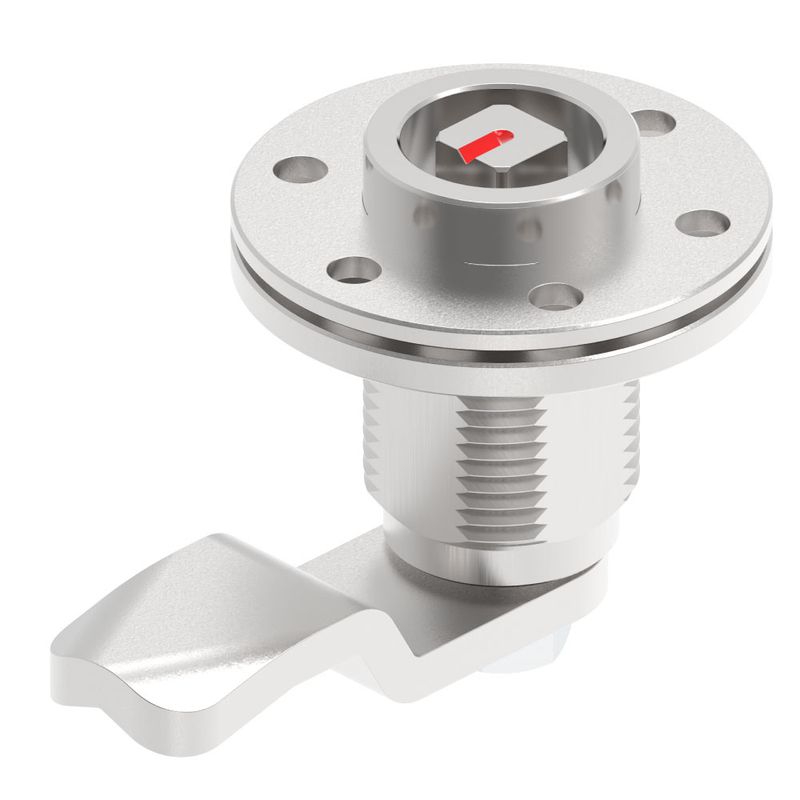
T-handle / rod system | High-leverage grip driving cams or rods | Medium; linkage inspection cycle | Large service doors, multi-point locking | B-1112-20 T-handle (square shaft drives rods and linkages) |
 |
For large service doors requiring multi-point engagement, check out our selection guide for T-handle locks. For high-vibration positions like underfloor containers, we specify rotary locks to physically trap the striker pin rather than relying on friction.
Trackside Enclosures vs. Rolling Stock: Two Hardware Environments
"Railway hardware" spans two environments with almost opposite priorities, and mixing them up leads to either over-specification or gaps in coverage:
Constraint | Rolling Stock (on-vehicle) | Trackside (wayside enclosures) |
Fire | EN 45545-2 mandatory, HL per zone | Not applicable; local fire codes instead |
Vibration | EN IEC 61373 per mounting category | Wind-induced only; seismic per region |
Corrosion | Interior-conditioned; mild | Full weather; coastal salt, de-icing salts |
Weight | Critical; lightweighting valued | Secondary |
Security focus | Crew access control, maintenance safety | Vandal and theft resistance |
Seal target | Interior dust/water splash | Full weather sealing; IP rating per site |
Rolling stock hardware demands strictly EN 45545-2 compliant materials, EN IEC 61373 vibration resistance, and lightweight designs for on-vehicle safety. Trackside enclosures (wayside cabinets) prioritize 316L stainless steel, UV-resistant seals, and site-specific IP ratings against severe weather and vandalism.
When specifying secondary sub-panels inside these cabinets, refer to our guide on industrial panel fasteners for captive retention options. Matching hardware to the specific operating environment prevents over-specifying costs or compromising safety.
Key Railway Lock Specs: Grip Range, Load Capacities and Tolerances
Grip range: the number that stops panel rattle
Grip range is the total thickness the latch must span — outer panel skin, frame flange, gasket, and any tolerance stack. Measure it in the loaded, gasket-compressed state, not from drawings alone. A grip range too short leaves the panel free to buzz; too long and the cam never reaches working angle. Railway panel tolerances are wider than sheet-metal cabinet norms, so we size grip range to the worst-case stack, not the nominal one.
Retention load vs. clamping load
These two ratings are routinely confused. Clamping load is the force the latch applies to compress the gasket — it determines sealing. Retention load is the force the engaged latch resists before failure — it determines whether the door stays shut under vibration and pressure pulses. Specify both: a latch with high clamping but modest retention will hold sealing force yet still release on rough track.
Thread engagement and installation torque
Minimum thread engagement should match the fastener diameter for steel inserts in aluminum frames. Over-torquing into a tapped aluminum panel is a leading cause of "mystery loosening" — the threads yield on the first installation, and vibration completes the loosening. We publish torque values for every railway lock we ship, and we compensate for tolerance drift with slotted or floating cam options where panel stacks vary.
Five Common Specification Mistakes in Railway Lock Selection
Nearly every failed railway lock program we are asked to rescue traces to one of these:
Mistake | Why It Happens | The Fix |
Ignoring the full requirement set (fire + vibration + environment + access) | Teams check one standard and stop | Build a requirements matrix per door position before shortlisting |
Misapplying EN 45545-2 | Confusing material classes with system ratings | Confirm hazard level per vehicle zone; verify component material data |
Galvanic corrosion in mixed assemblies | Stainless latch + carbon-steel screws | Match fastener material to latch; isolate dissimilar metals |
Spring-plunger seals on gasketed exterior doors | Copied from interior panel practice | Use compression preload for exterior sealing |
Missing maintenance keying / emergency release rules | Access plan defined after hardware frozen | Define KA/KD scheme and emergency egress at design review |
About ForndLock
ForndLock is an OEM/ODM engineering manufacturer specializing in railway-qualified locking hardware, compression latches, and high-retention access systems.
Our production program delivers application-matched hardware fully verified for EN 45545-2 fire reaction compliance, DIN EN 61373 shock and vibration resistance, and extreme-environment sealing. From 3300 N rotary claws for underfloor equipment to 316L stainless compression latches for trackside cabinets, we back every project with full material traceability, finite element testing, and custom grip, drive, and keying configurations.
Email: [email protected]