How to Vet a Friction Hinge Manufacturer: Torque Consistency, Cycle Life and Custom Development
A friction hinge is a small component with an outsized reputation problem. When it works, nobody notices it; when a display arm drifts or an access lid sags six months after launch, everyone remembers the hinge — and the brand on the equipment.

ForndLock manufactures friction and torque hinges for medical, industrial and rail equipment, and the questions in this article come up in almost every program review we run. This article shares what we believe buyers should demand of any friction hinge manufacturer: how to read torque numbers honestly, which production controls separate consistent batches from lucky ones, and what a real custom development path looks like.
Why Catalog Torque Numbers Mislead: Initial vs Retained Torque
The torque printed on a datasheet is almost always the initial torque — the resistance measured on a brand-new hinge, at room temperature, at whatever speed the supplier found convenient. Two hinges from two manufacturers can share the same catalog number and deliver completely different products, because the number says nothing about what happens after 10,000 or 50,000 cycles.
Ask for the Torque-Versus-Cycles Curve
The single most critical document a manufacturer can provide is a validated Torque vs. Cycle Count curve—a test record plotting retained torque against cycle count under specified load, speed, and ambient temperature. To ensure long-term position hold, evaluate this curve against key industry metrics:
● Retention Standard: The benchmark for acceptable torque retention is a decay of no more than 20% from initial torque after 20,000 cycles.
● Extended Life Benchmarks: For high-reliability applications—such as medical diagnostic displays or precision equipment—hinges should undergo validation testing up to 50,000 cycles to prove long-term mechanical stability.
● Measurement Precision: All validation data must be recorded using a calibrated digital torque tester operating at a standardized angular speed, as manual hand testing or high-speed testing artificially distorts readings.
A supplier's ability to supply a verified decay curve for a comparable design demonstrates process control and true performance testing; relying solely on a static datasheet number risks premature panel sag in the field.
Breakaway vs. Running Torque, and Tolerance Standards
A complete torque specification requires separate metrics for initial movement and continuous rotation, alongside strict process tolerance limits:
● Breakaway vs. Running Ratio: Breakaway torque (force required to initiate movement from rest) should not exceed running torque (continuous resistance during movement) by more than 30%. Exceeding this threshold introduces a distinct "stick-slip" jerk during user adjustments.
● Achievable Process Tolerance: Controlled production processes routinely achieve a ±10% tolerance band around nominal torque. A supplier who quotes ±20% as normal capability is describing an unstable process, not a tolerance target.
● Standardized Testing Conditions: Require suppliers to report breakaway and running torque separately with test speed explicitly stated. A speed of 180 degrees per minute serves as a reliable industry baseline, as high-speed testing artificially inflates torque readings.
What a Reliable Manufacturer Controls in Batch Production
Torque consistency across a batch is where catalog houses and manufacturers part ways. A single hinge that meets nominal torque proves the design works. Batch consistency is a separate capability, and it is the one most catalog suppliers cannot demonstrate. Five process controls are non-negotiable, and a serious supplier can show you each one on the factory floor.
Process Variable | How a Capable Manufacturer Controls It | What to Ask For |
Friction preload | Preload set by calibrated fixtures or torque-monitored assembly, not hand feel | Preload setting records from a recent batch |
Surface roughness | Shaft and friction element finished to a specified band and measured per lot | specification with measurement method |
Material batches | Heat/lot traceability on springs, friction bands and shafts; grease type and quantity fixed by recipe | Batch traceability record and approved grease spec |
First-article qualification | Full dimensional, torque and cycle validation before each production release | First-article report template with actual data |
Sampling torque distribution | Random samples from top, middle and bottom of cartons; distribution analyzed, not just averaged | CPK or spread data for torque across a batch |
Two practical tests complete the vetting. Measurement repeatability: watch them test five consecutive parts on the same calibrated torque tester; the spread across those five readings tells you more than any certificate. Sampling honesty: pull a carton off the pallet yourself and test from the bottom of the box — bottom-of-carton units are where relaxed springs and missed grease applications hide.
Custom Development Path: From Target Torque to Mass Production
Standard friction hinges cover common panel weights; anything with an unusual load, footprint, environment or feel requirement follows a development path. At ForndLock ours runs in four stages, and any supplier claiming custom capability should describe something equivalent.
Stage 1 — Inputs. You provide the panel drawing or dimensions, total assembly weight including cables and gaskets, center of gravity distance from the hinge axis, required opening angle, operating environment and target feel. From these we calculate the working torque and its tolerance window.
Stage 2 — Feasibility and route selection. Two primary engineering routes dictate mechanism design. The constant torque route fixes preload during assembly, giving a tamper-proof, batch-consistent part — the right choice for high-volume OEM builds with controlled panel weights. The field-adjustable route incorporates a set screw or hex adjustment so resistance can be tuned at installation or to compensate for late design changes — the right choice for prototypes, custom machinery, and panels that gain weight in service.
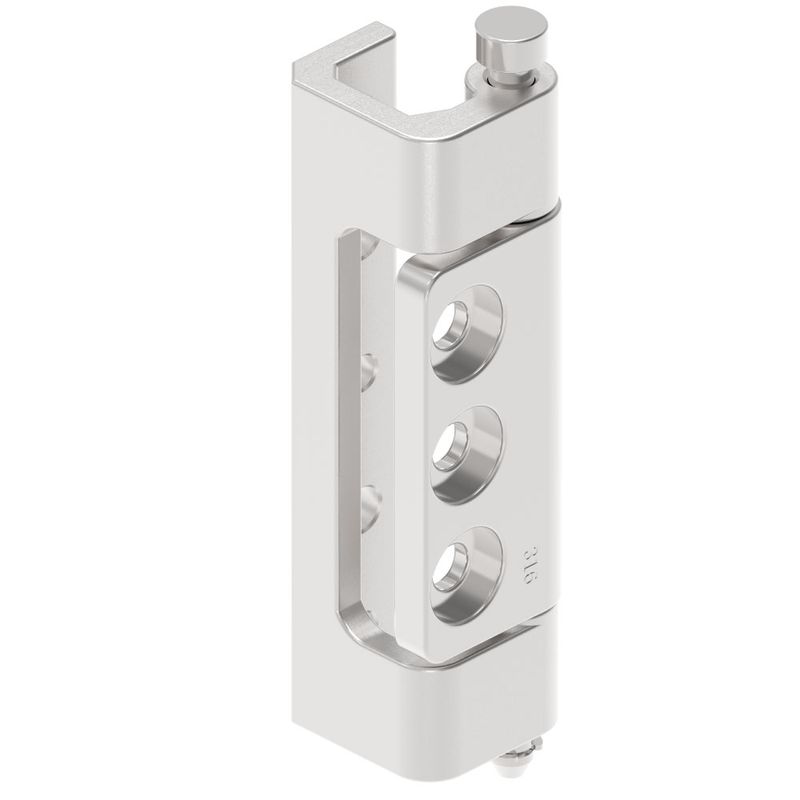
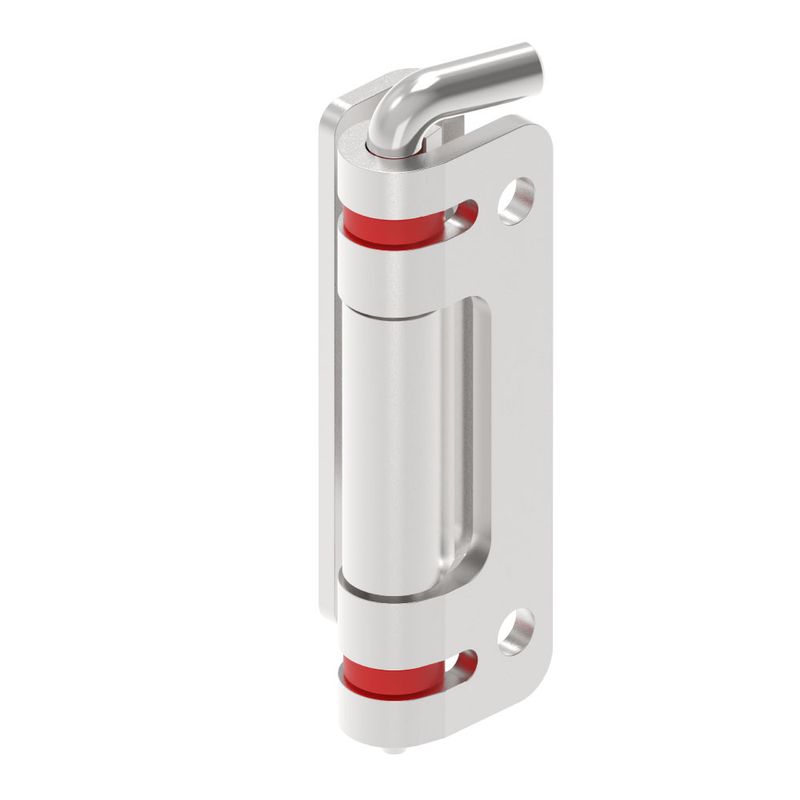
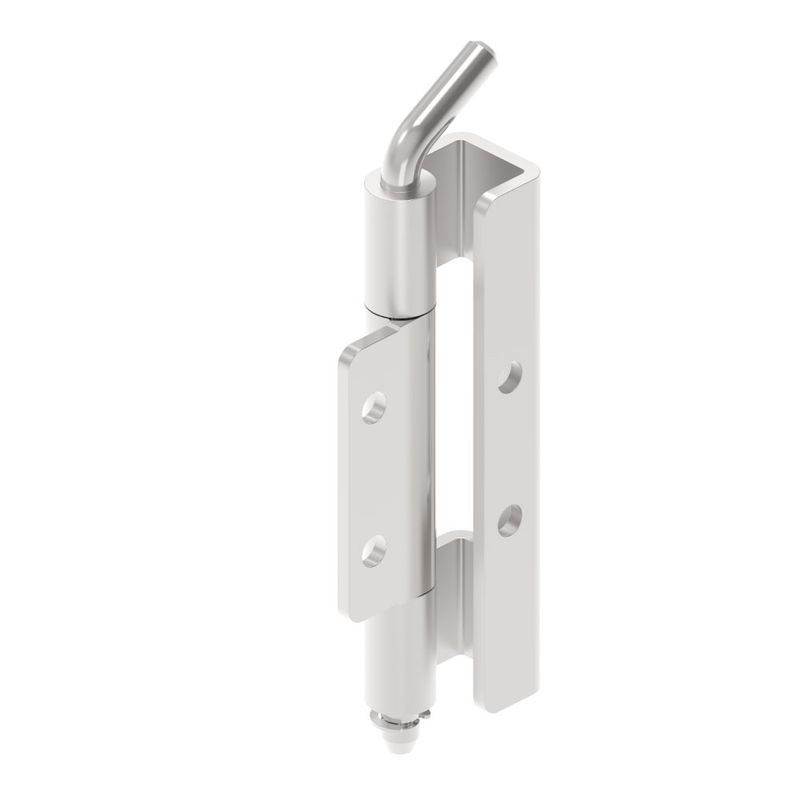
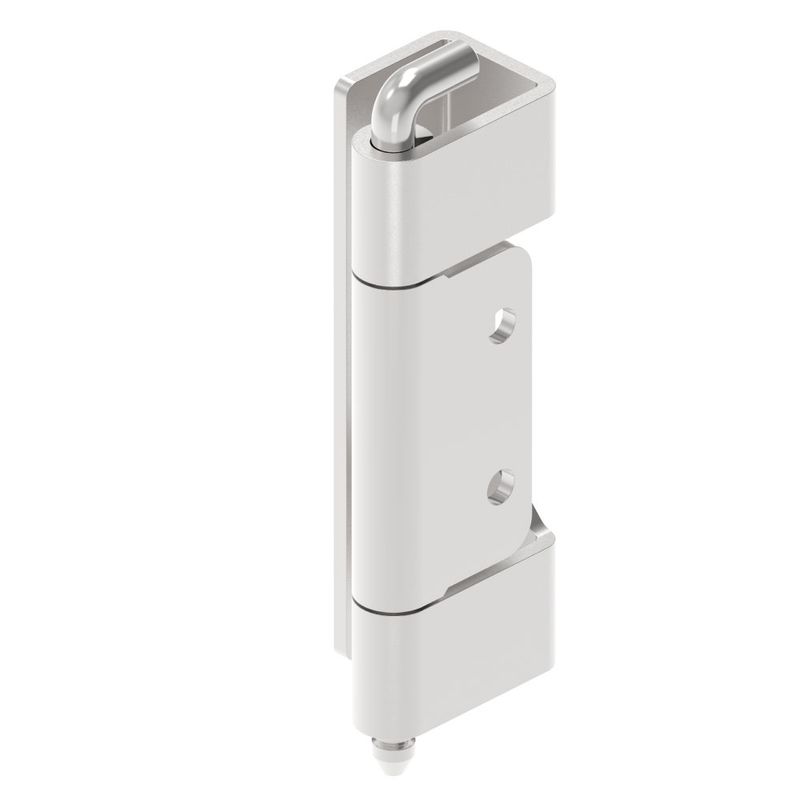
To execute these two routes across both standard specifications and fully customized OEM programs, ForndLock structures its production around core hinge families:
Product Line | Image | Structure & Behavior | Typical Scenario |
Constant Torque Hinges |
 | Preset fixed torque via internal friction damping structure; holds any angle | Industrial panels, display arms, access doors needing tamper-proof hold |
 | Set-screw preload tuning after installation | Prototypes, custom machinery, panels gaining weight in service | |
Adjustable Soft-Close Damping Hinges |
 | Speed-controlled motion, soft-close at end of travel | Electrical cabinets, medical equipment, operator safety panels |
Stage 3 — Sampling. We deliver functional samples in about 5–7 working days, tested on our benches for initial and running torque. The samples then go on your real prototype — verify holding at the worst-case horizontal position, drift under vibration, and use force with production gloves, because desk testing approves nothing.

Stage 4 — Validation and production. Approval triggers a cycle-life validation run on production-intent parts, first-article inspection at production release, and batch sampling with distribution records from that point forward. For volume programs we have scaled from five-thousand-piece pilot runs to multi-million-piece annual volumes without changing the process controls above.
Torque Ranges and Materials at a Glance
Start with the environment and load. The table below is the sequence we use in most specification reviews.
Material | Torque Behavior | Environment Fit | Notes |
SUS304 stainless | Stable, durable | General industrial, indoor/outdoor | The default industrial grade |
SUS316 / 316L electropolished | Stable, premium | Medical, food, marine, washdown | Crevice-free polish for hygiene audits |
Zinc alloy die-cast | Adequate, economy tier | Dry indoor, consumer-grade duty | Temperature ceiling near 80 °C |
Engineering plastic (POM/PA66) | Compact, temperature-sensitive | Electronics, light panels | Torque falls 15–25% from 20 to 50 °C |
Application Signals That Demand a Manufacturer, Not a Catalog Part
Four specific engineering conditions indicate that off-the-shelf catalog hinges are insufficient, requiring direct collaboration with a friction hinge manufacturer:
● Medical & Precision Positioning Arms: Applications where a display or monitor must hold position under equipment vibration while remaining adjustable with one hand. For example, a diagnostic imaging program required custom damping materials inside a stainless steel housing, validated over 50,000 cycles with zero torque loss to eliminate in-procedure drift.
● Heavy Overhead Lids and Hover Panels: High-mass enclosures where hold-anywhere ergonomics eliminate gas struts entirely, transferring all static and dynamic loads directly onto the hinge pivots.
● Panels with Cable Drag and Gasket Resistance: Enclosures where cable bundles, internal pressure, or gasket compression add 20–40% additional resistance above bare panel weight calculations, requiring a load-based engineering review.
● Bi-Directional Motion Damping: Applications requiring controlled motion speed in both directions combined with soft-close damping at travel limits—a motion-profile problem that catalog hinges cannot resolve.
About ForndLock
ForndLock specializes in the engineering and OEM/ODM manufacturing of constant-torque, adjustable, and damped friction hinge systems for critical industrial applications. From initial load calculations and 5-to-7-day rapid prototyping to 50,000-cycle life validation and lot-traceable volume production, we engineer custom friction hinges tailored to your exact torque and environment specifications.
Email: [email protected]