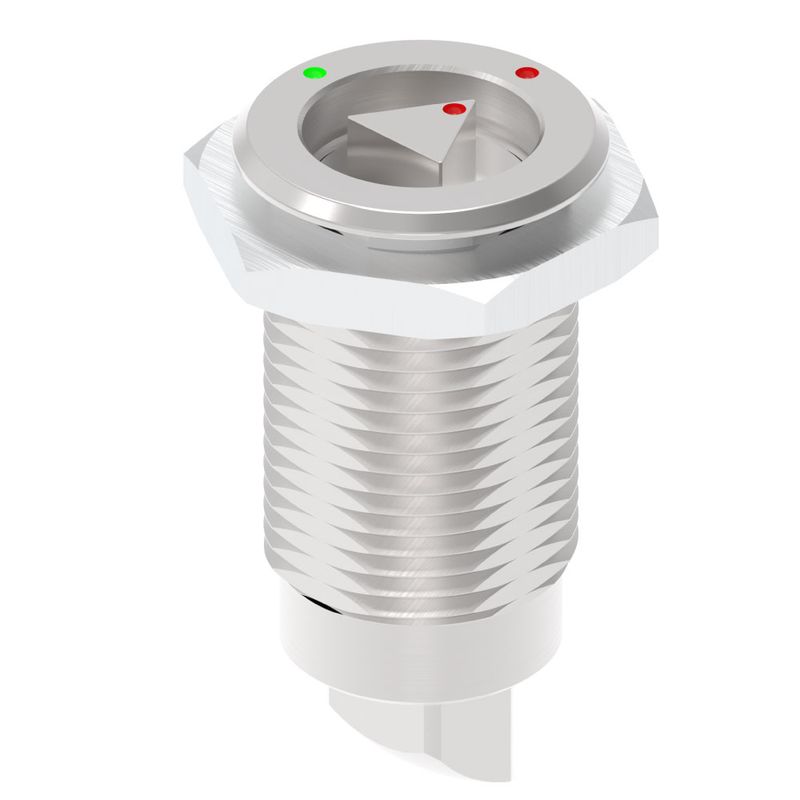
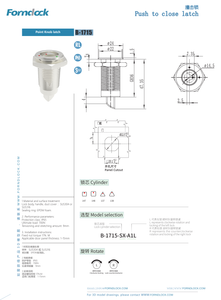
B-1715 Railway Impact Lock
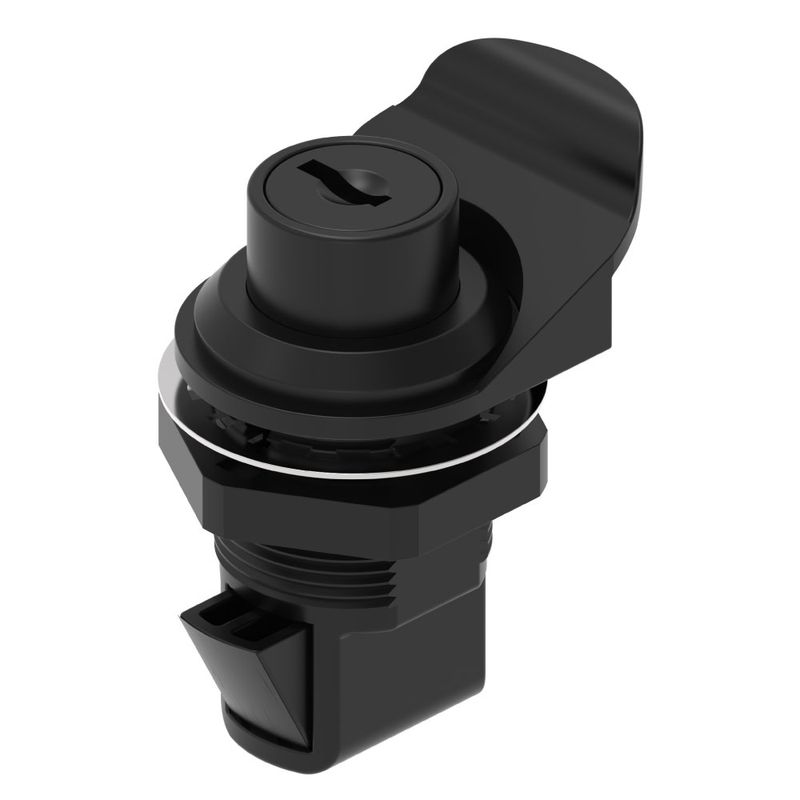
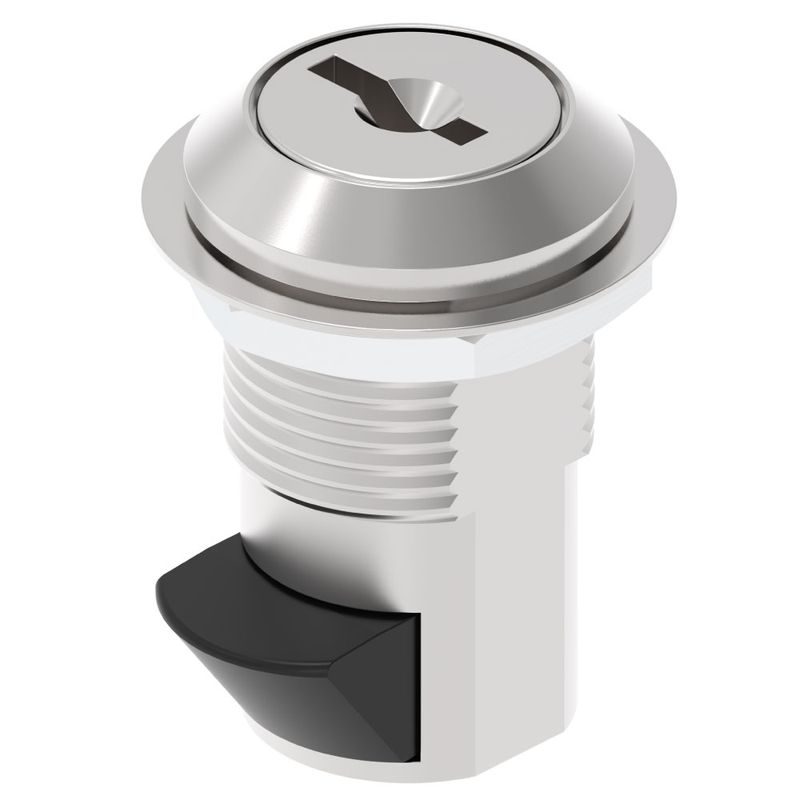
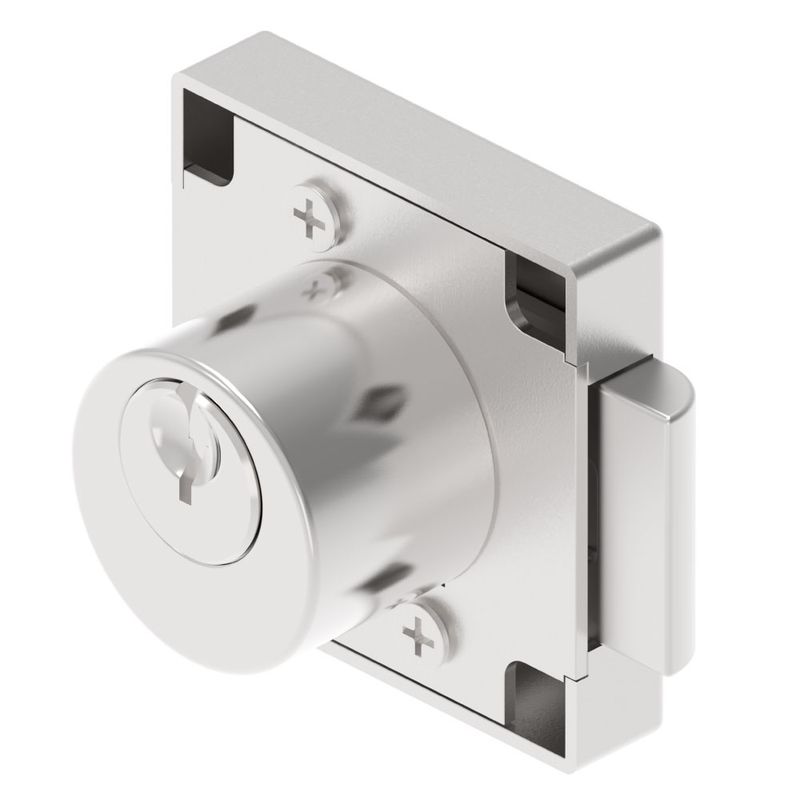
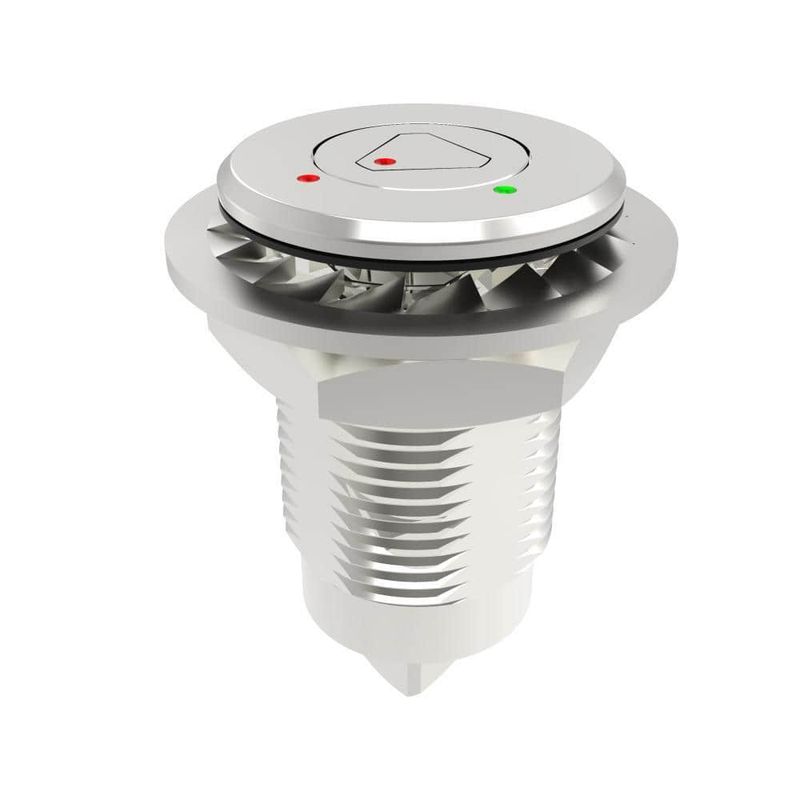
This is a key-operated Push-to-Close impact lock, suitable for industrial cabinet doors, equipment enclosures, electronic chassis, communication cabinets, small maintenance doors, drawers, and storage cabinets. The product features a round hole mounting structure, secured by a rear nut for easy installation. When the door panel closes, the lock tongue automatically engages into the latch position for secure closure; to open, the key is rotated to release the lock tongue. Compared to standard rotary locks, this product allows for quicker door closure; compared to push-type impact locks, it adds key access control, making it ideal for small cabinet doors or equipment doors that require basic protection and management access.
- Material: SUS304
- Compliance Standard: REACH No.1907/2006
- Usage scenarios: railway vehicle equipment cabinets, locomotive/EMU maintenance doors, undercarriage equipment boxes, rooftop equipment hatch covers, rail transit electrical cabinets, air conditioning/HVAC maintenance covers, battery boxes/control boxes, platform equipment cabinets.
FAQ
Can you send samples?
Yes, we can provide a few free samples for customers, but we hope the shipping cost can be covered by you.
Does ForndLock offer custom rotary locks OEM/ODM?
Yes, we support customization of materials, structures, surface treatments, lock cylinder types, and markings for rotary locks to meet project requirements.
Where is this lock mainly used?
Mainly used for railway vehicle equipment cabinets, rail transit electrical enclosures, undercarriage equipment boxes, maintenance doors, rooftop equipment hatches, air conditioning maintenance covers, and industrial equipment cabinets.
How to open the door?
Insert the key and turn it to release the internal lock tongue. The key is primarily responsible for unlocking, while whether the door panel automatically pops open depends on the door structure or the presence of a spring/pull handle.
How does this lock close the door?
This model features a slam shut mechanism, allowing the lock tongue to automatically engage into the latch position after the door panel is pushed closed, enabling quick locking.
Is it suitable for heavy-duty doors?
Not recommended for heavy doors or high-strength security doors. It is more suitable for small cabinet doors, equipment doors, drawer doors, and light to medium-duty access panels.