What Is a Rotary Latch? Working Principle, Rotor Variants, and Industrial Uses
Push a heavy enclosure door shut and hear a single crisp click — that click is a rotary latch doing its job. At ForndLock, where we manufacture rotary latch systems alongside our compression and quarter-turn lines, we see a consistent pattern: most of the rotary latch inquiries we handle start with a door that will not stay shut under vibration, or a panel that needs to close in one push.
This article explains what a rotary latch is, how the mechanism captures a striker, which rotor variants exist, and where rotary latches outperform other industrial latch families.
How a Rotary Latch Works in Five Seconds
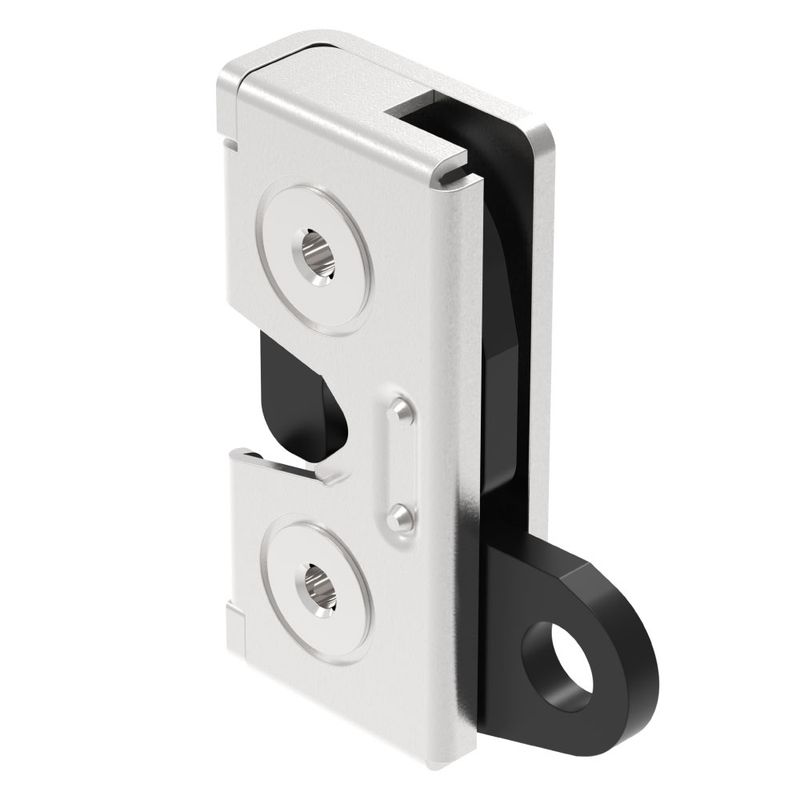
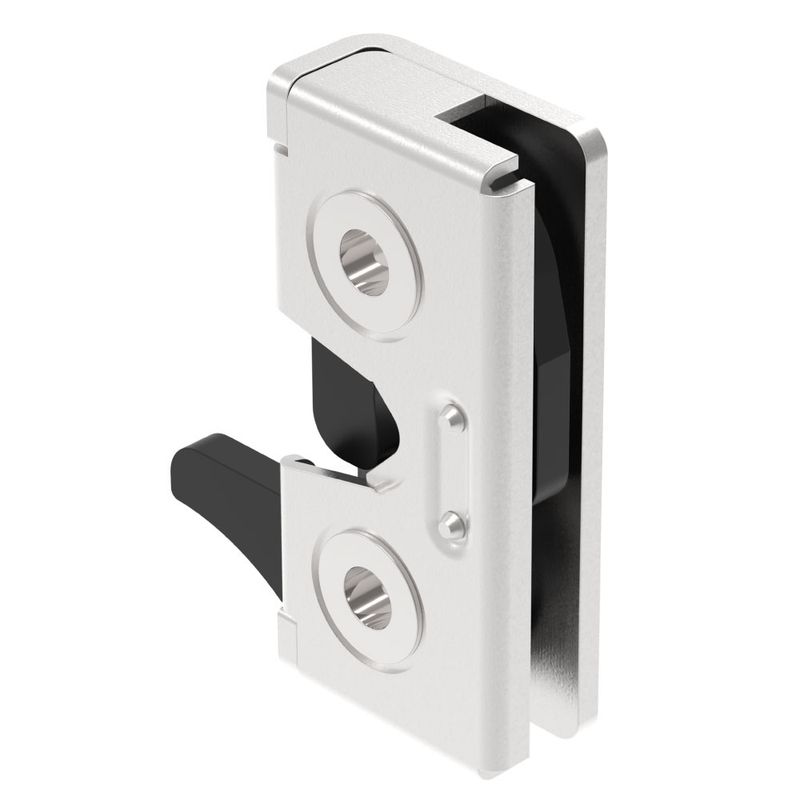
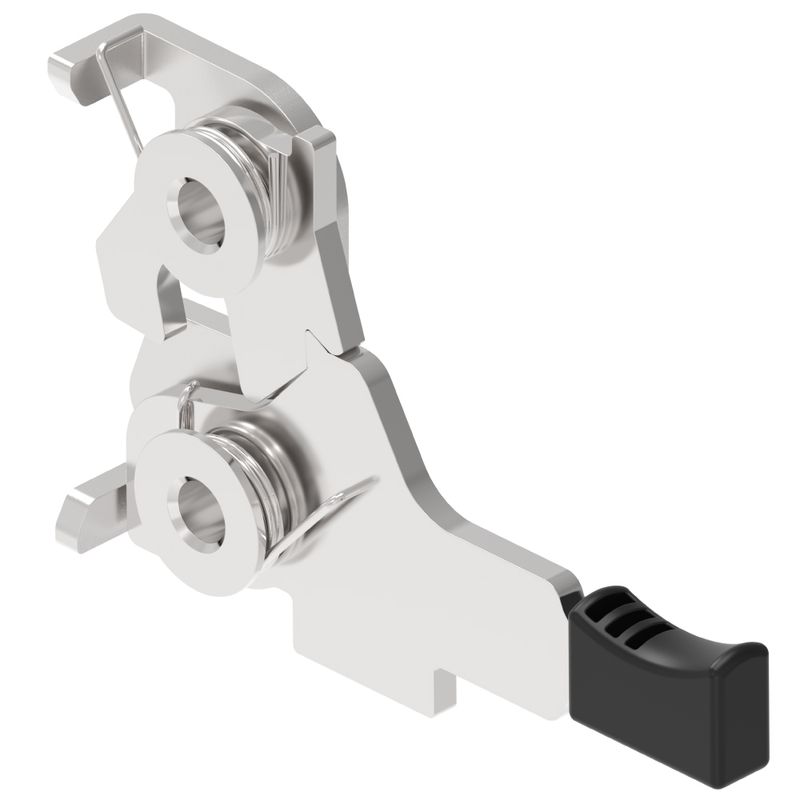
A rotary latch contains three working parts. The striker is a hardened pin or bent bar fixed to the door or frame. The rotor is a cam-shaped jaw inside the latch housing that pivots around the striker. The pawl is a spring-loaded lever that drops behind the rotor to lock it.

Closing happens in one motion: door momentum pushes the striker into the latch mouth, the rotor swings around it and trips past a detent point, and the pawl snaps in behind. The striker is now trapped inside the rotor jaw, and the harder the door pulls against the seal, the more securely it is clamped. Opening reverses the sequence — a handle, button or cable lifts the pawl, a return spring rotates the jaw open, and the striker is ejected. The mechanism relies on geometry rather than friction, so there is no bolt to back out and no separate locking step.
Rotary Latch Variants
Rotor architecture sets the load path, but release method and stage count determine how the latch behaves in service. Five variants cover most industrial projects, and they differ in load rating, safety behavior and access method.
Single-Rotor Latches
One rotating jaw captures the striker. Compact and economical, the single-rotor layout suits light to medium doors — equipment access panels, generator doors, and vehicle storage compartments. This slam-shut structure typically features a direct metal release lever or drive interface, delivering strong ultimate retention loads with a compact housing footprint.
Dual-Rotor Latches
Two opposed rotors close around the striker from both sides, sharing the clamping load. The payoff is higher retention force and far better resistance to the racking loads of large or flexing doors — the reason dual-rotor designs appear on off-highway machinery cabs and wide equipment enclosures where a single jaw would see uneven wear.
Two-Stage Latches
A two-stage latch adds a secondary catch between the open rotor and the fully closed position. If the door is not slammed fully home, the striker is still trapped partway in — the door may sit slightly proud of its seal, but it cannot fly open. On any door that moves or operates under vibration, this is a critical safety function rather than a mere convenience.
Cable-Actuated Latches
A Bowden cable or steel pull-cable connects the latch to a remote release point, so the latch can sit deep inside a sealed door while the handle sits wherever ergonomics demand. Cable actuation is the standard answer for engine compartments, multi-point systems where one pull releases several latches, and telecom or energy-storage cabinets whose panels must stay dust-tight.
Key-Cylinder-Integrated Latches
A lock cylinder is built into the release path, so operating the handle requires a key. This merges access control with the slam-closing convenience of the rotor — the right choice for shared telecom cabinets, battery energy storage enclosures, and utility boxes where dozens of identical doors must be keyed alike across a fleet.
The five variants are compared side by side below.
Variant | How It Works | Best Suited For |
Single rotor | Single jaw pivots around striker with spring-loaded detent pawl | Light-to-medium panels and generator doors |
Dual rotor | Two opposed jaws clamp striker simultaneously to divide load | Heavy vehicle cabs and wide, flexing enclosures |
Two-stage | Primary catch plus secondary safety position to prevent accidental rebound | Safety-critical doors and vibrating equipment |
Cable actuated | Remote Bowden cable releases interior latch mechanism | Sealed compartments and multi-point release systems |
Key cylinder integrated | Lock cylinder built into release path requires key operation | Shared utility boxes and battery storage cabinets |
To support these architecture variants across real-world enclosure builds, ForndLock engineers and manufactures a full range of industrial rotary latches—including vertical, top, bottom, and shock-absorbing drive configurations in steel and stainless alloy constructions. Below is a quick selection matrix of ForndLock's core rotary latch models.
Product Name & Type | Image | Key Specifications | Primary Uses |
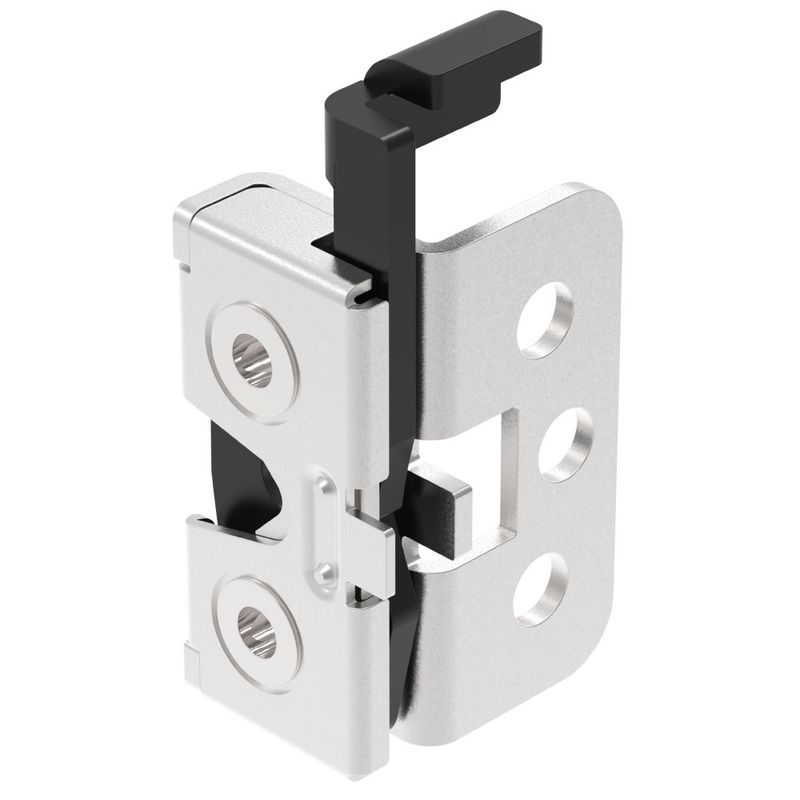
3000-10 Vertical Drive Rotary Lock (Two-Stage / Vertical Drive) |
 | 3,300 N ultimate load; single/double stage options; steel/zinc construction | High-vibration vehicle doors, generator canopies, and dust-tight cabinets |
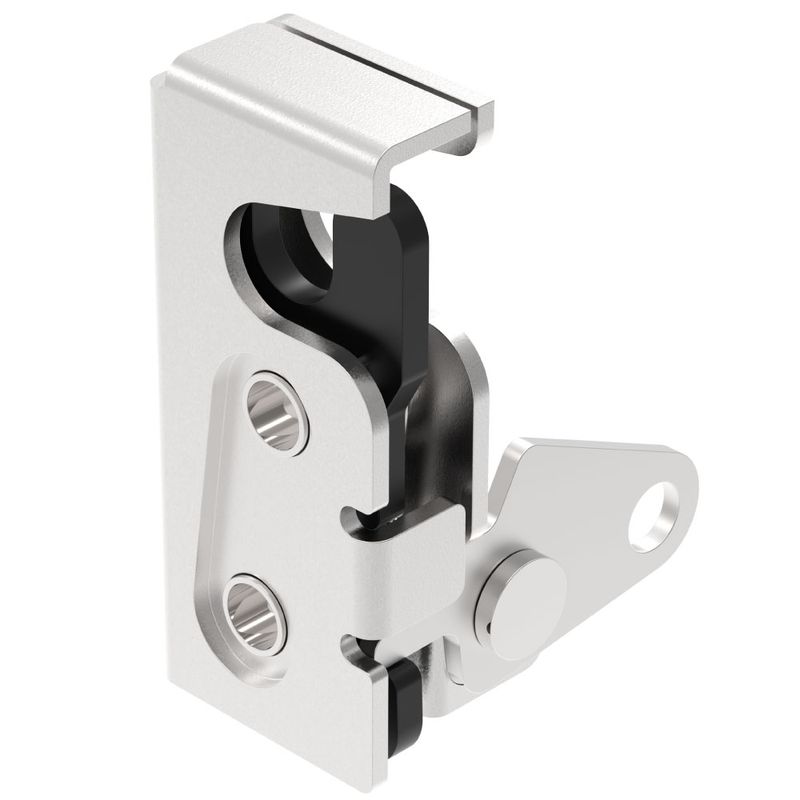
3001-10 Direct Drive Rotary Lock (Single Rotor / Direct Drive) |
 | 2,600 N ultimate load; 6.4 mm striker stroke; compact slim-profile housing | Machinery access panels, equipment covers, and light vehicle compartments |
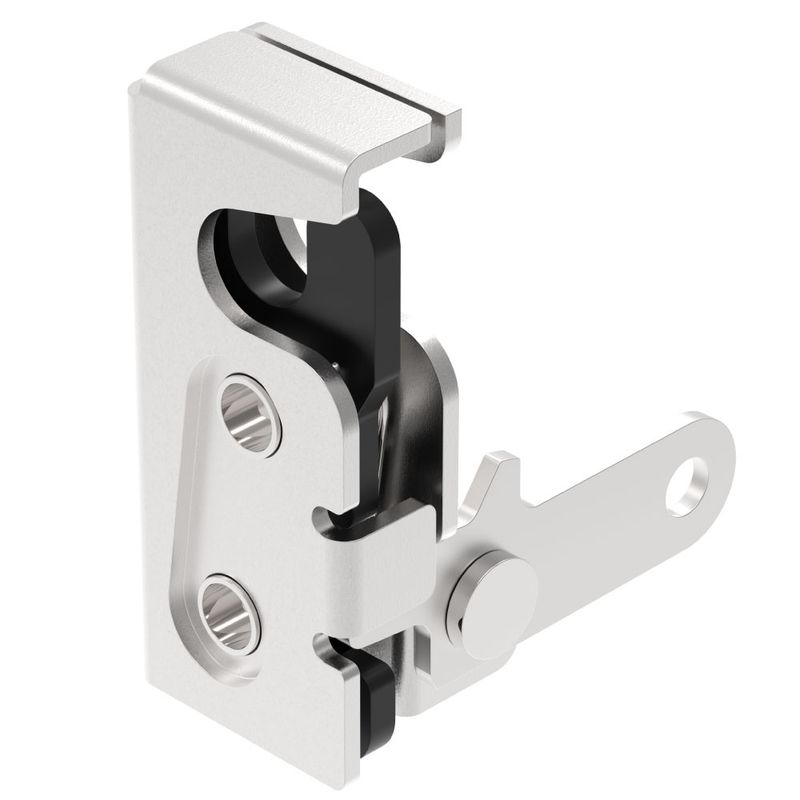
3004-32 Shock-Absorbing Bottom Drive Rotary Lock (Vibration-Damping / Bottom Drive) |
 | Integrated vibration-damping cushion; heavy-duty latching mechanism | Construction machinery, agricultural cabs, and off-highway equipment |
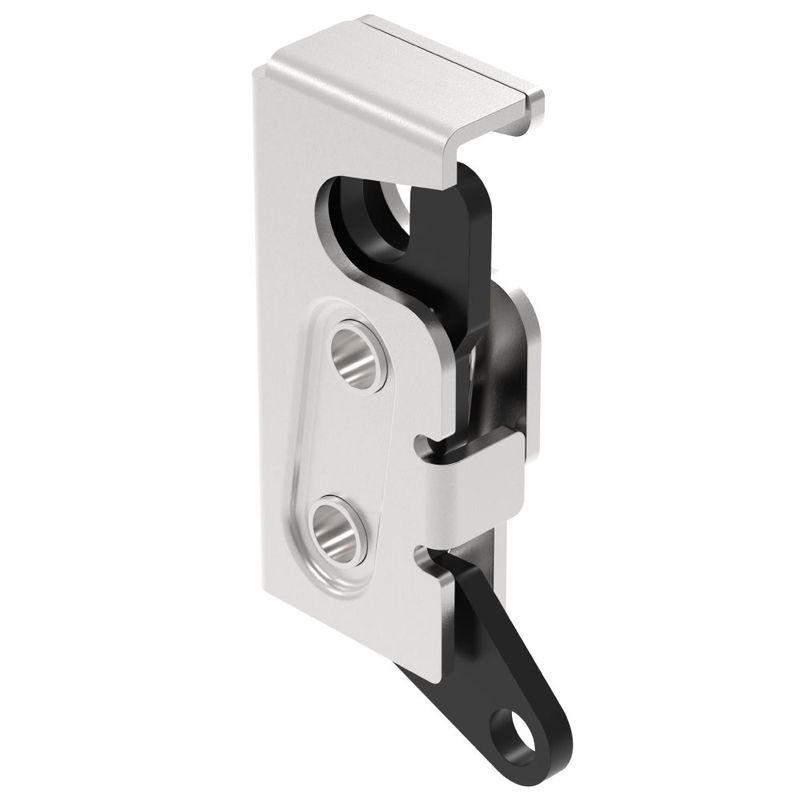
3005-11 Handle Type Rotary Lock (Integrated Handle Release) |
 | Manual handle actuation; direct latch release mechanism | Utility enclosures, toolboxes, and specialty vehicle compartments |
3009-21 Bottom Drive Rotary Lock (Compact Bottom Drive Slam Latch) |
 | Metal release lever; spring-loaded slam-to-close action | Electronic enclosures, battery cabinets, and energy storage housings |
When Rotary Beats Cam or Compression Latches
Cam, compression and rotary latches each cover a different range of door behavior. Cam latches dominate low-cost cabinet panels, and compression latches own the gasket-sealing market for outdoor enclosures. Rotary latches are specified when vibration, slam closing or sustained seal load exceeds what a cam or compression latch can hold.
Three operational conditions point directly to specifying a rotary latch:
1. Vibration Resistance: A cam latch holds the door with a flat tongue resting against a frame edge, which can fret, wear, and walk open given enough cycles. In contrast, a rotor clamps the striker inside a jaw so that ambient vibration tightens rather than loosens the engagement.
2. Slam-Closing Safety: Doors on vehicles and moving machinery must close securely with a single push and cannot be allowed to accidentally reopen. The two-stage secondary safety catch provides fail-safe security that no cam or compression latch can offer in the same package.
3. Door Mass and Heavy Seal Loading: A heavy door with a stiff gasket requires the mechanical advantage of a rotor to pull the last few millimeters of seal compression and maintain that tension indefinitely—something a sliding bolt or flat cam struggles to achieve.
Selection Criterion | Rotary Latch | Cam Latch | Compression Latch |
Vibration resistance | Self-locking rotor; improves under load | Tongue can fret and walk open | Good only while compressed |
Closing action | Slam-to-close, one motion | Turn handle or key | Lift-turn-press, multi-step |
Safety catch | Two-stage secondary position | None | None |
Seal clamping | Pulls door tight, holds indefinitely | Minimal | 2–4 mm squeeze stroke |
Security add-ons | Cylinder or padlock in release path | Keyed or padlockable | Keyed versions available |
Cost position | Mid to high | Lowest | Mid |
Primary Industrial Applications
Rotary latches concentrate where doors move, shake and get slammed:
Application Sector | Typical Doors | Why Rotary Wins There |
Construction & agricultural machinery | Excavator, loader and harvester cab doors; engine covers | Slam closing with gloved hands, extreme vibration, safety-catch requirement |
Generator & energy storage enclosures | Canopies, battery compartment doors | Sustained seal clamping, keyed access across fleets |
Telecom & electrical cabinets | Outdoor communication cabinet doors | Dust-tight sealing with remote or lever release |
RV & specialty vehicles | Storage compartments, service-body doors | Two-stage latching, cable release to interior handles |
Rail transit | Equipment lockers, access hatches | Vibration endurance and corrosion-protected housings |
Pre-Purchase Specification Checklist
Before sending an inquiry, confirm six data points — our engineers ask for the same list in every drawing review:
1. Striker load. Door mass, seal stiffness and dynamic shock define the N-rating; never size a latch from static door weight alone.
2. Drive direction. Top drive, bottom drive, direct drive or cable — decide from handle position before fixing the door design.
3. Stage count. Specify two-stage wherever the door moves or carries safety liability.
4. Environment. Galvanized steel for dry duty; stainless steel for outdoor, coastal or washdown service, validated by salt-spray hours.
5. Cable routing. For remote release, map bend radius, cable length and anchor points at the design stage, not after tooling.
6. Keying scheme. Keyed alike, keyed to differ or master-keyed — an order-time decision that is nearly impossible to retrofit.
About ForndLock
ForndLock manufactures rotary latches and enclosure hardware for industrial, transport and energy-storage applications. From single and dual-stage mechanisms to cable-actuated remote releases, we provide end-to-end OEM/ODM design, load testing, and custom manufacturing for machinery, rail, and energy storage enclosures.
Submit your project specifications and technical drawings to us for application engineering guidance and rapid prototype support.
Email: [email protected]