A Guide to Industrial Latch Mechanisms and Fitting Specs
A latch carries more responsibility than its size suggests. It maintains gasket compression against dust and water, absorbs operational vibration, and keeps the door aligned through years of cycling. When a latch is underspecified, the signs are easy to miss: slight spring-back along the gasket line, a gap that leaks under wind pressure, or a door that pops open on rough terrain.
ForndLock engineers industrial access hardware around gasket loads and mechanical fit rather than catalog dimensions. This guide covers the core latch mechanisms, mounting tolerances, material standards, and application requirements.
Latch vs Lock and Why the Distinction Matters
A lock addresses security — who may open the door. A latch addresses mechanics — how the door stays closed, compressed, and aligned.
Many industrial enclosures require both functions, but they address different failure modes:
● Latches prevent mechanical failures—such as vibration loosening, seal degradation, and panel sagging.
● Locks prevent security failures—such as unauthorized access or tampering.
Adding a key-locking cylinder to a routine maintenance cover raises unit cost for no real benefit. On heavy machinery, a basic latch without anti-vibration retention risks equipment failure. Most ForndLock mechanisms—including our quarter-turn latch series—are modular, accepting tool-operated inserts, key cylinders, or padlockable handles on the same mechanical base.
Six Core Industrial Latch Mechanisms and When to Use Them
Industrial latches are grouped by their mechanical actuation, clamping behavior, and retention physics:
Mechanism | Motion & Clamping | Operating Force | Seal Performance | Vibration Resistance | Typical Applications |
Quarter-Turn Cam | 90° rotation; cam swings behind frame | Low | Good (with gasket cam) | Fair–Good (with detent) | Electrical enclosures, control panels |
Compression | 90° turn drives axial pull, compressing gasket | Medium–High | Excellent (IP65–IP69K) | Excellent (pre-loaded) | Sealed outdoor boxes, HVAC, EV chargers |
Slam / Push-to-Close | Push shut; spring pawl captures striker | Very Low | Good (integrated gasket) | Good (spring pre-load) | Vehicle compartments, toolboxes |
Draw / Over-Center | Lever pulls panel in, snaps past center | Medium | Excellent (high leverage) | Excellent (self-locking) | Generator canopies, HVAC housings |
Rotary | Striker enters housing; rotating pawl cinches | Slam-in / Remote | Good (latch + seal) | Excellent (with detent) | Vehicle doors, heavy machinery guards |
Spring-Loaded Bolt | Spring drives bolt linearly into keeper | Low | Fair (secondary latch) | Fair–Good | Access covers, inspection hatches |
Three mechanisms from the matrix above are specified most often in ForndLock enclosure projects.
Quarter-Turn Cam Latches
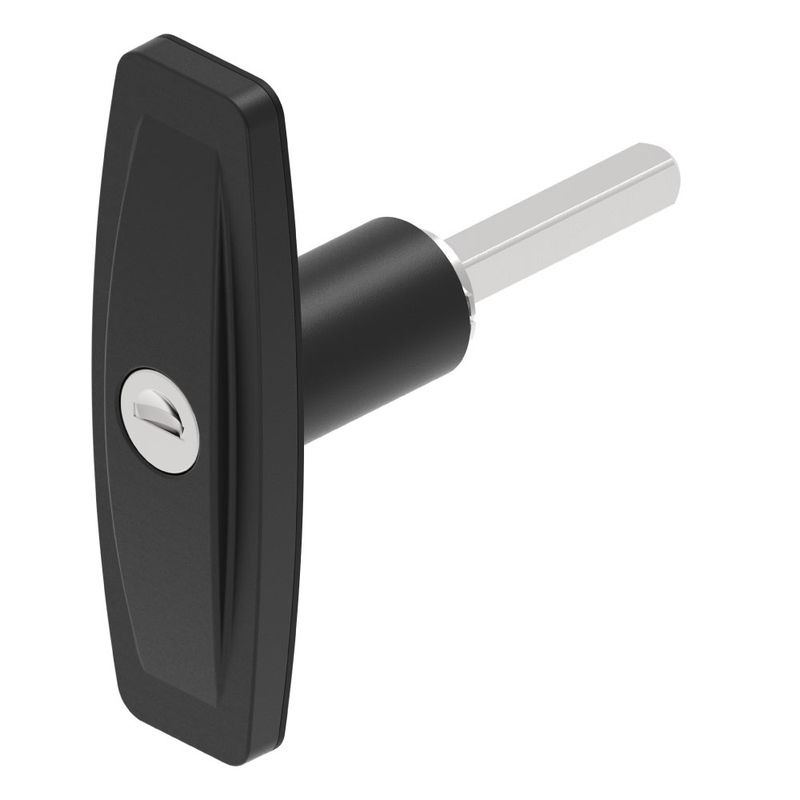
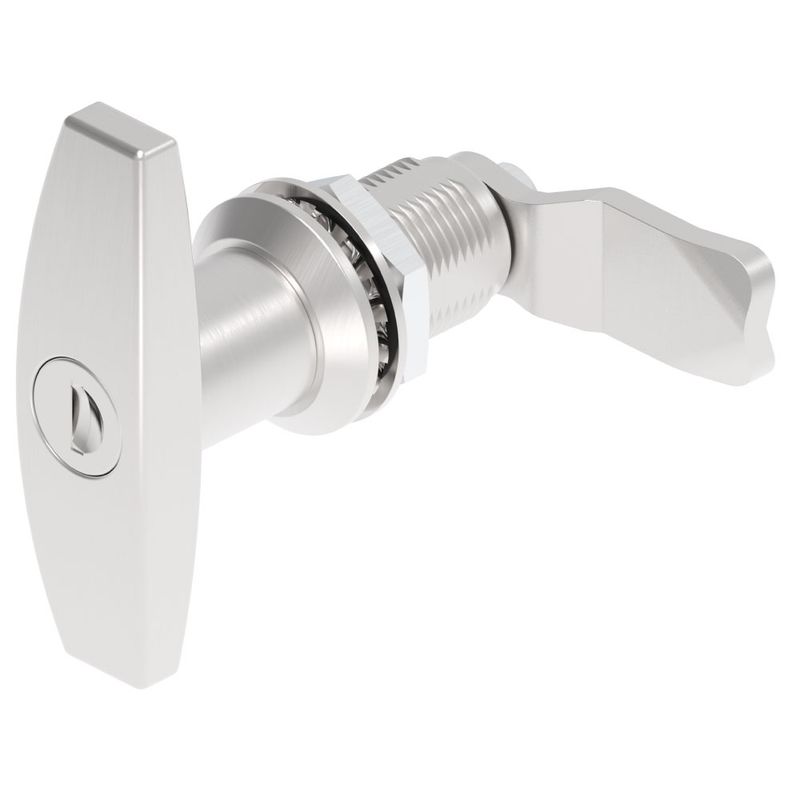
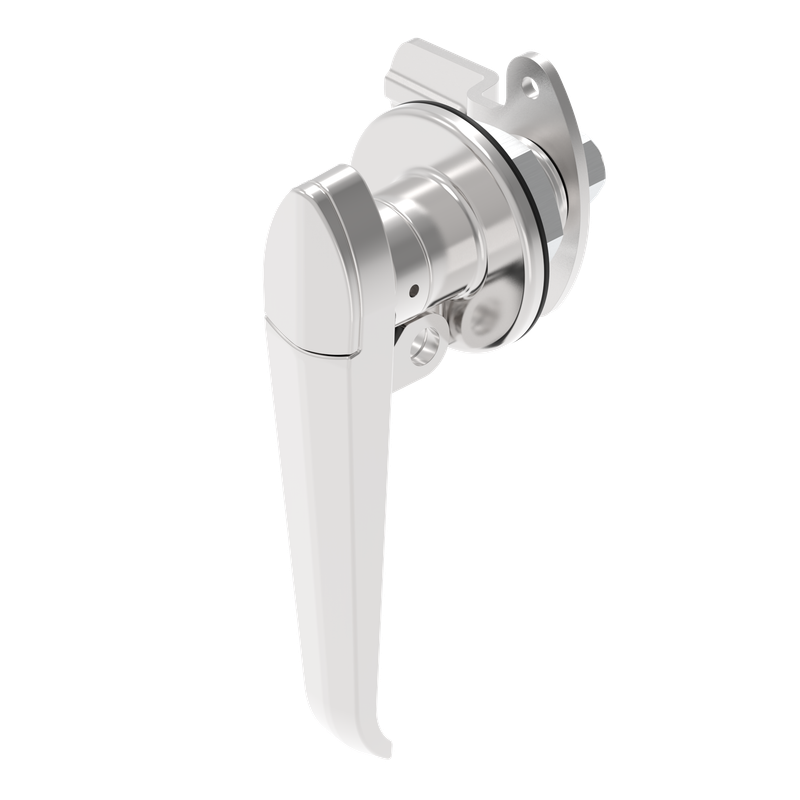
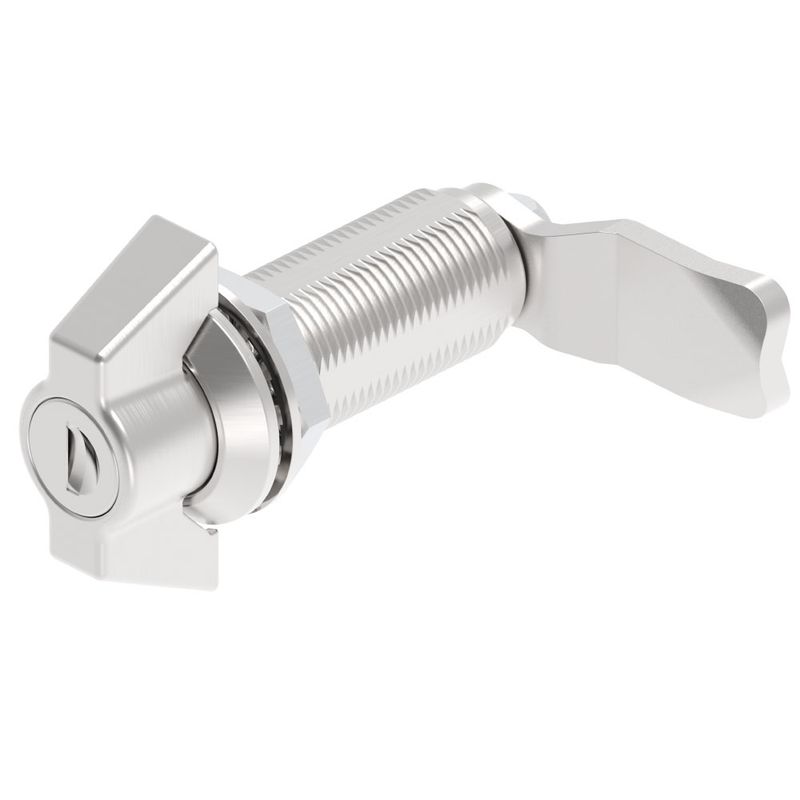
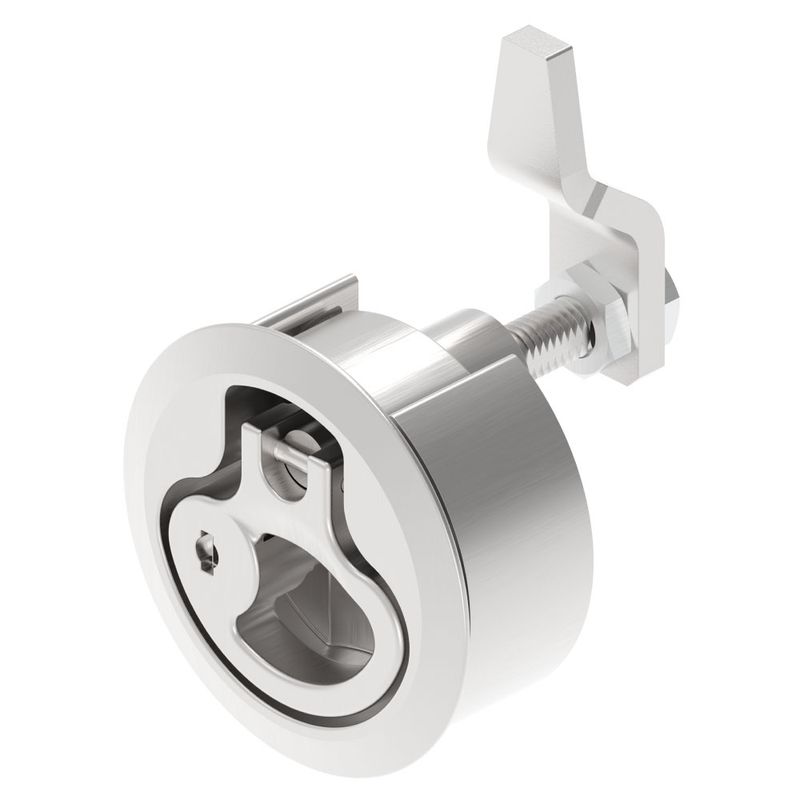
Simple, economical, and fast to operate. Available in wing-knob, L-handle, T-handle, and flush tool-operated drivers for standard indoor and control cabinets.
Model | Image | Key Specs | Scenarios |
 | Cutout: M22×20 | IP65 | Stainless / Zinc | Outdoor enclosures, generator doors, RV toolboxes | |
 | Cutout: M22×20 | IP65 | Optional lock cylinder | Electrical control cabinets, communication boxes, machinery panels | |
 | Cutout: M22×20 | IP65 | 90° Right-angle drive | Outdoor equipment boxes, machinery maintenance doors, trailer toolboxes |
Compression Latches
Combine rotation with an axial stroke that squeezes the gasket inward. This mechanism is essential for achieving IP65 to IP69K environmental sealing on outdoor cabinets and equipment subjected to washdown procedures.
Model | Image | Key Specs | Scenarios |
 | IP65 | Zinc Alloy | CH751 key + Push button | Pickup truck canopies, RV hatches, vehicle toolboxes | |
 | IP65 | Lift & Turn lever | Concealed mount | Air compressors, generator sets, industrial equipment cabinets | |
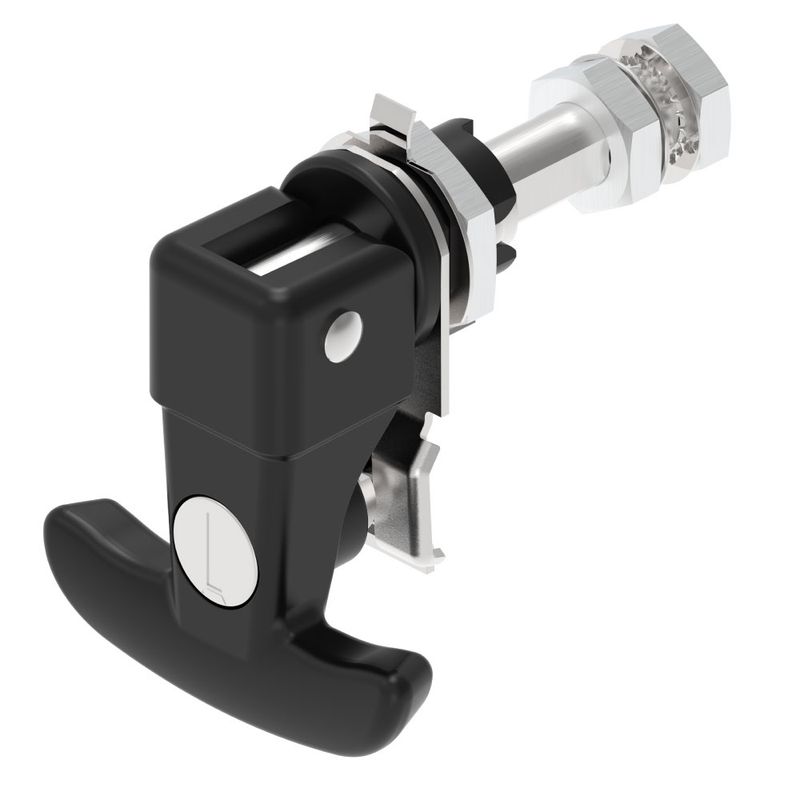
 | IP65 | T-Handle lever | Zinc / SUS304 | Heavy engineering vehicles, agricultural machinery, trailers |
Rotary Latch Systems
Concealed inside the door frame; a striker enters the housing and rotates an internal pawl. Rotary latch setup is ideal for flush exterior panels on mobile equipment and vehicles that require remote cable or rod actuation.
Model | Image | Key Specs | Scenarios |
 | Max load: 3300 N | Striker size: 9.6 mm | Engineering vehicles, pickup toolboxes, equipment hatches | |
 | Max load: 14000 N | Striker size: 12.8 mm | Off-road special vehicles, heavy construction machinery, generator enclosures |
Single-Point vs Multi-Point Industrial Latches
A single-point latch secures one central position on the door edge. While sufficient for small, rigid covers, single-point latching creates uneven sealing force on larger panels.
Consideration | Single-Point Latch | Multi-Point Latching System |
Recommended Door Height | Up to ~600 mm | Tall or wide panels (>1000 mm) |
Gasket Compression | Concentrated at latch point | Uniform along entire perimeter |
Corner Deflection | High risk of corner bowing | Eliminates corner gap and EMI leakage |
System Complexity | Simple single cutout | Central actuator with driving rods/cables |
When a gasketed door exceeds 1000 mm in height, gasket reaction force causes the unsupported corners to bow outward. Multi-point rod systems—driven by a central swinghandle—distribute clamping force evenly across top, middle, and bottom strike points, preventing air leakage and maintaining EMI/RFI shielding integrity.

The Physics of Latching and Five Critical Fitting Specs
A latch mechanism works in the field only when its mounting tolerances are correct. Five fitting parameters decide performance:
1. Axial Clamping Force
Sealing requires sufficient compressive force to deform the gasket loop into its sealing state. Plan for approximately 1–2 N of clamping force per millimeter of uncompressed gasket perimeter per 10 mm of seal width. Insufficient clamping leaves ingress paths for dust and water, while excessive clamping permanently crushes the elastomer and over-stresses the latch housing.
Parameter | Target Guideline |
Estimated Load | 1–2 N / mm perimeter / 10 mm width |
Point Spacing | 1 compression point every 300–500 mm |
Key Risk | Under-squeeze leaks water; over-squeeze crushes gasket |
2. Grip Range (Head-to-Cam Distance)
Grip range is the distance from the latch mounting face to the cam engagement surface. Calculate grip from the physical assembly stack-up:
Grip = Door Panel Thickness + Frame Offset + Compressed Gasket Thickness
Specifying a grip range smaller than the actual stack height prevents full cam engagement, while an oversized grip leaves the door loose and noisy under vibration. For applications with sheet-metal variation, adjustable cams allow on-site tuning to maintain consistent engagement.
3. Panel Cutout Tolerances
● Standard Dimensions: 20.1 mm or 22.5 mm circular cutouts for quarter-turns; rectangular or D-profiles for compression and slam latches.
● Tolerance Target: Maintain cutout positioning within ±0.2 mm.
● Critical Factor: Raised laser cut burrs alter effective grip height by tenths of a millimeter, causing inconsistent gasket squeeze. Always deburr cutouts prior to latch assembly.

4. Striker and Keeper Alignment
Slam, draw, and rotary latches require the striker pin to enter the housing catch within a defined alignment window (typically ±1–2 mm). Misalignment causes incomplete engagement, high operating force, or premature pawl wear. Slotted keeper holes or 2D-adjustable strikers help absorb sheet-metal assembly tolerances.
5. Anti-Vibration Retention
Ambient dynamic vibration from machinery, transport, or wind can walk standard cams loose over time. For high-vibration applications, specify detent cams, spring-loaded over-center linkages, or positive safety catches that require deliberate manual disengagement.
Environmental Selection for Materials Surface Finishes and Standards
Select housing materials, cams, and finishes to match the operating environment:
Operating Environment | Housing Material | Cam & Hardware | Finish / Standard |
Indoor Dry Equipment | Zinc die-cast | Zinc-plated steel | Powder coating, RoHS, IP20–IP54 |
Outdoor Industrial Enclosures | Zinc die-cast / SS304 | SS304 | Powder coated / Chrome, IP65–IP67 |
Marine & Coastal Sites | SS316 Stainless | SS316 Stainless | Passivated, NEMA 4X, Salt-spray certified |
Hygiene & Washdown Zones | SS316 Stainless | SS316 Stainless | Electropolished, IP69K, EHEDG-style |
High-UV / Insulated Cabinets | PA66 Glass-filled Nylon | SS304 Stainless | Heat-stabilized, UL94-V0 flame rated |
Gasket material also matters — EPDM for general outdoor sealing, silicone for wide temperature swings, and NBR for oils and fuels. Where chlorides are present, 316 stainless with molybdenum resists pitting far better than 304. Our high-security quarter-turn series offers IP65-rated waterproof and dustproof versions, plus sanitary stainless structures and hygienic accessories for food and pharmaceutical machinery.
Industrial Applications and Real-World Snapshots
● Electrical enclosures pair quarter-turn cam latches in zinc die-cast or SS304 with the panel — fast access and an EMI-friendly fit.
● HVAC units favor draw latches for their strong gasket pull and vibration hold.
● Off-highway and RV builders combine rotary latches with stainless pins and push-to-close hardware, because doors must slam shut on moving vehicles.
● Marine applications specify SS316 compression latches to hold NEMA 4X sealing in salt air.
● Food and beverage plants use IP69K compression latches in SS316 for daily washdown.
● Outdoor telecom cabinets need compression latches on multi-point systems — tall doors, weather exposure and security in one spec.
About ForndLock
ForndLock manufactures industrial access systems—including compression latches, quarter-turn cam latches, push-to-close latches, rotary latch systems, and swinghandle multi-point locking—engineered around structural load and sealing specifications.
Operating under ISO 9001 standards, our production capabilities feature in-house IP69K seal validation, torque testing, and dynamic vibration test rigs. We support OEM/ODM requirements from custom cam profiles and specialized key inserts to volume batch production.
Email: [email protected]