A Guide to Safety Quarter-Turn Latches for Industrial Cabinets
At ForndLock, we know that a simple cabinet click carries real engineering weight. This guide is written for equipment engineers and panel builders who need clear facts about industrial quarter turn latches. We will break down how these latches work, explore their main types, and look at their everyday uses. You will also learn how to pick the right safety locks for your industrial cabinets so they can handle heavy vibration, high-pressure washdowns, and strict safety rules.
The Mechanics Behind the 90° Turn
Industrial quarter turn latches offer a huge engineering benefit. They turn simple rotational motion into strong, straight-line clamping force inside a very tight space. Inside the latch, the cam works like a curved ramp. When an operator turns the handle or key, the cam rotates and catches the inside edge of the cabinet frame. The slope of this cam acts like a simple machine, which means a small turning effort creates a large clamping force that presses the door seal flat.
The whole locking or unlocking process takes exactly a 90° turn. This small angle gives the user clear visual and physical feedback about whether the door is open or closed, and it also protects the operator from wrist strain. With just a quarter turn, the cam swings smoothly from a totally open spot to a fully locked position behind the frame.
Step | Operation | Description |
1 | Turn Key / Handle (90°) | Initial mechanical input |
2 | Cam Rotates Behind Frame | Like a ramp |
3 | Pulls Door Inward | Linear Compression |
4 | Internal Stop Hits Detent | Prevents over-turning |
An internal stop mechanism keeps this movement precise and repeatable. It catches the latch at exact 90° intervals, which stops the user from turning the lock too far. Over-turning could push the cam out of line, wear out the housing, or bend the cabinet door panel. Thanks to this built-in stop, the cam always rests flat against the frame to spread the load evenly across the metal.
Different types of quarter-turn latches for industry
Engineers sort these latches into groups based on how they move and how they protect the cabinet. Here are the main designs used in modern panel building:
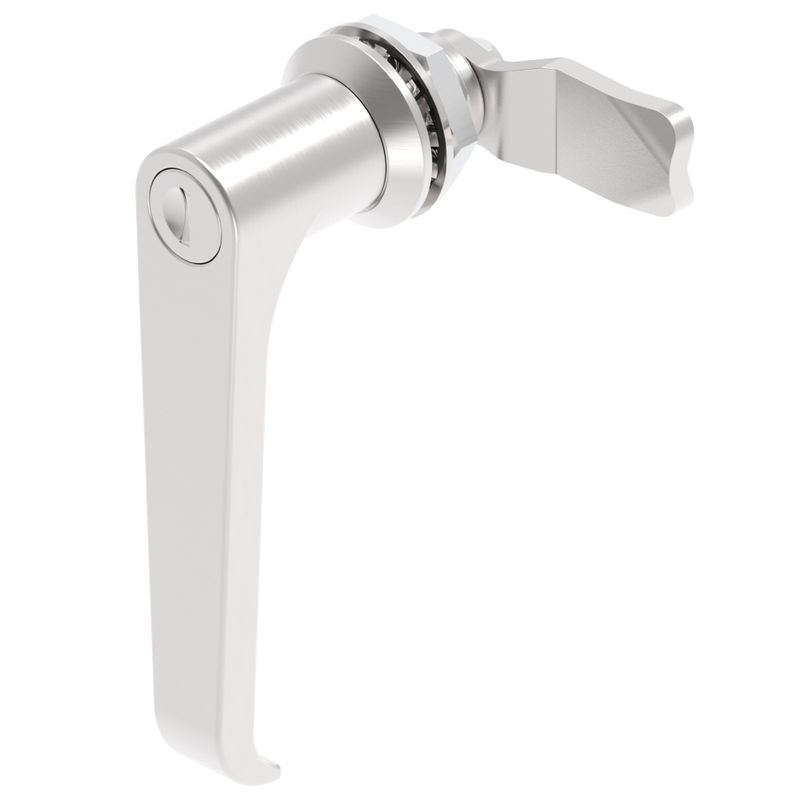
· Cylinder Quarter-Turn: This is the standard choice for ordinary control boxes. The key cylinder directly turns the cam in a simple 1:1 motion. It works best where vibration is low and standard dust seals are good enough.

· Padlockable Quarter-Turn: This design includes a loop or handle made to fit an external padlock. It adds a strong physical barrier that helps plants follow Lockout/Tagout (LOTO) safety rules, which keeps workers safe by preventing machines from turning on during maintenance.

· Compression Quarter-Turn: This style adds a second action to the turn. First, the cam rotates behind the frame, and then the mechanism pulls the cam 4 to 6 mm tighter toward the door. This extra pull crushes the rubber gasket flat to block out water and stop panels from rattling.
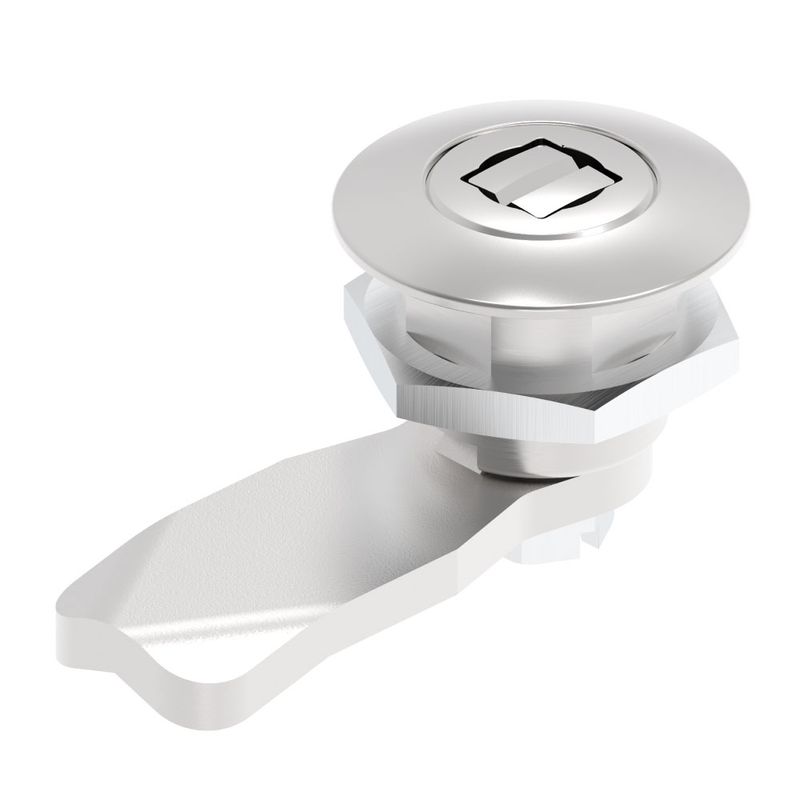
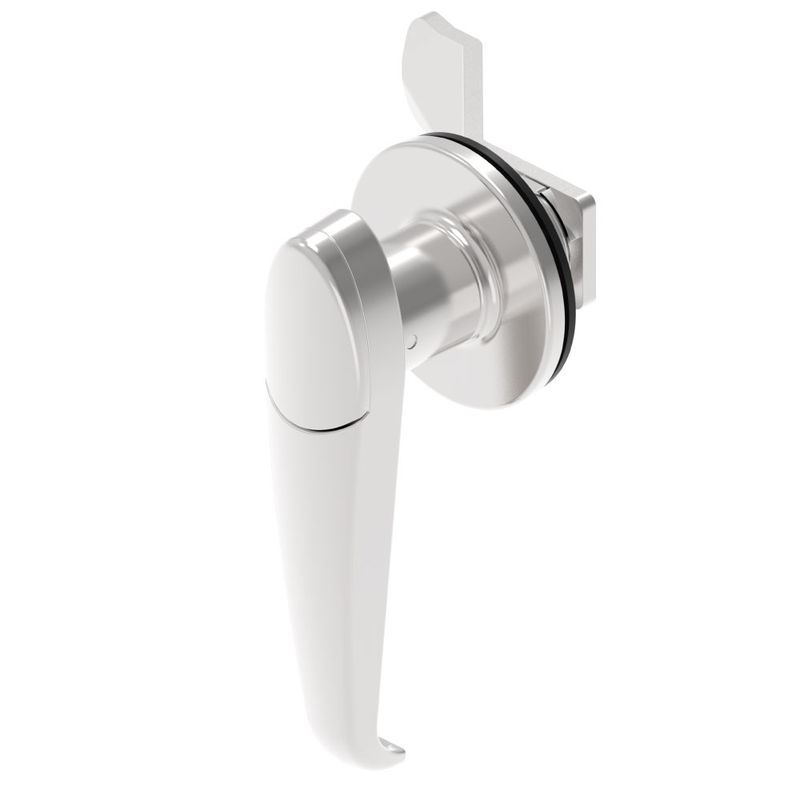
· Hygienic Quarter-Turn: Built for cleanrooms and food plants, this latch has a smooth, curved shape with no sharp corners, hidden pockets, or exposed threads. Liquids, dirt, and washdown chemicals slide right off without getting trapped.
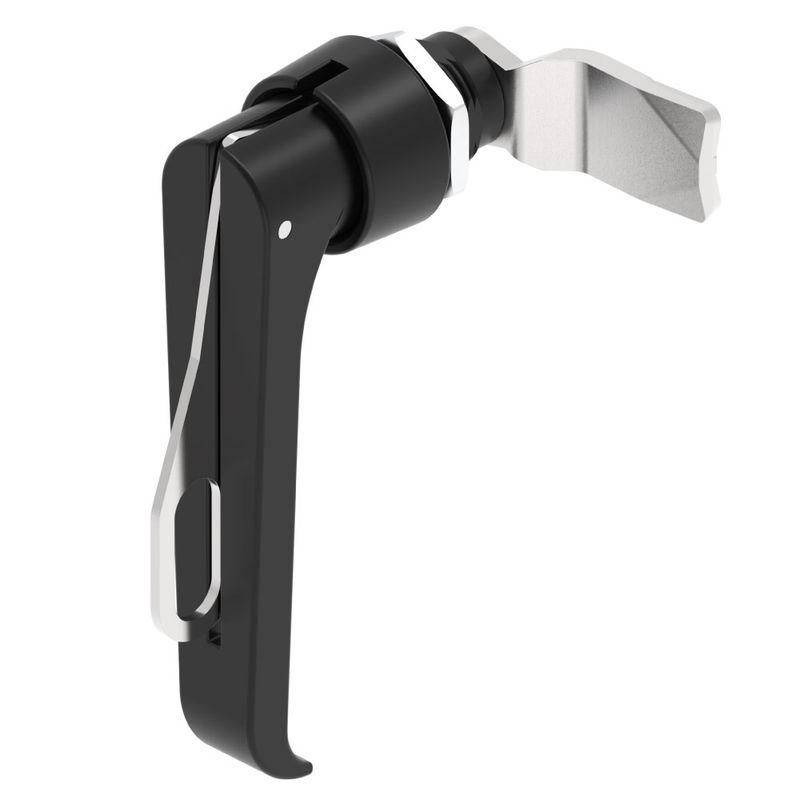
· Safety Quarter-Turn: Made for severe shock and shaking, this latch uses an internal locking pin. The cam physically locks in place when closed, so outside vibration cannot shake it loose. You must press the pin down with a specific key or tool before the latch can turn.
Selecting materials for quarter-turn latches in industrial use
The material you pick decides how long the latch will last, how much force it can take, and how well it fights off rust. To make the right choice, you must look closely at the heat, chemicals, and mechanical strain your cabinet will face.
The latch body and cam must be strong enough to resist the outward push of the compressed door gasket as well as any positive air pressure from internal cooling fans. Surface coatings are just as important because they serve as the first shield against rust and chemical damage.
Material | Key Properties | Surface Treatment | Ideal Application Environment |
Zinc Die-Cast | High tensile strength, excellent dimensional stability, cost-effective for mass production. | Chrome plating or black powder coating. | Standard indoor manufacturing facilities, electrical control rooms, and general machinery enclosures. |
304/316 Stainless Steel | Exceptional resistance to pitting, galvanic corrosion, and chemical degradation. | Electropolishing or natural brushed finish. | Marine environments, food and beverage processing, pharmaceutical cleanrooms, and highly corrosive chemical plants. |
Polyamide (PA6) | High electrical insulation, inherent corrosion resistance, lightweight, and thermally stable. | None required; material is inherently stable. | Outdoor telecommunication boxes, high-voltage electrical panels, and weight-sensitive transportation applications. |
Solving Uncommanded Openings in High-Vibration Environments
Cabinet doors opening on their own is a huge problem near heavy machinery. Constant shaking and rhythmic vibration can easily cause this failure. Standard cam latches stay shut purely by friction between the cam and the metal frame. In trains, stamping presses, or diesel generators, non-stop shaking quickly overcomes that friction, allowing the cam to slowly back out until the door swings wide open.

Safety quarter-turn latches for industrial cabinets solve this problem for good. These latches feature an internal spring-loaded pin that drops into a solid groove the moment the latch closes all the way. Once that pin locks in, shaking cannot turn the cam at all. The only way to open the door is to use a special tool or key that lifts the pin out of its groove before turning the latch.
Type | Mechanism / Flow | Result |
Standard Latch | [Frame] <--- Friction Only ---> [Cam] | Shakes Loose! |
Safety Quarter-Turn Latch | [Tool In] ──> [Lifts Locking Pin] ──> [Cam Can Now Turn]
(Without the tool, the pin physically blocks rotation) | Secure & Locked |
High-risk electrical systems often require double-bit inserts certified to the DIN 43668 standard. This standard gives trained technicians quick access with a standard key while keeping untrained people from opening the box with everyday tools. A great example of this build is part number 1000-U818-03IA. It comes with a zinc die-cast body, an earthing nut for safe electrical grounding, and a dust shield to protect the internal cylinder.
Latch Type | Locking Mechanism | Vibration Resistance | Ideal Application |
Standard Cylinder | Friction-based cam engagement. | Low. Susceptible to harmonic backing out. | Stationary indoor IT racks and low-vibration control panels. |
Compression Latch | Friction combined with high axial gasket tension. | Moderate to High. Tension dampens minor vibrations. | HVAC units and standard generator enclosures. |
Safety Quarter-Turn | Mechanical locking pin blocking cam rotation. | Extreme. Immune to rotational backing out. | Railway rolling stock, heavy stamping presses, and wind turbine nacelles. |
Demystifying IP69K and NEMA Ratings for Cabinet Latches
A cabinet is only as well sealed as its weakest opening, and that opening is often the latch hole. If you want the whole enclosure to keep out water and dirt, the latch must meet or beat the cabinet's protection ratings.
Standard factory and outdoor boxes are usually judged by NEMA ratings. A NEMA 12 rating means the latch keeps out floating dust, falling dirt, and light dripping water, which is ideal for indoor factory floors. A NEMA 4 rating goes further by blocking windblown rain, harsh dust storms, and direct water streams from washdown hoses, making it a must-have for outdoor gear.
Food, medicine, and construction equipment face much tougher washdowns, which is why they rely on the IP69K standard. The test for IP69K is brutal. The latch must hold off hot water blasting at 80 to 100 bar / 1,160 to 1,450 PSI. The water is heated to an intense 176°F / 80°C to push the rubber seals to their absolute limit. To pass, the latch sits on a spinning table while a nozzle just 10 to 15 centimeters away sprays 14 to 16 liters of water per minute from several angles.
Parameter | Value / Condition |
Water Pressure | 80 – 100 bar / 1,160 – 1,450 PSI |
Water Temperature | 176°F / 80°C (Hot Water) |
Flow Rate | 14 – 16 L/min |
Spray Distance | 10 – 15 cm |
Target / Setup | Latch Body on a Rotating Turntable |
High ratings like this require perfectly sized O-rings and outer sealing washers. When you mount the latch, aim to compress the rubber O-ring by 25% to 30%. Squeezing it less than 20% leaves tiny gaps where hot and cold cycles can pull in moisture, but crushing it past 35% permanently ruins the rubber's spring, causing the seal to fail over time.
Cabinet Design Compliance and Layout Pitfalls
Internal part placement plays a direct role in how your latch works and which one you should buy. Engineers often treat latches as simple external hardware while forgetting about the harsh conditions inside the box.
Putting fluid pipes near electrical switches creates major safety and rule-breaking hazards. Under standard NFPA 79 11.2.2, control circuits and fluid valves cannot share the exact same enclosure compartment. If a fluid line bursts, high-pressure oil or water will spray straight at the back of the latch. A poorly sealed lock cylinder can lose its grease, rust from the inside out, or leak dirty fluids onto the floor outside.
Plastic latches must also meet strict fire ratings if they sit near high-voltage power blocks or motor drives. The plastic cannot act as fuel if an electrical spark goes off. For example, parts like the Push-to-Close Latch B-1701-10-2P use tough glass-filled nylon tested to the UL94-HB standard. This rating proves the plastic burns slowly and will not spread an internal electrical fire outside the cabinet walls.
Actuator Styles: When to Use Handles vs. Screws
The head style of a latch controls how easy it is to open and how secure the cabinet remains. Choosing between a flat screw-style head and a sticking-out handle depends entirely on your floor space and how often you need inside.
Flush actuators use slotted, hex, or double-bit tools and sit completely flat against the door panel. They are essential in narrow factory aisles, tight walkways, or train corridors where protruding handles could snag on worker clothing or moving equipment. Flush locks also stop unauthorized opening because you need a specific tool rather than bare hands to open them.
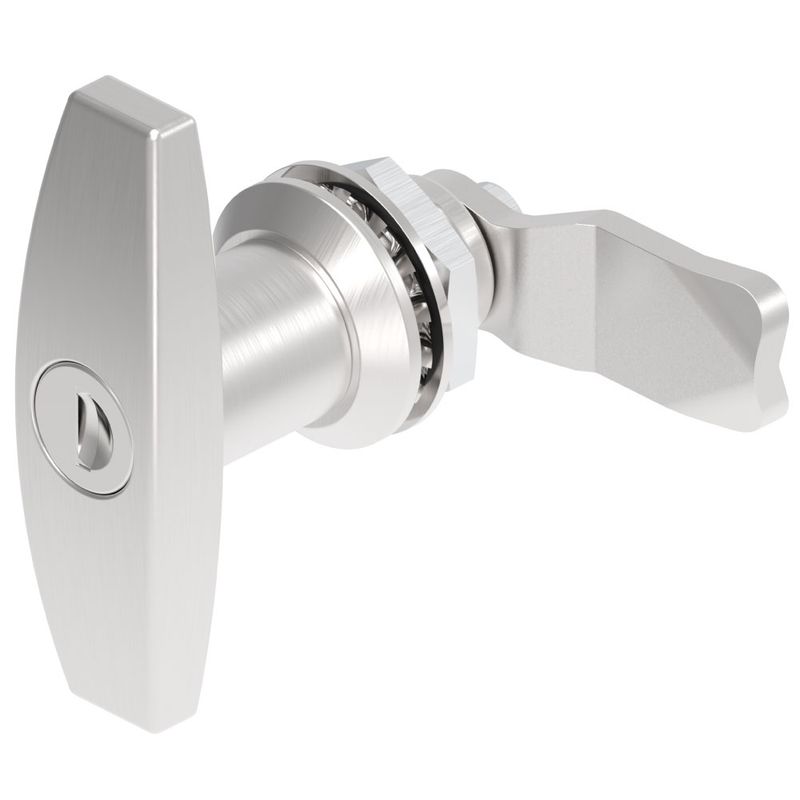
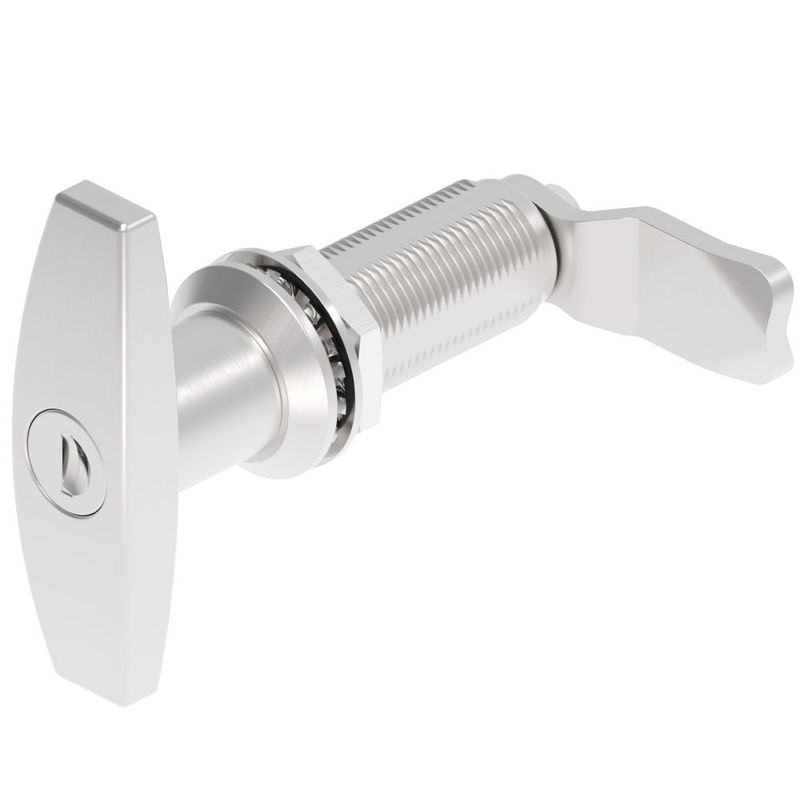
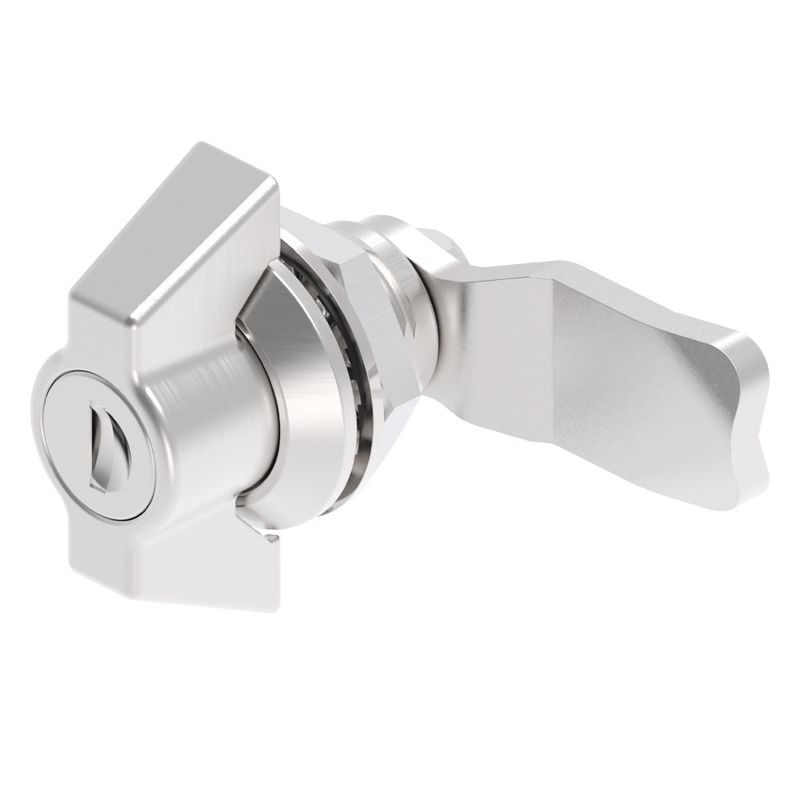
Handles, wing knobs, and T-handles are built for speed and comfort. When operators must open a box several times each shift to reset breakers or adjust valves, hunting for a hand tool wastes time. T-handles provide great physical leverage, allowing workers with thick protective gloves to easily overcome stiff, heavy door gaskets.
Actuator Type | Key Features & Advantages |
FLUSH ACTUATOR
(Tool Operated) | • Sits completely flat
• Prevents clothing snags in tight walkways
• Keeps out unauthorized people |
PROTRUDING HANDLE
(Wing Knob, T-Handle) | • Quick, tool-free access
• Easy to turn with heavy work gloves
• Gives more leverage on thick door seals |
No matter which handle style you pick, hole placement is critical for panel strength. Always keep the center of the latch mounting hole at least 22 mm away from the edge of the door panel. This gap leaves enough solid sheet metal to keep the door edge from bending, and it also gives the cam plenty of room to spin freely without banging into the frame.
Key Application Areas and Industry Use Cases
You will find industrial quarter turn latches across many industries, each with its own tough operating environment.
Trains and transit cars face non-stop shaking from tracks and air blasts from passing cars. These loads shake standard friction latches loose in no time, which is why transit systems use heavy-duty compression locks with anti-vibration locking pins.
Food and drug factories follow strict cleanliness rules. Any tiny crack can collect bacteria, so IP69K is the bare minimum for surviving daily chemical washes. Equipment makers in this space choose crevice-free stainless steel hygienic latches that can take harsh cleaning chemicals day after day without rotting.
ForndLock AISI316 Hygienic Quarter Turn Lock
Outdoor cell towers and power equipment live in punishing weather. Cabinets mounted high on utility poles face blazing sun, wild temperature swings, and blowing rain. Latches on these enclosures must meet NEMA 4 standards. The materials must resist sun rot and galvanic rust to protect delicate circuit boards from wet air and short circuits.
Commercial air conditioning systems deal with intense air pressure changes. Their heavy doors are packed with thick foam to block heat and noise. To seal these thick doors against continuous air pressure, designers install latches with extra-long cams or multi-point rods that lock the door evenly at the top, middle, and bottom.
Preventative Maintenance Schedule for Industrial Latches
Even the best hardware needs basic routine care to stay dependable over the long haul. Waiting for a latch to snap before fixing it leads to ruined door seals, broken equipment, and dangerous work conditions. Regular latch checkups should always be part of your normal plant maintenance routine.
Check heavily used or dusty outdoor latches every 6 months. Take a close look at the cam for metal wear, check the handle for loose play, and inspect the rubber O-rings for drying, cracking, or flattening. A small dab of clean silicone grease on the internal cylinder and cam keeps parts moving freely and stops water rust. Never use petroleum grease because it eats away standard EPDM and Nitrile rubber seals.
Inspection Item | Action / Requirement | Warning / Note |
Cam | Check for metal wear and deep gouges | — |
Handle | Test handle play | Make sure it feels tight |
Rubber O-rings | Inspect for cracks or flat spots | — |
Lubrication | Apply clean silicone grease to moving parts | DO NOT use petroleum grease on rubber seals |
Take extra care with cheap snap-in plastic latches used on light-duty enclosures. These latches use flexible plastic clips to snap into place and hold the door shut. While fast to install, those plastic legs lose their springiness when left under continuous stress. Most users find these clips stretch out permanently if pushed near their maximum structural load of 90 N for long periods, even if spec sheets lack exact wear curves. Once the plastic clips give out, the latch cannot seal the door properly and must be swapped for a new one.
Maintenance Interval | Inspection Focus | Action Required |
Every 6 Months | O-ring integrity and elastomer elasticity. | Replace cracked or flattened seals. Apply silicone-based grease to internal moving parts. |
Every 12 Months | Cam wear and internal stop latch engagement. | Verify the 90° rotation remains crisp. Tighten the internal retaining nut to factory torque specifications. |
Every 24 Months | Polymer fatigue and surface coating degradation. | Replace snap-in plastic latches showing stress whitening. Replace metal latches with compromised surface plating. |
Conclusion: Secure Your Next Project with ForndLock
Industrial enclosures depend heavily on their latching hardware for safety and weather protection. In rough workspaces, safety quarter-turn latches for industrial cabinets are far more than simple accessories; they are vital parts that keep workers safe, protect delicate electronics, and satisfy strict industry codes.
Every job brings its own challenges. You might need to stop heavy vibration, block high-pressure chemical washdowns, or restrict access to trained workers only. Whatever the threat, your latch hardware must be built specifically for the job. At ForndLock, we turn these difficult physical and environmental problems into strong, dependable mechanical locks.
If you are picking hardware for basic electrical boxes or building a custom enclosure that demands serious vibration resistance and tight seals, our team is ready to help. We can review your mechanical loads and suggest the perfect lock design for your setup. Reach out to our technical support desk at [email protected] , and let ForndLock bring trusted, heavy-duty security to your next industrial build.