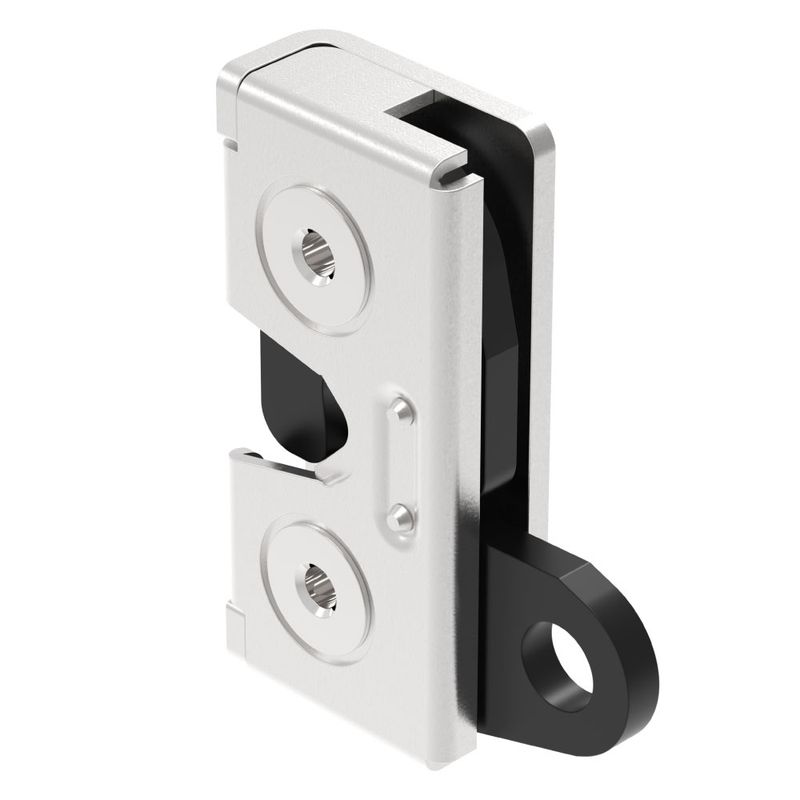
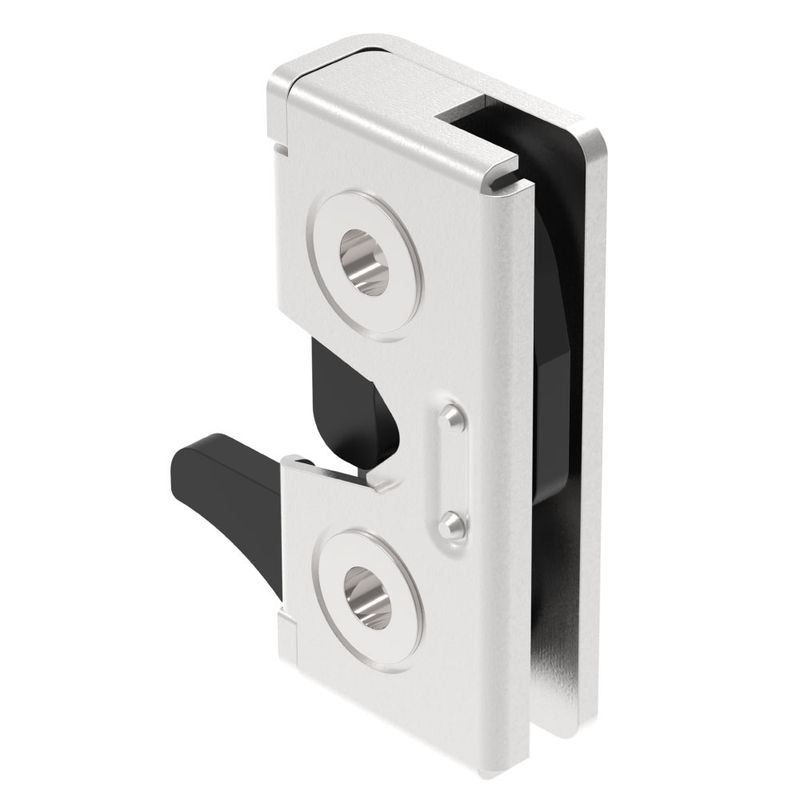
Types and Applications of Rotary Latches: How to Choose the Right Industrial Latch?
In this article, we walk through how rotary latches work, the structural types available, where they are applied across industrial and transportation systems, how they compare to traditional latching hardware, and the specific selection logic for stainless steel electrical enclosures. At ForndLock, we design and manufacture rotary latch systems for industrial equipment, electrical enclosures, and transportation applications, and the guidance below reflects the practical questions our engineering team addresses with customers on a regular basis.
What Is a Rotary Latch and How Does It Work?
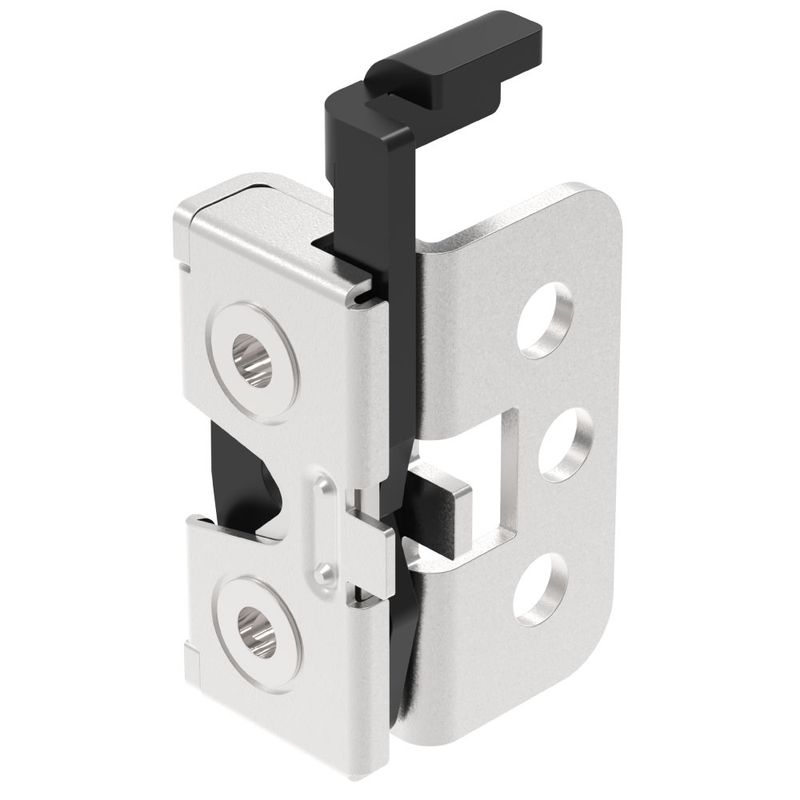
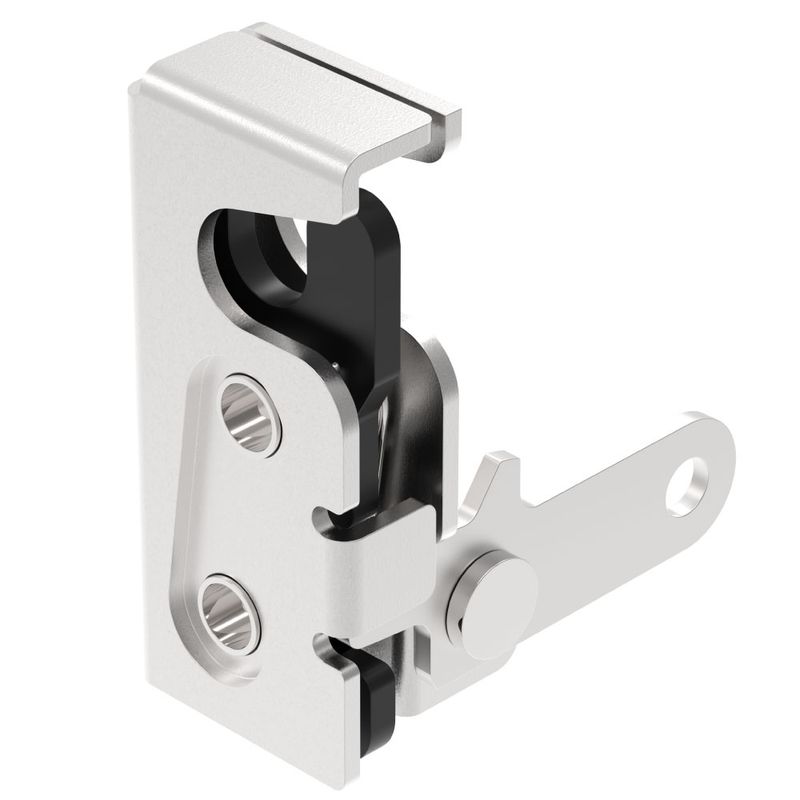
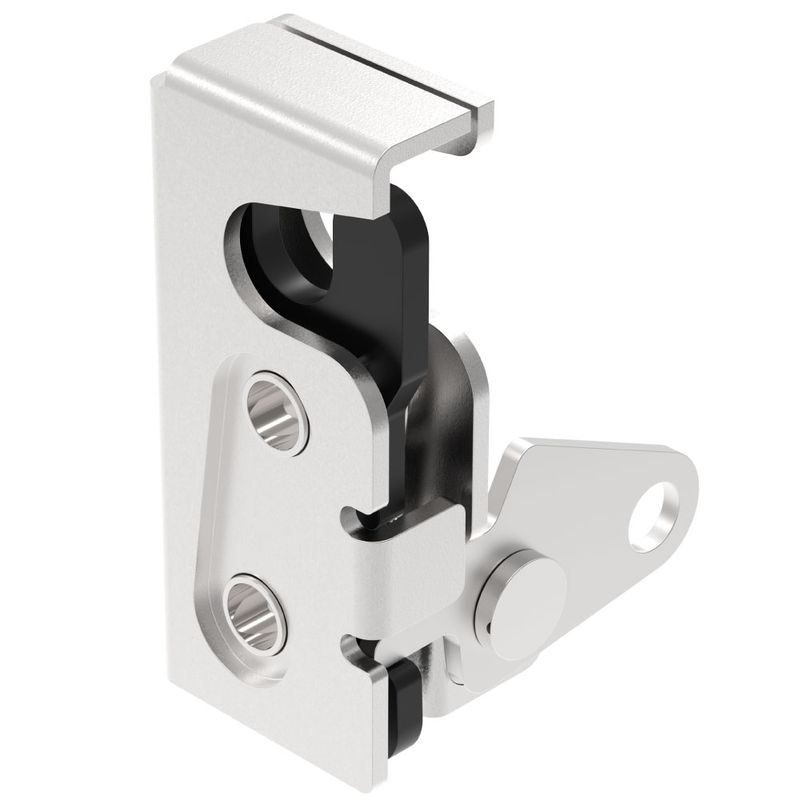
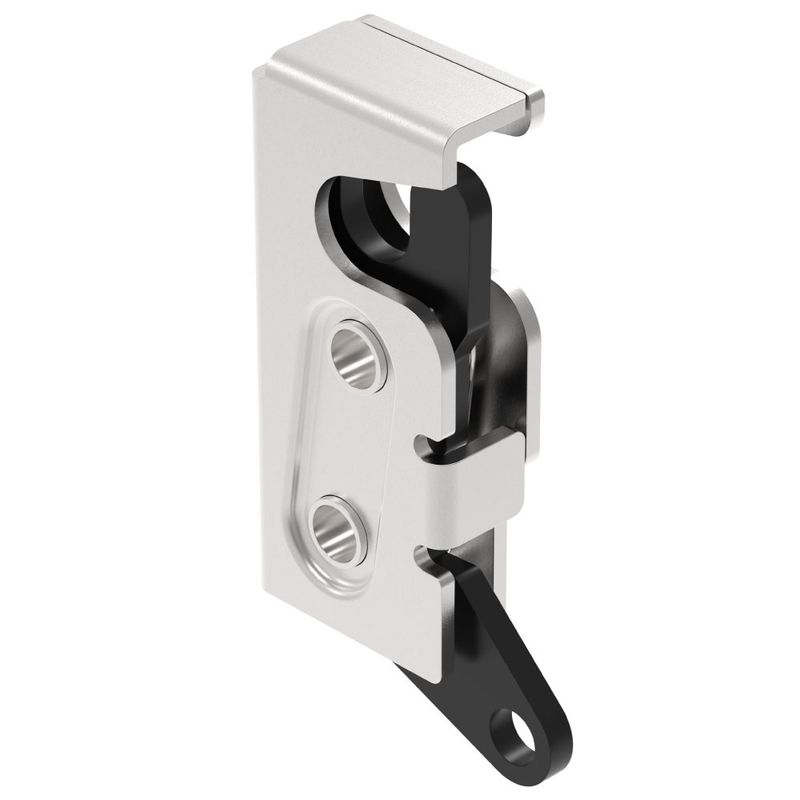
A rotary latch is a mechanical locking component that uses a rotating pawl to capture a striker pin, pulling the door or panel into a fixed, vibration-resistant closed position.
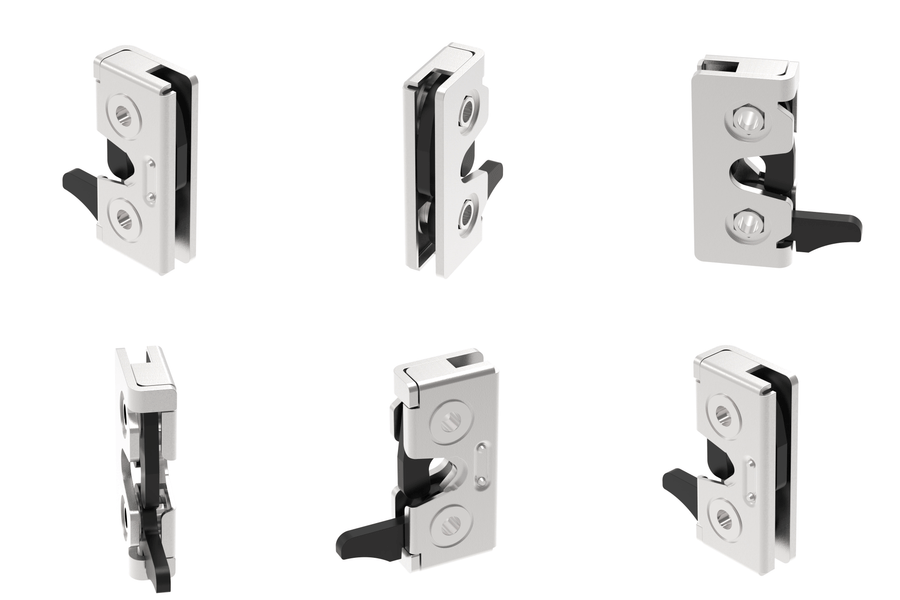
Unlike a slam latch that relies on a spring-loaded bolt, or a cam latch that turns a flat cam against a keeper, a rotary latch uses a pivoting rotor housed within a compact body. As the door closes, this rotor swings around the striker and locks it into place under continuous tension, rather than simply resting against it. That distinction matters in any application where the door experiences movement, shock, or repeated cycling — conditions that are common in industrial rotary latch use cases.
The working sequence generally follows four steps. First, the door closes and the striker pin approaches the latch housing. Second, the striker enters the rotor channel built into the latch body. Third, the rotor rotates around the striker, drawing the door tighter against the frame or gasket. Fourth, the locking mechanism — whether a spring detent, secondary catch, or handle-actuated hook — secures the rotor in place, holding the door under continuous clamping pressure until it is deliberately released.
ForndLock: Stainless Steel Rotary Latch System
The key advantages that follow from this design are straightforward: reliable locking force that does not depend on friction alone, resistance to vibration-induced loosening, a compact design that fits into thin door panels or tight enclosure frames, and simple, low-effort operation for maintenance staff who need frequent access.
What Are the Main Types of Rotary Latches?
The main types of rotary latches — single rotor, double rotor, multi-point, and cable operated — differ primarily in holding strength, sealing performance, and how they are actuated, making each suited to a distinct enclosure or vehicle application.
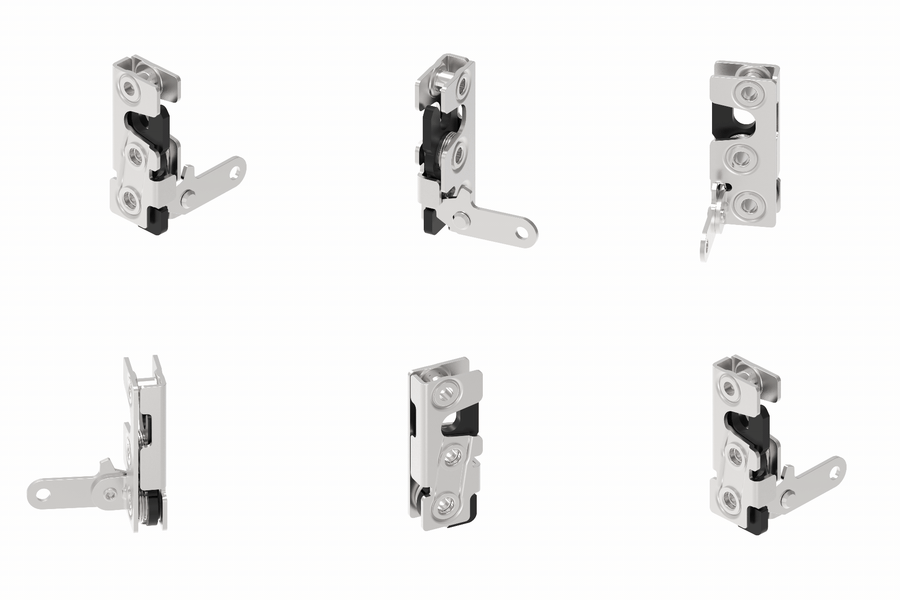
Selecting among these types is the first real decision point in a rotary latch system specification, and it is worth walking through each one on its own terms before comparing load capacity in more detail.
What Defines a Single Rotor Rotary Latch?
A single rotor rotary latch uses one rotating mechanism in a compact housing, offering a simple, easy-to-install locking point for smaller doors and panels.
Its structure is intentionally minimal — one rotor, one striker interface, and a housing sized for tight installation spaces. That simplicity translates into easy installation and low part count, which is why single rotor latches are common on small equipment doors, access panels, and toolboxes. For a small stainless steel distribution box or a compact junction enclosure, a single rotor latch is often sufficient, provided the door is lightweight and not subject to heavy sustained vibration.
What Makes a Double Rotor Rotary Latch Different?
A double rotor rotary latch adds a second rotating mechanism to increase holding strength and improve alignment across larger or heavier doors.
By distributing the locking action across two rotors instead of one, this design improves resistance to racking and twisting forces that a single rotor might not fully absorb. That makes it a heavy duty rotary latch option well suited to vehicle doors, heavy equipment access panels, and industrial machinery covers where the door itself carries more mass and the closing forces are less predictable.
How Does a Multi-Point Rotary Latch System Work?
A multi-point rotary latch system distributes locking force across several points along the door edge, improving sealing performance for large or IP-rated enclosures.
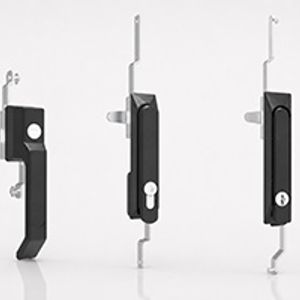
Instead of concentrating clamping force at a single location, a multi-point configuration links several latch points along the door perimeter, often through a connecting rod or synchronized mechanism. This produces more even compression against the door gasket, which is exactly what large equipment doors, industrial cabinets, and railway system panels need when they must maintain a specific IP54 or IP65 sealing rating across the full door surface rather than just near the latch itself.
When Is a Cable Operated Rotary Latch Useful?
A cable operated rotary latch is useful when the release mechanism must be positioned away from the latch itself, such as in vehicles or panels with restricted access.
Here, the latch body stays fixed at the door edge while a cable transmits the release action from a remote handle, lever, or button. This is a common configuration in automotive rotary latch installations, marine hatches, and special vehicle compartments where the latch location is not physically reachable by the operator, or where a clean, uninterrupted exterior surface is preferred over a visible handle.
Is Double Stage Load Capacity Higher Than Single Stage?
A double stage rotary latch generally holds a higher retention load than a single stage latch because the secondary catch position adds resistance before the door can fully release, though single stage latches remain sufficient for lighter, lower-vibration applications.
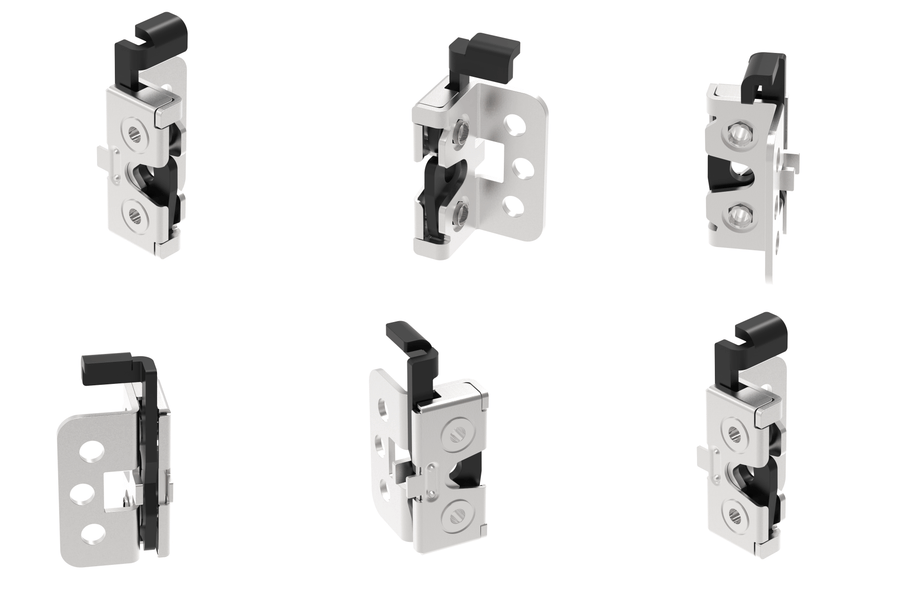
This is one of the more practical comparisons engineers ask us about, and a double stage rotary latch vs single stage load capacity comparison usually comes down to how the pre-lock position functions. A single stage latch engages the striker and secures it directly in the fully closed position. A double stage design first captures the striker in an intermediate, or pre-lock, position before advancing to full engagement — and it is this secondary catch that adds meaningful resistance against sudden vibration-induced release. In our own testing and field feedback, we generally see double stage latches favored once retention loads exceed roughly 800 N or when the enclosure sits in a high-vibration environment such as mobile equipment or transit systems. Lighter stainless steel panels with limited vibration exposure, on the other hand, often perform adequately with a single stage latch at a lower cost and simpler actuation.
Where Are Rotary Latch Applications Most Critical?
Rotary latch applications are most critical wherever doors or panels face continuous vibration, frequent access, or environmental exposure — including industrial machinery, vehicles, electrical enclosures, and railway systems.
Industrial Equipment
Machinery doors, equipment covers, and industrial enclosures see frequent operation throughout a shift, sometimes dozens of times a day. Reliable locking under that cycle count is non-negotiable — a latch that loosens after a few thousand cycles creates ongoing maintenance headaches and safety exposure on the shop floor.
Automotive and Vehicle Applications
Truck doors, RV systems, and vehicle storage compartments demand vibration resistance and a reasonable level of security against unintended opening while the vehicle is in motion. This is where automotive rotary latch designs, often cable operated, earn their reputation for holding tight across rough terrain and long duty cycles.
Electrical Enclosures and Cabinets
Control cabinets, communication cabinets, and outdoor equipment enclosures need both protection and stable closure. This is the application area where our main keyword focus sits most directly — stainless steel electrical enclosures deployed outdoors or in corrosive plant environments must combine a sealed IP rating with a locking mechanism that will not degrade from repeated exposure to moisture or salt-laden air. Many outdoor cabinets are specified against corrosion resistance benchmarks similar to ASTM B117 salt spray testing, and the latch hardware needs to meet the same durability standard as the enclosure body itself.
Railway Applications
Railway equipment panels and transit system access doors require durability and long-term reliability above almost any other consideration, given the extended service intervals and the safety-critical nature of the equipment behind those panels.
How Does a Rotary Latch Compare to a Traditional Latch?
A rotary latch outperforms a traditional latch in vibration resistance and sealing consistency, while a traditional latch may offer a simpler structure for low-demand, low-vibration applications.
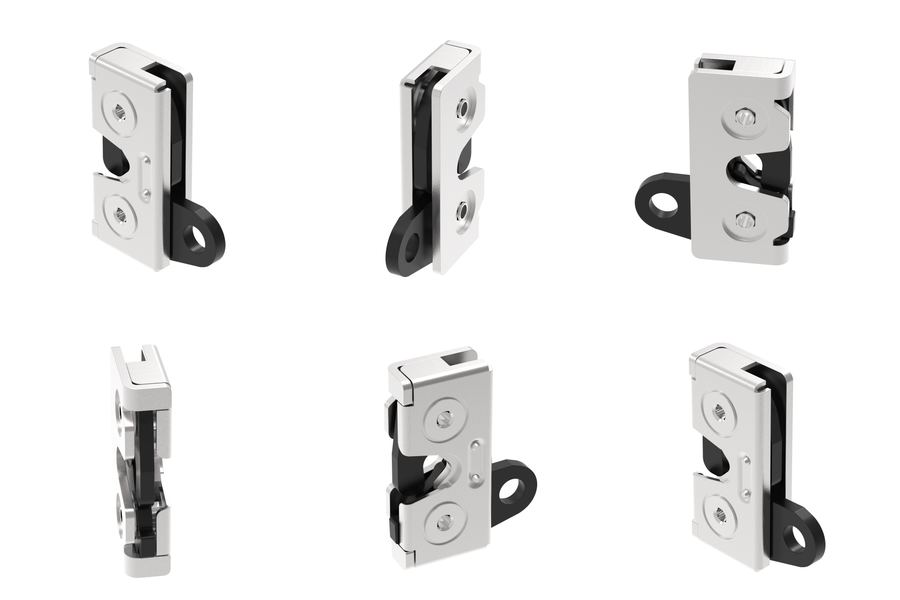
The comparison below reflects the dimensions our engineering team weighs most often when a customer asks whether a rotary latch is worth specifying over a conventional bolt or hook-style latch: locking mechanism, vibration resistance, installation space, operation method, and typical application fit.
Feature | Rotary Latch | Traditional Latch |
Locking mechanism | Rotating pawl captures striker for positive engagement | Sliding bolt or hook-based engagement |
Vibration resistance | High, maintains hold under continuous movement | Moderate, may loosen under sustained vibration |
Installation space | Compact, suited to thin panels | Often requires additional depth or frame reinforcement |
Operation method | Handle, push-button, or cable release | Typically manual lever or key-turn |
Typical applications | Electrical enclosures, vehicles, industrial cabinets | Light-duty panels, low-vibration storage |
This comparison reflects patterns we have observed directly through our own engineering testing rather than a general industry summary, and it is consistent with why rotary latches have become the default choice across most of the industrial latch solutions we design for enclosure and vehicle door applications.
How Do You Choose the Right Rotary Latch for Stainless Steel Electrical Enclosures?
Choosing the right rotary latch for a stainless steel electrical enclosure requires evaluating door weight and opening frequency, environmental exposure and IP requirements, stainless steel grade for corrosion resistance, and single- versus multi-point locking needs.
Door Weight and Size
Start with the physical door itself: its dimensions, the load it places on the latch, and how frequently it will be opened. A large, heavy door on an outdoor switchgear cabinet behaves very differently from a light access panel on a control box. Heavier doors, or doors opened many times per day, generally point toward a double rotor or multi-point rotary latch system rather than a single rotor unit, simply because the additional engagement points reduce wear and improve long-term alignment.
Operating Environment
Next, consider whether the enclosure sits indoors or outdoors, and what it will be exposed to — moisture, dust, temperature swings, or direct weather. This is where the latch's sealing performance needs to align with the enclosure's overall IP rating. An IP54-rated cabinet protecting against dust and limited water spray has different sealing demands than an IP65 unit built for direct hosedown or heavy rain exposure, and a multi-point latch configuration often becomes necessary to maintain even gasket compression across a larger door on the higher-rated enclosure. For outdoor communication cabinets or coastal power distribution boxes, we also look closely at corrosion testing benchmarks — many industrial specifications call for several hundred hours of continuous salt spray exposure without functional degradation, and the latch should be validated to a comparable standard as the enclosure body.
Neutral Salt Spray Test for ForndLock Rotary Locks
Material Selection
Material choice is where the stainless steel electrical enclosure application becomes most specific. Zinc alloy latches offer reasonable cost and adequate performance in dry, low-corrosion indoor settings. Aluminum latches reduce weight and work well where cost sensitivity outweighs harsh exposure risk. But for enclosures exposed to high humidity, washdown cycles, or chemical contact, stainless steel is the material of choice — and the grade matters. 304 stainless steel handles general corrosion resistance for most outdoor and light industrial settings, while 316 stainless steel, with its added molybdenum content, holds up better against chloride exposure in coastal or heavy chemical environments. It is also worth checking the electrochemical compatibility between the latch material and the enclosure body itself; pairing dissimilar metals without proper isolation can trigger galvanic corrosion at the mounting interface over time, which undermines the very corrosion resistance the stainless steel enclosure was chosen for.
Locking Requirements
Finally, define the locking requirement itself. A single-point locking latch may be adequate for smaller doors with no particular safety interlock requirement. Larger doors, or applications where accidental opening could expose live electrical components, often call for multi-point locking, or a double rotor design with a secondary lock position for added assurance against vibration-driven release. It is also worth accounting for physical space constraints early — thin-gauge door panels and compact enclosure frames often require a low-profile latch body, which can narrow the field of suitable industrial latch solutions before other criteria are even applied.
Can ForndLock Customize Rotary Latch Solutions for Your Enclosure?
Yes — at ForndLock, we customize rotary latch dimensions, materials, and surface finishing to match the specific door thickness, corrosion exposure, and locking requirements of each enclosure project.
At ForndLock, we provide customized rotary latch solutions for industrial equipment, electrical enclosures, transportation systems, and specialized applications where standard catalog hardware does not fully address the installation constraints or environmental demands of the project. Our customization work typically covers custom dimensions to fit non-standard door thicknesses or mounting cutouts, material selection including different stainless steel grades for varying corrosion exposure levels, surface finishing options suited to indoor or outdoor service, and engineering optimization of the rotor and striker geometry to match specific load and cycle-life targets.
In practice, this often starts with a review of the customer's enclosure drawings and the environmental parameters of the installation site — for example, an outdoor communication cabinet project where the door panel thickness, expected salt spray exposure, and required IP rating all needed to be resolved before finalizing a multi-point latch layout. Working through that kind of detail with our engineering team early in the design process helps avoid rework later, and it reflects how we support customers as a rotary latch manufacturer serving equipment builders and enclosure integrators across industrial, electrical, and transportation sectors.
What Do Engineers Commonly Ask About Rotary Latches?
What Are the Different Types of Rotary Latches?
The different types of rotary latches include single rotor, double rotor, multi-point, and cable operated designs, each suited to a distinct combination of load, sealing, and actuation requirements.
Where Are Rotary Latches Commonly Used?
Rotary latches are commonly used in industrial machinery, vehicle doors, electrical and communication enclosures, and railway equipment panels, wherever vibration resistance and consistent sealing are required.
Are Rotary Latches Suitable for Vibration Environments?
Yes, rotary latches are well suited to vibration environments because the rotor mechanism maintains continuous clamping pressure on the striker rather than relying on friction alone to keep the door closed.
How Do I Select a Rotary Latch for Industrial Equipment?
Selecting a rotary latch for industrial equipment involves evaluating door weight, operating environment, material corrosion resistance, and whether single-point or multi-point locking is needed for the application.
Can ForndLock Customize Rotary Latch Solutions?
Yes, at ForndLock we customize dimensions, materials, and surface finishing for rotary latches to match the specific requirements of each customer's enclosure or equipment project.
Where Do You Go From Here?
Selecting a rotary latch is rarely just a hardware decision — it is a direct extension of how well an enclosure will hold its protection rating and mechanical integrity over years of service. As outdoor installations and stainless steel electrical enclosures continue to expand across industrial and infrastructure projects, the engineering demand for corrosion-resistant, high-sealing latch hardware will only continue to grow.
ForndLock Unveiled: Inside Our State-of-the-Art Factory
At ForndLock, we provide customized rotary latch solutions for industrial equipment, electrical enclosures, and transportation systems. If you need product selection support, custom designs, or manufacturing solutions for your enclosure project, please contact our team:
Email: [email protected]