How to Choose Rotary Latch Load Capacity for Vehicle Doors
The right rotary latch load capacity depends on matching the latch's rated holding force against the combined static weight, dynamic road-induced loads, and safety margin your specific door design demands.
At ForndLock, we hear this question in nearly every project intake call, usually after the fact — a fleet operator noticing rattling doors, or an OEM engineer troubleshooting a batch of returns. Load capacity selection tends to get overlooked at the design stage because it looks simple on paper: pick a latch, bolt it on, done. But the difference between a latch that lasts the vehicle's service life and one that fails within a year almost always traces back to how carefully the load capacity was calculated in the first place. This article walks through the actual calculation logic, explains how single stage vs double stage rotary latch differences explained side by side affects your decision, and looks at real mismatch scenarios so you can avoid repeating them.
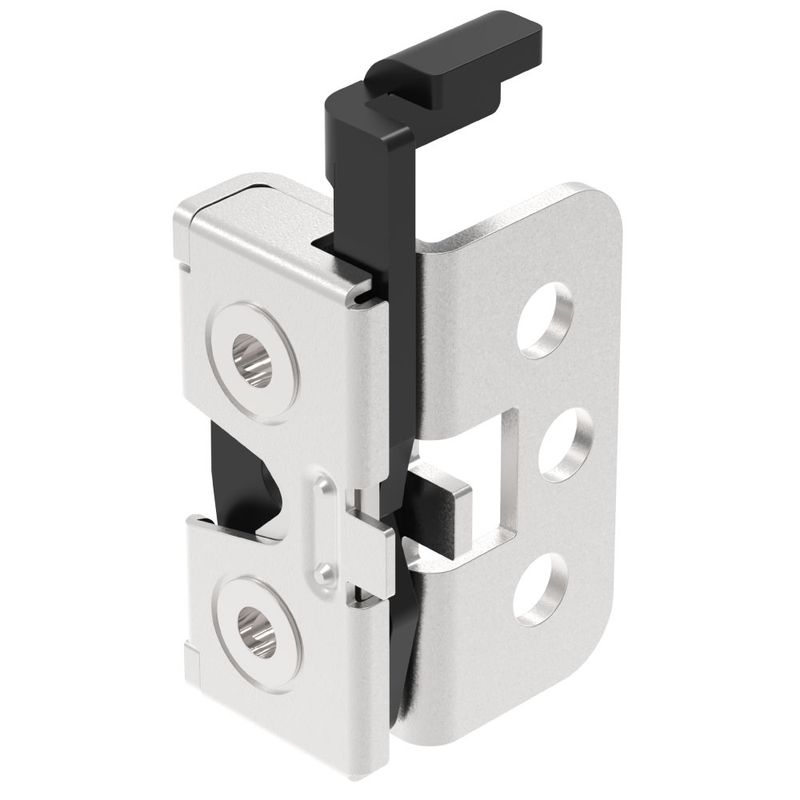
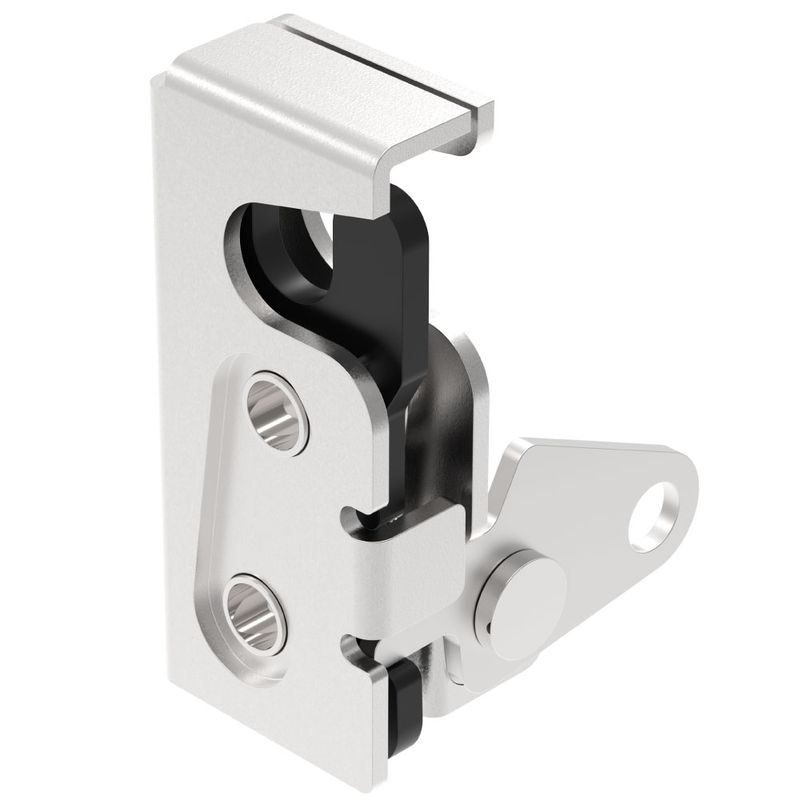
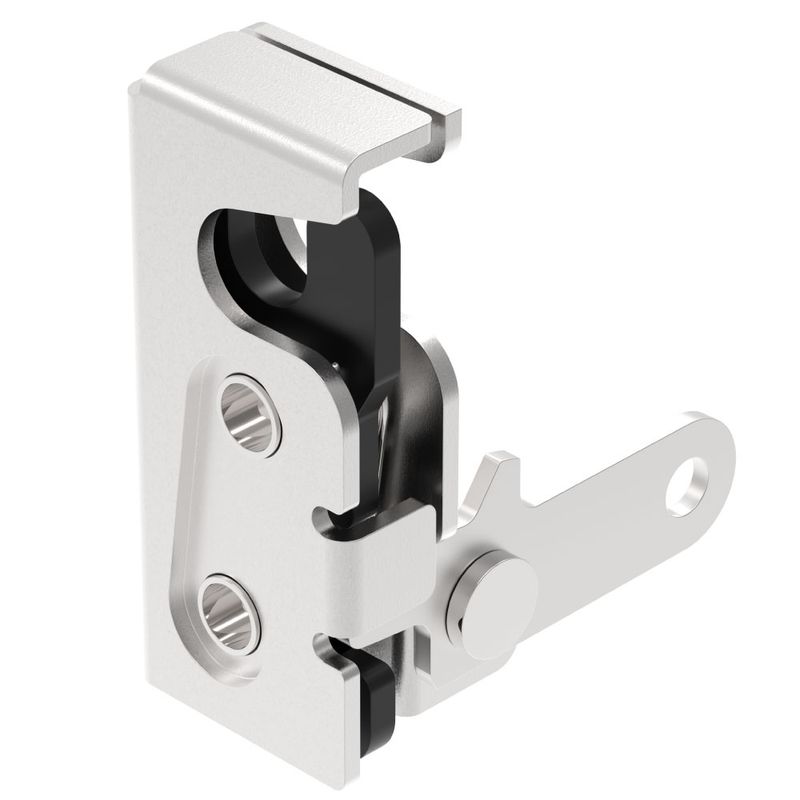
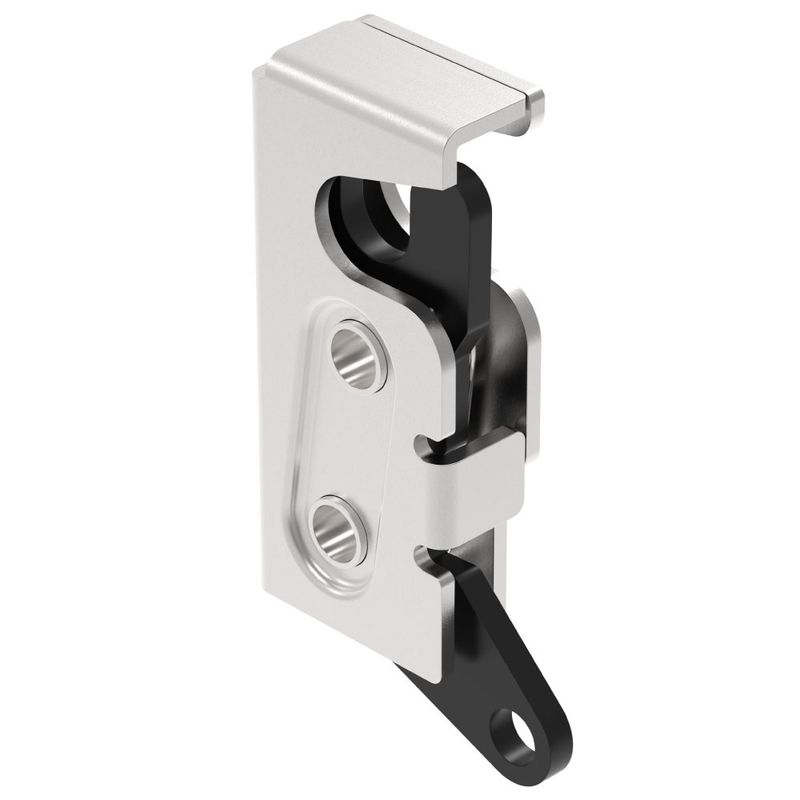
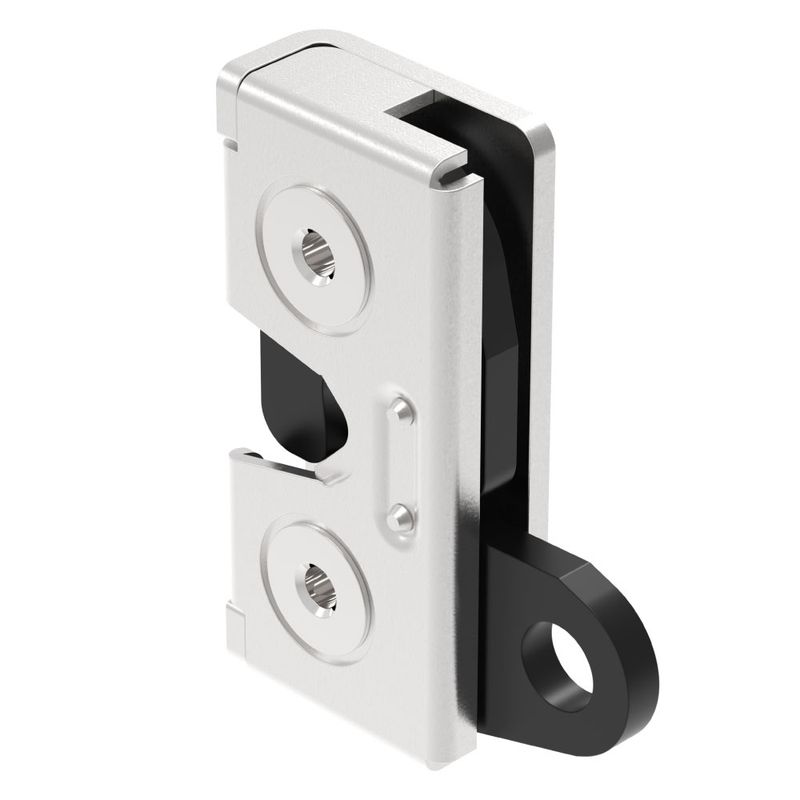
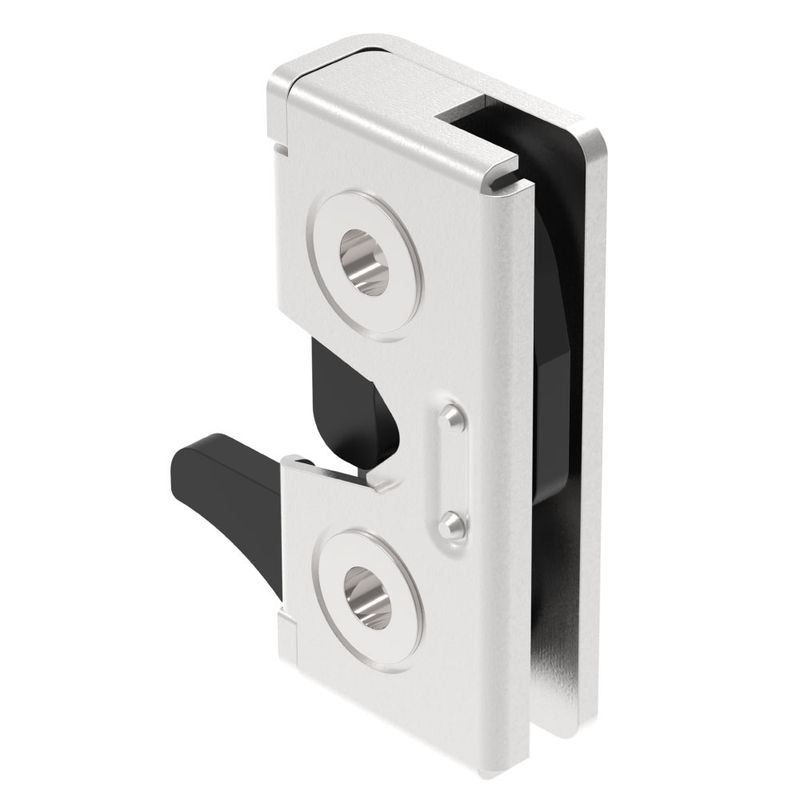
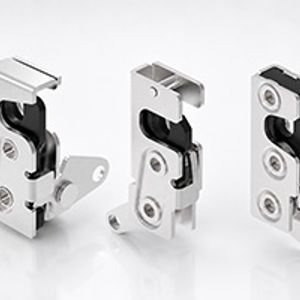
ForndLock:Stainless Steel Rotary Latch
Why Does Load Capacity Matter More Than Latch Size Alone?
Load capacity matters more than physical size because a latch's holding strength is determined by internal rotor geometry and material rating, not by how large or heavy the housing looks.
This is one of the most common misconceptions we run into with new customers: the assumption that a bulkier latch automatically means a stronger one. In practice, two latches with nearly identical housing dimensions can carry very different load ratings depending on rotor wall thickness, pivot pin diameter, and the alloy used in the rotor itself. A compact zinc-alloy latch engineered for a specific rotor profile can sometimes outperform a larger but poorly reinforced housing.
Buyers evaluating rotary latches need to think in terms of two distinct load types. Static holding load is the constant weight the latch supports when the door is closed and at rest — think of a side panel or rear door simply sitting shut. Dynamic load, on the other hand, covers the force spikes generated by vibration, door slamming, sudden braking, or rough terrain. For reference, lightweight access panels on service vehicles often sit in the 50 to 150 kg static holding range, while heavier truck or trailer doors can demand static ratings well above 300 kg, with dynamic peaks running two to four times higher during hard braking or off-road jolts.
Ignoring the dynamic component is, in our experience, the single most common root cause of premature latch fatigue in vehicle applications. Engineers size for the door's dead weight, the latch holds fine on the test bench, and then within a few thousand road cycles the rotor starts showing wear that nobody anticipated.
What's the Difference Between Static and Dynamic Load?
Static load is the constant weight the latch supports when the door is closed and stationary, while dynamic load is the sudden force spikes caused by vibration, road impact, or slamming.
A simple way to picture this: holding a bag of groceries steady in your hand is static load. Catching that same bag when someone tosses it to you unexpectedly is dynamic load — the peak force at the moment of impact is far higher than the bag's actual weight, even though the bag itself hasn't changed. This is exactly why dynamic load requires a safety multiplier over the raw static weight of the door. A latch rated only for the door's resting weight will feel adequate in the shop and fail on the highway.

How Do You Calculate the Load Capacity You Actually Need?
Calculating required load capacity starts with weighing the door itself, then applying a safety factor of roughly 3 to 5 times that weight to account for vibration, misuse, and cyclical stress over the door's service life.
This is the step most buyer's guides skip entirely, yet it's the part that actually determines whether your latch selection holds up in the field. We recommend working through it in four stages.
Step one is determining the actual door or panel weight, and this needs to include everything mounted to it — insulation layers, wiring harnesses, reinforcement brackets, or any accessory hardware. Engineers frequently weigh only the bare panel and miss the added mass from these components, which can shift the real number by 15 to 20 percent.
Step two is identifying the usage environment. A highway delivery van, an off-road utility vehicle, a marine application, and a static roadside enclosure all experience fundamentally different vibration and shock profiles, and each one changes the multiplier you should apply. Off-road and marine applications generally push toward the higher end of any safety factor range because sustained vibration and shock loading are the norm rather than the exception.
Step three is applying the industry-standard safety factor and understanding why running a latch near its rated maximum is rarely advisable. Manufacturers publish maximum load ratings under controlled, ideal conditions — a real vehicle door rarely operates under ideal conditions, so headroom matters.
Here's a simplified reference table we often walk customers through during early specification calls:
Door/Panel Weight | Suggested Load Multiplier | Recommended Latch Type |
Under 20 kg | 3x static weight | Single-stage, light-duty |
20–60 kg | 3.5–4x static weight | Single-stage, reinforced rotor |
60–150 kg | 4x static weight | Double-stage |
Over 150 kg | 4–5x static weight | Double-stage, heavy-duty alloy |
Step four is cross-checking against usage frequency. A door that opens and closes a handful of times a day has very different fatigue requirements than a high-cycle access panel opened dozens of times per shift. High-cycle applications need latches rated with fatigue life in mind, not just peak load tolerance — a latch can technically handle the peak force once and still wear out quickly if it's cycling constantly near its rated limit.
What Safety Margin Should You Build In?
A safety margin of at least three times the static door weight is a reasonable baseline for most vehicle applications, rising higher for off-road or high-vibration use.
Under-margining is, in our experience, the number one cause of warranty claims we see reported back from the field. A latch spec'd right at the edge of calculated need leaves no room for manufacturing tolerances, material variance, or unexpected duty cycles. That said, over-margining isn't free either — it adds unnecessary cost and often forces a larger footprint than the mounting location can comfortably accommodate. The right approach is a balance, not a blanket rule of "bigger is always safer."
Is a Single-Stage or Double-Stage Rotary Latch Right for Your Door?
A single-stage rotary latch uses one rotor engagement point and suits lighter, rigid doors, while a double-stage (two-stage) latch pre-locks before full engagement, offering better load distribution and vibration resistance for heavier or more flexible doors.
Mechanically, the distinction comes down to engagement sequence. A single-stage latch has one rotor that grabs the striker pin directly and locks in a single motion. A double-stage latch operates in two positions — a partial pre-lock engagement first, followed by rotation into the fully secured position. This two-step sequence is exactly what single stage vs double stage rotary latch differences explained come down to in practical terms: it's not just about strength, it's about how controlled the closure process is.
We've worked with fleet engineering teams evaluating door panels with noticeable flex or wider manufacturing tolerances on striker placement, and in those cases we consistently point them toward double-stage designs. The reasoning is straightforward: when a door panel isn't perfectly rigid, the striker doesn't always land in exactly the same spot relative to the latch mouth every time it closes. A double-stage rotor geometry gives more room for that striker to travel into the pre-lock position even with some misalignment, rather than forcing a single, precise engagement point.
This matters directly for load capacity because misalignment stress reduces a latch's effective holding strength. A single-stage latch fighting against a slightly off-angle striker on every closure accumulates wear faster than its rated cycle life would suggest, simply because it's absorbing lateral stress the rating didn't account for.
It's worth being clear that double-stage isn't automatically "stronger" in a raw load sense — some single-stage latches with reinforced rotors carry comparable static ratings. What double-stage really offers is controlled closure and stability under load fluctuation, which becomes particularly relevant for vehicle doors exposed to torsion from uneven road surfaces or chassis flex.
When Does a Single-Stage Latch Make Sense?
A single-stage latch makes sense when the door is rigid, lightweight, and operates in a low-vibration setting where a straightforward, cost-effective latching action is sufficient.
Good examples include access panels on service vehicles, light commercial compartment doors, and equipment enclosures mounted in relatively stable positions. If the panel doesn't flex and the striker consistently lands in the same position, there's often no functional need to pay for the added complexity of a two-stage mechanism.
When Should You Upgrade to Double-Stage?
You should upgrade to a double-stage latch when the door is heavier, prone to flexing, or subject to continuous road vibration that could shake a single-stage latch loose over time.
Heavy truck doors, off-road vehicle panels, and enclosures under sustained mechanical stress are the typical candidates. In these settings the extra engagement stage isn't a luxury — it's what keeps the latch holding reliably across thousands of closure cycles under load variation.
What Happens When Load Capacity Is Mismatched to the Door?
A mismatched load capacity typically shows up first as loosening or rattling under vibration, followed by rotor wear, striker deformation, and eventually latch failure that can allow the door to open unexpectedly.
The failure progression tends to follow a fairly predictable timeline. Early on, you get subtle vibration symptoms — a faint rattle at highway speed that's easy to dismiss as road noise. Left unaddressed, this progresses to visible rotor wear and striker deformation, where the metal itself starts showing fatigue marks from repeated stress beyond its intended range. If it continues past that point, the outcome is a latch that fails outright, sometimes allowing the door to pop open mid-transit.
We've heard this pattern described repeatedly across off-road vehicle applications specifically: a latch underestimated for dynamic load during the design phase performs fine for the first several thousand open-close cycles, then begins failing in clusters once accumulated vibration fatigue catches up with the undersized rotor. It's rarely a single dramatic event — it's cumulative stress finally reaching a breaking point.
The cost implications go well beyond the price of the latch itself. Warranty claims, unplanned field service visits, and in more serious cases safety liability all stack on top of the original component cost. Correct upfront calculation, the kind we outlined earlier in the load calculation section, is consistently far cheaper than replacing failed latches across a deployed fleet.
What Warning Signs Should You Watch For?
Watch for a door that no longer sits flush, unusual rattling at speed, or a latch that requires more force than before to release — all early signs the latch is undersized for its load.
Maintenance teams should treat these as a practical checklist during routine inspection:
· Door panel sitting slightly proud of the frame instead of flush
· Rattling or vibration noise noticeably worse at highway speed than before
· Increased resistance or effort needed to release the latch
· Visible play or looseness when the closed door is pushed by hand
Catching any of these early gives you a chance to address the issue before it becomes a full latch replacement under less controlled circumstances.
How Do Environmental and Mounting Factors Affect Load Selection?
Environmental and mounting factors affect load selection because corrosion, temperature extremes, and mounting rigidity can all reduce a latch's effective holding strength below its rated capacity over time.
A latch's published load rating assumes the hardware is in good condition. Corrosion changes that equation quickly, which is why material selection matters as much as the initial load calculation. Stainless steel and zinc-plated alloys are chosen specifically because they preserve rated performance over the service life of the vehicle, rather than degrading after a few seasons of road salt or coastal humidity exposure.
Mounting configuration plays a role too. Surface-mount installations distribute stress differently than flush-mount setups, and a latch that's technically rated for a given load can still underperform if the mounting surface itself isn't rigid enough to support that rating without flexing.
Actuation method matters as well. Cable-actuated systems, common on remote-release panels and RV-style storage compartments, introduce additional mechanical slack over longer cable runs compared to direct handle-actuated setups. That slack can interact with load performance in subtle ways, particularly on doors already dealing with vibration exposure. It's one of the reasons our engineering team factors mounting geometry and actuation style into custom recommendations rather than relying purely on catalog load numbers — a rating on a spec sheet only tells part of the story once real-world mounting conditions come into play.
Neutral Salt Spray Test for ForndLock Rotary Locks
Choosing the right rotary latch load capacity isn't a guess, and it shouldn't be treated as an afterthought once doors start rattling in the field. It's a calculated decision built from actual door weight, realistic dynamic load exposure, appropriate safety margin, and the right structural choice between single and double-stage engagement. Our engineering background spans telecom, energy, equipment, and transportation sectors, which means our team has very likely already worked through a door-loading challenge similar to yours.
If you're specifying a latch for a new vehicle door design, we'd encourage sending over your door drawings, weight specifications, or project requirements directly for a load capacity review. Sample requests are also available if you'd like to physically test fit and holding performance before committing to a volume order, and custom development is on the table for non-standard load ranges or mounting configurations that don't fit a catalog part cleanly. Reach our team directly at [email protected] with your project files or specifications.
As vehicle designs continue shifting toward lighter materials and higher-vibration duty cycles — electric platforms, off-road builds, and modular fleet bodies among them — getting load-capacity matching right at the design stage is only going to matter more, not less.