How to Choose High-Security RV Door Locks and a Reliable Manufacturer
An RV door lock only performs as a security system when the latch, deadbolt, cylinder, striker, door structure and installation all work together, not when any single feature is judged on its own. RV entry doors face access control demands, road vibration, mechanical closing cycles, weather exposure, emergency release requirements and repeated daily use, often for years without a service interval. In the RV door projects we evaluate, we see engineers and purchasing teams focus on one visible feature, usually a keypad or a deadbolt, and assume that feature defines the security level of the whole door.
At ForndLock, we look at high-security RV door locks differently. We treat the lock body, latch, deadbolt, cylinder, key system, striker, fasteners, reinforcement, door structure, electronic access and mechanical backup as one connected system. A lock that tests well on a bench can still underperform once it is installed on a flexible door skin with a thin, poorly fastened striker. This guide walks through how to evaluate high-security RV door locks for motorhomes, travel trailers, fifth wheels, campers and cargo trailers, and then how to evaluate a manufacturer capable of developing that system with you.
What Makes an RV Door Lock High Security?
A high-security RV door lock depends on the combined performance of the lock body, latch, deadbolt, striker and mounting reinforcement rather than any single component. Reviewing a lock as a standalone part gives an incomplete picture; the door and frame around it decide how much of that lock's design potential is actually realized once installed.

How Strong Is the Mechanical Locking System?
Mechanical locking strength comes from how the lock body, latch, deadbolt and striker resist force together, supported by the mounting reinforcement behind them. The lock body houses the moving parts and needs enough wall thickness and fastening points to resist prying without deforming. The latch handles daily closing, while the deadbolt adds a second, more rigid locking point. Neither component performs to its design intent if the striker it engages is undersized or the door structure behind the mounting screws is thin sheet material with no backing plate.
How Does the Cylinder Control Key Access?
Cylinder and key control determine who can operate a lock, through key variation, keyed-alike or keyed-different configurations, master keying and cylinder retention.

Key variation refers to how many distinct key patterns a cylinder platform supports; this matters for fleet and multi-door projects where duplicate keys across many vehicles create an access management problem. Cylinder retention refers to how firmly the cylinder is held inside the lock body, since a cylinder that can be pulled or rotated out of position undermines the rest of the lock regardless of how the latch and deadbolt are built.
What Tamper-Resistance Features Actually Matter?
Tamper resistance depends on details such as exposed fastener protection, reinforcement plates, cylinder guards and striker shielding, with real-world performance varying by structure, material and installation. We do not treat any of these features as an absolute guarantee against forced entry. Exposed fasteners on the exterior face of a lock plate, for example, give an easy starting point for tampering if they are accessible from outside the door; recessed or interior-accessed fasteners reduce that exposure. A cylinder guard limits direct access to the cylinder face but its value depends on how it is mounted and how the surrounding housing is built. Reinforcement behind the lock and striker spreads load across a wider area of the door, which reduces the chance of localized deformation under force, but the actual outcome always depends on the specific door, material thickness and installation quality.
How Should Emergency Access Be Designed?
A main entry door needs a reliable inside release and mechanical backup so occupants can exit even if electronic access fails. For a primary RV entry door, this is not optional. An inside thumb-turn or lever release should operate independently of any external keypad, remote or app-based control. If a keypad module loses power, or a remote transmitter fails, occupants still need a mechanical way to release the door from inside. We recommend confirming this behavior specifically for any door being fitted with keyless or connected access, rather than assuming it is built into every keypad-equipped lock body.
What Are the Main Types of High-Security RV Door Locks?
RV door locks fall into several structural categories, each suited to different doors and access requirements, from mechanical paddle handles to keyless and connected systems. Selecting between them starts with the door application, not with which type looks the most advanced.
How Do Mechanical Paddle-Handle Locks Work?
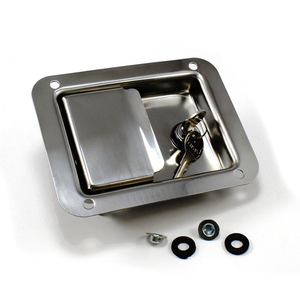
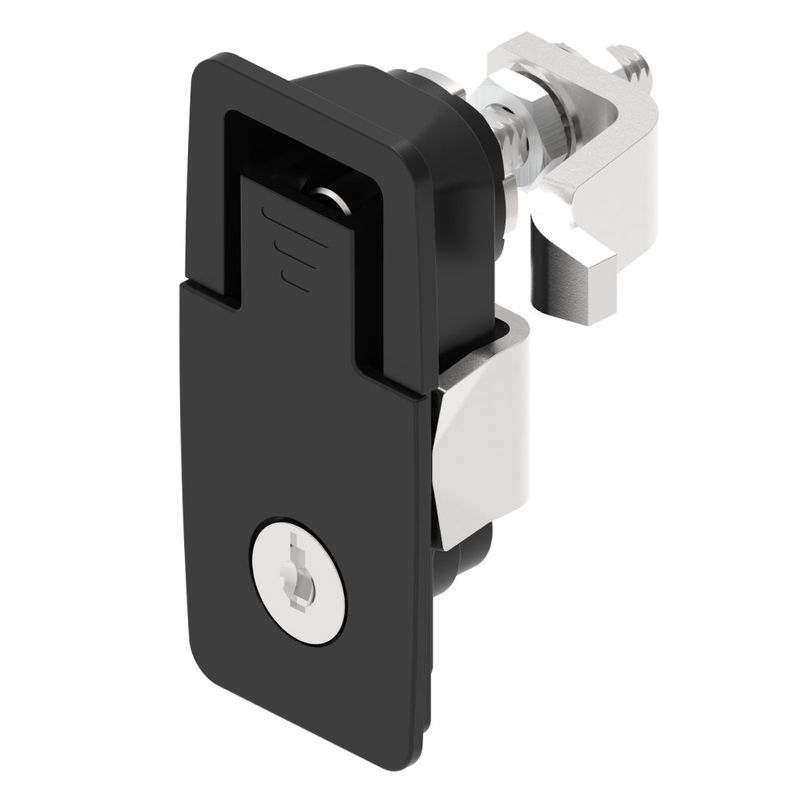
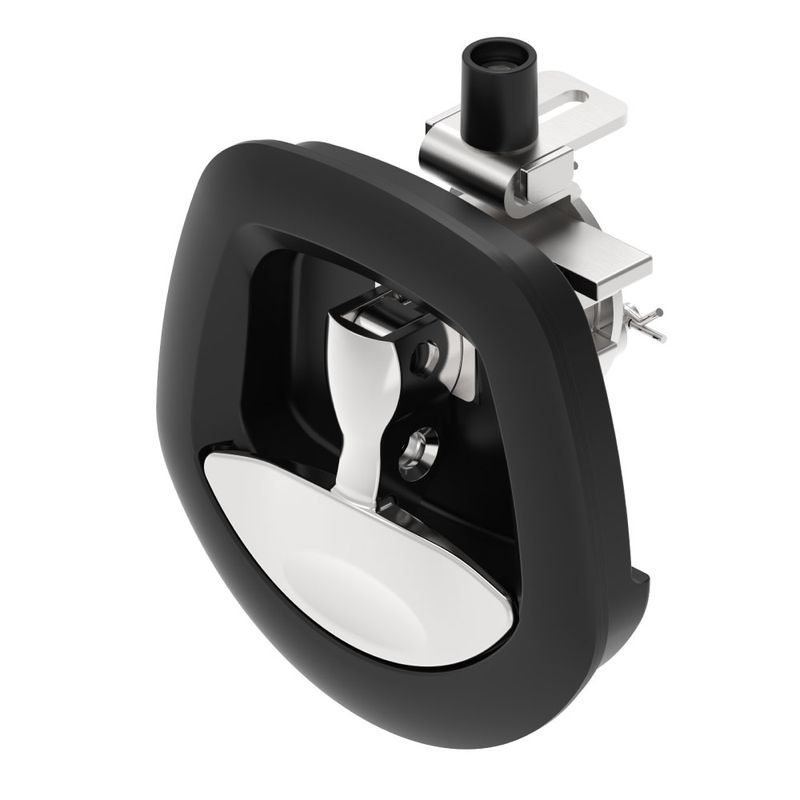
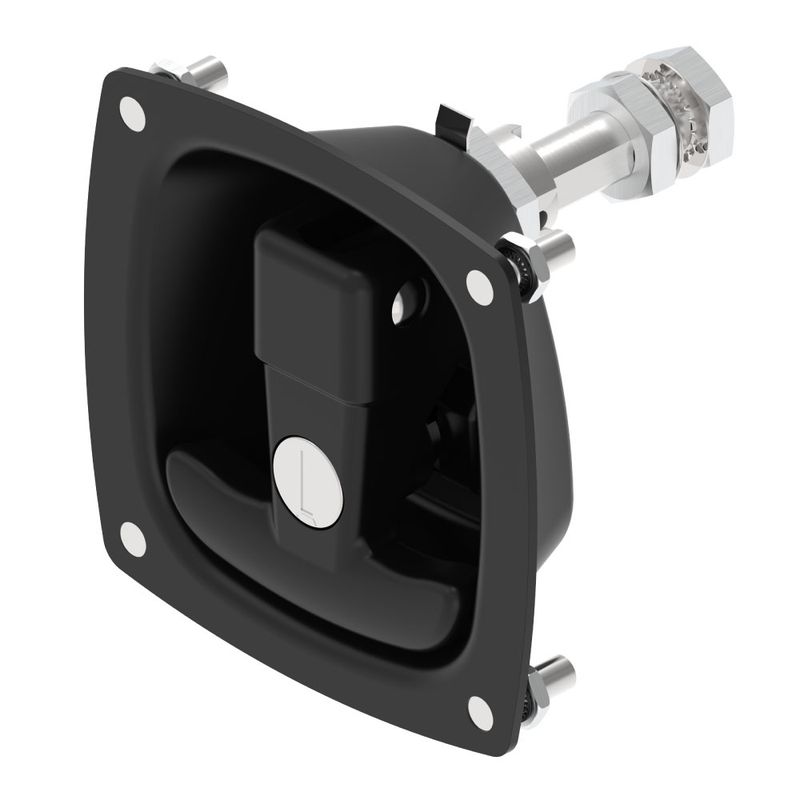
A paddle-handle lock operates the latch through a lever-actuated paddle, usually combined with a key cylinder for locking. It suits main entry doors on travel trailers, fifth wheels and campers where a straightforward, key-operated mechanism is preferred. The main advantage is mechanical simplicity with no dependence on battery power; the main limitation is that access management relies entirely on physical key control. Maintenance is limited to periodic lubrication and fastener checks.
How Do Mechanical Deadbolt Locks Work?

A mechanical deadbolt throws a solid bolt into a striker pocket, independent of the latch. It is suited to any door where an additional, rigid locking point is wanted beyond the daily-use latch. Its security value comes from resisting lateral movement of the door once engaged, provided the striker and door structure support it. The main limitation is that a deadbolt alone, without a compatible striker and door reinforcement, does not add as much resistance as its design suggests.
What Is a Dual-Lock RV Door Configuration?

A dual-lock configuration combines a paddle-handle latch mechanism with a separate deadbolt, often operated by the same key. This suits main entry doors where daily convenience and a secondary locking point are both required. The advantage is that occupants can choose to engage only the latch for short stops or add the deadbolt for extended parking. The limitation is that both components still depend on a matched striker and adequate door reinforcement to perform as intended.
How Do Keyless Keypad RV Door Locks Work?

A keypad lock replaces or supplements key access with a numeric code entered on an exterior pad, usually operating the deadbolt or latch through a motor or solenoid linkage. This suits owners and fleet operators who want to manage access without distributing physical keys. The advantage is code-based access management; the limitation is dependence on battery power and a code that can be observed or shared. Maintenance includes battery replacement and periodic keypad function checks.
How Do Remote-Controlled RV Locks Work?

A remote-controlled lock adds a wireless fob to trigger the same motor or solenoid linkage used by a keypad system, often on the same lock body. It suits users who want quick access without entering a code each time. The advantage is convenience at the door; the limitation is the same battery dependence and the added complexity of a wireless receiver that must be protected from moisture and vibration.
What Are Smart or Connected RV Door Locks?
A smart or connected lock adds Bluetooth or app-based control on top of a mechanical or motorized lock body. This suits owners who want to manage access remotely or share temporary access.

We do not treat connected features as evidence of stronger mechanical security; the app, Bluetooth module or remote link controls convenience and access management, while the mechanical resistance of the door still depends on the lock body, latch, deadbolt, striker and door structure underneath it.
What Locks Are Used for Baggage and Compartment Doors?
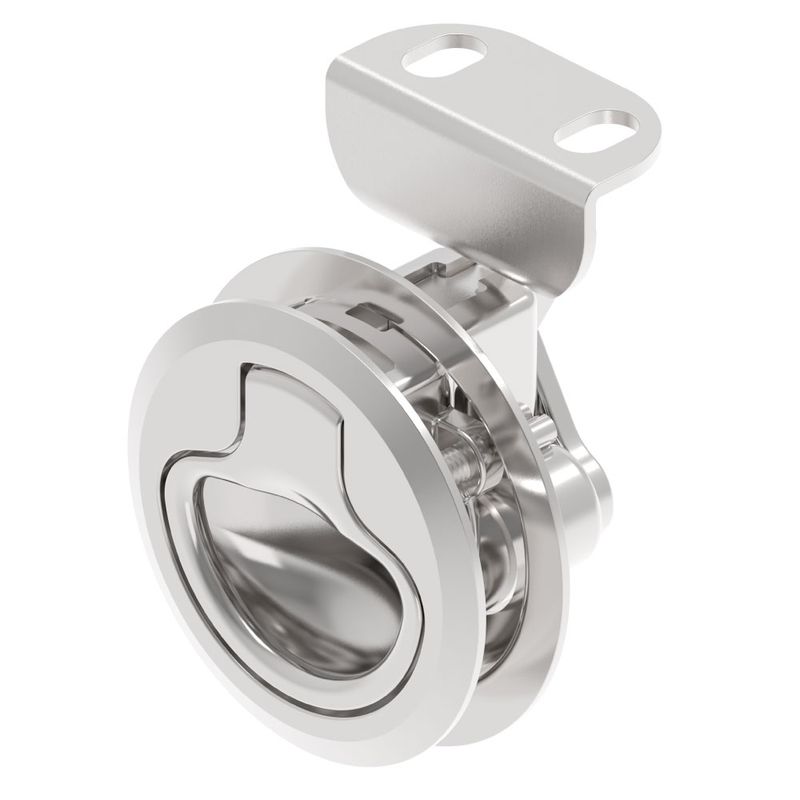
Baggage and compartment locks are typically smaller cam-style or paddle-style mechanisms designed for storage doors, battery compartments and service hatches rather than main entry. Security value here is usually secondary to weather sealing and vibration resistance, since these doors do not carry the same occupant-safety requirements as a main entry door.
Lock Type | Access Method | Suitable Door | Security Consideration | Main Limitation |
Mechanical paddle-handle | Key | Main entry | Depends on latch, striker, reinforcement | Key control only |
Mechanical deadbolt | Key | Main entry, service doors | Rigid engagement if striker matches | Limited without dual-lock pairing |
Dual-lock configuration | Key | Main entry | Latch plus deadbolt engagement | Still striker-dependent |
Keypad keyless | Code | Main entry, rental units | Code-based access management | Battery dependent |
Remote-controlled | Fob | Main entry | Quick access, no code entry | Battery and receiver dependent |
Smart/connected | App, Bluetooth | Main entry | Access management, not mechanical strength | Connectivity and power dependent |
Baggage/compartment | Key or cam | Storage, hatches | Weather sealing priority | Lower structural demand |
In the door projects we support, the right type often depends on door structure and use case rather than the access method alone. Sharing your door drawing lets us confirm which configuration actually fits the application before recommending a lock type.
What Is the Difference Between a Latch and a Deadbolt?
A latch handles everyday closing and handle-operated retention, while a deadbolt provides rigid engagement that adds resistance beyond normal closing. Confusing the two, or assuming one replaces the other, is one of the more common misunderstandings we see in door lock specifications.
What Does the Latch Actually Do?
The latch is the component that engages automatically when the door closes and releases when the handle is operated from inside or outside. It handles daily use and keeps the door retained during normal opening and closing cycles, but it is designed for convenience-driven engagement, not for resisting deliberate force.
What Does the Deadbolt Add?
The deadbolt throws a solid bolt that does not retract under handle pressure. It adds resistance because it engages independently of the latch mechanism, giving the door a second locking point that behaves differently under load. This is why many high-security configurations pair a latch with a deadbolt rather than relying on either alone.
Why Does the Striker Matter as Much as the Deadbolt?
A deadbolt cannot perform to its design intent if the striker is too thin, the screws are weak, the frame flexes or engagement is shallow. We regularly review lock specifications where the deadbolt itself is well built, but the striker pocket is stamped from thin material with two short screws into a hollow door frame. Under load, the striker deforms or pulls free before the deadbolt itself is tested. From our engineering experience, the striker, its fasteners and the frame behind it should be evaluated with the same attention given to the lock body.
Should You Choose a Mechanical or a Keyless RV Door Lock?
Mechanical and keyless RV door locks each involve different trade-offs in power dependence, convenience, backup access and maintenance, and neither is automatically more secure than the other. The right choice depends on how the vehicle is used, who needs access, and how the door will be maintained over its service life.
Factor | Mechanical | Keyless |
Power | No power required | Requires battery or vehicle power |
Convenience | Key must be carried | Code, fob or app-based entry |
Mechanical backup | Built into the design | Requires a separate backup key |
Maintenance | Lubrication, fastener checks | Battery replacement, module checks |
Access management | Physical key control | Code or credential management |
Weather requirements | Fewer sealed electronic components | Requires sealed keypad and wiring |
Failure modes | Wear, corrosion, fastener loosening | Battery failure, module or linkage failure |
We recommend against treating either category as a default answer. A rental fleet managing frequent access changes may value code-based management enough to accept battery maintenance; a service vehicle stored for long periods may be better served by a purely mechanical configuration with no battery to maintain.
ForndLock Compression Lever Latches for Trucks, Caravans & Trailers
How Do You Choose the Right High-Security RV Door Lock for Your Door?
Choosing the right lock starts with the door application, thickness and cutout, then moves through handing, striker alignment, door strength, environment and backup planning. This is the process we walk through with engineering teams before recommending any specific lock configuration.
What Type of Door Are You Securing?
A main entry door, baggage door, service hatch, battery compartment access panel and cargo trailer door all carry different requirements. A main entry door needs occupant-safe emergency release; a battery compartment prioritizes weather sealing and vibration resistance over key management complexity.
How Do You Measure Door Thickness Correctly?
Door thickness needs to account for the skin, core material, interior trim and any reinforcement layer, not just the visible panel. A lock specified for a standard core thickness will not seat correctly on a door with added insulation or a thicker trim panel, and this mismatch often only becomes visible during installation.
How Do You Confirm the Door Cutout?
Confirming the cutout means recording width, height, corner radius, fastener pattern, lock centre and window clearance, because a similar appearance does not guarantee a direct replacement fit. We often see fit problems when a door looks like a standard opening but the corner radius or fastener spacing is slightly different from the reference lock. A cutout drawing with these dimensions removes the guesswork before any hardware is ordered.
How Do You Confirm Left- or Right-Hand Orientation?
Handing depends on the hinge side, the direction the door opens, the direction the latch must engage, and which side is viewed from outside. Handing errors are common when orientation is judged from a photo rather than confirmed on the physical door, since some lock platforms define left-hand and right-hand differently.
How Do You Match the Latch and Deadbolt to the Striker?
Backset, projection, engagement depth, alignment and door compression all need to be checked together. A deadbolt with generous projection still fails to engage properly if the striker pocket is positioned even a few millimeters off the bolt's travel path, or if door compression when closed pushes the striker out of alignment.
How Strong Does the Door and Frame Need to Be?
A strong lock cannot compensate for a structurally weak door or a poorly reinforced striker installation. We evaluate the door skin, frame material, core, reinforcement plate and striker mounting as part of every lock recommendation. In the projects we review, we see a well-built lock installed on a door with a hollow, unreinforced frame around the striker location more often than we see the reverse problem.
How Do You Select the Right Security Features?
Access risk, application, vehicle usage, stored equipment value and whether the vehicle is used in a fleet or rental operation all affect which features are worth specifying. A privately owned travel trailer stored at a residence has different requirements than a rental fleet unit accessed by rotating renters.
How Do You Decide Between Mechanical and Electronic Access?
User convenience, maintenance capacity, backup planning, power availability and how keys or codes will be managed all factor into this decision. Electronic access adds convenience but also adds a maintenance obligation that mechanical systems do not carry.
How Well Does the Lock Need to Resist Weather?
Rain, dust, road salt, UV exposure, condensation, temperature swings and cleaning agents all act on an RV door lock differently than on a stationary building door. Seals, gaskets and corrosion-resistant finishes need to match the expected operating environment, particularly for vehicles operated in coastal or winter road-salt conditions.
Neutral Salt Spray Test for ForndLock Rotary Locks
How Much Vibration and Impact Will the Lock Face?
Fasteners, internal linkages, battery contacts, wiring, the striker and the door skin itself all experience repeated vibration during road travel. Loose fasteners and striker movement are among the most common issues we see traced back to sustained road vibration rather than a design flaw in the lock body itself.
How Should Mechanical Backup Be Planned for Electronic Locks?
Any electronic lock needs a defined backup key, a documented emergency release method, and a clear response plan for battery failure. We recommend confirming this at the specification stage rather than treating it as an afterthought once the electronic system is already selected.
Before recommending a configuration, we review the door thickness, cutout, handing and striker position on the actual drawing rather than working from assumptions. Sending us this information early avoids rework later in the project.
What Materials Are Used in RV Door Locks?
RV door lock components are typically built from zinc alloy, stainless steel, carbon steel reinforcement and engineering plastics, each selected for a specific structural or sealing role rather than for security rating alone. Material names on a specification sheet do not by themselves indicate a security level; the geometry, thickness and installation of each part matter as much as the material choice.
Where Is Zinc Alloy Used?
Zinc alloy is commonly used for handle bodies and internal lock components because it can be cast into complex shapes with good dimensional consistency. It performs well in general outdoor use but benefits from a plated or coated surface finish for long-term corrosion resistance.
Where Is Stainless Steel Used?
Stainless steel is often selected for exterior-facing parts, fasteners and striker plates where corrosion resistance and mechanical strength both matter. Its main limitation is cost and machining complexity compared with zinc alloy or carbon steel alternatives.
What Role Does Carbon Steel Reinforcement Play?
Carbon steel is frequently used for internal reinforcement plates and deadbolt components where strength is the priority. Without a protective coating, carbon steel is more prone to corrosion than stainless steel, making surface treatment an important part of the specification.
Where Are Engineering Plastics Used?
Engineering plastics appear in keypad housings, internal cams and non-load-bearing covers where weight reduction and electrical insulation matter more than raw mechanical strength. UV-stabilized formulations resist embrittlement from long-term sun exposure better than standard plastics.
What Do Gaskets and Sealing Components Do?
Gaskets and seals around the lock body and keypad prevent water and dust intrusion into the mechanism and any electronic components. Their material and compression design need to match the expected exposure to rain, dust and temperature cycling rather than being treated as a minor detail.
How Do You Choose an RV Door Lock Key System?
The right key system depends on how many doors and vehicles need access, ranging from keyed-alike and keyed-different cylinders to master keying and electronic code management. This decision affects daily operations more than most buyers initially expect.
What Is a Keyed-Alike System?
A keyed-alike system uses one key pattern across multiple locks on the same vehicle, such as the main entry door and a storage compartment. This suits a single vehicle owner who wants fewer keys to manage.
What Is a Keyed-Different System?
A keyed-different system assigns a unique key pattern to each lock, suited to multi-vehicle projects or fleet applications where access needs to be separated between units.
How Does a Master Key System Work?
A master key system allows one key to operate multiple locks while each lock also accepts its own individual key. This suits service teams and fleet operators who need broad access alongside individually assigned keys.
What Is a Replacement Cylinder Strategy?
A replacement cylinder strategy plans for cylinders to be swapped without replacing the entire lock body, useful for rental fleets managing turnover or lost-key situations without full hardware replacement.
How Do Electronic Codes Support Access Management?
Electronic codes allow access to be granted or revoked without physical key exchange, which suits rental fleets and multi-vehicle projects where access changes frequently. This still requires a mechanical backup key plan, since code-based systems depend on battery power.
What Are the Most Common RV Door Lock Selection Mistakes?
The most common selection mistakes involve treating a single feature such as a keypad or material name as proof of security while overlooking the striker, door structure and backup access. These mistakes are rarely obvious until after installation, when fit or function problems surface.
Mistake | Potential Consequence | Correct Approach |
Treating a keypad as proof of high security | Weak mechanical resistance despite convenient access | Evaluate the full lock, latch, deadbolt and striker system |
Reviewing only the lock body, not the striker | Deadbolt fails to perform under load | Specify and reinforce a matching striker |
Ignoring door thickness | Lock does not seat or fasten correctly | Measure skin, core, trim and reinforcement together |
Ignoring cutout dimensions | Hardware does not fit the opening | Record full cutout dimensions before ordering |
Selecting incorrect handing | Latch and handle operate on the wrong side | Confirm hinge side and opening direction on the door itself |
Insufficient deadbolt engagement | Reduced resistance despite a rated deadbolt | Verify projection and engagement depth against the striker |
No reinforcement behind the frame or striker | Striker deforms or pulls free under force | Add a reinforcement plate matched to the lock loads |
No mechanical backup on electronic locks | Occupants locked out during power failure | Plan a backup key and emergency release from the start |
Overlooking battery depletion | Lock becomes inoperable without warning | Include battery status checks in maintenance planning |
Ignoring road vibration | Fasteners and striker loosen over time | Specify vibration-resistant fastening and periodic checks |
Judging security from material name alone | Assumed strength without verified geometry or installation | Evaluate structural design, not material labels |
Exposed exterior fasteners | Easier tampering access | Use recessed or interior-accessed fastening where possible |
No planned key system | Uncontrolled key duplication across units | Define keyed-alike, keyed-different or master key strategy early |
No full-door prototype validation | Undetected fit or function issues in production | Validate the installed door system before volume production |
How Do You Install and Validate an RV Door Lock System?
Installation and validation need to confirm fit before cutting, reinforce weak structures, align the latch and striker, seal openings, and test every access method on the fully installed door. Skipping any of these steps shifts risk into the field rather than catching it during development.
Why Verify Fit Before Cutting or Drilling?
Test-fitting the lock against the actual cutout and door thickness before permanent modification avoids costly rework if dimensions do not match the reference drawing.
How Do You Reinforce a Weak Door Structure?
Adding a backing plate or reinforcement bracket behind the lock and striker locations distributes load across a wider area of the door skin and frame.
How Do You Align the Latch, Deadbolt and Striker?
Checking backset, projection and engagement depth with the door closed under normal compression confirms the components meet as designed rather than binding or under-engaging.
How Do You Seal Exterior Openings?
Gaskets and sealing components around the lock body and any keypad housing need to be fitted without gaps that would let water track into the door core.
How Do You Protect Wiring and Electronics?
Wiring for keypads, motors or remote receivers needs routing that avoids pinch points and vibration-prone areas, with connectors protected from moisture exposure.
How Do You Test All Access Methods?
Every access method should be tested on the installed door, including the exterior handle, interior handle, mechanical key, deadbolt, keypad, remote and emergency release. Testing the lock body alone before installation does not confirm how it behaves once mounted.
How Do You Validate the Complete Door System?
Validating the complete system means testing the installed door under flex, vibration, repeated cycles, weather exposure, emergency release and striker retention, not the lock body in isolation. We recommend this validation on a representative sample door before committing to volume production, since door flex and striker retention behave differently once the lock is mounted in its actual frame than they do on a test fixture.
How Do You Choose a Reliable RV Door Lock Manufacturer?
A reliable manufacturer reviews your door drawings, develops the latch, deadbolt and striker as one system, customizes the key system, and supports prototype validation before volume production. This is the second core evaluation engineers and purchasing teams need to work through, and it deserves the same rigor as the lock selection process itself.
Can the Manufacturer Review Your Door Drawings?
At ForndLock, our engineering team reviews door thickness, cutout dimensions, handing, lock position, striker location, reinforcement and available installation space before proposing a configuration. A manufacturer that skips this step is effectively guessing at fit.
Can They Match or Customize the Door Cutout?
We evaluate existing cutout compatibility, mounting hole patterns, handle geometry and trim dimensions for both new development and replacement applications, so the hardware matches the opening rather than requiring the door to be modified around the lock.
Can They Develop the Latch, Deadbolt and Striker as a System?
Developing the latch, deadbolt and striker as one system means understanding engagement, projection, striker position, door compression and frame strength together, not producing a lock body in isolation. We manufacture strikers alongside the latch and deadbolt they engage, rather than treating the striker as an afterthought supplied separately.
Can They Customize Lock Cylinders and Key Systems?
Our engineering team develops keyed-alike, keyed-different and master key configurations, along with replacement cylinder options and key management planning for multi-door and multi-vehicle projects.
Do They Understand Material and Surface Treatment Selection?
We select between zinc alloy, stainless steel and carbon steel, and specify plating or coating based on the corrosion protection the operating environment requires, rather than defaulting to one material across every application.
Can They Support Mechanical and Electronic Integration?
Where a project uses a keypad, motor, solenoid, remote or controller, we evaluate the mechanical linkage, backup key provision, wiring space, failure mode behavior and overall door fit as part of the same review, since electronic components still need to work within the mechanical envelope of the door.
Do They Provide Prototype and Sample Validation?
We support prototype development, fit checks, sample installation, function verification and design revision before a project moves into production. This step catches fit or engagement issues while changes are still inexpensive to make.
How Do They Control Production Consistency?
Dimensional consistency, cylinder and key matching, assembly accuracy, surface finish and functional inspection all need to be controlled batch to batch. We manage these checks as part of our production process, without claiming specific quality metrics we have not measured for your particular project.
Can They Support Volume Production?
We plan production, support batch supply, provide replacement parts and coordinate packaging and delivery support for ongoing programs. Specific volumes and lead times depend on the project scope and are confirmed directly with each engineering team.
What Information Should You Provide to an RV Door Lock Manufacturer?
Providing a clear door drawing with thickness, cutout dimensions, handing, latch and deadbolt requirements, key system and quantity gives a manufacturer what it needs to propose an accurate configuration. This information matters more than a general product description.
Information | Why It Matters |
RV or trailer type | Determines use case |
Door drawing | Defines installation structure |
Door thickness | Determines lock configuration |
Cutout dimensions | Confirms compatibility |
Handing | Determines latch orientation |
Latch requirements | Defines normal closing |
Deadbolt requirements | Defines additional locking |
Key system | Defines cylinder configuration |
Electronic access | Defines integration |
Environment | Guides material selection |
Quantity | Supports manufacturing planning |
A clear drawing with these parameters gives our engineering team a far more accurate starting point than a single product photo, since a photo does not show thickness, cutout tolerances or striker position.
What Custom RV Door Lock Support Does ForndLock Provide?
We take part in an RV door lock project from drawing review and cutout matching through latch, deadbolt and cylinder development to prototype evaluation and volume production support. Our involvement typically begins with reviewing your door drawing and confirming fit before any tooling or hardware decisions are made.
From there, we work through handing confirmation, latch and deadbolt design, and striker development matched to the specific door structure. We customize lock cylinders and key systems based on whether the project needs keyed-alike, keyed-different or master key configurations, and we select materials and surface treatments based on the expected operating environment rather than a default specification.
For projects that include electronic access, we evaluate the mechanical backup, wiring space and integration requirements alongside the keypad, motor or remote hardware. Every custom development moves through prototype evaluation and sample fit verification before we support volume production, so fit and function issues are caught while adjustments are still straightforward to make.
How Should You Summarize This RV Door Lock Selection Process?
A reliable high-security RV door lock depends on the latch, deadbolt, cylinder and striker matching the door fit, door strength, environment and backup access as one connected system. Judging security from a single feature, whether that is a keypad, a material name or a deadbolt rating, leaves the rest of the system unverified.
Choosing a reliable manufacturer follows a similar logic. A capable partner reviews your engineering drawings, develops custom cutouts, latches, deadbolts and strikers as a matched system, customizes cylinders and key management, supports prototype and sample validation, and maintains production consistency once a project moves into volume manufacturing.
If you are developing an RV, motorhome, travel trailer, fifth wheel, camper or cargo trailer door system and need a locking solution built around your specific door structure, send your door drawings, cutout dimensions, door thickness, handing, latch and deadbolt requirements, key system, electronic access requirements, material or finish preferences and expected quantity to [email protected]. At ForndLock, we can review the complete door-locking system, including the latch, deadbolt, cylinder, striker, key system and installation fit, and support prototype evaluation and sample verification before your project moves into production.