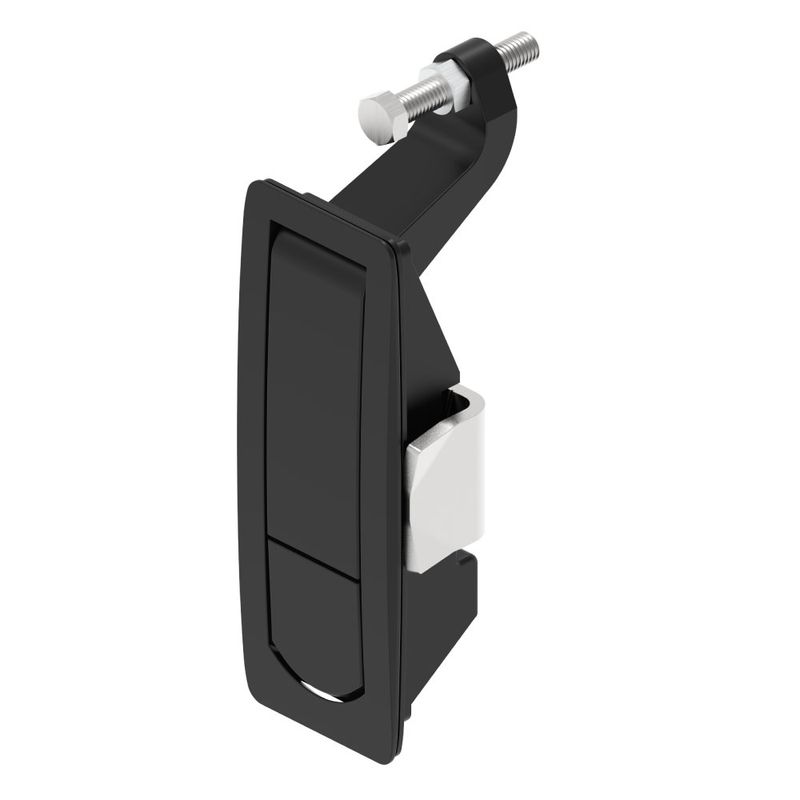
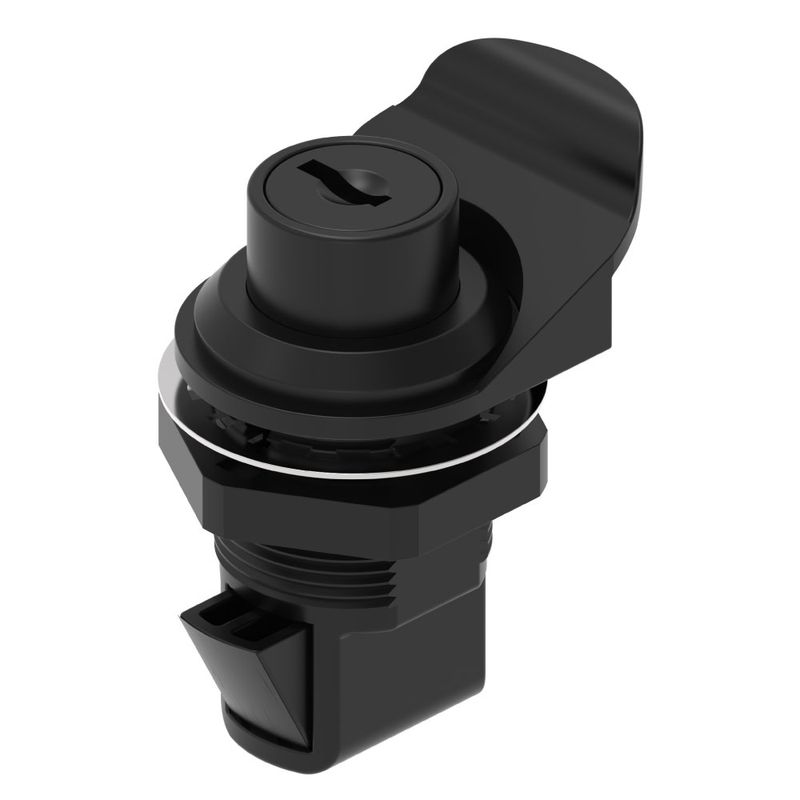
Push-to-Close Latch Selection Guide: How to Choose the Right Type for Your Application
Push-to-close latches allow a door or panel to engage automatically when pushed shut, but several different mechanisms can provide this behavior. The correct choice depends less on the product name and more on door construction, retention requirement, grip, striker geometry, mounting space, access method, vibration and environment. Two latches that look similar on a datasheet can behave very differently once installed on an actual door, because the door's stiffness, hinge position and settling behavior all interact with the mechanism. This guide walks through the main push-to-close types, the geometry variables that determine whether any of them will actually work, and the situations where a different latch mechanism is the more reasonable choice. The goal is to help you narrow the decision before a drawing goes to a manufacturer, not to explain what push-to-close means.
What Are the Types of Push-to-Close Latches?
Push-to-close latches are available in several mechanically distinct forms — spring-loaded slide, rotary, push-button slam-shut, quarter-turn slam-shut, spring or striker catches, and magnetic catches — and each engages the striker differently, which is why the same door problem can have more than one workable solution.
Spring-Loaded Slide Latches
A spring-loaded bolt or pawl retracts as the door closes and returns into engagement once the striker has passed it. This is one of the simplest push-to-close mechanisms available, and it is a reasonable starting point when a simple mechanism is required, installation space is compact, and retention needs are moderate rather than high. It shows up frequently on equipment panels, machinery covers, utility doors and compact service access points where the priority is quick closing rather than high holding force.

The trade-off is sensitivity. Because engagement depends on a straight-line bolt travel meeting a fixed striker, the mechanism is alignment sensitive, and door movement during closing can affect how completely the bolt seats. Compression capability is also limited compared to mechanisms built specifically for gasket loading. Before specifying this type, the variables that actually decide whether it will work are bolt travel, spring force, striker position and engagement depth — not the catalog description of the latch body.
Rotary Push-to-Close Latches
In a rotary latch, the striker enters the latch body, a rotor or claw rotates around it, and a pawl holds the rotor in the closed position. This geometry is why rotary designs are common on machinery doors, vehicle compartments, transportation equipment and installations where the latch itself needs to stay concealed.
The reason engineers reach for rotary designs in these situations is fairly specific: the rotor wraps around the striker rather than simply blocking it, which gives a more positive striker capture than a sliding bolt; the mechanism can be built to support a remote release through a cable or linkage; and the closed profile allows the latch to sit behind a panel rather than in view. Our engineering team reviews striker path drawings before confirming rotary latch integration, because how rotary latch systems engage the striker in industrial doors depends heavily on the approach angle and travel available on that specific door — not just the latch's own dimensions.
That capability comes with added responsibility on the design side. The striker path becomes a critical dimension rather than a rough approximation, release stroke has to be controlled so the rotor fully disengages without over-travel, and there are simply more components and geometric relationships to manage compared with a slide bolt. A rotary latch chosen without confirming striker approach angle can bind or fail to fully rotate closed, even though the mechanism itself is correctly rated for the application.
Push-Button Slam-Shut Latches
These combine a push-button actuator with an integrated release and automatic re-engagement on closing, which makes them a common choice for cabinets, compact enclosures and access panels where a single hand needs to both close and later release the door. The dimensions that determine whether one of these will actually fit and function are the cutout, panel thickness, rear clearance and button travel.
Compact design does not mean installation is simple. A button latch that fits the visible cutout can still fail if rear clearance is insufficient for the internal linkage to travel fully, or if panel thickness falls outside the latch's designed grip range. In our experience, a review of rear clearance early in the design stage avoids a late-stage redesign once the enclosure is already tooled.
Quarter-Turn Slam-Shut Latches
This design uses a sprung cam that yields momentarily as the door closes, then springs back into a retained position — combining the operating feel of quarter-turn access hardware with the convenience of automatic push-to-close engagement. It is a common evaluation point for electrical cabinets, control panels and machinery enclosures where operators want the latch to close without a separate turning action, but still want the option of tool-operated access.
The value of this type is exactly that combination, but it depends on confirming four dimensions before ordering: grip, cam geometry, door thickness and frame position. Get any one of these wrong and the cam either fails to reach full engagement or binds against the frame before it can spring back, which defeats the purpose of specifying a slam-shut cam in the first place.
Spring Catches and Striker Catches
These are suited to lightweight panels, smaller covers and applications where moderate retention is acceptable rather than required. The advantages are straightforward — a simple, low-profile, compact mechanism that adds little to the panel's footprint. The limitation is equally straightforward: positive retention is lower than what a rotary system provides, and in some applications the catch is more sensitive to panel movement, which can translate into rattle or partial disengagement under repeated flexing.
Magnetic Push-to-Close Catches
Magnetic catches are worth mentioning briefly rather than treating as a primary industrial latching strategy. They suit lightweight panels and low-load access doors where the closing force needed is small and the environment is relatively stable. Mechanical retention is limited by design, which makes magnetic catches a poor match for many vibration-heavy industrial applications where a mechanically held pawl or rotor is needed to keep the door from working loose over time.
Push-to-Close Latch Type Comparison
Type | Best Application | Retention Style | Main Advantage | Main Limitation | Critical Design Variable |
Spring-loaded slide | Equipment panels, utility doors | Bolt/pawl into striker | Simple, compact | Alignment sensitive | Bolt travel, spring force |
Rotary push-to-close | Machinery doors, vehicles, concealed installs | Rotor/claw wraps striker | Positive capture, remote release | Striker path is critical | Striker approach angle, release stroke |
Push-button slam-shut | Cabinets, compact enclosures | Button-actuated latch body | Integrated release | Rear clearance dependent | Cutout, panel thickness, rear depth |
Quarter-turn slam-shut | Electrical cabinets, control panels | Sprung cam | Combines cam access with auto-close | Cam geometry sensitive | Grip, cam geometry, door thickness |
Spring/striker catch | Lightweight panels, small covers | Spring catch into striker | Low profile, simple | Lower positive retention | Panel movement, catch tension |
Magnetic catch | Lightweight, low-load doors | Magnetic attraction | No moving mechanical parts | Limited retention | Magnet strength vs. panel weight |
Simple, rigid door panels are usually a good fit to evaluate against spring-loaded slide latches or spring catches first. Dynamic or vehicle-type applications generally point toward rotary systems because of the positive capture requirement. Compact cabinet doors with a defined actuation preference are better matched to push-button or quarter-turn slam-shut designs rather than either extreme.
Selection Factors That Matter Most
Five variables drive the majority of push-to-close selection outcomes — door structure and movement, grip and engagement, striker or frame geometry, actuation and access, and installation space — and skipping any one of them is the most common reason a correctly named latch still underperforms.
Door Structure and Movement
Door size, stiffness, weight, hinge location and expected movement all change how a latch behaves at the moment of closing. A flexible or heavy door does not close along a perfectly repeatable path; it can flex, drop slightly on its hinges, or arrive at the striker at a slightly different angle each time. That movement can change the effective latch geometry from one closing cycle to the next, which is why a mechanism that works reliably on a small, rigid access panel may not transfer directly to a large, heavier door without reconsidering bolt travel or engagement depth.
Grip and Engagement
Grip is not always equal to panel thickness, and treating it that way is a frequent source of selection error. Grip also accounts for frame offset, brackets, gaskets, keeper position and the geometry of the latch itself. Specifying grip based on panel thickness alone can leave the door loose with incomplete engagement, or push closing force higher than expected because the mechanism is trying to close over a gap it was not sized for.

Striker or Frame Geometry
Push-to-close systems depend on a predictable interaction between a moving door and a fixed retention point, so striker position, entry angle, engagement depth and alignment need to be confirmed against the actual installed geometry, not just against a catalog drawing of the latch. If you are still weighing a push-to-close mechanism against a cam, draw or compression latch for the same door, comparing different latch mechanism types for industrial equipment at this stage is often more useful than comparing individual push-to-close products, because the retention style needed may point toward a different family of latch entirely.
Actuation and Access
Depending on how the door is used, actuation may be a direct pull, push button, paddle, handle, cable, remote release or key lock. Access frequency and authorization requirements should influence this choice more than appearance. A door opened dozens of times per shift by an operator has different actuation requirements than a panel opened occasionally by a technician with a key.
Installation Space
Cutout, rear depth, mechanism clearance, cable routing and the position of nearby components all need to be confirmed before a latch type is finalized. A latch that is dimensionally correct at the front face can still be unusable if the rear depth needed for the release linkage is not available behind the panel.
Selection Matrix: Start With the Door, Not the Latch
Door / Application Condition | Recommended Mechanism to Evaluate | Why | Main Risk |
Lightweight rigid panel | Spring-loaded slide or spring catch | Simple engagement is sufficient | Rattle if grip is loose |
Heavy moving door | Rotary push-to-close | Positive capture tolerates more movement | Striker path must be re-checked as door settles |
Frequent maintenance access | Push-button slam-shut | Fast one-hand open/close | Rear clearance for button travel |
Concealed latch requirement | Rotary push-to-close | Body can sit behind panel | Release access must be planned early |
Restricted access requirement | Quarter-turn slam-shut with key/tool option | Combines auto-close with controlled opening | Cam geometry must match door thickness |
Limited rear space | Spring-loaded slide or spring catch | Shallow mechanism depth | Reduced compression capability |
Remote release needed | Rotary with cable actuation | Rotor/pawl design supports linkage | Cable routing and release stroke control |
High vibration environment | Rotary push-to-close (re-evaluate if severe) | Pawl retention resists loosening better than a catch | Magnetic and light spring catches are a poor match |
Large flexible door | Re-evaluate multi-point locking | Single-point push-to-close may not hold across the span | Localized engagement, edges may gap |
Strong gasket compression needed | Re-evaluate compression latch | Push-to-close is not built for sustained compression load | Seal degrades under closing force alone |
The pattern across this table is consistent: door condition narrows the list of mechanisms worth evaluating before any single product is chosen, and in a few rows the more honest answer is to look outside the push-to-close family entirely.
Grip, Striker Position and Door Geometry
Even a correctly selected latch type will perform poorly if grip, striker alignment or door geometry is wrong — geometry errors, not mechanism choice, cause most field failures we see reviewed after installation.
When Grip Is Too Large or Too Small
If grip is specified too large for the actual gap being closed, the door remains loose, the latch does not retain tightly against the frame, and rattle develops over time as the loose connection wears. If grip is specified too small, the opposite failure appears: closing force becomes excessive, the mechanism can bind partway through its travel, and release force rises because the pawl or bolt is under more preload than it was designed to hold.
Striker Misalignment and Door Sag
Striker misalignment typically shows up as partial engagement, a door that closes hard, accelerated wear at the contact point, and eventually a door that needs to be slammed to seat fully. This is where a design decision has a delayed consequence: a latch can work correctly during initial assembly and only fail once the door settles. Door sag from hinge wear or frame flex changes the striker's position relative to the latch weeks or months after installation, which is why a latch that passed initial function testing can still generate field complaints later.
Panel Flex and Mounting Rigidity
Thin panels or weakly supported mounting areas can flex under closing force, which changes the effective engagement geometry each time the door is closed. A latch mounted on a rigid bracket and the same latch mounted on an unsupported thin panel are not the same installation from an engagement standpoint, even though the part number is identical.
Geometry Problems and Their Symptoms
Geometry Issue | Typical Symptom | Engineering Consequence | What to Check |
Grip too large | Loose door, rattle | Latch cannot pull door fully closed | Grip stack including gasket and bracket |
Grip too small | Excessive closing force, binding | Mechanism operates under preload | Actual gap vs. specified grip range |
Striker misalignment | Hard closing, partial catch | Wear accelerates, door needs slamming | Striker position, entry angle |
Door sag over time | Latch worked initially, fails later | Engagement point shifts after installation | Hinge condition, frame level |
Panel flex | Intermittent engagement | Engagement geometry changes under load | Mounting rigidity, panel gauge |
Troubleshooting Poor Latch Engagement
Most push-to-close latch problems trace back to a small set of recurring causes — door geometry, striker preload, frame distortion or panel flexibility — rather than a defective latch.
Push-to-Close Latch Troubleshooting
Symptom | Likely Cause | What to Inspect | Corrective Direction |
Door closes but does not latch | Striker out of engagement range | Striker position and entry angle | Adjust striker or re-check grip |
Door requires excessive force | Grip too small or striker preloaded | Grip stack, gasket compression | Re-measure actual gap, adjust grip |
Door rattles after closing | Grip too large or worn catch | Grip stack, catch tension | Re-evaluate grip, consider higher-retention type |
Latch releases unexpectedly | Insufficient pawl engagement or vibration | Pawl spring, mounting rigidity | Reconsider mechanism for vibration exposure |
Works when open but binds when closed | Frame distortion under load | Frame alignment when door is loaded | Check frame deflection under closing force |
Cable release feels heavy | Cable routing or bend radius | Cable path, linkage friction | Re-route cable, reduce bends |
Latch does not fully reset | Spring fatigue or debris | Spring condition, mechanism cleanliness | Inspect spring force, clean mechanism |
Engagement changes after repeated use | Hinge wear or fastener movement | Hinge condition, fastener torque | Inspect long-term door settling |
Three of these issues are worth expanding on, because they explain problems that are frequently reported as "the latch is defective" when the root cause is elsewhere.
Works on the Bench, Fails on the Door
A latch tested independently and found to function correctly is not the same as a latch performing correctly once installed in the actual door assembly. On a bench, the striker is presented in an idealized, repeatable position. Once installed, door geometry, striker preload, frame distortion and panel flexibility all interact with the mechanism at once. In our experience, a review of the door drawing often resolves this faster than repeated trial adjustment on site, because the bench test has already confirmed the latch itself is not the problem.

Engagement Changes Over Time
A latch that engaged correctly at commissioning can develop problems months later without any change to the latch itself. Hinge wear changes the door's swing path, door sag shifts the striker relative to the latch body, fastener movement changes mounting position, and frame deformation under repeated use alters the geometry the latch was originally set up against. This long-term drift is one of the more common concerns raised by industrial users, because it means an installation that passed initial inspection can still generate access complaints well into service life.
Matching Latch Types to Industrial Applications
Four application categories account for most push-to-close latch decisions — electrical enclosures, machinery access panels, vehicle compartments and outdoor equipment — and each weights grip, vibration and sealing differently enough that a single default choice does not carry across all four.
Electrical and Control Enclosures

Quarter-turn slam-shut and push-button latches are the types most worth evaluating here. Grip, access control, cutout dimensions and environmental exposure all need confirmation, since these enclosures often combine controlled access requirements with a need for quick closing during routine inspection.
Machinery Access Panels

Spring-loaded slide latches and rotary latches are the more relevant candidates. The deciding factors are vibration exposure, how often the panel is accessed, the rigidity of the panel itself, and how consistently the striker aligns across repeated open-close cycles.
Vehicle and Transportation Compartments

Rotary push-to-close systems are typically the priority to analyze first, because dynamic movement during operation makes positive retention more important than in a stationary enclosure. Remote actuation and corrosion resistance also tend to carry more weight in this category than in fixed indoor equipment.
Outdoor Equipment

For outdoor equipment, the focus should not be on specifying a single preferred latch type, but on an overall sealing strategy: corrosion resistance, contamination exposure, material selection and how exposed the striker itself is to weather and debris all matter more than which push-to-close mechanism is chosen.
Application Match Table
Application | Main Requirement | Suitable Types to Evaluate | Critical Risk |
Electrical/control enclosures | Controlled access, clean closing | Quarter-turn slam-shut, push-button | Cutout and grip mismatch |
Machinery access panels | Repeated access, vibration tolerance | Spring-loaded slide, rotary | Striker alignment drift |
Vehicle/transport compartments | Dynamic retention | Rotary push-to-close | Corrosion, remote release complexity |
Outdoor equipment | Sealing and corrosion resistance | Depends on sealing strategy, not latch type alone | Material and striker exposure |
When Should You Use a Different Latch Mechanism?
Push-to-close is not the right choice for every requirement — strong gasket compression, precise manual clamping and large flexible doors are typically better served by other latch mechanisms, and recommending push-to-close anyway usually shows up later as a sealing or retention complaint.
Requirement-Based Mechanism Suitability
Requirement | Push-to-Close Suitability | Better Mechanism to Evaluate | Reason |
Fast repeated access | Suitable | — | Matches core strength of the mechanism |
Automatic engagement without a handle | Suitable | — | Core design intent |
Strong gasket compression | Limited | Compression latch | Sustained compression load, not single-point push force |
Precise manual clamping | Limited | Draw / over-center latch | Manual leverage gives controlled, repeatable force |
Large flexible door | Limited | Multi-point locking | Single-point engagement cannot hold the full span |
Multi-point retention | Not suitable | Multi-point locking system | Push-to-close is inherently single-point |
Hidden remote release with heavy pull force | Limited | Rotary with reinforced linkage, or cable-actuated lock | Standard push-to-close release stroke may be insufficient |
Very high vibration | Limited | Rotary with positive pawl retention, re-evaluate case by case | Light catches and magnetic types loosen under sustained vibration |
We do not default to recommending push-to-close for every one of these rows. When compression, multi-point retention or heavy manual clamping is the actual requirement, pointing toward a different mechanism family up front avoids a redesign after the first field complaint.
What Information Should You Provide to a Manufacturer?
Before requesting a latch recommendation, a manufacturer needs the door drawing, grip, striker position, cutout, rear depth and operating conditions — not just a product photo or external dimensions.
Project Information and Why It Matters
Project Information | Why It Matters |
Door drawing | Shows actual geometry, not an assumed shape |
Panel thickness | Affects grip stack and mounting method |
Grip | Determines whether the latch can fully seat |
Frame / striker position | Confirms alignment and engagement path |
Cutout | Confirms the latch body will physically fit |
Available rear depth | Confirms mechanism and release linkage will clear |
Door size | Relates to expected flex and movement |
Door weight (if relevant) | Affects hinge sag and long-term alignment |
Closing direction | Affects bolt or rotor orientation |
Access frequency | Influences actuation type and durability needs |
Locking requirement | Determines whether a key or tool-operated variant is needed |
Actuation preference | Narrows candidate types early |
Environment | Affects material and sealing needs |
Quantity | Affects whether custom tooling is reasonable |
A manufacturer should not recommend a latch only from a product photo or external dimensions when the door geometry is actually available. Grip and striker position in particular cannot be reliably estimated from a photo, and guessing at them is exactly how a correctly rated latch ends up mismatched to a real door.
From Door Geometry to a Production-Ready Latch Configuration
At ForndLock, latch selection starts with the door drawing — grip, striker position, mounting space, actuation and environment — before any mechanism is proposed.
We review the drawing alongside grip and striker matching, then evaluate mounting space and cutout constraints against the actuation method the application actually needs. From that review, the judgment usually falls into one of a few directions: which push-to-close type fits the door as drawn, whether an existing latch design can be adapted with a modified striker or bracket rather than starting from scratch, whether a custom striker, cam or mounting arrangement is needed to match an unusual frame condition, or in some cases, whether push-to-close is not actually the right mechanism for that door at all. Sample validation against the real door geometry, rather than against a generic test fixture, is part of how that judgment gets confirmed before moving into production.
Confirm the Door Before You Confirm the Latch
The final latch decision should follow, not precede, confirmation of door movement, grip, striker position, installation space and required actuation. A push-to-close mechanism selected purely from a product name or a general application category can still fail once it meets the actual geometry of a specific door — and by the time that shows up as rattling, hard closing or a latch that stops resetting, the fix usually costs more than it would have to confirm the geometry up front.
If you are comparing several push-to-close latch types but are unsure which one matches your door geometry, send ForndLock your drawing, panel dimensions, striker position and operating requirements. A photo of an existing latch, if one is already installed, is useful alongside the drawing. Include the application, expected quantity and any actuation preference, and email the package to [email protected] so the review starts from the door rather than from a part number.