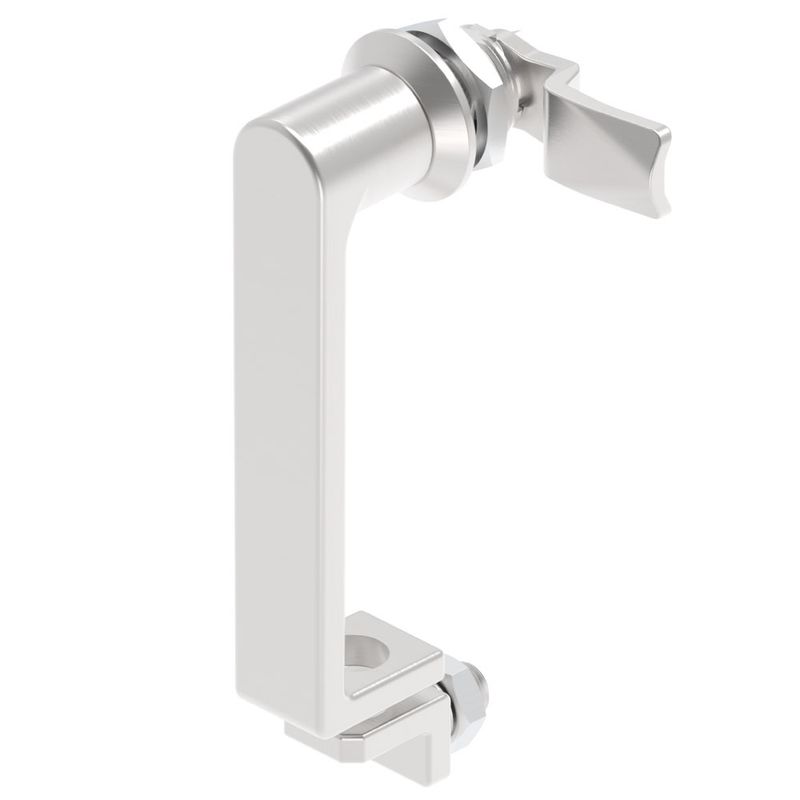
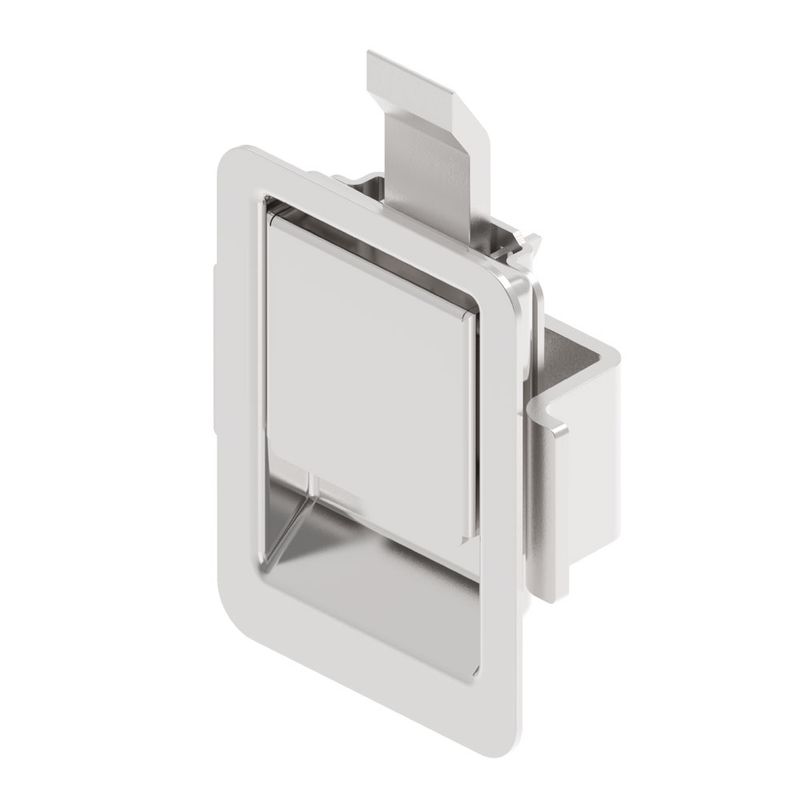
Industrial Slide Bolt Latches: Types, Applications and Manufacturer Selection Guide
An industrial slide bolt latch is a mechanical locking device that uses a sliding bolt moving into a keeper or strike to retain a door, panel or enclosure in the closed position. Selecting the right one is rarely a matter of matching bolt size alone. Bolt travel, keeper alignment, engagement depth, mounting position, material and operating environment all influence whether a latch performs reliably over time. At ForndLock, we evaluate slide bolt latches together with the keeper, mounting structure and application environment instead of selecting the bolt latch as an isolated component. This guide walks through how industrial slide bolt latches work, the main types available, material considerations, common industrial applications and the criteria we recommend using to select both a configuration and a manufacturer.

What Is an Industrial Slide Bolt Latch and How Does It Work?
An industrial slide bolt latch is a mechanical retention system in which a sliding bolt moves linearly into a keeper to hold a door, panel or enclosure closed, and its performance depends on how the bolt, keeper and door structure work together rather than on the bolt alone. Manufacturers often market these products by bolt diameter or overall length, but those numbers say very little about how the latch will behave once it is mounted on a real door under real operating conditions.
What Components Make Up the Complete System?
A complete slide bolt latch system includes the sliding bolt, housing, handle, keeper and mounting structure, and treating the keeper as a minor accessory rather than a core locking component is one of the most common selection errors.

The bolt is the moving element that provides retention. The housing guides the bolt and controls its travel path. The handle transfers operator force into bolt movement. The mounting structure transfers all operating loads into the door or panel. The keeper receives the bolt and completes the mechanical loop. None of these parts function independently — a strong bolt mounted against a misaligned keeper will still fail to hold the door reliably. This is why we review bolt, keeper and door structure as one system rather than as separate purchased items.
How Does Bolt and Keeper Engagement Work?
Engagement happens in a defined sequence — bolt movement, keeper entry, engagement depth, mechanical retention and withdrawal for opening — and each stage can fail independently of bolt size. The bolt first travels along its housing, then enters the keeper opening, then reaches a minimum depth required for secure retention, then holds the door against normal operating forces, and finally withdraws cleanly when the operator needs access. A bolt that is oversized for its housing clearance can still fail at the second or third stage if the keeper opening is undersized or misaligned. In our experience, this is where many field problems begin: the bolt cannot fully enter the keeper because the keeper opening, position or angle does not match the bolt path established by the housing and mounting structure. The result is a door that appears closed but is not fully retained, which only becomes obvious after vibration or repeated use.
Why Do Bolt and Keeper Design Determine Performance?

Bolt and keeper design determine performance because available bolt travel, keeper alignment and door movement together decide whether engagement is complete, smooth and durable over repeated cycles. Bolt diameter affects shear strength, but it has almost no bearing on whether the bolt will actually reach and stay in the keeper once the door is installed and cycled.
How Much Bolt Travel Do You Need?
Correct bolt travel is not simply a distance measurement — it must balance available movement, required engagement depth and operating clearance at the same time. Available movement is limited by the housing and handle geometry. Required engagement is the minimum depth needed for the keeper to hold the bolt securely. Operating clearance is the margin needed so the bolt does not bind against the keeper edge during normal opening and closing. When bolt travel is too short, the bolt cannot reach full engagement depth, and the door can appear latched while actually resting on only a partial bite of the keeper — a load or vibration event can then release it unexpectedly.

When bolt travel is too long, the operator has to apply more force to reach full withdrawal, and the extra travel distance accelerates wear on the housing bore and bolt surface. The better approach is to size travel against the keeper's actual engagement depth plus a defined clearance allowance, not against a generic catalog dimension.
Why Does Keeper Alignment Matter More Than Bolt Size?
Keeper alignment matters more than bolt diameter because a perfectly sized bolt cannot compensate for a keeper positioned or angled incorrectly relative to the door. Position deviation shifts the keeper opening away from the bolt's natural travel line. Angle deviation tilts the opening so the bolt enters at an angle rather than square to the keeper face. Weak keeper mounting allows the keeper itself to shift under load. Any of these three conditions produces the same downstream symptoms: binding during operation, partial engagement that looks complete but is not, and accelerated wear at the contact edges as the bolt repeatedly forces itself against a misaligned opening. Keeper position causes binding far more often than bolt quality does, which is why we treat keeper specification as equal in importance to bolt specification rather than as a secondary fitting.
How Does Door Movement Affect Latch Tolerance?
Industrial doors are rarely perfectly static, so panel deformation, manufacturing tolerance, vibration and thermal expansion must all be accounted for when calculating engagement margin. A sheet metal panel can flex slightly under its own weight or under wind and pressure loads. Manufacturing tolerance in the door frame introduces small dimensional variation from unit to unit. Vibration from nearby machinery or transport can shift the relative position of bolt and keeper over time. Thermal expansion changes clearances between installation and operating temperature. Door movement changes alignment after installation is a common failure scenario: a latch that fit correctly on the shop floor can bind or disengage months later once the structure has settled, expanded or been exposed to repeated vibration. Building a reasonable movement allowance into the engagement margin, rather than designing to a single fixed dimension, is what prevents this failure from appearing after the equipment is already in service.
What Types of Industrial Slide Bolt Latches Exist?
The industrial slide bolt latch category includes several structurally distinct types, and choosing among them depends on operating method, retention requirement and access frequency rather than appearance alone.
When Should You Use Standard Manual Slide Bolt Latches?
Structure: a standard manual slide bolt latch consists of a bolt, housing and handle with no spring or automatic return, requiring the operator to move the bolt in both directions by hand.

Suitable Applications: this type suits simple access doors and equipment panels where operation frequency is moderate and automatic closing is not a functional requirement.
Limitations: because operation is fully manual, there is no automatic closing function, and reliability depends entirely on the operator correctly seating the bolt each time — a partially closed bolt will not self-correct.
When Do Spring-Loaded Slide Bolt Latches Make Sense?
Structure: a spring-loaded slide bolt latch adds a spring element that assists position retention, holding the bolt in either the engaged or withdrawn position once it passes a certain point of travel.

Suitable Applications: this design is useful when uncontrolled bolt movement — not full automation — is the concern, such as applications exposed to light vibration where an unsprung bolt might creep out of position over time.
Limitations: the spring only assists retention within its designed force range; spring design and environment affect performance together, and a spring rated for light-duty indoor use will not necessarily resist heavier vibration or contamination in a harsher setting.
What Can Lockable Slide Bolt Latches Actually Control?
Structure: a lockable slide bolt latch adds a cylinder, padlock eye or similar feature that restricts bolt movement until released.
Suitable Applications: the primary function is access control — limiting who can open the door — rather than serving as a complete anti-theft solution on its own.

Limitations: locking capability still depends on door structure, mounting strength and overall latch design; a lockable bolt mounted on a weak panel or thin-gauge frame provides limited resistance regardless of the lock cylinder's quality, because the surrounding structure becomes the weak point instead of the bolt.
Why Choose Reversible Slide Bolt Latches?
Structure: a reversible slide bolt latch is designed so the bolt and handle assembly can be installed in more than one orientation without requiring a mirrored part number.
Suitable Applications: this matters most where equipment is produced in different installation directions — left-hand and right-hand door swings, or top-mounted versus side-mounted configurations.
Limitations: reversibility affects installation efficiency and hardware standardization, allowing one part to cover multiple configurations, but it does not change the underlying travel, engagement or keeper-matching requirements that still have to be verified for each orientation.
What Really Makes a Slide Bolt Latch Heavy Duty?
A latch qualifies as heavy duty only when bolt section, housing strength, keeper strength and mounting structure are upgraded together — a larger bolt alone does not make the system stronger.
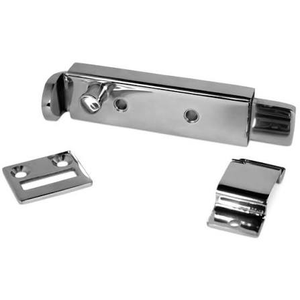
A thicker bolt increases shear resistance, but if the housing, keeper and mounting screws remain at standard-duty specification, those components become the failure point instead. This is also where slide bolt selection sometimes gets pushed beyond its appropriate scope: slide bolt is used where compression is required, such as sealed enclosure doors that need continuous gasket pressure. A slide bolt latch provides retention, not compression, and asking it to do both typically results in inconsistent sealing regardless of how heavy the bolt itself is specified.
How Do You Select Materials and Surface Treatments?
Material selection should follow environment, mechanical requirement and maintenance expectation in that order, rather than choosing a material based on cost or appearance alone.
When Is Stainless Steel the Right Choice?

Stainless steel can be suitable for outdoor, moist or corrosive environments, but the correct grade depends on chloride exposure and surrounding materials rather than on stainless steel alone. Limitation: stainless steel carries a higher material cost, and grade selection matters — a general-purpose grade may still corrode in high-chloride coastal or washdown environments where a higher-alloy grade would be required. Choosing stainless steel without reviewing the specific exposure conditions can lead to unnecessary cost in mild environments or insufficient protection in aggressive ones.
When Does Standard Steel Make Sense?
Standard steel remains a practical choice for general industrial applications, provided surface protection and environmental exposure are evaluated before specification. Limitation: uncoated or under-protected steel will corrode under moisture or chemical exposure faster than the surrounding equipment, so surface protection needs to match the actual operating environment rather than a default assumption of indoor, dry conditions.
Why Choose Zinc-Plated Steel?
Zinc-plated steel offers a cost-effective balance of surface protection for many indoor and moderate environments, though performance varies significantly outdoors or under chemical exposure. This is a common source of an eighth engineering failure scenario: incorrect material causes corrosion when zinc-plated hardware is specified for an application later exposed to washdown chemicals, salt air or extended outdoor moisture.
The plating that performs well in a dry indoor cabinet can degrade quickly under those conditions, and the resulting corrosion often affects bolt travel and keeper fit before it becomes visually obvious. When we review a specification, we walk through the same process outlined in our guide to selecting hardware for harsh environmental conditions, because material choice and enclosure sealing are closely linked in harsh settings.
How Do Engineers Actually Select Materials?
Engineers select materials by evaluating environmental exposure first, mechanical load second and maintenance capacity last, then matching the result against available grades. Environmental exposure defines the corrosion and contamination risk. Mechanical load defines the required strength and wear resistance. Maintenance capacity defines how much periodic inspection and lubrication the installation can realistically receive. Material selection cannot compensate for a poorly designed mounting structure or an unsuitable latch geometry — it addresses one variable in a larger system, not the entire performance outcome.
Where Are Industrial Slide Bolt Latches Commonly Used?
Slide bolt latches are commonly used on enclosures, machinery doors, equipment panels, outdoor equipment and transportation hardware, but each application carries different design considerations that affect the correct configuration.
Why Use Slide Bolt Latches on Industrial Enclosures?
Enclosures often use slide bolt latches because access frequency and panel alignment are predictable, though environmental sealing still needs separate evaluation. A fixed enclosure with a stable frame gives the keeper a consistent reference position, which simplifies alignment compared with doors that move or flex during operation.
What Matters Most on Machinery Access Doors?
On machinery access doors, vibration, door movement and mounting rigidity matter more than bolt appearance when determining long-term reliability. Vibration causes unwanted movement in latches that lack any position-retention feature, which is why spring-assisted or lockable variants are often reviewed for machinery-adjacent installations rather than a basic manual bolt.
How Do Equipment Panels Affect Latch Selection?
Equipment panels typically limit available space and involve frequent operation, both of which narrow the practical latch options before material or finish is considered. A compact housing profile and manageable operating force become priorities when a panel is opened multiple times per shift.
What Should You Check for Outdoor Equipment?
Outdoor equipment requires evaluating moisture exposure, temperature swings and corrosion potential together, since any one factor considered alone can lead to premature failure. Temperature swings affect clearances between bolt and keeper, moisture exposure drives material and finish decisions, and corrosion potential ties both of those factors back to the surrounding hardware and fasteners.
How Does Transportation Equipment Change Requirements?
Transportation equipment introduces dynamic movement and vibration that raise the retention requirement beyond what standard static-door installations typically need. A slide bolt latch that performs adequately on a stationary cabinet may require a spring-loaded or lockable variant, along with a reinforced keeper mount, once it is installed on equipment subject to continuous road or transit vibration.
How Do You Select the Right Industrial Slide Bolt Latch?
Selecting the right industrial slide bolt latch requires evaluating door structure, bolt travel, keeper geometry, mounting direction and environment together, then confirming that a slide bolt is actually the correct mechanism for the application.
How Do You Evaluate Door Structure First?
Door structure evaluation starts with door thickness, panel stiffness and frame rigidity, since a latch cannot compensate for a structure that flexes or deforms under normal use. A thin, unsupported panel will move relative to its frame each time it is operated, and that movement directly undermines whatever engagement margin the latch was designed around.
How Do You Confirm Bolt Travel and Engagement?
Confirming bolt travel means verifying that available movement matches required engagement depth with enough operating clearance, not simply selecting a longer bolt. This check should happen against the actual keeper and door dimensions, not against a generic catalog assumption, because the same nominal bolt travel can behave very differently depending on keeper depth and mounting offset.
How Do You Match Keeper Geometry to the Bolt?
Keeper geometry must be matched to the bolt profile and mounting position — at ForndLock, we review bolt and keeper together rather than supplying a bolt alone. Our engineering team looks at keeper opening size, entry angle and mounting surface relative to the door structure before recommending a configuration, because a bolt specification without a matched keeper leaves the most failure-prone part of the system unresolved.
How Does Mounting Direction Affect Performance?
Horizontal and vertical mounting create different gravity and vibration effects on the bolt, which changes how alignment and wear should be evaluated. A vertically mounted bolt is influenced by gravity pulling it toward or away from the keeper, while a horizontally mounted bolt is more sensitive to vibration-driven lateral movement — both conditions need to be reviewed rather than assumed identical.
What Environmental Factors Should You Consider?
Moisture, dust, chemical exposure and temperature range should be reviewed before finalizing material and finish, since environment often determines service life more than mechanical design. Two identical latches installed in a clean indoor cabinet versus a washdown production area will show very different wear and corrosion timelines despite sharing the same mechanical specification.
How Do You Know a Slide Bolt Is Not Suitable?
A slide bolt latch is not suitable when the application requires automatic closing, compression sealing or remote release, in which case a slam latch, compression latch or cable-actuated latch should be considered instead. If the door needs to latch automatically on closing, a slam latch is the appropriate mechanism. If the panel needs continuous gasket compression for sealing, a compression latch is the correct choice. If the release point needs to be located away from the latch itself, a cable-actuated latch fits that requirement better than a slide bolt ever will. Recognizing these boundaries is part of responsible selection, not a limitation of the slide bolt latch itself.
How Does a Slide Bolt Latch Compare to Other Industrial Latches?
Compared with slam latches and compression latches, a slide bolt latch offers simple manual retention but limited automatic engagement and no meaningful compression capability. The table below summarizes how these three mechanisms differ across the factors that typically drive a selection decision. For a broader comparison across mechanism families, our review of choosing between different latch mechanism types for industrial equipment walks through additional variants beyond these three.
Feature | Slide Bolt Latch | Slam Latch | Compression Latch |
Operation | Manual | Automatic on closing | Manual or key-operated |
Automatic Engagement | No | Yes | No |
Compression Capability | Limited/None | Limited | High |
Keeper Requirement | Critical, precise alignment needed | Strike plate, moderate tolerance | Gasket/seal interface |
Typical Application | Access doors, panels, enclosures | Frequently opened doors | Sealed enclosures, weatherproof doors |
What Engineering Mistakes Should You Avoid?
The most common slide bolt latch mistakes involve selecting by bolt size alone, ignoring the keeper, and mismatching the latch type to the application's actual mechanical requirement.
1. Choosing only by bolt size → this ignores keeper geometry and door structure entirely → evaluate the full bolt-keeper-door system before finalizing a specification.
2. Ignoring keeper geometry → the keeper is treated as a minor accessory rather than a locking component → specify bolt and keeper together as one matched assembly.
3. Incorrect bolt travel → travel is set too short or too long relative to required engagement → calculate travel against actual engagement depth plus clearance, not a catalog default.
4. Poor keeper alignment → position or angle deviation occurs during field installation → verify alignment against the actual door before final mounting, not against drawings alone.
5. Wrong material for the environment → a coating or grade suited to indoor conditions is used outdoors or in chemical exposure → follow the environment-mechanical-maintenance sequence before selecting a grade or finish.
6. Ignoring vibration exposure → the bolt migrates out of full engagement over time → add a retention feature such as a spring element or reconsider the latch type entirely.
7. Using a slide bolt where compression sealing is required → gasket sealing becomes inconsistent and leakage develops → switch to a compression latch designed for that function.
8. Weak mounting structure → fasteners or panel material cannot resist repeated operating loads → reinforce the mounting point and confirm panel stiffness before installation, not after failures appear.
In our experience, these issues repeat across industries regardless of bolt quality when the keeper and mounting are not reviewed together as part of the same decision.
How Should You Evaluate an Industrial Slide Bolt Latch Manufacturer?
Evaluating a manufacturer means assessing drawing review capability, customization capability, bolt-and-keeper matching, sample validation and production consistency — not price or lead time alone.
Can the Manufacturer Review Your Drawings?
A capable manufacturer should be able to review door structure, bolt travel and keeper position directly from your drawings before recommending a configuration. This step catches structural mismatches early, before hardware is produced against an assumption that does not match the actual door.
What Customization Capability Should You Expect?
Customization capability should cover dimensions, material and mounting configuration, since standard catalog sizes rarely fit every door structure. A manufacturer limited to fixed catalog parts will push you toward compromises on travel or keeper fit rather than adapting the hardware to your equipment.
Can the Manufacturer Match Bolt and Keeper?
Bolt and keeper matching capability determines whether the delivered hardware will actually engage correctly on your specific door, not just in isolation on a test bench. A supplier that only sells bolts and expects the keeper to be sourced separately shifts the alignment risk back onto the buyer.
How Is Sample Validation Handled?
Sample validation allows the fit, travel and alignment to be confirmed on the actual door structure before full production begins. This step is where theoretical drawing dimensions are checked against real mounting tolerances, catching issues that drawings alone cannot reveal.
How Is Production Consistency Maintained?
Production consistency ensures that later batches maintain the same bolt travel and keeper fit validated during the sample stage. Without this consistency, a configuration that passed sample review can drift in later production runs, reintroducing the same alignment problems the sample stage was meant to prevent.
How Can ForndLock Support Your Custom Slide Bolt Latch Project?
At ForndLock, we support custom slide bolt latch projects through drawing review, configuration recommendation, material selection, keeper matching and sample validation rather than offering a fixed catalog part. Our engineering team reviews your door structure, panel thickness and mounting layout directly from your drawings, and we recommend bolt travel and keeper geometry based on that structure rather than a generic dimension. We match keeper geometry to your door structure as a paired assembly, evaluate material selection against your stated environment, and support sample validation so fit and engagement can be confirmed before production quantities are committed. We do not present this as a guarantee of load capacity, certification or absolute security, since those outcomes depend on the complete installed system, not on the latch component alone. If you have a door structure that needs review, you can send drawings to [email protected] and our team will walk through bolt travel, keeper matching and mounting requirements with you.
What Should You Do Next With Your Latch Selection?
The right industrial slide bolt latch is determined by bolt travel, keeper geometry, door structure and environment working together, not by bolt size alone. As equipment doors and enclosures continue to vary in structure and operating condition, selection increasingly depends on reviewing actual drawings rather than matching a part number to a general description. If you are evaluating industrial slide bolt latches for a door, panel or enclosure project, send your door structure drawings to [email protected], and our engineering team will review bolt travel, keeper matching and mounting requirements before recommending a configuration.