How to Choose Cam Lock Size and Material for Outdoor Use?
What Is Vital When Choosing The Right Cam Lock For Your Needs In Outdoor Applications?
Choosing The Right Cam Lock For Your Needs goes far beyond browsing a catalog and selecting a component that visually fits your enclosure. In outdoor industrial environments, the hardware you select faces an unforgiving reality. A single point of failure in a lock mechanism can allow moisture, dust, or unauthorized personnel to compromise highly sensitive and expensive internal equipment. When designing heavy machinery, telecommunications cabinets, or power distribution panels, engineers and procurement officers must treat the locking mechanism as a critical structural component rather than an afterthought. This comprehensive guide is specifically tailored for engineering teams and OEM clients who require a concrete, technical decision-making framework.
Throughout this technical analysis, we will bypass basic lock mechanics and dive straight into the structural, dimensional, and environmental metrics required for industrial applications. As a dedicated hardware manufacturer, ForndLock frequently consults with clients who have experienced catastrophic field failures due to improper hardware selection. By understanding exactly how to choose cam lock size and material for outdoor use, you can ensure your enclosures remain secure, completely waterproof, and highly resistant to corrosion under the most extreme climatic conditions. We will explore the critical engineering criteria, including ingress protection ratings, salt-spray resistance thresholds, and the precise dimensional accuracy needed to maintain optimal gasket compression.
How Do Industrial And Furniture Locks Differ?
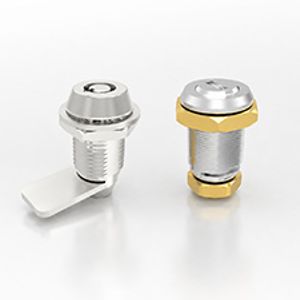
Industrial cam locks are engineered for harsh environments and heavy-duty sealing, whereas furniture locks prioritize simple aesthetics and basic access control.
Understanding the fundamental difference between cam lock types for furniture versus industrial applications is the first step in specifying the correct hardware for your project. We frequently see OEM clients coming to ForndLock needing to urgently upgrade from standard commercial locks to industrial-grade solutions because their initial hardware choices failed in the field. Utilizing a standard indoor lock for an outdoor industrial cabinet inevitably leads to rapid mechanical failure, severe water ingress, and compromised internal electronics. The operational stakes in industrial infrastructure dictate an entirely different manufacturing approach, focusing on structural integrity rather than mere visual deterrence.
What Defines A Furniture Cam Lock?
A furniture cam lock is typically a lightweight, low-security mechanism designed for indoor wooden cabinets and desk drawers where environmental threats are non-existent.
These basic mechanisms are mass-produced using low-grade zinc alloys or even high-impact plastics for internal components. Because they are intended for climate-controlled offices or residential spaces, they completely lack weather sealing, internal O-rings, or specialized anti-corrosion coatings. The primary function of these locks is to keep honest people out of a desk drawer, providing only visual deterrence and minimal physical security. If exposed to outdoor humidity, the internal pins will rapidly oxidize, and the lack of a mounting gasket will allow water to flow freely into the enclosure behind the panel.
Why Do Industrial Applications Demand More?
Industrial applications demand more because the hardware must withstand constant vibrations, extreme weather conditions, and unauthorized access attempts in critical infrastructure.
When evaluating the difference between cam lock types for furniture versus industrial applications, the regulatory and environmental requirements are staggering. Industrial outdoor enclosures must adhere to strict NEMA and IP enclosure standards, which dictate precise hardware performance metrics. In sectors like telecommunications, rail transportation, and power distribution, the locking mechanism must feature robust metallurgical composition, precise gasket compression capabilities, and engineered anti-vibration features. A lock on a trackside railway enclosure must endure the constant high-frequency vibration of passing trains without the mounting nut backing off. Furthermore, industrial security requires complex keying systems, drill-resistant cylinders, and materials that will not become brittle in sub-zero temperatures or warp in extreme heat.
How To Select Outdoor Cam Lock Materials?
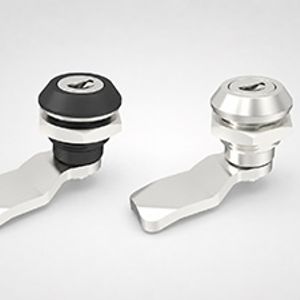
Selecting the right outdoor cam lock material requires evaluating environmental exposure, with stainless steel offering ultimate corrosion resistance and zinc alloy providing cost-effective durability when properly coated.
At ForndLock, our engineering team emphasizes that knowing how to choose cam lock size and material for outdoor use is the most critical phase of the hardware specification process. The metallurgical properties of the lock body and the rotating cam directly determine the expected lifecycle of the enclosure in harsh climates. Procurement personnel must carefully balance the manufacturing budget against the long-term maintenance costs associated with premature hardware degradation. Specifying a cheaper metal may save fractions of a cent during initial production but can result in thousands of dollars in warranty claims when the locks rust shut or snap under pressure in the field.
When Is Stainless Steel The Best?
Stainless steel is the best choice when the enclosure faces marine environments, extreme humidity, or regular chemical washdowns that would degrade lesser metals.
For ultimate reliability, industrial clients must look toward austenitic stainless steel. However, not all stainless steel is created equal. Grade 304 stainless steel provides excellent general corrosion resistance and is suitable for most standard outdoor applications, such as roadside traffic control cabinets. However, if the enclosure is deployed in coastal regions exposed to salt spray, or in industrial zones with high airborne chemical concentrations, Grade 316 stainless steel becomes mandatory. Grade 316 contains a significant molybdenum addition, which drastically improves its resistance to localized pitting and crevice corrosion caused by chloride exposure. When long-term structural integrity in a marine environment is non-negotiable, 316 stainless steel is the definitive engineering choice.
Can Zinc Alloy Survive Outdoor Environments?
Zinc alloy can survive outdoor environments effectively if it is treated with high-quality powder coating or advanced chrome plating to seal out moisture.
Die-cast zinc is incredibly popular for large-scale OEM production due to its excellent structural strength, high dimensional stability, and significant cost advantages over machined stainless steel. However, raw zinc is highly susceptible to white rust oxidation when exposed to moisture. To validate zinc alloy for outdoor use, manufacturers must subject the coated components to rigorous environmental testing. While standard indoor hardware might only survive a 48-hour salt-spray test, industrial-grade zinc locks must be engineered to withstand 120 hours, 240 hours, or even 500 hours of continuous salt-fog exposure without showing signs of base metal corrosion. When budget constraints are tight but volume is high, properly treated zinc alloy remains a highly viable option.
How Do Coatings Prevent Industrial Corrosion?
Specialized surface coatings prevent industrial corrosion by creating a robust barrier that isolates the base metal from oxygen, water, and corrosive salts.
The engineering behind modern surface treatments is highly advanced. In ForndLock's manufacturing process, we utilize a variety of techniques to extend hardware lifespan. Electroplating deposits a thin layer of a more noble metal, such as chromium or nickel, over the zinc substrate, providing both a hardened surface and a protective barrier. For more extreme environments, advanced nano-coatings and industrial powder coatings are applied and baked onto the lock housing. These coatings not only prevent galvanic corrosion but also offer resistance against ultraviolet radiation, ensuring the lock does not chalk, fade, or degrade structurally after years of direct sunlight exposure.
What Determines The Correct Cam Lock Size?
The correct cam lock size is determined by accurately matching the cylinder length to your panel thickness and selecting a cam reach that ensures proper compression.
Even if you select the highest grade of marine stainless steel, the lock will fail its primary objective if the dimensions are incorrectly specified. Precision in sizing prevents loose installations, rattling doors, and compromised weather seals. The architecture of a cam lock involves a complex relationship between the cylinder housing length, the cam offset, the mounting hole dimensions, and the enclosure frame itself. Understanding how to choose cam lock size and material for outdoor use means mastering these geometric relationships to ensure flawless mechanical integration on the assembly line.
How To Measure Your Panel Thickness?
To measure your panel thickness correctly, you must account for the base sheet metal along with any applied gaskets, paint, or powder coating layers.
A common engineering oversight occurs when designers only consider the raw gauge of the sheet metal. For instance, if an enclosure uses 2mm sheet steel, an engineer might specify a lock designed for a maximum 2mm panel. However, once a heavy industrial powder coat is applied, and an electromagnetic interference shielding layer is added, the actual panel thickness might exceed 2.5mm. This underestimation leads to locks that cannot be properly fastened, as the mounting nut will not have enough thread engagement to secure the housing. Procurement teams must calculate the absolute maximum total thickness of the finished door panel before specifying the cylinder length.
Why Is Grip Range Crucial Outdoors?
Grip range is crucial outdoors because an incorrect dimension will fail to compress the weather seal, allowing rain and dust to bypass the lock.
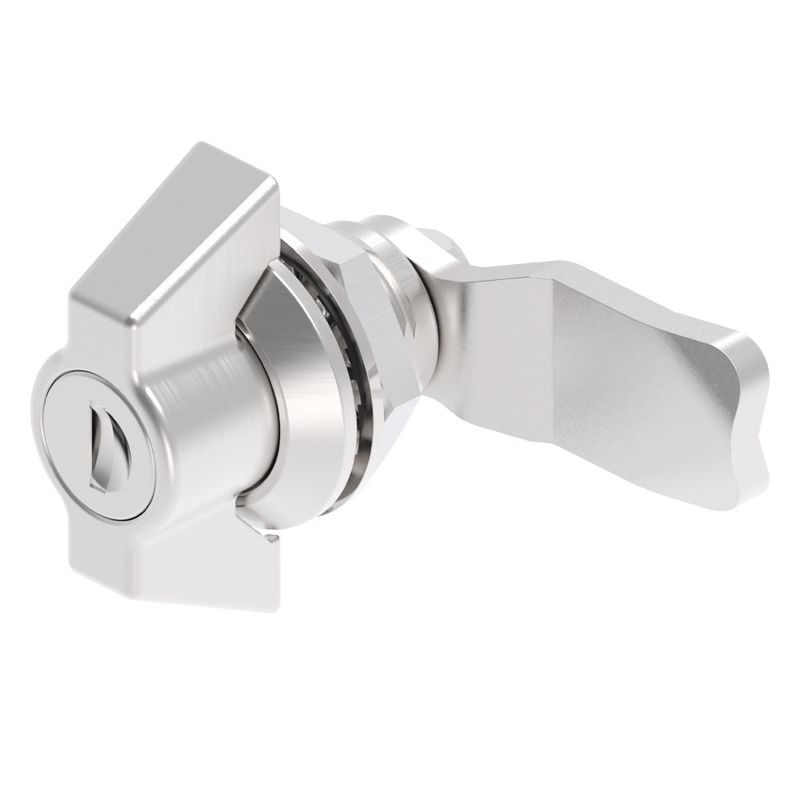
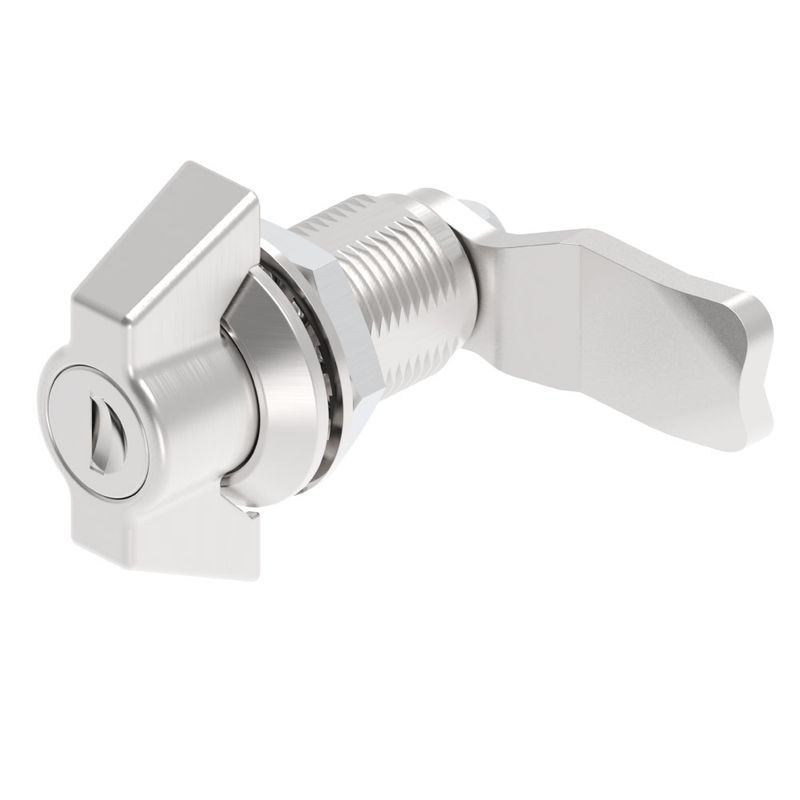
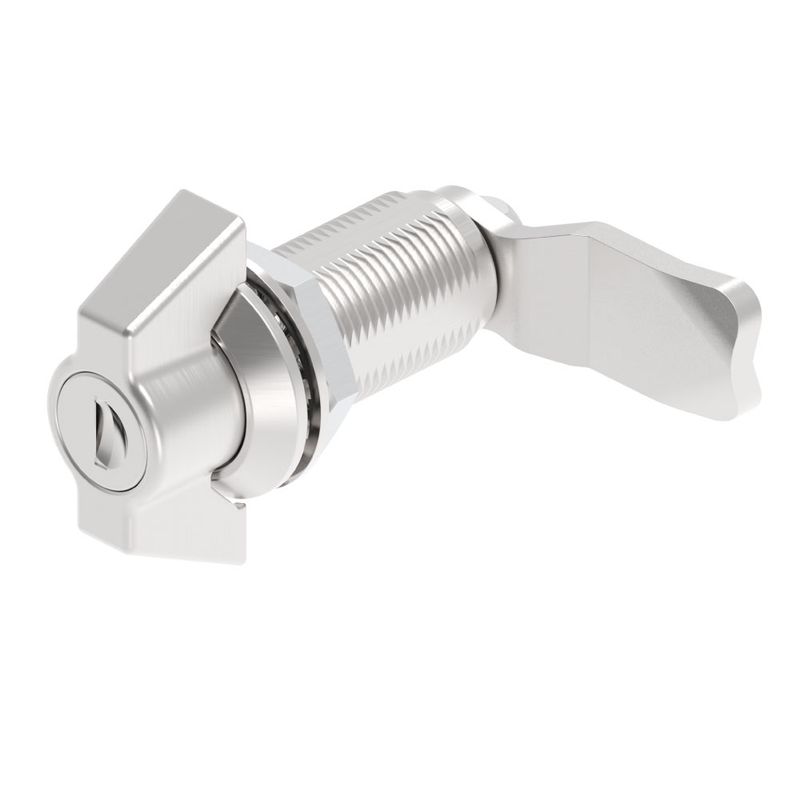
Grip range, often referred to as cam reach or grip dimension, is the precise distance from the front face of the installed lock to the inner locking surface of the rotating cam. In an outdoor industrial cabinet, the door does not simply close; it must be pulled tight against a thick polyurethane or EPDM gasket. If the grip range is too long, the door will latch loosely, failing to compress the gasket and leaving a gap for water ingress. If the grip range is too short, the cam will not be able to rotate behind the frame at all, rendering the lock useless. A properly sized grip range ensures that as the key is turned, the cam engages the frame and draws the door inward, achieving the exact compression ratio required by the gasket manufacturer.
Does Thread Size Impact Installation Stability?
Thread size directly impacts installation stability by determining how securely the mounting nut can anchor the lock body against high-vibration industrial machinery.
The physical installation of the lock relies entirely on the interplay between the housing threads and the mounting cut-out. Industrial standards typically utilize specific cut-out dimensions, such as the widely adopted 19mm by 16mm double-D punch. The double-D shape prevents the entire lock housing from spinning when excessive torque is applied to the key. Furthermore, the thread pitch on the cylinder housing must be engineered to resist loosening. In applications involving heavy diesel generators or transit vehicles, fine-pitch threads combined with serrated mounting nuts or chemical thread-locking compounds are necessary to prevent the hardware from backing off during continuous machine operation.
How Do IP Ratings Affect Outdoor Locks?
IP ratings affect outdoor locks by defining their exact capacity to block dust and water ingress, which is mandatory for protecting sensitive internal electronics.
Choosing The Right Cam Lock For Your Needs requires strict verification of the product's tested ingress protection capabilities. An enclosure is only as secure as its weakest penetration point, and the lock cut-out is inherently a massive vulnerability in the sheet metal. At ForndLock, our approach involves integrating sealing mechanisms directly into the lock housing architecture, rather than relying solely on external silicone sealants applied by the end-user. Understanding the International Protection (IP) code is essential for any engineer designing outdoor hardware.
What IP Rating Do Outdoor Enclosures Need?
Outdoor enclosures typically need an IP65 rating or higher to guarantee that low-pressure water jets and blowing dust cannot penetrate the locking mechanism.
The IP rating system provides a standardized metric for environmental sealing.
· IP54: Offers basic protection against dust and splashing water. Suitable for sheltered outdoor areas, but inadequate for direct weather exposure.
· IP65: Completely dust-tight and protected against low-pressure water jets from any direction. This is the baseline standard for roadside telecom boxes, traffic control panels, and standard industrial machinery.
· IP67: Dust-tight and protected against temporary total immersion in water. Required for offshore wind turbine panels, marine environments, and flood-prone infrastructure.
Selecting a lock that matches or exceeds the intended IP rating of the entire enclosure ensures that the hardware will not become the point of catastrophic failure during a severe storm.
How Do O-Rings Enhance Sealing Performance?
O-rings enhance sealing performance by filling the microscopic gaps between the lock cylinder and the housing, creating a watertight barrier under compression.
Achieving a high IP rating on a rotating mechanical component is a complex engineering challenge. Water can enter through the keyway, between the rotating cylinder plug and the outer housing, or between the housing and the door panel. To combat this, industrial locks utilize internal O-rings and external mounting gaskets. The material selection for these O-rings is critical. Nitrile Butadiene Rubber (NBR) is common for general oil and water resistance. However, for outdoor temperature extremes, Silicone or Ethylene Propylene Diene Monomer (EPDM) O-rings are superior, as they maintain their elasticity and sealing properties in freezing blizzards or scorching desert heat without cracking or degrading.
How Can Custom Manufacturing Solve Unique Challenges?
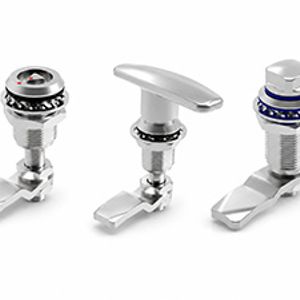
Custom manufacturing solves unique challenges by allowing engineers to tailor lock dimensions, materials, and testing protocols to exact project specifications for flawless integration.
Off-the-shelf components are often sufficient for standard projects, but highly specialized industrial applications frequently demand bespoke solutions. This is where ForndLock's OEM and ODM capabilities provide immense value to engineering teams. When standard dimensions fail to provide adequate gasket compression, or when standard metals cannot survive a specific chemical environment, custom manufacturing is the only viable path. By collaborating directly with a manufacturer, procurement officers can secure hardware that is purpose-built for their exact operational parameters, backed by comprehensive sample testing procedures and dedicated engineering support before bulk delivery.
What Was The Telecom Enclosure Challenge?
A German telecommunications client faced a severe challenge where standard locks on their outdoor enclosures were corroding and vibrating loose due to high humidity and transit stress.
To illustrate the critical nature of these engineering decisions, consider a recent project involving a major telecommunications infrastructure deployment. The client's initial enclosures were fitted with standard commercial zinc locks. Deployed in damp, heavily forested regions and situated near high-speed rail lines, the cabinets were subjected to constant high-frequency vibration and aggressive morning dew. Within months, the difference between cam lock types for furniture versus industrial applications became a costly reality. The mounting nuts vibrated loose, breaking the weather seal, and galvanic corrosion seized the internal pins. Water ingress subsequently caused critical server short-circuits, leading to unacceptable network downtime and exorbitant emergency maintenance costs.
How Did ForndLock Engineer The Solution?
ForndLock engineered the solution by developing a custom 316 stainless steel cam lock featuring a specialized anti-vibration thread pitch and an integrated NBR O-ring.
The client's engineering team provided their structural drawings to ForndLock. We immediately identified that their new, upgraded polyurethane door gaskets required a highly specific grip range that standard catalog locks could not accommodate. We engineered a custom 316 stainless steel solution, machining the cylinder length to precisely match their coated panel thickness. We integrated a specialized EPDM facial gasket and internal O-rings to guarantee an IP65 seal. Before full production, we subjected the custom prototypes to a rigorous 500-hour salt spray test and mechanical vibration simulations. The resulting bulk delivery completely eliminated field failures, proving that precise dimensional matching and superior material selection are the ultimate defenses against outdoor environmental threats.
Determining the exact geometric dimensions, selecting robust metallurgical materials like 316 stainless steel or heavily coated zinc alloys, and verifying strict IP ratings are non-negotiable steps when engineering industrial outdoor hardware. Choosing The Right Cam Lock For Your Needs dictates the long-term survival of the sensitive equipment housed within your enclosures. Standard commercial hardware simply cannot survive the structural demands or corrosive threats of the industrial world.
As a dedicated industrial hardware manufacturer, ForndLock is fully equipped to support your next major engineering project. Whether your team requires precise material selection advice, complex dimensional matching for custom enclosures, complete OEM customization, or physical prototypes for your internal testing protocols, our engineering team is here to assist. Send your detailed project requirements, technical CAD drawings, or sample requests directly to our engineering support team at: [email protected].