How Do You Choose the Right Cam Latch Lock for Industrial Enclosures?
Picture this: you're specifying hardware for a new outdoor electrical cabinet, you pull up a supplier catalog, search "cam latch lock," and get back forty-seven SKUs. Some are zinc alloy, some stainless, some keyed, some tool-operated, some rated IP65, and some with no ingress rating at all. They all look roughly the same in the thumbnail. The term "cam latch lock" is doing a lot of heavy lifting across wildly different product classes — and picking the wrong one doesn't just mean a reorder. It can mean field failures, IP rating voids, or a compliance problem that surfaces after installation.
Most of the content out there explains what a cam latch lock is. Almost none of it walks through how to actually select one for a real industrial enclosure. At ForndLock, we manufacture and supply cam latch locks across a wide range of industrial applications, and this guide distills the selection logic we use with our engineering customers every day. The decision comes down to four intersecting layers: environment and ingress protection, material and finish, actuation type and security level, and mounting geometry and panel compatibility. Work through those four filters in order, and the right product becomes obvious.
What Exactly Is a Cam Latch Lock?
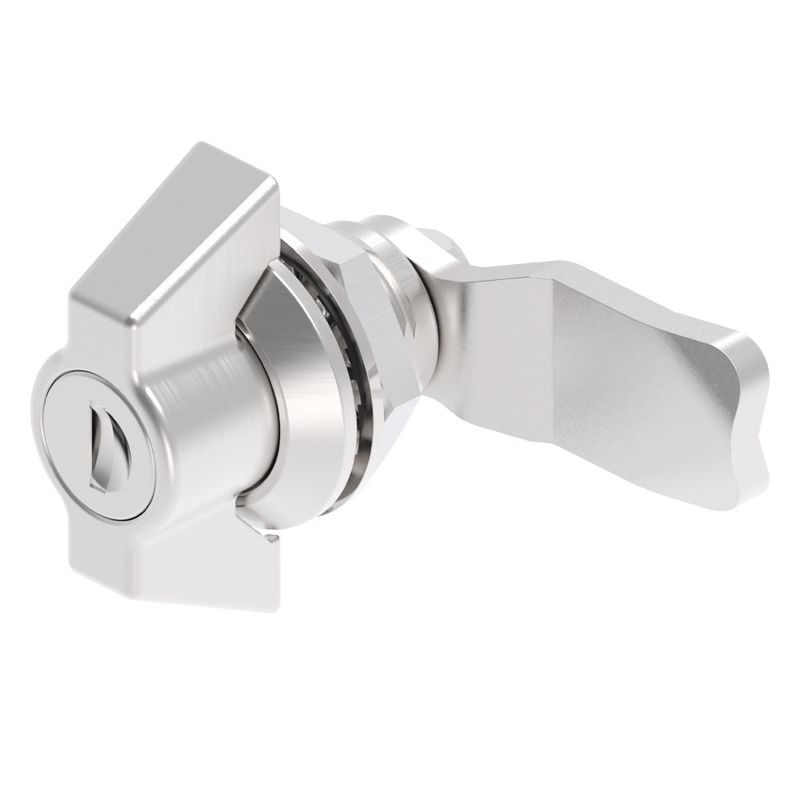
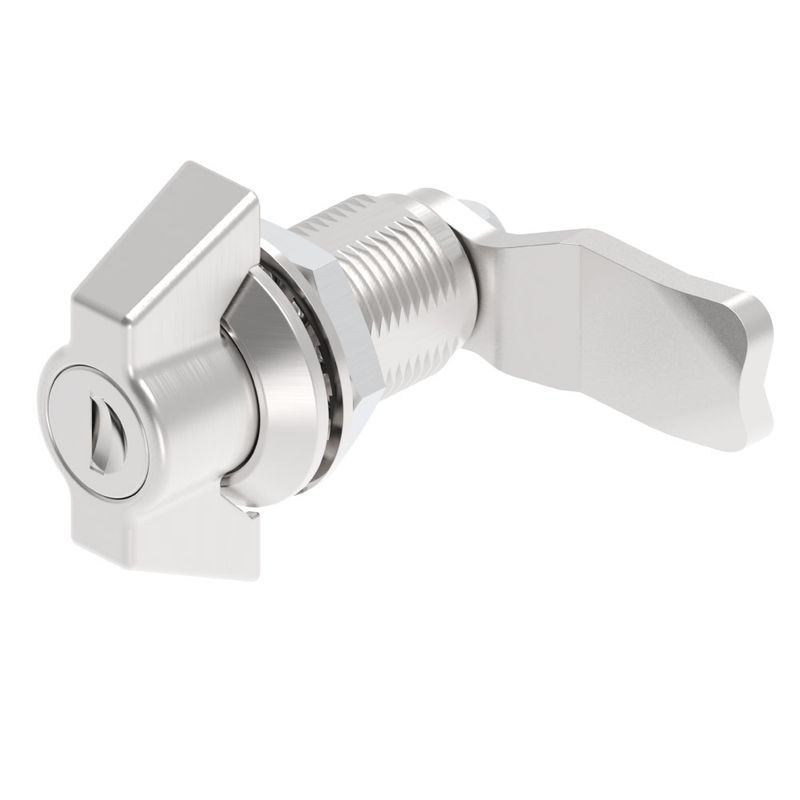
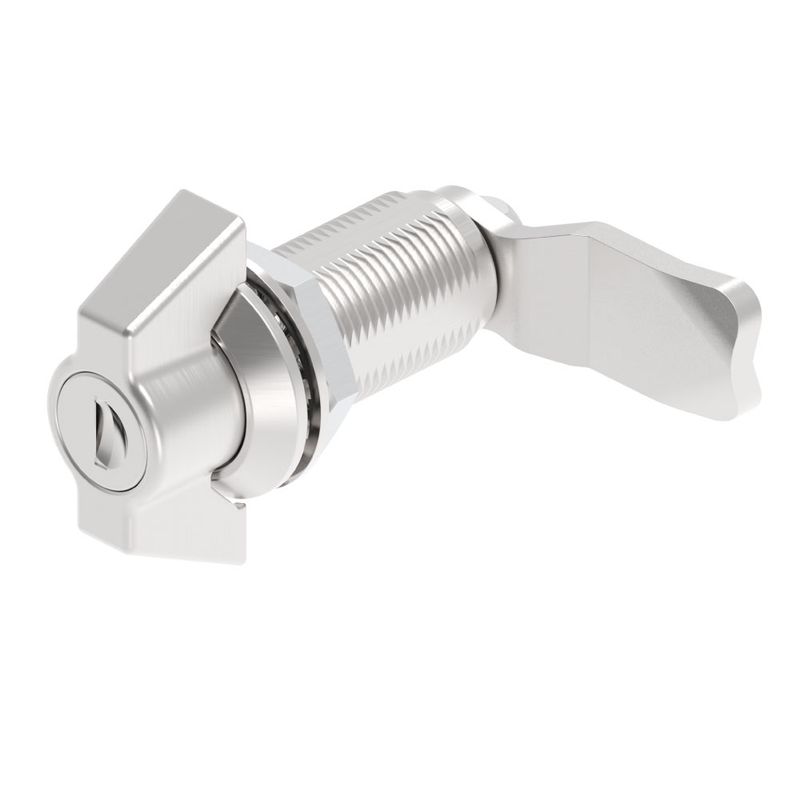
A cam latch lock is a rotational fastening device — typically cylindrical — that secures an enclosure panel by rotating a metal cam arm behind the frame upon actuation, creating a mechanical block that holds the door flush and closed.
The anatomy is straightforward: a cylindrical body mounts through a hole in the panel, and a cam arm attaches to the rear of the body. When actuated — by key, tool, or hand — the body rotates between 90° and 180°, swinging the cam arm behind the enclosure frame and preventing the door from opening. Simple in principle, but the product category is broader than most buyers realize.
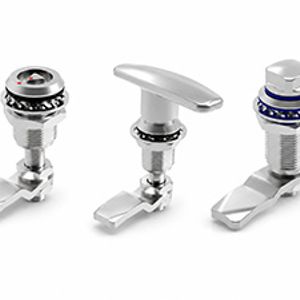
The terminology doesn't help. "Cam lock," "cam latch lock," and "quarter-turn latch" are used interchangeably across industrial catalogs, and they are not always the same product. This creates real specification risk. The more important distinction — the one that should be the first fork in your decision tree — is whether the latch includes a keyed tumbler. A cam latch lock with a keyed tumbler both holds the door closed and restricts access. A non-keyed variant only holds the door closed. In industrial enclosure contexts, that difference determines whether you're looking at a security product or a retention product, and those two categories have different material specs, different cam arm strengths, and different torque ratings.
We see the misapplication regularly: a customer sources a cam lock spec from a furniture hardware catalog and applies it directly to an outdoor electrical cabinet. The body material is wrong, the cam arm gauge is undersized for the panel weight, and there's no ingress protection. The product looks identical from the front. The problems show up three months into field deployment.
Is a Cam Latch Lock or a Quarter-Turn Latch the Right Fit?
The core difference is not just terminology — cam latch locks with keyed tumblers prioritize access control and are suited for secure or regulated environments, while quarter-turn latches prioritize speed of access and sealing performance, making them the better choice for maintenance-heavy panels that also need IP65 or higher ingress protection.
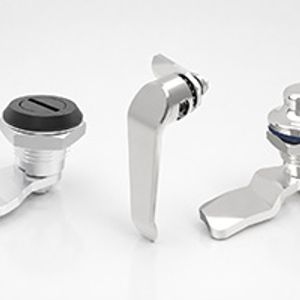
Understanding the cam latch lock vs quarter turn latch key differences explained properly comes down to three concrete variables: cutout geometry, ingress protection baseline, and actuation method.
How Do Their Mounting Cutouts Differ?
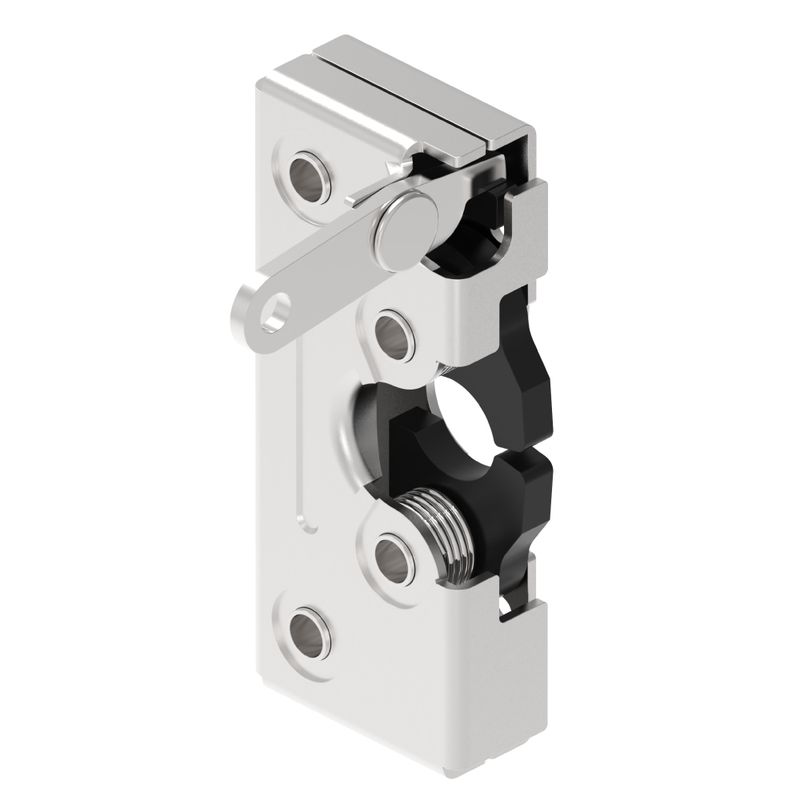
Cam latch locks use a circular "double-D" cutout, while quarter-turn latches require a square-with-rounded-corners cutout — a difference that determines panel tooling requirements before you ever order a single unit.
If you're designing a new enclosure, the cutout choice is yours to make. If you're retrofitting an existing cabinet, the cutout already punched into the panel may lock you into one product type entirely. Always confirm cutout geometry against your panel drawing before specifying. Ordering the wrong type for a retrofit means either re-tooling the panel or sourcing an adapter plate — both add cost and delay.
Which One Actually Seals Against Ingress?
Quarter-turn latches are inherently designed with gasket compression built into their cam geometry, which is why they carry NEMA 12 / IP65 ratings as a standard baseline — most keyed cam latch locks carry no ingress protection rating unless specifically ordered with a sealing gasket.
For outdoor electrical cabinets, washdown environments, and any enclosure exposed to dust or moisture, a quarter-turn latch with a verified IP rating is the correct starting point. For indoor control panels where access restriction is the primary requirement, a keyed cam latch lock is the appropriate choice.
There is an important middle ground worth noting: some cam latch locks in ForndLock's range are available with optional silicone gaskets that bring the assembly to IP54. When a customer needs both key-based access control and protection against splashing water or moderate dust — a common requirement in light industrial indoor environments — this variant is worth specifying explicitly.
Dimension | Cam Latch Lock (Keyed) | Quarter-Turn Latch |
Cutout shape | Double-D circular | Square with rounded corners |
IP rating baseline | None (unless gasket specified) | NEMA 12 / IP65 standard |
Actuation method | Keyed tumbler | Tool or hand-operated |
Access security | Yes | No |
Typical application | Control panels, secure enclosures | Maintenance panels, outdoor cabinets |
What Are the Four Critical Selection Dimensions?
Choosing the right cam latch lock for an industrial enclosure comes down to four intersecting decisions: the environmental protection level required, the material and finish suited to the operating environment, the actuation and security type, and the panel thickness and mounting geometry.
What IP or NEMA Rating Does Your Environment Demand?
The operating environment is the first filter — a cam latch lock installed on an outdoor telecom cabinet in a coastal region has fundamentally different ingress and corrosion requirements than one used on an indoor server rack access panel.
Map your environment to a minimum rating before you look at anything else:
· Indoor dry environments: no IP requirement; focus on material and security type
· Indoor with dust or oil mist exposure: IP54 minimum
· Outdoor general industrial or washdown: IP65 (dust-tight, protected against water jets from any direction) or NEMA 4
· Coastal, marine, or aggressive washdown: IP66 (protected against powerful water jets) or NEMA 4X with corrosion-resistant body material
The distinction between IP65 and IP66 is meaningful: IP65 protects against low-pressure water jets, while IP66 handles high-pressure jets from any direction. NEMA 4X adds a corrosion resistance requirement that NEMA 4 does not include — a critical difference for coastal or chemical environments.
One point that gets overlooked: the IP rating of the installed assembly is only as good as its weakest component. A latch body rated IP65 achieves nothing if the installer omits the gasket, or if the panel cutout is punched oversized and the gasket can't seat properly. The system rating depends on the latch hardware, the gasket, and the installation quality together.
Which Material and Finish Should You Specify?
Material choice is driven by chemical exposure, temperature range, and whether the enclosure is in a corrosive environment — stainless steel (304 or 316) dominates marine and food-grade applications, zinc alloy suits most indoor industrial uses, and engineering plastics like PA66 work well in weight-sensitive or electrically insulated panels.
Material | Corrosion Resistance | Typical Application | ForndLock Option |
Zinc alloy (die-cast) | Moderate (indoor/light industrial) | Control panels, indoor enclosures | Yes — zinc plate or chrome finish |
304 stainless steel | Good (general outdoor) | Outdoor industrial, general-purpose | Yes |
316 stainless steel | Excellent (chloride environments) | Marine, food processing, chemical plants | Yes |
PA66 engineering plastic | N/A — non-metallic | Weight-sensitive panels, ground-isolated enclosures | Yes |
Finish matters beyond aesthetics. Passivation improves the inherent corrosion resistance of stainless steel by removing surface iron contamination. Powder coat adds a protective layer but can chip in high-contact applications. Black oxide provides a mild corrosion barrier and reduces light reflection — useful in certain instrumentation enclosures. Specify the finish alongside the base material, not as an afterthought.
Do You Need Keyed Access or Tool Operation?
If unauthorized access to the enclosure contents represents a safety, liability, or compliance risk, a keyed cam latch lock is non-negotiable — but if the panel is accessed multiple times per shift by maintenance personnel, a tool-operated or hand-operated quarter-turn variant dramatically reduces operational friction.
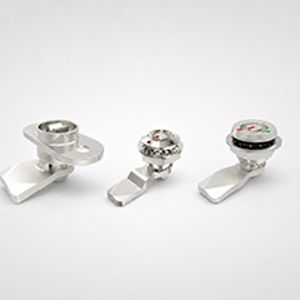
The actuation options map roughly to use frequency and security requirement:
· Keyed: appropriate for enclosures where access restriction is required. Master-keyed systems — where individual enclosures have unique keys but a single master key opens all units — are one of the most common custom requests we handle at ForndLock, particularly from facility managers overseeing large equipment installations.
· Tool-operated (slotted or square drive): fast, no key management overhead, suitable for internal maintenance panels accessed by trained personnel.
· Hand-operated (wing knob or T-handle): highest access speed, appropriate for non-secure service doors accessed frequently throughout a shift.
One compliance note worth flagging: certain electrical safety standards in specific markets mandate keyed locking on enclosures above defined voltage thresholds. Always verify local requirements before defaulting to a tool-operated variant on electrical enclosures.
How Does Panel Thickness Affect Your Choice?
Panel thickness directly determines whether a given cam latch lock body length will achieve proper cam engagement — too short and the cam won't grip the frame; too long and the body protrudes awkwardly or the cam over-rotates past the keeper.
Every cam latch lock lists a grip range — the range of total panel thicknesses within which the cam arm can properly engage the frame. A typical range might be 1mm–6mm for thin-panel applications, or 1mm–12mm for deeper frame assemblies. The critical mistake is measuring only the outer panel skin. Enclosures with internal insulation, acoustic lining, or inner liners add to the effective stack thickness significantly.
We worked through exactly this issue with an OEM customer building enclosures for heavy electrical equipment. Their panels had a multi-layer construction: outer steel skin, foam insulation, and an inner aluminum liner. The total stack was nearly 14mm, well outside the grip range of the standard cam latch lock they had specified. The cam was engaging but not fully seating, leaving the door with noticeable play. ForndLock supplied an extended-body variant with a custom cam arm length matched to their stack measurement, and the issue was resolved without any changes to the panel tooling. Measure the full material stack before you specify — not just the outer face.
Are There Common Mistakes That Lead to Wrong Selections?
The most costly selection mistakes we see at ForndLock are not about picking the wrong brand — they are about applying the wrong product category entirely, or overlooking one critical environmental or mechanical parameter that only surfaces after installation.
Treating all cam latch locks as interchangeable is the most frequent error. Furniture-grade cam locks are routinely misapplied to industrial enclosures. The body material, cam arm strength, and torque rating are entirely different product classes. A latch that works perfectly on a filing cabinet will not perform reliably on a 15kg electrical panel door in a vibrating equipment enclosure.
Ignoring the installed assembly's IP rating is the second most common problem. Buying a latch rated IP65 means nothing if the gasket is omitted during installation or the cutout is punched slightly oversized. The system rating is only as good as the weakest link in the assembly.
In mobile equipment, transportation, and heavy machinery enclosures, a standard cam latch lock without vibration-resistant retention will loosen over time. Specify latches with positive locking or spring-loaded cam retention for any application involving sustained vibration.
Cam arm offset direction is a detail that gets skipped more often than it should. Cam arms can be offset inward or outward relative to the panel face. Getting this wrong means the cam clears in the wrong direction and the door simply won't secure. Always specify offset direction explicitly on the purchase order — don't assume the default will be correct.
Finally, skipping a prototype fit check before committing to a production run is a risk that a 30-minute verification step eliminates entirely. At ForndLock, we strongly encourage customers to request samples before production. The cost of a sample is trivial compared to the cost of reworking a full run of enclosures.
ForndLock Cam Latch Usage Guide
How Do You Finalize Your Cam Latch Lock Specification?
A complete cam latch lock specification for an industrial enclosure should capture six parameters: environmental rating required, material and finish, actuation type, panel thickness and cutout geometry, keying requirement, and cam offset direction — missing any one of these is how reorders happen.
Work through this checklist before placing any order:
1. Required IP or NEMA rating, based on the environment mapping above
2. Body material and surface finish, matched to chemical and corrosion exposure
3. Actuation type: keyed, tool-operated, or hand-operated
4. Total panel stack thickness and required grip range
5. Mounting cutout type and diameter
6. Cam offset direction: inward or outward relative to the panel face
For non-standard requirements — unusual panel thickness, master-key systems, special surface finishes, or custom engravings for branded equipment — ForndLock's engineering team works directly from customer drawings and project specifications. Sending a drawing is always faster and more reliable than trying to match a catalog number to a complex assembly.
FAQ
Is a cam latch lock the same as a quarter-turn latch?
They share the same rotational cam principle, but they are not identical products. The cam latch lock vs quarter turn latch key differences explained in practical terms come down to three things: mounting cutout shape, whether a keyed tumbler is included, and ingress protection capability. Cam latch locks with keyed tumblers prioritize access security; quarter-turn latches prioritize sealing and fast access. The right choice depends on your specific enclosure requirements — security-first or access-frequency-first.
What IP rating should I specify for an outdoor industrial enclosure?
For general outdoor exposure, IP65 is the practical minimum — dust-tight and protected against water jets. For coastal, marine, or washdown environments, specify IP66 or NEMA 4X, and ensure the latch body material is 316 stainless steel or equivalent. The gasket and installation quality are equally important to achieving the rated protection level; the latch hardware alone does not guarantee the system rating.
Can ForndLock supply cam latch locks with a master-key system?
Yes. Master-keyed cam latch lock systems are one of our most common custom requests from facility managers and OEM customers. We can configure systems where individual enclosures have unique keys but a single master key opens all units. Send your project details to [email protected] and we'll work through the keying scheme with you directly.
How do I know if my panel thickness is compatible with a specific cam latch lock?
Check the product's listed grip range, then measure the full material stack — outer panel, insulation, inner liner, and any other layers — not just the outer skin. If your panel falls outside standard grip ranges, ForndLock offers extended-body and adjustable cam variants. Share your panel drawing and we can confirm compatibility before you order.
What is the difference between 304 and 316 stainless steel, and when does it matter?
Both are corrosion-resistant, but 316 stainless contains molybdenum, which significantly improves resistance to chloride-induced corrosion — the type caused by salt air, seawater, and many industrial cleaning chemicals. For enclosures in coastal locations, marine vessels, food processing plants, or chemical facilities, 316 is the correct specification. For general outdoor industrial use without aggressive chemical exposure, 304 is typically sufficient and more cost-effective.
Choosing the right cam latch lock for an industrial enclosure is rarely a single-variable decision. The environment, the panel construction, the access frequency, and the security requirement all intersect — and getting that intersection right the first time is exactly what we focus on at ForndLock.
If you're specifying a new enclosure design, retrofitting existing hardware, or sourcing for a production run and want a verified recommendation rather than a catalog guess, we'd be glad to help. Send your project requirements, panel drawings, or custom specifications directly to [email protected] — our engineering team reviews every inquiry and can arrange samples for fit verification before you commit to volume.