Heavy-Duty Compression Latches: How to Choose for Gasketed Doors and Panels
Heavy-duty compression latches do two jobs. They hold a door shut, and they pull that door inward so the gasket is squeezed to a controlled depth. A plain cam latch only does the first. If your enclosure has to keep out dust and water, or stop a panel from buzzing against its frame on a vehicle, the second job is the one that matters.
This is how we at ForndLock walk engineers and buyers through the selection. It covers what "heavy-duty" should mean on a drawing, which latch type fits which door, how to match grip range to the gasket, and what to put in an RFQ so the quotes you get can be compared.
What Is a Heavy-Duty Compression Latch?
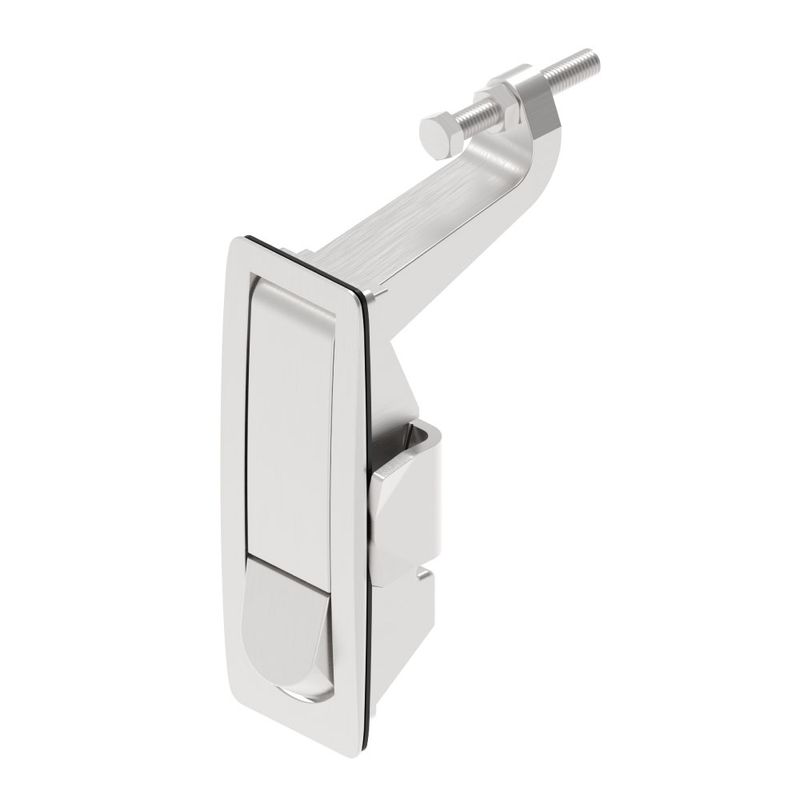
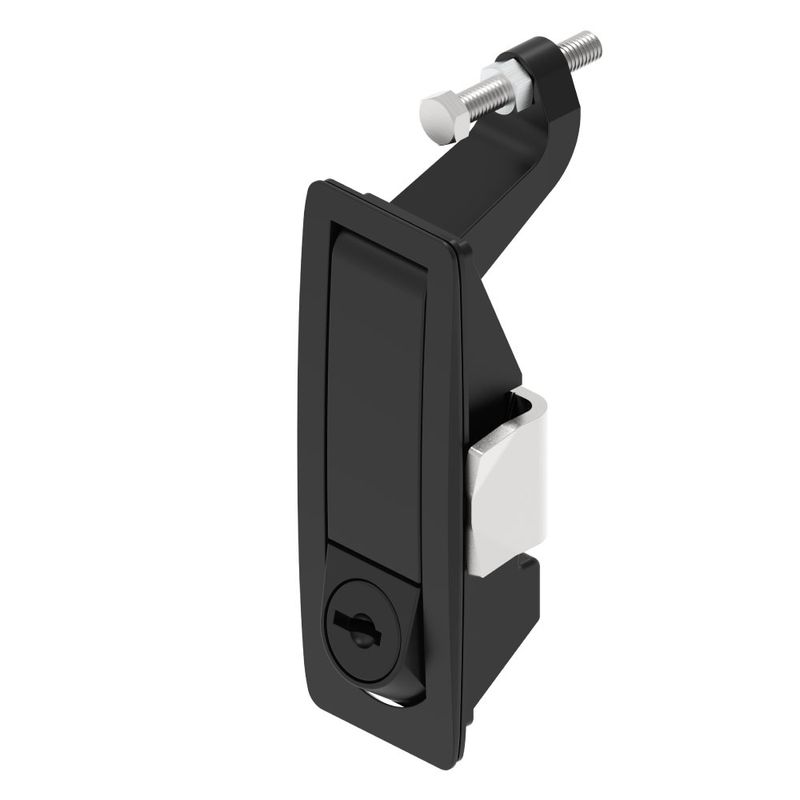
The latch mounts through the door or panel from behind. When you operate it, a cam or tongue rotates behind the door frame. Because of the cam's geometry, the door is drawn toward the frame as it locks, and the gasket compresses. Release the latch and the compression comes off.
Compression latch vs. cam latch
A cam latch is a stop. The cam sweeps behind the frame and keeps the door from opening, but it doesn't care how tightly the door sits. With a gasket in play, the seal then depends on how close the door happened to be when you turned the key. Doors rattle over time, and gaskets creep.
A compression latch applies the closing force itself, so the closure is tighter, quieter and more repeatable. With no gasket and no vibration, a cam latch is cheaper and perfectly fine. Once either one shows up, you want compression.
What "heavy-duty" should actually mean

The label has no standard definition, and every catalog uses it. I'd rather you define it in your own spec, in numbers you can test:
· Gasket load: how much force your seal needs per unit length to reach its target compression. A thick closed-cell foam and a dense EPDM profile behave very differently.
· Vibration profile: a control cabinet in a plant and a service door on a truck are not the same duty.
· Material and finish: which corrosion test, for how many hours, and with what pass criteria.
· Cycle life: how many open-close cycles the latch must survive while still holding its grip setting and compression.
· Door size and stiffness: a large, thin door flexes between latch points, and the latch alone can't fix that.
Put numbers on those five and "heavy-duty" becomes something a supplier can quote against.
How a Compression Latch Works
Main components
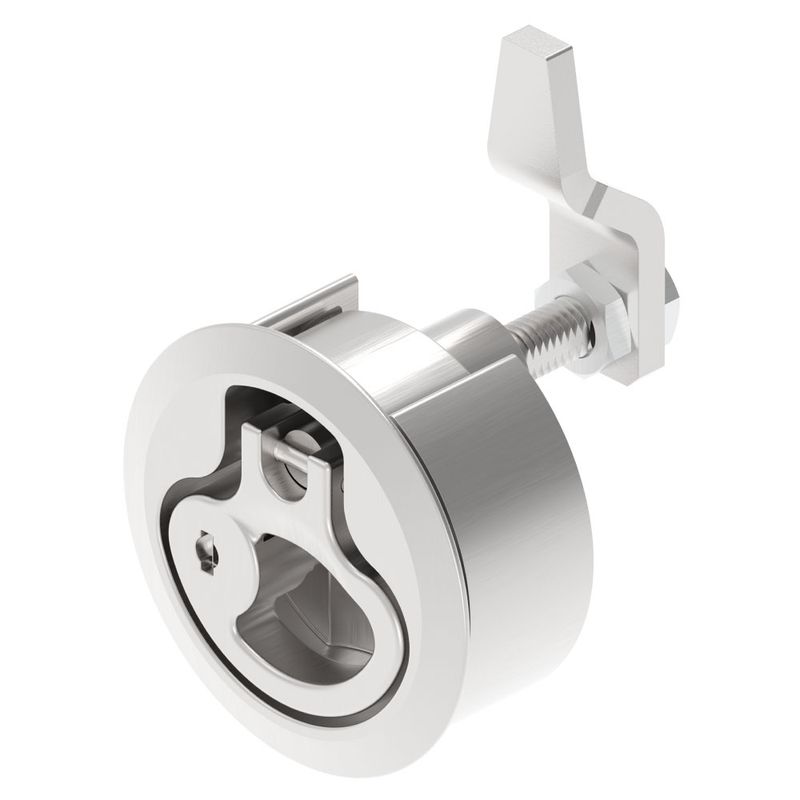
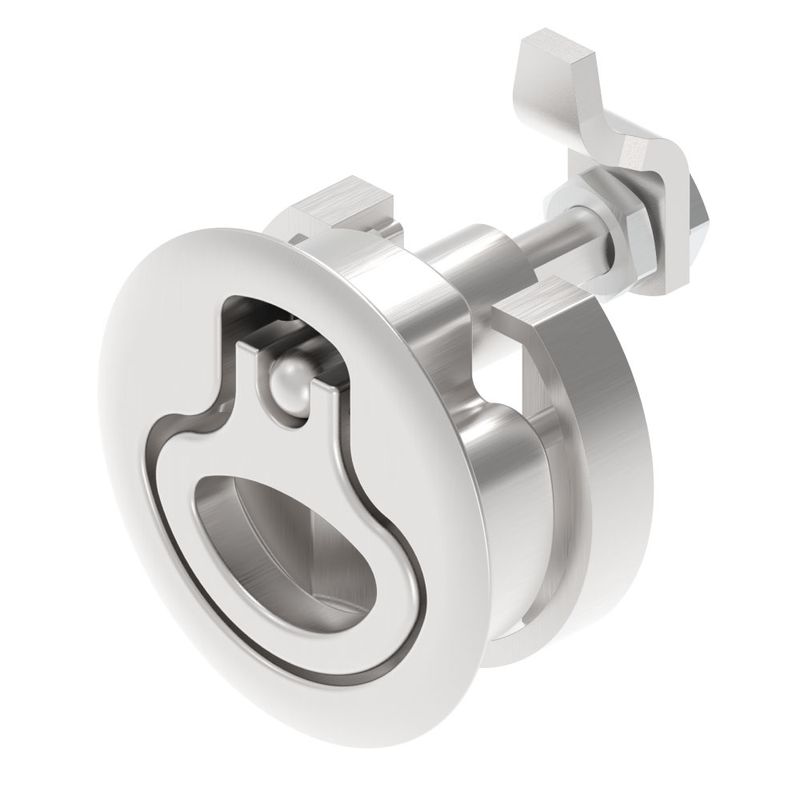
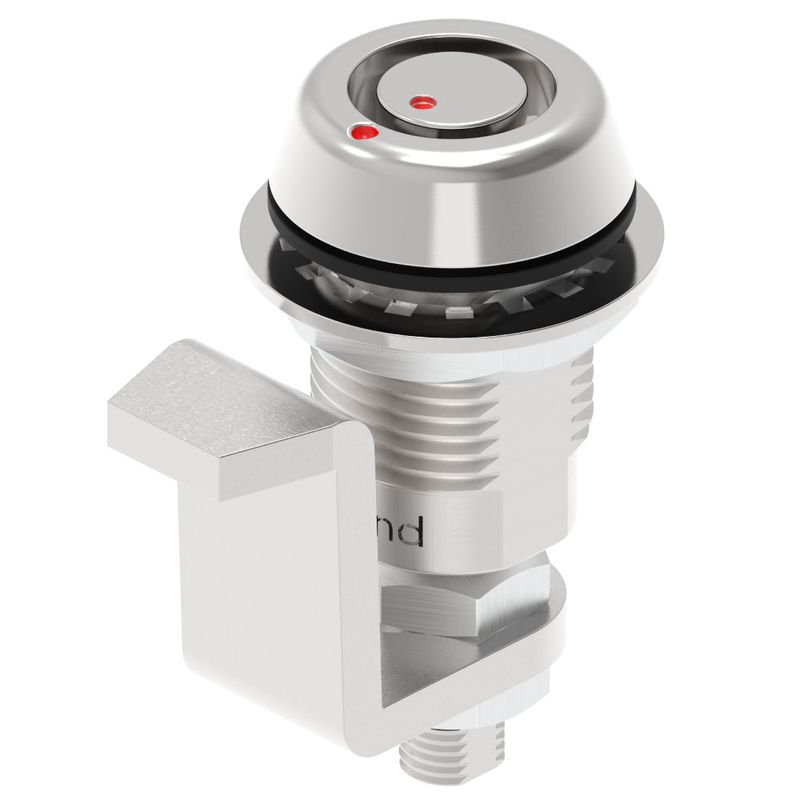
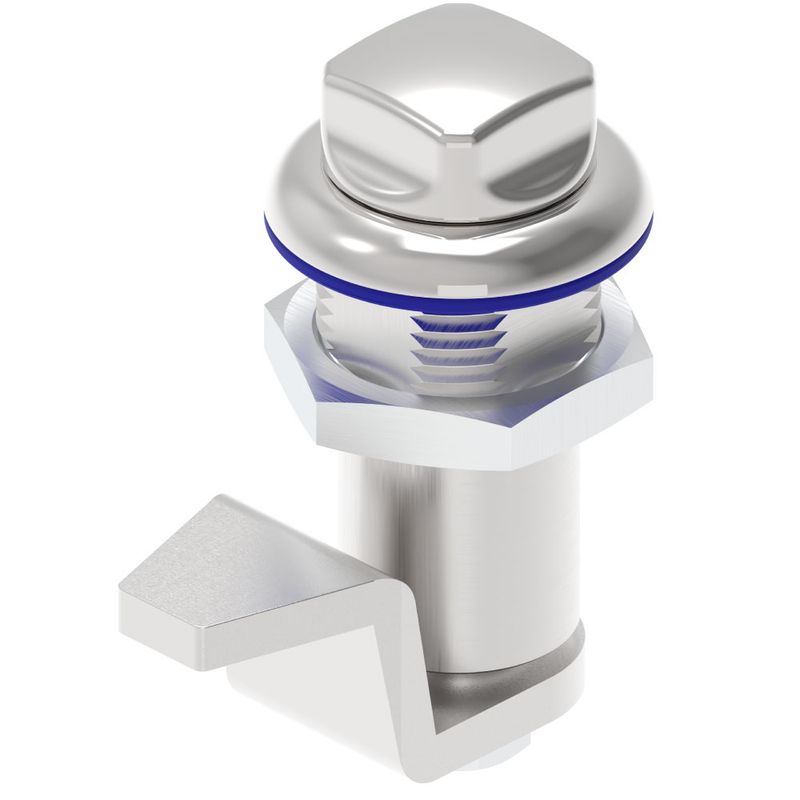
The parts list is short. A typical compression latch has a housing, an insert, a bearing plate, a base plate, a nut and a cam. Some add a cover or a handle, and some of those handles accept a padlock.
The latch screws or clamps through the door from behind. The housing sits on the outside, and the cam, sometimes called the tongue or pawl, lives on the inside.
Cam, pawl and frame interaction
On operation, the cam rotates behind the door frame. Its profile is ramped, so as it turns it rides against the frame and pulls the door in. Compression travel depends on the model. EMKA, for example, quotes compression values of 4.5 to 6 mm across its range, which is a useful ballpark for how much gasket squeeze a standard latch can produce.
Two practical points. The cam needs something solid to push against, meaning a flange or return on the frame and not a thin, unsupported lip. And cam length and offset matter: the wrong pawl reaches too little or too much of the frame, and no adjustment fixes that.
Main Types of Heavy-Duty Compression Latches
The type determines how the user applies force, which matters more than most specs admit.
Rotary (quarter-turn) compression latches
The workhorse. You turn a key, T-handle, hex, square or triangle drive a quarter turn and the cam does the rest. Operating force is modest and the footprint is small. The drawback is leverage. A rotary latch pulls the door in by the cam ramp alone, so a stiff gasket on a heavy door can be hard to close with one.
They suit cabinets, equipment panels and anywhere you want a clean, low-profile look.
Lever and over-center latches

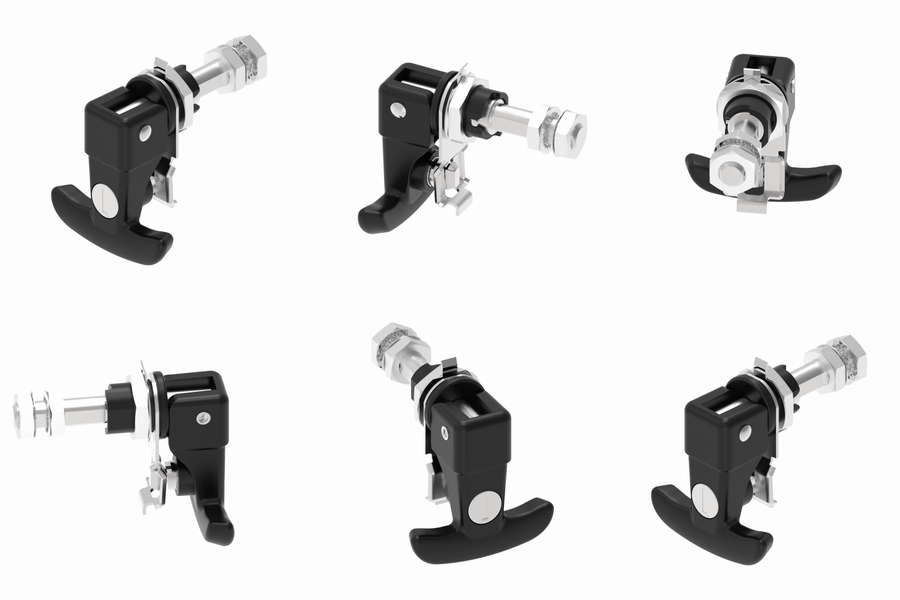
When the door fights back, you want leverage. A compression lever latch uses a handle that swings through an over-center position. That gives a strong mechanical advantage, and the latch stays closed without anyone holding it. These are the choice for heavier gasketed doors, and many versions include a key lock and a padlock option.

They stick out more than a rotary latch, and the handle needs room to swing. That's the trade.
Lift-and-turn and flush trigger latches

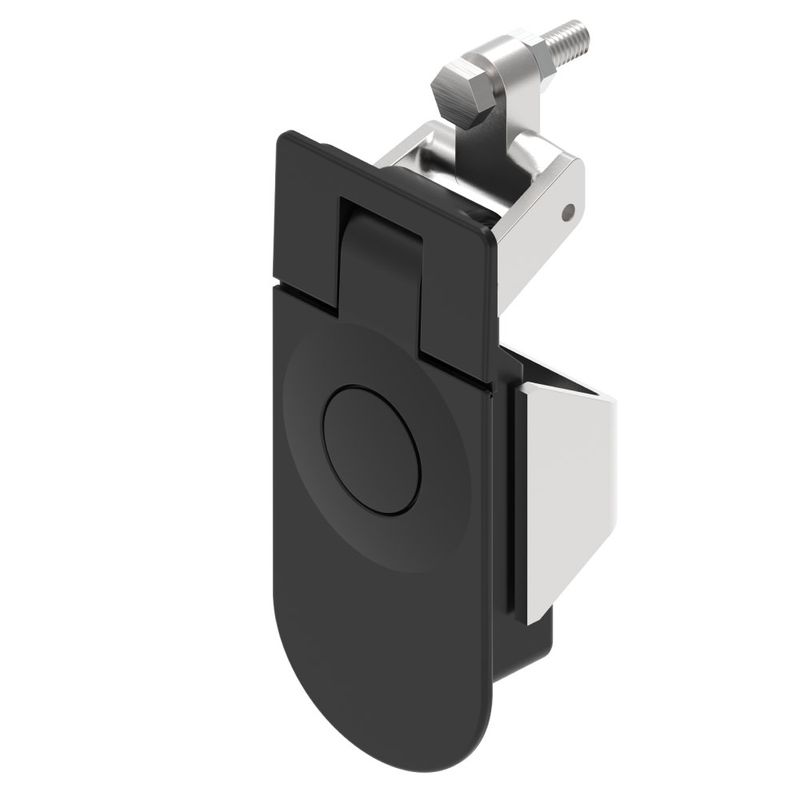
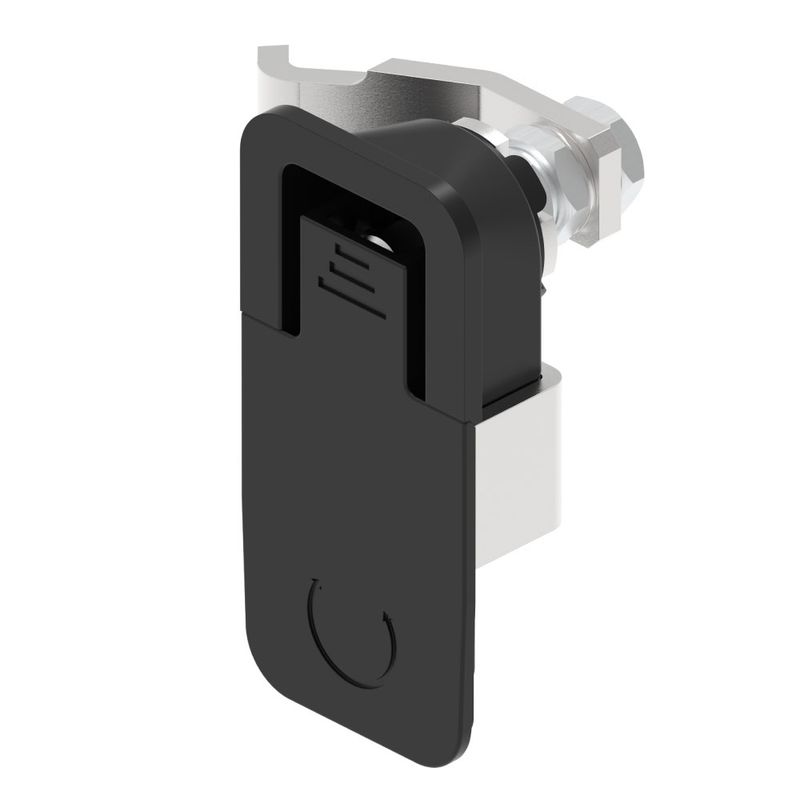
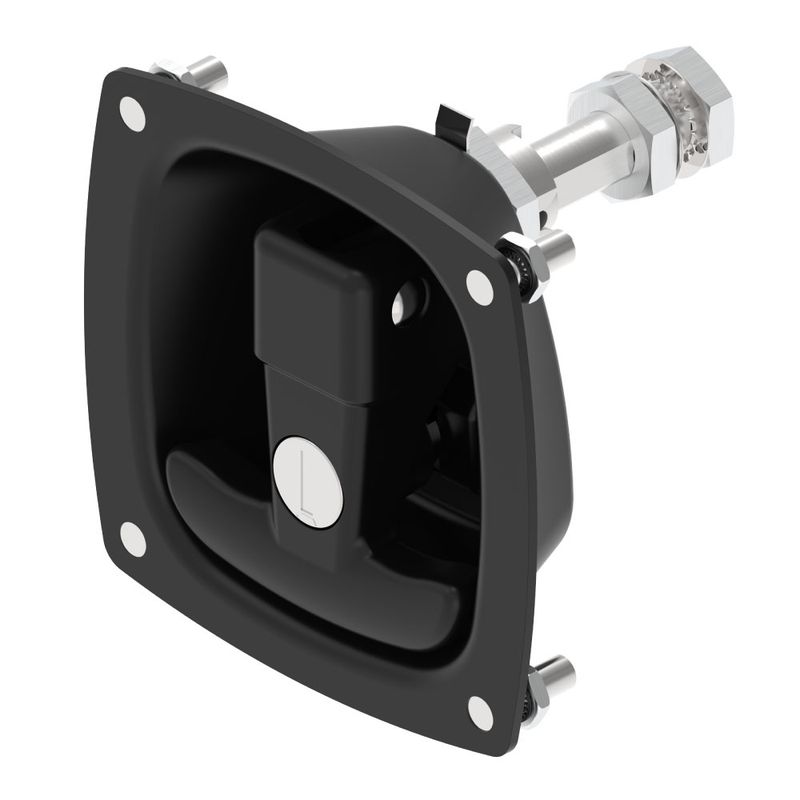
Lift-and-turn designs combine the compression latch and the door handle in one assembly. You lift the handle, which releases the compression, then turn to open. One part does the work of two, which is why you see them on equipment doors and vehicle compartments.
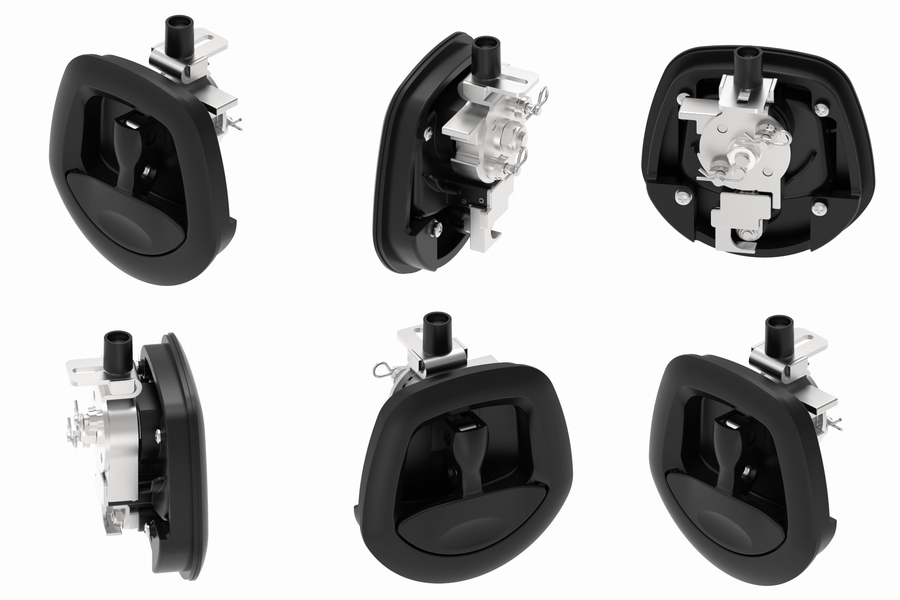
ForndLock A-1549 Heavy-Duty Compression Latch
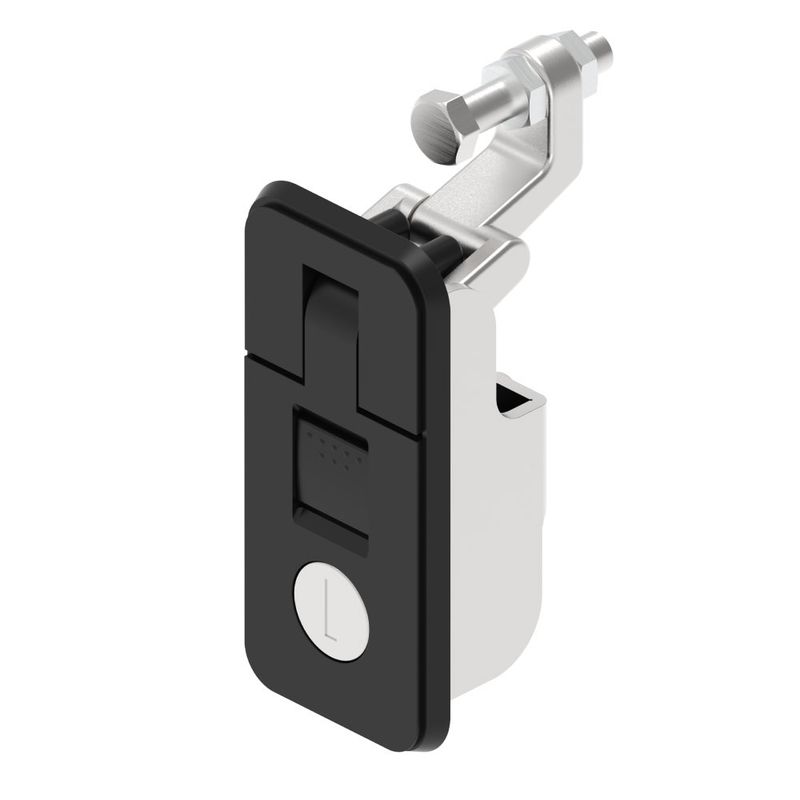
Flush trigger latches sit inside the door's contour. They suit places where a handle would snag, such as a vehicle body panel or a cabinet beside a walkway.
Adjustable grip and self-adjusting latches

Fixed latches work when tolerances are tight and the gasket is consistent. Real assemblies seldom cooperate. Adjustable grip latches let you set compression much like a screw, and some versions give effectively infinite adjustment. One style needs only a hex wrench, and a miniature version needs no tools at all.
Self-adjusting versions go a step further and compensate as the gasket takes a set. If you can't revisit the equipment once it ships, I'd lean this way.
Sizing the Latch to the Gasket and Door
Most selection mistakes happen here. People pick by looks and size, then discover the grip is wrong.
Gasket compression and compression set
Every gasket has a recommended compression range. Too little and it leaks. Too much and it crushes, takes a permanent set and loses its seal faster. Pick a latch whose compression travel lands in the middle of that range, not at the edge.
Compression set is the quiet killer. Over months the gasket flattens a little, compression drops and the door loosens. An adjustable or self-adjusting latch absorbs that. A fixed one doesn't.
Panel thickness and grip range
Catalog listings usually give two numbers, panel thickness and grip, written like "1-5 mm panel, 23-46 mm grip". Panel thickness is the door skin the latch passes through. Grip is the distance from the back of the door to the frame surface the cam bears on.
To pick correctly, measure:
1. Door panel thickness at the cutout
2. Distance from the door's inner face to the frame bearing surface, with the gasket fully uncompressed
3. The same distance at target compression
The grip range has to cover all of that, plus tolerance stack-up from the door, frame and gasket. If your window is tight, step up to an adjustable latch.
Multi-point vs. single-point closure
Large doors flex. A single latch at the center pulls hard right there while the corners stay loose and leak. Past a certain door height you need multiple points, either separate latches or a multi-point system tied together with rods.
Single-point is fine for small access panels. On a full-height door with a continuous gasket, put latches where the door tends to bow, then check the corners with a feeler gauge or a strip of paper.
Materials and Finishes for Harsh Environments
Compression latches come in zinc alloy, plated steel, stainless steel and composites. The right one depends on what the door sees.
Zinc alloy and plated steel
Zinc alloy with powder coat or chrome plating is the default for indoor cabinets and light outdoor duty. It's strong, easy to cast into complex shapes and economical. The weak point is the finish: once a powder coat chips, corrosion starts underneath. If the latch will be scraped, washed or salted, look elsewhere.
304 vs. 316 stainless steel
304 handles general moisture and food-grade areas well. 316 adds molybdenum for better resistance to chlorides, which makes it the usual pick for marine and coastal sites, de-icing salt and aggressive washdown with chemical cleaners.
Finish matters as much as grade. Passivation restores the protective oxide layer after machining. Electropolishing smooths the surface so contaminants and corrosion have less to grab. For washdown I'd specify one of the two.
Watch galvanic pairing too. A stainless latch on an aluminum door in a wet environment can corrode the aluminum around the fasteners. Isolators or compatible coatings help.
Composite and polymer options
Glass-filled polymers don't rust, don't conduct and are light. They suit chemical exposure, electrical enclosures and anywhere metal is a problem. Their load capacity is lower than metal's, so check them against your gasket force before committing, and think about UV exposure outdoors.

A heavy-duty compression latch pulling an enclosure door tight against its gasket.
Vibration, Sealing and Security Requirements
Resisting vibration loosening
A fixed latch set at the factory can back off in service as the gasket relaxes and the structure moves. On vehicles and machinery that is a real failure mode. Self-adjusting designs keep pressure on the door as the gasket changes. For fixed designs, a lock-nut or thread-locking compound on the adjustment is the minimum.
Dust and water sealing in practice
Be clear about what the latch does: it provides the compression. The ingress rating of the enclosure, whether IP or NEMA, depends on the gasket, the frame, the cutouts and the whole assembly. A good latch won't rescue a poor seal profile, and a latch alone can't certify a rating. Treat it as one part of the system and test the assembled door.
Key, tool and padlock options
Specify the level of access control you actually need:
· Non-locking, tool or handle only. Fine where the area is already secure.
· Tool-operated (hex, square, triangle, double-bit). Keeps casual users out without managing keys.
· Key-locking. For public or shared areas. Decide on keyed-alike or keyed-different up front.
· Padlock provision. Useful when site security policy already runs on padlocks.
Common Applications
Electrical enclosures and control cabinets
Rotary latches with a tool or key drive are standard. The main constraint is ingress protection. Pair the latch with the right gasket and confirm that panel thickness fits the cutout.
Commercial vehicles, RVs and equipment doors
If you're asking what the best cabinet latches for an RV are, compression latches are the answer for exterior compartment doors. They resist vibration, seal out road dust and rain, and stop rattles. Choose a corrosion-resistant finish and a key-locking option. For flush body lines, a trigger-style flush latch avoids snagging.
Vehicle doors see constant vibration and flex, so self-adjusting or lever types often outperform fixed rotary ones.
Outdoor and washdown equipment
316 stainless, electropolished or passivated, is the usual starting point. Sealed handles and drains matter as much as the latch, because water trapped behind a handle freezes and corrodes. Keep the geometry free of crevices.
Specification Checklist and Common Mistakes
Data to include in an RFQ
Copy this into your request:
· Panel (door skin) thickness and cutout dimensions
· Grip range required, with gasket uncompressed and at target compression
· Gasket type, material and profile
· Door size and number of latch points
· Operating environment (indoor, outdoor, washdown, marine, chemical, vehicle)
· Vibration conditions
· Latch type (rotary, lever, lift-and-turn, flush, adjustable)
· Locking requirement and key plan, or tool drive
· Material and finish, including any corrosion test requirement
· Expected cycle life
· Annual volume and delivery schedule
The more of this you supply, the fewer rounds of back-and-forth it takes to get a useful quote.
Typical failure modes
· Over-compression. The latch crushes the gasket, which takes a set early and leaks. Pick a grip that lands mid-range.
· Fatigue. Undersized cams and handles crack when cycled hard. Check cycle life against how the door is really used.
· Corrosion. Zinc or coated parts in salt, chemical or washdown settings fail early. Upgrade the material, not just the coating.
· Misalignment. If the cam doesn't land squarely on the frame, force concentrates and the door doesn't pull in evenly. Check frame flange position and cam offset.
· Wrong grip. Tolerance stack-up pushes the real gap outside the latch's range. Adjustable versions fix most of this.
FAQ
What is a compression latch?
It's a latch that closes the door and also draws it against its gasket, compressing the seal. That gives a tighter, quieter and more vibration-resistant closure than a basic cam latch.
What is the difference between a cam latch and a compression latch?
A cam latch only holds the door shut. A compression latch also pulls the door inward to compress the gasket, which improves sealing and reduces rattle.
What are the different types of compression latches?
Rotary or quarter-turn, lever and over-center, lift-and-turn, flush trigger, and adjustable or self-adjusting grip latches. Most are available in locking and non-locking versions.
How do I choose the right grip range?
Measure panel thickness, frame depth, and the gasket's compressed and uncompressed thickness. Choose a latch whose adjustable range covers the whole span, including tolerance stack-up.
Which material is best for outdoor or washdown use?
316 stainless steel is generally the pick for corrosive or washdown conditions. Zinc alloy with powder coat suits general indoor and light outdoor use. Match the material to the exposure.
What are the best cabinet latches for an RV?
Compression latches suit RV compartment doors because they resist vibration and seal against dust and water. Choose a corrosion-resistant finish and a key-locking option.
Custom and OEM Heavy-Duty Compression Latch Projects
Standard catalog latches cover many jobs. When yours isn't one of them, customization is usually a small change and not a redesign. This is where we work with OEM and ODM customers on heavy-duty compression latches.
What can be customized
· Grip range and cam length, to match your frame and gasket
· Finish and material, such as 316 with electropolish, or a specific powder coat color
· Key code and key plan (keyed-alike, keyed-different, master)
· Handle style, drive type and padlock provision
· Branding and marking
Sample testing and validation
Don't sign off a latch from a drawing alone. We supply samples so you can fit them on a real door with the real gasket, and check compression, operating force and alignment. Cycle and environmental checks can be agreed against your requirements before volume production, and batch delivery follows once the sample is approved.
If you have a project in mind, send the door drawing, gasket details, environment and target volume to [email protected]. A sketch and a few dimensions are enough to start. If you'd rather test first, ask for samples and tell us what you plan to measure. Either way, the goal is the same: heavy-duty compression latches that fit your door and keep the gasket working for the life of the equipment.