
Why Choose a Custom Stainless Steel Door Handle Manufacturer for Commercial Projects?
If you have spent weeks sending specification sheets to suppliers only to receive samples that are too light, finished in the wrong grade, or missing any trace of EN 1906 documentation, you already understand the core problem. Most stainless steel door handle manufacturers operating online are structured around residential retail — small batches, catalog SKUs, and no meaningful customization beyond finish color. Commercial projects operate on a completely different set of requirements: cycle-load performance, certification compliance, access control compatibility, and the ability to deliver hundreds of identical sets without variation across production batches. At ForndLock, we built our manufacturing capability specifically around that reality. This article walks through what separates a genuine custom commercial manufacturer from a catalog reseller — and what that difference means for your project's timeline, compliance outcome, and long-term hardware performance.
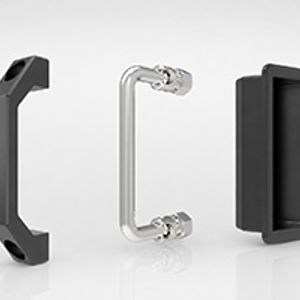
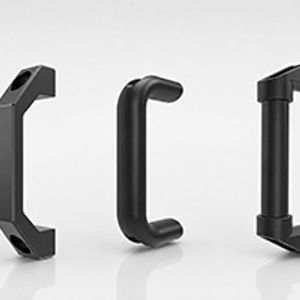
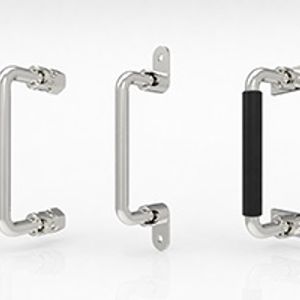
ForndLock Industrial Handle Series
What Makes a Stainless Steel Door Handle Truly "Commercial Grade"?
A commercial-grade stainless steel door handle is not simply a heavier version of a residential product — it is engineered from the outset around cycle-load performance, corrosion resistance in high-traffic environments, and compatibility with access control or fire-rated door assemblies.
The distinction matters more than most procurement managers realize until a project hits a specification review. A handle that looks identical to a commercial product can fail at the material level, the performance testing level, or the certification documentation level — any one of which can delay a project or trigger a costly hardware replacement mid-build.
Why Does Grade Matter — 304 vs. 316?
For most interior commercial applications, 304 stainless steel delivers sufficient corrosion resistance, but coastal buildings, healthcare environments, or exterior-facing doors on high-humidity sites genuinely require 316 — and the two grades are not interchangeable once a project specification is locked.
The practical difference comes down to molybdenum content. Grade 304 contains chromium and nickel but no molybdenum, which makes it highly resistant to oxidation in standard environments. Grade 316 adds approximately 2–3% molybdenum, which significantly improves resistance to chloride-induced pitting — the failure mode that matters in coastal facades, hospital wet zones, and exterior entrances in humid climates. A third grade worth flagging is 201, which some suppliers label simply as "stainless steel." Grade 201 substitutes manganese for nickel to reduce cost, and while it passes visual inspection, it performs materially worse in corrosion resistance over time — a serious concern when a commercial durability warranty is on the line. At ForndLock, we specify the steel grade upfront in every project quotation. It is not an afterthought or an upgrade option; it is a defined input at the specification intake stage.
What Performance Standards Should Commercial Handles Meet?
EN 1906 is the European benchmark for lever handle performance, covering cycle testing at 100,000+ operations, torque resistance, and dimensional tolerances — and for wholesale buyers sourcing into European markets, it is effectively a non-negotiable compliance gate.
EN 1906 classifies lever handles into grades based on use intensity. Grade 3 covers moderate-use applications such as light commercial interiors, while Grade 4 is the classification required for heavy-use commercial doors — hotel corridors, office entrance doors, healthcare facilities, and any opening that sees sustained high-cycle traffic. The certification is issued by accredited third-party testing laboratories, not self-declared by the manufacturer. For EU commercial construction projects, building inspectors and specification reviewers will request this documentation at the project approval stage. We have seen procurement timelines slip by four to six weeks when a buyer's original supplier could not produce EN 1906 test certificates at the specification submission stage — forcing a last-minute supplier switch and a complete re-sampling cycle. ForndLock's certified product line for wholesale stainless steel lever door handles EN 1906 certified covers Grade 4, and the documentation is available on request at the quotation stage, not after the order is placed.
How Does ForndLock's Custom Manufacturing Process Actually Work?
Our custom process at ForndLock runs in four defined stages — specification intake, prototype development, pre-production approval, and batch manufacturing — and each stage has a fixed deliverable so you always know where your project stands.
The "OEM/ODM available" claim is common across hardware suppliers. What it often means in practice is that a trading company can forward your drawings to a third-party factory and relay samples back to you, with no direct control over tooling, material sourcing, or batch consistency. That structure works for simple, low-stakes orders. It does not work for commercial projects where 400 room doors need identical lever geometry and finish matching across two production runs.
What Can Actually Be Customized?
At ForndLock, customization covers lever profile geometry, backplate dimensions, spindle configuration, surface finish, and engraving or logo integration — meaning a project architect can specify handles that are genuinely designed for the door system, not forced to fit it.
Lever profile options range from straight tubular designs to curved ergonomic profiles and ADA-compliant geometry for accessibility compliance. Backplate configurations include round rose, square rose, long escutcheon plate, narrow profile plate, and concealed-fix options. Spindle sizing defaults to the 8mm square standard used with European mortise lock cases, but project-specific sizing is available where the door hardware system requires it. Surface finishes cover satin brushed, mirror polished, PVD matte black, PVD champagne gold, PVD bronze, and powder coat options. For hospitality projects, lever engraving and logo integration are available with a minimum order threshold.
One project type that illustrates how this works in practice: a hotel group requiring a specific curved lever profile to match the pull handle design used across public-area doors. The lever curvature was not available in any standard catalog. We took the client's reference drawings through a CAD review, produced a 3D-printed mockup for spatial approval, then moved to a machined metal sample before production sign-off. The entire CAD-to-approved-sample stage ran 18 working days. That kind of workflow is only possible with in-house tooling capability — it cannot be replicated by a trading company routing work through an external factory.
What Is the Typical Lead Time for a Custom Order?
For a new custom lever handle with tooling development, ForndLock's standard timeline runs 15–20 working days to first physical sample, with production lead time of 30–45 days from approved sample depending on order volume.
The four stages break down as follows. Specification intake and design for manufacturability review takes 3–5 working days — this is where we confirm the geometry is producible, flag any tolerance issues, and align on material grade and finish. Prototype production runs 8–12 working days. Client approval and any revision round adds 3–5 working days, depending on feedback. Batch production, quality control, and packing runs 25–40 working days depending on quantity and finish complexity. For buyers who need faster turnaround, ForndLock's standard commercial catalog range — existing lever profiles in defined finishes — ships on a shorter cycle without the tooling development stage. MOQ for custom tooling orders typically starts from 200 sets for simpler profiles and 500 sets for more complex geometries. Standard catalog handles are available from lower quantities, which makes them practical for wholesale trial orders before committing to a custom development program.
Which Commercial Project Types Benefit Most from Custom Handles?
The projects where custom stainless steel door handles deliver the most value are those where door hardware must perform consistently across hundreds of identical openings, match a defined architectural language, and pass third-party inspection — conditions that off-the-shelf catalog product rarely satisfies at scale.
How Do Hospitality Projects Differ from Office Fit-Outs?
Hospitality projects prioritize aesthetic consistency and brand expression across high-cycle doors, while office fit-outs typically prioritize access control integration and EN 1906 compliance documentation for building certification purposes — and both require a manufacturer who can deliver on both dimensions, not just one.
In hospitality, the primary driver is visual uniformity. A 300-room hotel has room doors, corridor doors, service entrance doors, and public-area doors — all of which need to carry the same lever profile and finish, produced consistently across potentially multiple production batches. PVD finishes are common in this segment because they offer color options beyond standard brushed steel while maintaining surface hardness and scratch resistance appropriate for high-cycle door use.
Office tower fit-outs present a different set of requirements. The lever handle must be mechanically compatible with electronic mortise lock cases, which often have specific spindle and backplate clearance requirements. ADA and DDA ergonomic compliance is frequently specified, and fire door rating documentation must be coordinated with the hardware schedule at the building certification stage.
Healthcare environments introduce a third dimension: material specification and profile design for infection control. Grade 316 stainless steel is standard for wet-zone and clinical-area doors. Smooth-profile lever designs — without recessed joins or surface texture that traps contaminants — are preferred, and anti-ligature configurations are required in certain ward types. For retail and public infrastructure, the primary driver is cycle-load durability combined with vandal-resistant backplate construction.
Why Do Wholesale Distributors Choose ForndLock for European Markets?
Wholesale distributors serving European construction markets need a stainless steel lever door handle supplier who can provide EN 1906 certification documentation on demand, consistent batch quality across repeat orders, and competitive per-unit pricing at volumes that justify the import logistics — which is exactly the supplier profile ForndLock is built around.
EN 1906 Grade 4 handles are tested to a minimum of 100,000 operating cycles under the standard's torque and cycle-load protocol. For a distributor supplying into commercial construction projects, that certification number is what their contractor clients will cite when a warranty claim arises. If the supplier cannot back the product with accredited test documentation, the distributor absorbs the liability. ForndLock's certified range for wholesale stainless steel lever door handles EN 1906 certified carries third-party lab documentation as standard, and we support private label and OEM packaging for distributors who need branded product for their own client base.
How Should You Evaluate a Custom Stainless Steel Door Handle Manufacturer Before Committing?
Before placing a custom order with any stainless steel door handle manufacturer, there are five things worth verifying: material certification, prototype capability, EN 1906 test documentation, production quality control process, and whether their stated MOQ is genuinely flexible or just a negotiating opener.
What Documentation Should a Reliable Manufacturer Provide?
A credible commercial-grade manufacturer should be able to supply material test reports for the stainless steel grade used, EN 1906 test certificates for the relevant product line, and a documented QC inspection process — if any of these require significant chasing, that itself is a signal worth taking seriously.
Material test reports confirm actual alloy composition — chromium, nickel, and molybdenum percentages — rather than relying on the supplier's labeling. EN 1906 test certificates should reference an accredited third-party laboratory, not an internal test. ISO 9001 quality management certification indicates a structured production environment with documented process controls. For outgoing shipments, ForndLock applies AQL 2.5 Level II inspection sampling as standard — covering dimensional tolerances, surface finish consistency, spindle function, and packaging integrity before goods leave the factory. Pre-production approval samples are provided as a standard step in every custom order, not an optional upgrade.
Is a Low MOQ Always a Good Sign?
An unusually low MOQ can indicate a trading company reselling stock rather than a manufacturer with genuine production capability — and for custom commercial projects, the distinction matters because only a direct manufacturer can control tooling, material sourcing, and batch consistency across large orders.
There is a legitimate version of low MOQ: catalog stock items that are already manufactured and held in inventory. That is a different product category from custom tooling orders, and both serve real needs. The red flag is a supplier who quotes low MOQ on a custom profile with no tooling development timeline, no DFM review, and no production photos available. ForndLock operates with in-house CNC machining and surface treatment lines, which means we control the full production process from raw bar stock through finished, packed product. A sample order placed before committing to full project volume is the most reliable way to stress-test a new supplier — and we encourage it.

What Finish and Configuration Options Does ForndLock Offer for Commercial Handles?
ForndLock's commercial stainless steel door handle range covers the finishes and configurations that appear most frequently in project specifications — satin, mirror polish, PVD matte black, PVD champagne gold, and brushed antique — with both standard lever profiles and fully custom geometry available in 304 or 316 grade.
Finish | Description | Recommended Environment |
Satin (Brushed) | Matte directional texture, low reflectivity | Office interiors, healthcare, general commercial |
Mirror Polished | High-gloss reflective surface | Hotel lobbies, retail, prestige commercial |
PVD Matte Black | Hard physical vapor deposition coating, flat black | Contemporary hospitality, branded office fit-outs |
PVD Champagne Gold | Warm gold tone, scratch-resistant PVD layer | Luxury hospitality, high-end residential commercial |
PVD Bronze | Dark warm tone, durable surface | Heritage buildings, boutique hospitality |
Configuration types cover lever on round rose, lever on square rose, lever on long backplate, lever on narrow profile plate, tubular lever, and solid bar lever. Fire door compatible configurations are available with the relevant certification coordination. Spindle compatibility defaults to the 8mm square standard used with European mortise lock cases. Lever designs meeting ADA ergonomic requirements are available across multiple profiles. Custom engraving and logo integration is available from a minimum order threshold, and is most commonly used by hospitality groups and branded commercial developers.
FAQ
Is 304 or 316 stainless steel better for commercial door handles?
For most interior commercial applications, 304 stainless steel provides sufficient durability and corrosion resistance, but projects in coastal, high-humidity, or healthcare environments should specify 316 for its superior chloride resistance.
The practical rule is straightforward: 304 for interior corridors, office doors, and standard commercial interiors; 316 for exterior entrances in humid climates, hospital wet zones, and any application within close proximity to coastal salt air. ForndLock specifies the appropriate grade at the quotation stage for every project inquiry.
What does EN 1906 certification mean for a wholesale buyer?
EN 1906 is the European standard governing lever handle performance, and for wholesale buyers supplying into EU commercial construction projects, it is the primary compliance document that building inspectors and specifiers will request.
Grade 3 covers moderate-use applications; Grade 4 is required for heavy commercial use and is tested to a minimum of 100,000 operating cycles. ForndLock's certified product line covers Grade 4, and documentation is available for project submission without lead time.
What is the minimum order quantity for custom commercial handles at ForndLock?
For custom lever handles requiring new tooling development, ForndLock's typical MOQ starts from 200 sets, while standard commercial catalog handles are available from lower quantities for wholesale trial orders.
MOQ thresholds can be discussed based on project scope and complexity. We encourage direct inquiry with project drawings or reference specifications for accurate MOQ and lead time guidance.
How long does it take to receive a physical sample?
ForndLock produces first physical samples for new custom handles within 15–20 working days from confirmed specification, with standard catalog samples available for dispatch within 3–5 working days.
Sample charges may apply but are credited against the confirmed production order. Sending reference drawings or images at the inquiry stage accelerates the DFM review and reduces the overall sample timeline.
Can ForndLock supply private label packaging for wholesale distributors?
Yes — ForndLock offers OEM packaging and private label options for wholesale distributors, including custom box printing, product labeling, and mixed-SKU packing configurations suited to distributor warehouse requirements.
This service is used regularly by European and Middle Eastern distributors in ForndLock's existing client base. Minimum quantity thresholds for private label packaging apply and are confirmed at the quotation stage.
ForndLock Handles Series Introduction
Finding the right custom stainless steel door handle manufacturer for a commercial project is not simply a price-per-unit decision. It is about finding a manufacturing partner who understands project timelines, can produce EN 1906 documentation without being chased for it, and has the production infrastructure to deliver consistent quality across large-scale orders — because the cost of getting hardware wrong at scale, whether through a failed specification review or a batch finish mismatch across 400 room doors, is far higher than any per-unit saving from a cheaper supplier.
At ForndLock, our production capability is built specifically around this kind of project work. Whether you are specifying handles for a 500-room hotel, sourcing wholesale stainless steel lever door handles EN 1906 certified for European distribution, or developing a private-label hardware range for your own client base, we are ready to work through the details with you from the first specification call through to final shipment.
Send your project requirements, drawings, or sample requests directly to: [email protected]. We respond to all commercial project inquiries within one business day.