Rotary Latches: Types, Materials and Industrial Applications
A rotary latch uses a rotating claw, rotor or similar mechanism to capture a striker when a door or panel closes, giving equipment doors push-to-close operation, positive striker capture and the option of concealed installation with remote release. At ForndLock, we treat this closing action as the starting point of a much larger engineering decision rather than the whole answer. Reliable retention also depends on the striker, the engagement depth, door geometry, the release method, vibration exposure, material selection and mounting strength. Choosing rotary latches for machinery, vehicle or transportation equipment therefore means evaluating the latch and its supporting hardware as one system, not as a single hardware item picked from a catalog page.
What Is a Rotary Latch and How Does It Work?
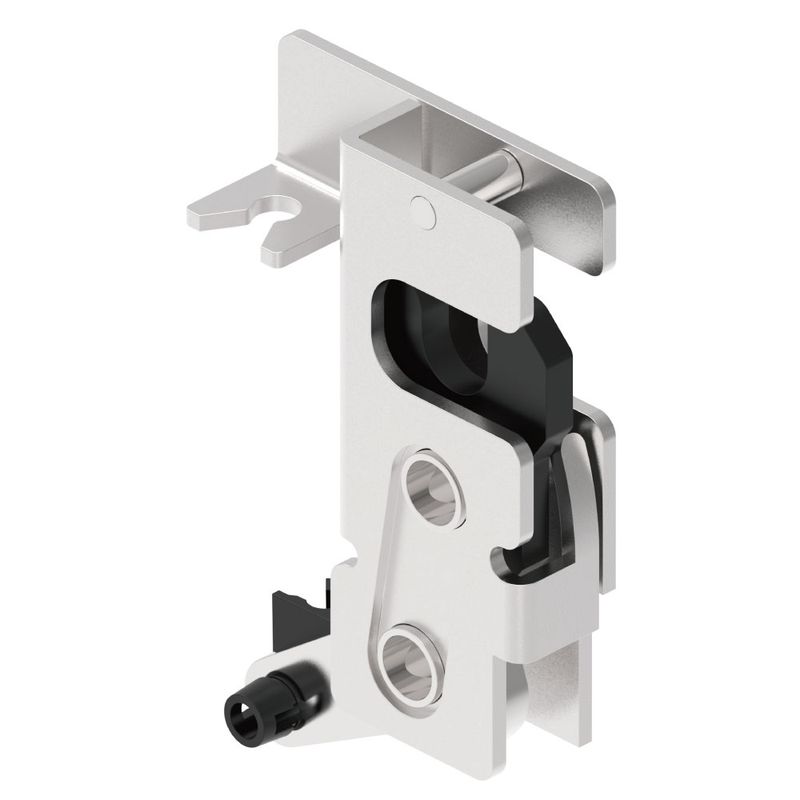
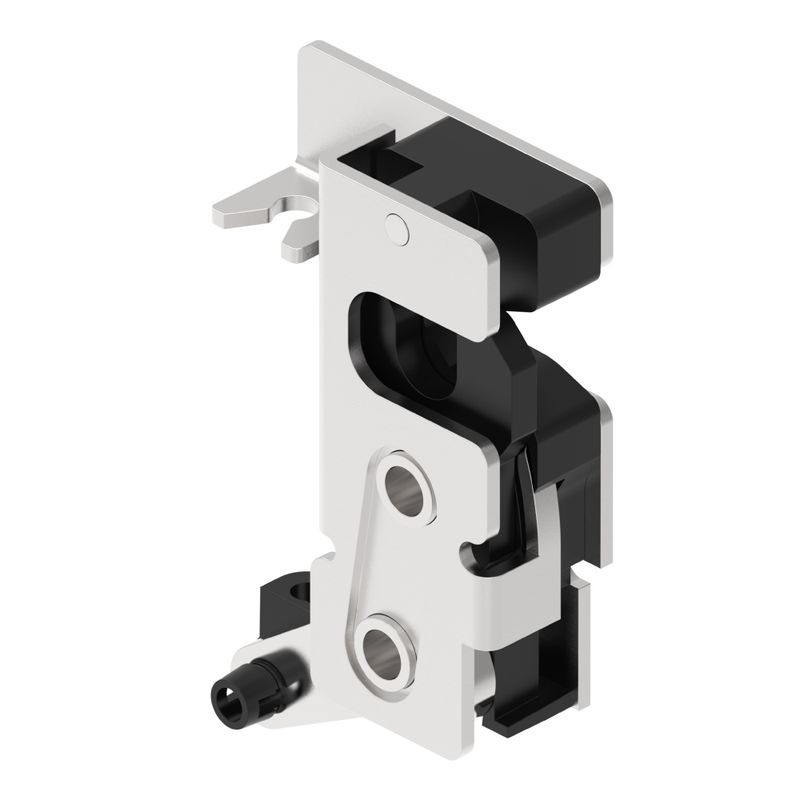
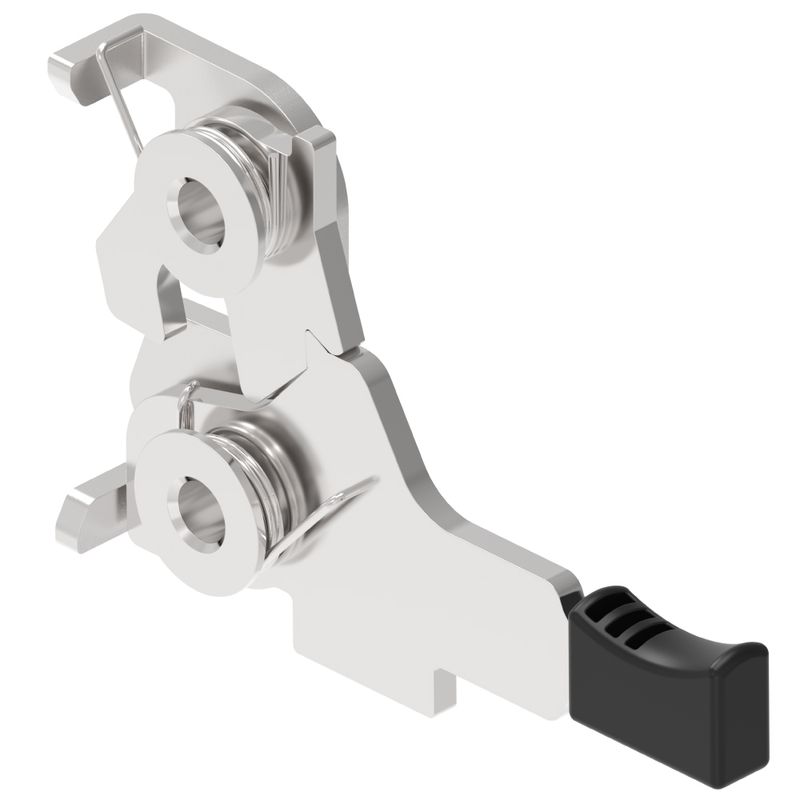
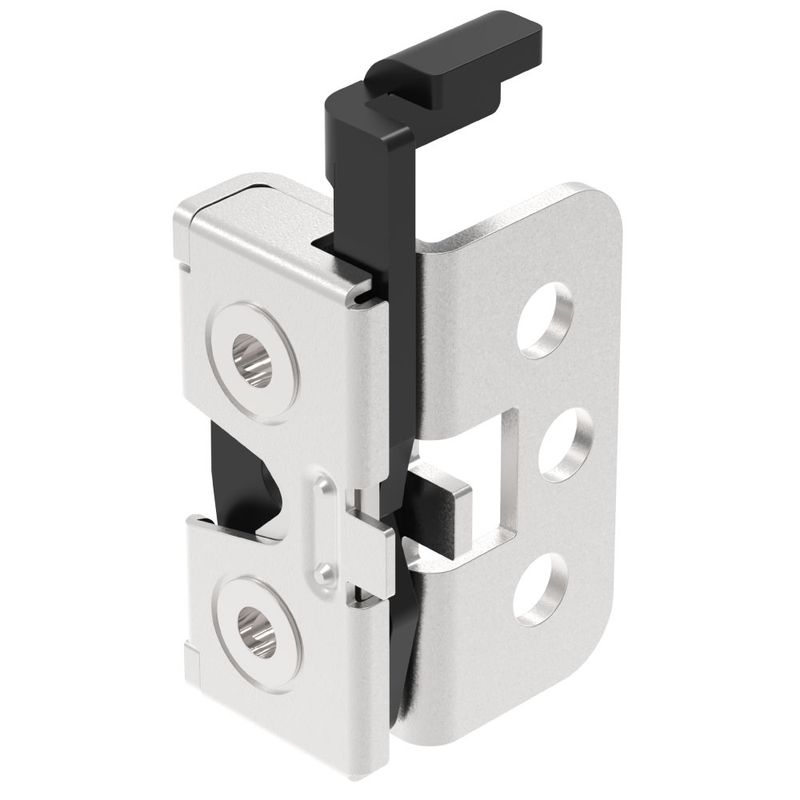
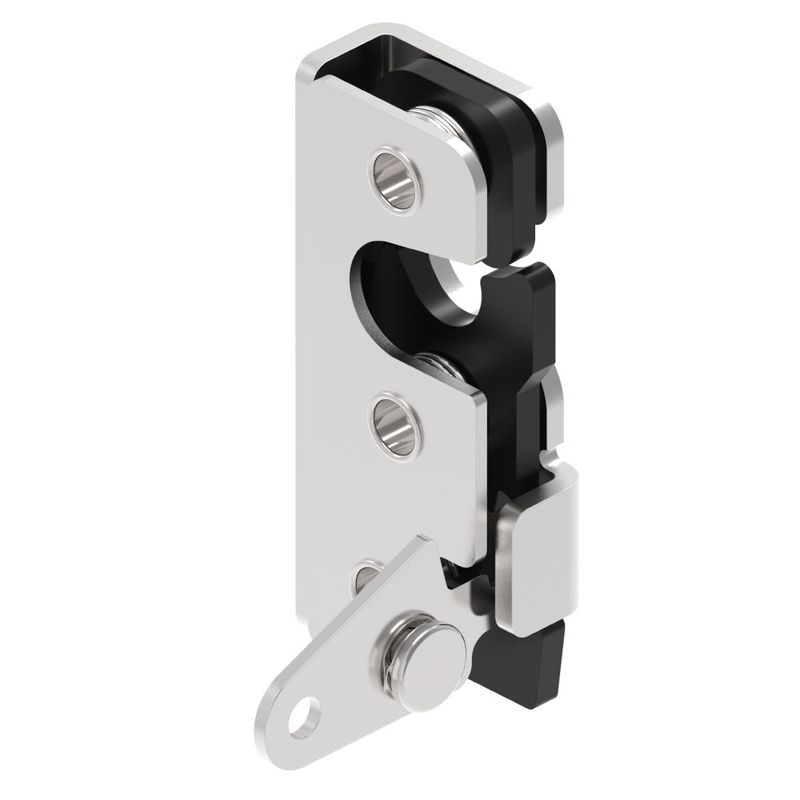
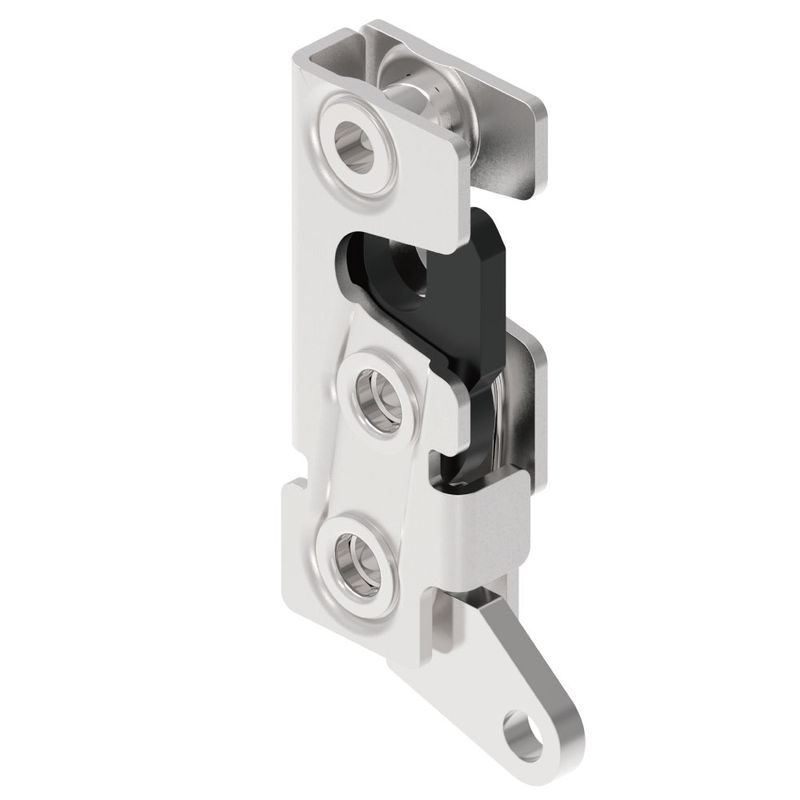
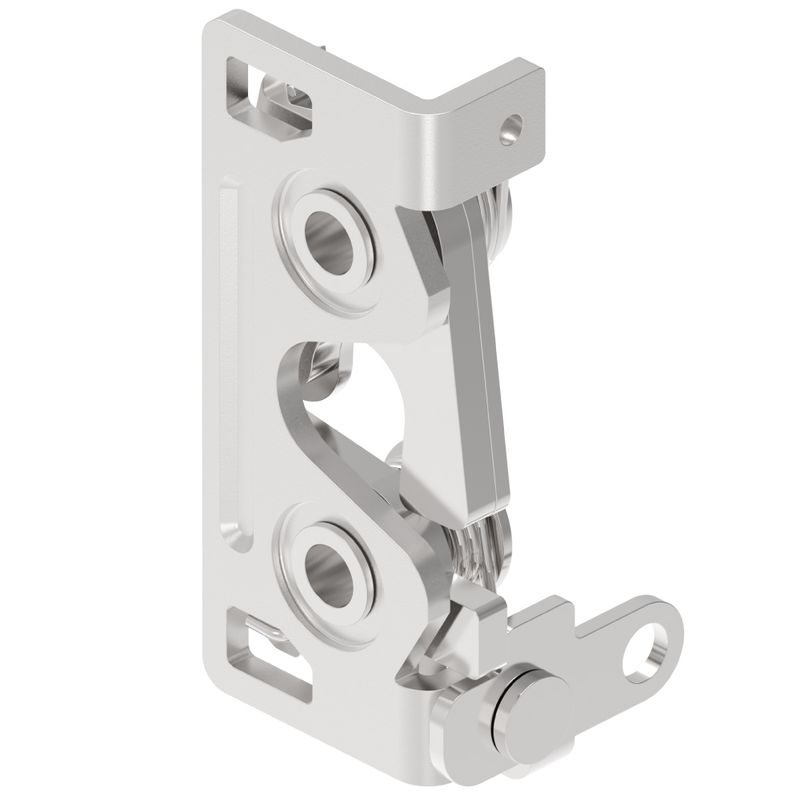
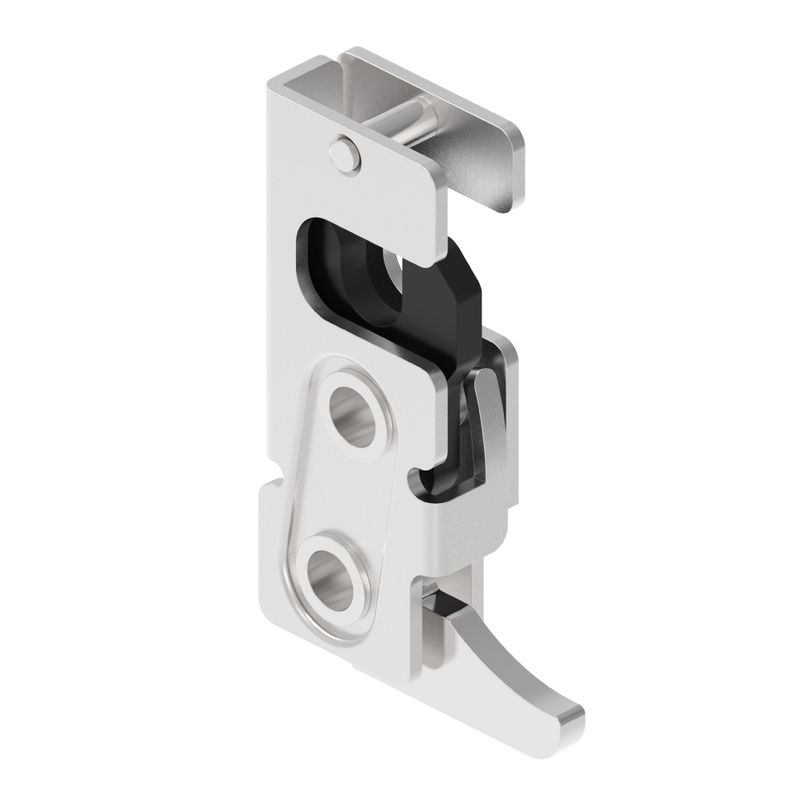
A rotary latch is a mechanical closure device that uses a rotating rotor or claw to capture and hold a striker, keeping a door or panel securely closed until it is released. A typical rotary latch mechanism includes a latch housing, a rotor or claw, an internal pawl, a spring, a striker, a release lever and, in many designs, a cable or external actuator. These components work together to convert the closing motion of a door into a positive mechanical hold.
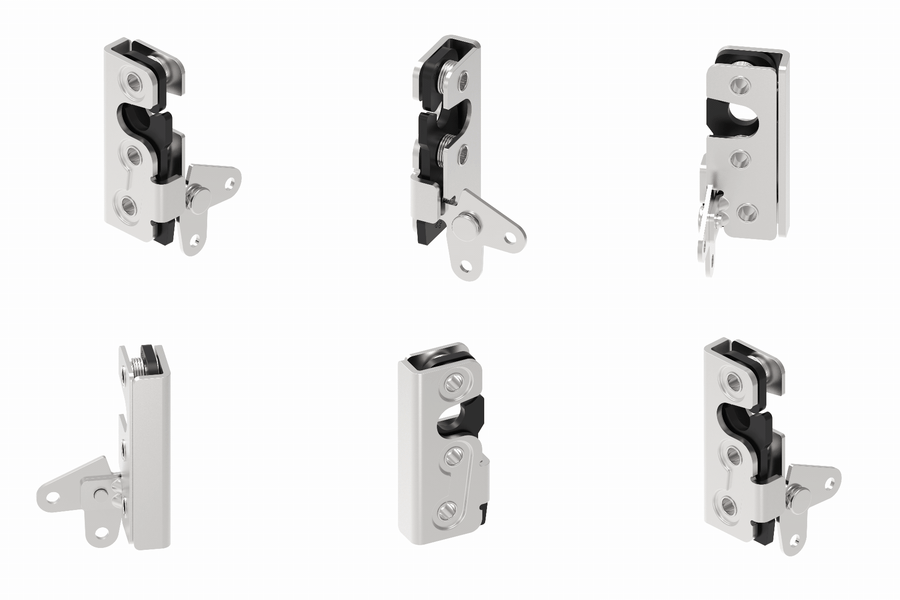
The closing sequence generally follows a consistent pattern, though the internal geometry differs between manufacturers and product lines:
1. The door moves toward the closed position.
2. The striker enters the latch opening.
3. Contact with the striker rotates the rotor or claw.
4. The internal pawl retains the rotor in the engaged position.
5. The striker remains captured against the housing.
6. The release mechanism moves the pawl and allows the rotor to release the striker.
We want to be clear that not every rotary latch shares the same internal layout. Spring tension, pawl geometry, rotor profile and housing design vary by product family, so the specific engagement behavior of one rotary latch should not be assumed to apply to another without checking the actual drawing.
Why Is the Striker Critical to a Rotary Latch System?
The striker determines how the rotor engages, how much retention the latch provides and how reliably the door closes, so it must be selected and positioned together with the latch rather than treated as an accessory.
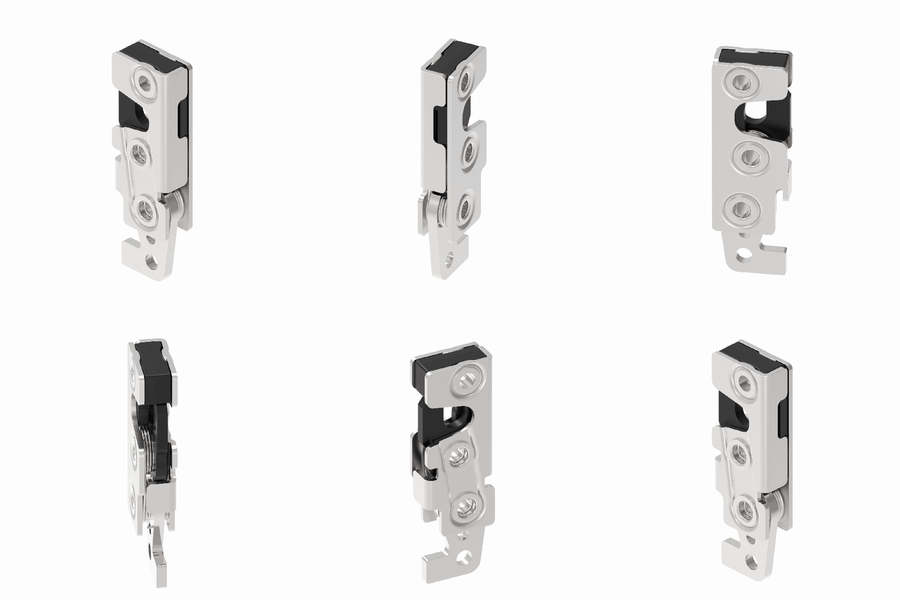
In our experience, a large share of field issues with rotary latches trace back to the striker relationship rather than to the latch body itself. At ForndLock, we review striker drawings alongside latch selection for exactly this reason, and we recommend that any equipment manufacturer working with a rotary latch mechanism do the same before finalizing a door design.
How Does Striker Position Matter?
Striker position determines the entry path, engagement point and the closed position of the door, so incorrect placement can prevent proper latching. If the striker sits outside the intended capture window, the rotor may only partially rotate, leaving the door loosely held even though it appears closed.
Why Does Striker Geometry Matter?
Different rotary latches require specific striker diameter, shape and mounting geometry, and there is no single universal size that fits all designs. We do not recommend assuming a striker from one product family will function correctly on a different rotary latch without confirming the manufacturer's engagement dimensions.
How Deep Should Engagement Be?
Engagement depth must be within the range the latch is designed for, because insufficient depth causes partial engagement while excessive depth can create closing force or release problems. A striker that enters too shallowly may leave the rotor resting on an intermediate surface instead of fully seated, while a striker positioned too deep can increase closing effort and make release harder than intended.
Why Does Alignment Matter?
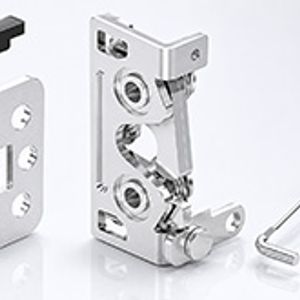
Poor alignment between the striker and the rotor can prevent the latch from closing fully, cause the door to rebound, or accelerate wear. In our experience, a striker entering the latch at the wrong angle is one of the more common causes of a door that seems to close but pops back open under light vibration.
Why Does Mounting Strength Matter?
Even a well-designed latch cannot provide reliable retention if the striker mounting is weak or the surrounding frame flexes under load. We have seen installations where the latch itself was correctly specified, yet door movement continued because the striker bracket deformed under repeated closing cycles, which shifted the engagement geometry over time.
What Are the Common Types of Rotary Latches?
Rotary latches are commonly classified by engagement stage, rotor configuration and release method, including single-stage, two-stage, single rotor, dual rotor, cable-actuated, handle-actuated and lockable designs. Understanding these categories helps narrow the selection before matching a specific striker and release configuration.
What Are Single-Stage Rotary Latches?
A single-stage rotary latch provides one primary engagement position and typically suits applications with simpler retention and structural requirements. The rotor moves directly from the open position to the fully engaged position, which keeps the mechanism straightforward and can simplify both manufacturing and maintenance.

This design works well for access panels, light service doors and equipment covers where a single firm engagement point meets the retention requirement. A single-stage rotary latch is not inherently a lower-quality option; it is simply a different engagement structure suited to applications that do not require an intermediate holding position.
What Are Two-Stage Rotary Latches?
A two-stage rotary latch typically provides a primary engagement position plus a secondary or intermediate position, which can add a further retention state in some applications. The exact structure varies by product design, but the general idea is that the rotor first reaches a partial hold before rotating into the fully engaged position.

This secondary stage can offer closing assurance in situations where the door may not always be pushed with full force, or where an intermediate hold reduces the risk of the door swinging open before full engagement occurs. Whether a two-stage rotary latch is necessary depends on door function, equipment requirements and application validation rather than a general assumption that two-stage configurations are always the safer choice.
What Are Single Rotor Latches?
A single rotor rotary latch uses one rotor or claw to capture the striker and typically suits compact installations and standard equipment access doors. The single-rotor arrangement keeps the mechanism smaller, which can be useful where installation depth or lateral space is limited.

Selection considerations for this type center on the load path through the rotor, the striker geometry the latch is designed to accept and the available installation space within the door structure.
What Are Dual Rotor Latches?
A dual rotor rotary latch uses two rotors or claws working together, which can support different engagement requirements or load distribution depending on the specific design. We avoid stating that a dual rotor configuration is simply "stronger" than a single rotor design, because actual performance depends on the rotor geometry, material and how the load path is engineered within that specific product.

Dual rotor configurations are sometimes selected where the door design benefits from load distribution across two capture points or where a wider engagement window is useful for the closing geometry. The performance outcome should be confirmed against the specific latch structure rather than assumed from the rotor count alone.
What Are Cable-Actuated Rotary Latches?
A cable-actuated rotary latch is released through a handle, cable and release lever, allowing the latch itself to remain hidden while operation is initiated remotely. The typical arrangement follows a handle-to-cable-to-release-lever path, where pulling the handle transmits motion through the cable to move the pawl and release the striker.

Cable routing, cable travel, bend radius and release stroke all affect whether the mechanism releases smoothly. We do not provide a fixed travel figure here because required stroke varies by latch design; this is a detail we review against the specific product drawing during application review. Cable-actuated rotary latches are common in vehicle compartments, machinery doors and any installation where the latch body needs to stay hidden while access remains available from a separate location.
What Are Handle-Actuated Rotary Latches?
A handle-actuated rotary latch is released directly or indirectly through a paddle handle, pull handle or lever mounted at the latch location.
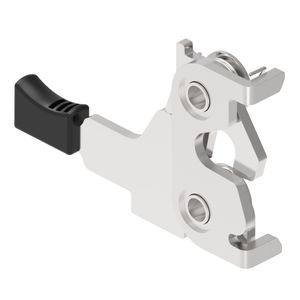
This configuration suits equipment compartments, service doors and access panels where the operator can reach the latch location directly, removing the need for cable routing.
What Are Lockable Rotary Latch Systems?
A lockable rotary latch system restricts release operation through a keyed handle, locking actuator or other access control mechanism, primarily serving access control rather than forced-entry resistance.

Key locking on a rotary latch is a way to manage who can operate the release; it should not be described as a security guarantee against forced entry, since actual resistance depends on the full door, frame and locking hardware assembly.
What Materials Are Used for Rotary Latches?
Rotary latch components are typically made from steel, stainless steel, zinc alloy or engineering plastics, with the appropriate material depending on which component it is and the operating environment. Material selection should be assessed component by component rather than applied uniformly to the entire latch.
Why Use Steel for Rotary Latches?
Steel is commonly used for the rotor, pawl, housing and striker because it offers mechanical strength, wear resistance and cost effectiveness, though its corrosion performance depends on coating and environment.
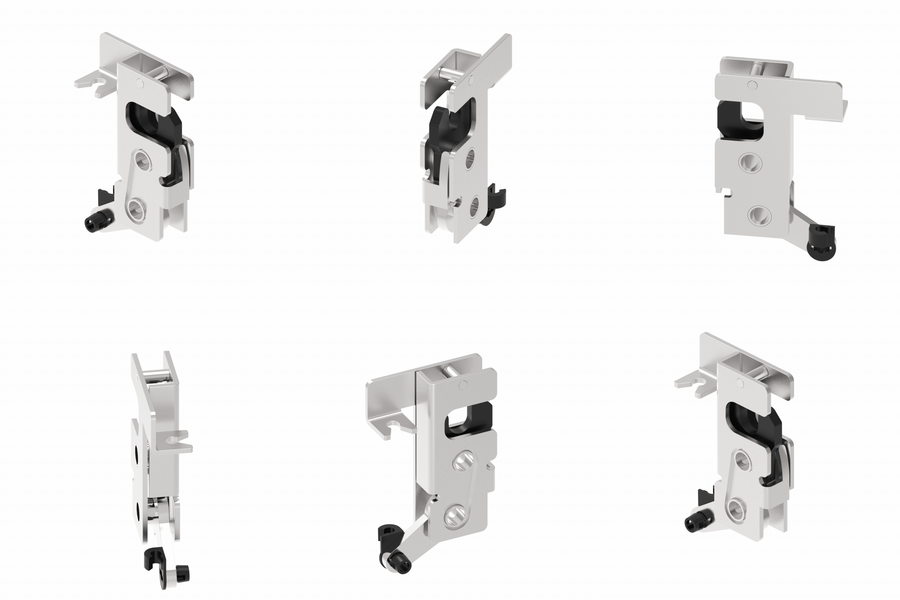
A steel rotor or pawl handles repeated mechanical loading well, but its long-term surface condition depends on plating, environmental exposure and ongoing maintenance rather than the base metal alone.
What About Zinc-Plated Steel?
Zinc-plated or surface-treated steel can improve corrosion resistance and surface durability, but actual performance still depends on the coating system and exposure conditions. We do not quote salt spray hours in this context because coating performance in the field depends on the specific plating process and how the part is exposed in service, not a single laboratory figure.
When Is Stainless Steel Needed?
Stainless steel is generally selected for outdoor, moist or corrosive applications, and the choice between grades such as 304 and 316 should be based on the specific exposure conditions.
Grade 304 is commonly suitable for general outdoor and light industrial exposure, while grade 316 includes molybdenum that can offer additional resistance in chloride-heavy or coastal-type environments. We do not treat 316 as automatically the better choice in every case; the correct grade depends on the actual chemical and environmental exposure the latch will face.
ForndLock: Stainless Steel Rotary Latch System Manufacturer
Where Is Zinc Alloy Used?
Zinc alloy is often used for handles, actuation components and certain housings where complex geometry and manufacturing flexibility are needed, rather than as the primary load-bearing structure for heavy applications. It allows more intricate shapes for ergonomic handles and integrated actuator parts, but we do not recommend it as the main structural material for latches carrying substantial door loads.
Where Do Plastics Fit In?
Engineering plastics can be suitable for covers, handles and bushings where structurally appropriate, but they are not a general substitute for metal rotors or pawls in load-bearing positions. Plastic components can reduce weight and cost in non-critical areas, but the primary capture and retention parts of a rotary latch typically remain metal for durability reasons.
How Should You Select Materials?
Material selection should be based on the combined load, wear, corrosion exposure, chemicals, weight and operating frequency of the application rather than simply choosing the strongest available material. A latch operating indoors in a dry environment has very different material needs from one exposed to washdown cycles, road salt or industrial chemicals, even if the mechanical load is similar.
Where Are Rotary Latches Used Industrially?
Rotary latches are used across machinery access doors, construction and heavy equipment, vehicle compartments, transportation equipment, industrial equipment doors and storage or service compartments, each with different structural and environmental demands.
How Do You Select the Right Rotary Latch?
Selecting the right rotary latch requires evaluating the door structure, required retention, engagement stage, striker match, closing path, release method, vibration exposure, material and installation space together as one system. Our engineering team reviews these factors together with your drawing before recommending a configuration, because changing one variable, such as door weight or closing angle, can change what the rest of the system needs.
What Is Your Door Structure?
Latch selection should start with the door dimensions, weight, panel stiffness, frame structure and opening direction, since the latch cannot be chosen independently of the door system. A thin, flexible panel behaves very differently under closing force than a rigid, heavier door, even if both use a similar latch size.
What Retention Do You Need?
Required retention depends on door load, dynamic load, equipment movement and vibration, not simply on the physical size of the latch. A larger latch does not automatically mean stronger retention if the striker mounting or door structure cannot support the actual operating loads.
Single-Stage or Two-Stage Engagement?
The choice between single-stage and two-stage engagement should be based on the required closing behavior, retention needs and application validation rather than a default assumption. Some doors benefit from the intermediate hold of a two-stage design, while others operate reliably with a single-stage mechanism that matches the closing force typically applied in that application.
Does the Striker Match?
Confirming striker geometry, position, entry angle, engagement depth and mounting strength is essential, since latch selection without striker evaluation is incomplete. This is one of the areas where we ask for a door drawing early, because striker mismatch is difficult to correct after the frame has already been fabricated.
Is the Closing Path Correct?
The striker should travel along the path the latch is designed to accept, since an incorrect closing path can cause side loading, misalignment or partial engagement. A door that swings on a slightly different arc than intended can introduce lateral force on the rotor that the mechanism was not designed to absorb repeatedly.
Which Release Method Fits Best?
Release method selection among direct lever, paddle handle, pull handle or cable actuation depends on user position, latch location and maintenance workflow. A latch positioned deep inside an enclosure with no direct operator access typically points toward a cable or remote actuator rather than a handle mounted at the latch itself.
How Should Cable Actuation Be Evaluated?
Cable actuation should be evaluated for routing, bend radius and release travel, since poor routing can reduce release travel and increase operating effort. In our experience, release force increases noticeably when cable routing includes tight bends that were not accounted for during the initial door layout, so we recommend reviewing the routing path alongside the latch drawing rather than after installation.
How Does Vibration Affect Selection?
In vehicles, machinery and mobile equipment, rotor engagement, pawl retention and striker mounting should be checked under actual dynamic movement rather than assumed from catalog data alone. Door movement under vibration can create rattling even when the latch closes correctly at rest, which is why validation on the actual assembly matters more than published specifications alone.
Which Material Suits the Environment?
Material choice should reflect the actual environment, including moisture, salt, chemicals, temperature and cleaning procedures the latch will encounter. A latch specified correctly for an indoor, climate-controlled setting may not hold up the same way once moved to an outdoor or washdown application.
Is There Enough Installation Space?
Installation space should be confirmed for latch depth, striker clearance, release lever clearance, cable routing and mounting hole positions before finalizing the design. Confirming these dimensions against the actual door section drawing avoids discovering a clearance conflict after tooling or fabrication has already started.
How Does a Rotary Latch Compare to Other Latches?
A rotary latch, slam latch and compression latch differ mainly in their capture mechanism and sealing behavior, and a rotary latch can itself operate as a slam-to-close latch rather than being a fully separate category. These terms are sometimes used as if they describe mutually exclusive product types, but "slam latch" generally describes push-to-close, self-engaging closing behavior, while "rotary latch" describes the rotating claw or rotor mechanism that performs the capture. A rotary latch is very often designed to be slammed closed, which means the two terms frequently overlap rather than compete.
Factor | Rotary Latch | Slam Latch | Compression Latch |
Main mechanism | Rotating rotor/claw captures striker | Self-engaging push-to-close mechanism | Rotation plus axial compression |
Push-to-close capability | Common | Defining characteristic | Usually no |
Striker capture | Core feature | Depends on mechanism | Usually not rotary striker capture |
Remote release | Common in many systems | Possible | Less common |
Gasket compression | Limited / application dependent | Usually limited | Core function |
Typical applications | Machinery and vehicle doors | Equipment doors and panels | Sealed enclosure doors |
A compression latch, by contrast, is built specifically to draw the door inward against a gasket for sealing, which is a different functional goal from striker capture alone.
When Should You Avoid a Rotary Latch?
A rotary latch may not be the right choice when strong gasket compression, simple manual locking, adjustable clamping, limited installation space or an unsuitable striker path make another mechanism more appropriate.
Is Gasket Compression Required?
If strong, consistent gasket compression is required, a compression latch is typically a better fit than a rotary latch. Rotary latches provide limited or application-dependent compression, so an enclosure that depends on gasket sealing for environmental protection usually needs a different mechanism.
Is a Simple Lock Enough?
For small enclosures with simple, low-complexity access needs, a cam lock or quarter-turn latch may be a simpler solution. Adding a full rotary mechanism to a lightly used cabinet door can introduce more complexity than the application actually needs.
Do You Need Manual Clamping?
When adjustable tension or manual clamping is required, a draw latch or over-center latch may be more suitable. These mechanisms allow the operator to set clamping force directly, which a rotary latch is not designed to provide.
Is Installation Space Too Limited?
If the door or frame cannot accommodate the rotary latch mechanism, a more compact locking device should be considered. Rotor travel and pawl clearance require a certain depth within the door structure, and some thin-panel designs simply cannot house that geometry.
Is There No Striker Path?
If the door design does not allow the striker to enter the latch along a suitable path, a rotary latch is unlikely to function reliably. Door hinge geometry or panel curvature can sometimes prevent a straight, consistent striker approach, which undermines the core capture action the latch depends on.
What Are Common Rotary Latch Mistakes?
The most common rotary latch mistakes involve evaluating the latch without the striker, ignoring alignment, engagement depth, vibration and material suitability, each of which can compromise door retention.
Mistake | Potential Problem | Better Approach |
Selecting the latch without evaluating the striker | Latch and striker geometry do not match, causing poor engagement | Review latch and striker together from the drawing stage |
Incorrect striker alignment | Door fails to close fully or rebounds after closing | Verify alignment against the latch manufacturer's engagement drawing |
Insufficient engagement | Partial capture, weak retention, door movement | Confirm minimum engagement depth for the selected latch |
Incorrect closing path | Side loading on the rotor, accelerated wear | Check the striker's approach angle against the intended closing arc |
Ignoring door stiffness | Frame or panel flexes, changing latch alignment over time | Assess panel and frame stiffness before finalizing mounting |
Ignoring vibration | Rattling, gradual loosening, intermittent partial release | Validate performance under actual dynamic movement conditions |
Incorrect single-stage / two-stage selection | Closing behavior does not match how operators actually use the door | Match engagement stage to real closing force and use pattern |
Poor cable routing | Increased release effort, reduced release travel | Plan cable path and bend radius during door layout, not after |
Insufficient release travel | Latch does not fully release, requiring extra force | Confirm handle and cable travel against the latch's required stroke |
Selecting unsuitable material | Premature corrosion or wear in the actual environment | Match material to real exposure conditions, not a general assumption |
Weak striker mounting | Striker loosens or shifts, degrading engagement over time | Confirm mounting strength under expected operating loads |
Ignoring installation depth | Mechanism interferes with surrounding structure | Verify latch depth and clearance against the door section drawing |
Assuming all rotary latches have the same load capability | Latch selected for one application underperforms in another | Confirm capability for each specific product and configuration |
Using a rotary latch where strong gasket compression is required | Inadequate sealing performance | Evaluate a compression latch instead |
How Should You Install and Maintain Latches?
Reliable rotary latch performance depends on correct installation of the striker and latch, verified engagement and release, followed by periodic inspection of wear, corrosion and cable condition.
What Does Installation Involve?
Installation should confirm mounting position, striker entry path, engagement, mounting strength and door alignment, and verify both closing and release operation before commissioning. Where a cable is used, routing should be checked for excessive bends and full release travel should be confirmed at the handle before the door is put into service.
What Does Maintenance Involve?
Maintenance should periodically inspect rotor and pawl wear, striker condition, mounting hardware, corrosion and cable operation without assuming a fixed service interval. Because operating frequency, environment and load vary by installation, we recommend basing inspection intervals on actual usage conditions rather than a generic schedule not tied to the specific product.
How Does ForndLock Support Custom Rotary Latches?
At ForndLock, we evaluate the rotary latch, striker, door structure and release system together before recommending a configuration, supporting drawing review, striker matching, material recommendation and sample validation. Our engineering team reviews the application details you provide, including door drawings, door dimensions, door weight, frame geometry, striker requirements, closing direction, release method, application environment and quantity, before proposing a latch and striker configuration.
From there, we can work through structural customization where the standard geometry does not fit your door section, evaluate single-stage or two-stage engagement against your closing behavior, and recommend material based on your actual operating environment rather than a generic specification. Where cable or handle actuation is involved, we review routing and travel requirements as part of the same evaluation. We support sample validation before production and can carry that configuration through to production once the design is confirmed.
What Should You Remember About Rotary Latches?
Choosing the right rotary latch means matching the latch type, engagement stage, striker, door structure, closing path, release method, material and vibration exposure as one complete system rather than evaluating the latch body alone. Whether you are comparing single-stage against two-stage engagement, single rotor against dual rotor configurations, or steel against stainless steel components, the right answer depends on your specific door, environment and operating pattern rather than a generic recommendation.
A rotary latch should be evaluated as part of a complete door-retention system rather than as an isolated component. Reliable operation in the field ultimately depends on how the latch, striker, door, actuator and mounting hardware work together, not on any single part viewed on its own.
If you are working through a rotary latch selection for a machinery door, vehicle compartment or transportation equipment project, send your door drawings, door weight, installation dimensions, striker requirements, release requirements, material requirements, application environment and quantity to [email protected]. Our team can review the details, assist with striker matching and structural customization, recommend suitable materials, configure cable or actuator release, and support sample evaluation through to production for your specific application.