How Rotary Latch Systems Work in Industrial Door Applications
A rotary latch system secures an industrial door when the striker enters the latch and rotates a jaw into the retained position. An internal pawl holds the jaw until a handle, cable, rod, or electronic actuator releases it. The core components—latch, striker, actuator, and linkage—must work together as a single system rather than as isolated parts. Rotary latch systems are widely used because they support push-to-close closing and remote-release operation, which makes them suitable for machinery access doors, enclosures, and specialty vehicle compartments. This article explains how rotary latch systems work, where they are commonly applied, and how engineers should select and validate the complete assembly. As ForndLock, an industrial access-hardware manufacturer, we work with design teams that need to confirm these systems will perform reliably under real operating conditions.
What Is a Rotary Latch System?
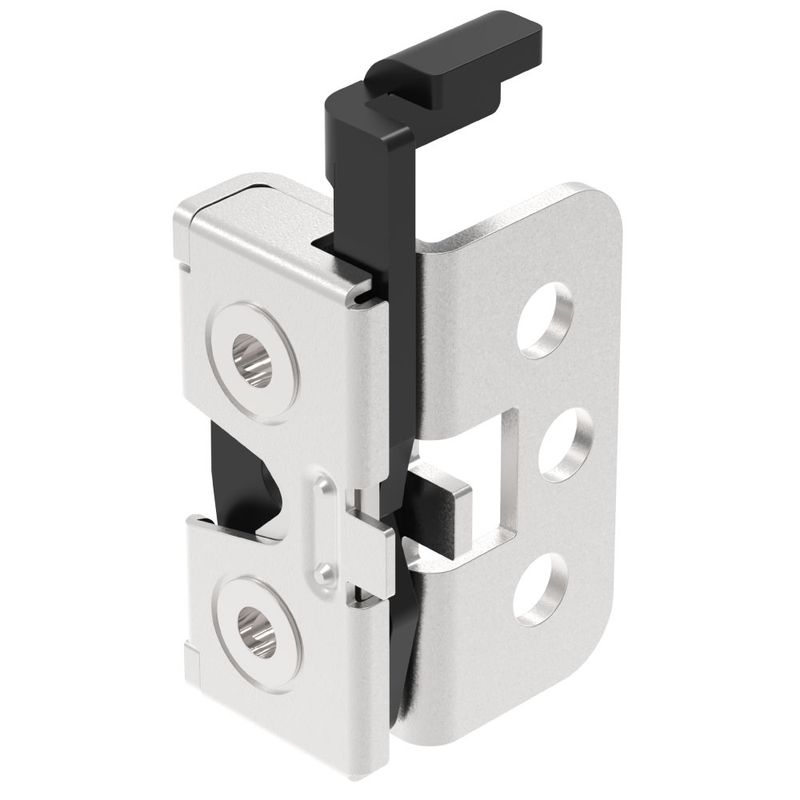
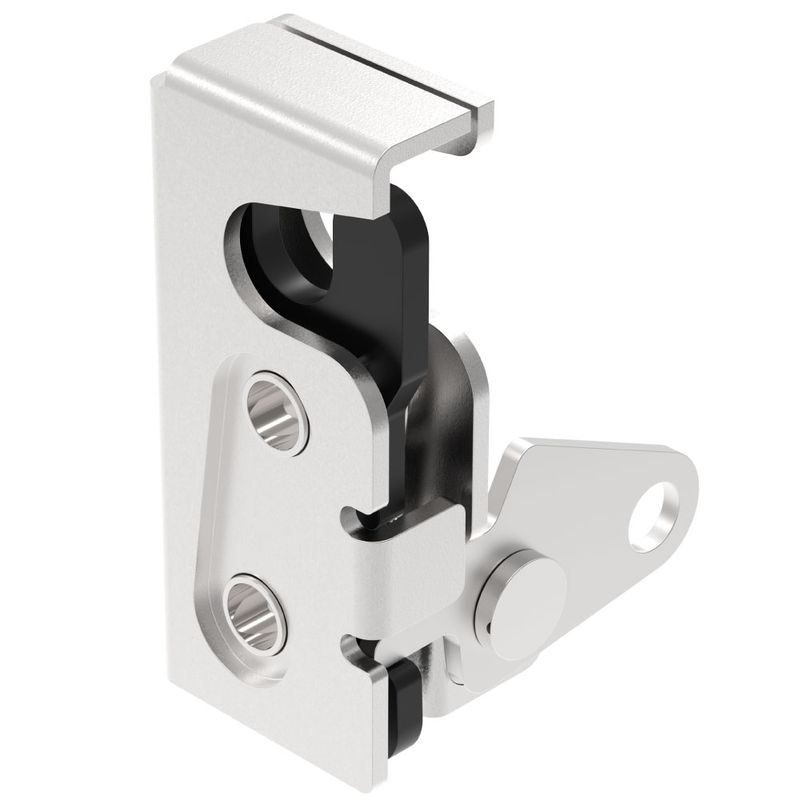
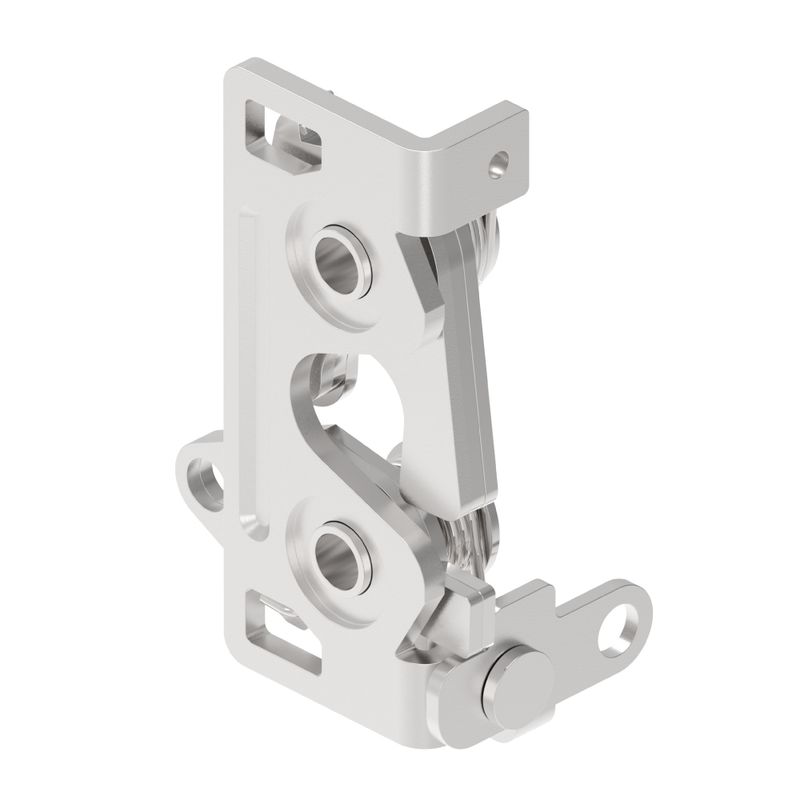
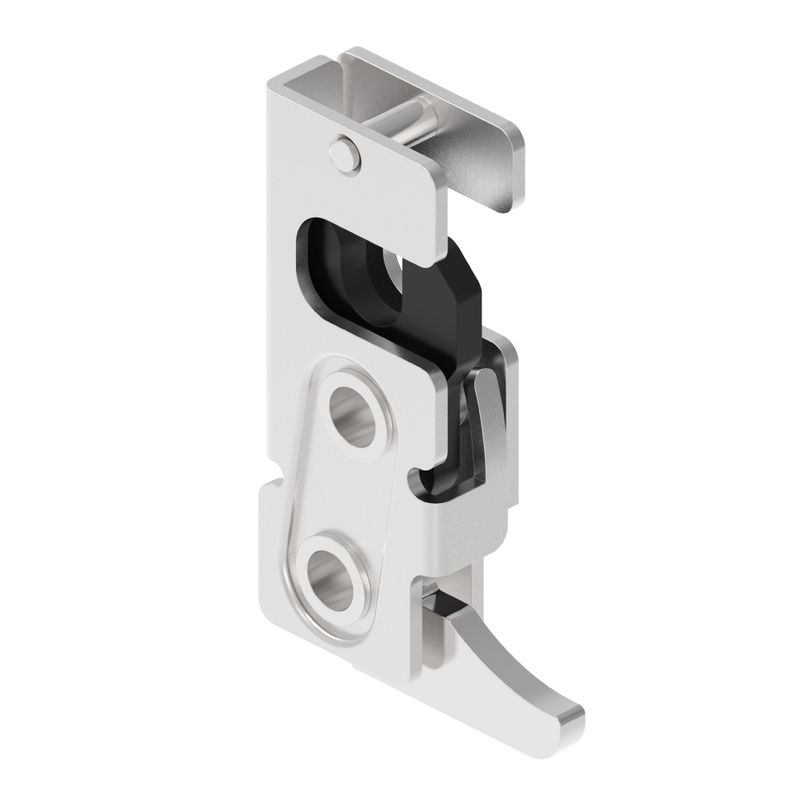
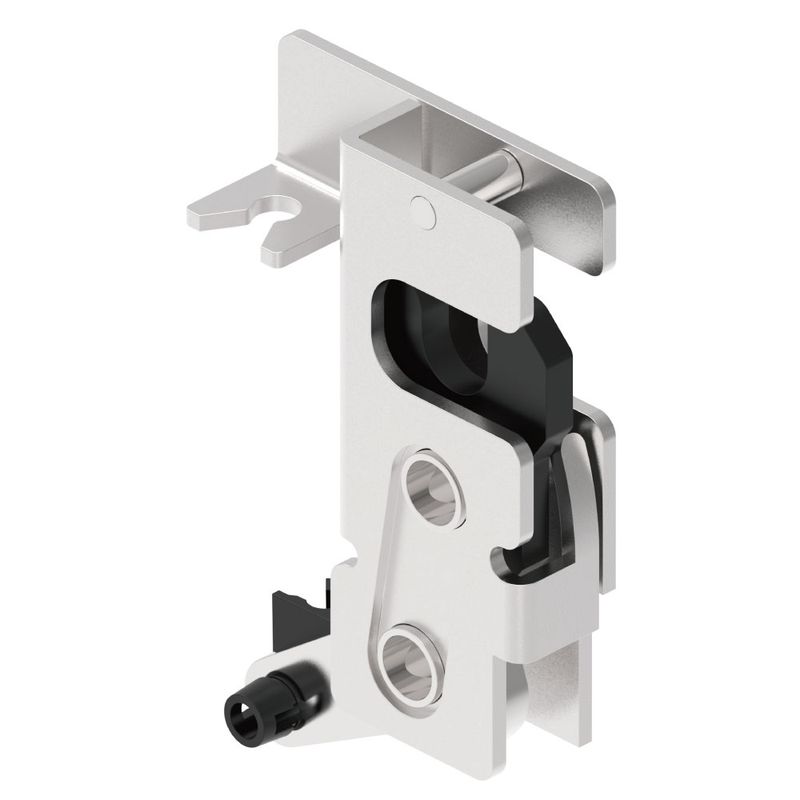
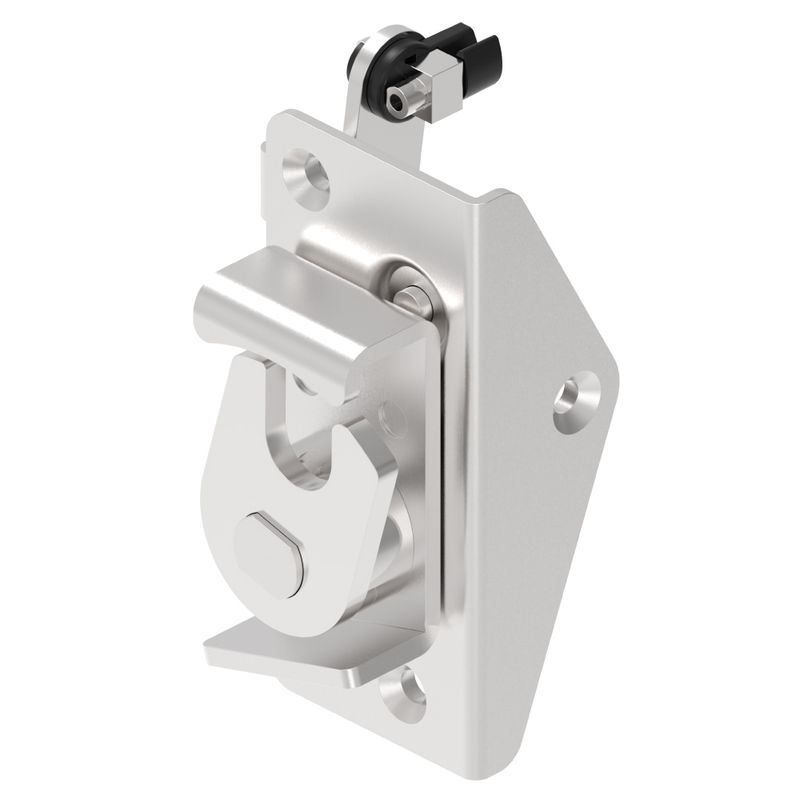
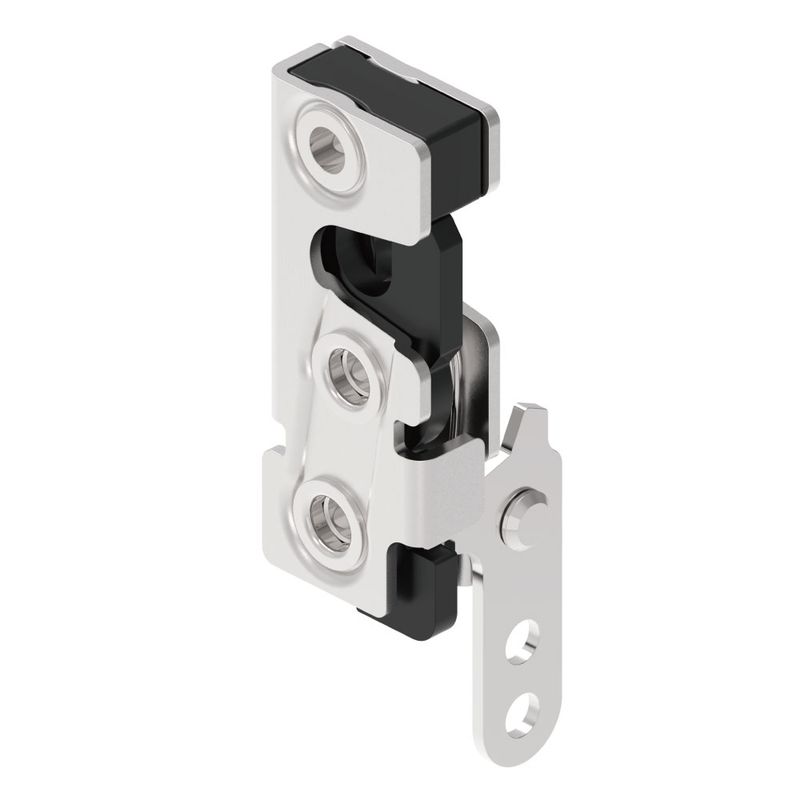
A rotary latch system is a push-to-close mechanism in which a rotating jaw captures a striker and a pawl locks the jaw in place until the release system is actuated. When the door closes, the striker contacts the rotor, which pivots around a pin inside the latch housing. As the rotor turns, an internal pawl drops into a notch on the rotor and prevents it from rotating back open. The door remains captured until the release lever is moved, either directly by hand or remotely through a cable or rod.
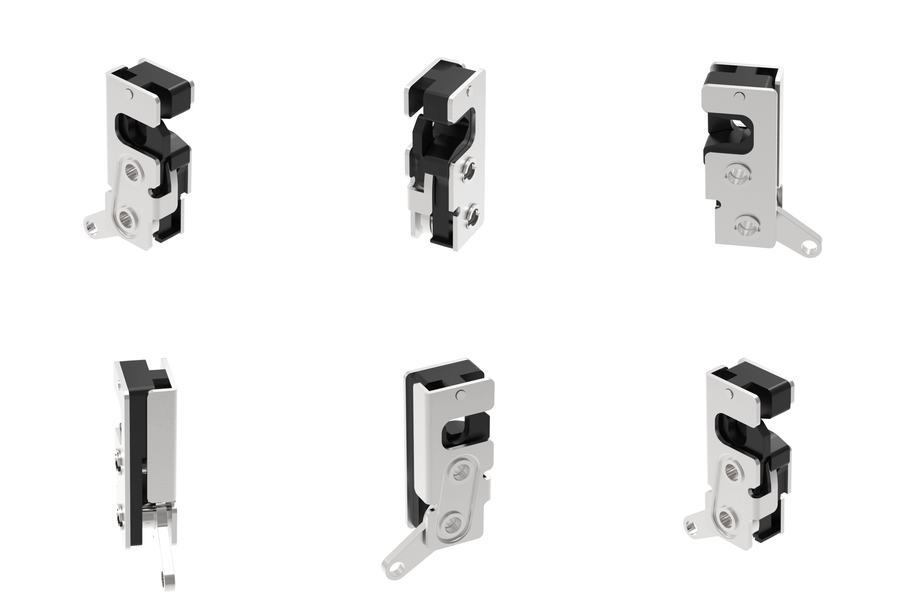
A complete rotary latch system typically includes the following components:
· Rotary latch – the housing containing the rotor and pawl
· Rotor or jaw – the rotating element that captures the striker
· Pawl – the mechanical stop that holds the rotor closed
· Striker – the pin or bar mounted on the door or frame
· Actuator – the handle, button, or lever that initiates release
· Cable or rod linkage – the connection between the actuator and the latch
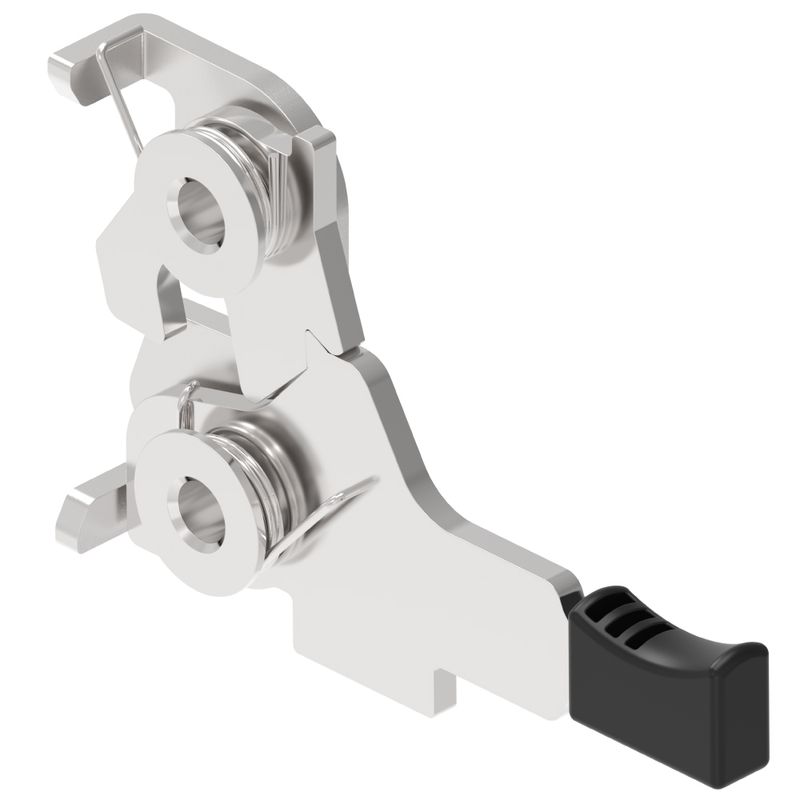
· Release lever – the internal lever that lifts the pawl
· Mounting hardware – brackets, fasteners, and plates that fix the latch and striker to the structure
How Is a Rotary Latch Different from Other Industrial Latches?
A rotary latch differs from cam, compression, and sliding-bolt latches mainly through positive striker capture, push-to-close operation, remote release capability, and the option to conceal the mechanism. Cam latches typically rotate a flat cam against a keeper and are often actuated with a key or quarter-turn tool rather than by closing the door. Compression latches are designed primarily to compress a gasket evenly along a seam, which is useful for sealed enclosures but does not provide the same striker-capture geometry. Sliding-bolt latches extend a bolt into a keeper but usually require manual alignment rather than automatic engagement during closing. Rotary latches stand out because the striker enters the latch during normal door closing, the jaw rotates and captures it automatically, and the latch itself can be mounted out of sight, which is useful where a clean exterior appearance or resistance to tampering is desired.
How Does a Rotary Latch Capture and Release the Striker?
A rotary latch captures the striker through a four-stage cycle: the striker enters the latch opening, rotates the jaw, is held by the pawl in the latched position, and is released when the actuator moves the release lever. In the first stage, the door closes and the striker enters the mouth of the latch along a defined entry path. In the second stage, contact between the striker and the rotor causes the rotor to pivot, drawing the striker further into the latch body. In the third stage, the pawl engages a notch on the rotor and mechanically blocks it from rotating back toward the open position, which is what keeps the door closed under load, vibration, or an attempted pull. In the fourth stage, the actuator—whether a direct handle, remote cable, rod linkage, or electronic actuator—moves the release lever, lifting the pawl clear of the rotor notch so the rotor can rotate open and release the striker.

A four-step operating diagram is useful here, since it allows engineers to see how striker position, rotor angle, and pawl engagement change through the cycle.
What Are the Primary and Secondary Latched Positions?
The primary latched position provides full engagement, while the secondary latched position represents partial engagement that can occur with single-stage latches and lead to false latching or door rattle. In a single-stage latch, the rotor typically has one engagement point, so if the door is not closed with enough force or the striker is misaligned, the rotor may not reach full rotation and the pawl may not seat correctly. In a two-stage latch, the rotor has two notches: a secondary position that provides partial retention and a primary position that provides full engagement. This design can reduce the likelihood that a partially closed door goes unnoticed, since it holds the door at an intermediate point rather than allowing it to swing free. However, a two-stage latch does not automatically satisfy any particular safety or regulatory requirement on its own; whether a specific application requires two-stage latching depends on the governing design standards and risk assessment for that equipment, not on the latch alone.
How Does the Latch Reset for the Next Closing Cycle?
A rotary latch resets when the return spring drives the rotor and pawl back to the open position after sufficient release travel, and incomplete release or linkage lost motion can prevent a full reset. After the pawl lifts clear of the rotor, an internal return spring rotates the rotor back to its open position so the latch is ready to accept the striker again. If the actuator does not provide enough release travel—because of cable stretch, rod misadjustment, or friction in the linkage—the pawl may only partially clear the rotor notch, which can leave the latch in a state where it fails to reset cleanly or re-engages unpredictably on the next closing cycle.
When Should You Use Single-Point or Multi-Point Rotary Latching?
A single rotary latch is typically sufficient for small, rigid doors, while multi-point rotary latching is required for larger or flexible doors that need distributed retention and synchronized release.
System | Suitable door | Main advantage | Main design risk |
Single-point rotary latch | Small, rigid doors | Simple actuation, lower cost | Limited seal distribution |
Multi-point rotary latch | Large or flexible doors | Distributed retention, better sealing | Synchronization complexity |
When Is a Single Rotary Latch Sufficient?
A single rotary latch is usually sufficient when the door is small, rigid, and requires only localized retention with simple actuation. In these cases, the door structure itself provides enough stiffness that one latch point can maintain consistent seal contact and resist typical shock or vibration loads.

Actuation is generally simpler as well, since a single latch can often be operated with a direct handle without the added complexity of cable or rod synchronization.
When Does a Door Need Multiple Latch Points?

A door needs multiple latch points when its size, flexibility, or exposure to vibration causes corner movement, uneven seal compression, or rattle at a single retention point. Large doors and flexible sheet-metal panels tend to flex under wind load, vibration, or manual pressure, which can allow the corners furthest from a single latch to lift slightly and break seal contact. Distributing retention across two or more latch points helps maintain even seal compression along the door edge and reduces the rattle that often occurs when only one point is secured. Adding latch points, however, means the release action must be synchronized so that all latches disengage together.
How Should Multiple Latches Be Synchronized?
Multiple rotary latches should be synchronized through a central actuator and equal cable or rod travel, with linkage adjustment used to compensate for tolerance accumulation and maintain release margin. Because manufacturing tolerances accumulate across a longer linkage run, one latch point may reach full release slightly before or after another unless the linkage is adjusted to equalize travel. If this is not addressed, there is a real risk that one latch remains engaged while the others release, which can jam the door or place uneven load on the hardware during opening.
Where Are Rotary Latch Systems Used on Industrial Doors?
Rotary latch systems are commonly used on machinery access doors, engine compartments, industrial enclosures, equipment cabinets, off-highway equipment, specialty vehicle compartments, and large service panels where push-to-close convenience and positive striker capture are needed.
Application | Why a rotary latch may be suitable | Main selection concern |
Machinery access doors | Push-to-close convenience | Door rigidity |
Engine compartments | Vibration resistance | Heat and corrosion exposure |
Industrial enclosures | Concealed installation | Seal compression |
Equipment cabinets | Remote release | Actuation routing |
Off-highway equipment | Positive striker capture | Shock and vibration load |
Specialty vehicle compartments | Multi-point capability | Synchronization |
Large service panels | Distributed retention | Door flex |
These applications share several recurring reasons for choosing a rotary latch: push-to-close operation reduces the steps needed to secure a door, the mechanism can be mounted concealed within the door structure, release can be actuated from a remote location, and the positive geometric capture of the striker resists vibration better than latches that rely only on friction or spring pressure. When properly selected and installed, this vibration resistance is one of the more valuable characteristics of a rotary latch system.
Rotary latches are not always the best choice, though. For simple access panels that are opened frequently by hand and do not need remote release, a quarter-turn fastener may be simpler and less expensive. For enclosures where even, continuous gasket compression along the full perimeter is the primary requirement, a compression latch designed specifically for that purpose may perform more predictably than a rotary latch positioned at discrete points.
How Should the Latch, Striker, and Door Geometry Be Designed?
The latch, striker, and door geometry must be designed together so that the striker enters on the correct centerline and angle, allowing the jaw to reach full engagement without side loading or excess closing force. This is the section where most reliability problems either get solved or get built into the design, since a correctly rated latch can still perform poorly if the striker path, door structure, and seal preload are not coordinated with it.
How Should the Striker Be Aligned with the Rotary Jaw?
The striker should be aligned with the rotary jaw so that its entry angle and centerline match the latch opening, allowing full engagement without side loading or accelerated wear. Mounting orientation and the actual travel path of the door as it closes both affect where the striker contacts the rotor. Striker position typically needs to be adjustable so it can be fine-tuned during assembly to achieve full engagement. When the striker enters off-center or at the wrong angle, the rotor can be forced to rotate under side loading, which increases wear on both the striker and the rotor surfaces and can eventually affect how reliably the pawl seats.
How Do Door Rigidity, Hinges, and Seals Affect Engagement?
Door flex, hinge sag, frame deflection, and seal preload all affect whether the striker reaches full engagement, and the latch should not be relied on to correct major door or hinge misalignment. A door that flexes under its own weight, or hinges that sag slightly over time, can shift the striker path relative to the latch centerline even if the original installation was correct. Seal preload and gasket compression set add another variable, since a seal that has taken a compression set over time may allow the door to sit slightly differently against the frame than it did when new. Production tolerances and ongoing vibration in vehicle or machine applications compound these effects. The latch and striker can accommodate a reasonable amount of variation, but they are not a substitute for adequate door and hinge rigidity; if the door or frame structure is significantly out of alignment, that needs to be corrected at the structural level rather than compensated for entirely through the latch.
How Much Adjustment Should the Striker Provide?
The striker should provide enough adjustment range to accommodate initial assembly tolerances, door sag, and seal compression changes, though the exact adjustment amount depends on the specific latch and application. Adjustment is typically needed at several points in a product's life: during initial assembly to compensate for stack-up tolerances, over time as the door settles or the seal takes a compression set, and during field service when a striker or latch is replaced. Because the appropriate adjustment range depends on the specific latch geometry, door size, and application, we do not provide a universal adjustment dimension; this should be confirmed against the specific product data sheet and verified on the actual assembly.
How Should the Rotary Latch Be Actuated?
A rotary latch can be actuated directly by a handle or button, remotely through a cable or rod linkage, or electronically, with the choice depending on access location, packaging space, and synchronization needs.
Actuation method | Main advantage | Main limitation | Suitable use |
Direct handle | Simple, low cost | Requires local access | Small, accessible doors |
Remote handle | Flexible mounting location | Added linkage complexity | Limited-access doors |
Push button | Fast operation | Needs power or spring return | Frequent-cycle doors |
Keyed actuator | Basic security | Slower operation | Access-restricted panels |
Cable release | Routing flexibility | Cable stretch and friction | Curved or offset routing |
Rod linkage | Rigid, precise travel | Limited routing flexibility | Straight-line multi-point systems |
Electronic actuator | Remote or automated release | Requires power source | Remote or automated access |
When Should You Use a Cable or Rod Linkage?
A cable linkage suits applications needing routing flexibility around obstacles, while a rod linkage suits applications needing rigid, low-friction travel for precise multi-point synchronization. Cables can be routed around corners and through tight packaging spaces, which is useful where the actuator and latch are not in a straight line, but cables can stretch slightly over repeated cycles and are more sensitive to friction and contamination inside the housing. Rod linkages resist stretch and generally transmit motion with less lost travel, but they require a straighter routing path and are less forgiving of layout changes late in design.
Maintenance access should also be considered, since cables and rods both need periodic inspection for wear at connection points, particularly in multi-point systems.
How Do Release Travel and Force Affect Reliability?
Release travel and force affect reliability because cable stretch, friction, rod adjustment, and lost motion can accumulate across a linkage and reduce the overtravel margin needed for full release. The latch requires a certain amount of release lever travel to fully lift the pawl clear of the rotor; if the actuator, cable, or rod does not deliver that full travel—due to stretch, friction, or accumulated tolerance—the latch may only partially release, which can cause it to bind or fail to open smoothly. Because required travel and force vary by latch model, mounting geometry, and linkage length, we do not provide a universal release-force or travel figure; this needs to be verified against the specific components used and confirmed through testing on the actual assembly.
Which Selection Factors Determine System Reliability?
System reliability depends on how the latch, striker, mounting hardware, and door structure jointly handle static retention load, shock, vibration, seal preload, and environmental exposure such as corrosion, dust, and temperature.
A rotary latch system in industrial service is typically exposed to a combination of static retention load from door weight or seal pressure, shock from slam-close impact or transport, and ongoing vibration from machinery or vehicle operation. Seal preload and door pull both add continuous load on the latch and striker even when the equipment is stationary. Operating cycle count, temperature range, dust, water, chemical exposure, and general corrosion resistance all influence how the hardware performs over its service life, and noise from latch engagement or door rattle can also be a design consideration in cab or enclosure environments.
Material and finish selection should be matched to the environment rather than treated as a separate specification exercise. Stainless steel and corrosion-resistant coatings are commonly used where moisture, salt, or chemical exposure is expected, while standard steel with a protective finish may be adequate for drier indoor environments.
Neutral Salt Spray Test for ForndLock Rotary Locks
Whatever material is chosen, a latch's published rating must be reviewed together with load direction, the specific striker used, the mounting hardware, and the door and frame structure supporting it, along with the actuator and linkage and the conditions under which any rating was tested. A latch's individual component rating does not automatically represent how the complete door assembly will perform, since the door, frame, hinges, and seals all contribute to the loads the latch actually experiences in service.
What Common Problems Should Be Checked Before Production Approval?
Before production approval, engineers should check striker entry, full engagement, release force, latch reset, and multi-point synchronization on the actual door assembly to catch problems such as false latching or rattle.
Problem | Likely cause | What to check |
Door does not fully latch | Striker misalignment | Entry angle, centerline |
Door reaches only secondary position | Insufficient closing force | Seal preload, door flex |
Release handle difficult to operate | Cable or rod friction, lost motion | Linkage routing, adjustment |
One latch remains engaged | Unsynchronized multi-point release | Cable or rod travel equalization |
Door rattles when closed | Incomplete engagement | Pawl or jaw wear, seal compression |
Latch does not reset | Return spring or lost motion issue | Release travel, spring condition |
Striker or rotor shows abnormal wear | Side loading from misalignment | Mounting geometry, entry path |
In one project we reviewed, a cabinet door on a piece of stationary equipment was rattling intermittently after installation. Rather than assuming the latch itself was undersized, we reviewed the door's rigidity, the striker entry path, and the cable routing to the remote handle. The rattle traced back to a combination of striker misalignment and some lost motion in the cable run rather than a defect in the latch. We worked through adjustment options with the customer's team and confirmed the revised geometry using samples before it moved into production.
What Should Be Tested on the Complete Door Assembly?
The complete door assembly should be tested for striker entry, primary and secondary engagement, closing and release force, actuator travel, latch reset, multi-point synchronization, seal compression, and cycle operation under real conditions. Depending on the application, vibration, shock, and corrosion or environmental exposure testing may also be appropriate. This testing needs to be performed with the actual door, hinges, seals, actuator, and linkage installed, because a latch that performs correctly on a test fixture can behave differently once it is mounted on a door with its own flex characteristics, seal preload, and linkage routing.
How Can You Select the Right Rotary Latch System?
The right rotary latch system is selected by defining door size and rigidity, determining latch points, confirming loads and seal preload, selecting the latch and actuation method, and validating the complete assembly before production approval.
1. Define the door size, rigidity, and movement.
2. Determine the number of latch points.
3. Confirm loads, vibration, and seal preload.
4. Select the latch and striker.
5. Define direct or remote actuation.
6. Select cable or rod linkage where required.
7. Confirm materials and environment.
8. Review closing and release force.
9. Test the complete door assembly.
10. Approve controlled drawings before production.
What Information Should You Send to ForndLock?
To evaluate a rotary latch system, we typically need door and frame drawings, door dimensions and material, hinge position, door rigidity, seal information, the required number of latch points, the striker entry path, load conditions, the preferred actuation method, cable or rod routing, the operating environment, cycle target, estimated quantity, and any sample requirements. With this information, our team can review the geometry, propose a latch and striker configuration, and support sample validation before drawings are locked for production.
In summary, a rotary latch performs reliably only when the latch, striker, actuator, linkage, door, frame, hinges, and seals are selected and validated together as one system rather than specified as separate, unrelated components.
ForndLock: Your Trusted Partner in Industrial Hardware
Need a Rotary Latch System for Your Industrial Door?
We can review your door geometry, latch points, striker alignment, actuation method, linkage, loads, and operating environment.
At ForndLock, we support industrial door and access-hardware projects with rotary-latch selection, single-point or multi-point system planning, latch and striker geometry review, actuator selection, cable or rod-linkage evaluation, material and finish recommendations, drawing review, custom component development, and prototype and sample testing.
Email: [email protected]