
Medical Equipment Enclosure Locks Compliance With FDA Hygiene Standards
Solving Medical Hardware Hygiene Compliance
Working through the strict regulatory requirements of medical device manufacturing often uncovers a critical blind spot in hardware selection. Engineers, OEM procurement managers, and quality compliance officers regularly run into situations where otherwise perfect equipment fails hygiene audits because of hidden contamination risks inside hardware crevices. This article directly tackles this widespread problem, offering practical guidance on regulatory compliance, advanced material selection, and sanitary structural design. When reviewing hardware components, many professionals ask: what are the application advantages of industrial locks and hinges in medical equipment hardware? The answer goes far beyond basic mechanical fastening. In sterile environments, the real advantage lies in preventing microbial buildup and surviving aggressive sterilization routines.
By shifting focus from standard mechanical function to strict regulatory adherence, engineering teams can remove weak points from their access panel designs. Readers will come away with a thorough understanding of how specific surface treatments, structural shapes, and sealing technologies work together to meet demanding sanitary requirements. Understanding these criteria is essential for choosing components that not only protect sensitive internal electronics but also maintain the absolute sterility required in modern healthcare facilities, ensuring smooth audit approvals and long-term operational safety. The overlap between mechanical reliability and biological safety forms the foundation of modern healthcare engineering. Every millimeter of exposed surface on an access panel is a potential pathway for pathogen transmission if it is not properly designed. Because of this, selecting the right fastening mechanisms is not simply a matter of structural strength but a critical compliance requirement. By mastering the details of sanitary hardware design, procurement teams can avoid costly redesigns and prevent product recalls linked to biological contamination.
FDA Standards for Medical Enclosure Locks
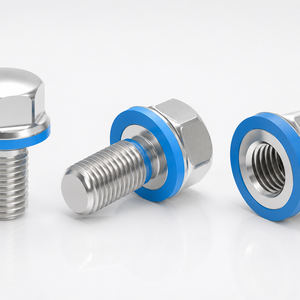
Based on ForndLock's manufacturing experience in industrial locks, latches, hinges, handles, and access hardware, we understand that passing a rigorous sanitary audit requires far more than specifying standard corrosion-resistant metals. Achieving medical equipment enclosure locks compliance with FDA hygiene standards demands a microscopic approach to surface engineering and structural geometry. The FDA 21 CFR guidelines, while broad in their application to medical devices, effectively dictate the performance requirements for all external and internal components exposed to clinical environments. A lock mechanism cannot simply hold a door shut; it must actively resist biological adhesion and allow for thorough cleaning. Generic claims that stainless steel alone is sufficient are fundamentally inadequate for high-risk applications.
The key measurement is surface roughness, typically expressed as an Ra value. For medical applications, hardware surfaces must reach an Ra value of 0.8 micrometers or lower. This ultra-smooth finish removes the microscopic peaks and valleys where bacteria, viruses, and organic matter can settle and multiply. In addition, the internal mechanics of a latching system must be carefully engineered to eliminate dead spaces. Traditional lock cylinders often include exposed springs, internal threads, and overlapping metal plates that create hard-to-reach crevices. In a clinical setting, these crevices become hiding spots for pathogens that routine cleaning cannot reach. To engineer hardware that meets these strict expectations, we focus on three primary FDA-related design requirements for access hardware:
· Crevice-free external geometry that ensures all exposed surfaces are completely flush and reachable for direct mechanical wiping without needing specialized cleaning tools.
· Micro-polished surface treatments that achieve specific Ra values to prevent bacterial biofilm formation and allow liquid disinfectants to drain away quickly.
· Hermetically sealed internal mechanisms that isolate all moving parts, springs, and tumblers from outside environmental exposure, preventing both contamination and chemical breakdown.
By strictly following these requirements, engineering teams can specify hardware that naturally supports the biological safety of the overall medical device. Incorporating these design principles turns a simple mechanical component into an active barrier against hospital-acquired infections. When auditors inspect medical equipment, they examine every joint, seam, and fastening point. Hardware that clearly follows sanitary design principles significantly speeds up the approval process. Furthermore, implementing these standards reduces the daily maintenance burden on healthcare staff, since the equipment can be sanitized more efficiently and reliably. This ultimately contributes to a safer clinical environment and a lower total cost of ownership for the medical facility.
IP Ratings and Disinfection Compatibility
The relationship between Ingress Protection ratings and chemical resistance is a critical factor in determining the lifespan and safety of medical hardware. In clinical environments, equipment is routinely exposed to harsh hospital-grade disinfectants, including vaporized hydrogen peroxide, chlorine-based solutions, and high-concentration isopropyl alcohol. A locking mechanism must withstand these aggressive chemical exposures while maintaining a perfect seal against moisture and particulate ingress. There is a significant difference between standard industrial IP65 ratings and the demanding IP69K rating required for heavy-duty medical washdowns. An IP65 rating only protects against low-pressure water jets, which is often not enough for operating room equipment that goes through intensive cleaning routines. By contrast, an IP69K rating guarantees protection against high-pressure, high-temperature washdowns, ensuring that neither boiling water nor harsh chemicals can get inside the enclosure lock.
Reaching this level of protection requires precise engineering of the internal lock components. The O-rings, gaskets, and sealing washers must be made from advanced elastomers, such as fluorocarbon rubber or medical-grade silicone, which offer strong resistance to chemical breakdown. If a standard nitrile rubber O-ring is exposed to vaporized hydrogen peroxide, it will quickly become brittle, crack, and compromise the entire IP rating of the lock. This degradation allows both moisture and pathogens to bypass the hardware and enter the sterile enclosure, leading to serious equipment failure and major compliance violations. We engineer our sealing mechanisms to ensure that the chemical resistance of the internal components matches the durability of the external metal housing.
Disinfectant Type | Active Chemical Agent | 304/316L Stainless Steel Risk | Zinc Alloy Risk | Elastomer Compatibility |
Vaporized Hydrogen Peroxide | H2O2 (High Oxidation) | Low (Maintains integrity) | High (Rapid surface pitting) | FKM/Silicone required |
Chlorine-Based Bleach | Sodium Hypochlorite | Moderate (Requires immediate wiping) | Severe (Corrosion and structural failure) | EPDM/FKM excellent |
Alcohol-Based Cleaners | Isopropyl/Ethyl Alcohol | None (Highly compatible) | Low (May dull finish) | Most elastomers compatible |
Quaternary Ammonium | Quats (Cationic surfactants) | None (Highly compatible) | Moderate (Discoloration over time) | Silicone highly recommended |
Choosing the right material composition based on the expected disinfection routine is non-negotiable. While zinc alloys may work fine for standard IT enclosures, they break down quickly under clinical sterilization routines. Using hardware that does not account for these chemical interactions will inevitably lead to premature mechanical failure, compromised sterile boundaries, and immediate failure during routine hygiene compliance audits. Continuous exposure to these aggressive agents speeds up the aging process of lower-quality materials. Micro-cracks caused by chemical embrittlement become invisible reservoirs for biological contaminants. Therefore, specifying access hardware must include a thorough review of the end-user's cleaning procedures. Engineering teams must confirm that the selected locks and latches have a documented resistance profile that exceeds the maximum concentration and exposure times of the hospital's chosen disinfectants.

Stainless Steel Hinges for Imaging Panels
While enclosure locks secure the barrier, the structural integrity of heavy access doors depends entirely on the articulation mechanisms. Medical imaging equipment, such as magnetic resonance imaging machines and computed tomography scanners, presents unique engineering challenges that standard industrial hardware cannot handle. The heavy lead-lined or heavily shielded doors require strong articulation that keeps precise alignment across thousands of operational cycles. This is where evaluating stainless steel hinges for medical imaging device panels durability becomes a top priority for OEM engineers.
One of the most critical challenges in designing hardware for imaging equipment is the strict requirement for non-magnetic properties. In an MRI environment, any ferromagnetic material creates a serious safety hazard and can distort the imaging magnetic field, making the diagnostic output useless. Therefore, selecting austenitic alloys like 316L is mandatory. Beyond magnetic permeability, the sheer weight of these shielding panels demands exceptional load-bearing capacity. If a hinge sags even a fraction of a millimeter, the sophisticated locking mechanisms will fall out of alignment, compromising the hermetic seal of the enclosure.
In addition, the continuous friction of heavy articulation introduces the risk of galling, a type of mechanical wear where microscopic metal particles are torn from the hinge surfaces. In a clean clinical environment, the release of metal dust is a critical contamination event that violates strict cleanroom standards. Ensuring stainless steel hinges for medical imaging device panels durability requires advanced anti-galling surface treatments and self-lubricating polymer bushings that operate smoothly without generating particulate matter. To address these complex variables, engineering teams must follow a thorough evaluation process when specifying articulation hardware for heavy imaging panels:
1. Verify the exact magnetic permeability of the alloy to guarantee zero interference with sensitive diagnostic electromagnetic fields.
2. Calculate the dynamic load-bearing requirements to ensure the hinges can support lead-lined doors without sagging or structural deformation over a high-cycle lifespan.
3. Specify anti-galling treatments and particulate-free articulation joints to maintain absolute environmental cleanliness and prevent microscopic metal shedding.
4. Ensure the hinge geometry mirrors the crevice-free design of the locks, allowing for fast and effective chemical disinfection without harboring biological agents.
By addressing these specific criteria, manufacturers can guarantee that the structural articulation of their imaging equipment meets the strict hygiene and performance standards required in modern diagnostic facilities.
Medical Hardware Compliance Case Study
Translating theoretical compliance standards into practical engineering solutions requires a deep understanding of manufacturing capabilities and clinical environments. A recent project with a medical imaging equipment OEM in Indonesia clearly illustrates the direct link between hardware selection and regulatory success. This client was developing a next-generation advanced diagnostic scanner intended for high-throughput hospital environments. During their pre-compliance testing phase, they ran into serious issues that threatened to shut down their entire production timeline.
The problem started with their use of standard commercial off-the-shelf industrial hardware. The heavy access panels of the scanner were fitted with basic hinges that began shedding microscopic metal particles due to the extreme friction caused by the heavy shielding. This galling effect created a continuous source of contamination in what needed to be a sterile diagnostic suite. At the same time, the enclosure locks they had specified were failing quickly. The hospital-grade vaporized hydrogen peroxide sterilization cycles were causing the internal zinc components of the locks to corrode, while the standard nitrile seals cracked under the chemical stress. This degradation destroyed the IP rating, allowing cleaning fluids to seep into the sensitive electronic compartments. They were on the verge of failing their critical hygiene compliance certification.
The engineering team reached out to us for a full overhaul of their access hardware. We engineered a custom set of components designed specifically to withstand their rigorous testing environment. For the articulation, we manufactured heavy-duty 316L stainless steel hinges featuring specialized anti-galling surface treatments and integrated self-lubricating, medical-grade polymer bushings. This completely eliminated the metal particulate shedding issue, even under maximum load conditions. For the securing mechanisms, we provided IP69K sealed compression locks manufactured entirely from passivated stainless steel, using fluorocarbon rubber O-rings that are highly resistant to vaporized hydrogen peroxide.
Hygienic Locking System for Food Industry and Medical Engineering
The results were immediate and measurable. The newly outfitted diagnostic scanners went through a demanding continuous sterilization testing cycle. The access hardware showed zero signs of chemical corrosion, the internal electronics remained completely dry and secure, and the cleanroom particulate tests returned flawless results. The client successfully passed their hygiene compliance audits on the first official attempt and significantly extended the projected lifecycle of their access hardware, eliminating a major warranty liability.
Securing Your Medical Equipment Hardware
Navigating the complexities of medical equipment hardware design requires a fundamental shift in perspective. Achieving medical equipment enclosure locks compliance with FDA hygiene standards is not a simple procurement task; it is a complete engineering process that demands a deep combination of material science, structural engineering, and rigorous environmental testing. The components you select must act as an unbreakable barrier against both biological contamination and aggressive chemical degradation, all while delivering flawless mechanical performance under heavy daily use. From specifying the correct surface roughness to eliminate pathogen harboring points, to selecting the precise elastomer compounds capable of surviving vaporized hydrogen peroxide, every decision affects the final regulatory approval of your device.
In our experience as an industrial locking solutions manufacturer, we know that off-the-shelf industrial components rarely meet the demanding requirements of modern healthcare environments. Partnering with a specialized hardware manufacturer ensures that your equipment is engineered for compliance from the very beginning of the design phase, reducing the risk of costly redesigns and failed audits. We invite procurement and engineering teams to work with us on their next critical project. Whether you need to evaluate your current hardware, request custom samples, or require extensive engineering support for a new medical device access panel, we are ready to help. Please send your project requirements, technical drawings, and custom specifications to our engineering team at [email protected]. Together, we can engineer hardware solutions that protect your sensitive equipment and uphold the highest standards of clinical hygiene.