
Manufacturer Guide: What Type of Hinges for Inset Cabinet Doors in Industrial Enclosures
Industrial Inset Door Hinge Selection
Let's start with the core engineering challenge: choosing the right hardware for flush-mounted industrial enclosures. The main difficulty is figuring out the exact movement clearance needed and making sure the door sits perfectly flush inside the cabinet frame without weakening the overall structure. When you're working with heavy metal doors that need to sit completely flat within the frame, standard overlay hardware just doesn't cut it. Engineers have to account for door thickness, frame depth, and the specific path the door takes when it opens, all to prevent the door from jamming along the hinge edge. In high-stakes environments, even a single millimeter of misalignment can cause serious operational failures, break the environmental seal, or wear down the enclosure frame much faster than expected.
As a dedicated ForndLock industrial locks, industrial latches, industrial hinges, industrial handles and access hardware manufacturer, we have decades of experience in tool-making and hardware stamping for heavy machinery. We know that picking the right components isn't just about looks — it's about keeping equipment safe and protecting it from the environment. This guide gives OEM designers and procurement teams a solid foundation for evaluating load capacity, clearance, and door movement for inset configurations. By understanding the unique mechanical demands of flush-mounted systems, engineering teams can avoid common mistakes that come from choosing the wrong hardware, stop doors from sagging over time, and ensure long-term reliability in tough industrial settings.
On top of that, industrial applications require hardware that can handle continuous use under heavy physical loads. The selection process needs to fit smoothly into the overall structural design of the enclosure, taking into account the strength of the materials used and the specific environmental stresses the equipment will face out in the field.
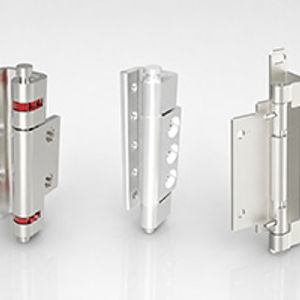
Analyzing Inset Door Hinge Types
When engineers ask what type of hinges for inset cabinet doors work best for heavy-duty use, the answer depends a lot on how the load is spread, how the door needs to move, and the specific shape of the enclosure frame. Unlike overlay setups where the hinge attaches to the outside face of the frame, inset doors need hardware that mounts entirely within the depth of the internal frame. This hardware also has to allow the full thickness of the door to swing open without rubbing against the panels next to it.
Among the various types of cabinet hinges available for industrial use, concealed hinges with specific opening angles are a popular choice for flush applications. These hinges use a complex multi-pivot design to pull the door slightly forward before swinging it open, which keeps the edge from binding against the internal frame. For situations involving very heavy doors, heavy-duty continuous hinges — often called piano hinges — provide outstanding structural support by spreading the load across the entire vertical length of the door. Internal pivot hinges are another strong option. They mount at the top and bottom of the doorway rather than on the side walls, which changes how the load is handled and works especially well for very thick or reinforced metal doors.
The rules for mounting inset doors require strict attention to gap tolerances. To keep thick metal inset doors from binding, engineers need to calculate the hinge throw based on the door thickness and how far back the pivot point is set. We use a detailed analytical framework that matches the door material thickness with the required opening angle — typically between ninety and one hundred eighty degrees — to figure out the exact gap tolerance needed. For example, a standard two-millimeter steel door might need a gap tolerance of two to four millimeters, depending on the hinge gauge and how much the environmental gasket compresses. If that calculation is even slightly off, the door will either scrape the frame or fail to press the seal tightly enough.
To help you compare these options, here are the key load-bearing capacities and structural differences:
Light to medium duty internal pivot hinges work well for doors weighing up to twenty-five kilograms. They mount simply at the top and bottom of the frame and take up very little space inside the cabinet.
Medium to heavy duty multi-link concealed hinges are built for loads between twenty-five and fifty kilograms. They follow a complex movement path that clears thick frames while keeping gap tolerances very tight.
Extreme duty continuous hinges are made for very heavy loads over fifty kilograms. They use thick-gauge stainless steel to prevent any vertical sagging or structural bending over the life of the enclosure.
Choosing from these types of cabinet hinges requires a thorough understanding of how the door needs to move and what physical space is available for mounting hardware inside the frame.
Frameless Enclosures and Soft Close
The way industrial equipment is designed keeps evolving, and engineers are increasingly turning to frameless construction — especially in environments that house sensitive control panels, automated control boxes, or medical equipment racks. In these precise engineering situations, specifying soft close cabinet hinge types for frameless cabinets becomes a critical structural decision rather than just a convenience feature. Frameless enclosures don't have the rigid face frame found in traditional cabinet designs, which means the hardware has to mount directly to the side walls of the enclosure. This setup demands very high precision in alignment and strong vibration control to keep the structure sound.
In high-stakes industries like medical OEM manufacturing or advanced server infrastructure, protecting sensitive internal electronics from shock and vibration is absolutely essential. A door that slams shut can send a harsh jolt directly through the enclosure body, potentially knocking loose delicate electrical connectors, throwing off sensitive calibration instruments, or even causing tiny cracks in circuit boards. Using advanced soft close mechanisms directly reduces this risk by slowing the door down smoothly during the last few degrees of closing. In addition, in laboratory and medical settings, keeping noise levels low is often a strict regulatory requirement or a mandatory client specification that simply cannot be overlooked.
When evaluating dampening technologies for long industrial use, engineers typically compare hydraulic damping systems with mechanical spring dampeners. Hydraulic systems use a fluid-filled cylinder that provides smooth, consistent resistance no matter how hard the door is pushed closed, making them very effective for heavy metal doors. However, these hydraulic parts need to be tightly sealed to prevent fluid from leaking under extreme temperature changes. Mechanical spring dampeners, on the other hand, rely on heavy-duty coiled tension and physical friction. They are very durable in harsh, dirty environments but sometimes don't provide the perfectly smooth deceleration that premium hydraulic systems offer.
To help procurement teams and industrial designers make well-informed decisions, the following table compares standard free-swinging hardware with advanced dampening options designed specifically for frameless industrial applications.
Feature | Standard Free-Swinging Hinges | Soft Close Hydraulic Hinges | Soft Close Mechanical Hinges |
Cycle Life | Up to 100,000 cycles | 50,000 to 80,000 cycles | Up to 100,000 cycles |
Vibration Reduction | None | Excellent deceleration | Moderate deceleration |
Ideal Use Case | Rugged outdoor utility boxes | Sensitive medical OEM racks | Automated control panels |
Maintenance Need | Minimal lubrication | Periodic seal inspection | Tension adjustment |
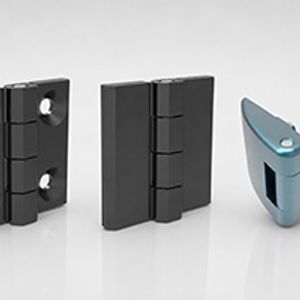
Using soft close cabinet hinge types for frameless cabinets helps preserve the structural integrity of the frameless chassis over thousands of demanding operational cycles, protecting both the enclosure itself and the valuable electronics inside from mechanical shock.
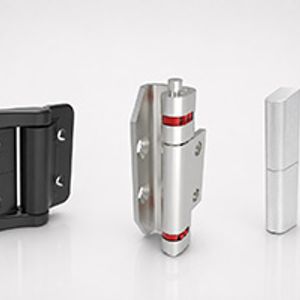
Environmental Resistance and Sealing Needs
Going well beyond basic door movement mechanics, evaluating hardware for outdoor or harsh environments requires a strict, uncompromising focus on environmental resistance. The hardware you choose has a direct and measurable impact on the overall Ingress Protection rating of the inset cabinet. If the hinge mechanism can't maintain consistent, evenly distributed pressure all the way around the door, the enclosure will inevitably fail to meet the required waterproof and dustproof standards, leaving critical internal components exposed to potentially catastrophic environmental damage.
Among the various types of cabinet hinges used in extreme industrial environments, the choice of base material is the most important factor for long-term corrosion resistance. Zinc alloy components offer solid structural strength and are cost-effective for indoor industrial use, especially when treated with advanced powder coating or specialized electroplating. However, for environments that are constantly exposed to high humidity, aggressive coastal salt spray, or harsh chemical washdowns, specifying marine-grade materials is absolutely necessary. Using premium 304 or 316 stainless steel ensures the hardware stays structurally sound without degrading over time. Specialized surface treatments like chemical passivation or electropolishing on stainless steel further improve resistance to microscopic pitting and exposure to highly corrosive chemicals.
One critical engineering factor that many designers completely miss is the complex mechanical interaction between the hinge pivot point and how much the enclosure's rubber gasket compresses. Whether you're using EPDM foam or solid silicone seals, for an inset door to achieve a strict IP rating like IP65 or IP67, the gasket must be compressed evenly across all four sides of the internal frame at the same time. If the pivot point is in the wrong position, the mechanical leverage of the door may crush the gasket on the hinged side while leaving a tiny but disastrous gap on the latch side.
Engineers need to carefully specify hardware that provides a slight sideways movement or adjustable depth during the final stage of closing. This specific motion allows the door to pull squarely into the frame, compressing the perimeter gasket evenly without tearing it sideways. We engineer our inset hardware solutions to give precise mathematical control over this compression ratio, ensuring the sealing mechanisms work perfectly even when the structure flexes under heavy internal equipment loads or strong external wind pressure. By matching the correct types of cabinet hinges with the right elastomeric gasket profiles, procurement teams can confidently ensure their enclosures will stand up to the harshest industrial environments without ever compromising the internal seal.
Engineering Case Study Telecom Enclosures
The Problem
A major telecommunications infrastructure client based in Northern Europe came to our engineering team with a serious problem: critical structural failures in their latest generation of outdoor base station cabinets. These enclosures used a precision flush inset door design to maintain a sleek, aerodynamic profile against strong prevailing winds and to prevent ice buildup in sub-zero temperatures. However, the existing inset doors were failing early due to a damaging combination of high-frequency wind vibration and severe coastal saltwater corrosion. The inadequate, off-the-shelf hardware allowed tiny movements of the heavy metal door under constant wind load, which quickly wore down the polyurethane perimeter seals through repeated friction. As a result, aggressive moisture and airborne salt got inside and seriously damaged the sensitive internal routing electronics, leading to unacceptable network downtime and very high emergency maintenance costs for the service provider.
The Engineering Solution
Our engineering team carried out a thorough, multi-point analysis of the client's existing CAD drawings and historical environmental data. Recognizing immediately that standard commercial hardware could not handle both continuous harmonic vibration and aggressive salt spray, we custom-engineered a heavy-duty, fully concealed stainless steel hinge system specifically designed for their exact inset configuration. We upgraded the base material to premium 316 stainless steel to effectively fight the harsh coastal environment. We also built a specialized mechanical dampening feature into the pivot joints to actively absorb high-frequency wind vibrations before they could transfer to the chassis. Most importantly, we completely redesigned the movement path of the main pivot mechanism to provide improved, perfectly parallel gasket compression, ensuring the door pulled squarely and tightly against the environmental seals without crushing them unevenly.
The Final Result
Rolling out our customized hardware solution produced immediate, clearly measurable improvements for the telecom client. The new structural design achieved consistent IP65 sealing across all mass-production units, completely eliminating the costly moisture ingress problems. During rigorous third-party laboratory testing, the upgraded enclosures passed the demanding one-thousand-hour salt spray test with zero signs of rust or structural degradation. Additionally, by incorporating precise, laser-etched alignment markers directly into the custom hardware, the client was able to streamline their factory assembly process significantly, cutting door installation and calibration time by nearly fifteen percent. This case study clearly shows our proven ability to turn challenging environmental variables into reliable, mass-producible engineering solutions.
Partnering for Custom Access Hardware
Successfully specifying hardware for complex industrial equipment requires a rigorous approach to mechanical design and environmental analysis. Matching the right movement mechanics, optimal marine-grade materials, and appropriate dampening systems for inset industrial doors ensures that your critical enclosures will perform reliably under extreme mechanical stress, protecting valuable internal components from environmental damage and physical wear.
As a proven ForndLock industrial locks, industrial latches, industrial hinges, industrial handles and access hardware manufacturer, we have the deep engineering expertise and global production capacity needed to meet your most demanding project specifications. We offer comprehensive OEM and ODM customization services, rigorous sample testing protocols, and reliable bulk delivery capabilities tailored for large-scale global engineering projects. Whether your engineering team is designing next-generation automated server racks, rugged outdoor telecommunications cabinets, or highly sensitive medical diagnostic equipment, our specialized team is fully ready to help with expert hardware selection and precision custom fabrication.
We actively welcome industrial engineers, global procurement officers, and OEM clients to share their unique operational challenges with us. To start a detailed technical consultation, request physical samples for laboratory evaluation, or submit your CAD drawings for expert engineering review, please send an email directly to: [email protected]. Partnering with an experienced, dedicated manufacturer ensures that your access hardware will consistently deliver outstanding operational durability, precise alignment, and superior environmental protection throughout the entire working life of your critical equipment.