
How to Choose Industrial Cabinet Locks for Harsh Environments: A Practical Selection Guide
When standard hardware breaks down in extreme conditions, the resulting equipment failures can cause massive downtime, serious safety hazards, and damaged infrastructure. Water getting inside a cabinet can instantly short-circuit critical electrical panels, while strong structural vibration can rattle standard doors open, leaving sensitive controls exposed to destructive elements. We created this guide specifically for industrial engineers, procurement staff, and OEM clients who need solid, engineering-grade advice on hardware selection rather than generic tips. If your projects are dealing with failing seals, rapidly corroding metal parts, or unpredictable mechanical fatigue, this article gives you the clear technical criteria needed to solve these complex problems. We focus heavily on key factors like sealing integrity, vibration resistance, and long-term material durability. At ForndLock, we understand that choosing the right hardware is never just about closing a door — it is about engineering a protective barrier for critical infrastructure. This resource serves as your comprehensive Industrial Locks and Latches: A Practical Selection Guide. By studying the mechanical forces and environmental threats involved, you will learn exactly how to choose industrial cabinet locks for harsh environments. Our goal is to give you practical, field-tested knowledge that helps you prevent costly failures before they ever occur.

Evaluating Operational Constraints in Harsh Environments
To specify hardware correctly, engineers need to go far beyond basic weather forecasts and build a thorough, engineering-grade assessment framework. We regularly see field failures when procurement staff underestimate how dynamic and interconnected extreme environments can be. For example, a sudden drop in temperature during a severe thunderstorm can create a strong vacuum effect inside a previously heated electrical cabinet. This pressure difference actively pulls moisture past an inadequate lock gasket, bypassing standard defenses. Understanding these complex operational constraints is the essential first step in protecting your sensitive equipment from serious damage.
We group the main environmental threats into three distinct, measurable categories:
Water and dust ingress requires careful attention to specific Ingress Protection standards rather than broad assumptions. An IP65 rating means protection against low-pressure water jets from any direction, which may be enough for standard outdoor telecom cabinets. However, food processing facilities that use daily high-pressure chemical washdowns, or coastal enclosures facing heavy wind-driven rain, need at least IP67. This higher rating guarantees protection against temporary submersion. The lock mechanism itself must maintain this strict rating dynamically without compromising the main cabinet door seal during use.
Mechanical stress from structural vibration and physical impact is equally important. Heavy manufacturing machinery, railway applications, and generator housings produce continuous, low-frequency vibrations that slowly but surely loosen standard fasteners. Over time, this mechanical fatigue weakens the locking mechanism's grip, causing the door to lose its tight compression against the frame. Hardware must be evaluated for its ability to handle these dynamic loads without spontaneously unlatching or suffering structural damage.
Chemical exposure and extreme temperature swings affect the resilience of every single component. Industrial enclosures often face highly corrosive agents like concentrated salt spray, harsh cleaning solvents, or acidic industrial byproducts. On top of that, extreme cold can cause standard rubber seals to become brittle and crack on impact, while excessive heat speeds up the breakdown of internal lock lubricants and plastic parts.
At ForndLock, we train our engineering teams to analyze all these variables at the same time. A lock might have excellent chemical resistance but fail badly under severe vibration. Evaluating operational constraints therefore means looking closely at how sudden temperature changes, continuous moisture ingress, and mechanical shock all interact. When engineers carefully map out these specific parameters, they establish the exact technical baseline needed for hardware selection. This thorough evaluation phase ensures that the chosen locking mechanism will not just pass a controlled lab test, but will reliably perform throughout the entire service life of the industrial enclosure under the harshest real-world conditions.
Difference Between Cam Locks and Compression Latches
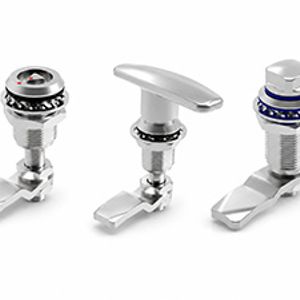
Understanding the difference between cam locks and compression latches for industrial enclosures is arguably the most critical structural decision an engineer will make during the hardware specification process. While both mechanisms serve the basic function of keeping a door closed, their mechanical operation and suitability for extreme environments are very different.
A standard cam lock works on a simple quarter-turn rotary motion. When the operator turns the key or handle, the internal metal cam rotates behind the enclosure frame to hold the door in place. This design is cost-effective, easy to install, and perfectly suitable for mild indoor environments where the main goal is simple access control and basic dust prevention. However, standard cam locks provide a purely fixed grip. They do not actively pull the door inward. In high-vibration environments, this lack of active tension creates a serious hidden risk: rapid gasket fatigue. As the enclosure vibrates, the door rattles slightly against the frame, eventually wearing down the weather stripping, degrading the foam, and allowing moisture to get inside the cabinet.
By contrast, a compression latch uses a more sophisticated dual-action mechanical movement. As the latch is engaged, it first rotates the cam into position behind the frame, and then physically pulls the cam inward, pressing the door tightly against the enclosure gasket. This active compression completely eliminates the small movements caused by heavy machinery vibration. By maintaining constant, even pressure on the sealing gasket, compression latches are the definitive engineering solution for achieving strict NEMA 4 and NEMA 4X ratings, ensuring complete watertight and dust-tight integrity under pressure.
To clearly illustrate the difference between cam locks and compression latches for industrial enclosures, we have laid out their performance across key engineering dimensions in the comparison table below:
Feature | Standard Cam Lock | Compression Latch |
Sealing Capability | Low to Moderate (relies purely on fixed gasket thickness) | Extremely High (actively compresses the sealing gasket) |
Vibration Resistance | Poor (highly prone to rattling and loosening over time) | Excellent (eliminates door play and structural micro-movements) |
Installation Complexity | Very Low (simple single-hole mounting process) | Moderate (requires extremely precise grip range calculation) |
Ideal Harsh Environment Use | Indoor dust protection, basic secure access panels | Outdoor NEMA 4/4X, marine, railway, heavy machinery |
When advising our OEM clients, we consistently stress that specifying standard cam locks for outdoor or high-vibration applications often leads to early, serious system failure. The initial cost savings of a simpler lock are quickly wiped out by the damage that water ingress causes to sensitive electronics. For enclosures mounted on heavy construction equipment, offshore drilling rigs, or high-speed rail systems, the constant mechanical tension provided by a compression latch is absolutely non-negotiable. Furthermore, a compression latch actively compensates for gasket set — the natural flattening of rubber over time — ensuring the seal stays fully intact even after years of harsh environmental exposure. Choosing the right mechanism directly determines the long-term survival of your internal systems.
Selecting Materials for Extreme Industrial Conditions
Pairing the right mechanical design with the correct metal and chemical composition is strictly essential for long-term survival. The physical environment dictates exactly which materials will hold up under prolonged exposure without suffering structural failure.
For moderate industrial environments, zinc alloy remains a popular and economical option. When treated with high-quality powder coating or precise chrome plating, zinc alloy locks offer solid resistance to general atmospheric moisture, indoor humidity, and light physical wear. However, when the environment shifts to severe corrosive conditions — such as chemical processing plants or coastal marine applications — stainless steel becomes absolutely necessary. We typically recommend 304 stainless steel for heavy washdown areas like food and beverage manufacturing facilities. For the harshest environments with continuous saltwater exposure or highly acidic industrial atmospheres, 316 stainless steel is required because of its added molybdenum content, which greatly increases resistance to localized pitting.
Beyond the metal body, the integrity of the weather seal is critical. Through extensive manufacturing experience, we have consistently found that selecting the right gasket material is just as important as the metal lock body itself when dealing with extreme conditions. Standard commercial rubber degrades quickly under intense ultraviolet light. For outdoor applications with heavy daily UV exposure, high-grade EPDM gaskets should be specified to avoid premature EPDM degradation, as they offer superior long-term weatherability. For extreme temperature swings or environments requiring daily harsh chemical washdowns, silicone or poured polyurethane gaskets provide outstanding thermal stability and chemical resistance. Even a premium 316 stainless steel lock will fail if its internal gasket cracks under freezing winter temperatures.
Engineers must also carefully assess the serious risk of galvanic corrosion — an electrochemical process where dissimilar metals corrode quickly when placed in electrical contact in the presence of an electrolyte like rainwater or saltwater. Mounting a premium stainless steel lock directly onto an untreated bare aluminum enclosure without proper isolation gaskets will cause the aluminum panel to corrode aggressively around the mounting hole, eventually causing the lock to come loose entirely.
At ForndLock, we help procurement staff and engineers navigate these complex material decisions. We make sure that the lock housing, internal springs, mounting nuts, cams, and sealing gaskets all share fully compatible environmental tolerances. Specifying the correct material combination prevents premature mechanical binding, rust buildup, and loss of sealing pressure, thereby extending the working life of the entire industrial cabinet. Selecting materials is never a one-size-fits-all process; it requires a precise, calculated alignment of metallurgy, polymer chemistry, and environmental data. By factoring in these material variables during the initial design phase, OEM clients can avoid expensive retrofits and warranty claims later on, ensuring maximum reliability.
Field Case: Offshore Marine Enclosure Upgrades
Client Profile
An industrial automation provider based in Norway, specializing in power distribution and control systems for the offshore marine sector. The client manufactures heavy-duty electrical cabinets deployed directly on offshore oil platforms and coastal wind farms.
The Challenge
The customer faced a dual threat of rapid saltwater corrosion and severe structural vibration on their offshore control cabinets. Initially, they used standard stainless steel cam locks with basic rubber gaskets. However, the continuous low-frequency vibration from platform drilling equipment caused the cam locks to rattle loose. At the same time, the harsh North Sea saltwater spray accelerated the breakdown of the standard rubber seals. This combination led to significant water ingress during heavy storms, resulting in serious electrical shorts, major equipment downtime, and very high emergency maintenance costs. The client urgently needed a hardware overhaul to protect their sensitive internal electronics.
Engineered Solution
After receiving the technical drawings and environmental data, the ForndLock engineering team conducted a thorough analysis of the operational constraints. We determined that a standard rotary mechanism was completely insufficient for the dynamic loads present on the offshore platform. We recommended a full transition to a custom-engineered compression latch. To combat the aggressive saltwater environment, we specified marine-grade 316 stainless steel for all metal components, including the internal springs and mounting hardware, to prevent any localized pitting. To address the sealing failure, we integrated a specialized IP68-rated silicone sealing gasket. Unlike standard rubber, this premium silicone maintains its high elasticity in freezing North Sea temperatures while resisting the corrosive effects of continuous salt spray.
The Result
Following the installation of the ForndLock compression latches, the Norwegian client conducted rigorous field testing through a complete winter season on the offshore platform. The active compression mechanism completely neutralized the structural vibration, eliminating all door rattle and gasket wear. The 316 stainless steel construction showed zero signs of surface corrosion, and the IP68 silicone gasket maintained a perfect, watertight seal. The result was a complete elimination of water ingress over the extended deployment period. By engineering a solution tailored specifically to their environmental threats, we helped the client significantly reduce ongoing maintenance costs and greatly improve the reliability of their offshore control cabinets. This case clearly illustrates why matching the precise locking mechanism to the specific environmental reality is the most critical step in industrial hardware design.
Validating Performance Through Custom Engineering Support
Bridging the gap between standard product selection and project-specific customization requires a strong engineering support infrastructure. Standard off-the-shelf catalogs often fall short when specialized enclosures face unique operational constraints. At ForndLock, our extensive hands-on manufacturing experience allows us to provide comprehensive OEM and ODM capabilities, ensuring that every locking mechanism is perfectly calibrated for its intended environment. Understanding exactly how to choose industrial cabinet locks for harsh environments ultimately means partnering with a capable manufacturer dedicated to validating physical performance long before mass production begins.
We actively support our industrial customers through a structured, step-by-step customization and validation process:
1. Requirement Analysis involves a deep dive into the specific environmental threats, carefully reviewing technical CAD drawings, and calculating precise grip ranges and material compatibilities for the project.
2. Sample Prototyping allows our engineering team to quickly produce functional physical models, ensuring that the theoretical design fits perfectly into the client's actual enclosure door frame without tolerance issues.
3. Rigorous Testing is conducted within our advanced factory laboratories. We subject the prototypes to extended salt spray tests to verify corrosion resistance, and perform thorough lifecycle fatigue testing to confirm that the mechanical springs and compression cams will survive tens of thousands of actuations under heavy dynamic load.
4. Batch Delivery is carried out only after all strict performance metrics are fully validated, ensuring seamless integration into the client's manufacturing assembly line with consistent batch-to-batch quality.
This rigorous validation process guarantees that customized locks meet the exact, unforgiving demands of extreme environments. By simulating harsh weather conditions and mechanical stress in the laboratory, we remove all guesswork from hardware specification, giving OEM clients complete peace of mind. Our dedicated engineering support ensures that procurement personnel receive a proven, highly reliable product that significantly extends cabinet longevity.
Securing Your Next Industrial Engineering Project
Protecting sensitive internal components from extreme weather, corrosive chemicals, and continuous mechanical vibration requires a strategic, uncompromising approach to hardware specification. As we have explored throughout this guide, knowing exactly how to choose industrial cabinet locks for harsh environments ultimately comes down to perfectly matching the right mechanical structure and metallurgical materials to your specific environmental threats. Whether you are upgrading to a marine-grade 316 stainless steel compression latch for an offshore platform or specifying high-grade silicone gaskets for a high-temperature chemical processing plant, the right hardware decision prevents serious equipment failure and significantly reduces long-term maintenance costs.
At ForndLock, we are fully committed to helping you build rugged enclosures that can handle the toughest conditions on earth. Our experienced engineering team is ready to help you validate your design and select the best locking mechanisms for your specific application.
> We invite industrial engineers, procurement personnel, and OEM clients to partner with us for their next critical deployment. Please send your specific project requirements, technical CAD drawings, requests for rapid sample testing, or detailed OEM customization needs directly to our engineering support team at: [email protected].
Let us help you engineer a secure, resilient, and fully optimized locking solution for your most demanding industrial cabinet projects today.