Industrial Cam Locks: Types, Applications and Selection Guide
A cam lock secures a door or panel by rotating a cam behind a frame, keeper, or strike, and the correct type depends on the required access control, panel and frame geometry, cam engagement, rotation, sealing, security, and operating environment. Industrial cam locks are available as keyed, tool-operated, hand-operated, padlockable, and compression variants, each built around the same basic rotating-cam principle but suited to different operating conditions. Selecting the wrong type, or the wrong dimensions within the right type, is one of the most common causes of failed access panels, door rattle, and cam disengagement in enclosures and machinery. This guide explains cam-lock types, applications, and selection criteria, including grip, cam geometry, rotation, keying, and materials. At ForndLock, we manufacture industrial cam locks and related access hardware, and this guide reflects the dimensional and functional questions we work through with engineering and procurement teams before any drawing is approved.
What Is a Cam Lock and How Does It Work?
A cam lock secures a door or panel through a rotating cam that engages behind a frame, keeper, or strike when the key, tool, or handle is turned.
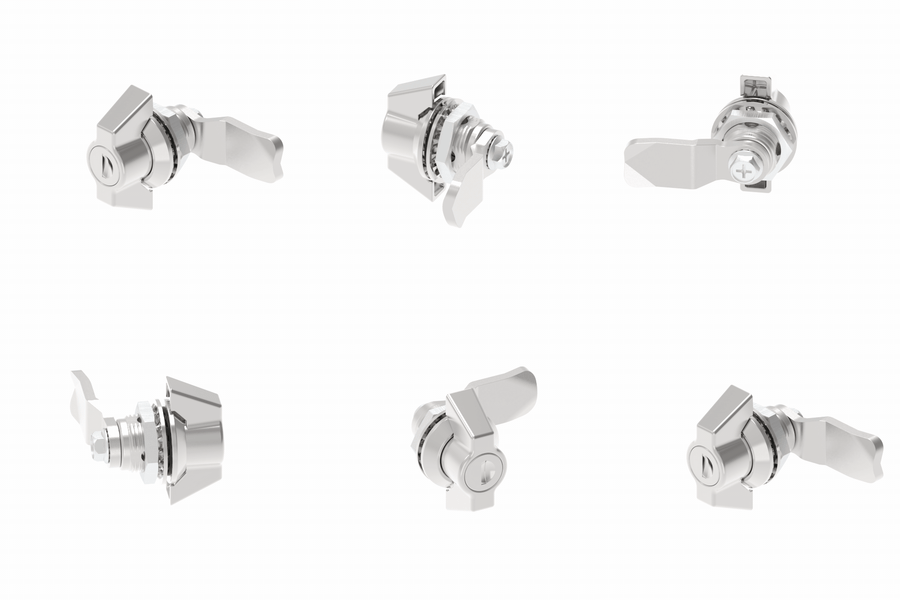
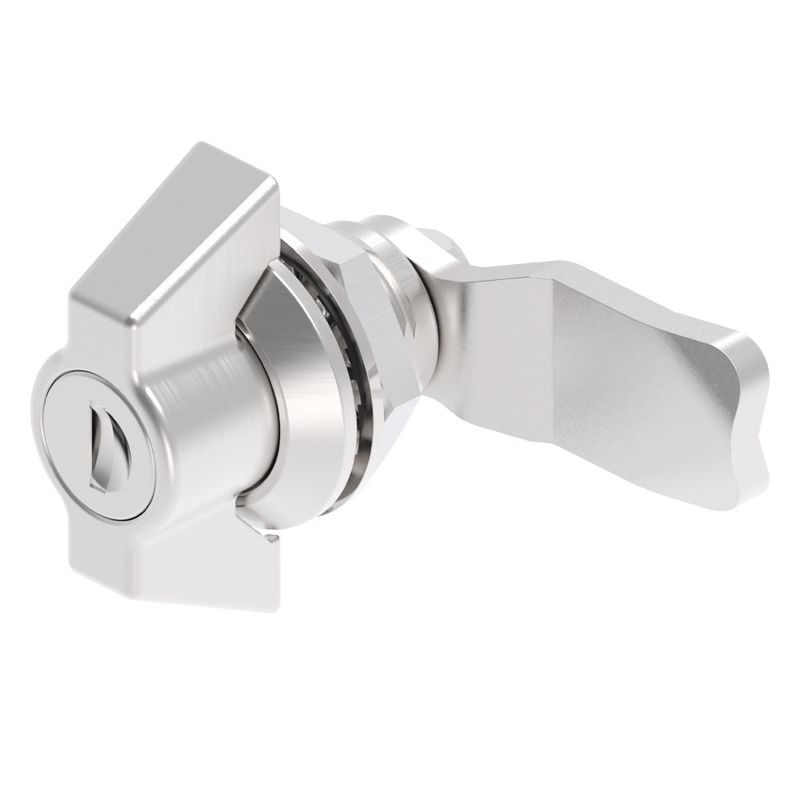
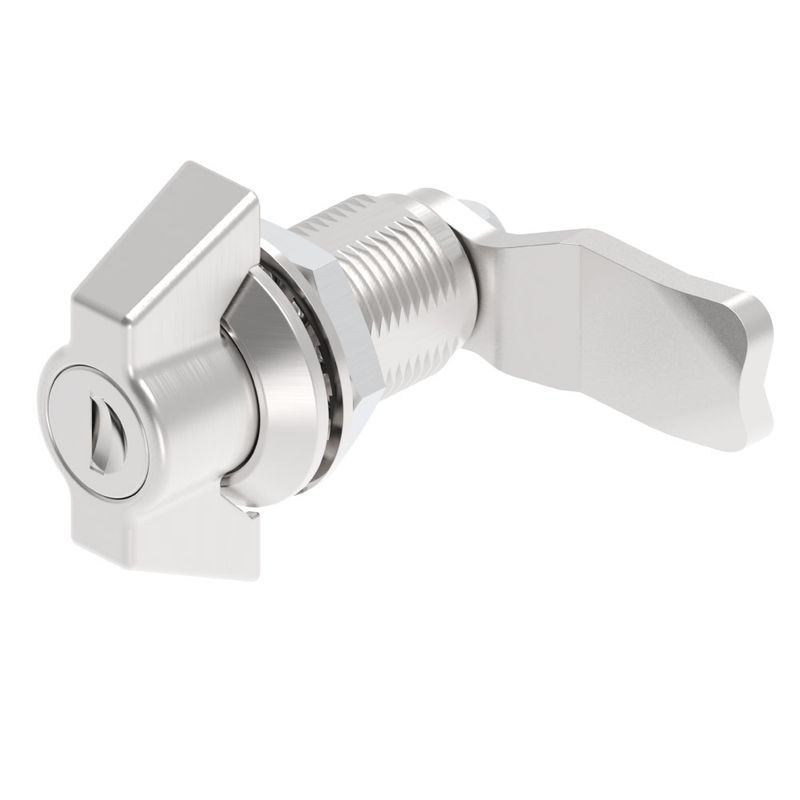
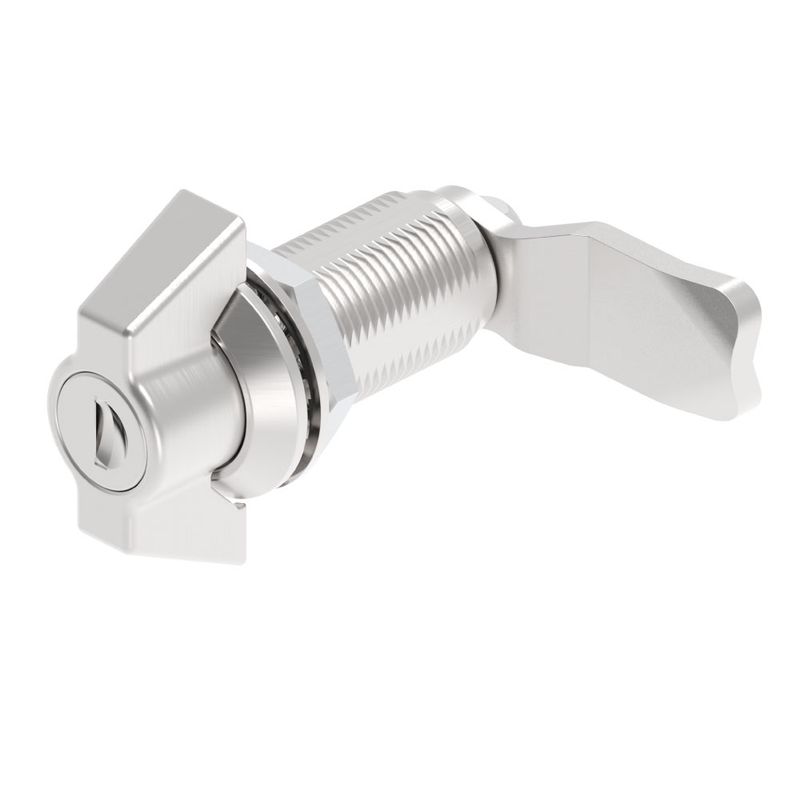
The lock body sits within a panel cutout, while the cam itself projects from the rear of the housing and swings into position as the cylinder or insert rotates. This basic mechanism has remained largely unchanged across decades of industrial hardware because it is compact, mechanically simple, and adaptable to many housing, cam, and operating-head combinations.
Which Components Make Up a Typical Cam Lock?
A typical cam lock consists of a housing, a cylinder or insert, a mounting nut or retaining clip, a cam, a cam fastener, a seal, and an operating key, tool, knob, or handle. The housing is inserted through the panel cutout and secured from the rear by the mounting nut or clip, which holds the lock body stationary against the panel. The cylinder or insert sits inside the housing and rotates when the correct key, tool, or handle is applied. The cam is attached to the rear of the cylinder using a cam fastener, typically a screw, and rotates with it. A seal, where fitted, sits between the housing and the panel to limit moisture and dust ingress at the mounting point. For readers reviewing a new installation, a labeled cam-lock anatomy diagram showing each of these parts in cross-section is strongly recommended before finalizing a drawing.
How Does the Cam Secure a Door or Panel?
The cam rotates from an unlocked to a locked position, engaging behind the frame or keeper to transfer closing load across the panel opening. In the unlocked position, the cam is oriented so the door or panel can swing open freely. When the key, tool, or handle is turned, the cam sweeps through its operating angle and moves behind the frame lip or keeper. Once engaged, the cam holds the door closed by resisting outward movement of the panel, transferring the closing load from the door to the frame through the cam-to-keeper contact surface. The reliability of this load transfer depends on how much of the cam actually overlaps the frame, which is why frame engagement is treated as a distinct engineering variable later in this guide.
How Is a Cam Lock Different from a Cam Latch or Compression Latch?
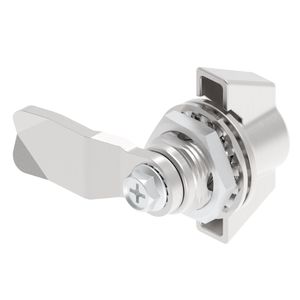
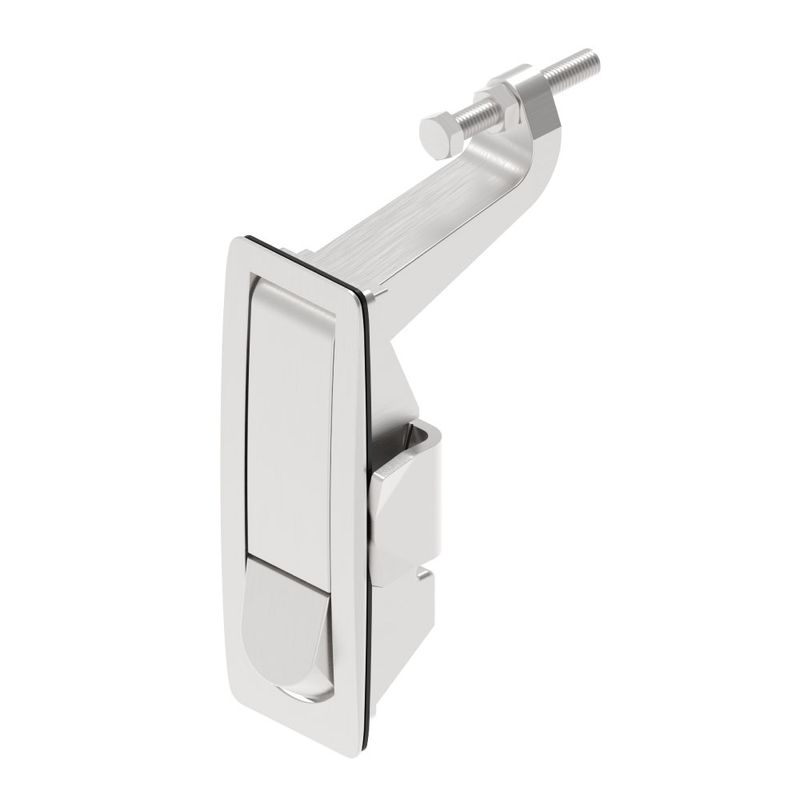
A keyed cam lock controls access, a non-keyed cam latch secures a panel without key-based access control, and a compression latch adds axial movement to pull the panel against a frame or gasket. These three products are related but not interchangeable. A cam lock is defined by its access-control function: a key, tool, or handle determines who can open it. A cam latch performs a similar mechanical rotation but is intended purely for convenient, repeated panel closure rather than restricted access.

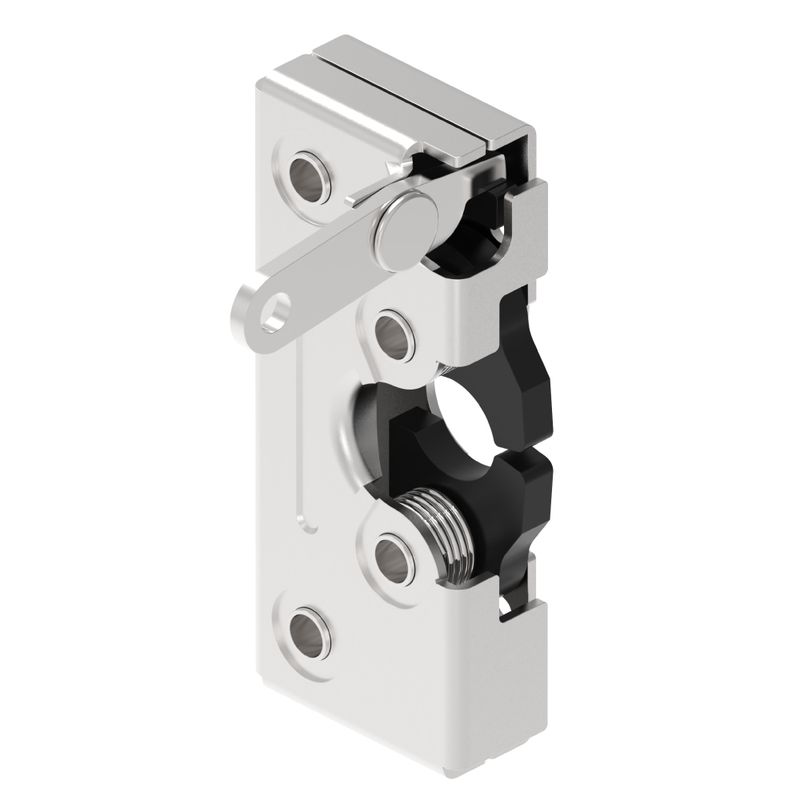
A compression latch goes a step further mechanically, combining rotation with axial draw to seat the door against a gasket under measurable closing force. Specifying a standard cam lock where a compression latch is actually required is a common and preventable selection error, particularly on sealed or gasketed enclosures.
What Types of Industrial Cam Locks Are Available?
Industrial cam locks are commonly available as keyed, tool-operated, hand-operated, padlockable, and compression types, each suited to a different access-control and sealing requirement. The table below summarizes the main distinctions before each type is discussed in more detail.
Cam-lock type | Operating method | Access control | Recommended applications | Main limitation |
Keyed cam lock | Cylinder and key | Restricted, key-controlled | Electrical cabinets, restricted-access panels | Key management overhead |
Tool-operated cam lock | Triangular, square, hexagonal, or slotted insert | Managed but not restricted | Service panels, internal covers | Not a high-security mechanism |
Hand-operated cam lock | Knob, wing knob, T-handle, L-handle | None (tool-free) | Frequent maintenance access | No restricted-access function |
Padlockable cam lock | External padlock through hasp | Optional, visible | Lockout applications, shared equipment | Requires hasp and padlock clearance |
Compression cam lock | Rotation plus axial pull-down | Depends on cylinder/insert used | Gasketed, sealed, or vibration-exposed doors | Higher cost, more installation depth |
When Should You Use a Keyed Cam Lock?
A keyed cam lock is used when restricted, key-controlled access is required, supported by keyed-alike, keyed-different, or master-key planning. This type suits electrical enclosures, control cabinets, and any panel where only authorized personnel should gain entry. Key-code planning should be considered early, since keyed-alike systems reduce the number of unique keys in circulation while keyed-different systems isolate access at the compartment level. Key retention, meaning whether the key can be removed in the locked position, unlocked position, or both, should also be defined before ordering, since this affects both convenience and site security.
When Should You Use a Tool-Operated Cam Lock?
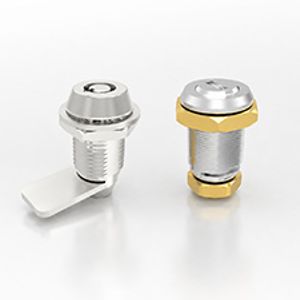
A tool-operated cam lock is suited to managed service access where a triangular, square, hexagonal, or slotted insert restricts casual operation without functioning as a high-security lock. These inserts are effective at discouraging accidental or unauthorized operation by untrained personnel, and they are widely used on internal service panels, machine covers, and secondary access points inside a larger enclosure. However, tool-operated inserts should not be described or specified as high-security devices, since common insert shapes are not designed to resist deliberate tampering the way a cylinder-based keyed lock can.
When Should You Use a Hand-Operated Cam Lock?
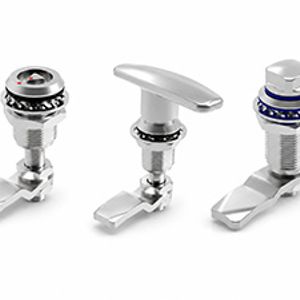
A hand-operated cam lock with a knob, wing knob, T-handle, or L-handle suits frequent, tool-free maintenance access where restricted entry is not required. This type is common on internal doors, non-critical access covers, and equipment that technicians open and close many times per shift. Because no key or tool is needed, operation is fast, but this also means the lock provides no meaningful access control. Hand-operated cam locks are best reserved for applications where the panel itself does not need to be restricted from casual access.
When Should You Use a Padlockable Cam Lock?
A padlockable cam lock is appropriate when visible, external padlock-based access control or lockout procedures are required, provided adequate hasp and operating clearance exist. This type is often selected where a facility already uses padlocks as part of a documented lockout or tagout procedure, or where visible evidence of a lock is preferred over a concealed cylinder. Selection should account for hasp geometry, the clearance needed to fit and operate the padlock, and whether the padlockable feature is the primary locking method or a secondary option alongside a keyed cylinder.
When Should You Use a Compression Cam Lock?
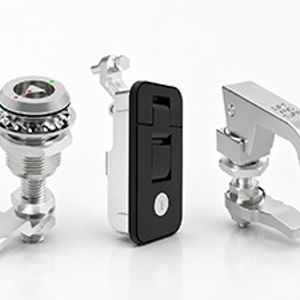
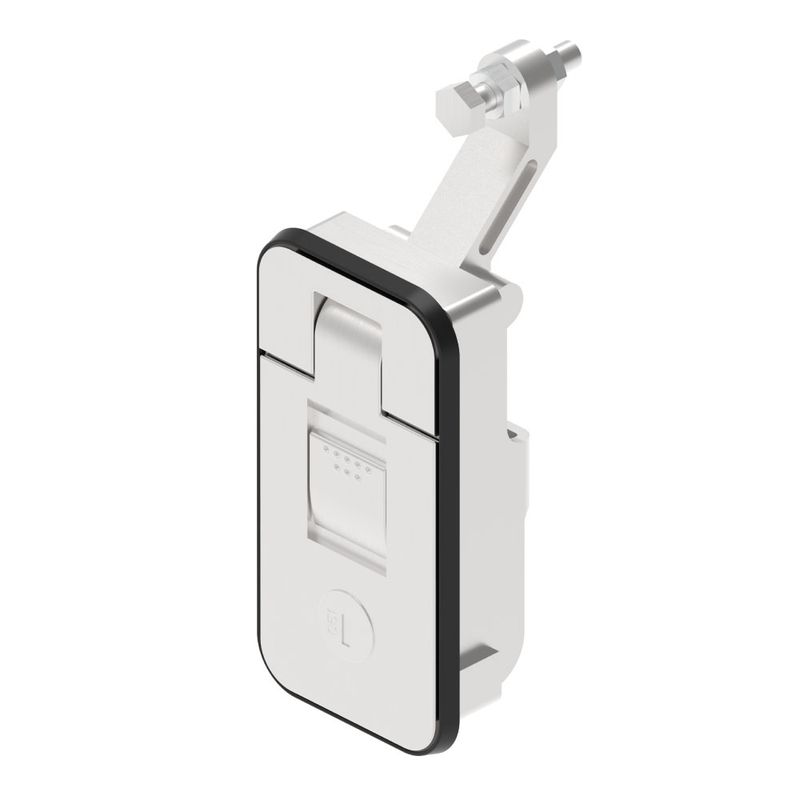
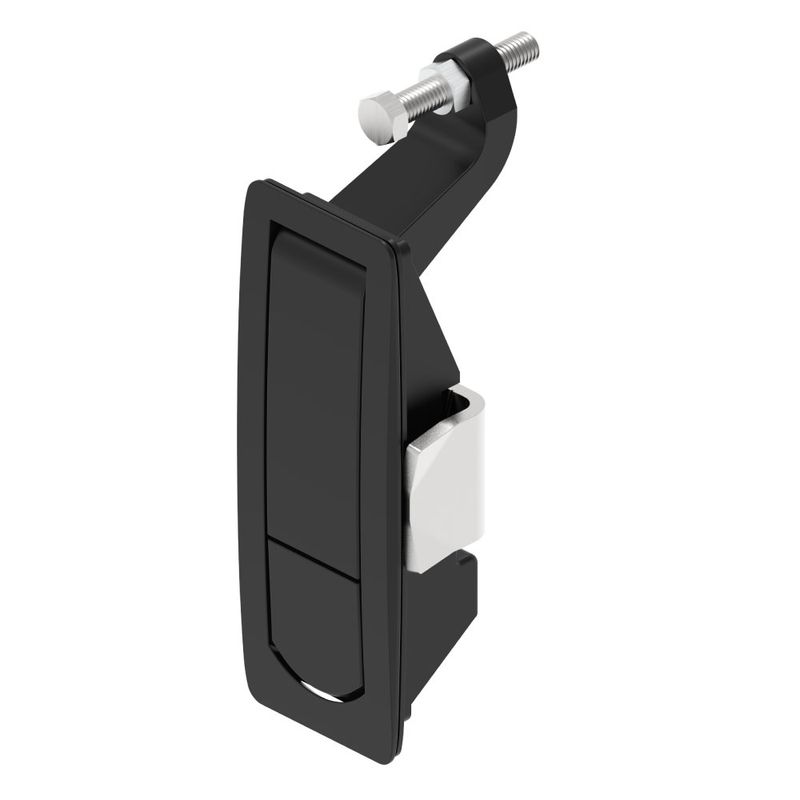
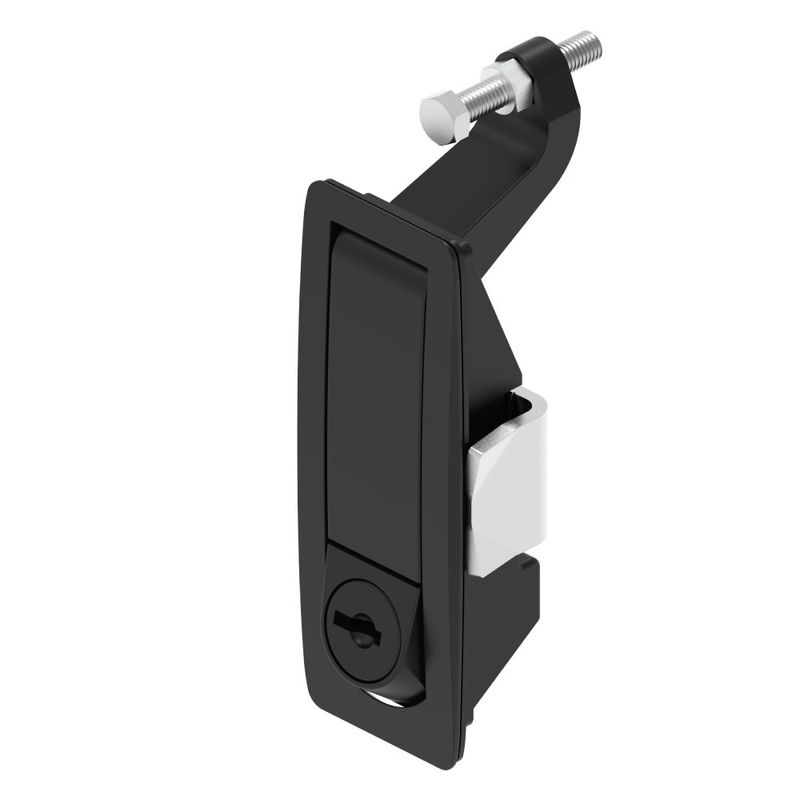
A compression cam lock is required when axial pull-down is needed to compress a gasket, reduce door rattle, or resist vibration beyond what a basic rotating cam can provide. A standard cam lock rotates the cam into position but does not necessarily draw the door tightly against the frame; any gap between the cam and keeper can allow the door to move slightly under vibration or wind load. A compression cam lock adds a controlled axial travel during the final part of its rotation, drawing the panel inward against a gasket or seal. When a project specifies sealed enclosures, outdoor cabinets, or doors exposed to sustained vibration, a basic rotating cam is often insufficient, and a compression-type lock or a dedicated compression latch should be evaluated instead.
Compression Latch Series by ForndLock
Where Are Cam Locks Used in Industrial Applications?
Cam locks are applied across electrical enclosures, machinery, outdoor and communication cabinets, transportation equipment, and storage compartments, each with distinct dimensional and environmental priorities.
Application | Recommended cam-lock type | Main selection concern | Alternative option |
Electrical/control enclosures | Keyed or tool-operated | Panel thickness, cutout, rear clearance | Quarter-turn lock |
Machinery/automation | Tool-operated or hand-operated | Vibration, service frequency | |
Outdoor/communication cabinets | Keyed, sealed | Corrosion, keyway protection | Compression latch |
Transportation/mobile equipment | Keyed with anti-rotation mounting | Shock, vibration, fastener retention | Compression cam lock |
Storage/service compartments | Hand-operated or tool-operated | Access frequency, cost | Padlockable cam lock |
Which Cam Locks Suit Electrical and Control Enclosures?
Electrical and control enclosures typically require cam locks selected for panel thickness, cutout compatibility, gasket sealing, and adequate rear clearance from internal wiring. Because these enclosures often contain live components, the locking method should also support a documented key-management approach, and the rear projection of the lock and cam must be checked against internal wiring looms, terminal blocks, and other equipment to avoid interference. Corrosion resistance becomes more important where the enclosure is installed outdoors or in a washdown area.
Which Cam Locks Suit Machinery and Automation Equipment?
Machinery and automation equipment favor tool-operated or hand-operated cam locks that resist vibration while allowing frequent, controlled service access. These doors are often opened many times during commissioning, adjustment, and routine maintenance, so operating convenience matters as much as security. Vibration from motors, drives, or moving mechanisms can loosen mounting nuts or cam fasteners over time, so anti-rotation features and adequate frame engagement should be reviewed alongside door movement and internal interference with cables or guards.
Which Cam Locks Suit Outdoor and Communication Cabinets?
Outdoor and communication cabinets require corrosion-resistant, sealed cam locks, though the lock alone does not determine the environmental rating of the finished enclosure. Rain, dust, salt exposure, UV exposure, and temperature cycling all affect both the lock and the surrounding gasket system. Keyway protection through a spring-loaded cover or shielded cylinder can reduce direct water and dust entry, but the overall ingress protection of the cabinet depends on the door gasket, panel seams, and cutout sealing as a complete system, not the lock in isolation.
Neutral Salt Spray Test for ForndLock Rotary Locks
Which Cam Locks Suit Transportation and Mobile Equipment?
Transportation and mobile equipment require cam locks with anti-rotation mounting and reliable cam engagement to withstand shock, vibration, and fastener loosening. Doors on trucks, trailers, rail equipment, and mobile machinery experience continuous low-level vibration combined with occasional shock loading, both of which can work mounting hardware loose over time. Key retention is also relevant here, since a key that falls out during transit or operation can create both a convenience and a safety concern.
ForndLock Railway Compression Lock Latch
Which Cam Locks Suit Storage and Service Compartments?
Storage and service compartments generally prioritize compact, cost-effective cam locks balanced against access frequency and key-control requirements. Where tamper exposure is low and the compartment does not contain sensitive equipment, a simpler hand-operated or tool-operated lock is often adequate. Where replacement cost and maintenance convenience matter more than restricted access, standardizing on a single compact lock type across multiple compartments can simplify spare-parts planning.
How Should You Select Cam Length, Offset, and Orientation?
When Should You Use a Straight or Offset Cam?
A straight cam contacts the frame directly, while forward- or reverse-offset cams shift the contact plane to match different door-to-frame relationships. A straight cam extends from the cylinder in a single flat plane and is suited to installations where the frame contact point lines up directly with the lock's mounting position. A forward-offset cam shifts the contact plane closer to the door face, while a reverse-offset cam shifts it further away, allowing the same lock body to accommodate different grip requirements without changing the housing. A comparison diagram showing straight, forward-offset, and reverse-offset cams side by side is useful when communicating requirements to a manufacturer.
How Should Cam Length Be Selected?
Cam length must be selected from the rotation axis to the frame contact point so the cam reliably reaches the keeper without interference. This distance depends on the specific door and frame geometry, the required keeper overlap, and the space available for the cam to rotate without striking surrounding structure. An excessively short cam may miss the frame entirely, leaving the door effectively unlocked even though the lock cylinder operates normally. An excessively long cam may interfere with internal components or create binding as it rotates, resulting in poor operation or premature wear.
How Much Rear Clearance Does the Cam Need?
Rear clearance must accommodate the full cam rotation envelope while avoiding contact with wiring, insulation, or internal reinforcement. This clearance check should account for the complete sweep of the cam from unlocked to locked position, not just its final resting position, since interference partway through the rotation can prevent the lock from turning smoothly even if the locked and unlocked positions themselves appear clear. Installation-tool access behind the panel should also be confirmed during the same review.
How Should Cam-Lock Rotation and Key Removal Be Specified?
Should the Cam Lock Rotate Clockwise or Counterclockwise to Open?
Rotation direction must always be defined from a stated viewing direction, since door handing and nearby hardware affect the expected operating path. A rotation described as clockwise when viewed from outside the enclosure may be counterclockwise when viewed from inside, so the viewing reference must be stated explicitly on any drawing or specification. Door handing, the locked cam position, and the presence of nearby hardware, such as handles or hinges, all influence which rotation direction feels natural to the operator.
When Is a 90-Degree or 180-Degree Rotation Required?
Operating angle depends on the specific lock design, cam travel, key-removal position, and locked and unlocked orientation, so a 90-degree or 180-degree rotation should never be assumed without confirmation. Different lock families use different internal mechanisms, and the same nominal lock size can be available with different operating angles depending on the cylinder or insert selected. Application requirements, such as available rotation space or compatibility with existing installations, should be checked against the manufacturer's specific product data rather than assumed from general industry convention.
Should the Key Be Removable When the Lock Is Open?
Key removal may be limited to the locked position, allowed in both positions, or captive, depending on convenience needs versus the risk of leaving equipment unsecured. A key removable only in the locked position encourages operators to lock the panel before removing the key, which can support site security policies. A key removable in both positions offers more convenience but relies on operator discipline. Captive or key-retaining functions keep the key attached to the lock at all times, which suits applications where losing a loose key would be a significant maintenance or safety concern.
How Should Security and Key Management Affect Cam-Lock Selection?
Security and key management should be defined through keyed-alike, keyed-different, or master-key planning matched to the project's maintenance hierarchy and tamper exposure.
Keying option | Main advantage | Main limitation | Suitable project |
Keyed alike | Fewer keys to manage | One key opens many units | Uniform cabinets, single-site maintenance |
Keyed different | Compartment-level separation | More keys to track | Mixed-access facilities |
Master key | Hierarchical access | Requires documented key records | Multi-building or multi-team sites |
When Should You Use Keyed-Alike Cam Locks?
Keyed-alike cam locks simplify maintenance access by reducing key quantity, but they create risk if one key can open many cabinets. This approach suits facilities where the same maintenance team services many identical enclosures and carrying a single key is more practical than managing dozens of unique ones. The trade-off is that losing or duplicating that one key compromises access to every cabinet using the same code, so this option should be paired with a clear key-control policy.
When Should You Use Keyed-Different Cam Locks?
Keyed-different cam locks separate access at the compartment level at the cost of increased key-management complexity. This suits applications where different teams or contractors should only access specific compartments, such as separating electrical access from mechanical access within the same piece of equipment. The complexity of tracking multiple unique keys increases with the number of locks, so this approach benefits from documented key records from the outset.
Which Cam-Lock Materials and Finishes Suit Different Environments?
Zinc alloy, carbon steel, stainless steel, and engineering plastic each suit different combinations of mechanical load, corrosion exposure, and cost.
Material | Main advantage | Main limitation | Suitable environment |
Zinc alloy | Cost-effective, good castability | Lower corrosion resistance than stainless | Dry indoor cabinets |
Carbon steel | Higher mechanical strength | Requires coating for corrosion protection | Indoor machinery with coating |
Stainless steel | Strong corrosion resistance | Higher cost | Outdoor, washdown, coastal environments |
Engineering plastic | Lightweight, non-conductive | Lower mechanical load capacity | Electrically sensitive or lightweight panels |
When Should You Use Zinc Alloy, Steel, or Stainless Steel?
Zinc alloy suits cost-sensitive indoor use, carbon steel adds mechanical strength, and stainless steel offers the strongest corrosion resistance for demanding environments. Zinc alloy castings are widely used for standard cabinet applications where mechanical load and corrosion exposure are moderate. Carbon steel components offer higher mechanical strength for applications with heavier doors or more frequent cycling but require an appropriate surface treatment to control corrosion. Stainless steel carries a higher material cost but is generally preferred for outdoor, washdown, or coastal installations where long-term corrosion resistance outweighs the cost difference.
ForndLock: Zinc Alloy Compression Lock MS609 Industrial Cabinet Plane Compression Latch
When Can Engineering Plastic Be Appropriate?
Engineering plastic can be appropriate where reduced weight, electrical insulation, or corrosion resistance matters more than high mechanical load capacity. Plastic components avoid galvanic corrosion entirely and provide electrical insulation where that is a design requirement. However, impact resistance, temperature range, UV exposure, and chemical compatibility should all be checked against the specific application, since engineering plastics vary considerably in these properties and are not a universal substitute for metal components under heavy mechanical load.
Which Surface Finish Is Appropriate for Indoor or Outdoor Use?
Finish selection, such as zinc plating, chrome plating, powder coating, or passivation, should match dry indoor, outdoor, coastal, washdown, or chemical exposure conditions. Zinc plating provides basic corrosion protection suited to dry indoor environments. Chrome plating adds a decorative, wear-resistant surface often used where appearance matters alongside moderate corrosion protection. Powder coating provides a thicker, more durable protective layer suited to environments with more frequent contact or moisture exposure. Passivation on stainless steel components enhances the natural corrosion resistance of the base material and is commonly specified for outdoor or washdown applications. Any finish claim beyond these general characteristics should be confirmed against the specific manufacturer's verified specification.
Why Should Dissimilar Materials and Electrical Requirements Be Reviewed?
Dissimilar materials should be reviewed to avoid galvanic interaction, coating damage, or interruption of required earthing continuity. Mounting a stainless steel lock directly against an untreated carbon steel panel, for example, can create galvanic corrosion at the contact point over time in moist environments. Where the enclosure has earthing or grounding requirements, conductive continuity across the mounting point should be confirmed, since some finishes or plastic components can interrupt continuity if not specifically selected for that purpose.
How Do Sealing, Compression, and Vibration Affect Selection?
When Is a Sealed Cam Lock Sufficient?
A sealed cam lock with housing and insert seals is sufficient for basic moisture and dust exposure, but component sealing does not automatically establish the enclosure's overall environmental performance. Housing seals, insert seals, and sealing washers reduce the path for moisture and dust to enter around the lock's mounting point and keyway. This is generally adequate for enclosures with moderate environmental exposure and a properly sealed door gasket. However, the sealed lock is only one component of the complete enclosure sealing system, and its presence does not by itself guarantee any particular level of protection for the finished cabinet.
When Is a Compression Cam Lock Required?
A compression cam lock is required when gasket pull-down, panel flatness correction, or vibration-driven door rattle exceed what a standard rotating cam can control. Where a door needs to be drawn tightly against a gasket to achieve consistent sealing across its full perimeter, or where the panel itself is not perfectly flat, the added axial travel of a compression mechanism provides more reliable closing force than a standard cam alone. Applications with continuous vibration exposure often benefit from this additional closing force as well, since it reduces the small gaps that allow rattling to develop over time.
How Can Vibration Cause a Cam Lock to Fail?
Vibration can loosen mounting nuts, rotate the lock body, or loosen the cam fastener, gradually reducing engagement until the lock fails. This is a progressive failure mode rather than a sudden one: engagement may be fully adequate at installation but degrade over weeks or months of continuous operation as fasteners work loose under repeated low-amplitude movement. Door flex, insert wear, and repeated impact loading can accelerate this process, particularly on mobile or heavy machinery applications.
Which Anti-Loosening Measures Should Be Considered?
Anti-rotation cutouts, locking nuts, retaining clips, adequate cam engagement, compression, assembly torque control, and vibration testing should be selected based on compatibility with the specific lock design. An anti-rotation cutout in the panel prevents the lock body itself from turning within its mounting hole, which addresses one failure mode but not cam-fastener loosening. Locking nuts and retaining clips address the mounting connection, while cam-fastener retention addresses the cam-to-cylinder connection separately. Because these measures are not universally interchangeable across product families, they should be confirmed against the specific lock's design rather than applied generically.
What Common Cam-Lock Selection Mistakes Cause Failure?
Most cam-lock failures trace back to incorrect grip, mismatched cutouts, insufficient cam engagement, or overlooked vibration and sealing requirements.
Symptom | Likely cause | What to check | Corrective action |
Lock body wobbling | Oversized or wrong-shape cutout | Cutout dimensions, anti-rotation feature | Correct cutout, add anti-rotation feature |
Cam missing the frame | Incorrect grip or cam length | Actual door/frame measurement | Reselect cam length or offset |
Cam jamming | Wrong offset or orientation | Rotation envelope, frame tolerance | Adjust cam orientation |
Door rattling when locked | Insufficient cam contact, no preload | Gasket condition, cam engagement | Consider compression cam lock |
Key difficult to turn | Preload, contamination, corrosion | Cylinder condition, alignment | Clean, lubricate, or replace |
Why Does a Cam Lock Wobble or Rotate in the Panel?
Wobbling usually results from an oversized or incorrectly shaped cutout, a missing anti-rotation feature, or insufficient mounting-nut engagement. An oversized cutout allows the housing to shift slightly within the panel, which becomes noticeable during key operation. Incorrect panel thickness relative to the housing length can also leave the mounting nut without enough thread engagement to hold the lock firmly in place, compounding the wobble.
Why Does the Cam Miss or Jam Against the Frame?
A missing or jamming cam usually points to incorrect grip, cam length, offset, or orientation relative to the actual door and frame. Door sag over time, frame tolerance stacking, or simple misalignment between the door and frame during installation can all shift the effective contact point enough to cause these problems, even when the lock itself was manufactured correctly to specification.
Why Does a Locked Door Still Rattle?
Rattling after locking generally indicates insufficient cam contact, no gasket preload, or panel flexibility that a standard cam lock cannot resolve. If the cam engages the frame but does not draw the door tightly against it, small gaps remain that allow movement under vibration or air pressure changes. This is a common indicator that a compression cam lock or compression latch should be evaluated instead of a standard rotating cam.
Why Can the Key Become Difficult to Turn?
Difficult key operation is often caused by excessive cam preload, misalignment, contamination, corrosion, or internal wear. Excessive preload can occur when the cam is engaging too tightly against the frame, requiring more force than the cylinder mechanism is designed to handle. Contamination and corrosion inside the cylinder are common in poorly sealed outdoor installations, while internal wear develops naturally over a long service life and eventually requires replacement.
What Should Be Tested Before Production Approval?
Before production approval, dimensional, functional, and environmental checks should confirm that the selected cam lock performs correctly on the actual assembly.
Which Dimensional Checks Should Be Completed?
Dimensional checks should confirm cutout, panel thickness, housing fit, grip, cam length, offset, orientation, and rear clearance. These checks should be performed on a physical sample installed in the actual door and frame assembly, rather than relying solely on drawing review, since manufacturing tolerances on both the lock and the enclosure can produce small deviations that are only visible during a physical fit check.
Which Functional Tests Should Be Completed?
Functional tests should confirm operating torque, key insertion and removal, cam engagement, and installation stability across repeated cycles. Locked and unlocked positions should be verified through several operating cycles to confirm consistent behavior, and door retention under normal handling should be checked alongside compression performance where a compression-type lock is used.
Which Environmental and Durability Tests May Be Required?
Depending on the project, corrosion, dust, water, temperature, vibration, and cycle testing may be required, each with defined conditions and acceptance criteria. Tests must define the sample configuration, exact test conditions, duration, and acceptance criteria in advance; a test result is only meaningful when it is tied to a clearly documented test method rather than a general claim of durability.
How Can You Choose the Right Cam Lock for Your Project?
Choosing the right cam lock requires working through access function, geometry, cam selection, rotation, keying, material, sealing, and validation in a defined sequence. We recommend following this order: define the required locking and access function; confirm the panel cutout and thickness; measure grip from the actual door and frame; select cam length, offset, and orientation; confirm rotation direction and key-removal positions; define the keying plan; select material and finish; review sealing, compression, and vibration; test samples on the actual assembly; and finally approve controlled drawings and production requirements.
Which Application Details Should You Collect First?
Collecting door and frame drawings, panel thickness, existing cutout, required grip, and keying requirements first prevents late-stage selection errors. A complete information set should also include cam contact position, cam length, cam offset, locked orientation, rotation direction, material, finish, sealing requirement, environment, cycle target, quantity, and sample requirement. Gathering these details before requesting a quotation typically shortens the review cycle significantly.
Which Questions Should You Ask a Cam-Lock Manufacturer?
Buyers should ask about dimensional options, cam options, keying, materials, finishes, customization, drawing support, sample availability, test conditions, inspection procedures, production consistency, and technical support. A manufacturer able to answer these questions with specific, verifiable information, rather than general marketing statements, is generally better positioned to support an engineering-level selection process. We recommend asking these questions directly of any cam-lock supplier, including ForndLock, before committing to a production order.
What Is the Final Cam-Lock Selection Rule?
A suitable cam lock must meet five conditions: correct access function, correct door and frame geometry, reliable cam engagement, appropriate environmental performance, and verified assembly-level operation. Meeting only some of these conditions is a common reason cam locks underperform in service even though they appeared correct on paper. Confirming all five together, ideally through a physical sample on the actual assembly, remains the most reliable path to a correct final selection.
Can ForndLock Customize Cam Geometry, Keying, or Mounting Dimensions?
At ForndLock, we work with engineering drawings to evaluate cam geometry, keying plans, and mounting dimensions for specific applications. We recommend sharing door and frame drawings, panel thickness, and grip requirements early so cam options and keying plans can be reviewed against the actual installation.
ForndLock: Your Trusted Partner in Industrial Hardware
Need Help Selecting a Cam Lock for Your Industrial Enclosure?
We can review your door geometry, grip, cam engagement, rotation, keying, material, and environmental requirements.
At ForndLock, we manufacture industrial locking and access-hardware solutions for cabinets, enclosures, machinery, and engineering projects. Contact us for support with:
· Cam-lock type selection
· Panel thickness and cutout review
· Grip and housing evaluation
· Cam length and offset selection
· Rotation and orientation confirmation
· Keying-plan development
· Material and finish recommendations
· Custom cam requirements
· Drawing evaluation
· Prototype development
· Sample testing
· Production-project support
Email: [email protected]