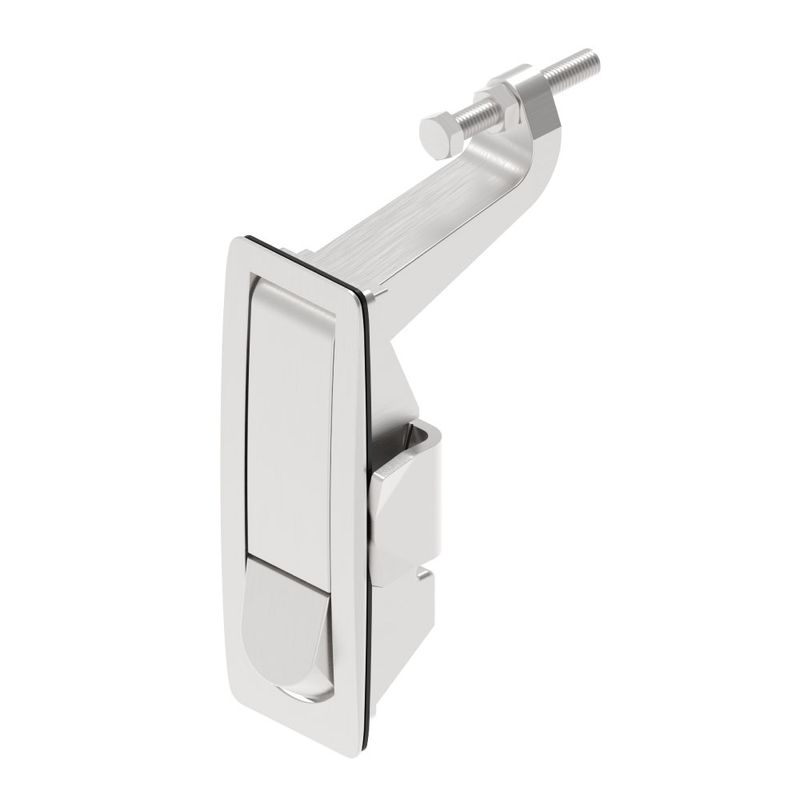
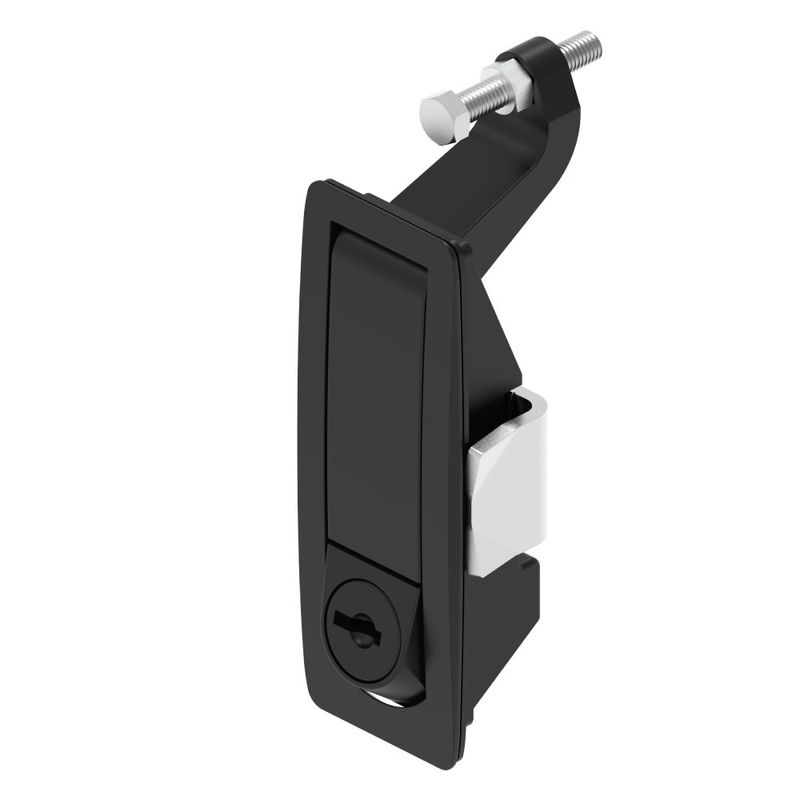
Aerospace Latches: Types, Applications and Manufacturer Selection Guide
Aerospace systems place unusual demands on hardware that most engineers outside the industry rarely think about. Access panels, equipment compartments and avionics enclosures all need a way to open and close that does not compromise weight budgets, installation space or long-term reliability. This is where aerospace latches come into the picture.
Lightweight design, secure panel retention, compact installation, frequent maintenance access and reliable operation are not separate requirements. They are connected, and a latch that satisfies one of them poorly usually affects the others too. An aerospace latch is not simply a small mechanical part bolted onto a panel edge. It functions as part of a complete access and retention system that includes the latch mechanism, the panel structure, the available installation space, the material selected and the operating environment the assembly will face.
At ForndLock, we evaluate aerospace latch requirements before recommending a mechanism, because a latch chosen without understanding the full system context often creates problems later in assembly or maintenance. This guide walks through the latch types commonly used in aerospace applications, where they are applied, how they differ from standard industrial latches, and what to look for when evaluating an aerospace latch manufacturer.
What Are Aerospace Latches?
An aerospace latch is a mechanical retention component that secures access panels, doors or enclosures on aircraft and aerospace equipment while supporting lightweight structure and repeated operation.
Structurally, most aerospace latches share a similar set of components. The latch body houses the mechanism and provides the mounting reference. The catch mechanism, whether a hook, cam or rotary element, engages a striker or keeper fixed to the mating structure. A handle or actuator allows the operator to engage or release the latch, sometimes with a tool and sometimes by hand. A locking element prevents the latch from releasing under vibration or accidental contact. The mounting interface ties the entire assembly to the panel or frame, and its geometry often determines whether a given latch will even fit the available space.
Aerospace applications generally prioritize a specific combination of characteristics over raw mechanical strength. Lightweight structure reduces the overall mass contribution of hardware distributed across a panel or enclosure. Compact design keeps the latch within tight installation envelopes that are common in aircraft interiors and equipment bays. Reliable operation matters because a latch that becomes difficult to actuate after repeated cycles creates maintenance friction. Long-term consistency means the latch should perform the same way after hundreds of open-close cycles as it did during initial installation.
Our engineering team looks at these structural elements before recommending a latch type, since the mounting interface and catch geometry often dictate which mechanisms are even feasible for a given panel design.

Why Are Latches Important in Aerospace Applications?
Latches are important in aerospace applications because they directly affect panel retention, weight budgets, maintenance efficiency and installation feasibility within limited space.
How Do Latches Support Secure Panel Retention?
Latches maintain panel position, prevent unintended opening and support the overall access system under operating loads and vibration.
A panel that shifts, rattles or opens unexpectedly is more than an inconvenience. It can affect airflow around adjacent components, expose internal systems to contamination, or create noise that draws unnecessary attention during inspection. The latch engagement depth, the stiffness of the catch mechanism and the fit between the latch and its striker all contribute to how well a panel stays where it is supposed to be.
Why Does Lightweight Design Matter in Aerospace?
Lightweight design matters because every added gram affects fuel efficiency and payload, so latches must use efficient materials and compact mechanisms.
A single latch may seem insignificant on its own, but aerospace equipment often uses dozens or hundreds of similar fasteners and latches across interior panels, compartments and enclosures. Small weight savings per unit compound quickly across a full installation. This is why material selection and mechanism design are treated as engineering decisions rather than cosmetic ones.
How Do Latches Balance Security and Accessibility?
Latches balance security and accessibility by providing secure locking while still allowing quick inspection and maintenance access.
Maintenance teams need to open panels frequently, sometimes under time pressure. A latch that is too difficult to operate slows down inspection routines. A latch that opens too easily raises retention concerns. Selecting a mechanism that suits the expected access frequency is part of getting this balance right.
How Do Latches Fit Space-Constrained Installations?
Latches fit space-constrained installations through compact hardware profiles designed to work within limited mounting envelopes.
Aircraft interiors, avionics bays and equipment compartments rarely offer generous clearance. Latch height, depth and swing radius for handles all need to be checked against the actual installation envelope, not just the panel dimensions on a drawing.
What Types of Aerospace Latches Are Commonly Used?
The most commonly used aerospace latches include rotary latches, compression latches, quarter-turn latches, draw latches and flush latches, each suited to different retention and access needs.
How Do Rotary Latches Work in Aerospace?
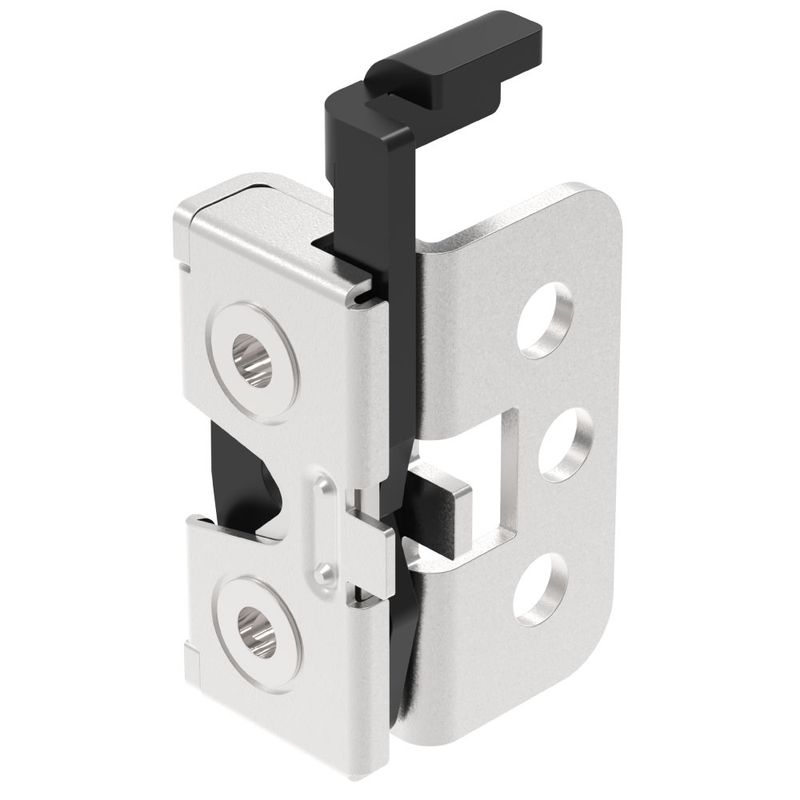
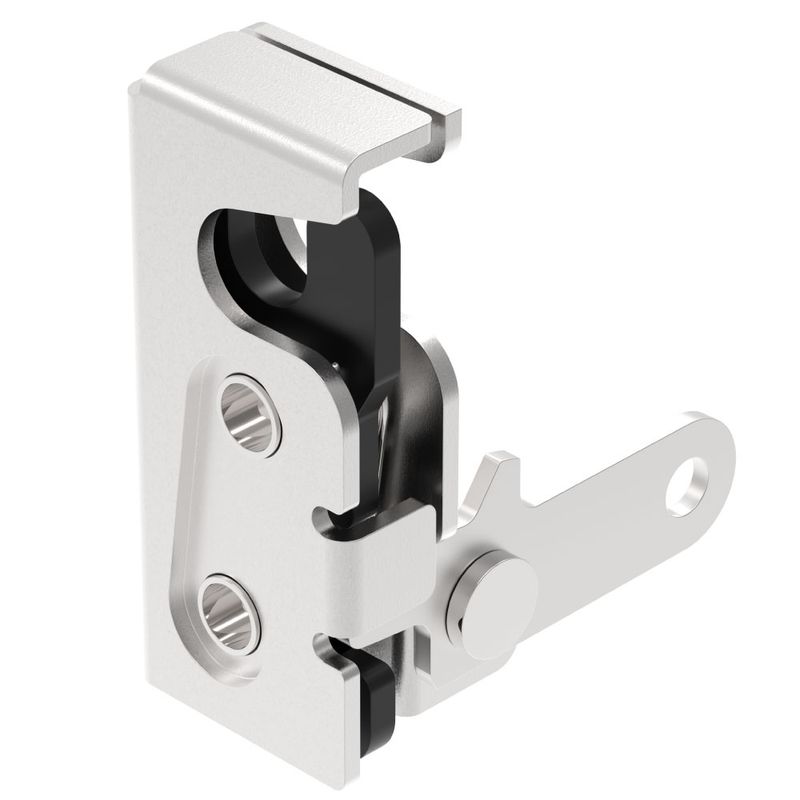
A rotary latch engages a rotating hook or cam against a striker to secure panels while resisting vibration-induced loosening.
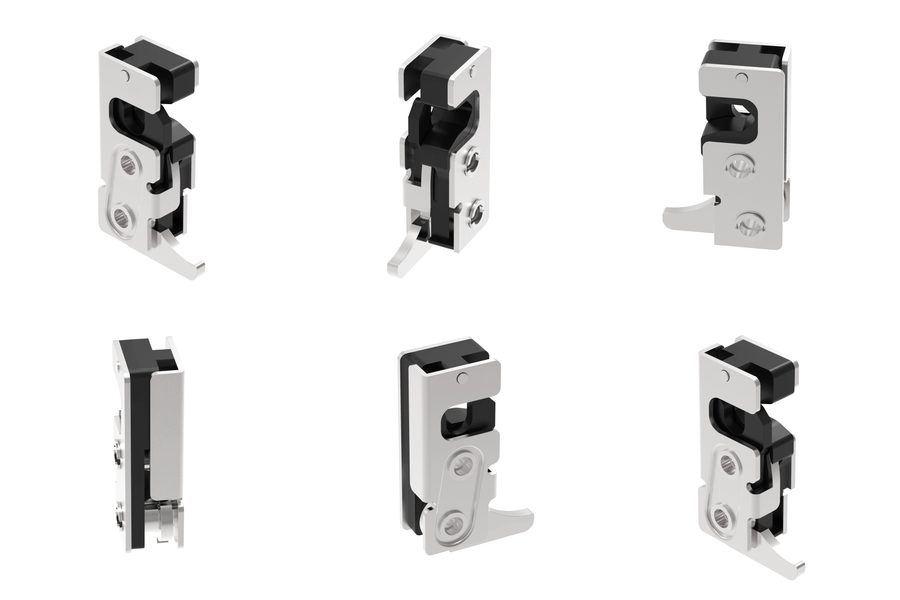
Structure: A rotary latch uses a pivoting hook or cam that rotates into engagement with a fixed striker, often assisted by a spring that keeps the mechanism seated once closed.
Application: Rotary latches are common on panels that experience continuous vibration, since the rotating engagement resists loosening better than simple friction-based designs.
Advantages: They provide strong mechanical engagement and tend to hold their position reliably across repeated cycles.
Selection considerations: Engineers should check the required rotation clearance, the striker alignment tolerance and whether the application needs a keyed lock, a paddle handle or a remote actuation cable.
When Should You Use Compression Latches?
Compression latches should be used when a panel needs consistent clamping force against a frame to maintain sealing and reduce rattling under vibration.
Structure: Compression latches use a cam or lever mechanism that draws the panel tightly against the mating frame as the latch is closed.
Application: They are well suited to panels where a consistent, even clamping force matters more than a simple mechanical hook.
Advantages: The compressive force helps reduce panel movement and can support gasket or seal compression where environmental sealing is part of the design.
Selection considerations: Vibration exposure, panel flatness and the required clamping force all influence which compression latch style fits best.
Why Choose Quarter-Turn Latches for Access Panels?
Quarter-turn latches are chosen for access panels that require fast, tool-light operation within a compact footprint.
Structure: A quarter-turn latch uses a rotating stud or cam that engages a receptacle with a partial turn, often ninety degrees.

Application: These latches suit access panels that maintenance personnel need to open and close frequently without complex tools.
Advantages: The mechanism is compact, simple to operate and generally has a low parts count, which supports long-term reliability.
Selection considerations: Panel thickness, the torque needed for engagement and whether the application calls for a flush or slightly raised head all affect quarter-turn latch selection.
What Makes Draw Latches Useful for Removable Panels?
Draw latches are useful for removable panels because their adjustable clamping accommodates variations in panel thickness and alignment.
Structure: A draw latch uses a lever arm connected to a hook or wire loop that draws two surfaces together when closed.
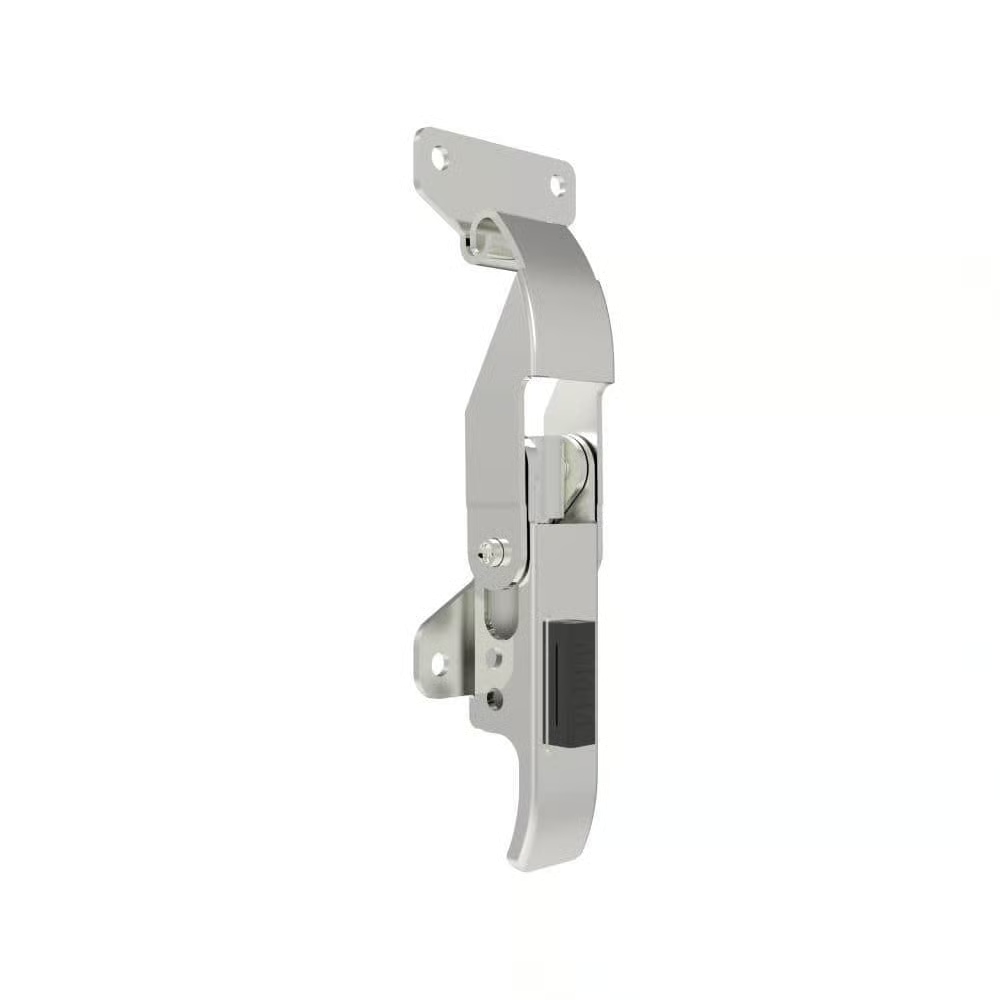
Application: These latches work well on panels that are removed and reinstalled periodically, since the adjustable engagement point tolerates small dimensional variation.
Advantages: Draw latches offer a strong mechanical advantage for their size and can compensate for minor misalignment between panel and frame.
Selection considerations: Engineers should confirm the adjustment range, the clamping force required and whether the latch will be exposed to conditions that could affect the hook or loop over time.
Why Are Flush Latches Used in Aerospace Panels?
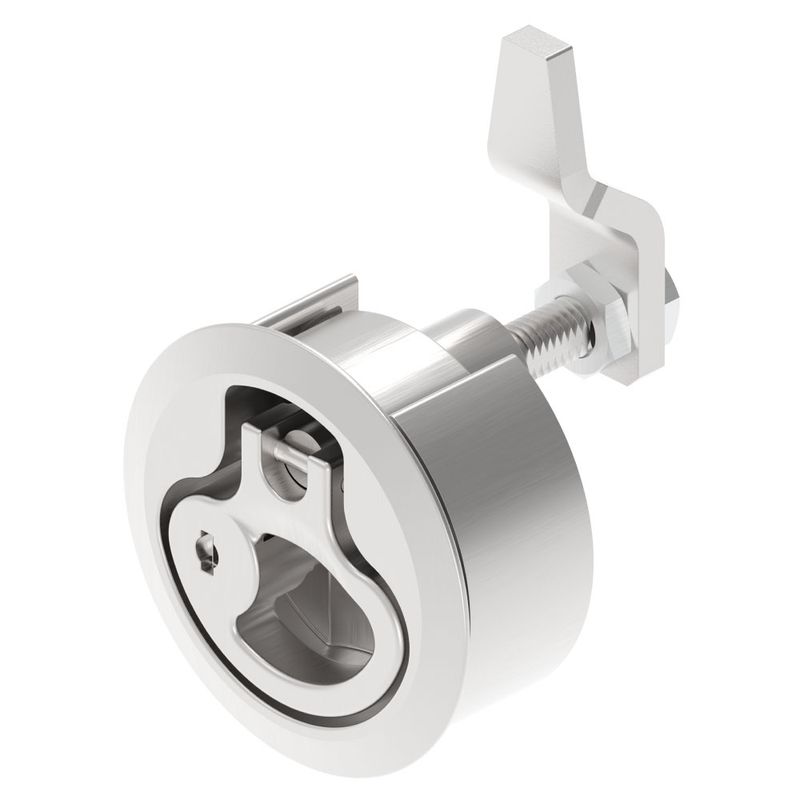
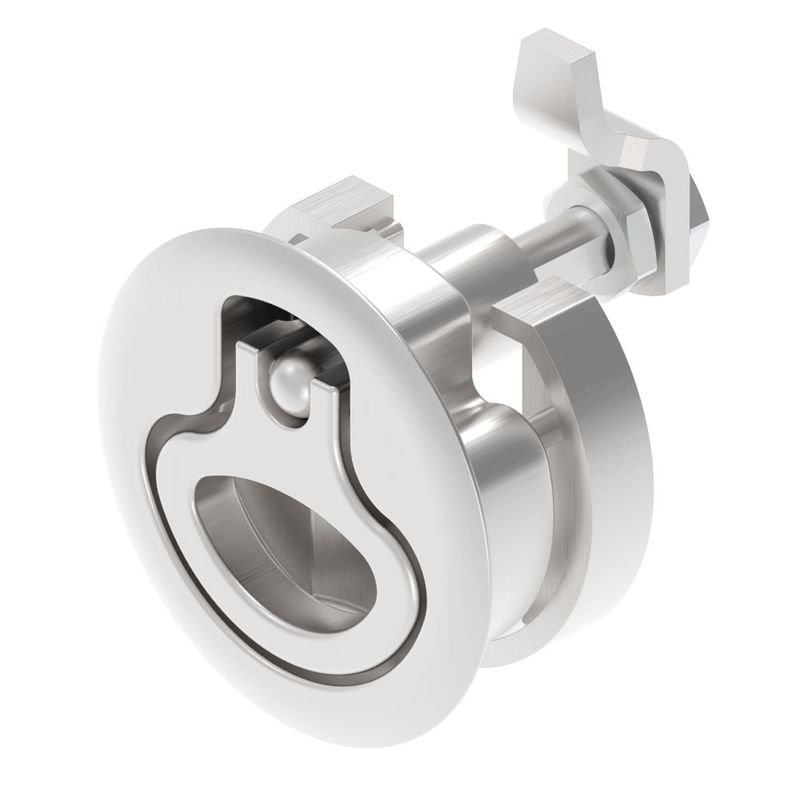
Flush latches are used where a low-profile surface is required to reduce external projection and avoid interference with adjacent components.
Structure: A flush latch is designed so that the handle or actuator sits within or close to the panel surface rather than protruding outward.
Application: These latches are common on exterior-facing panels or interior surfaces where a protruding handle could catch on clothing, equipment or adjacent structure.
Advantages: The low-profile design reduces snag risk and often improves the finished appearance of a panel.
Selection considerations: Panel thickness and the depth available behind the panel surface determine whether a flush latch mechanism can be accommodated.

Where Are Aerospace Latches Applied?
Aerospace latches are applied across aircraft interior panels, equipment compartments, avionics enclosures and aerospace ground support equipment, each with distinct retention and access requirements.
How Are Latches Used in Aircraft Interior Panels?
Interior panel latches are selected for lightweight construction, a clean finished appearance and reliable performance under frequent access.
Application requirement: Interior panels need latches that blend into the surrounding surface while withstanding repeated opening during cleaning, inspection or reconfiguration.
Latch selection consideration: Flush or quarter-turn latches are often favored here because they minimize visual disruption and reduce the risk of snagging.
What Latch Requirements Apply to Equipment Compartments?
Equipment compartments require latches that maintain secure retention under load while still allowing efficient maintenance access.
Application requirement: These compartments often hold heavier components, so the latch needs to resist the load without excessive wear over time.
Latch selection consideration: Rotary or compression latches tend to suit this category, since they provide stronger mechanical engagement than lighter-duty flush designs.
How Do Avionics Enclosures Use Latches?
Avionics enclosures use compact latches that fit tight installation envelopes while providing consistent, repeatable access.
Application requirement: Space around avionics units is usually limited, and the latch must not interfere with cable routing or adjacent modules.
Latch selection consideration: Quarter-turn latches or small rotary latches are common choices because of their compact swing radius and predictable engagement.
How Are Latches Used in Ground Support Equipment?
Ground support equipment relies on durable latches capable of withstanding frequent, repeated operation in varied field conditions.
Application requirement: This equipment is often handled outdoors and cycled frequently, so latches need to tolerate dust, temperature variation and rougher handling.
Latch selection consideration: Draw latches and compression latches with corrosion-resistant finishes are often appropriate given the more exposed operating conditions.
We work with equipment engineers to match latch selection to each application category, since a mechanism that performs well in an avionics enclosure may not be the right fit for ground support hardware exposed to outdoor conditions.
How Do Aerospace Latches Differ from Industrial Latches?
Aerospace latches differ from industrial latches mainly in weight priority, installation space and material selection rather than raw holding strength alone.
Factor | Aerospace Latches | Industrial Latches |
Weight consideration | Weight reduction is treated as a primary design driver | Weight is usually secondary to cost and strength |
Space limitation | Compact installation envelopes are common and often fixed by panel design | Space constraints are typically less restrictive |
Material selection | Aluminum alloys, stainless steel and engineering plastics chosen for a weight-strength balance | Materials selected mainly for strength and cost efficiency |
Installation requirements | Precision mounting interfaces and tight tolerance panel fits | Installation methods are generally more flexible |
Application focus | Access panels, equipment compartments and enclosure systems | General-purpose cabinets, doors and equipment housings |
The core distinction is not that aerospace latches are inherently stronger. In many cases, an industrial latch could hold more load in a static test. The difference is that aerospace latch selection is an exercise in balancing weight, strength, size and reliability simultaneously, rather than maximizing any single factor. A latch that is overbuilt for its actual load requirement adds unnecessary weight, while one that is undersized compromises retention.
How Do You Select the Right Aerospace Latch?
Selecting the right aerospace latch requires defining application requirements, evaluating retention needs, weighing size and weight constraints, and validating the design before production.
How Do You Define Application Requirements First?
Before comparing latch types, we recommend clarifying the equipment type the latch will serve, the installation location on the airframe or enclosure, how frequently the panel will be accessed, and the operating environment including temperature range, humidity and vibration exposure. These four factors narrow the field of suitable mechanisms considerably before any material discussion begins.
How Do You Evaluate Panel Retention Requirements?
Panel weight determines how much engagement force the latch needs to provide. Door or panel structure affects how the load is distributed across one or more latch points. Vibration conditions influence whether a self-locking or spring-loaded mechanism is necessary. Latch engagement depth needs to be checked against the striker geometry to confirm it will not disengage under expected movement.
How Do Weight and Size Constraints Affect Selection?
Material selection is often the first lever engineers pull when weight is a concern, but compact structural design and mechanism simplification also contribute. A latch with fewer moving parts and a tighter mounting footprint can sometimes achieve similar weight savings to a material change, particularly when panel geometry limits material options.
How Do You Select the Right Latch Mechanism?
Access requirements, space limitations, sealing requirements and maintenance frequency together point toward a mechanism type. Rotary latches suit vibration-prone applications with moderate access frequency. Compression latches suit sealing-sensitive panels. Quarter-turn latches suit frequently accessed panels with limited depth behind the surface. Flush latches suit applications where external projection needs to be minimized.
Which Materials Work Best for Aerospace Latches?
The best material depends on the balance between weight, strength and environmental exposure required by the specific application.
Why Choose Aluminum Alloy for Aerospace Latches?
Aluminum alloy offers a favorable combination of light weight and reasonable corrosion resistance, which makes it a common choice for latch bodies and non-critical structural elements where load requirements are moderate.
When Is Stainless Steel the Better Choice?
Stainless steel provides higher strength and strong corrosion resistance, which suits latches subjected to higher mechanical load or exposure to moisture, cleaning agents or outdoor conditions.
Where Do Engineering Plastics Fit In Aerospace Latches?
Engineering plastics contribute to weight reduction and are often used for non-load-bearing components such as handles, covers or actuator elements where mechanical stress is limited.
Material choice ultimately depends on the operating environment, the mechanical requirements of the specific installation, and the broader application conditions the latch will face throughout its service life.
What Installation Requirements Should You Check?
The mounting interface needs to match the panel or frame geometry precisely. Panel thickness affects how deep the latch body and mechanism can sit. Available space behind and around the panel determines whether handles or actuators will clear adjacent structure. Fastening method, whether riveted, bolted or bonded, needs to be compatible with the surrounding panel material.
Why Validate Prototypes Before Production?
Prototype validation confirms fit, function and design adjustments before committing to full production, reducing costly rework.
Fit verification checks that the latch physically installs as intended within the panel and frame. Functional evaluation confirms the mechanism operates smoothly through repeated cycles under representative conditions. Design adjustment allows engineers to correct interface or clearance issues before committing to tooling or a production run.
Our engineering team supports drawing review and prototype verification before production begins, since catching a clearance or alignment issue at the prototype stage is considerably less costly than discovering it after a batch has already been produced.
What Mistakes Should You Avoid When Selecting Latches?
Common selection mistakes include focusing only on weight, ignoring installation space, choosing the wrong mechanism, poor material choices, overlooking vibration and skipping prototype validation.
Mistake | Potential Issue | Better Approach |
Selecting only by weight | Insufficient structural strength or retention force | Balance weight reduction with retention and durability needs |
Ignoring installation space | Installation conflicts or assembly interference | Confirm mounting envelope and clearance before finalizing selection |
Choosing incorrect latch mechanism | Difficult operation or maintenance delays | Match mechanism type to access frequency and available space |
Poor material selection | Corrosion or fatigue-related failure risk | Select material based on environmental and mechanical conditions |
Ignoring vibration conditions | Latch loosening or unwanted noise | Evaluate vibration exposure and choose a vibration-resistant structure |
Skipping prototype validation | Assembly problems discovered after production | Validate fit and function with a prototype before full production |
Engineering teams working through real installation challenges know these problems firsthand. Limited installation space forces compromises between mechanism type and clearance. Panel alignment issues can turn a well-specified latch into a poor fit if tolerances are not accounted for early. Weight optimization pushes designers toward materials that need careful mechanical verification. Vibration considerations often reveal themselves only after a mechanism has been running through repeated cycles. Material selection challenges arise when the same latch needs to work across slightly different environmental exposures. Addressing these issues during the selection phase, rather than after installation, tends to produce a more workable outcome.
How Do You Choose a Reliable Aerospace Latch Manufacturer?
A reliable aerospace latch manufacturer should be evaluated on engineering capability, customization ability, manufacturing capability, prototype support and production consistency.
How Do You Assess Engineering Capability?
Drawing review capability shows whether a manufacturer can interpret panel and installation drawings accurately. Application analysis reflects an understanding of how the latch will actually function once installed. Structural recommendation capability indicates whether the manufacturer can suggest design adjustments rather than simply supplying a catalog part.
How Do You Evaluate Custom Development Capability?
Custom dimensions accommodate panels that do not match standard latch sizing. Mounting interface flexibility allows the latch to fit existing structural features rather than forcing a redesign of the panel. Special latch configurations address unusual access or retention requirements. Actuator customization covers cases where a standard handle or button does not suit the application's operating conditions.
What Manufacturing Capabilities Should You Check?
Precision machining supports tight tolerance components where fit accuracy matters. Metal forming capability covers latch bodies and brackets that require shaping beyond basic machining. Surface treatment protects against corrosion and wear across the expected service life. Assembly capability ensures the finished latch meets consistent functional standards before it ships.
Does the Manufacturer Offer Prototype Support?
Prototype production allows a design to be tested physically before committing to a production run. Installation evaluation confirms the prototype fits the actual panel and frame as intended. Design improvement based on prototype feedback often resolves small issues that were not apparent on the drawing alone.
How Is Production Quality Consistency Ensured?
Dimensional control across a production batch prevents variation that could affect fit from one unit to the next. Assembly consistency ensures every latch functions the same way regardless of when it was produced. Batch stability matters particularly for projects that require ongoing supply over an extended period, since variation between batches can create downstream assembly problems.
How Does ForndLock Support Custom Aerospace Latch Projects?
At ForndLock, we support aerospace latch projects through application analysis, drawing review, structural customization, material recommendation and prototype-to-production assistance.
Our process typically begins with application analysis, where we review the panel type, access frequency and operating environment before discussing latch options. Drawing review follows, allowing our engineering team to check mounting interfaces, panel thickness and available installation space against the proposed latch design. From there, we work through latch selection, structural customization where standard dimensions do not fit, and material recommendation based on the specific environmental and mechanical conditions involved.
We manufacture prototypes to support fit and function verification before a project moves into production, and we provide production assistance to help maintain dimensional and assembly consistency across a full order quantity.
To move a project forward efficiently, we generally ask customers to provide drawings, a description of the application requirements, installation conditions, material requirements and the expected quantity. This information allows our engineering team to give a more accurate and useful response rather than a generic recommendation.
ForndLock: Your Trusted Partner in Industrial Hardware
What Should You Remember When Selecting Aerospace Latches?
Selecting aerospace latches requires balancing latch type, application, weight, installation space, material and operating environment, while manufacturer selection depends on engineering capability, customization, prototype support and production consistency.
There is no single latch type that fits every aerospace application. Rotary, compression, quarter-turn, draw and flush latches each address different combinations of retention, access and space requirements. Getting the selection right depends on defining the application clearly, evaluating retention and installation constraints honestly, and validating the chosen design with a prototype before committing to production. The manufacturer supporting the project matters just as much as the latch type itself, since engineering review and prototype support often determine whether a design works smoothly the first time or requires costly revisions later.
How Can You Start Your Aerospace Latch Project?
If you are working through an aerospace latch selection or need a custom latch developed for a specific panel, compartment or enclosure, we are glad to review the details with you. Send your product application, drawings, installation requirements, material requirements and quantity to [email protected], and our engineering team will review the information and respond with selection guidance or customization options based on your project requirements. ForndLock can support aerospace latch selection, customization and production based on the specifics of your application, and sending your drawings early in the process helps us provide a more accurate engineering review from the start.