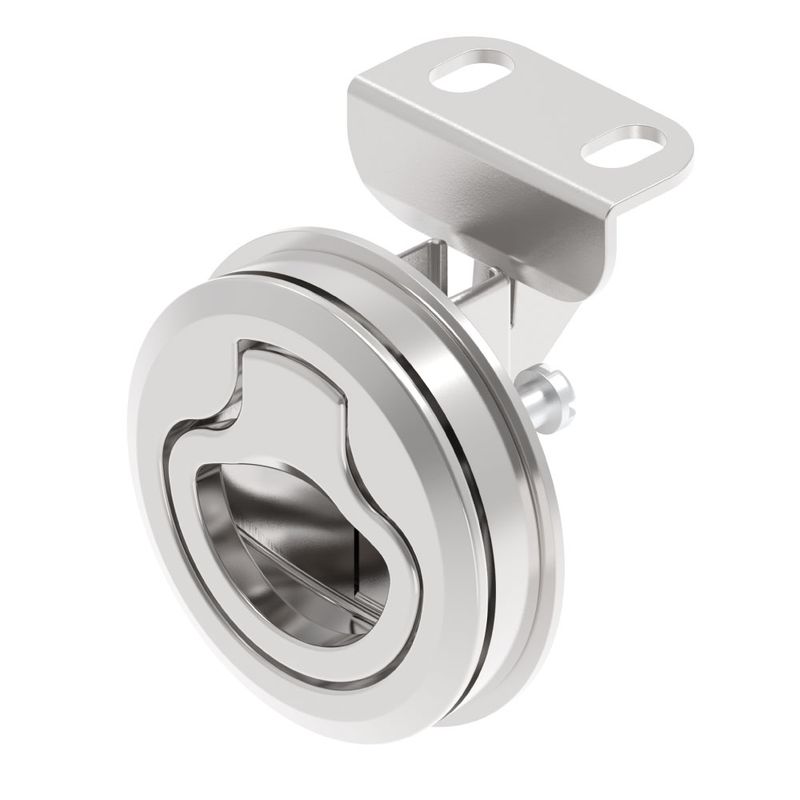
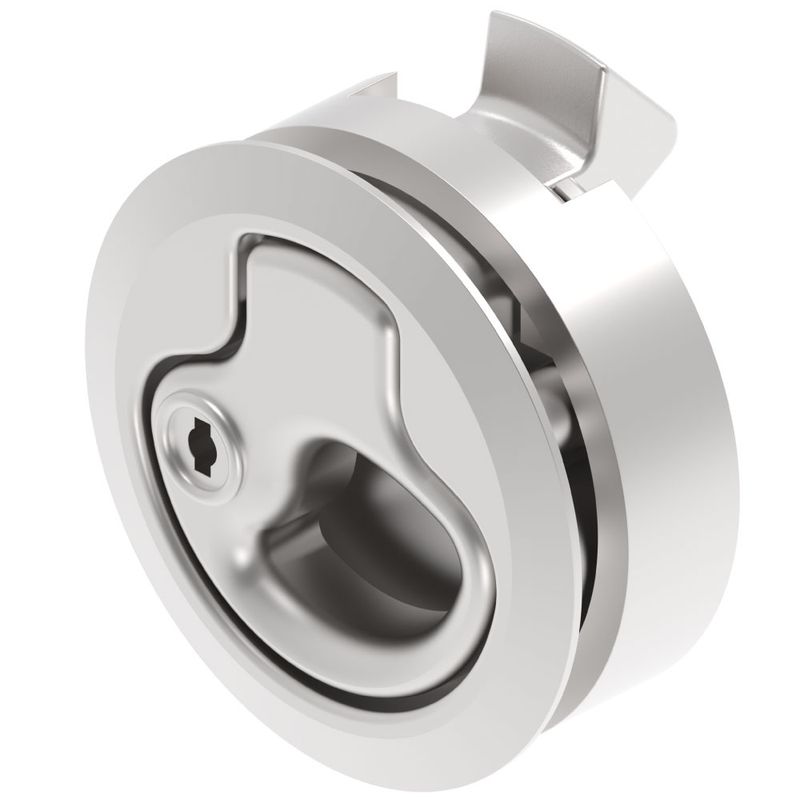
RV Door Locks: Types, Applications and How to Choose the Right Lock
RV door locks are selected according to the function of the door they serve, not a single universal product. The main categories include entry-door locksets, paddle latches, slam latches, compression latches, cam locks, T-handle locks, and keyless locks. Entry-door and compartment locks are not interchangeable, since each is engineered around different retention, sealing, and access requirements. Selecting the correct hardware depends on fitment dimensions such as door cutout, thickness, and backset, along with handing and strike alignment. At ForndLock, we manufacture industrial and vehicle access-hardware solutions for RV manufacturers and project teams. This article covers RV door lock types, their applications, and the technical criteria used to select the correct lock for each door.
What Is an RV Door Lock and How Does It Work?
An RV door lock is a mechanical assembly that latches, secures, retains, and releases a door, and each of these four functions depends on a different internal component. Latching refers to the latch bolt engaging the strike so the door stays closed under normal handling. Locking is a separate action that restricts the latch or bolt from being operated from the exterior, typically through a cylinder or keypad. Retention during vehicle movement depends on how firmly the latch bolt and strike remain engaged under vibration, road shock, and body flex, which is a different requirement than simple closure. Interior release allows an occupant to open the door from inside without a key, which is essential on habitation entry doors.

The main components that make up this system include the exterior handle, which operates the latch mechanism from outside; the interior handle or release, which provides occupant egress; the latch bolt, which physically engages the strike; and a deadbolt where fitted, which adds an independent locking point. A lock cylinder controls key-operated locking, while linkage connects the handle motion to the latch and deadbolt. The strike, mounted on the frame, receives the latch bolt and deadbolt. Mounting hardware secures the assembly to the door skin, and seals or gaskets around the housing and door edge reduce water and air intrusion. Understanding how these parts interact helps explain why a lock suited for one door type may not perform correctly on another.

What Types of RV Door Locks Are Available?
The main RV door lock families are entry-door locksets, paddle latches, slam latches, compression latches, cam locks, T-handle locks, and keyless locks, each built around a different operating principle. The table below summarizes their core differences before the following sections explain where each type is typically applied.
Lock type | Operating principle | Typical application | Main advantage | Main limitation |
Entry-door lockset | Handle-operated latch with optional deadbolt | Main habitation entry door | Interior release plus exterior security | More complex fitment requirements |
Paddle latch | Manual paddle depresses latch mechanism | Baggage and storage compartments | Flush, low-profile operation | Requires manual alignment each use |
Slam latch | Latch engages automatically on door closure | Frequently accessed compartments | Fast, one-motion closing | Can require adjustment as gaskets wear |
Compression latch | Rotating mechanism draws door against gasket | Gasketed compartment doors | Reduces rattle and improves seal contact | Needs more closing effort if misadjusted |
Cam lock | Key or knob rotates a cam to engage a slot | Utility hatches, panels | Simple, compact, economical | Limited retention for heavier doors |
T-handle lock | T-shaped handle rotates a cam or rod mechanism | Larger compartment and service doors | Easier grip and higher operating leverage | Bulkier than a cam lock |
Keyless lock | Keypad, remote, or app-based control with mechanical override | Entry doors needing shared access | No physical key required for daily use | Depends on battery power |
At ForndLock, we support the development and customization of these lock families for RV manufacturers who need a specific fit, keying arrangement, or finish rather than a generic replacement part.
ForndLock RV Door Lock with Keys
When Should You Use an RV Entry-Door Lockset?
An entry-door lockset should be used on the main habitation door where occupants need both exterior and interior operation with a deadbolt option. This lock type is built to provide a primary latch for daily use, combined with an independent deadbolt for additional locking when the RV is unattended.

The lockset must align with a compatible strike on the door frame, and it must include a reliable interior release so an occupant can exit without a key under any condition. Because the entry door is also typically fitted with a screen or storm door, clearance between the interior lock housing and the screen-door frame needs to be confirmed before installation. Applicable regulatory or vehicle-specific requirements for entry-door hardware can vary by market and vehicle classification, so we recommend confirming these conditions with the relevant vehicle authority rather than assuming a single standard applies universally.
When Should You Use a Paddle, Slam, or Compression Latch?
Paddle, slam, and compression latches are all suited to compartment doors, but they differ in closing behavior, sealing performance, and required operating force. Paddle latches provide flush manual operation, where the user presses a paddle to retract the latch bolt; this design is common on baggage doors where a low-profile exterior appearance is preferred.
Slam latches engage automatically when the door closes, which speeds up frequent access but depends on consistent alignment between the latch and strike to avoid partial engagement. Compression latches pull the door against the frame or gasket using a rotating cam or turn-handle mechanism, which is useful when consistent gasket contact is needed to reduce rattling and limit water or dust entry.

In terms of closing behavior, slam latches require the least operator effort, paddle latches require a deliberate manual motion, and compression latches typically require more turning force but produce tighter gasket contact. For sealing, compression latches generally offer the most consistent result on gasketed doors, while paddle and slam latches perform adequately on doors where sealing is secondary to quick access. Vibration control also favors compression latches on rougher terrain, since the mechanism maintains continuous preload against the gasket rather than relying solely on a latch bolt.
When Should You Use a Cam or T-Handle Lock?
Cam and T-handle locks are typically used on utility hatches, battery compartments, and larger linkage-operated compartment doors rather than primary entry doors. A cam lock consists of a key or knob-operated cam that rotates into a slot or bracket, making it a compact and economical choice for smaller access panels, storage doors, and service hatches where retention demands are moderate. A T-handle lock uses a larger handle connected to a cam or rod mechanism, which provides more leverage and is often selected for bigger compartment doors, generator access panels, or doors with linkage rods that need to travel farther to fully engage multiple points.

It is worth clarifying that simple cam locks are not automatically suitable for primary occupant entry doors, since they generally lack the interior release, deadbolt option, and retention characteristics expected on a habitation door. Their role is best suited to secondary access points where the consequences of a less robust latch are lower.
When Should You Use a Keyless RV Door Lock?
A keyless RV door lock is suitable when keypad or remote convenience and shared access outweigh the added dependence on battery power. These locks allow multiple users to enter a code or use a remote fob without carrying a physical key, which is useful for rental fleets, shared-use vehicles, or households where several people need entry.

Because keyless locks rely on battery power, environmental exposure to temperature extremes and moisture can affect battery life and keypad longevity over time. Most keyless RV locks retain a mechanical override, typically a physical key or manual cylinder, so that emergency access remains possible if the electronic system fails. When evaluating a keyless option, it is important to confirm that the override function is accessible and reliable rather than treating the electronic feature as the sole means of entry.
Which RV Lock Fits Each Door Application?
The correct lock for each RV door depends primarily on whether the door is an occupant entry point or a compartment access point. The matrix below summarizes general recommendations, though the final decision should always be confirmed against the specific door design.
Door application | Recommended lock type | Main selection concern |
Main entry door | Entry-door lockset | Interior release and deadbolt compatibility |
Baggage door | Paddle or slam latch | Access frequency and flush fitment |
Storage compartment | Paddle, slam, or compression latch | Gasket sealing and vibration exposure |
Utility hatch | Cam lock | Compact fitment and moderate retention |
Exterior service panel | Cam or T-handle lock | Panel size and required operating leverage |
Large compartment door | T-handle lock | Linkage travel and multi-point engagement |
This article focuses on RV entry and compartment doors. Cab and passenger-vehicle doors generally use different automotive lock systems and are outside this article's main scope.
Which Lock Is Suitable for the Main RV Entry Door?
The main RV entry door requires a lockset that provides interior release, reliable latch retention, and optional deadbolt engagement with the strike. Interior release must function smoothly under normal and emergency conditions, since occupants depend on it for daily egress.

Latch retention needs to hold under road vibration without requiring excessive closing force. When a deadbolt is specified, the strike must be positioned and reinforced to receive both the latch bolt and the deadbolt without interference. Screen-door compatibility should be verified so that the interior housing does not conflict with the screen-door frame or its own latching hardware. Applicable vehicle requirements for entry-door hardware can differ by RV classification and destination market, so this should be confirmed on a project-specific basis rather than assumed.
Which Lock Is Suitable for Baggage and Utility Compartments?
Baggage and utility compartments are typically fitted with paddle, slam, compression, cam, or T-handle hardware depending on door size, gasket type, and access frequency. Smaller baggage doors accessed frequently often use paddle or slam latches for quick, low-effort operation. Larger storage compartments with a continuous gasket benefit from compression latches, which maintain consistent seal pressure across repeated openings. Utility hatches with lighter retention needs are commonly served by cam locks, while larger panels or doors with linkage rods benefit from the added leverage of a T-handle. Vibration exposure and required security level should also be weighed, since higher-vibration mounting locations or higher-value compartments may justify a more robust latch family even when the door itself is small.
How Should You Measure an RV Door Before Selecting a Lock?
An RV door should be measured for cutout, thickness, backset, latch projection, handing, and clearance before any lock is selected. We recommend working from a labeled diagram that identifies the door cutout, door thickness, door edge, backset, latch bolt, strike, exterior housing, interior housing, and screen-door clearance, since verbal descriptions alone often lead to fitment errors during installation.
How Should the Door Cutout and Thickness Be Measured?
Door cutout and thickness should be measured directly on the physical door, including skin, reinforcement, insulation, and gasket layers, rather than assumed from a standard specification. Cutout measurements include both width and height, along with the corner shape or radius, since square-cornered cutouts cannot always accept a lock designed for a rounded profile. Mounting-hole positions and edge distance from the cutout to the door perimeter also need to be confirmed to avoid interference with the frame or hinge. Door thickness should account for the outer and inner skins, internal reinforcement, trim, insulation, and any applied gasket, since these layers combine to determine the correct fastener length. It should not be assumed that a commonly advertised cutout size will fit every RV door, since door construction varies significantly between manufacturers and even between models from the same manufacturer.
What Are Backset and Latch Projection?
Backset and latch projection are the two dimensions that determine whether the latch bolt can reach and fully engage the strike. Backset is generally measured from the face of the door edge to the center of the latch mechanism, while latch projection refers to how far the latch bolt extends beyond the door edge when engaged. Both measurements should be confirmed against the specific product drawing for the lock being evaluated, since these values differ between manufacturers and even between models within the same product line.
An incorrect backset or latch projection can result in the latch bolt failing to reach the strike, which prevents proper engagement. It can also cause excessive closing force as the door is pushed to compensate for misalignment, incomplete latching that leaves the door only partially secured, ongoing door rattle during travel, or physical interference between the latch and the frame. Confirming these dimensions before ordering hardware reduces the likelihood of a fitment issue discovered only after installation.
How Should Door Handing Be Confirmed?

Door handing must be confirmed using a clearly stated viewing direction, since left-hand and right-hand identification is not universal across manufacturers. To avoid ambiguity, handing should be confirmed by identifying the hinge position, the latch position, and whether the reference view is taken from the exterior or interior of the door. Handle movement direction and bolt orientation should also be checked, since some locks operate correctly only in one handing configuration. It should not be assumed that every lock can simply be reversed for the opposite handing, as some mechanisms are handing-specific by design and cannot be field-modified.
Which Clearances Must Be Checked?
Screen-door, interior trim, window frame, and full handle-movement clearances must all be checked before finalizing a lock selection. On the exterior, the lock housing must clear any screen-door frame or hardware without binding. On the interior, trim panels, window frames, wiring runs, reinforcement members, and insulation layers can all interfere with the lock body or its linkage if not accounted for during the review. The handle should be checked through its full range of motion to confirm it does not contact adjacent trim, and the interior release must remain fully accessible. Fastener access should also be confirmed, since some mounting screws require sufficient interior clearance for a tool to reach them during installation or future service.
How Should Security, Keying, and Keyless Operation Be Selected?
Security selection for RV door locks depends on whether entry and compartment doors should share keys and whether a deadbolt is required in addition to the primary latch.
When Should RV Locks Be Keyed Alike or Keyed Differently?
RV locks should be keyed alike for convenience across multiple doors, or keyed differently when entry and compartment access must remain separated. A keyed-alike system reduces the number of keys an occupant or technician needs to carry, which is convenient for single-owner RVs or small fleets. Keyed-different systems separate entry access from compartment access, which limits exposure if a single key is lost, though it increases the number of keys in circulation. Fleet or rental operations often require careful key-management records to track which units use which key codes, and lost-key situations should be planned for in advance rather than addressed only after they occur. Where a facility manages many units, a master-key arrangement can allow supervisory access while individual doors retain their own working keys, though this adds complexity to the keying plan and should be specified clearly during the ordering process.
What Does a Deadbolt Add to an RV Entry Door?
A deadbolt adds an independent locking point on the entry door, but it depends on adequate strike and frame strength and does not by itself secure the complete door. The deadbolt operates separately from the primary latch, meaning the door can be locked even if the latch mechanism is compromised. For a deadbolt to function as intended, the strike must be properly reinforced to accept the bolt under load, and the interior operation must allow the occupant to engage or release it without difficulty. The overall strength of the door and surrounding frame also plays a role, since a deadbolt engaged into a weak frame section provides limited additional resistance. A deadbolt should be understood as one component of an entry door's overall security, not a standalone guarantee of protection against forced entry.
How Do Materials, Weather, Sealing, and Vibration Affect Selection?
Material, weather resistance, sealing, and vibration tolerance should be evaluated together because they all affect how consistently a lock performs over time.
Which Materials and Finishes Suit Exterior RV Locks?
Zinc alloy, coated steel, stainless steel, and engineering plastic each offer a different balance of corrosion resistance, strength, and weight for exterior RV locks. Zinc alloy is commonly used for handles and housings due to its balance of strength and manufacturability, though its corrosion resistance depends on the applied finish. Coated steel components can offer good mechanical strength, but the coating must remain intact to maintain corrosion protection, particularly in road-salt or coastal environments. Stainless steel generally provides strong corrosion resistance, though it typically costs more and can add weight compared with other options. Engineering plastic components reduce weight and can resist certain chemicals well, but they may be more sensitive to prolonged UV exposure or temperature extremes than metal parts. Mixed-material assemblies, combining a metal mechanism with plastic housing elements, are also common as a way to balance cost, weight, and durability. Rather than relying on a universal corrosion claim, the specific finish, base material, and expected environment, including cleaning chemicals and wear around handles and keyways, should be reviewed for each application.

When Is a Compression Latch Better for a Gasketed Door?
A compression latch is preferable on a gasketed door when consistent gasket compression and rattle reduction are required across repeated closings. The latch mechanism draws the door inward against the gasket, and the amount of compression travel available should match the gasket's compressibility and the flatness of the door itself. Doors that are not perfectly flat can produce uneven closing effort or inconsistent seal contact, even with a well-selected compression latch. It should be noted that a sealed lock component does not automatically determine the weather performance of the complete door; the surrounding gasket, door construction, and frame fit all contribute to the final result, and the lock is only one part of that system.
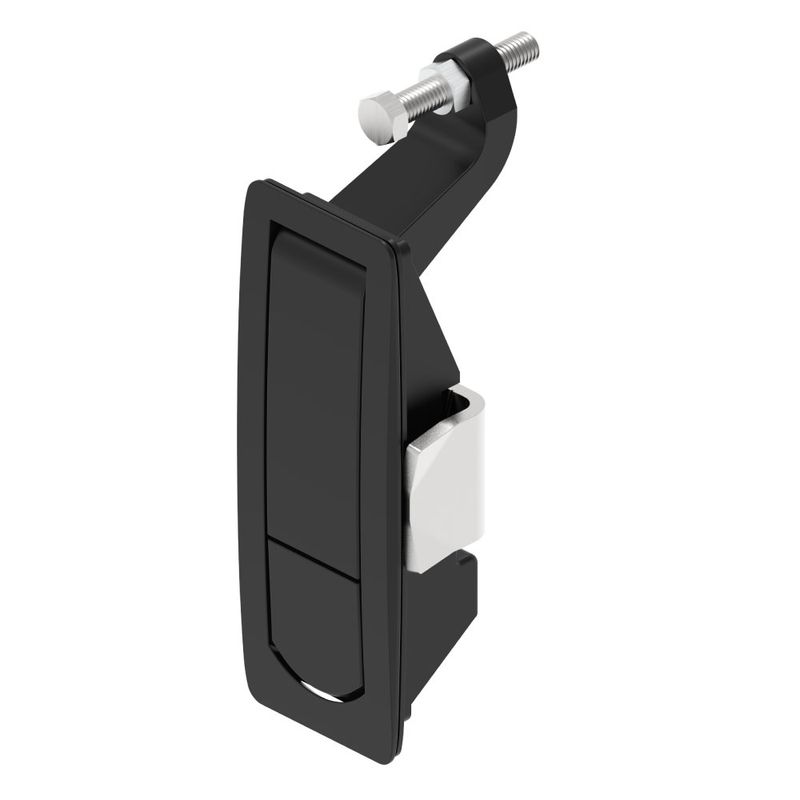
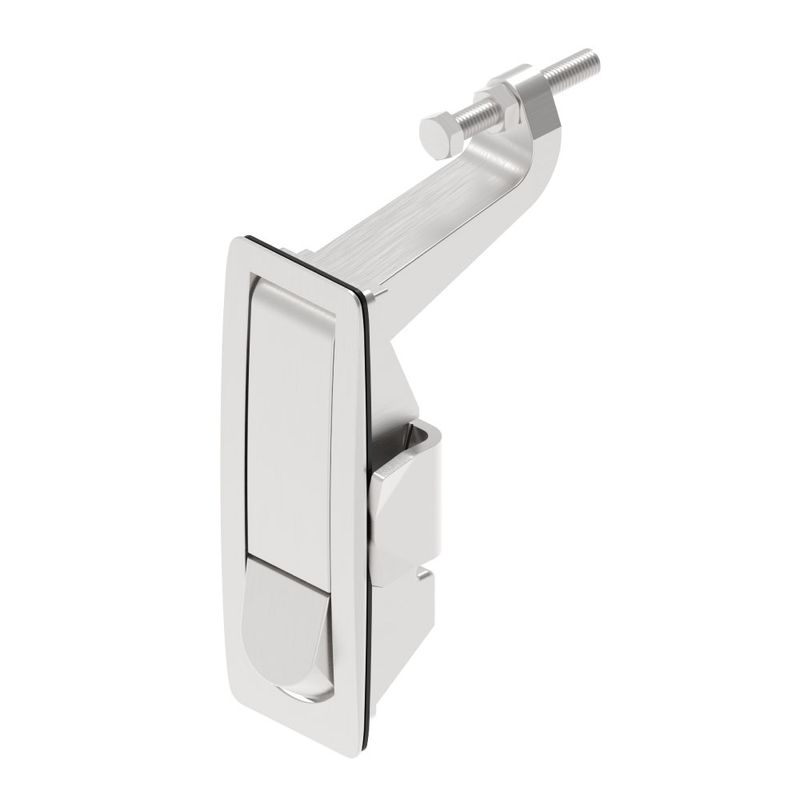
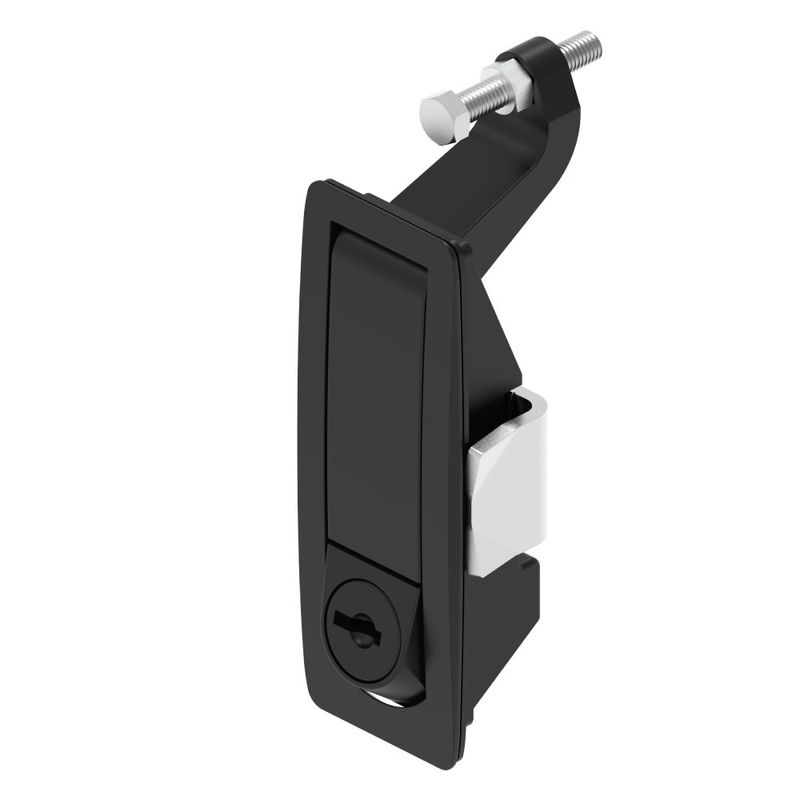
ForndLock Compression Lever Latches for Trucks, Caravans & Trailers
How Can Vibration and Door Flex Affect the Lock?
Vibration and door flex can loosen fasteners, shift the strike, and prevent full latch engagement over time. Repeated road vibration can gradually loosen mounting screws, which allows the lock body or strike to shift out of alignment. Linkage components inside compartment-door latches can also wear from repeated cycling, leading to incomplete engagement even when the door appears closed. Door sag, body flex, and general panel deformation, which develop as an RV ages or travels over rough terrain, can further affect how well a previously well-fitted lock continues to perform, making periodic inspection a reasonable part of ongoing maintenance.
What Common RV Door-Lock Problems Should Be Prevented?
Most recurring RV door-lock problems come from incorrect fitment, misaligned strikes, or insufficient gasket compression rather than a defective lock body.
Problem | Likely cause | What to check | Corrective action |
Replacement lock does not fit | Cutout, thickness, or backset mismatch | Compare measurements to the product drawing | Reselect a lock matching the confirmed dimensions |
Door must be slammed | Strike misalignment or door sag | Strike position and door squareness | Adjust strike or address door sag |
Door rattles during travel | Incomplete engagement or loose mounting | Latch engagement and fastener torque | Re-align strike and retighten mounting hardware |
Lock becomes difficult to operate | Linkage wear or debris | Linkage movement and cylinder condition | Clean, lubricate, or replace worn components |
Lock body becomes loose | Vibration-related fastener loosening | Mounting screws and backing plate | Retighten or reinforce mounting points |
Keyless lock loses power | Battery depletion or exposure damage | Battery condition and keypad seal | Replace battery and verify mechanical override |
Water or corrosion affects operation | Seal failure or unsuitable finish | Gasket condition and housing finish | Replace seals or select a more resistant finish |
Why Does an RV Door Need to Be Slammed to Latch?
An RV door usually needs to be slammed when the strike is misaligned, the gasket over-compresses, or the door has begun to sag. Other contributing factors include insufficient latch projection reaching the strike, gradual frame deformation, or excessive gasket preload that resists normal closing force. Rather than accepting slamming as normal behavior, these underlying causes should be checked and corrected, since repeated slamming can accelerate wear on both the latch and the surrounding door structure.
Why Does a Locked Door Still Rattle?
A locked door can still rattle when the latch is not fully engaged or the mounting hardware has loosened under vibration. Insufficient gasket compression, a worn strike, flexible door panels, or general vehicle vibration during travel can all contribute to a door that feels locked but still moves slightly. Identifying which of these factors is present typically requires a physical inspection of the latch engagement and mounting hardware rather than relying on the lock alone as the source of the issue.
What Should Be Tested Before Production Approval?
Before production approval, the lock should be tested on the actual door assembly for dimensional fit, operation, latching, and cycle performance. A practical checklist includes dimensional fit, exterior and interior operation, latching, deadbolt operation where applicable, strike engagement, closing force, key removal, mechanical override function, cycle operation, vibration exposure, and water or corrosion exposure where relevant to the application. This checklist is meant as a practical verification step rather than a substitute for a full laboratory test program, and additional testing may be appropriate depending on the vehicle type and intended market.
How Can You Choose the Right RV Door Lock?

Choosing the right RV door lock is a sequential process that starts with door function and ends with drawing approval before production. The recommended sequence is to identify the door function, select the appropriate lock or latch family, measure the cutout and door thickness, confirm backset and latch projection, confirm handing and strike alignment, check screen-door and internal clearance, define mechanical, deadbolt, or keyless functions, select keying, material, finish, and sealing, test the lock on the actual door assembly, and approve controlled drawings before production. Following these steps in order reduces the likelihood of discovering a fitment or performance issue after tooling or production has already begun.
What Information Should You Send to ForndLock?
Send ForndLock the door and frame drawings, cutout dimensions, thickness, backset, handing, and keying requirements so the fit can be reviewed before ordering. Additional helpful information includes the vehicle and door type, latch projection, strike position, screen-door clearance, gasket and sealing requirements, expected operating environment, estimated quantity, and any sample requirements. Our application review considers these details together to confirm whether an existing product can be adapted or whether a custom lock development is more appropriate.
In one representative application, a manufacturer's exterior utility compartment door was experiencing inconsistent retention during travel. We reviewed the reported cutout, thickness, and backset measurements alongside the gasket specification, then evaluated whether a compression latch would provide more consistent sealing than the paddle latch originally specified. Based on that review, we proceeded with sample validation on the actual door assembly before any production quantity was confirmed, since dimensional review alone cannot substitute for a physical fit check.
The correct RV door lock must fit the door, retain it reliably, provide the required access function, and withstand the vehicle's operating environment. No single lock type serves every application, which is why door function and confirmed measurements should always guide the final selection.
ForndLock: Your Trusted Partner in Industrial Hardware
Need an RV Door Lock for Your Entry or Compartment Door?
We can review your door function, cutout, thickness, backset, handing, strike, keying, sealing, and operating environment.
At ForndLock, we manufacture industrial and vehicle access-hardware solutions for RV entry doors, baggage compartments, utility hatches, and exterior service panels. Contact us for support with RV lock-type selection, door cutout and thickness review, backset and latch evaluation, handing and strike confirmation, mechanical or keyless function planning, keying-system development, material and finish recommendations, custom lock development, drawing evaluation, and prototype and sample testing.
Email: [email protected]