Rotary Latch Types Explained: Selection Guide for Automotive and Industrial Cabinets
The engineering landscape is filled with complex closure mechanisms, but few components are as universally critical as the rotary latch. Whether you are securing the door of a high-speed vehicle or sealing a massive outdoor power distribution cabinet, the fundamental requirement remains the same: the door must stay closed under stress, yet open smoothly on command. As industrial hardware demands become increasingly stringent, understanding the nuanced differences between various latching mechanisms is no longer just a matter of basic procurement; it is a critical engineering imperative. In this comprehensive technical breakdown, we will explore the specific mechanical architectures of rotary latches, analyze how environmental factors dictate material selection, and provide actionable insights on how to choose the right rotary latch mechanism for heavy duty enclosures to ensure long-term operational success.
Why Trust ForndLock's Manufacturing Experience?
You should trust ForndLock's manufacturing experience because we are a dedicated manufacturer of industrial locks, latches, hinges, and hardware with years of proven project expertise. We directly assist engineers, procurement teams, and OEM clients with reliable selection, customization, and batch delivery.
In the highly specialized world of industrial hardware, theoretical knowledge is simply not enough to solve complex real-world engineering problems. As a primary manufacturer, we do not merely distribute components; we design, test, and produce them on our own factory floors. Our deep understanding of rotary latches: types and applications comes from countless hours spent troubleshooting closure failures, analyzing metallurgical properties, and collaborating directly with OEM product designers across the globe. We have seen firsthand how a seemingly minor miscalculation in latch specification can lead to catastrophic field failures, compromised safety, and expensive warranty claims.
ForndLock: Stainless Steel Rotary Latch System Manufacturer
Industrial clients face a unique set of challenges that go far beyond basic unit cost. Procurement managers and mechanical engineers must navigate strict regulatory compliance, extreme environmental degradation, dynamic vibration loads, and complex installation constraints. We bridge the gap between design intent and manufacturing reality by offering comprehensive engineering support. When you partner with us, you are tapping into a reservoir of practical knowledge regarding product selection, installation adaptation, and reliable batch manufacturing. We understand that heavy-duty applications require components that perform flawlessly in the harshest conditions, and our manufacturing processes are strictly optimized to deliver that exact level of uncompromising reliability.
What Are The Core Latch Types?
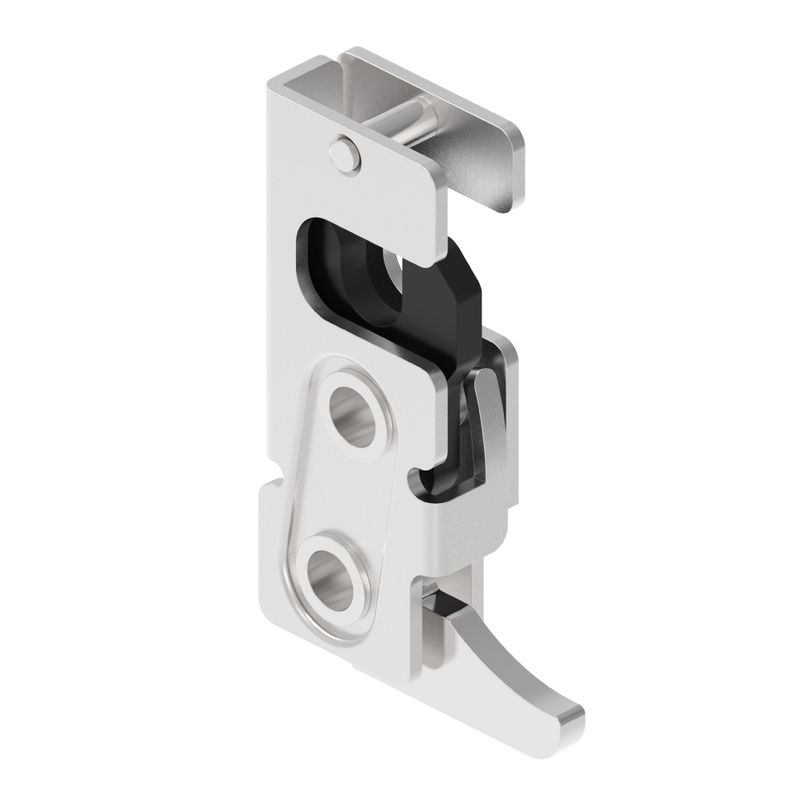
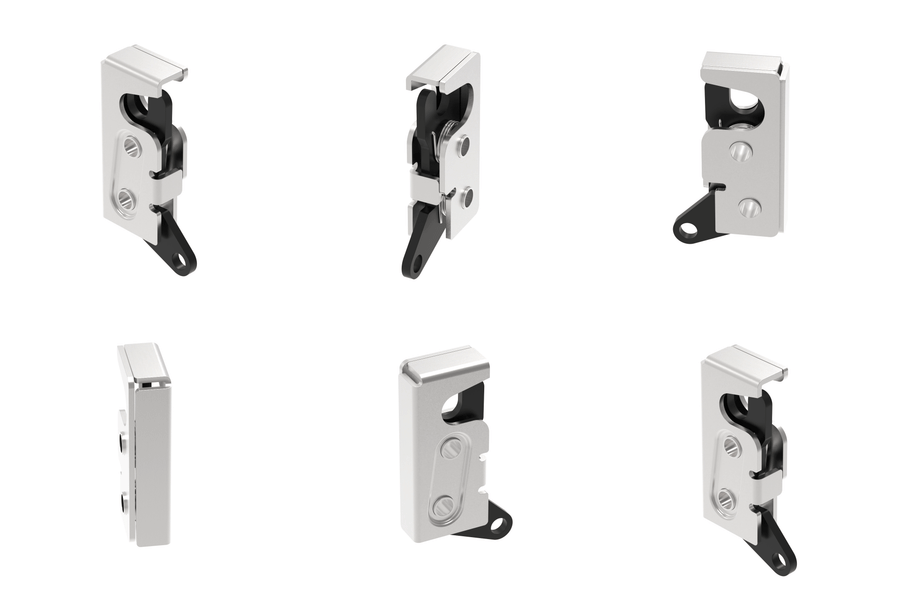
The core latch types primarily include single-stage and two-stage rotary mechanisms, each engineered with distinct structural differences to handle varying levels of stress and safety requirements. Understanding these internal structural variations is the very first step in successful product integration.
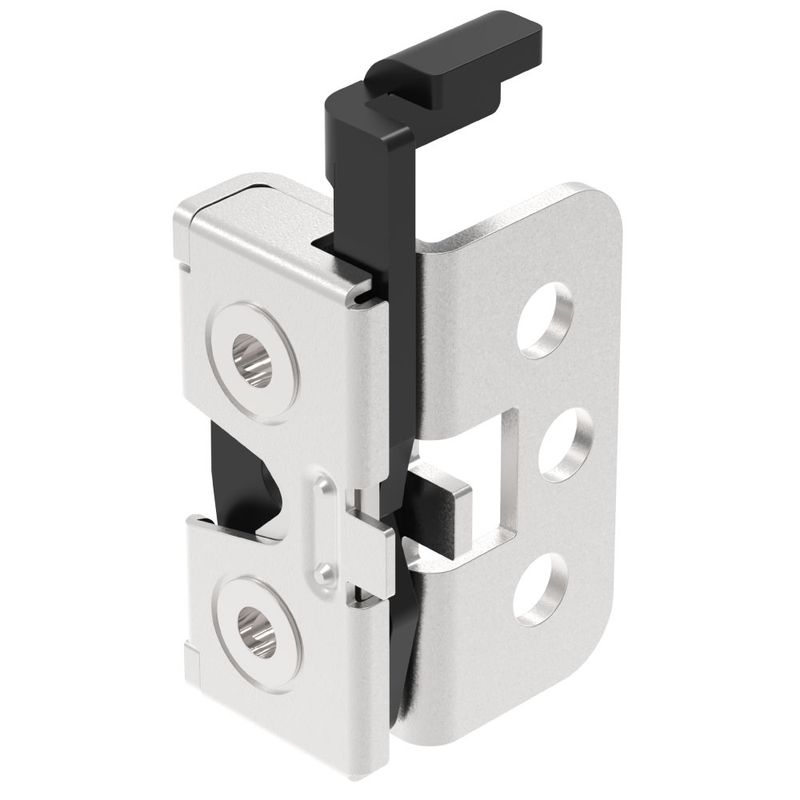
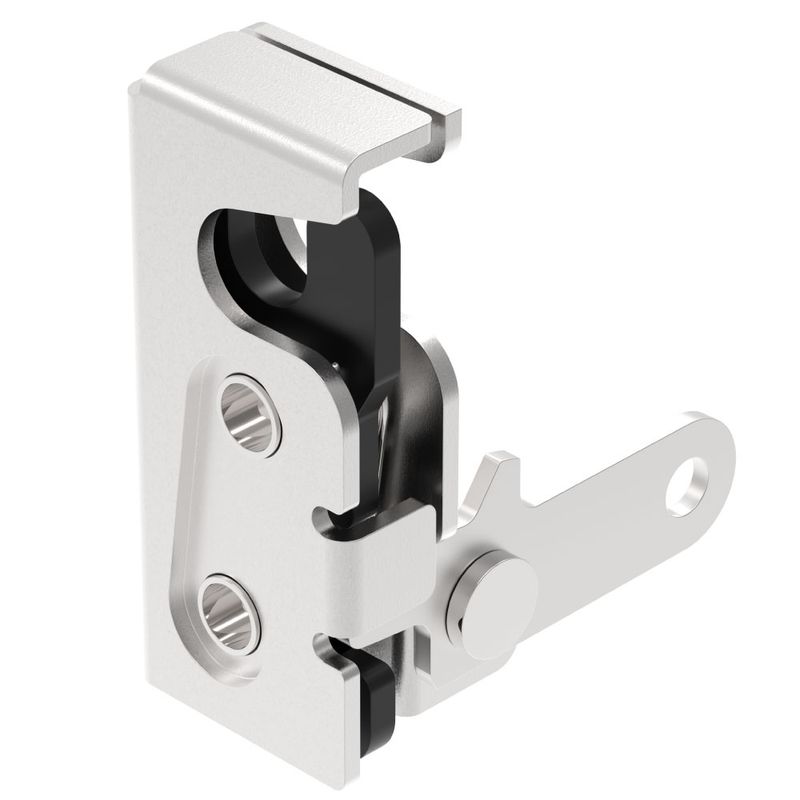
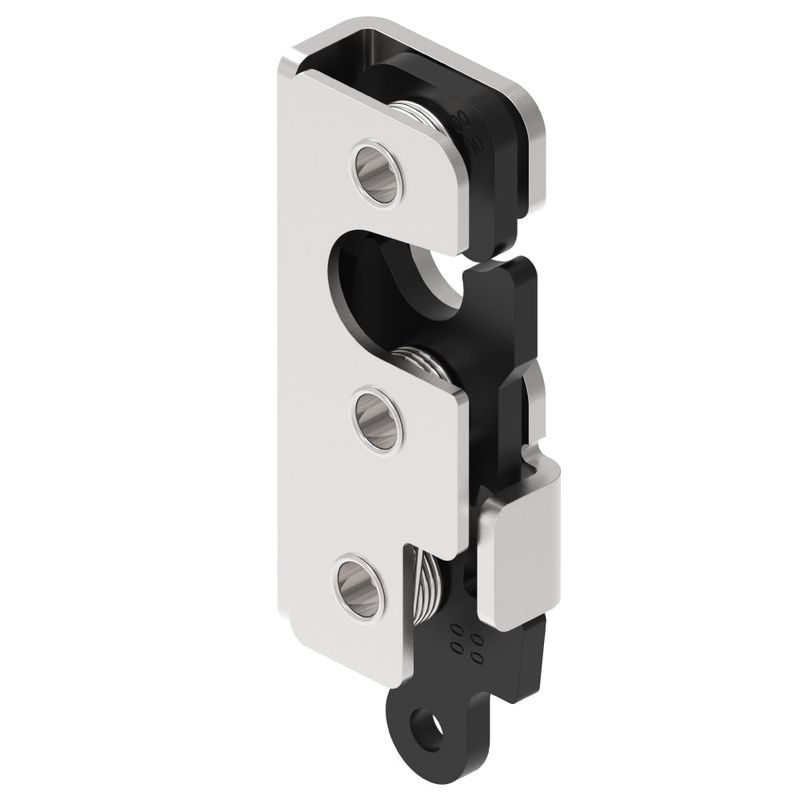
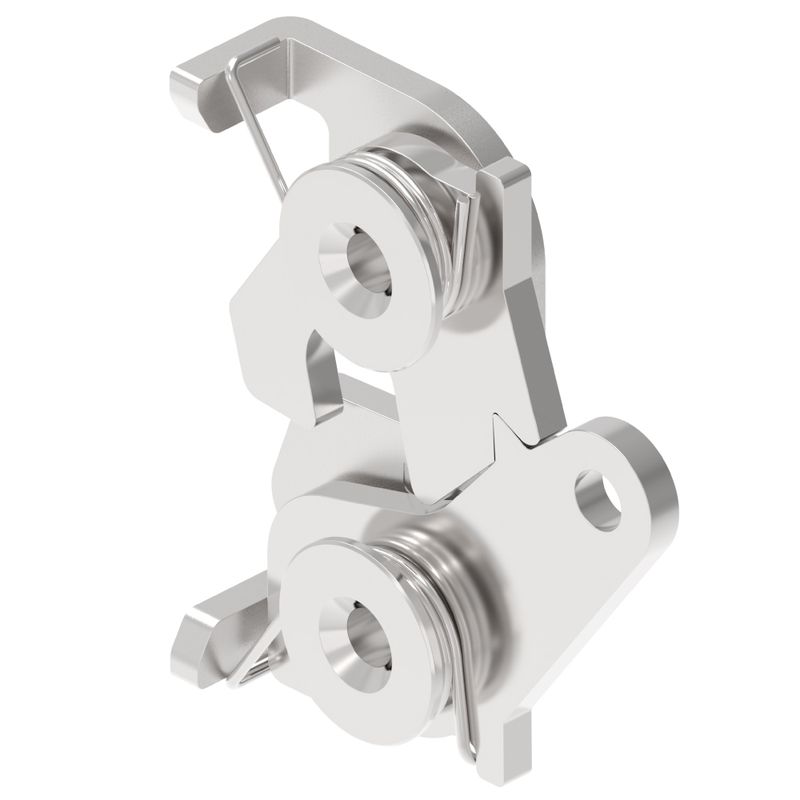
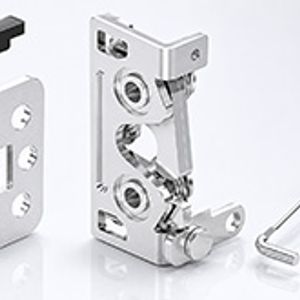
At the most fundamental level, the operation of any rotary latch relies on the interaction between a rotating cam, commonly referred to as the rotor, and a spring-loaded pawl or catch. When a door or panel is pushed closed, the stationary striker pin engages the opening of the rotor. The mechanical force of the closing action causes the rotor to pivot around its axis, capturing the striker pin within its jaws. Once the rotor reaches its designated locking position, the spring-loaded pawl drops into a notch on the rotor, physically preventing it from rotating backward and releasing the pin. To open the latch, an external actuation force—delivered via a push button, a pull handle, or a remote cable—lifts the pawl out of the notch, allowing the rotor to spin freely and release the striker pin. While this basic kinematic sequence applies to almost all variations, the specific engineering of rotary latches: types and applications dictates whether a single-stage or a two-stage mechanism is required for your particular project.
How Do Single Rotor Latches Work?
Single rotor latches work by utilizing a single locking position to secure lightweight to medium-weight doors efficiently. They provide a simple, cost-effective, and space-saving solution for enclosures that do not face extreme dynamic loads.
The architecture of a single-stage mechanism is defined by its straightforward, highly efficient design. Because it only has one locking position, the internal geometry is less complex, which translates to a smaller overall footprint and a lower manufacturing cost. When the door is pushed closed, the rotor rotates until the pawl engages the single locking notch, securing the panel in one swift motion. This simplicity makes them incredibly reliable for applications where the primary goal is basic closure and access control.
These mechanisms are typically deployed in scenarios where the operating environment is relatively stable. For instance, internal access panels within larger machinery, stationary storage compartments, or lightweight protective covers are ideal candidates for single-stage integration. Because they require fewer internal components, they often exhibit lower actuation friction, meaning they can be opened and closed with minimal physical effort.
However, it is crucial for engineers to understand the mechanical limitations of this design. Single-stage mechanisms do not possess a secondary safety catch. If the latch is not closed with sufficient force to fully engage that single locking notch, or if structural warping causes the striker pin to misalign, the door may bounce back or fail to secure entirely. Furthermore, under high tensile loads or severe continuous vibration, the single pawl engagement point bears the entirety of the mechanical stress, which can lead to premature wear or accidental release if deployed outside of its intended operational parameters.
Why Choose Two-Stage Rotary Latches?
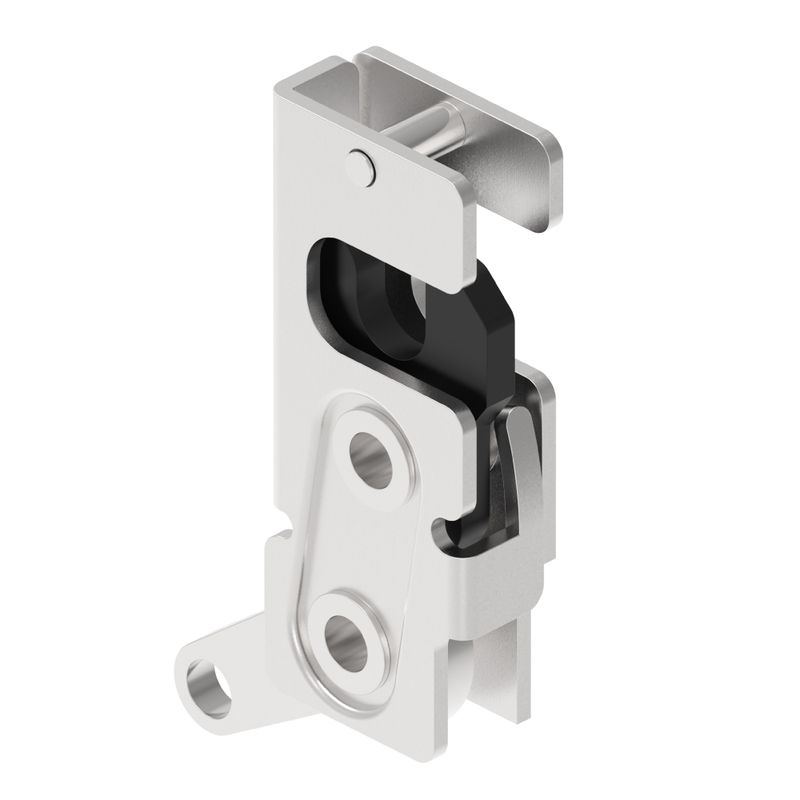
You should choose two-stage rotary latches when your application demands a secondary safety catch to prevent accidental opening under severe vibration. This dual-locking design is absolutely critical for heavy-duty doors, moving vehicles, and high-risk enclosures.
The defining characteristic of a two-stage mechanism is its implementation of a primary and a secondary locking position, often referred to as the safety catch and the fully closed position. When a heavy door is closed, the striker pin first engages the rotor and pushes it to the first stage. If the closing force is insufficient to fully compress the door seals and reach the final locking position, the pawl will still drop into the first-stage notch. This creates a highly secure "false lock" state where the door is mechanically captured and cannot fly open, even though it is not completely sealed. To fully secure the enclosure, additional pressure is applied until the pawl clicks into the second, final notch.
This dual-stage architecture provides an immense leap in safety and load-bearing capability. The internal components are typically manufactured from thicker, higher-grade materials to withstand substantial kinetic energy. While a standard single-stage unit might be rated for a maximum tensile load of two to three kilonewtons, heavy-duty two-stage variants are frequently engineered to withstand loads exceeding ten kilonewtons. This massive increase in structural integrity ensures that even if the enclosure is subjected to violent impacts, chassis twisting, or relentless mechanical vibration, the latch will maintain its grip on the striker pin. For procurement teams specifying hardware for applications where a door failure could result in severe equipment damage or human injury, the integration of two-stage mechanisms provides an indispensable layer of operational security.
How Do Application Demands Actually Differ?
Application demands actually differ significantly in terms of dynamic vibration exposure, environmental sealing needs, and structural mounting constraints. While vehicles prioritize crash safety and noise reduction, industrial setups focus heavily on static load bearing and extreme weather resistance.
A critical mistake often made during the initial phases of product design is assuming that a high-quality latch will perform equally well across all industries. The reality is that the physical forces and environmental stressors acting upon a locking mechanism vary wildly depending on the end-use scenario. When evaluating rotary latch types for automotive and industrial cabinet applications, engineers must dissect the specific operational context of the enclosure. A mechanism designed to survive the continuous, high-frequency vibration of a commercial truck door will have vastly different tribological properties and actuation requirements than a latch designed to sit motionless on a coastal power grid cabinet for decades, battling salt spray and hurricane-force winds. Understanding this divergence is the key to preventing costly hardware failures and ensuring that your chosen component aligns perfectly with the physical reality of its deployment.
What Do Automotive Panels Strictly Require?
Automotive panels strictly require mechanisms that offer flawless anti-vibration performance, compact installation footprints, and strict adherence to passenger safety standards. They also demand smooth actuation and consistent acoustic feedback upon closure.
The automotive and transportation sector presents one of the most mechanically hostile environments for any closure system. Vehicles are subjected to constant dynamic movement, meaning the latch is perpetually fighting against road vibrations, chassis flex, and sudden deceleration forces. In these applications, the mechanism must absolutely prevent the door from opening during transit, which is why two-stage designs are universally mandated for passenger and heavy-duty commercial vehicle doors. The latch must be capable of absorbing significant transverse and longitudinal loads without deforming.
Beyond sheer strength, automotive applications impose severe spatial constraints. The internal cavity of a vehicle door is crowded with window regulators, acoustic insulation, and wiring harnesses. Therefore, the latch must feature a highly compact, low-profile footprint. Additionally, because the exterior door handle is rarely located directly adjacent to the latch, the mechanism must be compatible with flexible cable actuation systems or rigid rod linkages. This allows for remote unlatching from multiple points, including interior and exterior handles. Finally, the automotive industry places a premium on tactile and acoustic feedback. The latch must actuate smoothly without binding, and the closing action must produce a solid, reassuring sound that conveys a sense of manufacturing quality to the end user.
What Do Industrial Cabinets Actually Need?
Industrial cabinets actually need robust waterproof and dustproof sealing, exceptional anti-corrosion properties, and the ability to withstand heavy static loads. Reliable performance in harsh, unconditioned environments is non-negotiable for these heavy-duty enclosures.
Unlike moving vehicles, industrial cabinets are typically stationary, but they are exposed to a relentless barrage of environmental hazards. Telecommunications enclosures, energy storage systems, and heavy machinery control panels are frequently deployed outdoors in unconditioned environments. Here, the primary threat to the latch is not constant dynamic vibration, but rather atmospheric corrosion, moisture ingress, and extreme temperature fluctuations.
Industrial cabinets heavily rely on thick rubber or polyurethane gaskets to achieve strict IP65 or IP67 ratings, protecting sensitive internal electronics from water and dust. Compressing these thick gaskets requires significant mechanical force. The rotary latch must be robust enough to pull the door tightly against the seal and hold that high static compression load indefinitely without the rotor creeping or the pawl slipping. Furthermore, the latch itself must not become a point of ingress; it must be designed with integrated sealing washers or O-rings around its mounting points. Material degradation is another massive concern. A standard zinc-plated component might survive indoors, but when exposed to acidic rain, industrial chemicals, or high-humidity environments, it will rapidly oxidize and seize. Therefore, the industrial sector demands hardware that provides unwavering static strength combined with elite metallurgical resistance to the elements.
Neutral Salt Spray Test for ForndLock Rotary Locks
How To Select Heavy Duty Mechanisms?
To select heavy duty mechanisms effectively, engineers must evaluate the specific tensile load requirements, material grades, and the exact operating environment of the enclosure. This systematic approach ensures long-term operational reliability and prevents costly field failures.
When engineers ask exactly how to choose the right rotary latch mechanism for heavy duty enclosures, we always point them toward a structured evaluation process rather than a simple catalog lookup. The total cost of ownership for industrial hardware extends far beyond the initial purchase price. If a latch fails in the field, the resulting costs associated with equipment damage, emergency maintenance dispatch, and compromised security will exponentially outweigh any savings gained by specifying an inferior component. Therefore, the selection process must be treated as a critical engineering exercise, requiring a deep analysis of the physical forces, chemical exposures, and ergonomic requirements unique to the project.
Which Factors Drive The Selection Process?
The selection process is driven by factors such as IP rating requirements, material choices like stainless steel versus carbon steel, and the need for OEM/ODM customization. Assessing these technical elements helps determine the exact specifications needed for your specific project.
To successfully determine how to choose the right rotary latch mechanism for heavy duty enclosures, procurement teams and designers must systematically evaluate several core technical parameters. Overlooking any single factor can lead to a fundamental mismatch between the hardware and the application.
First, material selection is paramount. For indoor applications or environments with strictly controlled climates, high-strength carbon steel treated with advanced zinc plating or electro-coating offers an excellent balance of cost-efficiency and mechanical durability. However, if the enclosure is destined for marine environments, coastal regions, or chemical processing plants, carbon steel will eventually succumb to galvanic corrosion. In these harsh scenarios, specifying 304 or 316-grade stainless steel is non-negotiable. The addition of molybdenum in 316 stainless steel provides exceptional resistance to chloride pitting and crevice corrosion, ensuring the internal pawl and rotor continue to operate smoothly even after years of salt spray exposure.
Second, the actuation method must be carefully matched to the ergonomic design of the enclosure. Will the operator open the door using a direct push-button integrated into the latch body, or does the design require a concealed latch operated by a remote pull-cable located meters away? Understanding the routing of cables or linkage rods dictates the specific lever arms and spring tension required within the latch assembly.
Third, the interface between the latch and the environmental sealing strategy must be analyzed. If the cabinet requires a high IP rating, the latch mounting holes must be sealed. Furthermore, the latch must possess enough mechanical leverage to overcome the compression resistance of the door gasket. If the closing force required to compress the weather seal exceeds the physical capabilities of the operator, the latch geometry must be adjusted, or a multi-point linkage system must be implemented to distribute the closing force evenly across the panel.
Finally, standard off-the-shelf components may not always fit complex proprietary designs. This is where OEM and ODM customization becomes a critical factor. Altering the mounting plate dimensions, adjusting the striker pin capture angle, or modifying the tension springs are common customizations that ensure the latch integrates seamlessly into the final product without requiring expensive retooling of the actual cabinet doors.
How Did We Help A Client?
We helped a client by engineering a custom 316 stainless steel two-stage rotary latch that completely resolved their issues with door failures caused by transport vibration and coastal corrosion. This direct intervention ensured their high-value equipment remained permanently secure and fully operational.
To illustrate the critical nature of proper hardware selection, we can look at a recent collaboration with a German OEM client specializing in the manufacturing of large-scale outdoor telecommunications and energy storage cabinets. This client had secured a massive infrastructure contract to deploy their systems across several coastal regions in the Middle East. However, during their initial pilot deployment, they encountered severe operational failures.
The problem was twofold. First, the standard zinc-plated carbon steel latches they originally specified were rapidly deteriorating due to the extreme atmospheric salinity and high humidity of the coastal environment. The internal springs were rusting, causing the pawls to stick and preventing the doors from latching securely. Second, the cabinets had to be transported across hundreds of miles of rugged desert terrain to reach their installation sites. The severe, continuous vibration during transport was causing the single-stage latches to vibrate loose. The heavy doors were popping open in transit, leading to catastrophic damage to the sensitive battery banks and server racks inside.
The client urgently needed a solution that would not require them to redesign their entire cabinet door tooling, which would have delayed the project by months. Our engineering team at ForndLock immediately analyzed their technical drawings and the specific environmental stressors of the Middle Eastern deployment. We recommended upgrading their closure system to a heavy-duty, two-stage rotary latch. The two-stage design guaranteed that even under brutal transport vibration, the secondary safety catch would absolutely prevent the heavy doors from flying open.
To combat the aggressive coastal corrosion, we manufactured the entire mechanism, including the internal springs and rivets, from premium 316 stainless steel, followed by a specialized surface passivation process to maximize the material's protective oxide layer. Crucially, our ODM capabilities allowed us to customize the mounting hole patterns on the new stainless steel latches to perfectly match the client's existing door panel cutouts, eliminating the need for any structural modifications on their assembly line.
We rapidly prototyped the solution and delivered physical testing samples to their facility within seven days. The custom ForndLock latches were subjected to rigorous 500-hour salt spray testing and extreme multi-axis vibration simulations. The new mechanisms passed all tests flawlessly. By understanding exactly how to choose the right rotary latch mechanism for heavy duty enclosures and applying our direct manufacturing capabilities, we eliminated their field failures entirely. This successful engineering intervention not only salvaged their Middle Eastern deployment but also secured a long-term batch manufacturing contract between our two companies.
How Can We Support Your Project?
We can support your project by providing expert engineering advice, rapid sample testing, and dependable batch manufacturing tailored to your exact requirements. Our dedicated team is ready to turn your technical drawings and operational challenges into reliable hardware solutions.
Navigating the complexities of industrial hardware specification requires a delicate balance between understanding structural mechanism types and anticipating the brutal realities of automotive or industrial environments. Whether your project demands the compact, anti-vibration performance required for vehicle panels or the uncompromising static strength and corrosion resistance necessary for outdoor power enclosures, selecting the correct component is foundational to your product's success. As we have detailed throughout this guide, relying on generic assumptions or inadequate materials will inevitably lead to systemic failures.
As a dedicated manufacturer, ForndLock is uniquely positioned to guide you through this critical selection process. We do not just supply parts; we supply engineering certainty. Our capabilities encompass full OEM and ODM customization, allowing us to adapt our robust locking mechanisms to your specific dimensional constraints and actuation requirements. Furthermore, we stand behind our manufacturing quality by providing rapid sample testing, comprehensive material certificates, and reliable, scalable batch delivery to keep your production lines moving without interruption.
Do not leave the security of your high-value equipment to chance. If you are currently facing challenges with environmental sealing, vibration-induced failures, or complex custom integrations, our engineering team is ready to assist. We encourage procurement managers, mechanical engineers, and product designers to reach out to us directly. Send your project requirements, technical drawings, or requests for physical samples, material certifications, and customized hardware solutions to: [[email protected]](mailto:[email protected]). Let us partner together to build enclosures that are truly engineered to endure.