Quarter-Turn Latch with Wing Knob: Applications and Selection Guide
What Is a Quarter-Turn Latch with Wing Knob?
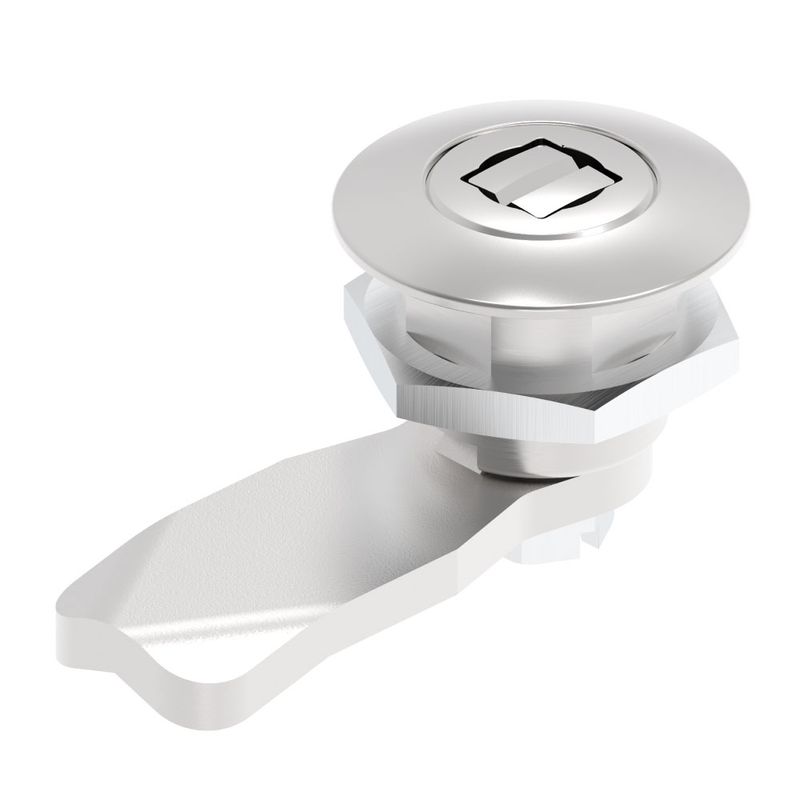
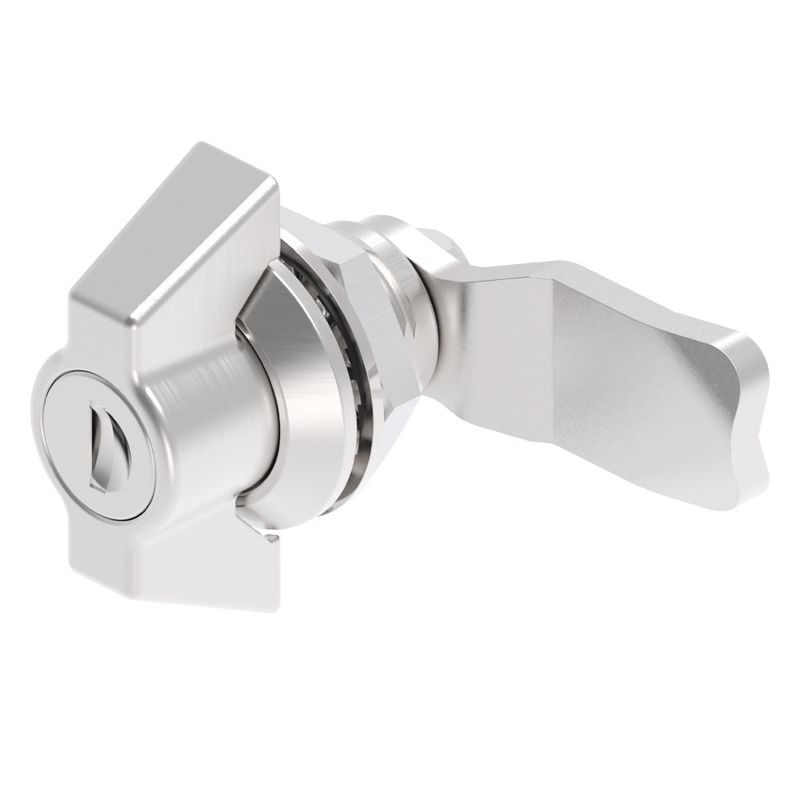
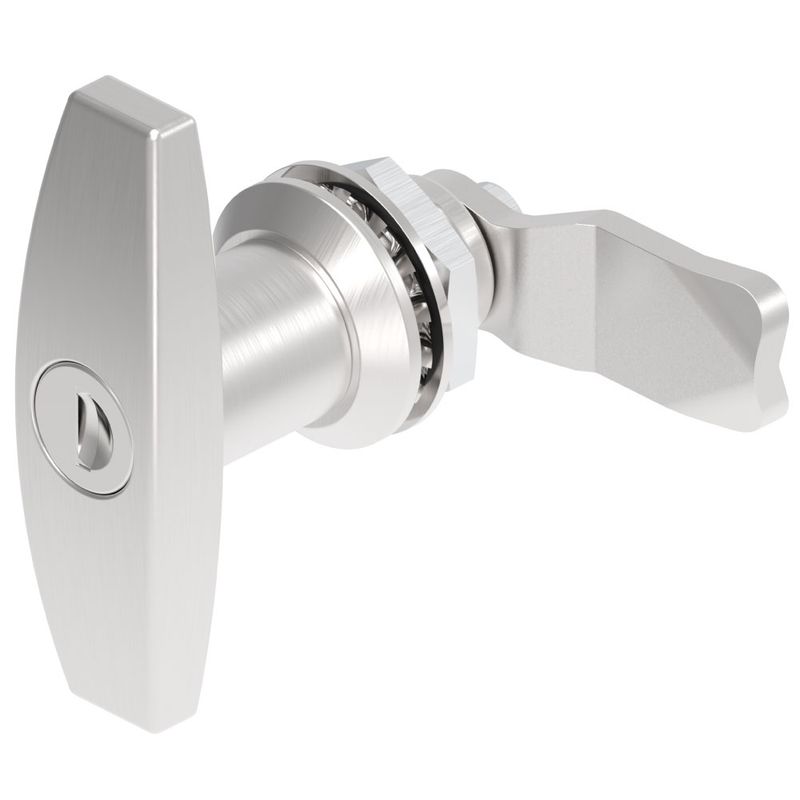
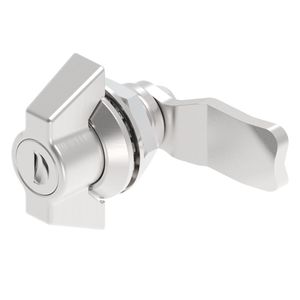
A quarter-turn latch with wing knob is a rotary latching device that uses a 90-degree turn of a wing-shaped knob to drive a cam into or out of engagement with a frame or strike. The construction is straightforward but each part carries engineering weight.
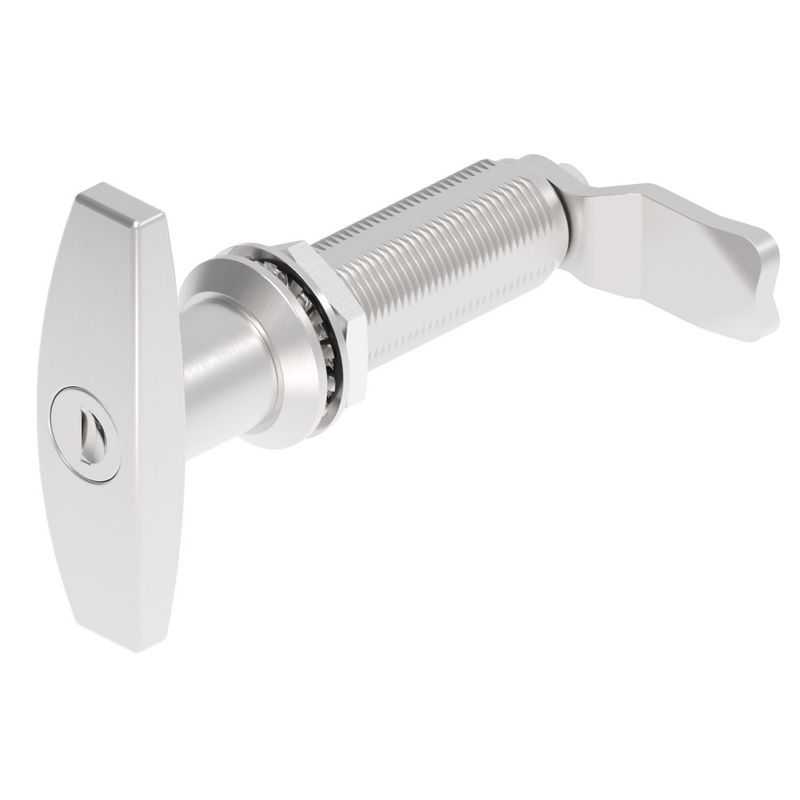
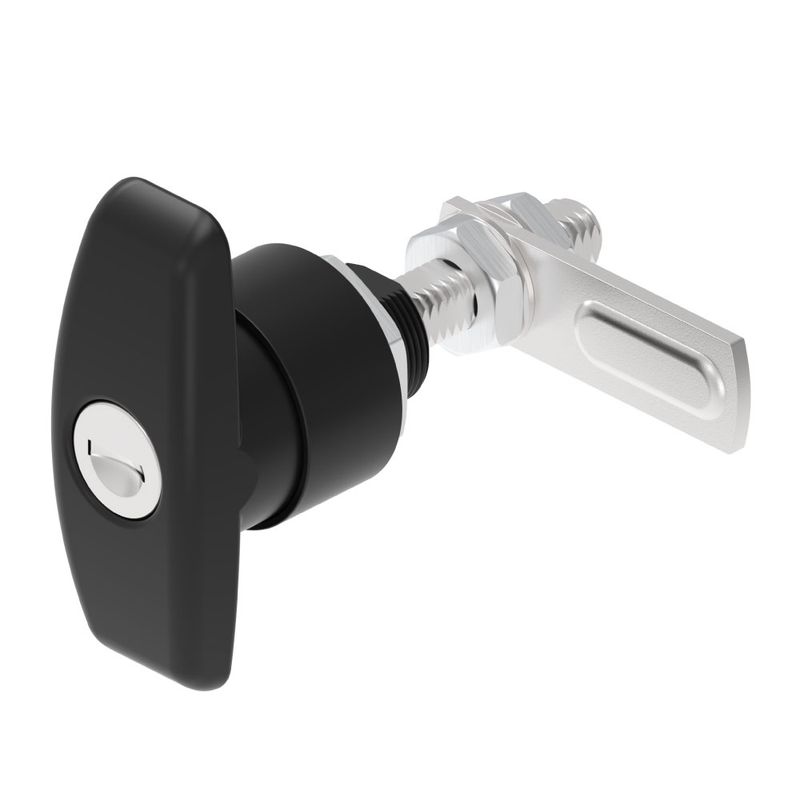
The housing is the body that mounts into the panel cutout and holds the internal shaft in position. The wing knob sits on the outer face of the panel and gives the operator a grip point large enough to turn by hand. Behind the panel, a shaft connects the knob to the cam, transferring rotational movement through the panel thickness. The cam itself is the component that actually engages the frame or strike plate; when the knob turns 90 degrees, the cam rotates from a parallel position to a perpendicular position, pulling the panel against the frame or releasing it.
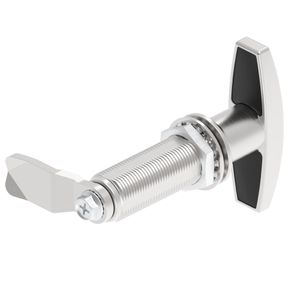
A mounting nut secures the housing from behind the panel, and where sealing is required, a gasket sits between the housing flange and the panel surface. This gasket reduces gaps at the mounting point but is only one part of the overall sealing picture, which we cover later in this guide.
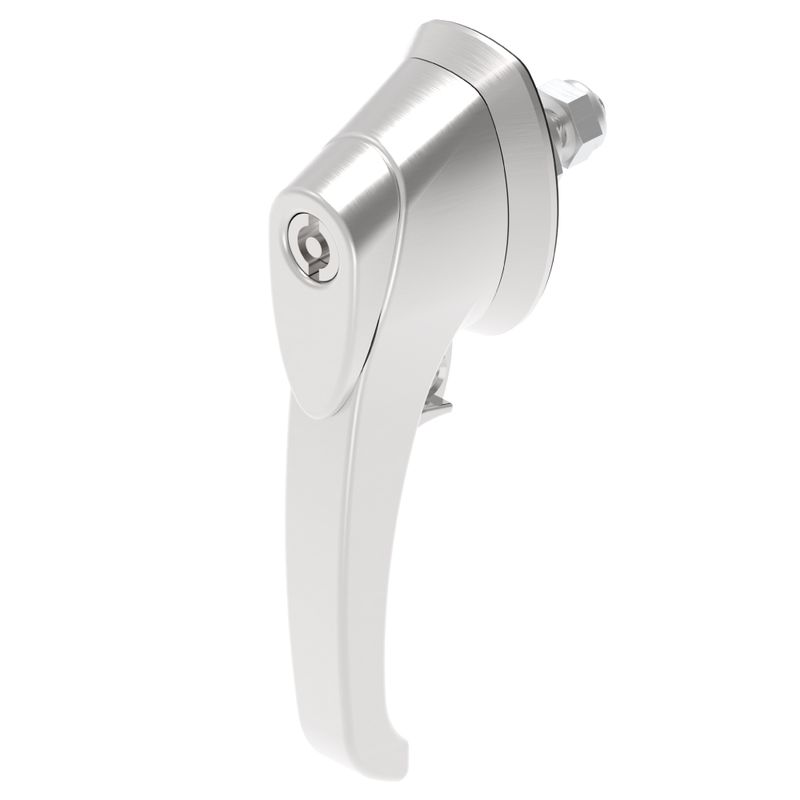
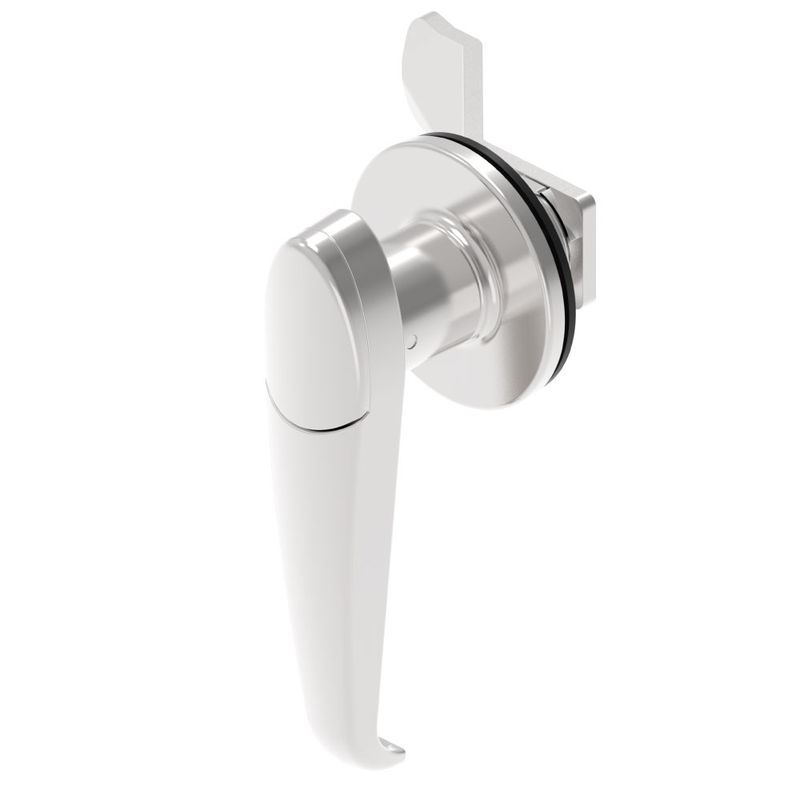
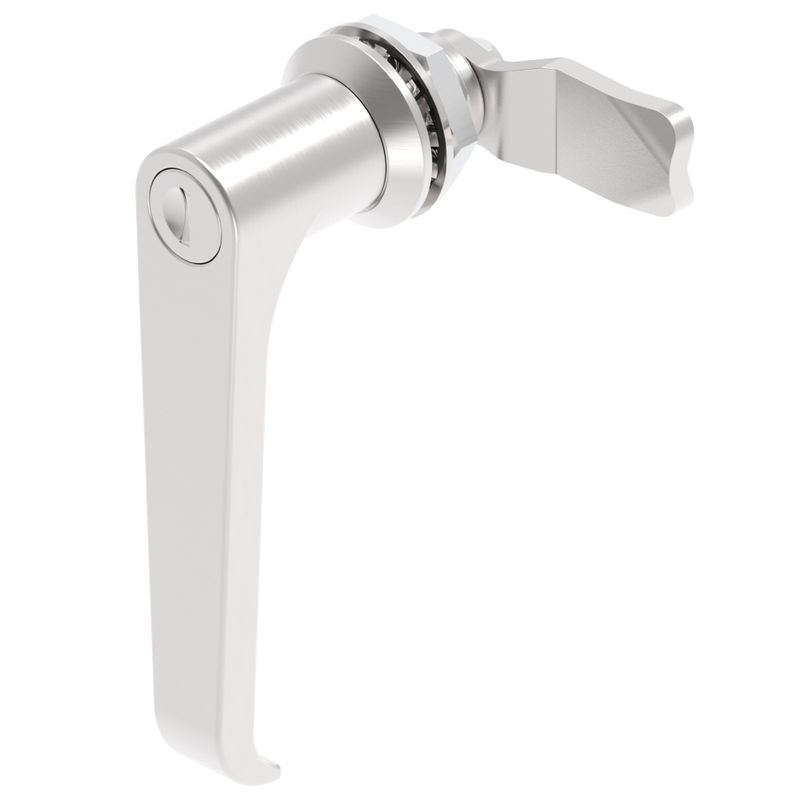
Mechanically, this structure is shared with key-operated and tool-operated quarter-turn latches. The difference between them is almost entirely in the operator — the part the user turns — rather than in the cam or housing design.
Why Do Maintenance Panels Need Wing Knob Latches?
Maintenance and access panels that are opened frequently benefit from a wing knob quarter-turn latch because it removes the need for a tool while still holding the panel closed under normal vibration and handling. At ForndLock, we work with enclosure manufacturers who open certain panels several times a day for inspection, wiring changes, or filter replacement. A tool-operated or key-operated latch slows this process down and adds a step that technicians often skip under time pressure.
A wing knob quarter-turn latch with wing knob solves that problem directly. A quarter turn of the knob releases the cam, and the panel opens without a screwdriver, hex key, or key blank. This speeds up routine work and reduces the chance that a technician leaves a panel loosely closed because reaching for a tool was inconvenient.
Tool-free access, however, is not free of trade-offs. Anyone standing in front of the panel can open it, so the environment and access control requirements matter as much as the operating speed. We often see selection problems when a wing knob is chosen purely because it looks convenient, without reviewing grip range, cam engagement, panel fit, material, or sealing. Selecting the right latch means treating the knob as one variable among several, not the whole decision.
How Does a Wing Knob Compare to Other Operators?
A wing knob offers the fastest tool-free operation, while key-operated and tool-operated latches trade speed for higher access control and tamper resistance. From our engineering experience, this is the single most misunderstood decision point in quarter-turn latch selection.
Operator Type | Main Advantage | Main Limitation | Typical Application |
Wing Knob | Fast tool-free operation | Low access restriction | Frequent-access maintenance panels |
Key-Operated | Controlled access | Slower, requires key management | Panels with restricted personnel access |
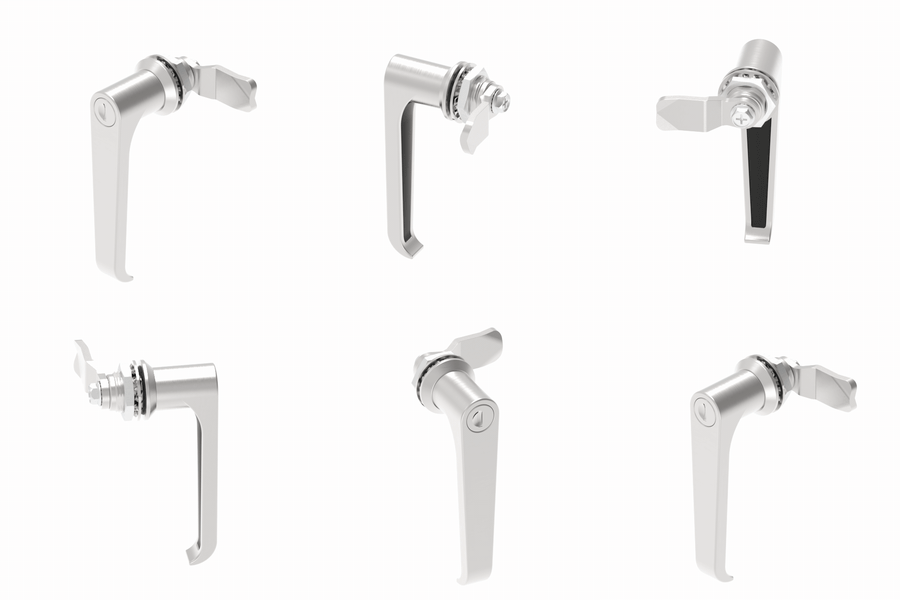
Tool-Operated (slotted/hex/triangle) | Basic tamper deterrence | Requires matching tool | Shared or semi-public equipment covers |
A wing knob quarter-turn latch is the right choice when access is frequent, the environment has limited public exposure, and the panel does not need to prevent casual opening. Maintenance rooms, internal equipment bays, and staff-only areas are typical fits.
It is not the right choice when strict access control is required, when tamper resistance needs to be higher than a bare hand can defeat, or when the panel faces a public or semi-public area. In those cases, a key-operated or tool-operated latch — or a wing knob version with a padlock provision — is a better starting point.
At ForndLock, we confirm the access control requirement with the requesting engineer before recommending an operator style. Knob appearance is the last decision, not the first.
Where Are Wing Knob Latches Commonly Used?
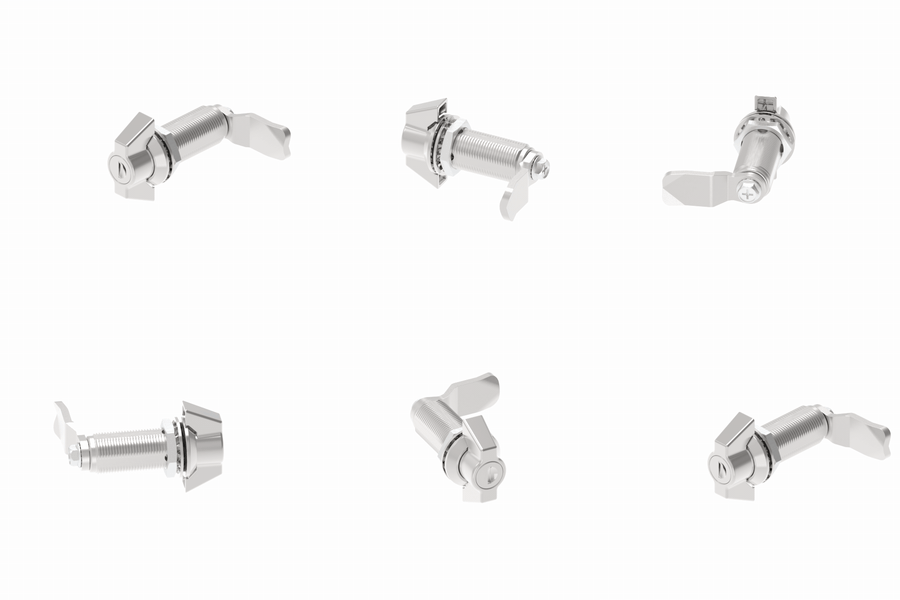
Wing knob quarter-turn latches are most often specified on electrical enclosures, control cabinets, machinery guards, and service panels where access is frequent and security requirements are moderate. Each application carries its own combination of access frequency, environment, sealing need, vibration exposure, and panel structure.
Electrical enclosures typically see moderate access frequency for inspection and wiring work. Indoor units usually need only basic dust protection, while units near production floors may need a gasketed latch to resist airborne particulate. Panel structure is usually single-wall sheet metal, so grip range tolerances are tight.
Control cabinets are opened often during commissioning and less often afterward. These cabinets frequently sit in climate-controlled rooms, but vibration from adjacent machinery can still loosen an under-specified latch over time, making cam engagement and mounting nut tightness important.
Machinery guards are opened for blade changes, lubrication, or adjustment, sometimes multiple times per shift. These panels experience direct mechanical vibration, so wear-resistant components and secure cam engagement matter more than in static cabinets.
HVAC panels are exposed to temperature cycling and, in rooftop or outdoor units, direct weather. Sealing quality and corrosion-resistant materials become more important here than pure operating speed.
Telecom cabinets often sit outdoors or in unconditioned shelters and are accessed periodically for service calls. Moisture resistance and a properly compressed gasket protect the internal electronics from condensation and dust.
Energy storage cabinets combine moderate access frequency with a higher sensitivity to vibration and thermal cycling. Panel structure is often reinforced, which changes the grip range and cam length needed compared to thin sheet metal doors.
Equipment covers on mobile or semi-mobile machinery see frequent opening combined with constant vibration during transport or operation, making retaining features on the cam and knob more important than on static installations.
Service panels on general industrial equipment are the classic wing knob application: frequent tool-free access, indoor or semi-protected environment, and moderate sealing needs.
When an application sits between two of these categories, our engineering team reviews the drawing before recommending a grip and cam combination, since a single generic answer rarely fits mixed conditions.
How Do You Select the Right Wing Knob Latch?
Selecting the right wing knob quarter-turn latch requires checking grip range, cam geometry, panel thickness, cutout dimensions, rotation direction, and expected operating frequency together, not separately. These six factors interact with each other, so changing one without checking the others is a common source of installation failures.
How Do You Determine the Correct Grip Range?
The correct grip range is determined by adding the panel thickness, any frame offset, and the required gasket compression, then matching that total to the latch's rated grip window. Grip range describes the span of material the latch can clamp between the cam and the underside of the housing flange while still engaging fully.
If the calculated total falls near the low end of a latch's rated grip range, gasket compression may be insufficient, leaving gaps for dust and moisture. If the total exceeds the rated range, the cam cannot draw the panel fully closed, and the latch will feel loose or fail to seat. We often see grip range problems on projects where the panel drawing does not account for an added liner, a doubled panel edge, or a thicker-than-expected gasket, all of which change the effective grip needed.
How Do You Choose Cam Length and Shape?
Cam length and shape are chosen based on the distance to the strike and the clearance around it, with straight, offset, and special profiles suited to different frame geometries. A straight cam works well where the strike sits directly behind the latch housing with no obstruction. An offset cam shifts the engagement point sideways or vertically, useful when the frame or strike is not centered on the latch axis. Special cam profiles handle unusual frame shapes, tight clearances, or applications needing a longer reach without increasing panel thickness.
A cam that is too long can strike the frame before completing its rotation, preventing full engagement or damaging the mechanism. A cam that is too short may clear the strike edge without any real hold, leaving the panel to vibrate open. Cam selection should always be checked against a section drawing of the door and frame, not assumed from a catalog photo.
How Does Panel Thickness Affect Selection?
Panel thickness directly determines grip range and cam clearance, so thin sheet metal, reinforced panels, and double-wall structures each require a different latch configuration. Thin sheet metal panels need less grip range but may need reinforcement around the cutout to prevent the housing from deforming under repeated operation. Reinforced panels, with added stiffeners or thicker gauge material, change the grip calculation and may need a longer shaft. Double-wall structures, common on insulated or acoustic panels, often exceed standard grip ranges and require a latch specified for extended grip or a custom shaft length.
What Mounting Cutout Details Matter Most?
The mounting cutout must match the latch's hole size, anti-rotation feature, and mounting nut specification, or the latch will rotate or loosen under repeated use. Hole size tolerances affect how snugly the housing sits in the panel. An anti-rotation feature, such as a flat, tab, or secondary pin, stops the housing from spinning when the knob is turned, particularly important on latches without a fully keyed cutout. The mounting nut needs to match the thread and torque capacity of the shaft, and reinforcement around the cutout may be needed on thin panels to prevent flexing.
Why Does Rotation Direction Matter?
Rotation direction matters because the cam must swing toward the strike in the correct orientation, and confirming clockwise or counterclockwise operation before ordering avoids a non-functional installation. Some cabinet layouts require a specific rotation direction to clear an adjacent hinge, wiring duct, or neighboring latch. Confirming this on the drawing before production prevents a latch that physically fits the cutout but cannot engage the strike correctly.
How Does Operating Frequency Affect Component Wear?
Higher operating frequency accelerates wear on the knob, shaft, cam, and retaining parts, so high-cycle panels need latches selected with durability margins rather than minimum-cost components. A panel opened a few times a year has very different wear expectations than one opened multiple times per shift. On high-frequency applications, we recommend reviewing knob attachment method, shaft material, and cam retention before finalizing a part, since these are the components most exposed to repeated mechanical stress.
Which Materials Suit Different Environments?
Zinc alloy suits general indoor enclosures, stainless steel suits outdoor and corrosive environments, and the cam material and surface treatment determine actual durability more than the base material name alone.
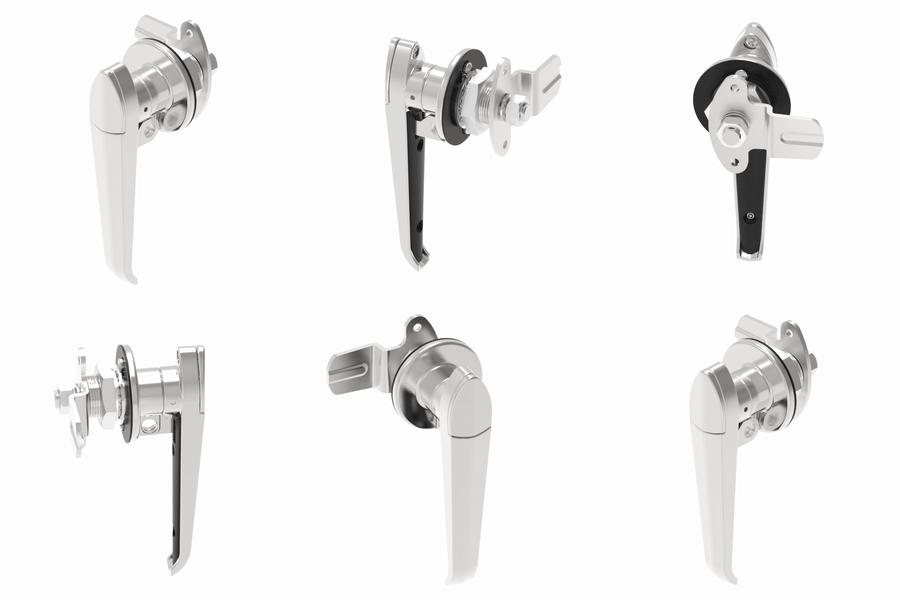
Zinc alloy housings and knobs offer good casting precision and a reasonable cost for indoor applications with stable humidity. Their limitation is reduced corrosion resistance compared to stainless steel, making them less suitable for outdoor or washdown environments without additional plating.
Stainless steel is the standard choice for outdoor cabinets, coastal installations, and washdown or chemical-exposure areas. It resists corrosion well but typically costs more and may need a smoother surface finish specification for hygienic applications.
Carbon steel cams offer strength for load-bearing engagement points but need plating or coating to resist rust, since bare carbon steel corrodes quickly in humid or outdoor settings. The plating quality, not just the base metal, determines how long the cam resists surface corrosion.
Engineering plastic knobs reduce weight and cost and avoid metal-to-metal galling on the shaft interface, but they have lower mechanical strength than metal knobs and are less suitable where high torque or rough handling is expected.
Plating, such as zinc or nickel plating on steel components, adds a corrosion barrier but is only as effective as its thickness and application quality. Coating, including powder coat or specialized finishes, can improve chemical resistance and appearance but should be matched to the specific exposure the panel will see, rather than assumed to perform identically across all environments.
Material names alone do not define a performance grade. A stainless steel latch with a poorly finished cam can still corrode at the wear surface, and a zinc alloy latch with proper plating can perform reliably indoors for years. Environment and surface treatment should always be reviewed alongside base material.
How Do Gaskets Affect Enclosure Protection?
Gaskets, O-rings, and sealing washers reduce dust and moisture ingress at the latch mounting point, but they do not by themselves determine the ingress protection rating of the complete enclosure. A gasket under the latch housing flange compresses against the panel surface when properly installed, closing the gap that would otherwise let dust, moisture, or light rain reach the interior at that mounting point. O-rings and sealing washers serve a similar purpose at specific junctions, such as around the shaft or mounting nut.
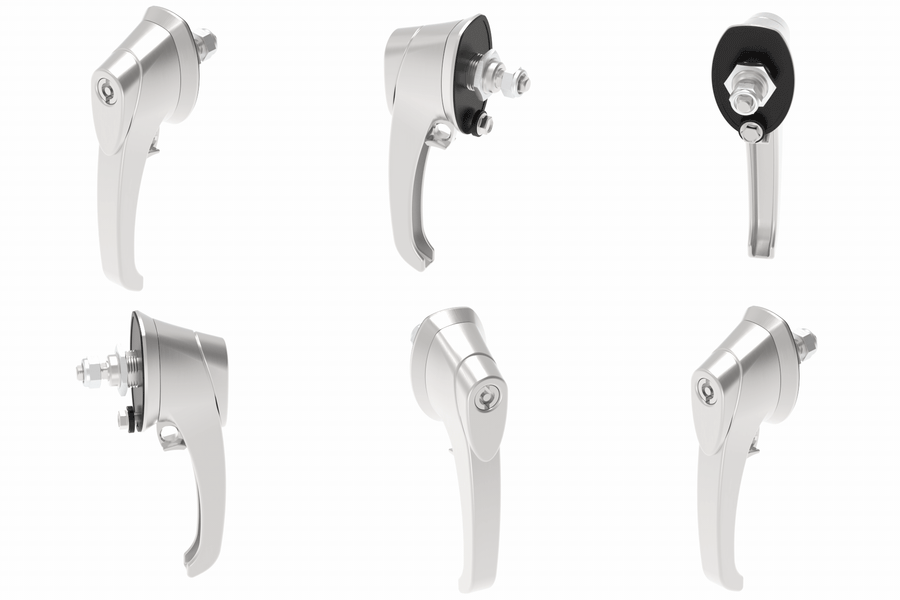
A quarter-turn latch alone does not determine the IP rating of the complete enclosure. Ingress protection for the full enclosure depends on the door gasket around the entire panel perimeter, the stiffness of the panel itself, the sealing at every mounting point, the compression achieved when the door closes, and the quality of the overall installation. A single well-sealed latch cannot compensate for a warped door, an under-compressed perimeter gasket, or unsealed cable entries elsewhere on the enclosure.
At ForndLock, we recommend confirming the full sealing system — panel, gasket, latch grip, and closing force — through a drawing review and, where ingress protection is critical, a sample test on the actual enclosure rather than relying on a latch specification sheet alone.
When Should You Choose a Compression Latch Instead?
A compression latch should replace a standard quarter-turn wing knob latch when the application needs even gasket pressure, higher vibration resistance, or a sealed structure beyond what a single-point latch can provide.
Factor | Quarter-Turn Wing Knob Latch | Compression Latch |
Operation | Tool-free 90° turn | Turn plus draw-in compression stroke |
Tool-free access | Yes | Usually yes, with added mechanism |
Sealing pressure | Moderate, position-dependent | Higher, consistent gasket load |
Vibration resistance | Adequate for light-duty panels | Better for high-vibration equipment |
Structure | Simpler, single-point | More complex, draws door tight |
Suitable application | General enclosures, service panels | Outdoor cabinets, high-vibration machinery |
A standard quarter-turn wing knob latch pulls the cam into engagement but does not add a separate compression stroke, so the sealing force depends heavily on how precisely the grip range was matched during selection. A compression latch adds a mechanism that draws the door tight against the gasket with a more consistent load, independent of small variations in panel fit.
We recommend moving to a compression latch when the enclosure sees continuous vibration, when the door is large enough that a single latch point cannot pull it evenly against the gasket, or when sealing consistency across many identical units matters more than the lowest-cost hardware option. For smaller, lighter, indoor panels with frequent access and moderate sealing needs, a standard wing knob quarter-turn latch usually remains the simpler and more economical choice.
What Selection Mistakes Should You Avoid?
The most common selection mistakes involve choosing a latch by knob appearance alone while overlooking grip range, cam length, cutout compatibility, and sealing requirements.
1. Choosing by wing knob appearance alone. Consequence: the latch fits visually but fails to match panel thickness or cam clearance. Correct approach: confirm grip range and cam geometry from the drawing before selecting a knob style.
2. Ignoring grip range. Consequence: insufficient gasket compression or a cam that cannot fully seat. Correct approach: calculate total grip need including panel thickness, offset, and gasket compression.
3. Selecting the wrong cam length. Consequence: the cam either strikes the frame early or fails to engage the strike. Correct approach: verify cam length and shape against a section drawing.
4. Mismatching panel thickness. Consequence: loose engagement or an overloaded housing on thin panels. Correct approach: match the latch's rated grip range to the actual measured panel thickness, not an assumed standard.
5. Mismatching the mounting cutout. Consequence: the housing rotates in service or the mounting nut cannot seat properly. Correct approach: confirm hole size, anti-rotation feature, and nut specification before cutting the panel.
6. Treating tool-free access as security. Consequence: unauthorized personnel open panels intended only for maintenance staff. Correct approach: use a wing knob only where access restriction is not a primary requirement, or add a padlock provision or keyed operator where it is.
7. Selecting the wrong material for outdoor exposure. Consequence: corrosion at the cam or shaft leading to stiff or failed operation. Correct approach: match material and surface treatment to the actual environment, not the lowest-cost indoor default.
8. Omitting the gasket. Consequence: dust and moisture entry at the mounting point even when the rest of the enclosure is sealed. Correct approach: specify a gasket wherever the enclosure has any sealing requirement.
9. Overlooking vibration exposure. Consequence: gradual loosening of the knob, shaft, or mounting nut on machinery-mounted panels. Correct approach: select components with adequate retention features and inspect more frequently on high-vibration equipment.
10. Failing to adjust multiple latch points correctly. Consequence: uneven door closure, with some points over-compressed and others barely engaged. Correct approach: verify each latch point individually during installation rather than assuming uniform grip across all points.
How Should You Install a Wing Knob Latch?
Installing a wing knob latch correctly means confirming the cutout, checking cam engagement, aligning the door and frame, and testing repeated operation before the panel is put into service.
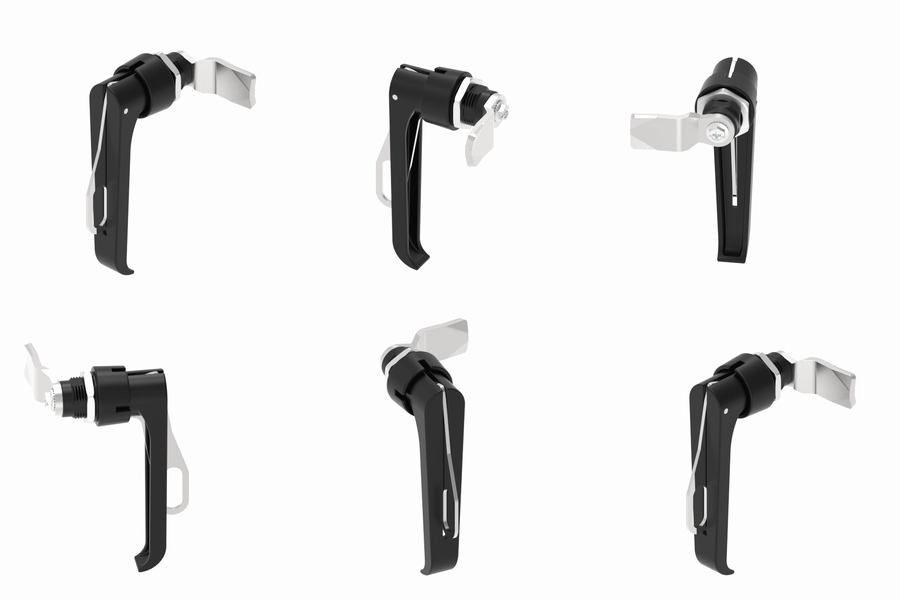
Confirm the cutout matches the latch's specified hole size and anti-rotation feature before mounting. Check cam engagement by rotating the knob through its full range and verifying the cam clears and re-engages the strike without binding. Align the door and frame carefully, since a misaligned door can mask a grip range problem during a single test but fail intermittently later. Install the mounting nut correctly, seated fully against the housing without over-tightening to the point of deforming the panel. Check rotation direction against the design requirement, and verify the closed position actually compresses the gasket rather than resting just short of full engagement. Finally, test repeated operation several times to confirm the latch performs consistently rather than only on the first cycle. We do not specify a single installation torque value here, since the correct tightness depends on panel material, nut design, and latch construction, and should be confirmed against the specific latch's documentation.
How Do You Maintain and Inspect These Latches?
Routine inspection should check knob wear, shaft looseness, cam wear, mounting nut tightness, corrosion, gasket condition, rotation resistance, and door alignment rather than following a fixed interval.
Knob wear shows as rounding of grip surfaces or looseness at the shaft connection. Shaft looseness can allow the cam to rotate slightly out of position even when the knob appears fully turned. Cam wear, especially at the engagement edge, reduces holding force over time. A loose mounting nut allows the entire housing to shift in the cutout. Corrosion, particularly at the cam and shaft, can stiffen rotation or eventually seize the mechanism. Gasket condition should be checked for compression set, cracking, or displacement. Rotation resistance that feels noticeably higher or lower than when new often signals wear or contamination. Door alignment should be rechecked periodically, since hinge wear elsewhere on the panel can throw off latch engagement even when the latch itself is undamaged.
Because operating frequency and environment vary widely between projects, we recommend setting an inspection schedule based on actual usage and exposure conditions rather than applying one fixed interval across all installations.
When Do You Need a Custom Quarter-Turn Latch?
Customization becomes necessary when standard grip ranges, cam shapes, mounting dimensions, or materials cannot match the panel geometry or environmental requirement of a specific project.
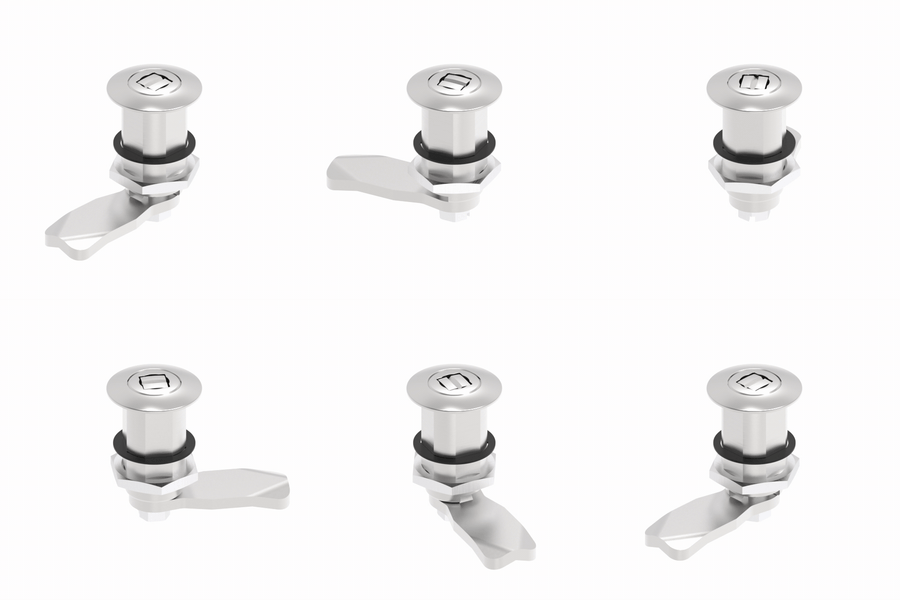
Special grip requirements arise on unusually thick or thin panels, or double-wall structures outside standard ranges. Custom cams, including offset or special profiles, are needed when the strike position or frame geometry does not match a straight cam's reach. Special panel thickness combinations may require a shaft length outside catalog offerings. Custom knob shapes or materials may be needed for ergonomic, branding, or chemical-resistance reasons. Non-standard mounting dimensions occur when retrofitting into an existing cutout pattern. Stainless steel upgrades are common for outdoor or corrosive-environment projects that started with a general-purpose material. Custom surface finishes may be required for hygienic or cosmetic standards. Gasket profile changes are sometimes needed to match an existing door seal system. Anti-rotation structures may need to be added or modified for panels with unusual cutout tooling. Special door geometry, including curved or stepped panels, can require a fully custom housing shape.
When we see a grip range or cam geometry that falls outside standard options, we review the drawing with the requesting engineer directly rather than suggesting a near-fit part that may create problems during installation.
How Does ForndLock Support Custom Latch Projects?
We support custom quarter-turn latch projects by reviewing the door drawing, evaluating grip and cam requirements, recommending materials, and validating the design with a prototype before volume production.
ForndLock Quarter-turn Hygiene Latch
Our process begins with a drawing review, where we confirm panel thickness, frame geometry, and cutout dimensions against the intended latch design. We then evaluate grip requirements, factoring in gasket compression and any frame offset, and select cam length and shape based on strike position and clearance. Material recommendations follow, based on the operating environment and corrosion exposure described by the project team. We work through knob structure options, confirm mounting dimensions against the panel drawing, and specify surface finish and gasket type to match sealing and appearance requirements.
Once these details are set, we move to prototype evaluation, allowing the design to be tested on an actual panel sample before committing to volume production. This step catches grip range or cam clearance issues early, when adjustments are still straightforward.
To start this review efficiently, we ask engineers and purchasing teams to send a door drawing, panel thickness, grip range, cam requirement, frame geometry, material preference, environmental conditions, and expected quantity. Our engineering team reviews these details before confirming a workable grip and cam combination for your panel.
How Can You Start a Quarter-Turn Latch Project with ForndLock?
Starting a project means confirming grip, cam, panel thickness, mounting, sealing, material, and access requirement together, then sending your drawing for a direct engineering review.
ForndLock Unveiled: Inside Our State-of-the-Art Factory
Selecting a quarter-turn latch with wing knob is not a matter of picking an attractive operator style from a catalog page. It requires checking grip range against actual panel thickness and gasket compression, matching cam length and shape to the real strike position, confirming the mounting cutout and anti-rotation feature, choosing a material and surface treatment suited to the operating environment, and being honest about what tool-free access does and does not provide in terms of security. A quarter-turn latch with wing knob earns its place on frequent-access panels precisely because these variables are checked together rather than assumed.
At ForndLock, we review these variables through direct engineering contact rather than generic part matching. If you are specifying a quarter-turn latch with wing knob for an electrical enclosure, control cabinet, machinery guard, or service panel, send us your door drawing, panel thickness, grip range, cam requirement, frame geometry, material preference, environmental conditions, and quantity at [email protected]. We support custom quarter-turn latches, cam customization, engineering review, sample evaluation, and production support from prototype through volume production.