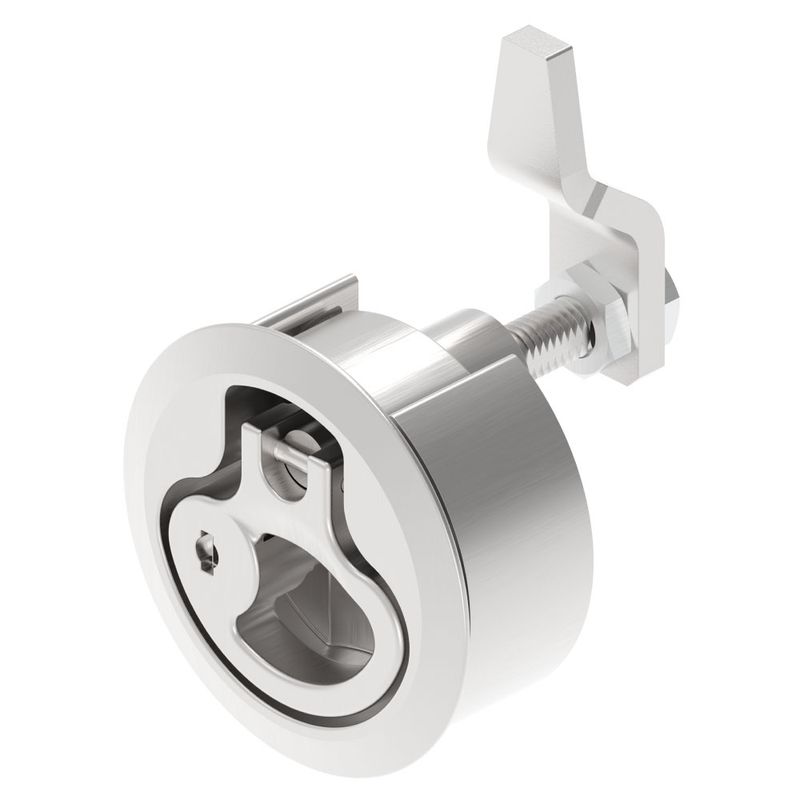
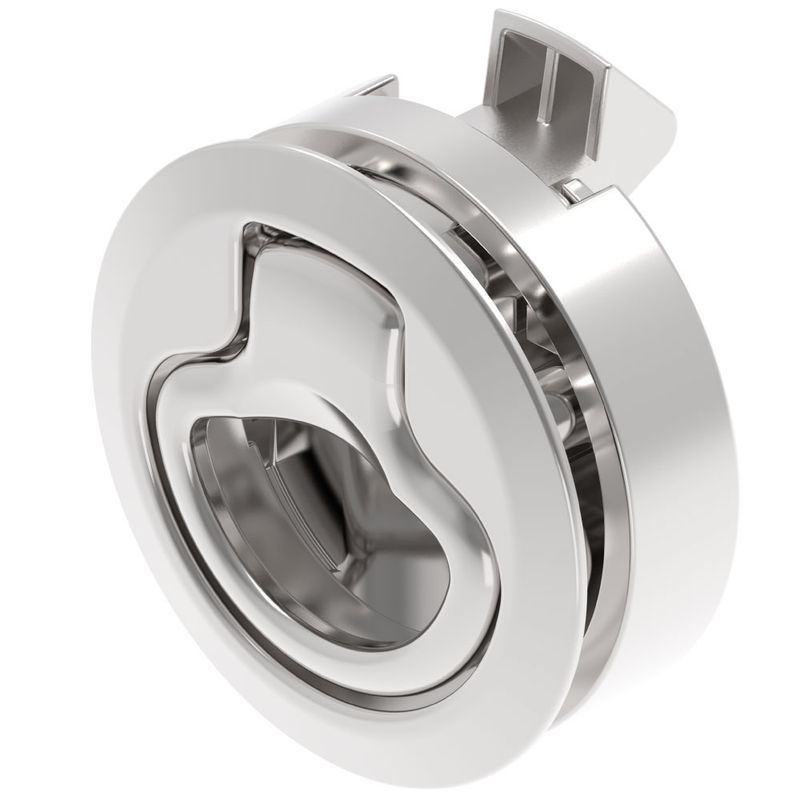
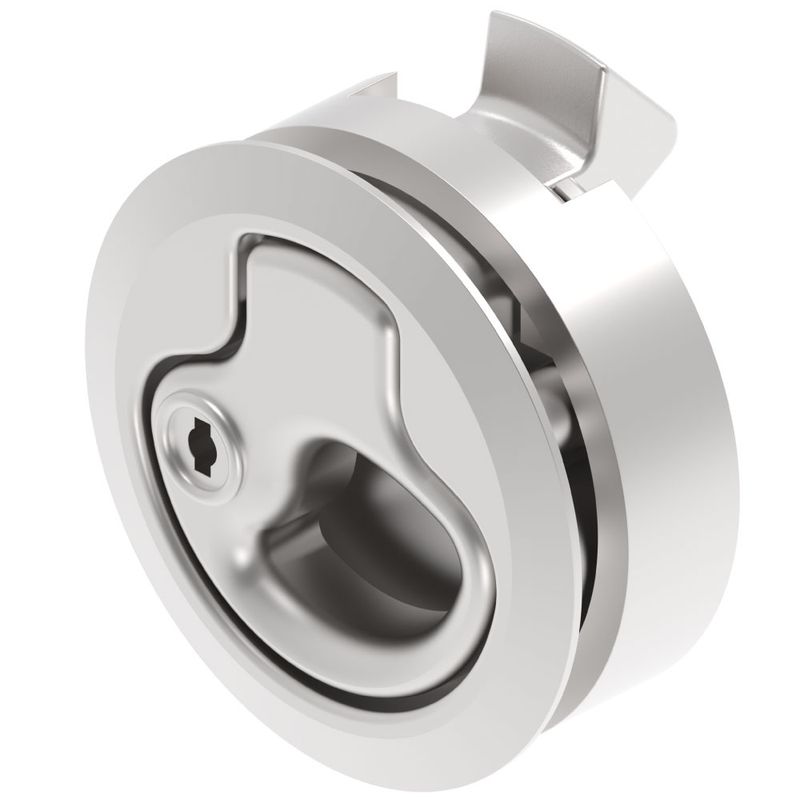
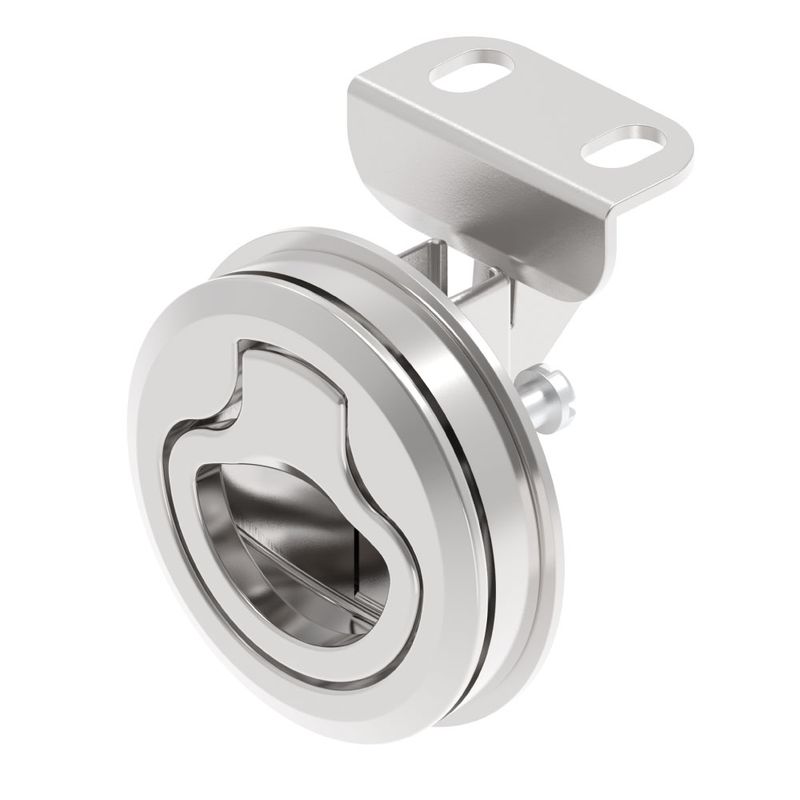
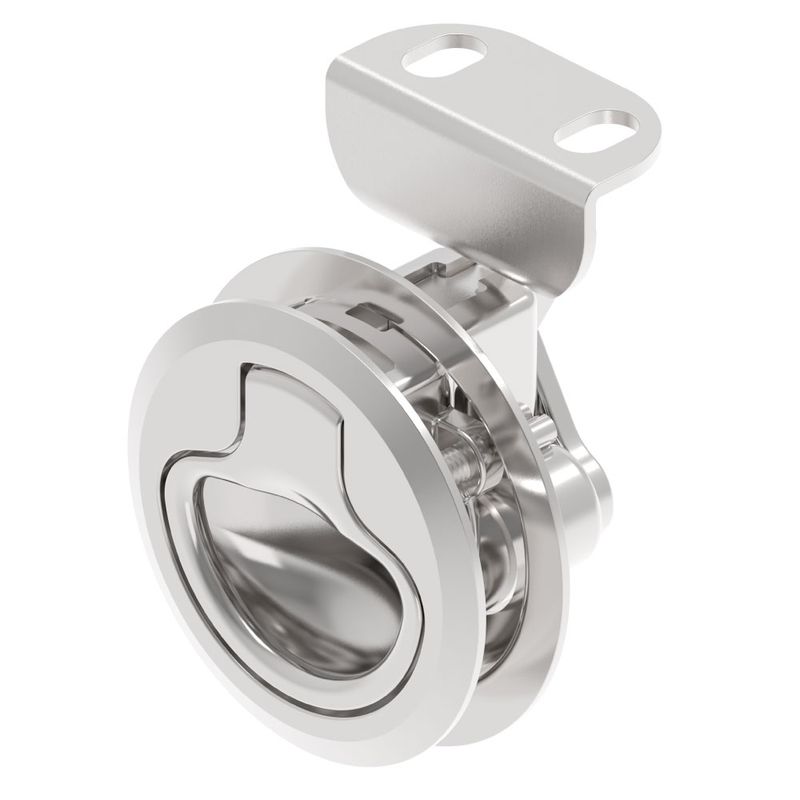
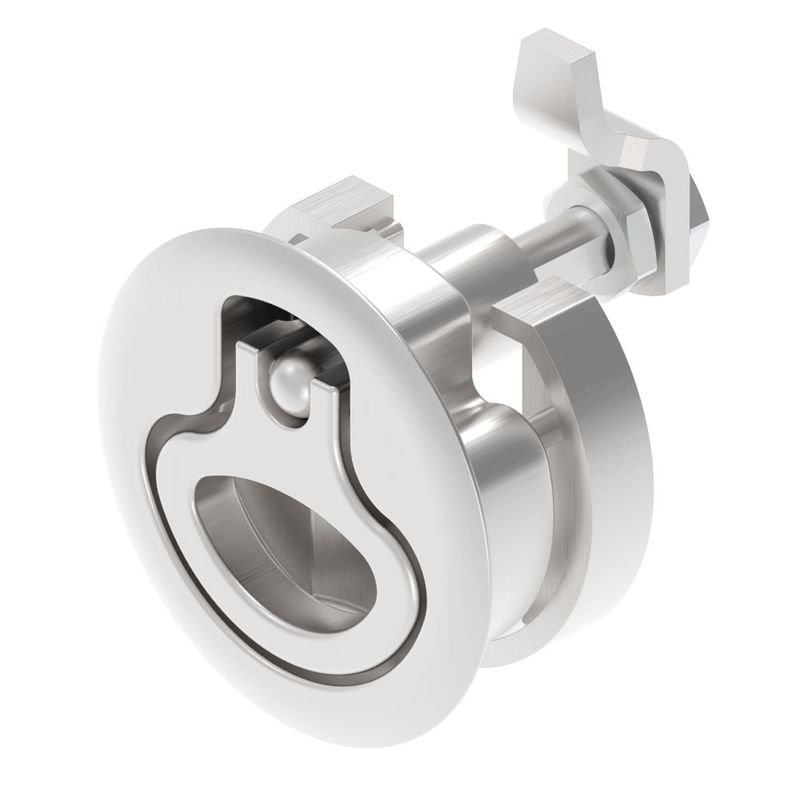
Marine Latches: Types, Materials, Applications and Manufacturer Selection Guide
Marine latches operate under a combination of salt spray, moisture, vibration, UV exposure and repeated daily operation that few other hardware categories face at the same time. Material selection alone does not determine how a latch performs in this environment — mechanism design, surface condition, mounting geometry and sealing behavior all matter as much as the alloy stamped on a datasheet. This article covers the main marine latch types, including compression, slam or rotary, cam or quarter-turn, draw and cabinet latches, and compares common materials such as 304 and 316 stainless steel without treating either as universally corrosion-proof. At ForndLock, we manufacture industrial and marine access hardware, and this guide walks through latch types, materials, applications, selection criteria and validation testing.
ForndLock: Marine Latches
What Makes a Latch Suitable for Marine Environments?
A latch becomes marine-suitable only when its mechanism, materials, sealing and mounting geometry are matched to the exact exposure zone — simply substituting stainless steel for carbon steel does not achieve this. A hatch mounted on an open deck faces direct salt spray, occasional seawater contact and constant UV exposure. A cabinet inside a wheelhouse faces condensation and humidity but rarely direct salt contact. A splash-zone compartment sits between these two conditions, with intermittent wetting and drying cycles that concentrate chloride at the surface rather than washing it away.
Chloride concentration matters because it drives pitting and crevice corrosion, particularly in tight gaps such as threads, washer contact faces and gasket seams where oxygen cannot reach the metal surface evenly. Add vibration, mechanical shock from door slamming, and repeated opening and closing cycles, and the demands on a latch extend well beyond corrosion resistance alone.
It is also worth remembering that a single latch assembly is rarely made from one material. The housing, cam, jaw, spring, pin, fasteners, seals and mating striker or keeper may each use a different alloy or polymer, chosen for strength, wear resistance or cost. A latch advertised as stainless steel may still include a zinc-plated spring pin or a plastic bushing, and each of these components has its own exposure limits.
The term "marine grade" is used loosely across the hardware industry and is not a universal performance guarantee tied to a specific standard. Even 316 stainless steel, which is widely specified for marine hardware, can still develop pitting, crevice corrosion or surface staining if it is contaminated during fabrication, poorly drained, or installed in a geometry that traps salt and moisture against the surface.
What Types of Marine Latches Are Available?
Marine latches fall into a small number of mechanical families — compression, slam or rotary, cam or quarter-turn, draw or toggle, and push-button cabinet types — each suited to a different combination of sealing, alignment and access requirements.
Latch type | Operating principle | Suitable applications | Main limitation |
Compression latch | Pulls panel against gasket | Deck hatches and sealed compartments | Higher closing force |
Slam or rotary latch | Captures striker when door closes | Equipment doors and storage compartments | Requires accurate alignment |
Cam or quarter-turn latch | Rotating cam engages frame | Cabinets and service panels | Limited compression unless designed for it |
Draw or toggle latch | Pulls two surfaces together | Covers and equipment cases | Exposed mechanism |
Push-button or cabinet latch | Push-to-close or press-to-release | Interior cabinets | Limited heavy-duty capability |
Our application review at ForndLock typically starts by identifying which of these mechanisms fits the door or hatch function, since the mechanism choice largely determines what sealing, load and access performance is realistically achievable before materials are even discussed.
When Should You Use a Marine Compression Latch?
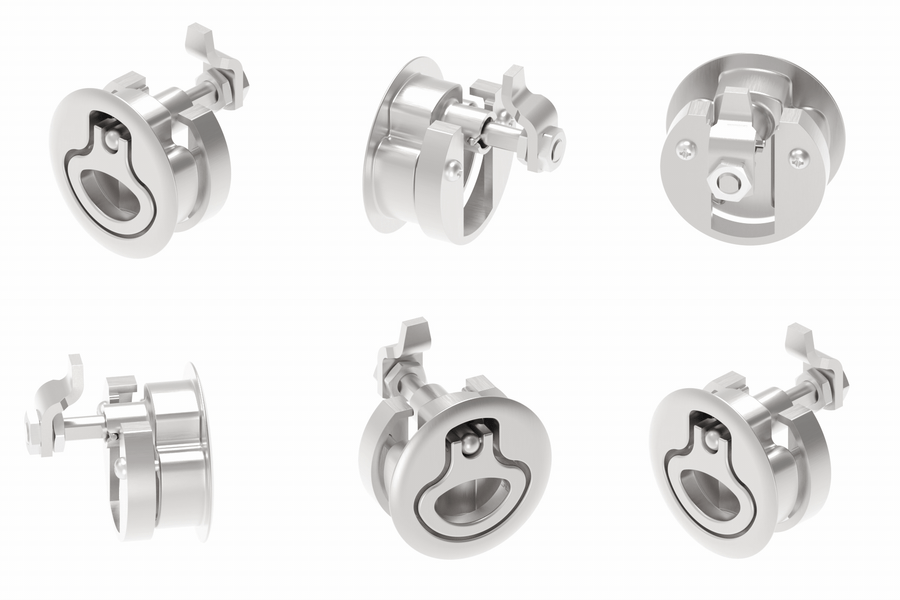
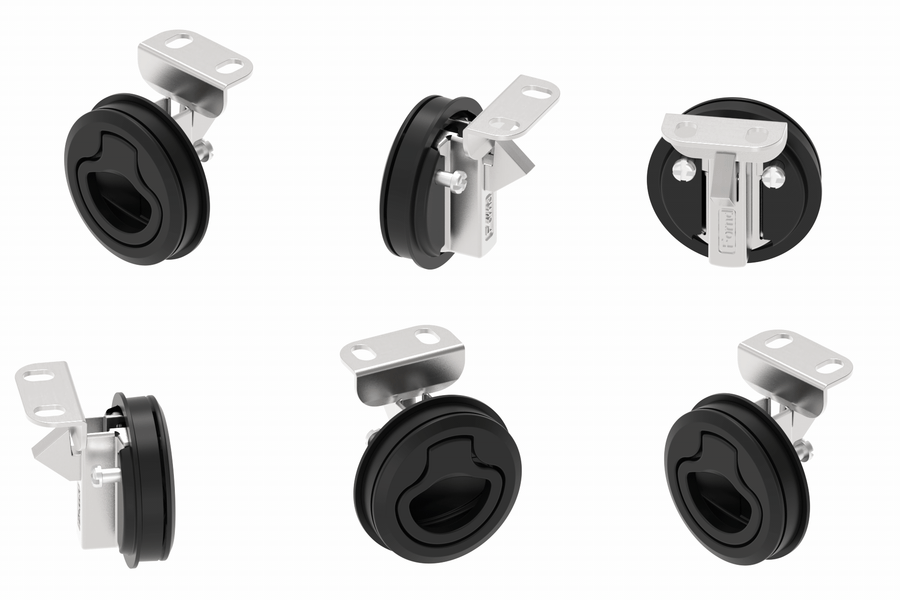
A compression latch should be used whenever a hatch or panel must be pulled tightly against a gasket to control water and dust ingress. These latches work by drawing the panel inward along a defined compression travel, increasing gasket load evenly around the perimeter and reducing rattle caused by vibration or wave impact. Flush-mounted compression latches are common on deck hatches because they minimize projection and reduce the risk of snagging lines or gear.
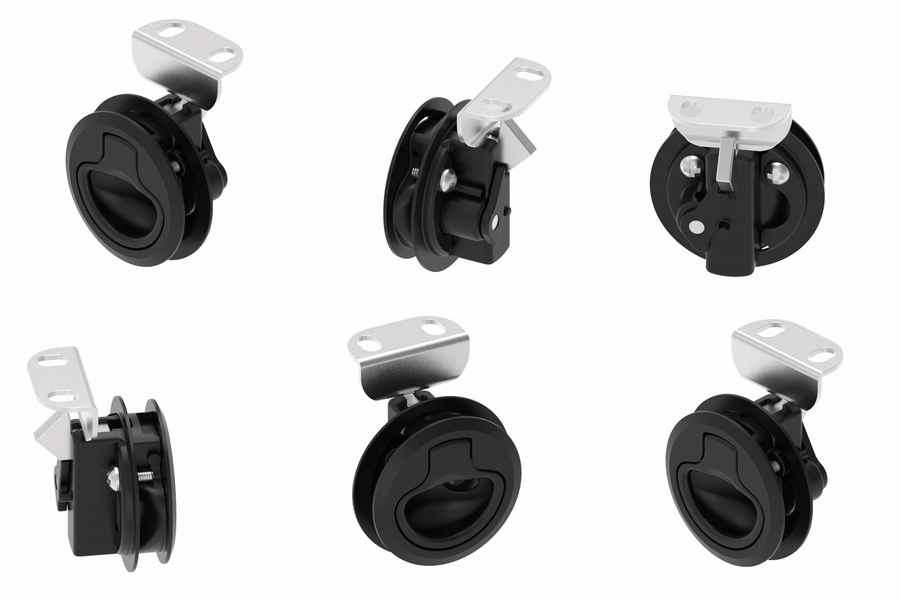
Operating force needs to be checked against realistic hand or gloved operation, since higher compression travel generally requires more closing effort. Panel deformation is a genuine risk if the mounting structure is not rigid enough to resist the compression load, and over-compression can crush a gasket permanently, reducing its sealing performance over repeated cycles. For general engineering guidance on selecting this latch family, our own engineering guide to choosing compression latches for outdoor enclosures covers travel, force and gasket selection in more detail. It is also worth noting that a compression latch does not independently establish the water-ingress rating of the complete hatch; that rating depends on the gasket, panel flatness, frame design and installation as a complete system.
When Should You Use a Slam or Rotary Latch?
A slam or rotary latch is appropriate when a door needs fast, push-to-close operation without manual compression, provided the striker and door remain properly aligned. These latches use a rotary jaw or spring-loaded catch that engages a striker automatically as the door closes, which is convenient for frequently accessed equipment doors and exterior storage compartments.
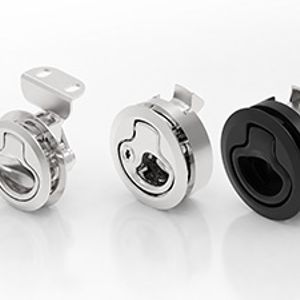
Some designs include primary and secondary engagement positions, giving a partial catch if the door is not fully closed before it seats completely. Remote actuation through a cable or rod linkage is common where the latch position is not easily reachable, such as on large storage lids or engine-room panels. Vibration and shock resistance depend on jaw preload and spring design, and both should be checked against the expected sea state or equipment vibration. It is important that the striker is never used to force a severely misaligned door into position — persistent misalignment points to a hinge, frame or panel problem that should be corrected rather than compensated for by the latch.
When Should You Use a Cam, Draw or Cabinet Latch?
Cam, draw and cabinet latches suit lighter, lower-exposure closures — service panels, adjustable covers and protected interior storage — rather than direct saltwater areas. Cam latches are a practical choice for service panels, electrical cabinets and lighter hatches where a rotating cam engaging behind a frame provides adequate retention without requiring high compression. Draw latches offer a visible, adjustable pull-down closure that is useful where slight panel movement or thickness variation needs to be accommodated, though the exposed mechanism can accumulate salt if not protected.
Cabinet latches, including push-button and paddle designs, are generally intended for protected interior storage rather than exposed exterior use. Interior cabinet hardware should not automatically be assumed suitable for exposed saltwater areas simply because it is described as marine-styled; its sealing and corrosion performance is usually designed around cabin humidity rather than direct spray. Door weight, access frequency, vibration levels and whether locking is required all influence which of these three families is the right starting point.
Which Materials Are Suitable for Marine Latches?
No single material suits every marine latch component — the correct choice depends on the exposure zone, the load path and how each part interacts with the others in the assembly.
Material | Main advantage | Main limitation | Suitable starting point |
316 stainless steel | Better chloride resistance | Higher cost and localized-corrosion risk | Exposed marine and coastal equipment |
304 stainless steel | Strength and general corrosion resistance | Lower chloride resistance | Sheltered or interior areas |
Brass or bronze | Marine corrosion resistance | Weight, cost and compatibility | Interior or specialized hardware |
Aluminum | Low weight | Wear and galvanic-corrosion risk | Lightweight assemblies |
Engineering plastic | Insulation and corrosion resistance | Load, creep, UV and temperature limits | Light-duty protected applications |
When Should You Choose 316 Instead of 304 Stainless Steel?
316 stainless steel is generally the more appropriate starting point for direct salt spray and coastal exposure because its molybdenum content improves resistance to chloride attack, while 304 may still suit sheltered or lower-salt areas. The added molybdenum in 316 slows the initiation of pitting and crevice corrosion compared with 304, which is why it is the more common recommendation for latches exposed to direct spray or splash-zone conditions.
That said, 304 remains a reasonable choice for interior cabinets, cabin hardware or equipment kept away from direct salt contact, where its strength and general corrosion resistance are usually sufficient. Neither grade is immune to attack: pitting and crevice corrosion can still occur on 316 components if surface contamination from cutting fluids, iron particles or welding residue is left in place, or if the latch geometry traps water rather than draining it. For a more detailed side-by-side comparison, see this detailed comparison of 316 vs 304 stainless steel for saltwater corrosion resistance. We recommend confirming base-grade and component-level material certificates before specifying 316 for exposed assemblies, since a housing marked "stainless" does not guarantee that every internal pin, spring or fastener shares the same grade. Welded components also need proper post-weld cleanup and passivation to restore corrosion resistance at the heat-affected zone.
When Are Brass, Bronze, Aluminum or Plastics Appropriate?
Brass, bronze, aluminum and engineering plastics each have a valid but narrower role in marine latches, limited by weight, galvanic compatibility, wear or environmental exposure. Brass and bronze have a long history in marine hardware due to their inherent corrosion resistance in seawater, but their added weight, cost and the need to check compatibility with adjoining metals limit their use to selected fittings rather than every latch component.
Aluminum is attractive for lightweight latch bodies or brackets, particularly on smaller craft, but thread wear and its position in the galvanic series relative to stainless steel need to be considered carefully, since direct stainless-to-aluminum contact in a wet environment is a common source of corrosion problems. Engineering plastics offer useful electrical insulation and inherent corrosion resistance for light-duty applications such as interior latch handles or bushings, but creep under sustained load, UV degradation, temperature limits and impact resistance all need to be checked against the specific application. In every case, raw-material data sheets describe the behavior of a coupon in a lab, not the behavior of a complete assembled latch under real mounting stress, vibration and drainage conditions — which is why sample testing on the actual latch remains necessary.
How Do Finishes and Dissimilar Metals Affect Marine Latch Durability?
Surface treatment and material pairing determine whether a correctly specified base material actually performs as expected once it is installed, fastened and exposed to a real marine environment.
Which Surface Treatments Are Useful for Stainless Steel?
Passivation, mechanical polishing and electropolishing improve corrosion resistance by removing free-iron contamination and creating a smoother, more cleanable surface. Passivation dissolves embedded iron particles left over from machining or fabrication, allowing the chromium oxide layer to form properly. Mechanical polishing and electropolishing further reduce surface roughness, which limits the number of microscopic sites where chloride and moisture can accumulate and makes the latch easier to rinse and clean.
Post-machining and post-welding surfaces need particular attention, since heat-affected zones and cutting residues are common starting points for localized corrosion if left untreated. Installation damage, such as scratches from tools or fasteners driven at an angle, can also compromise an otherwise well-finished surface. None of these treatments compensate for an unsuitable base grade — passivating a lower-grade alloy will not give it the chloride resistance of a higher grade.
When Are Plated or Coated Latches Acceptable?
Plated or coated latches are acceptable mainly in protected or interior applications where coating damage at edges, threads or moving contacts is unlikely to occur. Zinc plating, chrome plating and powder coating can provide adequate protection for latches used indoors or in sheltered locations, and they are often more economical than stainless steel for lower-exposure hardware.
The risk is concentrated at edges, drilled holes, thread roots and any point where two coated surfaces move against each other, such as a cam rotating against a keeper. Repeated contact wears through the coating at these points, and once the coating is breached, corrosion can proceed underneath the intact surrounding film — a condition known as underfilm corrosion that is often worse than corrosion on an untreated surface because it is hidden from view. A shiny or well-painted finish does not by itself prove what substrate material is underneath or how the latch will perform once the coating is damaged.
How Should Galvanic Corrosion Be Controlled?
Galvanic corrosion is controlled by treating the latch, fasteners, door panel and mounting bracket as a single material system rather than evaluating each part in isolation. When two dissimilar metals are in contact and an electrolyte such as saltwater bridges them, the metal with the lower electrochemical potential corrodes preferentially. This is a particular concern where stainless steel latches are fastened directly to aluminum doors or brackets, since the area ratio between the two metals affects how fast the aluminum is attacked.
Isolation washers, nylon bushings or compatible barrier coatings between dissimilar metals reduce direct electrical contact. Fastener selection should match or be compatible with the panel material rather than being chosen for stainless steel alone. Sealants that exclude water at the joint, along with drainage paths that prevent standing saltwater, both reduce the time the electrolyte is present. Where electrical grounding or bonding requirements apply to the vessel, these need to be confirmed separately, since bonding systems interact with galvanic behavior in ways that a latch specification alone cannot address.
Where Are Marine Latches Used in Industrial Applications?
A single vessel or offshore installation typically requires several different latch types because deck, splash-zone, sheltered exterior and interior locations each present a different combination of load, sealing and corrosion demands.
Application | Recommended starting point | Main engineering concern |
Deck hatch | Flush compression latch | Water, gasket compression and low projection |
Engine-room access | Compression or rotary latch | Heat, vibration and emergency access |
Exterior storage compartment | Slam, rotary or compression latch | Salt spray, impact and rattle |
Interior cabinet | Push-button, cam or cabinet latch | Retention during vessel movement |
Electrical enclosure | Sealed cam or compression latch | Corrosion, sealing and grounding |
Offshore equipment cabinet | Heavy-duty compression or rotary latch | Wind, salt, vibration and maintenance |
Marine transport equipment | Rotary or multi-point system | Shock, door flex and alignment |
It is common for one vessel or offshore platform to use several latch families side by side, since a deck hatch, an engine-room door and an interior electronics cabinet have almost nothing in common in terms of exposure. Latch selection needs to begin with the precise installation position rather than a general assumption that "marine" hardware is interchangeable across all of these locations. Safety-related doors, such as engine-room access or escape routes, may also require system-level and regulatory evaluation beyond the latch itself, since a single hardware component cannot establish compliance for the complete door assembly.
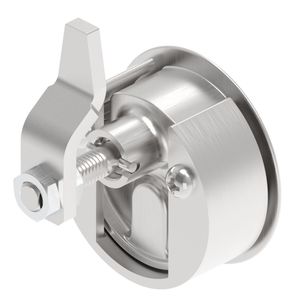
On one offshore equipment cabinet project, the original concern was fastener corrosion and inconsistent sealing at an exterior access door exposed to regular salt spray. We reviewed the latch type against the splash-zone exposure, checked the compatibility between the stainless latch components and the aluminum door panel, and worked through an isolation strategy for the mounting fasteners before validating a sample latch on the actual door assembly rather than relying on material data sheets alone.
Which Engineering Criteria Determine the Correct Marine Latch?
The correct marine latch is determined by matching door geometry, load, sealing requirements and access conditions — not by selecting a mechanism or material first and adjusting the installation afterward. Door or hatch dimensions and panel rigidity set the load the latch and its mounting structure must handle, while hinge position affects how evenly that load is distributed across the latch points. Static retention load, shock and vibration levels, and the number of latch points required all follow from the size and use of the door.
Grip range and cam, keeper or striker geometry need to match actual installed clearances rather than nominal drawing dimensions, since panel tolerances and gasket thickness both affect the real gap the latch must close. Opening frequency and whether operators will be wearing gloves influence handle and actuator design, and locking requirements determine whether a keyed, padlockable or tool-operated latch is needed. Flush or projecting installation affects both sealing and physical protection from impact, and drainage and maintenance access should be confirmed at the same stage rather than left until after installation.
How Do Sealing and Door Movement Affect Latch Selection?
Sealing performance depends as much on hull flex, hinge sag and panel rigidity as on the latch itself, so door movement must be assessed before compression or grip range is finalized. A vessel's structure flexes under load, and hatches or doors mounted across structural joints can move slightly relative to their frames over time. Hinge sag on heavier doors gradually changes alignment, and flexible panels can distort under wind or wave loading in ways that a rigid test bench does not reveal.
Seal preload needs to account for this movement, and closing or release force should remain reasonable even as gaskets compress and wear. Multi-point latching helps distribute load more evenly across a large door, reducing the risk of unequal load concentrating at a single point. Striker or keeper adjustment should be designed into the installation from the start, since a latch is not intended to correct major panel distortion or hinge misalignment — persistent difficulty closing a door usually indicates a structural issue rather than a latch problem.
How Should Security and Emergency Access Be Balanced?
Latching, locking and emergency release should be treated as three separate functions, each evaluated against how quickly and reliably the compartment must be opened under normal and emergency conditions. Keyed access, tool-operated access and padlockable latches all serve security purposes, but they add time to opening a compartment, which matters for engine-room access, escape hatches or other time-critical locations.
Internal release mechanisms allow occupants to exit even if a latch is locked from outside, and this becomes particularly important on escape hatches and restricted compartments where emergency operation cannot depend on someone finding a key. Applicable rules for locking and emergency access vary according to vessel type, installation position and destination market, and these should be confirmed against the relevant regulatory requirements for the specific project rather than assumed from general practice.
How Should Marine Latches Be Tested and Maintained?
Marine latches should be tested against the specific loads, cycles and exposure conditions of their intended installation, and maintained through routine inspection rather than assumed long-term performance.
Which Tests Should Be Specified?
The relevant tests depend on the application but typically include static retention, operating-cycle, impact, vibration, corrosion and gasket-compression evaluation, each defined against a documented acceptance criterion. Static retention testing confirms the latch holds its rated load without deformation, while operating-cycle testing checks that the mechanism continues to function smoothly after repeated use. Slam or impact testing and vibration testing simulate door closure forces and sea-state motion, and corrosion testing through salt spray or cyclic corrosion exposure, combined with UV and temperature exposure where relevant, evaluates material and finish behavior over a defined duration.
Every test should identify the part number and revision, material and finish, mounting method, mating hardware, exposure conditions, duration, acceptance criteria and the required operation after testing, so that results can be compared meaningfully between suppliers or design revisions. Laboratory salt-spray hours are useful for comparison and quality control between similar samples, but they do not translate directly into service years at sea, since real exposure involves cycles of wetting, drying, temperature change and mechanical wear that a constant-humidity chamber does not replicate.
What Maintenance Prevents Premature Failure?
Regular freshwater rinsing, fastener inspection and gasket checks prevent most premature marine-latch failures by removing salt before it accelerates corrosion at joints and contact points. Rinsing removes accumulated salt from crevices and drainage channels before it concentrates during drying cycles, and drainage paths should be checked periodically to confirm they remain clear.
Fasteners, cams, jaws, keepers and strikers should be inspected for wear, looseness or early corrosion signs, and gaskets checked for compression set, cracking or loss of resilience. Lubrication should use products confirmed compatible with the specific plastics, coatings and seals present in the assembly, since a universal lubricant or cleaner can soften plastics or strip protective coatings without warning. Establishing clear corrosion-monitoring and replacement criteria in advance helps avoid unplanned failures during service.
How Can You Select the Right Marine Latch?
Selecting the right marine latch means working through the door function, exposure zone, sealing and locking requirements, materials, finishes and validation testing as one connected process rather than choosing a product by material label alone. A practical sequence starts by identifying the door, hatch or cabinet function, then defining the exact marine exposure zone and the retention, sealing and locking requirements that follow from it.
From there, select the latch mechanism, confirm door geometry, grip and engagement, and choose materials for every major component rather than the visible housing alone. Review finishes and dissimilar-metal contact, confirm fasteners, seals and drainage, and define application-specific tests before testing samples on the actual assembly. Finally, approve controlled drawings and material specifications and establish maintenance requirements before the design is finalized. The best marine latch is not simply the product labeled "316 stainless steel." It is a complete, validated combination of latch mechanism, materials, surface condition, mating metals, sealing, installation geometry and operating environment.
Need a Marine Latch for a Hatch, Door or Offshore Enclosure?
At ForndLock, we can review your application, salt exposure, latch function, materials, gasket requirements, door geometry and testing needs. Contact us for marine latch selection, material and finish evaluation, compression and sealing review, cam, keeper or striker matching, custom latch development, drawing evaluation and sample testing support.
Email: [email protected]