
How to Choose Compression Latches for Outdoor Enclosures: An Engineering Guide
Solving Outdoor Enclosure Sealing Challenges
Designing and deploying outdoor equipment cabinets comes with a complicated set of mechanical challenges, where one weak point can lead to total system failure. When an outdoor cabinet is not properly sealed, the sensitive electronics inside are immediately exposed to wind-driven rain, tiny dust particles, and extreme temperature swings. Moisture getting inside almost always causes fast corrosion, short circuits, and complete equipment failure, which leads to large warranty claims and unacceptable repair costs in the field. To prevent these failures, engineers need to look past basic locking mechanisms and focus on precise sealing performance. This article serves as a guide to how to choose compression latches for outdoor enclosures, giving engineers, procurement teams, and mechanical designers a clear framework for evaluating sealing requirements, judging material durability, and working through the mechanical factors involved when choosing advanced access hardware for tough environments.
Based on ForndLock's manufacturing experience in industrial locks, latches, hinges, handles, and access hardware, we know that choosing the right hardware is a critical engineering decision that shapes the entire lifespan of the enclosure. In our experience as an industrial locking solutions manufacturer, we have seen many projects fail simply because the latching mechanism could not keep enough pressure on the door gasket over time. A reliable compression latch must do more than keep a door shut; it must actively pull the door panel against the frame, compressing the environmental gasket to a precise level to form a solid barrier against the elements. Through thorough testing and hands-on engineering, we have built a complete approach to hardware selection that ensures long-term stability in the harshest outdoor conditions.
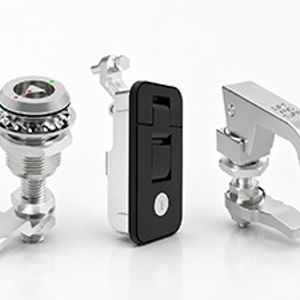
Key Selection Criteria for Latches
Understanding how to choose compression latches for outdoor enclosures starts with analyzing the basic mechanical requirements of your specific cabinet design. The selection process must be driven by real data and environmental testing standards rather than simple size compatibility. The main job of a compression latch is to turn rotational motion into a straight clamping force, which compresses a rubber-like gasket to seal the enclosure. If this force is miscalculated, the entire structural integrity of the cabinet is at risk.
Zinc Alloy Compression Lock MS609 Industrial Cabinet Plane Electronic Compression Latch
The first key measurement to consider is the required Ingress Protection or NEMA rating of the finished enclosure. Outdoor industrial cabinets typically need an IP65, IP67, or NEMA 4X rating to hold up in harsh weather. To maintain these ratings, the compression latch itself must be sealed, usually through built-in O-rings on the internal shaft and a weatherproof gasket under the mounting flange. On top of that, the latch must provide enough clamping force to compress the door gasket by the percentage specified by the manufacturer. For example, sponge EPDM gaskets generally need a compression rate of twenty to thirty percent to achieve a watertight seal, while solid rubber gaskets require significantly more force for a smaller compression percentage. If the latch cannot produce or hold this specific force, the enclosure will eventually fail water ingress testing.
Just as important is accurately calculating the grip range and accounting for panel thickness. The grip range is defined as the exact distance from the front face of the door panel to the engagement surface on the internal cabinet frame. Calculating this dimension requires precision and a solid understanding of manufacturing tolerances.
To determine the correct grip range for your enclosure, follow these steps in order:
Measure the total thickness of the outer door panel, accounting for any localized reinforcement brackets or powder coating layers that might add tiny fractions of a millimeter to the overall depth.
Determine the uncompressed thickness of your chosen environmental gasket and calculate its final compressed thickness based on the target IP rating requirements.
Measure the distance from the mounting surface of the door to the exact point on the internal frame where the latch cam will make contact.
Add the compressed gasket thickness and the door panel thickness to the frame distance to establish the baseline grip range.
Select an adjustable compression latch that offers a grip range spanning at least two millimeters above and below your baseline calculation to account for sheet metal fabrication tolerances and future gasket settling.
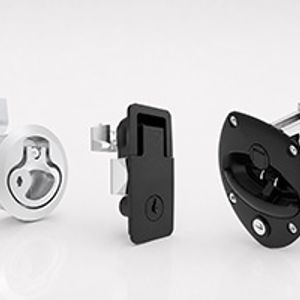
Below is an engineering reference table outlining typical outdoor enclosure applications, their baseline sealing requirements, and our recommended material specifications for the latching hardware.
Enclosure Application | Target IP / NEMA Rating | Primary Environmental Threat | Recommended Latch Material |
Telecommunications | IP65 / NEMA 4 | Wind-driven rain, dust, heat | Zinc Alloy (Powder Coated) or 304 SS |
Marine and Coastal | IP67 / NEMA 4X | Salt spray, galvanic corrosion | SUS316 Stainless Steel |
Railway and Transit | IP66 / NEMA 4 | High vibration, shock, dust | 304 SS with Anti-Vibration Detent |
Power Distribution | IP65 / NEMA 3R | UV degradation, rain, tampering | Polyamide (Glass-Filled) or 304 SS |
Matching Latches to Outdoor Environments
Choosing hardware for outdoor use means going beyond generic weatherproof labels and looking closely at the specific environment where the enclosure will actually be placed. Environmental stressors vary greatly across different locations, and a latch that works perfectly in a mild urban setting may fail within weeks in a coastal or desert environment. We group these harsh environments into three distinct profiles, each requiring specific material and mechanical choices.
ForndLock Compression Latch Usage Guide
Coastal and Marine Environments
Enclosures placed near coastlines, on offshore platforms, or in marine shipping yards face constant exposure to heavily oxygenated salt spray. This environment strongly promotes rapid galvanic corrosion and chloride ion attack. In our experience, standard zinc alloy latches, even those protected by high-quality powder coating or electrophoretic deposition, are highly vulnerable in these settings. A tiny scratch on the coating during installation or routine use exposes the underlying zinc, leading to rapid blistering and structural breakdown of the latch body. For marine applications, we strongly recommend specifying SUS316 stainless steel compression latches. The addition of molybdenum in the 316-grade alloy provides excellent resistance to pitting and crevice corrosion, ensuring the latch mechanism stays functional and maintains gasket compression over a lifespan of many decades, ultimately saving significant long-term maintenance costs.
Desert and High-UV Applications
Deploying cabinets in dry, desert regions introduces a double threat of extreme daily temperature swings and constant exposure to fine, abrasive sand. During the day, internal cabinet temperatures can rise dramatically, creating pressure differences that try to pull outside air and microscopic dust particles through any weak point in the gasket seal. On top of that, intense ultraviolet radiation quickly breaks down standard rubber and plastic components. Compression latches in these environments must feature highly UV-resistant O-rings, typically made from fluorocarbon or specialized silicone blends, to prevent the internal shaft seals from cracking and failing. The internal mechanisms must also be tightly sealed to keep fine sand from getting inside and acting as an abrasive material that jams the rotating parts of the latch.
High-Vibration Applications
Industrial equipment mounted on heavy machinery, railway vehicles, or near large power generators experiences constant low-frequency and high-frequency vibrations. In these situations, the main threat is not just weather, but the mechanical loosening of the latching mechanism. Continuous vibration can cause a standard latch cam to slowly rotate out of its locked position, gradually reducing the clamping force on the gasket until the environmental seal is broken. For high-vibration environments, engineers must specify compression latches equipped with built-in anti-vibration detent mechanisms. These specialized designs use internal spring-loaded ball bearings or friction-based Nyloc nuts that physically lock the shaft and cam in place, ensuring that the critical compression force stays constant regardless of the surrounding mechanical shock and vibration.
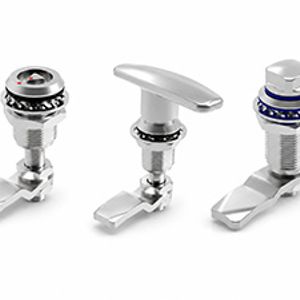
Installation and Torque Adjustment Tips
Following proper compression latch torque adjustment and installation tips is just as important as selecting the right hardware during the initial design phase. Even the most carefully engineered stainless steel latch will fail to provide an adequate environmental seal if it is installed incorrectly or if the clamping force is improperly set. The installation phase is where engineering theory meets real-world practice, and strict attention to torque dynamics is required to ensure the long-term integrity of the enclosure.

Understanding the physics of gasket compression is the foundation of proper installation. Elastomeric gaskets have a property known as compression set, which is the material's ability to remember its original shape and push back against the latching force. If a technician over-tightens the latch by applying too much torque to the cam, the gasket will be crushed beyond its elastic limit. This over-compression destroys the material's memory, causing permanent deformation. When the door is later opened and closed, the permanently flattened gasket will no longer fill the gap between the door and the frame, leading to unavoidable water leaks. On the other hand, under-tightening the latch fails to achieve the minimum compression ratio needed to block wind-driven rain, immediately canceling out the intended IP rating of the cabinet.
To achieve the right balance, we recommend following a strict, step-by-step installation process.
First, make sure the door panel cutout is completely deburred and free of any powder coating buildup that could prevent the latch flange from sitting flush against the metal surface.
Second, insert the latch housing through the panel, making sure that the external weatherproof gasket or O-ring is perfectly centered and free of any twists or pinches.
Third, secure the mounting nut or bracket on the inside of the door, tightening it only to the manufacturer-specified baseline torque to avoid warping the outer sheet metal.
Fourth, attach the cam to the threaded internal shaft, positioning it so that it lines up perfectly with the frame engagement point when the latch handle is in the closed position.
Fifth, use a calibrated torque wrench or a precision depth gauge to adjust the cam's position on the shaft. You must adjust the cam depth in small increments until the door closes with a firm, positive engagement that compresses the gasket by the exact percentage specified by the gasket manufacturer.
> Engineering Warning: Never use the compression latch as a tool to force a badly warped door closed. The latch is designed to compress the gasket evenly, not to fix structural misalignments in the sheet metal chassis. Applying excessive force to overcome a warped frame will result in premature mechanical failure of the internal latch spindle.
Mastering compression latch torque adjustment and installation tips also applies to the ongoing life of the equipment. We strongly advise setting up a standard maintenance protocol where field technicians perform periodic torque checks during routine enclosure inspections. Over time, environmental gaskets may experience minor settling or thermal shrinkage, slightly reducing the initial clamping force. By including a simple torque verification step in annual maintenance schedules, technicians can make small adjustments to the cam depth, restoring optimal pressure and extending the useful life of both the gasket and the internal electronics.
Engineering Case Study: Telecom Enclosures
To show how important hardware selection really is, we can look at a recent project involving a Saudi Arabian telecommunications enclosure manufacturer. This client was tasked with deploying a large network of outdoor 5G distribution cabinets across a desert region known for extreme heat and frequent sandstorms. Within the first six months of deployment, the client began experiencing an unacceptable number of field failures.
After analyzing the damaged cabinets, our engineering team found multiple failure points directly related to their previous latching hardware. The client had originally specified standard zinc-alloy compression latches with basic rubber O-rings. The extreme desert heat and intense UV radiation had caused the standard rubber seals to dry out and crack. As a result, microscopic desert sand worked its way into the internal latch mechanisms, binding the rotating shafts and making it nearly impossible for field technicians to open the doors without damaging the handles. On top of that, the continuous vibration generated by the heavy-duty internal cooling fans was slowly loosening the torque settings on the cams, reducing the gasket compression and causing the cabinets to drop below their required IP65 rating.
The ForndLock solution involved a complete redesign of their access hardware approach. We recommended switching to a heavy-duty, adjustable compression latch made entirely from 316 stainless steel to stand up to the abrasive environment. We upgraded all internal sealing components to high-temperature, UV-stabilized fluorocarbon O-rings to ensure the internal mechanisms stayed completely protected from fine sand. To address the cooling fan vibrations, we integrated a specialized anti-vibration detent mechanism that securely locked the cam into its compressed position, regardless of continuous harmonic resonance. We also provided the client's assembly line with custom torque specifications and installation jigs to ensure complete consistency across their production floor.
ForndLock Railway Compression Lock Latch
The results of this engineering solution were immediate and measurable. The newly equipped enclosures successfully passed rigorous 500-hour accelerated salt spray and dust chamber testing protocols without a single breach. Most importantly, the client achieved a sustained IP65 rating across their entire deployed network, completely eliminating water and dust ingress issues and reducing their hardware-related field maintenance call-outs to zero.
Partner with an Expert Manufacturer
Treating latch selection as an afterthought is a serious mistake in modern industrial design. The access hardware you choose is the primary barrier between the internal electronics of your enclosure and the harsh realities of the outside world. Precise engineering, exact material specification, and careful torque management are non-negotiable elements for any successful outdoor deployment. By integrating high-quality, properly calibrated locking mechanisms, you protect your internal systems, guard your brand reputation, and significantly reduce long-term maintenance liabilities.
We invite buyers, OEM mechanical designers, and procurement managers to work closely with our engineering team during your next enclosure development project. Whether you are dealing with extreme coastal corrosion, heavy industrial vibration, or complex custom grip ranges, our manufacturing capabilities are built to solve your most demanding access hardware challenges. We provide comprehensive technical support, from initial CAD drawing analysis to the rapid prototyping of custom hardware solutions tailored to your exact operational requirements.
To discuss your specific project needs, request detailed technical drawings, or arrange for customized physical samples for your testing laboratory, please contact our engineering support team directly at [email protected].