Industrial Keyed Cam Locks Types, Applications and Selection Guide
Industrial keyed cam locks combine a rotating cam mechanism with key-controlled operation to secure cabinet doors, access panels and industrial enclosures. At ForndLock, we see many specification teams treat the lock cylinder and the key as the entire decision, when the mechanical side of the lock actually determines whether the door closes correctly at all. Grip range, cam geometry, the relationship between the door and the frame, keying strategy, material and installation environment all influence how a keyed cam lock performs once it is mounted. This guide walks through how industrial keyed cam locks work, the types available, where they are used, and the engineering factors that determine whether a given configuration is the right fit for a specific cabinet or enclosure.
What Are Industrial Keyed Cam Locks?
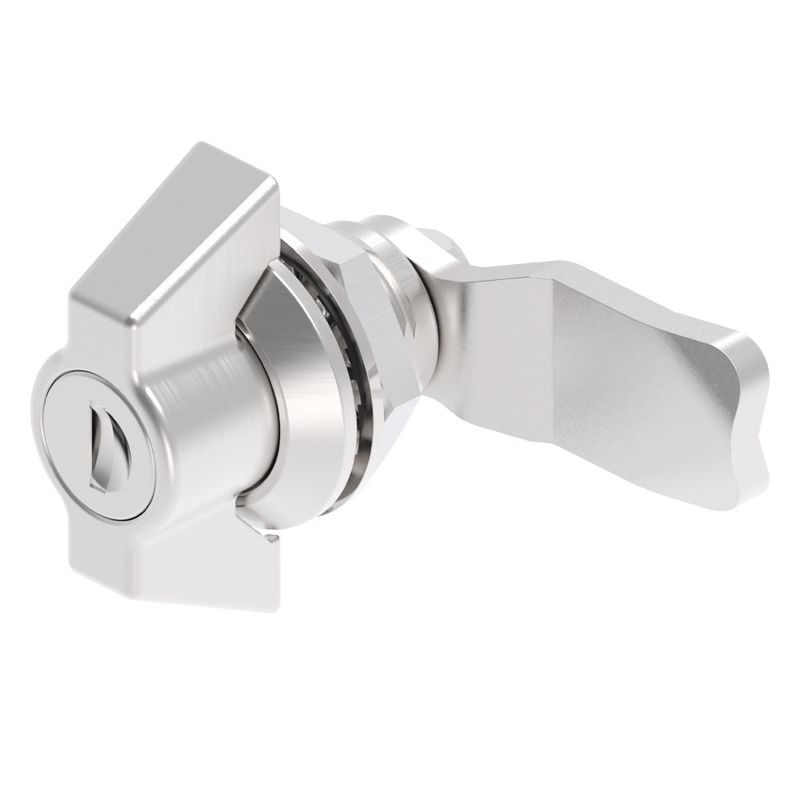
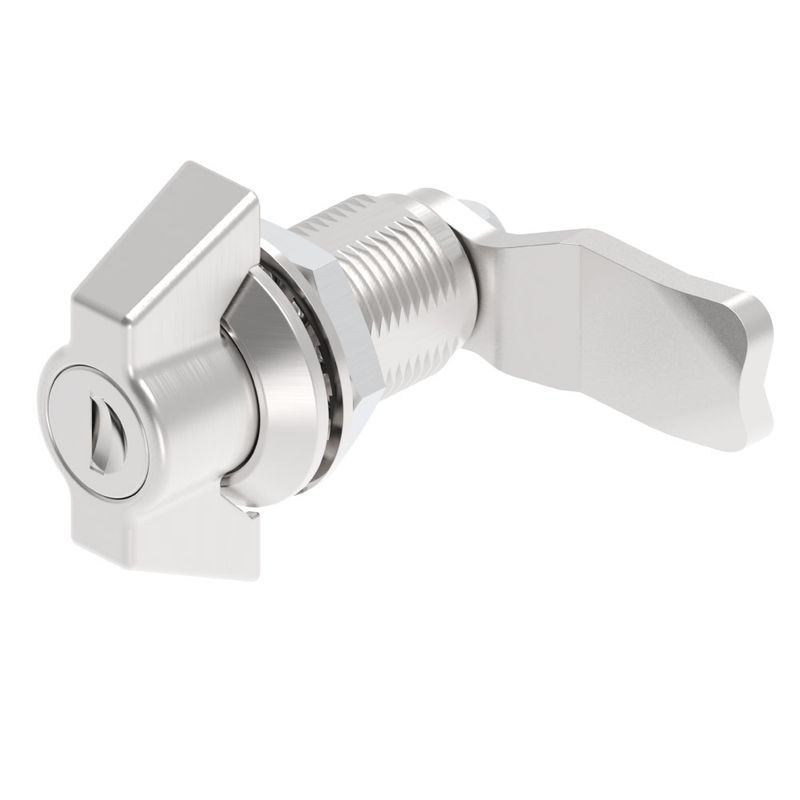
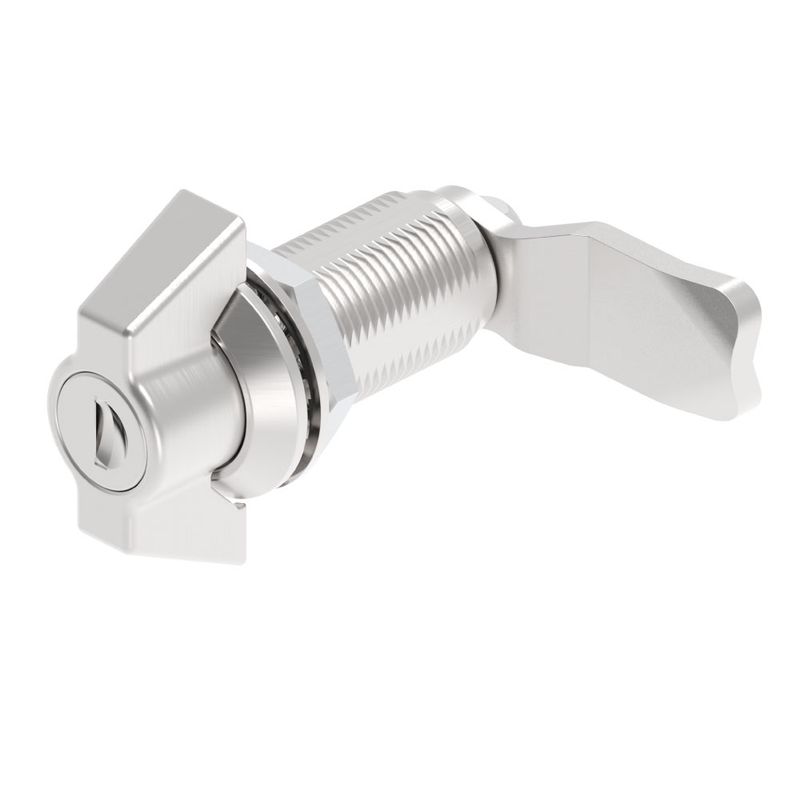
Industrial keyed cam locks are mechanical locking devices that use a key-operated cylinder or plug to rotate a cam into or out of engagement with a cabinet frame, enclosure edge or keeper. The lock body, or housing, holds the cylinder or plug in place and provides the mounting interface for the cabinet panel. A shaft connects the cylinder to the cam, so that turning the key rotates the shaft and, with it, the cam itself. Most designs also include a mounting nut, a key, and in some cases a gasket or seal depending on the enclosure requirement.
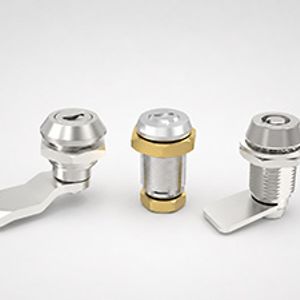
A keyed cam lock actually performs two separate functions, and it helps to think of them separately. The cam provides mechanical retention, physically holding the door against the frame once it rotates into position. The key-operated cylinder provides access control, determining who is able to turn that cam in the first place. Describing a lock as "keyed" only addresses the second function; it says nothing about whether the cam, the grip and the frame are matched correctly. The overall access control and mechanical retention performance of a keyed cabinet lock depends on the lock body, the key system, the cam engagement and the door structure working together, not on the presence of a key cylinder alone.
How Do Keyed Cam Locks Work?
A keyed cam lock works by using the correct key to rotate an internal cylinder, which turns a shaft and cam into or out of engagement with the frame or keeper. The sequence is straightforward: the correct key is inserted into the cylinder or plug, the key turns the cylinder, the shaft rotates with it, and the attached cam rotates along with the shaft. As the cam rotates, it moves behind the cabinet frame or keeper, and the door is retained in the locked position. Reversing the key rotation disengages the cam and allows the door to open.
How Does Cam Engagement Work?
Correct cam engagement depends on cam length, cam offset, frame location and grip working together. If any one of these variables is mismatched, the cam may rotate correctly but fail to reach the frame, or it may contact the frame at the wrong angle. A cam that is too short leaves a gap that allows the door to move; a cam that is too long can bind against the frame or prevent the door from closing flush. Engagement should always be checked as a system rather than confirmed by lock body match alone.
What Does Key-Controlled Operation Mean?
Key-controlled operation determines who can operate the cylinder, but the key itself cannot compensate for incorrect grip, the wrong cam, a weak panel or poor alignment. A correctly cut key will always turn the cylinder it matches, regardless of whether the mechanical side of the installation is correct. In our experience, this is one of the more common sources of confusion during commissioning: the key turns and the cylinder rotates, yet the door remains loose because the cam is not reaching the frame. Access control and mechanical retention need to be verified independently.
How Does Rotation Affect Operation?
Many industrial keyed cam locks use quarter-turn operation, but rotation angle, rotation direction and key removal position vary by product and must be confirmed individually. Some cylinders allow key removal only in the locked position, others allow removal in both the locked and unlocked positions, and rotation may run clockwise or counterclockwise depending on the cylinder and cam configuration. Assuming that all keyed cam locks behave the same way in this respect is a common specification error.
What Types of Industrial Keyed Cam Locks Exist?
Industrial keyed cam locks are commonly available as standard, quarter-turn, tubular and compression types, each suited to a different access-control and installation requirement. The types share the same rotating-cam principle, but they differ in cylinder interface, operating speed and whether they provide any sealing or compression function.
What Are Standard Keyed Cam Locks?
Standard keyed cam locks use a simple rotating cam in a compact, key-controlled design suited to electrical cabinets, small enclosures and access panels.

They are the most common configuration used where the primary requirement is restricted access with straightforward mechanical retention, rather than sealing or high closing force.
What Are Quarter-Turn Keyed Cam Locks?
Quarter-turn keyed cam locks provide fast, compact operation, but cam position, key removal position and rotation direction must still be confirmed for each application.

The quarter-turn action makes them convenient for repeated maintenance access, but fast operation does not remove the need to check that the cam geometry and rotation direction match the door orientation.
What Are Tubular Keyed Cam Locks?
Tubular keyed cam locks use a tubular key and cylinder interface rather than a flat key, and whether this configuration is suitable depends on the project's access-control requirements rather than an automatic security advantage.

The tubular interface is simply a different key and cylinder format, useful where a project specifically calls for that credential type. It should be evaluated against the access-control policy for the cabinet rather than assumed to be the stronger option in every case.
What Are Compression Keyed Cam Locks?
Compression keyed cam locks combine key-controlled rotation with an axial compression movement, making them suitable for gasketed doors and vibration-sensitive equipment.
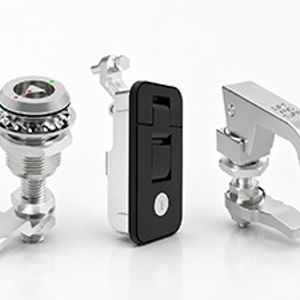
As the key turns, the cam not only rotates into engagement but also draws the door tighter against a gasket or seal. Not all keyed cam locks provide this compression function, so it needs to be specified explicitly when a gasketed or vibration-exposed enclosure is involved.
Why Do Cam Configurations Matter?
Straight, offset, bent and custom cams determine how the lock engages the frame, and many industrial projects actually need a customized cam rather than an entirely new lock body. The lock body and cylinder may already be correct for a project, while the cam shape or offset is the only variable that needs adjustment to fit the frame geometry. At ForndLock, our engineering team frequently reviews drawings where a cam customization, rather than a completely different lock, turns out to be the more direct solution.
Where Are Industrial Keyed Cam Locks Used?
Industrial keyed cam locks are commonly used on electrical cabinets, control cabinets, machinery access panels, telecom and outdoor cabinets, energy equipment and transportation equipment. Each application brings its own combination of access, environmental and mechanical requirements.
Why Use Keyed Locks on Electrical Cabinets?
Electrical cabinets typically require restricted maintenance access in a compact installation footprint, making key control, grip, cutout and cam engagement the primary selection factors. These panels are often accessed infrequently, so the priority is a reliable, compact lock rather than a high-frequency operating mechanism.
Why Use Keyed Locks on Control Cabinets?
Control cabinets are accessed repeatedly by technicians, so key management, ease of operation and lock replacement become the main practical considerations. Because these cabinets see more frequent servicing, the keying strategy and the ease of swapping a worn cylinder matter more than they might for a rarely opened enclosure.
Why Use Keyed Locks on Machinery Panels?
Machinery access panels need restricted service access with reliable panel retention, which depends heavily on vibration exposure, frame engagement and material selection. A panel that only needs to stay closed under static conditions has different requirements than one mounted on a vibrating machine frame.
Why Use Keyed Locks on Telecom Cabinets?
Telecom and outdoor cabinets require restricted access under outdoor exposure, so corrosion resistance, moisture protection and cylinder protection must be evaluated alongside material choice. Outdoor installations place additional demands on the cylinder and finish that indoor electrical cabinets typically do not face.
Why Use Keyed Locks on Energy Equipment?
Energy equipment requires controlled service access and equipment protection, which depends on the keying strategy, environmental conditions and door structure selected. These applications often combine restricted access requirements with demanding outdoor or industrial environments, so the keying plan and the enclosure design need to be reviewed together.
Why Use Keyed Locks on Transportation Equipment?
Transportation equipment requires service compartment access under vibration and space constraints, making mechanical retention, cam engagement and key management the central concerns. Compartment doors on vehicles and mobile equipment move and flex during operation, so cam engagement needs to hold reliably under continuous vibration rather than only under static conditions.
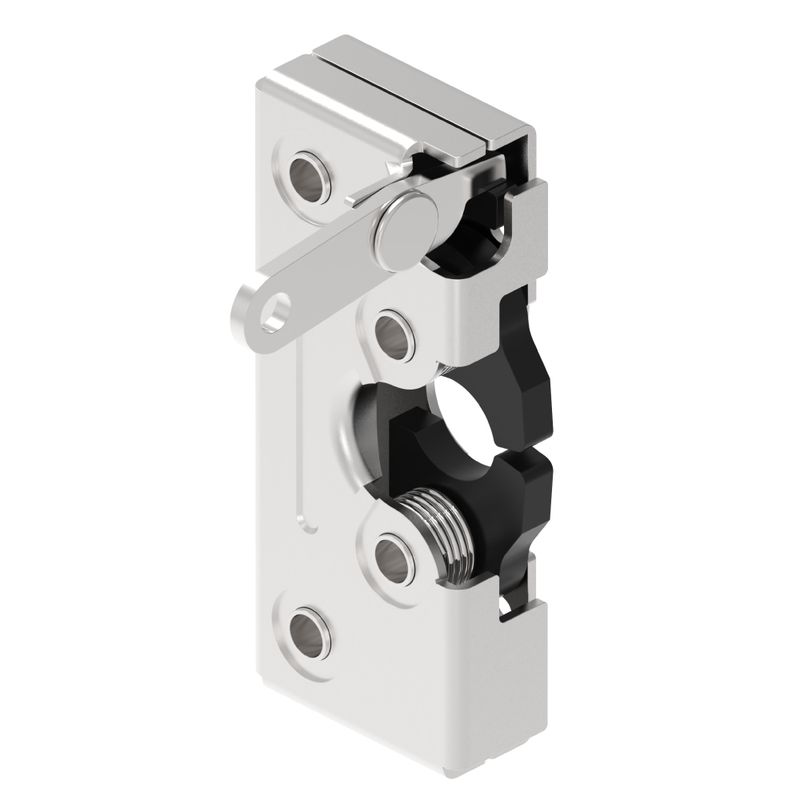
ForndLock Industrial Lock Series
How Should You Select the Right Keyed Cam Lock?
Selecting the right industrial keyed cam lock requires matching the access-control requirement with grip, cam geometry, rotation, material, environment and installation compatibility as a complete system. At ForndLock, we evaluate industrial keyed cam locks by considering the keying requirement together with grip, cam geometry, door structure and installation environment, rather than treating the key type as the only decision. The variables below cover the practical questions that come up on most cabinet and enclosure projects.
Which Keying Strategy Fits Your Project?
The keying strategy—keyed alike, keyed different, or master keying where supported by the lock system and project requirements—should match the maintenance workflow rather than a general security preference. A keyed alike configuration lets multiple locks share the same key, which suits multiple cabinets managed by the same maintenance team or applications where operational convenience matters most; the trade-off is that the key management scope grows as more cabinets share that key. A keyed different configuration gives each lock its own key, which suits projects needing individual equipment access or separate authorization, though it generally increases key management complexity. Where a project needs a master key arrangement, this should be confirmed against the specific lock system and project requirements rather than assumed to be available across every configuration.
How Much Grip Range Do You Need?
Grip range is not the same as panel thickness—it is also affected by frame position, gasket presence, door geometry and cam offset, and an incorrect grip can cause loose closure or prevent cam engagement. Two cabinets with identical panel thickness can require different grip values once frame position and gasket compression are taken into account. Selecting grip from panel thickness alone is a common source of loose doors and cams that never reach the frame.
How Do You Select Cam Geometry?
Correct cam length and offset ensure full frame engagement, proper clearance and smooth operation, and a replacement lock cannot be selected by matching the lock body alone. Straight cams, offset cams and custom cam shapes each engage the frame differently, so the cam needs to be confirmed against the actual frame location, not just against the previous lock's part number. When replacing an existing keyed cam lock, cam length, cam offset, rotation and grip all need to be checked, since a lock that fits the existing hole does not guarantee it will reproduce the original locking geometry.
How Do You Confirm Rotation Requirements?
Rotation direction, rotation angle and key removal position must be confirmed against door orientation and lock position, since these behaviors are not identical across all keyed cam lock products. A lock that rotates clockwise to lock on one door orientation may need to rotate counterclockwise on a mirrored installation, and key removal in the locked position only, versus both positions, affects how technicians actually use the cabinet day to day.
Which Material Suits Your Application?
Zinc alloy suits general indoor cabinet applications, stainless steel suits outdoor or corrosive environments, and steel is commonly used for cams, shafts and internal mechanical parts. Zinc alloy is a practical choice for general industrial cabinets and lock bodies with more complex geometry. Stainless steel is generally preferred where moisture, salt or chemical exposure is a factor. Steel components are common for cams, shafts and other internal parts where mechanical strength is the priority; the final choice should reflect the environment, corrosion exposure, mechanical load and surface treatment involved rather than a single default material.
How Does Environment Affect Lock Selection?
Moisture, dust, salt, chemicals and temperature exposure should be evaluated through sealing features, cylinder protection and gasket integration rather than assuming a keyed cam lock automatically provides a specific ingress protection rating. A keyed cam lock does not automatically achieve a defined ingress protection rating simply because it is described as industrial. Where higher environmental protection is required, it is worth reviewing sealing features, cylinder protection, gasket integration, or an alternative compression locking mechanism designed for that exposure.
How Does Vibration Affect Door Retention?
On machinery, transportation and mobile equipment, standard cam engagement may not be sufficient, and a compression latch or secondary retention should be evaluated when door movement risks loosening the lock. Continuous vibration can gradually work a standard cam lock loose even when the initial installation was correct, so cam engagement, door clearance and the potential need for compression should be reviewed specifically for moving equipment.
How Do You Check Cutout Compatibility?
Installation compatibility depends on cutout dimensions, lock body geometry, panel thickness, mounting nut, cam clearance and rotation space, and replacing an existing lock requires matching the cutout, grip and cam geometry together. A new lock that fits into an existing cutout is not automatically compatible with the original locking geometry; grip and cam configuration need to be checked separately from the hole diameter.
Keyed Alike or Keyed Different: Which Should You Choose?
The choice between keyed alike and keyed different should be based on access policy, number of cabinets, maintenance workflow and key management requirements rather than a simple "less secure vs. more secure" comparison. Both configurations use the same cam mechanism; the difference is entirely in how the key system is structured.
Factor | Keyed Alike | Keyed Different |
Number of keys required | Lower | Higher |
Maintenance convenience | Higher | Application dependent |
Individual access separation | Limited | Better |
Key management complexity | Lower | Higher |
Typical use | Multiple related cabinets | Individually controlled equipment |
In our experience, teams sometimes choose keyed alike cam locks purely for convenience without considering how many cabinets that single key will eventually open, which can create a wider access scope than intended. The better approach is to define the access policy and maintenance workflow first, then choose keyed alike cam locks, keyed different cam locks, or a mixed strategy across the site to match that policy.
What Are the Most Common Selection and Installation Mistakes?
Most keyed cam lock failures in the field trace back to a small set of avoidable selection or installation mistakes. The table below summarizes the ones we see most often and what they lead to.
Mistake | Potential Problem | Better Approach |
Selecting by key type only | Cam or grip mismatch goes unnoticed | Evaluate keying, grip and cam together |
Ignoring grip range | Loose closure or cam cannot engage | Confirm grip against frame and gasket, not just panel thickness |
Wrong cam length | Cam does not reach the frame, or binds | Match cam length to actual frame location |
Incorrect cam offset | Uneven engagement or door misalignment | Confirm offset against door and frame geometry |
Wrong rotation direction | Lock cannot be operated as intended | Confirm rotation direction for the specific installation |
Incorrect key removal requirement | Technicians cannot operate the cabinet as expected | Confirm locked/unlocked key removal before ordering |
Poor keying strategy | Excessive access scope or excess key inventory | Base keying decision on maintenance workflow |
Insufficient frame engagement | Door rattle or reduced retention | Verify engagement depth during installation |
Wrong material for outdoor exposure | Corrosion, seized cylinder | Match material to environmental exposure |
Assuming keyed means high security | Overreliance on the lock as sole protection | Treat the lock as one part of an access-control approach |
Replacing a lock without checking the original cutout | New lock fits the hole but not the locking geometry | Confirm cutout, grip and cam geometry together |
Using a basic cam lock where compression is needed | Gasket does not seal, seal degrades faster | Specify a compression latch for gasketed doors |
What Should You Know About Installation and Maintenance?
Correct installation and periodic inspection are what allow a keyed cam lock to keep performing as designed over time.
How Should a Keyed Cam Lock Be Installed?
Installation should confirm the cutout, seat the lock body securely, verify cylinder orientation, install the correct cam, and confirm frame engagement before the cabinet is put into service. After mounting, key rotation should be tested in both directions, the locked and unlocked positions should be verified, and key removal behavior should be checked against what the project specified.
What Should Be Checked During Maintenance?
Ongoing maintenance should check for mounting looseness, key operation, cylinder contamination, cam wear, corrosion and continued frame engagement. Door alignment is also worth checking periodically, since a shift in the door or frame can reduce cam engagement even when the lock itself is undamaged. We do not publish a fixed inspection interval, since the right frequency depends on the specific application, exposure and duty cycle.
How Should You Evaluate a Keyed Cam Lock Manufacturer?
A keyed cam lock manufacturer should be evaluated on drawing review capability, cam customization, keying support, material guidance, sample validation and production consistency, not on price alone.
Can the Manufacturer Review Drawings and Applications?
A capable manufacturer should be able to confirm lock configuration from a cabinet drawing, panel thickness, frame geometry, grip, cutout and access requirements. This review is what prevents a lock from being ordered on assumptions rather than on the actual installation geometry.
Does the Manufacturer Support Cam Customization?
Cam customization support should cover cam length, cam offset, cam shape and rotation requirements, since many projects need an adjusted cam rather than a different lock body. This is one of the more practical capabilities to confirm early, since it often resolves fit issues without requiring an entirely new lock design.
Does the Manufacturer Support the Keying Configuration You Need?
Keying configuration support should be evaluated against your specific project needs for keyed alike, keyed different, or other supported key configurations, since not every manufacturer offers the same options. It is worth confirming which keying options are actually available for a given lock series rather than assuming every configuration is supported by default.
Can the Manufacturer Recommend Materials and Finishes?
A manufacturer should be able to recommend material and finish based on indoor or outdoor use, corrosion exposure, moisture and mechanical requirements. This guidance is most useful early in the project, before a material choice is locked into drawings and tooling.
Does the Manufacturer Support Samples and Fit Validation?
Sample and fit validation should include sample selection, prototype support, installation checks, key operation verification and cam engagement verification. Confirming fit on a sample before committing to production quantities reduces the risk of discovering a grip or cam mismatch after parts have already been ordered.
How Consistent Is Production?
Production consistency should be reflected in stable lock dimensions, reliable cylinder operation, repeatable cam geometry, accurate key matching and stable assembly across batches. This consistency matters most for projects ordering keyed alike or keyed different sets across multiple cabinets, where variation between batches can complicate key management.
What Custom Industrial Keyed Cam Lock Support Does ForndLock Provide?
At ForndLock, we evaluate the keying system and the mechanical locking geometry together rather than treating them as separate selection decisions. Our process typically includes application and drawing review, grip evaluation, cam customization, lock cylinder selection, keying configuration support, material recommendation, sample evaluation and production support.
To move a project forward, customers can share cabinet or enclosure drawings, panel thickness, cutout dimensions, grip, cam dimensions, keying requirements, rotation requirements, the application environment and the quantity involved. Our engineering team uses this information to confirm whether a standard keyed cam lock configuration fits the project, or whether a cam adjustment, cylinder change or alternative locking mechanism would be a better match.
Conclusion
Selecting the right industrial keyed cam lock means matching two systems at the same time: the access-control requirement and the mechanical locking geometry. The access-control side covers the keying strategy—keyed alike, keyed different or master keying where supported—while the mechanical side covers grip, cam length, cam offset, rotation, cutout, material and environmental exposure. Choosing the right key system while ignoring cam geometry can still leave a lock that turns correctly but never actually engages the frame. Choosing the right mechanical fit while ignoring the keying strategy can leave a maintenance team with a lock that closes properly but does not match how the site actually manages access. Both sides need to be reviewed together for a keyed cam lock to perform as intended on an industrial cabinet or enclosure.
Ready to Select the Right Industrial Keyed Cam Lock?
Share your cabinet drawings, panel thickness, cutout, grip, cam requirements, keying requirements, application environment and quantity with our team at [email protected]. At ForndLock, we can support keyed cam lock selection, drawing review, cam customization, keying configuration, material recommendation, sample support and production, so your cabinet or enclosure gets a lock configuration matched to its actual access-control and mechanical requirements.