Industrial Cam Latch Selection Guide for Electrical Enclosures Panel Doors
Picture a panel builder standing at a workbench with a 2 mm steel door, a punched 22 mm hole, and three different cam latches lined up in front of them. None of them is obviously wrong. None of them is obviously right. That moment — where the catalog has been consulted and the answer still isn't clear — is exactly where most industrial cam latch selection problems begin.
The choice of an industrial cam latch for an electrical enclosure panel door is not a single-variable decision. It involves panel thickness, gasket compression, frame clearance, cutout standard, material grade, IP rating, and operating interface — and those variables interact with each other in ways that a product page rarely explains. At ForndLock, we manufacture these components and see the downstream consequences when any one of them is mismatched. This article walks through each variable with specific numbers and decision logic, so engineers and procurement teams can make the call confidently the first time.
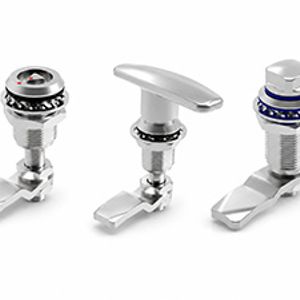
Why Does Panel Door Thickness Change Everything About Cam Latch Selection?
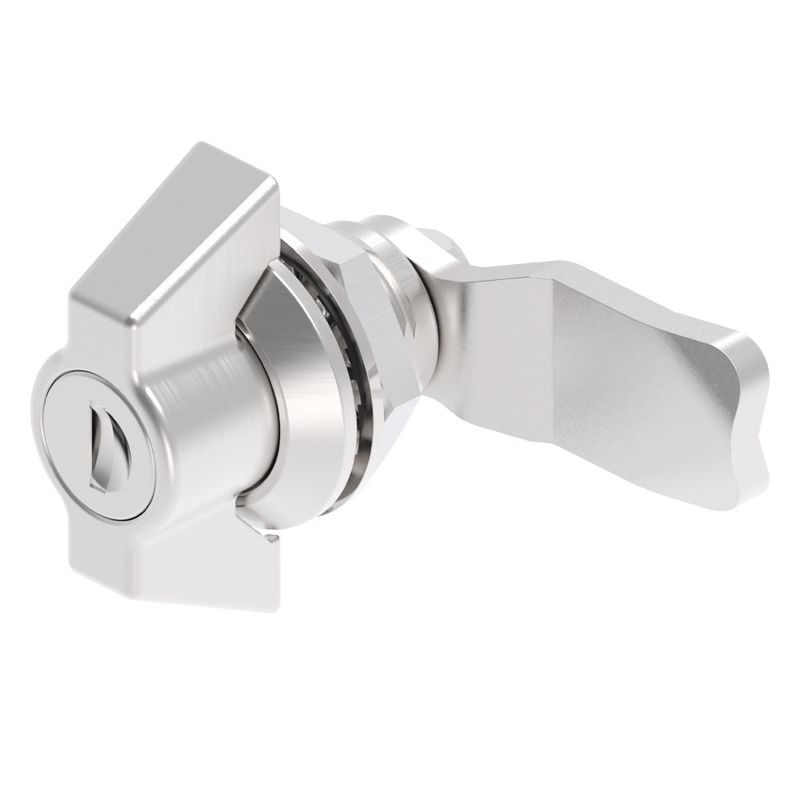
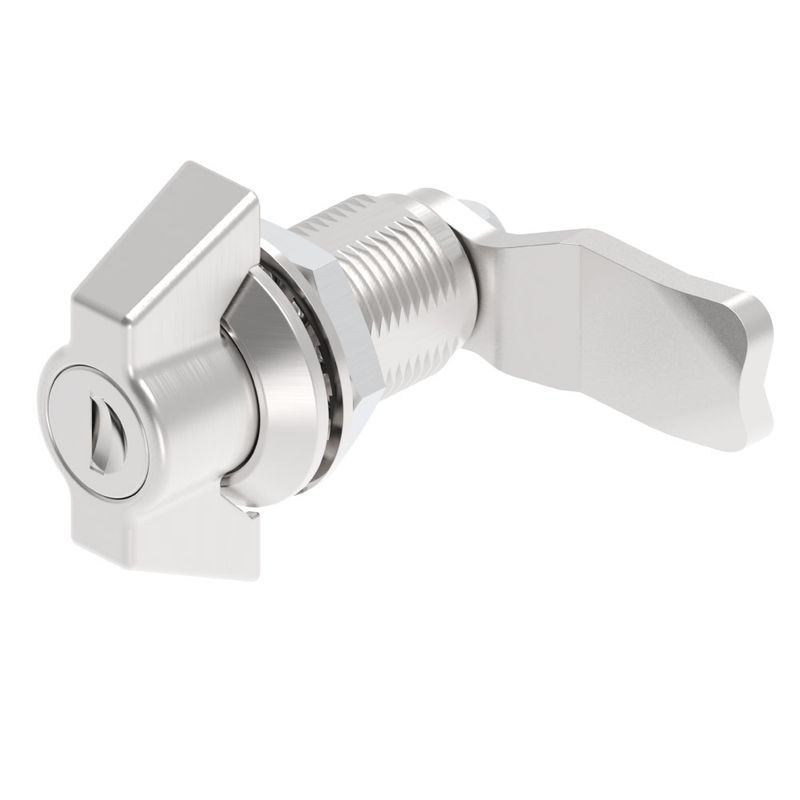
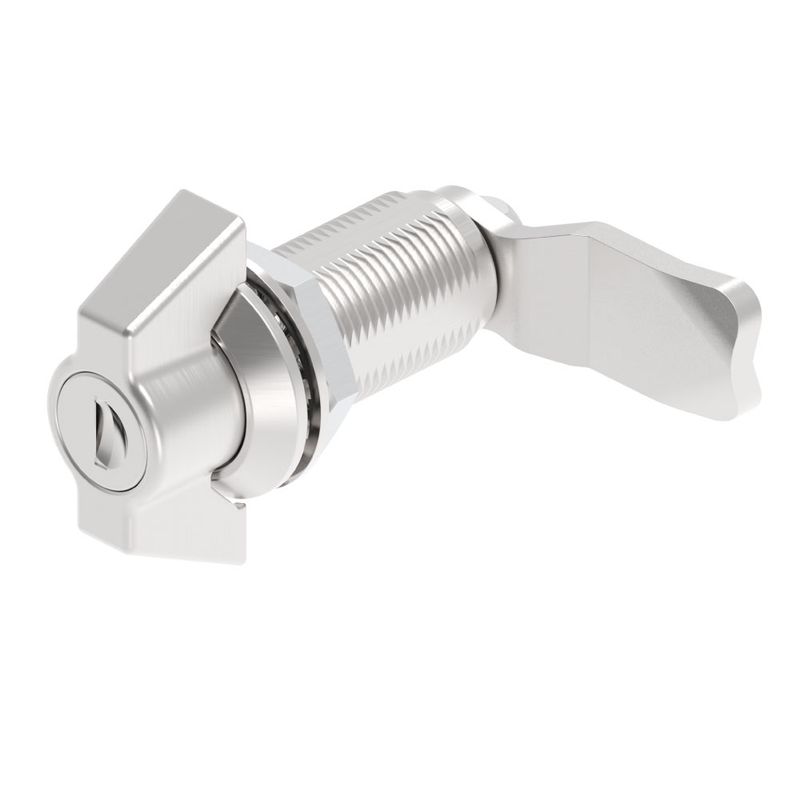
The grip range of an industrial cam latch — the distance between the panel's outer face and the frame's inner latching surface — must match your door assembly precisely, because even a 2 mm mismatch will leave the cam either unable to engage or unable to rotate fully past the frame lip.
Grip range is the most consistently misunderstood dimension in enclosure latch selection, and it is the source of the majority of installation failures we see at ForndLock. The confusion starts with how customers define it. Grip range is not simply panel thickness. It is the combined stack of panel skin thickness, plus any gasket compression at the door perimeter, plus the depth of the frame overlap, plus required cam engagement clearance. Each of those is a separate number, and they need to be added together before comparing against a latch's published grip specification.
Typical electrical enclosure panel doors use 1.5 mm to 3 mm sheet steel. That sounds manageable. But when a foam perimeter gasket is added — which is standard on any IP-rated enclosure — the effective grip stack often jumps to 6–10 mm in the compressed state. A customer ordering a standard latch with a 5 mm maximum grip range for that assembly will find the cam arm sitting proud of the frame rather than swinging behind it. The door appears closed; the cam is not actually engaged. We see this pattern regularly: a standard 16 mm grip latch ordered for a panel with a 6 mm foam gasket, resulting in a cam that physically cannot complete its rotation.
When the grip is too short, the cam clears the frame lip but doesn't generate holding force. When the grip is too long, the cam cannot swing past the frame lip at all. Extended-housing cam latches exist specifically for deeper grip stacks — they are the right solution for enclosures with thick perimeter gaskets or double-wall panel construction. When customers contact us, we ask for three separate measurements: panel skin thickness, compressed gasket thickness, and frame lip depth. Not one combined estimate — three distinct numbers.
What Standard Cutout Dimensions Apply to Enclosure Panel Doors?
Most industrial cam latches for electrical enclosures use one of two standard panel cutouts — a 22 mm round hole or a 16.5 mm × 16.5 mm square — and confirming which your enclosure uses before ordering prevents the most common procurement error we see at ForndLock.
Cutout Type | Compatible Latch Body Profile | Typical Enclosure Standard |
22 mm round | Cylindrical threaded body | IEC, most global industrial |
16.5 mm × 16.5 mm square | Square-profile body | NEMA-style, North American panel builds |
NEMA-style enclosures common in North American panel builds and IEC-style enclosures frequently differ on this dimension, and a cylindrical body will not seat correctly in a square cutout regardless of how much force is applied during installation. Beyond the cutout shape, retaining nut torque matters more than most installers realize. Under-torquing allows the latch body to spin in the panel when the operator applies rotational force to the key or tool. Over-torquing deforms thin sheet metal around the cutout and can crack powder coat or compress the body gasket unevenly. ForndLock supplies cutout dimension drawings and torque specifications with every product inquiry — these are not afterthoughts, they are part of the selection package.
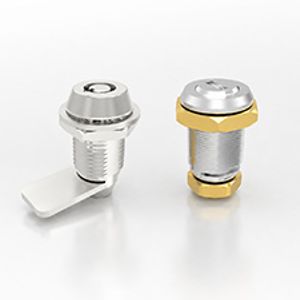
Which Material and Protection Rating Should You Specify for Your Enclosure Environment?
Material choice and IP/NEMA rating are not independent checkboxes — a zinc die-cast cam latch with a powder coat finish may satisfy IP65 on day one, but in a coastal outdoor enclosure or a washdown environment, only a stainless steel cam latch with a sealed body gasket will maintain that rating after two years of service.
There are three practical material tiers for industrial cam latches, and each maps to a specific service environment:
Zinc die-cast is cost-effective and entirely adequate for indoor switchgear, control panels in clean factory environments, and climate-controlled electrical rooms. It is not the right choice for direct outdoor exposure, chemical splash, or high-humidity environments where surface corrosion will degrade the finish and compromise the body seal over time.
304 stainless steel is the correct specification for most outdoor electrical enclosures, light washdown environments, and general industrial applications. This is the material behind the majority of stainless steel cam latch IP65 rated outdoor enclosure applications, and it handles most non-coastal outdoor conditions reliably when paired with a proper body gasket.
316 stainless steel is the specification for coastal installations, chemical processing plants, and marine electrical panels. The difference between 304 and 316 comes down to molybdenum content, which provides meaningful chloride resistance. In environments with salt air or chemical exposure, that difference is not marginal — it determines whether the latch still functions correctly after several years in service. The cost delta between 304 and 316 is justified in those environments by avoided replacement and downtime costs alone.
On the IP rating side, the number that matters for a cam latch specifically is the second digit — the water ingress rating. IP65 requires protection against low-pressure water jets from any direction at 12.5 L/min flow. IP66 steps up to high-pressure jets. IP67 covers temporary immersion. For a cam latch, achieving any of these ratings depends on the seal between the latch body and the panel cutout — specifically, the body O-ring or gasket that compresses against the panel face when the retaining nut is correctly torqued. A latch without a proper body seal will fail IP65 regardless of what the housing material is. NEMA 4X, which adds corrosion resistance to the NEMA 4 water protection requirement, is the reason stainless latches are the default specification on NEMA 4X enclosures.
Is a Stainless Steel Cam Latch Always Better for Outdoor Enclosures?
Stainless steel is the correct default for outdoor electrical enclosures, but the grade and the seal design matter as much as the material — a poorly sealed 316 stainless latch will still allow water ingress at the panel cutout, while a properly gasketed 304 stainless unit will hold IP65 reliably in most non-coastal outdoor environments.
For purely indoor, climate-controlled electrical rooms, zinc die-cast with powder coat is perfectly adequate and the stainless premium is unnecessary. The total cost argument for stainless in outdoor applications is straightforward: replacement cost plus downtime in a failed outdoor enclosure makes it the lower total cost option over the service life of the installation. ForndLock's standard recommendation maps environment type to material grade to minimum IP rating — that conversation takes about five minutes and prevents the wrong order.
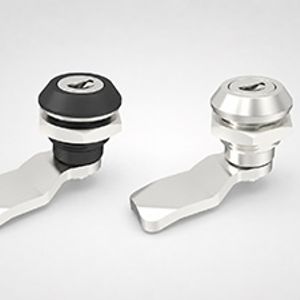
How Do You Match Cam Latch Operating Style to Your Panel Access Requirements?
The operating interface of your cam latch determines both who can open the enclosure and how fast they can do it — and for electrical panel doors specifically, that decision has safety and compliance implications that go beyond simple convenience.
There are three operating categories that matter for electrical enclosure applications:
Tool-operated latches — typically 8 mm square drive, hex key, or flathead slot — limit access to personnel carrying the correct tool. This is the standard interface for switchgear panels, motor control center doors, and outdoor utility enclosures. The 8 mm square drive is the de facto industrial standard in many markets, and specifying it aligns with the service tools technicians already carry on site.
Keyed cylinder latches provide individual or master-keyed access control. They are appropriate wherever enclosure contents carry live voltage and unauthorized access is a genuine risk. This is not only a security consideration — it is a safety one. Some facility safety standards require keyed or tool-only access on panels above certain voltage thresholds, and specifying a knob-operated latch on those panels can create a compliance problem that surfaces during audit rather than during procurement.
We have fielded requests where a customer specified knob-operated latches on an outdoor medium-voltage distribution panel, then had to retrofit keyed cylinders after a safety audit. The structural and sealing specification was fine; only the operating head needed to change. That retrofit cost — hardware, labor, downtime — was entirely avoidable if the access requirement conversation had happened upfront.
Tool-free knob or T-handle latches offer the fastest access with no tool dependency. They are the right choice for frequently accessed control panels in supervised environments, not the default choice for every application where they happen to be convenient to install.
When Does a Tool-Free Cam Latch Make Sense on an Industrial Panel Door?
A tool-free cam latch is the right choice when the panel door is accessed multiple times per shift by trained operators and the enclosure does not contain exposed live conductors — but it should never be the default selection just because it's convenient to install.
Appropriate applications include HMI enclosures, terminal strip access panels, and PLC cabinet doors in supervised production areas. Inappropriate applications include outdoor distribution panels, unattended remote equipment enclosures, and any panel where live bus bars are accessible on door open. ForndLock offers the same latch body in multiple operating head configurations, so the structural specification and IP sealing performance remain constant while the access interface changes to match the actual requirement.
ForndLock Cam Latch Usage Guide
What Should You Verify Before Installing a Cam Latch on an Electrical Enclosure Door?
Before mounting any industrial cam latch on an electrical enclosure panel door, you need to confirm five things: panel cutout size, panel thickness plus gasket stack, frame lip clearance for cam travel, retaining nut torque specification, and cam arm orientation relative to the latch direction — skipping any one of these is the reason most field installation problems occur.
Verification Step | What to Measure | Common Mistake | Consequence |
1. Cutout size | Hole diameter or square dimension | Assuming 22 mm round when enclosure uses square cutout | Body won't seat; latch cannot be installed |
2. Grip stack | Panel + compressed gasket + frame lip | Using panel thickness only | Cam misses engagement or can't rotate |
3. Cam travel clearance | Space behind frame for cam swing | Overlooking nearby DIN rail or cable tray | Cam arm physically blocked mid-rotation |
4. Cam arm orientation | Angle relative to latch body | Incorrect indexing on installation | Cam over-rotates or misses frame lip |
5. Retaining nut torque | Per manufacturer specification (typically 2–4 Nm for thin sheet) | Under- or over-torquing | Body spins in panel, or cutout deforms |
The cam arm needs approximately 10–15 mm of clear space behind the frame to complete its rotation. In enclosures with internal DIN rails or cable trays positioned close to the door edge, this clearance is easy to overlook during design but immediately obvious — and frustrating — during installation. On the torque point: most latch bodies specify 2–4 Nm for thin sheet metal panels. That is a narrow range, and both ends of it cause problems. In any vibrating environment — motor control centers, machine-mounted enclosures — applying thread-locking compound to the cam attachment screw is good practice and prevents gradual loosening under cyclic load.
Does Cam Arm Orientation Affect the IP Rating of the Installed Latch?
Cam arm orientation does not directly affect IP rating, but incorrect orientation can prevent the latch body from seating flush against the panel, which compresses the body O-ring unevenly and breaks the seal that delivers the IP65 or IP66 rating at the cutout.
The O-ring compression requirement is unforgiving: the body flange must sit flat and fully compressed against the panel face for the seal to function. A tilted or proud-seated body — caused by an oversized cutout, a missing retaining washer, or incorrect installation angle — creates a leak path even if the latch housing itself carries an IP66 rating. ForndLock includes installation torque specifications and O-ring replacement part numbers with every order, because seal maintenance over the service life of the enclosure is as important as the initial installation.
How Do You Decide Between a Standard Cam Latch and a Compression Cam Latch?
For most electrical enclosure panel doors, a standard cam latch is the correct choice — but if the enclosure operates in a high-vibration environment, requires IP66 or higher with active gasket compression, or sees more than approximately 5,000 open/close cycles per year combined with vibration above 5g RMS, a compression cam latch becomes worth the added cost and complexity.
In the electrical enclosure context specifically: if the enclosure is wall-mounted or floor-standing in a static environment, a standard industrial cam latch handles the application correctly. If the enclosure is bolted to a compressor, generator, or press — anything that transmits continuous vibration through the mounting surface — evaluate a compression design. The compression cam latch actively maintains gasket pressure through its clamping stroke rather than relying on the cam's static engagement, which matters when vibration would otherwise allow the door to work slightly loose over time.
For outdoor enclosures combining IP65 requirements with moderate vibration, such as roadside utility cabinets, a stainless steel cam latch with a robust body gasket frequently outperforms a compression latch at lower cost and simpler installation. The compression design adds a variable to grip range calculation — the compression stroke itself — which requires more precise panel stack measurement. ForndLock assists with this calculation for custom applications where the grip range is non-standard or the door assembly includes composite materials.
Quarter Turn Cam Lock with Key | Vending Machine & ATM Cabinet Lock Cylinder Manufacturer
Frequently Asked Questions
What panel cutout size do most ForndLock industrial cam latches for electrical enclosures use?
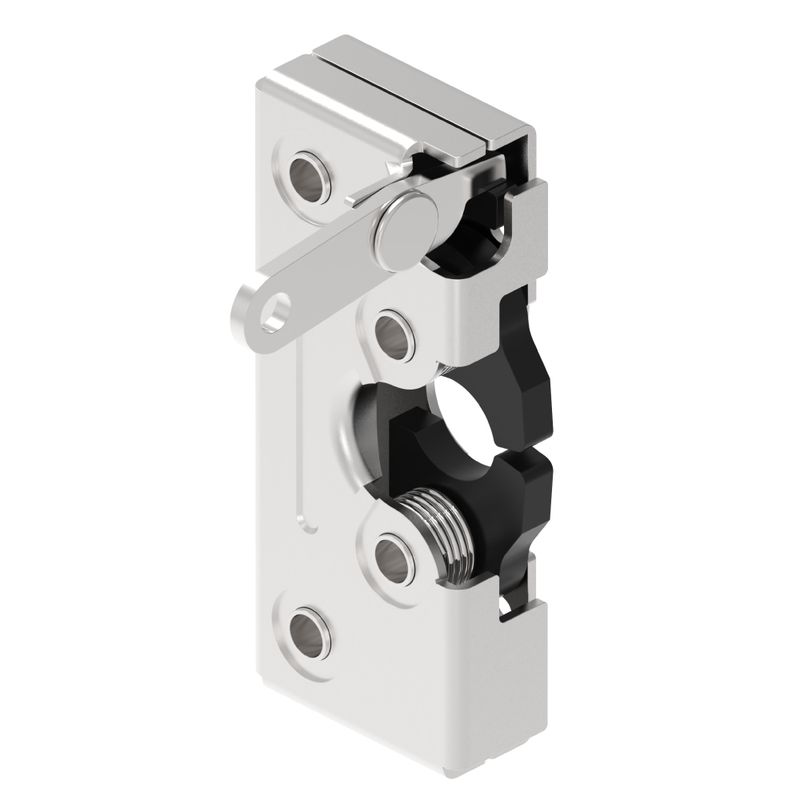
Our standard cam latch bodies for electrical enclosure panel doors are designed for a 22 mm round cutout, which is the most common punch size in industrial enclosure fabrication — we also offer 16.5 mm square and custom cutout profiles on request.
Can the same cam latch body be used with different operating heads?
Yes — at ForndLock we design our enclosure cam latch bodies as a modular platform, so the same housing that accepts an 8 mm square tool drive can also be fitted with a keyed cylinder or a T-handle without changing the panel cutout or the grip range specification.
What is the difference between IP65 and IP66 for a cam latch on an outdoor electrical enclosure?
IP65 protects against low-pressure water jets from any direction, while IP66 covers high-pressure jets — for most outdoor electrical enclosures in non-washdown environments, IP65 is sufficient, but enclosures near pressure-wash areas or exposed to driving rain at low angles should be specified to IP66 with a fully gasketed latch body.
How do I know if I need a stainless steel cam latch or if zinc die-cast is acceptable?
If the enclosure is outdoors, in a humid or coastal environment, or subject to any chemical exposure, specify stainless steel — for indoor control panels in dry, climate-controlled environments, zinc die-cast with powder coat is a cost-effective and fully adequate choice.
Does ForndLock offer custom grip ranges for non-standard panel assemblies?
Yes — we regularly manufacture cam latches with custom grip ranges, extended housings, and non-standard cam arm lengths for panel builders working with thicker door assemblies, composite panels, or enclosures with deep perimeter gaskets; send us your panel stack drawing and we will specify the correct solution.
Choosing an industrial cam latch for an electrical enclosure panel door is a five-variable engineering decision — grip range, cutout standard, material grade, IP/NEMA rating, and operating interface — where each variable interacts with the others. Most enclosure applications are straightforward once those variables are laid out correctly. The goal of this article is to give panel builders, design engineers, and procurement teams the framework to make that call without ambiguity.
If your enclosure specification is non-standard, the installation environment is aggressive, or the project requires master-keying across multiple panels, ForndLock's engineering team is available to work through the selection with you. Send your project requirements, panel stack drawings, or sample requests directly to [email protected] — whether it's a single prototype run or a production volume inquiry, the conversation starts the same way.