Cam Locks: How They Work, Types, Uses and Industrial Applications
Cam locks use a rotating cam to engage a frame, keeper or enclosure edge, allowing a compact lock body to secure a cabinet, panel or equipment door. They are commonly used on electrical cabinets, access panels and industrial equipment where a small footprint and simple access are required. Whether a cam lock performs well depends on cam engagement, grip range and installation geometry rather than the operator style alone.
This article explains how cam locks work, how to use a cam lock correctly, and what cam locks are used for across industrial applications. At ForndLock, we evaluate cam locks by reviewing panel thickness, grip range, cam geometry, operator type and installation environment before recommending a configuration. The goal is to help engineers, cabinet designers and procurement teams match a cam lock to the actual door or panel condition rather than selecting hardware by appearance.
What Is a Cam Lock?
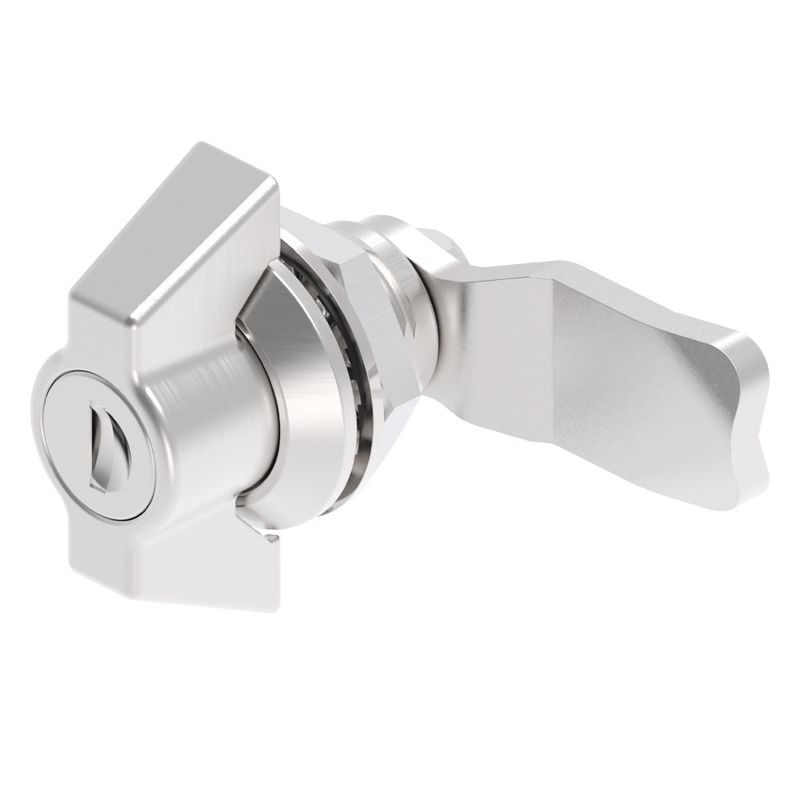
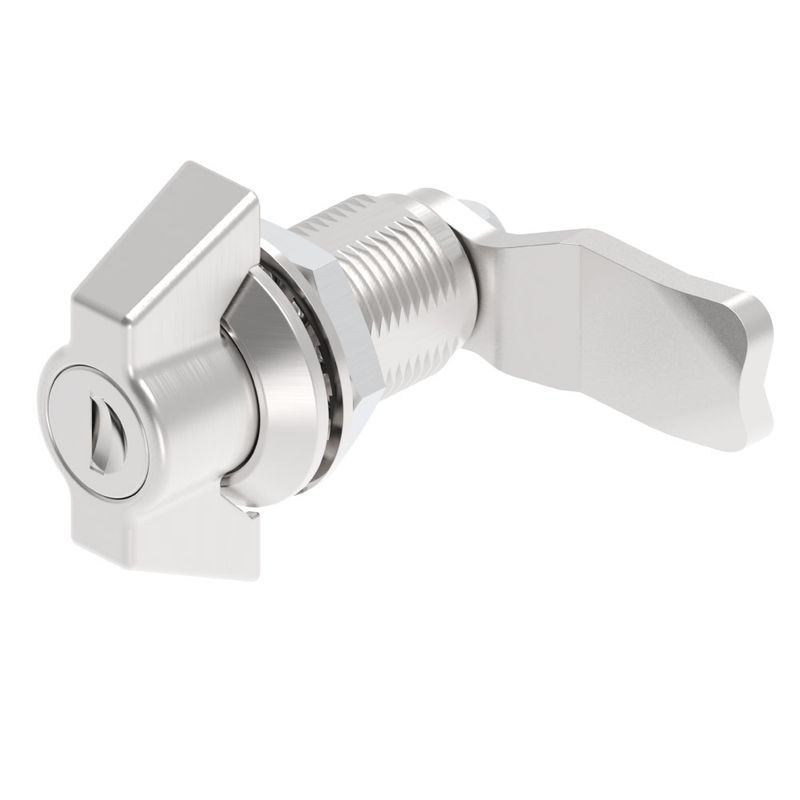
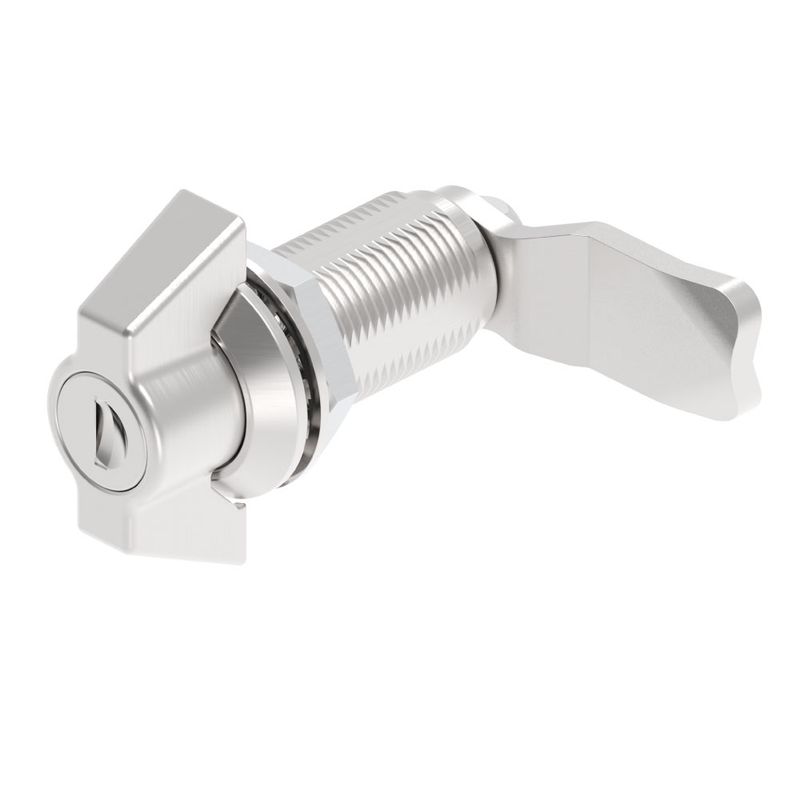
A cam lock is a compact mechanical locking component that secures a door, panel or enclosure by rotating a metal cam into engagement with a frame or keeper. The lock body sits through a cutout in the panel, while the cam extends behind the frame edge or keeper to hold the door closed. Unlike bolted or hinged retention systems, a cam lock relies on a short rotational movement rather than linear travel.
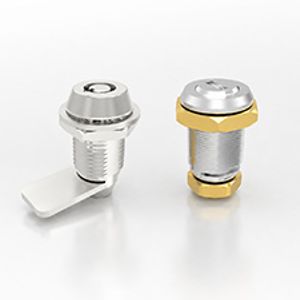
A typical cam lock is built from a small set of parts working together: a lock body or housing that mounts through the panel, a cylinder or operator that receives the input motion, a shaft that transfers rotation, a cam attached to the shaft, and a retaining nut or mounting hardware that holds the assembly in place. Each part has a specific mechanical role, and a change to any one of them can affect how the lock performs.
Cam locks can be operated in several ways depending on the application. Some use a key for restricted access, others use a tool such as a square or triangle key for maintenance personnel, and some use a wing knob or handle for frequent manual access. Regardless of operator type, the core function of a cam lock is the same: rotating cam plus mechanical engagement, not the key itself, is what actually secures the panel.
How Do Cam Locks Work?
A cam lock works by rotating an internal shaft that carries the cam into or out of engagement with a frame, keeper or enclosure edge. The operating sequence is consistent across most cam lock designs, even though the operator style may differ.
1. The operator turns the key, tool, knob or handle.
2. The internal shaft rotates in response to that motion.
3. The cam attached to the shaft rotates with it.
4. The cam moves behind or away from the frame, keeper or enclosure edge.
5. Engagement secures the door; disengagement releases it.
This sequence looks simple, but each step depends on correct mechanical alignment. A lock that turns smoothly is not automatically a lock that secures the panel correctly.
What Is Cam Engagement?
Cam engagement refers to how fully and correctly the cam contacts the door frame, enclosure edge or keeper once rotated. For the lock to hold, the cam must reach far enough behind the frame or keeper to resist the forces acting on the door, without binding against the panel or falling short of the retention surface. Partial engagement is one of the most common reasons a cam lock feels locked but still allows movement.
Does Rotation Angle Matter?
Rotation angle matters because it determines how far the cam must turn to reach full engagement, though not every cam lock rotates exactly 90 degrees. Many industrial cam locks are described as quarter-turn products because a partial rotation is enough to move the cam from open to engaged. However, rotation angle varies by product structure, cam shape and keeper position, so it should be confirmed for the specific lock rather than assumed.
Which Rotation Direction Is Correct?
Rotation direction depends on the lock's internal structure and the installation orientation, and may be clockwise or counterclockwise locking. A cam lock designed for a right-hand door may rotate in the opposite direction from one designed for a left-hand door. This is why rotation direction should always be confirmed against the actual door swing and mounting position before installation, not assumed from a previous project.
How Do Grip and Geometry Affect Locking?
Grip and door geometry affect locking because panel thickness, frame distance, cam offset and cam length all determine whether the cam can fully engage. A cam lock that is mechanically sound can still perform poorly if these dimensions are mismatched with the actual panel and frame condition. In our experience, this is one of the most overlooked variables in cam lock selection, because the lock itself often appears correct while the installation geometry is not.
How to Use a Cam Lock
Using a cam lock correctly involves confirming installation, operating the correct actuator, rotating it fully, and verifying complete cam engagement. This process is straightforward once the lock is properly installed, but each step matters for reliable performance over repeated use.
Step 1: Confirm the Lock Is Correctly Installed
Before relying on a cam lock, confirm that the lock body is mounted securely, the cam is installed in the correct orientation, the cam can reach the frame or keeper, and the panel and frame are properly aligned. Skipping this check is a common source of locking problems that appear later as looseness or failed engagement.
Step 2: Insert the Key or Operate the Correct Actuator
Depending on the product type, this step may involve inserting a key, applying a tool such as a square or triangle key, turning a wing knob, or moving a handle. The actuator type does not change the underlying mechanism, but it does affect who can operate the lock and how quickly.
Step 3: Rotate the Operator Toward the Locked Position
Turning the operator toward the locked position rotates the shaft, which in turn rotates the cam toward the frame or keeper. This motion should feel consistent and should not require excessive force if the lock and panel are correctly matched.
Step 4: Confirm Full Cam Engagement
After rotating to the locked position, check that the cam fully engages behind the frame, the door is retained without excessive looseness, and the cam is not over-stressing the panel. A lock that stops turning does not necessarily mean the cam has reached full engagement.
Step 5: Unlock by Rotating the Cam Away from the Frame
Unlocking a cam lock means rotating the cam away from the frame or keeper until it clears the engagement area and the door can open. On some designs this is a simple reversal of the locking rotation; on others, a defined stop position confirms the cam has fully disengaged.
Correct use depends on correct installation and selection, not operation alone. If the grip, cam length, offset or alignment is wrong, even a correctly operated cam lock may fail to lock tightly, allow the door to remain loose, prevent the cam from engaging, or create unusual operating resistance. If your team is uncertain whether a current grip or cam configuration matches your panel condition, our engineering team can review the drawing before you finalize the design.
What Are Cam Locks Used For?
Cam locks are commonly used to secure cabinets, access panels, electrical enclosures and equipment doors where compact installation and simple access are required. Their small mounting footprint and simple rotational mechanism make them practical across a range of industrial equipment types.
Why Use Them on Electrical Cabinets?
Electrical cabinets and control panels use cam locks for compact installation, maintenance access, and key- or tool-operated control over who can open the enclosure. When selecting a cam lock for this application, panel thickness, operator type and cam engagement should be reviewed together rather than treated as separate decisions.
How Are They Used in Enclosures?
Industrial enclosures rely on cam locks for panel retention, access control and general equipment protection. Selection in this context should focus on grip range, lock body material, and how the lock will be mounted relative to the enclosure frame.
What About Machinery Access Panels?
Machinery access panels depend on cam locks for repeated service access on removable panels that technicians open frequently. Because these panels are cycled often, vibration, operating frequency and consistent cam engagement over time become important selection factors.
How Are They Used in Telecom and Energy Equipment?
Telecom and energy equipment use cam locks on outdoor cabinets to restrict access to sensitive components. In these environments, corrosion resistance, moisture exposure and material choice typically carry more weight in the selection process than they would for an indoor panel.
What About Transportation Equipment?
Transportation equipment uses cam locks on service compartments and equipment panels that must resist vibration in compact mounting spaces. Retention reliability under continuous movement is a key concern here, alongside the physical space available for the lock body.
Cam locks also appear in furniture, mailboxes and storage cabinets, but these consumer-facing applications are outside the scope of this article, which focuses on industrial cam lock selection and use.
What Are the Common Types of Cam Locks?
The common types of cam locks are defined mainly by their operator method and engagement style, including key-operated, tool-operated, hand-operated, quarter-turn and compression designs. Understanding these differences helps match a lock to the access control and installation needs of a specific project.
What Are Key-Operated Cam Locks?
Key-operated cam locks use a key-controlled cylinder to restrict access to authorized personnel. They are suitable for cabinets and equipment enclosures where access needs to be limited to specific individuals.

What Are Tool-Operated Cam Locks?
Tool-operated cam locks are turned with a square, triangle or other tool-operated interface rather than a conventional key. They are common on electrical cabinets, utility equipment and maintenance panels where technicians carry a standard tool rather than a keyed system.
What Are Wing Knob Cam Locks?
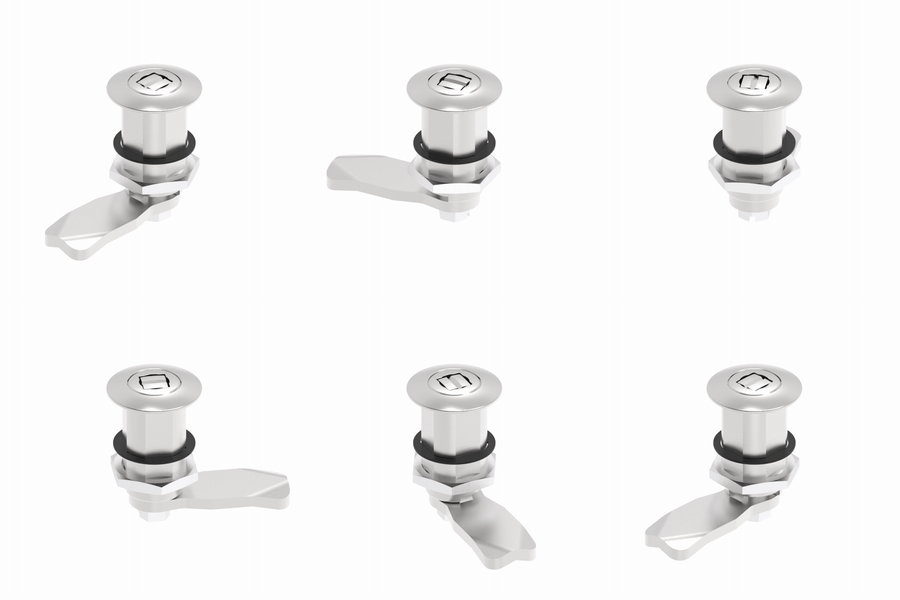
Wing knob or hand-operated cam locks allow fast operation without a key, which suits frequent-access applications where key control is unnecessary. It is worth noting that convenient operation does not equal a higher security level; these locks prioritize speed of access over restriction.
What Are Quarter-Turn Cam Locks?
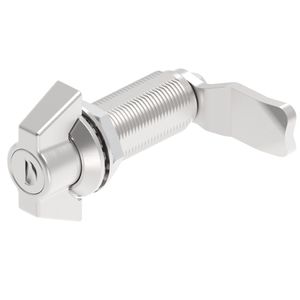
Quarter-turn cam locks achieve engagement through a fast partial rotation, though the term describes the operating motion rather than one fixed internal structure. Different manufacturers may build quarter-turn cam locks with different cam shapes, lengths and engagement details, so the label alone does not guarantee a specific fit.
What Are Compression Cam Locks?
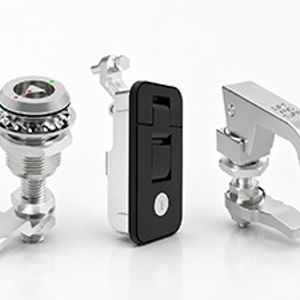
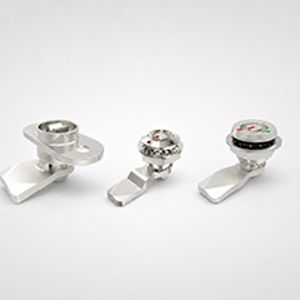
Compression cam locks differ from standard cam locks because they rotate and then create axial compression or pull-down force rather than simple cam rotation alone. A standard cam lock mainly rotates the cam into engagement, while a compression cam lock pulls the door tighter against the frame as it locks. This makes compression designs suitable for gasketed doors, vibration-sensitive applications, and situations requiring tighter panel closure than a standard cam lock can provide.
How Do You Choose the Right Cam Lock?
Choosing the right cam lock requires evaluating panel thickness, grip range, cam geometry, operator type, material and the installation environment together. Treating these as a single evaluation, rather than picking one variable and ignoring the rest, produces a more reliable outcome.
What Is the Difference Between Grip and Panel Thickness?
Grip range is not the same as panel thickness because it must also account for frame distance, gasket compression and mounting geometry. Panel thickness tells you how thick the door material is, but grip describes the full distance the cam needs to span to reach the frame or keeper correctly. An incorrect grip can leave the door loose, prevent the cam from engaging at all, or force excessive closing force that stresses the panel.
How Do Cam Length and Offset Affect Fit?
Cam length and offset determine whether the cam can reach the keeper correctly across a given lock-to-frame distance and door geometry. Straight cams, offset cams and different cam lengths exist specifically to address variations in lock-to-frame distance, keeper position and overall door geometry. Choosing the wrong cam geometry is one of the most common reasons a correctly operated lock still fails to secure the door.
Which Operator Type Fits the Application?
The right operator type depends on required access control, maintenance frequency and operator convenience, comparing key-, tool- and hand-operated options. A cabinet accessed daily by multiple technicians may call for a tool-operated design, while a panel requiring restricted access is better served by a key-operated cylinder.
How Do You Confirm Rotation Direction?
Rotation direction should be confirmed against left/right door orientation and installation direction before finalizing a cam lock configuration. This step is easy to overlook on mirrored cabinet designs, where a lock suited to one side will not necessarily rotate correctly on the opposite side.
Which Material Suits the Environment?
Material choice depends on the application environment, comparing zinc alloy, stainless steel and steel components rather than assuming one material fits every condition.
· Zinc Alloy is suitable for general industrial applications and complex lock body shapes where cost-effective manufacturing is a priority.
· Stainless Steel is suitable for outdoor, humid or corrosive environments where long-term material stability is a greater concern.
· Steel Components are often used for cams, shafts and internal components where mechanical strength is the main requirement.
No single material is inherently suitable for every harsh environment, and material selection should always be validated against the specific application conditions.
What Environmental Conditions Should You Check?
Environmental conditions to check include moisture, dust, salt, chemicals, temperature and outdoor exposure at the installation site. These factors influence not only material choice but also whether additional sealing measures are needed around the lock body.
Do Cam Locks Provide Sealing?
Standard cam locks mainly provide mechanical retention rather than sealing, so applications needing gasket compression should be evaluated against compression latches or sealed quarter-turn solutions. A standard cam lock holding a door closed does not by itself determine the sealing performance or ingress protection rating of the entire enclosure; that depends on the gasket, door design and overall enclosure structure. At ForndLock, we evaluate these variables together rather than selecting a lock by appearance alone, which is particularly important when sealing or vibration resistance is part of the requirement.
How Does a Cam Lock Compare to Other Latches?
Cam locks, quarter-turn latches and compression latches differ mainly in mechanism, retention strength and whether they provide compression against a gasket.
Factor | Cam Lock | Quarter-Turn Latch | Compression Latch |
Main mechanism | Rotating cam | Quarter-turn engagement | Rotation + compression |
Typical access | Key/tool/knob | Key/tool/knob | Multiple operator options |
Panel retention | Basic | Moderate | Compression-based |
Gasket compression | Limited | Usually limited | Designed for compression |
Typical use | Cabinets and panels | Industrial enclosures | Sealed or vibration-prone doors |
Product naming in this category can overlap across manufacturers, so a lock labeled as one type may share features with another. Rather than relying on the name alone, selection should confirm the actual mechanism, grip, cam geometry, compression behavior, operator type and mounting method.
What Are Common Cam Lock Mistakes?
Common cam lock mistakes include wrong cam length, incorrect grip range, wrong orientation and ignoring vibration or environmental exposure.
Mistake | Potential Problem | Better Approach |
Wrong cam length | Cam cannot reach keeper or over-engages | Match cam length to lock-to-frame distance |
Incorrect grip range | Door loose or cam cannot engage | Calculate grip from full mounting geometry |
Cam installed in wrong orientation | Lock fails to secure panel | Verify orientation before final assembly |
Insufficient frame engagement | Door retention is unreliable | Confirm engagement depth during testing |
Wrong rotation direction | Operator confusion, failed locking | Confirm clockwise/counterclockwise per door side |
Hand-operated lock where access control is needed | Unrestricted access | Use key- or tool-operated cam lock |
Ignoring vibration | Cam loosens over time | Consider compression or anti-vibration design |
Unsuitable material outdoors | Corrosion, reduced function | Select stainless steel or suitable coating |
Assuming sealing compression | Enclosure sealing underperforms | Evaluate compression latch separately |
Most of these mistakes are not visible until the panel is in service, which is why grip, cam geometry and rotation direction should be checked during design review rather than discovered during installation.
How Should You Install and Maintain a Cam Lock?
Installing and maintaining a cam lock correctly requires verifying cutout and engagement at installation, then periodically checking wear, corrosion and operator function.
How Do You Install a Cam Lock?
Installing a cam lock involves verifying the panel cutout, securing the lock body, confirming cam orientation and testing full engagement before final use. In practical terms, this means checking that the cutout matches the lock body dimensions, the mounting nut is properly tightened, the cam-to-frame engagement is complete, and the lock and unlock cycle functions smoothly with the door properly aligned.
How Do You Maintain a Cam Lock?
Maintaining a cam lock means periodically inspecting mounting looseness, cam wear, corrosion and operator function to confirm continued frame engagement. The right inspection interval depends on the specific product, operating environment and access frequency, so it should be set based on the actual application rather than a fixed generic schedule.
How to Choose a Reliable Cam Lock Manufacturer?
A reliable cam lock manufacturer should be evaluated on drawing review capability, cam customization options, operator flexibility, material choices and production consistency.
Can They Review Application Drawings?
A capable manufacturer should be able to confirm lock structure from door drawings, panel thickness, frame geometry, cutout dimensions and grip requirements. This review step catches mismatches before parts are produced, rather than after installation.
Do They Support Cam Customization?
Cam customization capability should cover cam length, offset, shape, rotation and special engagement needs rather than fixed standard parts only. Projects with non-standard frame distances or keeper positions often depend on this flexibility.
What Operator and Keying Options Exist?
Operator and keying options should include key-operated, tool-operated, wing knob and custom operation requirements depending on the project. A manufacturer limited to one operator style may not fit every cabinet design in a product line.
What Material and Finish Options Are Offered?
Material and finish options should be selected according to environment, corrosion requirement, appearance and mechanical requirement rather than a single default choice. This flexibility matters most for outdoor, telecom and energy equipment applications.
Can They Support Prototypes and Fit Checks?
A reliable manufacturer should support sample selection, prototype development and installation fit checks before full production. This step reduces the risk of discovering a grip or cam mismatch after a full production run has already been completed.
How Consistent Is Their Production?
Production consistency should be evaluated through lock dimensions, cam geometry, assembly consistency and batch stability across orders. Our engineering team reviews these criteria for every inquiry we receive, since consistency across batches is what allows a cam lock design to be repeated reliably across multiple cabinet units.
ForndLock Industrial Lock Series
How Does ForndLock Support Custom Cam Locks?
At ForndLock, we support cam lock projects by evaluating the complete locking geometry rather than selecting only the lock body. Our process typically includes application review, drawing review, grip evaluation, cam length and offset customization, operator selection, material recommendation, sample evaluation and production support.
To begin this review, customers can provide a door or panel drawing, panel thickness, cutout dimensions, grip requirement, cam dimensions, operator requirement, application environment and expected quantity. With this information, we can recommend a cam lock configuration suited to the actual installation rather than a generic standard part.
ForndLock: Your Trusted Partner in Industrial Hardware
What Should You Remember About Cam Locks?
Cam locks work by rotating a cam into or out of engagement, are used correctly through proper installation and full engagement, and are applied across electrical cabinets, enclosures, machinery panels, telecom/energy equipment and transportation equipment.
How cam locks work comes down to a simple chain: the operator drives the shaft, the shaft drives the cam, and the cam engages or disengages from the frame or keeper. How to use a cam lock correctly depends on correct operation, correct cam orientation, full engagement and proper installation, not just turning the key or tool. What cam locks are used for spans electrical cabinets, industrial enclosures, machinery access panels, telecom and energy equipment, and transportation equipment, each with its own selection priorities.
Choosing the right cam lock ultimately depends on grip range, cam geometry, operator type, material, environment and installation quality working together. Any performance claim related to sealing, corrosion resistance or vibration tolerance should be validated in the actual assembly rather than assumed from a general product description.
If you are working through a cam lock selection for a cabinet, enclosure or access panel, our team can review the details before you commit to a configuration. Send drawings, panel thickness, cutout dimensions, cam or grip requirements, operator preferences, application environment and quantity to [email protected]. We can support cam lock selection, cam customization, drawing review, sample support and production support based on the specifics of your project.