
Which Type of Hinge to Use for Heavy Cabinet Doors in Industrial Applications?
Engineers, procurement officers, and OEM designers constantly face critical hardware selection challenges when designing industrial enclosures, particularly concerning door sag, compromised environmental sealing, vibration loosening, and high maintenance costs. Making the wrong choice in hardware can lead to catastrophic failures in heavy machinery cabinets, server racks, and automated equipment enclosures. When a massive steel door fails to close properly, the immediate results are compromised IP ratings, ingress of dust or water, safety hazards for operators, and unacceptable equipment downtime. Selecting the appropriate mounting hardware is not merely an aesthetic choice; it is a fundamental engineering requirement that dictates the long-term reliability and structural integrity of the entire machine or enclosure system.
Based on ForndLock’s manufacturing experience in industrial locks, latches, hinges, handles, and access hardware, we know that preventing mechanical failure starts with precise load-bearing calculations and environmental matching. By analyzing the structural demands, dynamic loads, and spatial constraints of your specific application, you can confidently determine which type of hinge to use for heavy cabinet doors. In this comprehensive engineering guide, we will break down the mechanics of heavy-duty hardware, compare the structural advantages of various designs, and provide you with the data-driven insights necessary to make optimal procurement decisions for your next industrial manufacturing project.
Why Do Heavy Doors Need Specialized Hinges?
Heavy cabinet doors require specialized hinges because standard hardware cannot withstand high dynamic loads, leading to door sag, compromised environmental sealing, and premature mechanical failure.
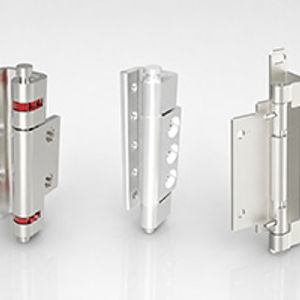
When evaluating the structural demands of an industrial enclosure, it is crucial to understand the fundamental difference between static loading and dynamic loading. A stationary heavy cabinet door primarily exerts a downward shear force on the hinge pins and fasteners. However, the moment that door is opened, the physics change dramatically. The door transforms into a cantilevered mass, creating a massive multiplier effect on the top hinge pivot. A door that weighs eighty kilograms can easily exert hundreds of kilograms of pull-out force on the top mounting points depending on its width. Standard commercial hinges are simply not engineered with the material thickness or bearing structures required to resist this intense leverage over thousands of operational cycles.
Furthermore, industrial environments introduce the destructive element of constant vibration. Heavy machinery, stamping presses, and generator enclosures produce high-frequency vibrations that travel directly through the cabinet frame into the hardware. Standard hinges with loose tolerances will rattle, causing the hinge pins to wear unevenly and the mounting screws to vibrate loose over time. This mechanical degradation inevitably leads to door sag.
The true cost of this failure extends far beyond the price of a replacement hinge. When a heavy door sags even a few millimeters, it fails to compress the rubber gaskets evenly against the cabinet frame. This instantly voids the enclosure's Ingress Protection (IP) rating, allowing moisture, corrosive chemicals, and conductive dust to penetrate the cabinet and destroy sensitive electronic controls. Upgrading to specialized heavy-duty hinges ensures that the physical alignment remains perfectly true, safeguarding both the equipment inside and the operators outside.
What Are the 6 Best Hinge Types?
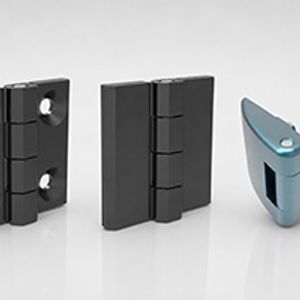
The six best hinge types for heavy applications include butt, continuous, weld-on, concealed, strap, and offset hinges, each engineered for specific load capacities and mounting environments.
When clients ask us to break down the 6 Different Types of Hinges and Where to Use Them, we always start by analyzing the specific operational environment and the exact weight distribution requirements of their heavy cabinet doors. As a manufacturer, we customize leaf thickness, pin diameter, and bearing materials based on these exact six structural profiles to ensure maximum longevity.
ForndLock Hinge Product Range: Heavy-Duty Butt Hinges for Perfect Cabinet Door Alignment!
How Do Butt Hinges Handle Heavy Loads?
Heavy-duty butt hinges handle massive weight by utilizing thicker gauge metal and integrated ball bearings that reduce friction and distribute vertical loads evenly.
Butt hinges are the most universally recognized hardware style, consisting of two rectangular leaves joined by a central pin. In heavy industrial applications, the construction of a butt hinge is radically upgraded compared to commercial variants. The leaf thickness is often increased to four millimeters or more, utilizing high-grade stainless steel or carbon steel to prevent warping under cantilever stress. This robust construction ensures that the mounting points will not tear or deform when subjected to extreme leverage.
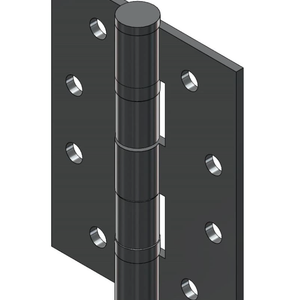
The secret to their heavy-load capability lies in the bearing design. Standard hinges rely on metal-on-metal friction, which quickly grinds down the knuckles under heavy weight. Heavy-duty butt hinges incorporate sealed ball bearings or self-lubricating thrust bearings between the knuckles. These bearings absorb the massive vertical downward force of the heavy cabinet door while allowing the pin to rotate with minimal friction. This specific engineering upgrade is what allows a massive server rack door to swing open smoothly with just the push of a finger, completely eliminating the grinding and squeaking associated with overloaded hardware.
When Are Continuous Hinges the Best Choice?
Continuous hinges are the best choice when you need weight distributed seamlessly along the entire length of the door to prevent warping and ensure a tight environmental seal.
Also known as piano hinges, continuous hinges run the entire vertical length of the enclosure door. This unique design completely eliminates the concept of point-loading. Instead of concentrating the entire eighty-kilogram weight of a door onto two or three isolated mounting points, a continuous hinge distributes that weight evenly across dozens of fasteners from the top to the bottom of the frame. This makes them exceptionally valuable for tall, heavy equipment cabinets fabricated from relatively thin sheet metal that might otherwise buckle or warp under localized stress.
Beyond load distribution, continuous hinges provide superior environmental protection. Because there are no gaps between the hinge leaves, they create a solid mechanical barrier along the entire hinged edge of the cabinet. When combined with high-quality perimeter gasketing, continuous hinges help maintain strict NEMA and IP ratings by ensuring uniform compression against the weather stripping. They are frequently the go-to choice for outdoor telecommunications cabinets, electrical control panels, and mass transit enclosures where maintaining structural rigidity and waterproofing is an absolute necessity.
Why Choose Weld-On Hinges for Metal?
Weld-on hinges provide the strongest possible permanent bond for heavy metal enclosures, completely eliminating the risk of fastener loosening under extreme industrial vibration.
When you are designing heavy machinery enclosures, armored security cabinets, or heavy-duty agricultural equipment, relying on threaded fasteners can sometimes be a liability. Intense, continuous vibration can back out even the most thoroughly torqued and thread-locked screws. Weld-on hinges, often referred to as barrel or bullet hinges, solve this problem entirely by fusing the hardware directly to the steel door and frame at the molecular level.
These hinges typically feature a streamlined, cylindrical design consisting of a male barrel with a fixed pin and a female barrel that slips over it. Between these two components, manufacturers like ForndLock integrate a heavy-duty brass or stainless steel thrust washer to handle the immense vertical load and reduce rotational friction. Because they are welded, they offer maximum shear strength and unparalleled tamper resistance, as there are no exposed screw heads for a vandal or thief to extract. They are the ultimate solution for extreme-duty applications where failure is simply not an option.
Where Do Concealed Heavy Duty Hinges Fit?
Concealed heavy-duty hinges fit perfectly in applications requiring high security against vandalism and clean exterior aesthetics without compromising on robust load-bearing capabilities.
Concealed hinges are engineered to be completely invisible from the outside of the cabinet when the door is closed. This provides two massive advantages for industrial designers. First, it creates an impenetrable barrier against tampering. If a thief or vandal cannot see or access the hinge knuckles or pins, they cannot cut or grind them off to bypass the locking mechanism. This makes concealed hinges mandatory for outdoor kiosks, ATM enclosures, and hazardous material storage cabinets.
Second, concealed hinges provide a completely flush, clean exterior aesthetic. This is highly desirable in food processing environments, pharmaceutical manufacturing, and cleanrooms where exposed hardware can harbor bacteria, dust, or chemical residue. To handle heavy doors from an internal mounting position, heavy-duty concealed hinges utilize complex multi-link kinematics. These precision-engineered linkages allow thick, heavy doors to swing out and away from the cabinet frame without binding, ensuring that the heavy weight is supported internally by robust articulated arms rather than a simple single-axis pin.
How Do Strap Hinges Distribute Door Weight?
Strap hinges distribute weight effectively by using elongated leaves that increase the surface area of the mounting points, significantly reducing stress on the door material.
Strap hinges are instantly recognizable by their long, narrow leaves that extend horizontally across the face of the door and the frame. While often associated with traditional or architectural designs, heavy-duty industrial strap hinges serve a highly specific structural purpose. When dealing with extremely wide doors, the leverage exerted on the hinge side is magnified exponentially. If the door material is slightly less rigid—such as fiberglass, heavy-duty plastics, or composite panels—a standard butt hinge might simply tear out of the material under the immense torque.
By utilizing an elongated strap, the hinge drastically increases the mounting surface area. It spreads the pulling force across a much wider section of the door panel, utilizing multiple fasteners spaced far apart to create a highly stable anchor. This effectively neutralizes the tear-out risk. Heavy-duty strap hinges are frequently deployed on oversized acoustic enclosure doors, heavy wooden industrial crates, and large access gates where maximizing the structural footprint of the hardware is the only way to safely manage the dynamic load.
When Should You Use Offset Hinge Types?
You should use offset hinges when a heavy door needs to swing completely clear of the frame to allow unobstructed access to the cabinet interior for maintenance.
In many industrial applications, particularly in data centers and automated control rooms, the internal components of a cabinet need to slide out on rails for routine maintenance. If a standard hinge is used, the thickness of the open door will partially block the cabinet opening, preventing server racks or heavy electrical trays from sliding out cleanly. Offset hinges are specifically engineered to solve this spatial conflict.
The leaves of an offset hinge are bent or folded at specific angles, moving the pivot point outward and away from the standard flush position. When the heavy cabinet door is opened to ninety degrees or beyond, the offset geometry physically pushes the entire door mass completely outside of the door frame's clear opening. This ensures that engineers have one hundred percent unobstructed access to the interior payload. Despite their irregular shape, heavy-duty offset hinges are manufactured with reinforced gussets at the bend points to ensure they can carry massive weight without flexing or losing their precisely engineered geometry.
Concealed vs Exposed Hinges: Which Is Better?
The choice between concealed and exposed hinges depends entirely on your project's specific balance of security needs, aesthetic requirements, and maintenance accessibility.
When engineers evaluate enclosure designs, they frequently debate the merits of internal versus external hardware mounting. This debate is not limited to machinery; in fact, the evaluation of concealed vs exposed hinges pros and cons for furniture in industrial settings—such as heavy-duty steel workbenches, mobile tool cabinets, and laboratory casework—follows the exact same rigorous selection logic as heavy equipment enclosures. Both styles offer distinct engineering advantages that must be weighed against the specific operational environment.
What Are Concealed Hinge Pros and Cons?
Concealed hinges offer superior security and a sleek exterior appearance, but they typically require more internal cabinet space and highly precise, complex installation procedures.
The primary advantage of concealed hardware is maximum security. With all mounting components, pins, and linkages hidden behind the closed steel door, external tampering is virtually impossible. Additionally, the smooth exterior surface prevents the accumulation of dirt, debris, and corrosive agents, making them ideal for hygienic washdown environments. When reviewing the concealed vs exposed hinges pros and cons for furniture, industrial designers often choose concealed hinges for high-end laboratory furniture to ensure chemical spills can be easily wiped away from a perfectly flat cabinet face.
However, the drawbacks are heavily tied to spatial engineering. Concealed heavy-duty hinges require a significant spatial envelope inside the cabinet to house their complex multi-link mechanisms. This can interfere with internal shelving or electronic components if not modeled correctly during the CAD phase. Furthermore, because they operate on complex kinematics, the installation and alignment tolerances are incredibly tight. A misalignment of just one millimeter can cause a heavy door to bind, requiring highly skilled assembly labor.
What Are Exposed Hinge Pros and Cons?
Exposed hinges provide maximum load-bearing strength and allow for greater door opening angles, though they are visible and more susceptible to external tampering or environmental corrosion.
Exposed hinges, such as heavy-duty butt or weld-on hinges, are the workhorses of the industrial sector. Their primary advantage is uncompromised structural simplicity. By mounting directly to the exterior frame, they allow the heavy cabinet door to swing open a full 180 or even 270 degrees, which is a critical requirement in tight factory aisles where doors must be folded flat against the machine side. They consume absolutely zero internal cabinet space, and their simple single-axis rotation makes them incredibly easy to align, weld, or bolt into place. Maintenance is equally straightforward, allowing technicians to easily lubricate pins or replace worn bearings without dismantling the entire enclosure.
The main disadvantage of exposed hinges is their vulnerability. Because they protrude from the cabinet, they are exposed to fork-truck impacts, environmental corrosion, and potential vandalism. If you are comparing concealed vs exposed hinges pros and cons for furniture intended for a public space or a highly corrosive chemical plant, the exposed knuckles of an external hinge represent a clear weak point that must be mitigated through the use of high-grade stainless steel or specialized protective coatings.
How Does Material Impact Heavy Hinge Performance?
Hinge material directly dictates the component's tensile strength, corrosion resistance, and operational lifespan in harsh industrial environments.
Selecting the correct structural design is only half the engineering equation; specifying the correct raw material is equally critical. In heavy industrial applications, the material must withstand not only the physical weight of the door but also the chemical, thermal, and atmospheric realities of the installation site.
Stainless Steel, specifically grades 304 and 316, represents the gold standard for harsh environments. 316 Stainless Steel offers exceptional tensile strength (typically exceeding 500 MPa) and provides unmatched resistance to oxidation. In standardized salt spray testing, high-quality 316 stainless steel hinges can easily surpass one thousand hours without showing signs of red rust, making them mandatory for marine equipment, offshore drilling enclosures, and food processing machinery subject to caustic washdowns.
Zinc Alloy provides an excellent balance of weight, structural strength, and cost-efficiency for indoor industrial enclosures. Zinc die-cast hinges are highly precise and naturally resist mild corrosion, though they typically max out around two hundred hours in salt spray testing unless treated with secondary powder coating or specialized plating. They are the ideal choice for server racks and factory floor control panels where extreme weather is not a factor.
Carbon Steel offers the maximum raw tensile strength and is often the most economical choice for massive, heavy machinery doors. However, raw carbon steel is highly susceptible to rapid oxidation. To utilize carbon steel hardware effectively, it must be rigorously protected through hot-dip galvanization, zinc plating, or heavy industrial powder coating. When designing with dissimilar metals—such as mounting a carbon steel hinge to an aluminum cabinet—engineers must also utilize isolation gaskets to prevent galvanic corrosion from destroying the mounting points.
How Do We Solve Real Hinge Problems?
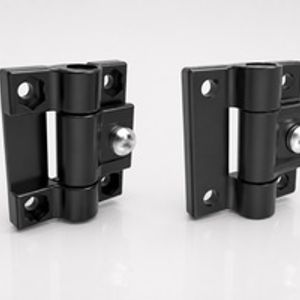
We solve complex hinge problems by analyzing the specific operational environment, dynamic load requirements, and spatial constraints to engineer custom or precisely matched hardware solutions.
To illustrate how critical hardware selection is, consider a recent project we undertook with a German machinery equipment OEM. This client manufactures massive automated stamping presses enclosed in heavy acoustic safety cabinets. Their primary issue involved the cabinet's eighty-kilogram steel doors. The OEM was initially using standard commercial-grade bolt-on hinges. Within three months of field operation, the intense, low-frequency vibration from the stamping press caused the hinge fasteners to loosen and the standard pins to wear down aggressively.
This rapid mechanical degradation led to severe door sag. Because the doors were no longer aligned, the heavy compression latches could not engage properly, and the enclosure completely lost its IP65 dust and waterproof rating. This exposed the sensitive internal programmable logic controllers (PLCs) to conductive factory dust, resulting in unacceptable warranty claims and equipment downtime.
The OEM brought the problem to our engineering team. After calculating the dynamic load and analyzing the vibration frequency, ForndLock engineered a specialized heavy-duty weld-on barrel hinge. We upgraded the material to high-grade carbon steel for maximum shear strength and integrated a custom self-lubricating thrust bearing to handle the eighty-kilogram vertical load smoothly. Furthermore, we integrated a custom grease fitting directly into the hinge barrel, allowing the OEM's maintenance teams to lubricate the hardware without ever removing the heavy door.
The result was immediate and permanent. During rigorous laboratory testing, the new heavy-duty hinges eliminated door sag entirely after one hundred thousand automated open-and-close cycles under full vibration load. The IP65 waterproof rating was permanently restored, and the German OEM saw a drastic reduction in field warranty claims, proving that specialized industrial hardware is an investment in overall machine reliability.
Conclusion
Knowing exactly which type of hinge to use for heavy cabinet doors ultimately comes down to a rigorous engineering assessment of your specific industrial application. You must carefully calculate the dynamic weight of the door, understand the spatial limitations of your enclosure, and anticipate the environmental hazards—whether that is intense mechanical vibration, corrosive chemical washdowns, or the threat of vandalism. From the seamless load distribution of continuous hinges to the uncompromising strength of weld-on hardware and the sleek security of concealed linkages, the right structural choice will dictate the safety and longevity of your equipment.
ForndLock: Your Trusted Partner in Industrial Hardware
At ForndLock, we are committed to providing robust, precision-engineered locking and hinge solutions for global clients. Stop guessing with your heavy-duty enclosure hardware. If you are designing a new industrial cabinet, upgrading heavy machinery, or experiencing field failures with your current setup, invite our engineering team to review your specifications. Send your project requirements, technical CAD drawings, or requests for custom hardware samples directly to our engineering team at: [email protected].