
What is a Draw Latch and Types of Draw Latches for Heavy Duty Industrial Enclosures
Understanding Draw Latches in Industry
Securing heavy machinery panels and industrial cabinets involves much more than simply keeping a door shut. Engineers and procurement professionals constantly deal with the challenge of maintaining strict ingress protection ratings under ongoing vibration, ensuring tight seals on heavy metal doors, and preventing accidental exposure of sensitive internal components. This article offers a thorough technical guide written specifically for OEM clients, mechanical engineers, and hardware procurement teams who need to solve these exact problems related to tension, sealing, and secure closure. By understanding the mechanical principles behind access hardware, professionals can eliminate the risk of panel failure in extreme environments.
People often ask, What is a Draw Latch in the context of industrial engineering? It is a mechanical tensioning device that uses leverage to pull two surfaces together, locking them securely in a flat or perpendicular arrangement. Unlike standard deadbolts, this hardware generates significant clamping force to compress gaskets and eliminate shifting between panels. As ForndLock, a professional industrial locks, industrial latches, industrial hinges, industrial handles and access hardware manufacturer, we have spent decades engineering these critical connection points. We use our extensive manufacturing experience to give you precise selection criteria, ensuring your heavy equipment operates safely and reliably in the field. The integrity of your industrial enclosure depends heavily on the tension load capacity and gasket compression efficiency provided by the correct hardware.

The core value of this tensioning mechanism lies in its ability to absorb structural tolerances while maintaining a rigid connection. When heavy metal doors are exposed to dynamic loads, the latching point becomes the primary area where stress concentrates. A properly chosen mechanism redistributes this energy, preventing structural fatigue and maintaining the environmental seal. Through our manufacturing experience, we have seen how even the smallest miscalculation in clamping force can lead to serious water ingress or acoustic leakage. Therefore, understanding the exact functional parameters of these tensioning devices is the first critical step in specifying reliable access hardware for large-scale engineering projects.
ForndLock Over Center Draw Latches
Types of Heavy Duty Draw Latches
When designing large-scale machinery, selecting the right closure mechanism is a critical engineering decision. There are several distinct types of draw latches for heavy duty industrial enclosures, each engineered to address specific load capacities, structural mechanisms, and environmental demands. Understanding these categories allows engineers to match the mechanical properties of the hardware with the exact requirements of the application, ensuring maximum reliability and safety.
Over-Center Draw Latch Mechanisms
The over-center design is a foundational element of industrial access hardware. This mechanism works on a geometric principle where the tension vector crosses the pivot point, physically locking the lever in place. As tension increases, the locking force actually grows stronger, completely preventing accidental opening under extreme vibration. For heavy machinery, we manufacture versions equipped with secondary locking buttons, safety catches, or padlockable features. These additions provide a fail-safe mechanism, ensuring that even if the primary lever is struck by debris or exposed to severe lateral shock, the enclosure stays sealed. The over-center geometry is especially effective for thick, heavy doors that require a large initial force to compress high-density weather stripping.
Rotary Cam Draw Latch Systems
In applications where external protrusions are not acceptable, such as acoustic enclosures, cleanroom equipment, or streamlined transit vehicles, rotary cam systems offer an ideal concealed tensioning solution. These systems use a rotating cam mechanism to engage a keeper, pulling the panels tightly together as the actuator is turned. This design provides excellent gasket compression without exposing the latching mechanism to external impact or snagging hazards. The rotary action allows for precise adjustment of the clamping force, making it highly suitable for enclosures that require strict IP65 or IP67 ratings. Additionally, the internal mechanism is protected from direct exposure to corrosive elements, extending its operational lifespan in harsh environments.
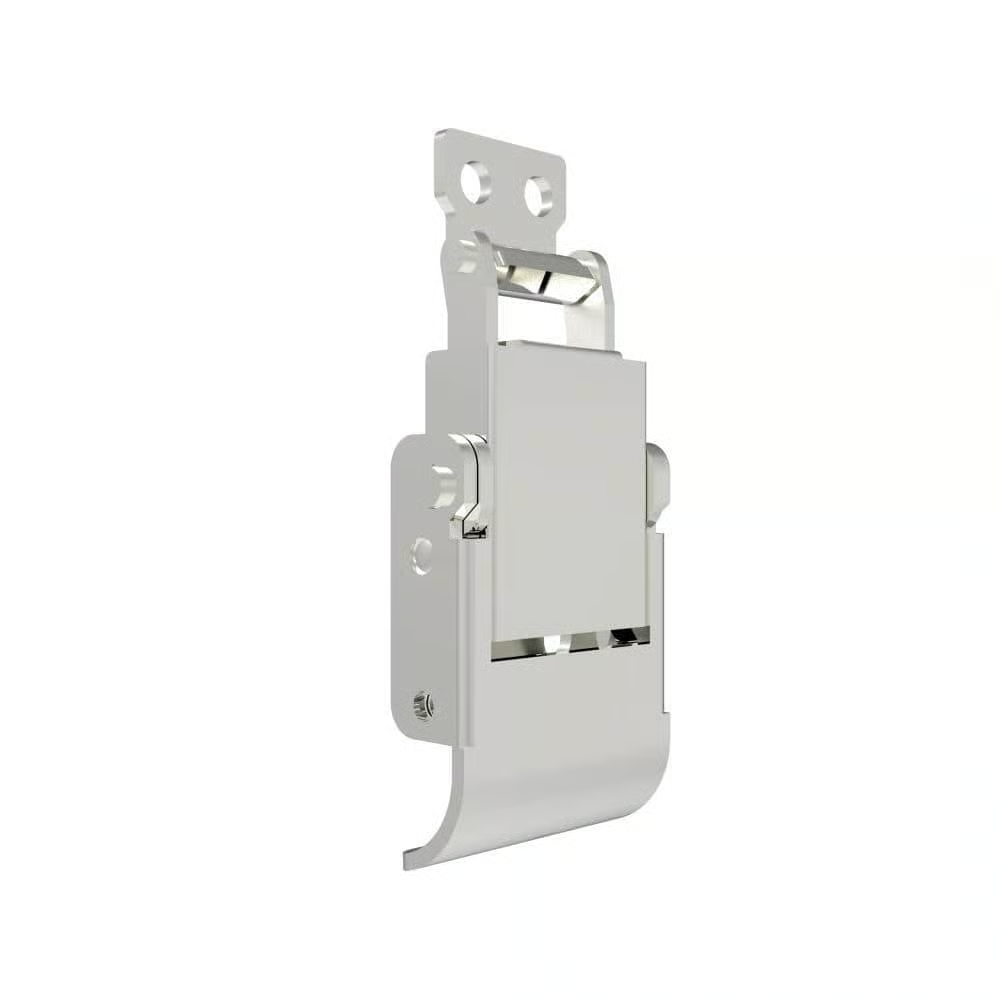
Spring Loaded Draw Latch Designs
Industrial cabinets frequently deal with dimensional tolerances, mounting inaccuracies, and vibration-induced shifting over time. Spring loaded designs incorporate heavy-duty compression or extension springs directly into the latching assembly to compensate for these variables. The integrated springs provide a continuous, dynamic clamping force that adjusts to thermal expansion, structural flexing, and gasket compression over time. If a cabinet door warps slightly due to temperature changes, the spring mechanism maintains constant tension, preventing the seal from breaking. This dynamic adaptability makes them essential for mobile equipment, off-road machinery, and enclosures exposed to constant thermal cycling.
To fully understand how each type affects the ingress protection rating of an industrial enclosure, we need to look at their respective gasket compression capabilities and vibration resistance. The choice of mechanism directly affects the final environmental sealing performance.
Latch Type | Vibration Resistance | Ideal Enclosure Type | Gasket Compression Level |
Over-Center Mechanism | Extremely High (with safety catch) | Heavy Machinery, Outdoor Telecom | Maximum |
Rotary Cam System | High | Acoustic Cabinets, Cleanrooms | High to Maximum |
Spring Loaded Design | Very High (dynamic absorption) | Mobile Equipment, Transit Vehicles | Moderate to High |
By reviewing this matrix, procurement teams and engineers can quickly rule out unsuitable options. For example, while a spring-loaded design offers excellent dynamic absorption for mobile equipment, an over-center mechanism with a secondary lock is absolutely necessary for static outdoor enclosures facing hurricane-force winds where maximum static compression is required.
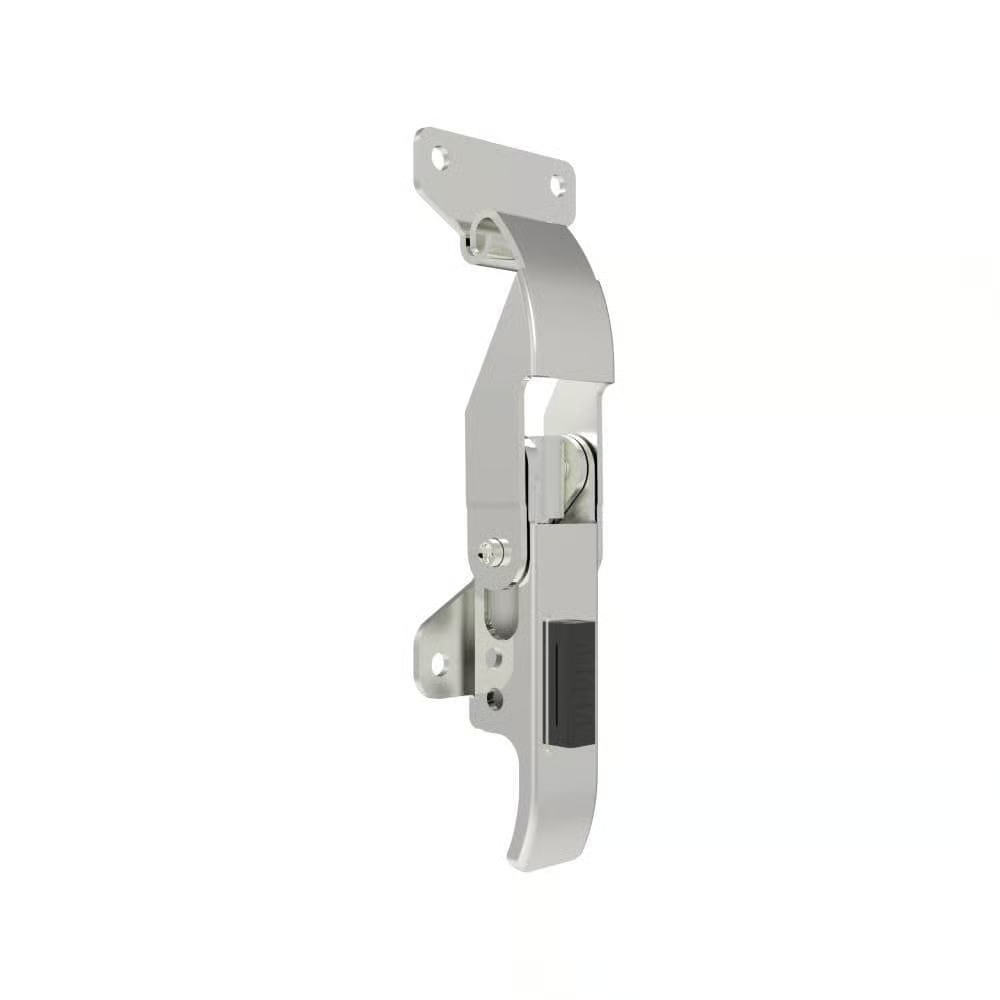
Choosing Latches for Cabinet Applications
Moving from theoretical knowledge to practical specification requires a structured approach. Knowing how to choose the right draw latch for cabinet applications is essential for preventing early hardware failure and maintaining the integrity of the entire system. Engineers must evaluate a combination of mechanical loads, environmental stressors, and operational ergonomics to specify the correct component for their specific project.
Assessing Load and Vibration Demands
The first step in the selection process is calculating the working loads and ultimate tensile strength requirements based on panel weight, gasket resistance, and environmental vibration. A common mistake is underestimating the dynamic forces placed on the hardware during operation. For applications like railway infrastructure or heavy earth-moving machinery, continuous low-frequency vibration can cause standard hardware to fatigue and fail. Engineers must calculate the required clamping force to achieve the desired ingress protection rating and then select a mechanism that exceeds this requirement by a meaningful safety margin. It is important to evaluate both the static load, which is the force needed to keep the door closed against the gasket, and the dynamic load, which includes the sudden forces created by impact or movement.
Evaluating Material and Corrosion Resistance
Material selection is just as important as the mechanical design. ForndLock manufacturing perspective emphasizes that the base material and surface treatment processes determine how long the hardware will survive in the field. When analyzing how to choose the right draw latch for cabinet applications, you must compare 304 and 316 stainless steel against zinc alloy and coated carbon steel.
316 stainless steel offers superior resistance to chlorides and is required for marine environments or chemical processing plants. 304 stainless steel provides excellent general corrosion resistance for standard outdoor telecom cabinets. Alternatively, zinc alloy with a thick powder coating or heavy plating offers a cost-effective solution for indoor industrial environments with lower corrosive exposure. We know from experience that surface treatment processes, such as passivation for stainless steel to remove free iron from the surface, are just as critical as the base material for maximizing longevity in outdoor industrial enclosures.
Engineers must check the following critical environmental factors before making a final selection:
· Exposure to saltwater, coastal air, or de-icing salts during winter operations.
· Presence of harsh industrial chemicals, airborne solvents, or abrasive cleaning agents.
· Extreme temperature fluctuations causing rapid thermal expansion and contraction of the panels.
· High levels of UV radiation that could degrade any integrated non-metallic components.
· Frequency of high-pressure washdowns required in food processing or sterile medical environments.
Engineering Case Study on Enclosures
To show why these selection criteria matter so much, we can look at a recent project where specialized access hardware solved a serious industrial problem. A European railway equipment manufacturer was struggling with HVAC enclosures mounted on the roofs of their high-speed transit trains.
The core problem was high-frequency vibration during transit. The standard access hardware previously specified for these units was failing to maintain a secure connection. Continuous aerodynamic buffeting and mechanical vibration caused the mechanisms to slowly disengage over time. This small but constant movement led to a loss of gasket compression, resulting in serious water ingress during rainstorms and high-speed transit. The compromised IP67 sealing was causing electrical shorts within the HVAC units, leading to unacceptable maintenance costs and train downtime.
After reviewing their 3D CAD models and operational parameters, our engineering team determined that a standard linkage was not sufficient for the dynamic loads involved. The solution we provided was a highly specialized heavy-duty over-center draw latch featuring a secondary safety catch and an adjustable drawhook. To handle the harsh environmental exposure, including rain, snow, and airborne pollutants, we manufactured the entire assembly from premium 316 stainless steel with a specialized passivation treatment.
The adjustable drawhook allowed railway assembly technicians to fine-tune the tension on the production line, compensating for slight variations in the heavy composite doors. The secondary safety catch ensured that even under extreme aerodynamic vibration, the primary lever could not physically disengage.
The final result completely eliminated accidental openings. The new hardware maintained a constant clamping force of 1500N, ensuring perfect gasket compression over thousands of kilometers of high-speed transit. Furthermore, the 316 stainless steel components successfully passed 500 hours of continuous salt spray testing, confirming their long-term durability. We also streamlined the bulk delivery process, aligning our manufacturing output with the client's strict OEM production schedule, ensuring zero delays on their assembly line.
OEM Customization and Project Support
Matching the right access hardware to the specific demands of heavy-duty enclosures is a complex but essential engineering task. Whether you are working with acoustic cabinets, railway HVAC systems, or outdoor telecom infrastructure, the structural integrity and environmental sealing of your product depend entirely on the quality of your closure mechanisms. Relying on standard, off-the-shelf solutions for specialized industrial problems often results in field failures and compromised safety.
At ForndLock, we understand that every large-scale project comes with unique mechanical and environmental requirements. We offer comprehensive OEM and ODM customization services to develop hardware solutions that integrate seamlessly with your specific enclosure designs. Our engineering support goes beyond basic component supply; we provide rapid sample testing, detailed load analysis, and reliable bulk delivery tailored for large-scale engineering projects. We work directly with your design teams to make sure every specification is met, from initial prototyping to final mass production.
We invite engineers, procurement personnel, and OEM clients to collaborate with our technical team. If you are facing challenges with vibration resistance, sealing, or load capacity, send us your project requirements, technical specifications, or 3D drawings. Contact us directly to discuss custom OEM designs or to request physical samples for your internal testing protocols. Please send your technical inquiries and project details to our engineering support team via email at [email protected]. Let us provide the robust hardware solutions your industrial applications demand.