
What Are the Different Types of Cabinet Handles and Which Works Best?
At ForndLock, we process handle orders across dozens of cabinet profiles every month. And the single most consistent mistake we see — from independent remodelers to furniture manufacturers ordering at volume — is buyers choosing a handle type based on aesthetics alone, without considering how that handle interacts with the door construction, the user's grip pattern, or the production tolerances of the cabinet itself. A handle that photographs beautifully in a showroom can create drilling complications, torque failures, or visual imbalance once it's actually mounted on the door it was specified for.
This guide does something different. Rather than listing every handle shape that exists, we're mapping the cabinet handles types of handles to the decisions that actually matter: function, proportion, door style compatibility, and finish durability. By the end, you'll have a working framework for making the right specification call — not just the most popular one.
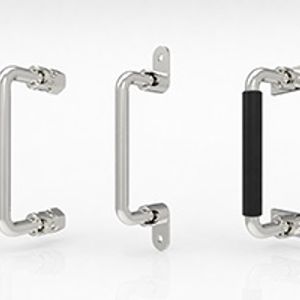
What Is the Core Difference Between Pulls, Knobs, and Edge Handles?
The fundamental distinction comes down to how force is applied when opening a cabinet — pulls distribute grip across two mounting points, knobs concentrate it at one, and edge handles eliminate external hardware entirely by integrating into the door profile itself.
This three-way distinction is the foundation of every handle specification decision, and it's the first clarification we ask for at ForndLock when a client sends us door specs without specifying hardware type — because the answer changes everything downstream, from drilling templates to substrate preparation to finishing requirements around the mounting zone.
Pulls, sometimes called bar handles or linear pulls, use two mounting points and are oriented horizontally or vertically depending on the application. That two-point configuration distributes the opening force across a wider area of the door face, which is why pulls hold up better under high-frequency use. Drawers, in particular, benefit from this load distribution because they're opened with a more direct pulling motion than doors.
Knobs use a single mounting point. They're lower in visual weight, traditionally paired with doors rather than drawers, and simpler to install. The trade-off is grip limitation — a knob concentrates all opening force at one small contact point, which becomes noticeable on heavier doors or in households where grip strength varies.
Edge and integrated handles are the category most commonly misunderstood. The "handleless" kitchen aesthetic that's been popular in contemporary design isn't actually handleless — it uses either recessed flush pulls mortised into the door face or lip pulls that run along the top or side edge of the door. These designs eliminate protruding hardware while preserving a functional opening mechanism. They require no through-holes in the door face, which means different substrate preparation and a different set of finishing considerations around the edge profile.
We had a client come to us once having already committed to a flush-inset door construction on a large kitchen project, only to discover mid-specification that the bar pull they'd selected required a 35mm projection clearance that the frame reveal simply didn't accommodate. Switching to an edge pull at that stage added lead time. Understanding the three-category distinction upfront prevents exactly that kind of problem.
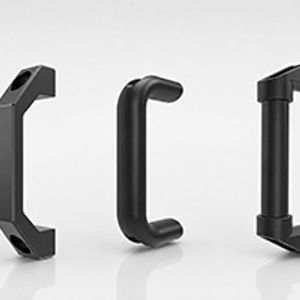
What Are the Main Types of Cabinet Handles by Shape and How Do They Differ?
Shape determines not just appearance but grip mechanics, proportional balance on the door face, and how the handle reads at different viewing distances — which is why we group our handle types by geometry first, then by style application.
Why Do Bar Pulls Remain the Most Specified Handle Type?
Bar pulls dominate specification lists because their straight geometry works across the widest range of cabinet door profiles, and their two-point mounting creates a stable, predictable load distribution that holds up under heavy daily use.
Within the bar pull category, there are meaningful differences that affect both the feel and the visual result. A round-rod bar has a softer grip profile and reads as lighter on the door face. A square-profile bar has sharper edges that register as more architectural and intentional — it reads as more precise, which is why it's common in European-influenced kitchen design. The subtle difference in cross-section changes how the handle catches light, which matters more than most buyers initially expect.
Center-to-center sizing conventions also deserve attention. In the production runs we see most frequently, 96mm is the default for drawer fronts and upper cabinet doors, 128mm and 160mm are standard for base cabinet doors and wider drawer banks, and anything from 305mm to 457mm falls into appliance-pull territory. These aren't arbitrary numbers — they reflect standard door and drawer widths that cabinetmakers have built around for decades, and specifying outside these conventions typically means custom drilling templates.
Bar pulls read as modern in shorter lengths. At appliance-pull proportions, they shift toward transitional, particularly when finished in aged brass or brushed bronze rather than matte black or chrome.
When Does a Cup Pull Outperform a Bar Pull?
Cup pulls outperform bar pulls on wide, shallow drawers where a user naturally scoops rather than pinches — the concave underside accommodates the full hand rather than just the fingertips.
The semi-circular concave form of a cup pull mounts along the drawer face rather than projecting outward, which keeps the hardware profile low while still providing a generous grip area. This geometry has a strong visual association with shaker-profile doors and furniture-style cabinetry, and that association isn't accidental — the recessed logic of a cup pull echoes the inset panel geometry of shaker construction in a way that feels coherent rather than applied.
Material choice matters significantly in this category. Cast brass cup pulls carry a weight and warmth that stamped steel versions cannot replicate. The density of cast brass translates into a tactile quality that registers every time the drawer is opened — it's the difference between hardware that feels like part of the furniture and hardware that feels like an accessory. At ForndLock, we produce both, and the clients who specify cast brass cup pulls for high-end residential and hospitality projects consistently cite the hand-feel as the deciding factor.
Are Knurled and Textured Handles Worth the Extra Production Cost?
Textured handles — including knurled, fluted, and hammered surface variants — justify their higher per-unit cost in high-humidity environments like kitchens and bathrooms, where grip security under wet hands is a functional requirement, not just a design choice.
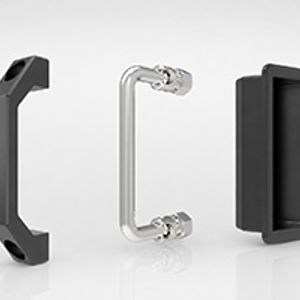
Knurling patterns break down into three main types: diamond knurl, linear knurl, and bead-roll. Diamond knurling provides the most aggressive grip surface and is common in industrial and contemporary applications. Linear knurling has a directional texture that reads as more refined — it's become a popular bridge between decorative and functional in high-end kitchen hardware. Bead-roll produces a softer, more tactile surface that works well in transitional contexts.
Fluted handles occupy a similar space — the vertical channels add texture and visual interest without the raw industrial quality of heavy knurling, which is why they've gained traction in spaces that want some personality without committing to a fully industrial aesthetic.
At ForndLock, we produce custom knurling patterns for clients who want a proprietary grip profile. This is more common in hospitality and high-end residential projects than most buyers expect — a hotel brand specifying hardware across hundreds of rooms has every reason to want a grip texture that's visually distinctive and not available off the shelf.
What Makes T-Bar and D-Bar Handles Different From Standard Pulls?
T-bar handles project at a right angle from the door face, giving more clearance for the hand, while D-bar handles curve back toward the door, creating a closed loop that feels more secure but requires more precise door-face clearance planning.
T-bar handles are particularly well-suited to smaller cabinet doors where a full-length bar pull would be visually disproportionate. The right-angle projection — typically 25–35mm from the door face in ForndLock's standard production range — creates a strong architectural silhouette that reads well in industrial and minimalist interiors without requiring a long center-to-center span.
D-bar handles, sometimes called D-pulls, use a curved form that returns to the door face at both ends, creating an enclosed loop. The closed form reads as more refined and considered than an open bar, which is why it's prevalent in European kitchen design and in spaces where the hardware is meant to feel integrated rather than applied. The projection depth on D-bars typically runs 20–28mm from the door face — slightly shallower than a T-bar — but the enclosed geometry means overlay versus inset door construction has a more pronounced effect on how the handle sits visually.
Handle Shape | Typical Projection | Best Door Type | Common Finish Pairings |
Bar Pull (round rod) | 28–38mm | Flat slab, shaker | Matte black, brushed nickel |
Bar Pull (square profile) | 28–38mm | Flat slab, contemporary | Brushed gold, chrome |
T-Bar | 25–35mm | Flat slab, smaller doors | Matte black, satin steel |
D-Bar | 20–28mm | Flat slab, inset doors | Brushed nickel, aged brass |
Cup Pull | 18–25mm | Shaker, furniture-style | Cast brass, oil-rubbed bronze |
Knurled/Fluted | 28–38mm | Flat slab, contemporary | Brushed gold, antique brass |
How Do You Match Cabinet Handle Types to Door Profiles and Room Context?
The most reliable matching principle we use at ForndLock is to align the handle's dominant line — whether straight, curved, or recessed — with the dominant line of the door profile, so the hardware feels like it belongs to the door rather than sitting on top of it.

Flat-slab doors offer the most flexibility because the door itself provides no visual competition. Bar pulls, T-bars, edge pulls, and recessed flush pulls all work — the door surface is neutral, so handle geometry becomes the focal point. In this context, proportion and finish carry the entire design decision.
Shaker-profile doors are more specific. The recessed center panel and visible frame rails create a geometry that rewards handles with some visual weight and logic. Cup pulls work particularly well here because the concave form echoes the inset panel. Straight bar pulls also work when sized to align with the rail width — a 96mm bar pull centered on a shaker rail reads as intentional; the same pull scaled to 160mm on a narrow door feels mismatched. What doesn't work on shaker doors is overly ornate hardware that fights the door's inherent clean lines.
We had a client specifying hardware for a large shaker kitchen who initially selected a heavily decorative bin pull with scroll detailing. After reviewing the door specs together, we recommended switching to a cast brass cup pull — same warm finish, same furniture-style reference, but the geometry complemented the shaker profile instead of competing with it. The client approved the switch after seeing a sample mounted on an actual door panel, and the final installation read as cohesive in a way the original selection wouldn't have.
Raised-panel and traditional doors already carry significant visual complexity. The door profile itself has depth, shadow lines, and dimensional interest — adding hardware with equal complexity creates noise rather than harmony. Knobs and bin pulls with modest decorative detailing work better here because they contribute to the aesthetic without overwhelming it.
Overlay versus inset installation introduces a proportion variable that's easy to underestimate. Inset doors sit flush inside the frame, which changes how a handle's projection reads in relation to the surrounding reveal. A handle that looks correctly proportioned on an overlay door can feel oversized on an inset door at the same center-to-center measurement, simply because the visual context has changed.
Room context also matters. Bathroom vanities tolerate more decorative handle choices than kitchen base cabinets, which absorb the most mechanical stress in any home. Laundry and utility cabinetry should prioritize grip security and finish durability over decorative intent — a beautifully detailed handle with a lacquered brass finish has no place on a utility room cabinet that gets opened with wet or dirty hands multiple times a day.
ForndLock Industrial Handle Series
What Finish and Material Choices Actually Affect Handle Performance Over Time?
Finish selection is not purely aesthetic — the PVD coating on a matte black handle and the lacquer on a brushed brass handle behave very differently under daily contact, cleaning chemicals, and humidity, and choosing the wrong one means your hardware ages poorly regardless of how good it looked on day one.
Base material is the starting point. Solid brass resists corrosion, takes surface treatments exceptionally well, and carries a density that communicates quality. Zinc alloy is lighter and less expensive, which makes it appropriate for lower-stress applications, but it's more susceptible to corrosion over time if the surface coating is compromised. Stainless steel offers inherent corrosion resistance without depending on a surface coating, which makes it the most forgiving base material in genuinely wet environments.
PVD — Physical Vapor Deposition — is the coating technology that separates durable kitchen hardware from hardware that looks good for six months and then starts to show wear. PVD coatings are applied in a vacuum chamber, bonding the finish at a molecular level rather than depositing it on the surface the way electroplating does. The result is a coating that typically achieves three to five times the surface hardness of standard electroplating, measurable in Vickers hardness ratings. At ForndLock, we apply PVD on all matte black and brushed gold variants specifically because these finishes see the most daily contact and are most likely to show wear if the coating isn't robust.
Brushed versus polished finishes is a decision that affects how the handle ages, not just how it looks initially. Polished finishes show fingerprints and micro-scratches quickly — they require more maintenance to keep looking as they did on installation day. Brushed finishes develop a more graceful patina because the directional texture absorbs minor contact marks rather than reflecting them.
Unlacquered brass is a deliberate choice for a specific design context — the intentional patina that develops over time is the point, not a flaw. But it requires client education. An unlacquered brass handle in a high-use kitchen will look noticeably different within a year, and buyers need to understand that before committing to it rather than discovering it afterward.
For warm-toned rooms with natural wood cabinetry, aged brass and bronze finishes create continuity. For painted or lacquered cabinetry, cool finishes — brushed nickel, chrome, matte black — read as more resolved. ForndLock can also match handle finishes to client-specified RAL colors or proprietary metal treatments for large production runs, which is particularly relevant for hospitality projects where finish consistency across hundreds of units is a specification requirement.
How Do You Decide Between Knobs and Pulls for a Mixed-Hardware Installation?
The most functional approach we recommend is to assign handle type by the motion required to open the surface — a rotational pull for doors (knob) and a linear pull for drawers (bar or cup pull) — then treat any deviation from that logic as a deliberate design choice that needs to be justified by the visual outcome.
The traditional rule exists for ergonomic reasons. Doors swing on hinges, and the natural motion to open them is a slight rotation — a knob accommodates that motion efficiently. Drawers slide on a linear track, and the natural motion is a direct horizontal pull — a bar or cup pull accommodates that more efficiently than a knob, which concentrates force at a single point on a surface that may be heavy or tightly fitted.
Breaking the rule makes sense in specific contexts. An all-pull kitchen — bar pulls on both doors and drawers — creates a cleaner, more architectural result that reads as more intentional than a mixed installation. This approach is common in contemporary kitchens where visual simplicity is the primary goal. An all-knob installation on a furniture-style piece can work when visual daintiness is the design objective and the pieces aren't opened under heavy load.
Mixing within a space is manageable when it's done with a clear logic. The key variables are finish consistency and a legible rationale for which surface gets which hardware type. Same finish across all hardware types is non-negotiable for a mixed installation to read as designed rather than assembled. ForndLock's consistent recommendation for clients ordering mixed hardware is to order samples of both types in the same finish before committing to full production quantities — finish consistency across handle categories can vary between production batches, and discovering a mismatch after delivery creates problems that are entirely avoidable at the sample stage.
ForndLock Handles Series Introduction
Choosing the right cabinet handle type is less about following current trends and more about understanding the relationship between the handle, the door, and the person using it every day. The handle that performs best is the one that fits the door geometry, suits the use context, and holds its finish over years of contact — not the one that looks best in isolation.
At ForndLock, we manufacture handles across all of the categories covered in this guide. Our value isn't just in the product — it's in helping clients make the right specification decision before production begins, which is a different kind of service than simply fulfilling an order.
Whether you're finalizing a kitchen hardware specification, sourcing for a furniture production run, or developing custom handle profiles for a hospitality project, we're set up to support you from sample stage through full-volume delivery. Send your project requirements, drawings, or custom finish requests directly to [email protected] and we'll come back to you with a clear path forward.
Frequently Asked Questions
Q1: What is the most durable material for cabinet handles in a high-use kitchen?
Solid brass and stainless steel are the most durable base materials for kitchen cabinet handles. Solid brass resists corrosion and takes PVD coatings exceptionally well, while stainless steel offers inherent corrosion resistance without relying on a surface coating. For the finish layer, PVD-coated handles significantly outlast electroplated alternatives in high-contact environments — PVD coatings typically achieve three to five times the surface hardness of standard electroplating, measurable in Vickers hardness ratings.
Q2: What center-to-center measurement should I specify for cabinet pulls?
The most common center-to-center measurements for standard cabinet pulls are 96mm, 128mm, and 160mm, with 96mm being the default for drawer fronts and upper cabinet doors, and 128mm to 160mm for base cabinet doors and wider drawer banks. For appliance pulls, lengths of 305mm to 457mm are typical. Always verify against your specific door width before finalizing the drilling template.
Q3: Can the same handle type work on both kitchen cabinets and bathroom vanities?
Yes, but the selection criteria differ. Kitchen cabinets prioritize grip security and finish durability under cooking conditions, while bathroom vanities can accommodate more decorative handle choices since they see less mechanical stress. If you're specifying the same handle across both rooms for a cohesive look, choose a finish rated for humidity resistance — PVD matte black and brushed nickel both perform well in both environments.
Q4: What is the difference between a recessed pull and an edge pull?
A recessed pull is mortised into the door face so it sits level with the surface — it requires a routed pocket in the door. An edge pull mounts along the top or side edge of a door or drawer front and protrudes slightly, requiring no routing. Edge pulls are easier to retrofit; recessed pulls require more precise door preparation but deliver a cleaner visual result.
Q5: How do I specify custom handle finishes for a large production order?
For custom finish specifications, we typically need a RAL color code, a physical reference sample, or a detailed finish description — for example, brushed warm gold, PVD-coated, 200 grit directional brush. ForndLock works with clients to develop and approve finish samples before committing to production runs. Send your project brief and any reference materials to [email protected] and we'll confirm feasibility and lead time.