
What Are The Differences Between Butt Hinges and Concealed Hinges For Heavy Doors?
Selecting the correct hardware for industrial and heavy-duty applications is a critical engineering decision that directly impacts the safety, longevity, and functionality of a structural system. As manufacturing experts at ForndLock, we frequently consult with industrial engineers, purchasing managers, and OEM clients who face complex challenges regarding door hardware specification. The physical demands placed on heavy doors—whether they are acoustic enclosures, blast-resistant panels, or high-traffic commercial entryways—require a rigorous understanding of mechanical load distribution.
The core of this discussion inevitably revolves around The Differences Between Butt Hinges and Concealed Hinges. While both mechanisms serve the fundamental purpose of allowing a door to pivot, their underlying engineering principles, material constraints, and kinetic behaviors are vastly different. To make an informed specification, one must look beyond aesthetic preferences and analyze the empirical data regarding shear strength, tensile stress, and dynamic fatigue. In this comprehensive technical analysis, we will deconstruct the mechanical properties of both hinge types, evaluate their performance under extreme industrial conditions, and provide actionable insights drawn directly from our manufacturing and testing facilities.
How Do Their Structural Designs Differ?
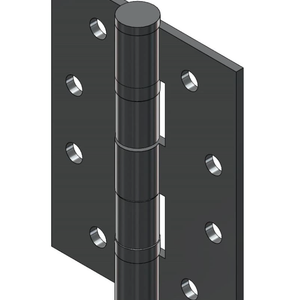
The fundamental structural contrast lies in their pivot mechanisms: butt hinges rely on a robust, single-axis fixed pin, whereas concealed hinges utilize a complex, multi-axis linkage system.
Understanding this structural divergence is the first step in specifying the correct hardware for any given application. The architecture of a hinge dictates how kinetic energy and static weight are transferred from the moving door leaf to the stationary frame. In industrial environments, where doors frequently exceed standard architectural dimensions and weights, the geometry of the pivot point becomes the primary factor in determining the system's overall lifespan. At ForndLock, our engineering team approaches hinge design by analyzing the load paths created by these structures. A direct, uninterrupted load path minimizes the opportunity for mechanical deflection, whereas a dispersed or indirect load path introduces multiple variables that must be tightly controlled to prevent premature failure.
How Do Single-Axis Mechanisms Work?
Single-axis mechanisms operate by transferring the door's entire weight directly through solid knuckles and a central pin into the reinforced door frame.
The engineering elegance of a traditional butt hinge lies in its absolute mechanical simplicity. A single-axis hinge consists of two solid metal leaves, extruded or cast with interlocking knuckles, joined by a single cylindrical pin. When a heavy door is hung on this type of hardware, the vertical downward force (static load) and the rotational force (dynamic moment) are channeled directly through the thick metal knuckles and concentrated onto the shear plane of the central pin. Because the pin is a solid cylinder of hardened metal, its resistance to shear stress is exceptionally high. There are no intermediary moving parts to absorb or deflect the kinetic energy.
This direct load transfer path inherently minimizes potential failure points. In a mechanical system, every additional joint, pin, or linkage introduces a new tolerance stack and a new opportunity for wear. By relying on a single robust pin, butt hinges eliminate the compounding errors that can occur in more complex assemblies. Furthermore, the longevity of this mechanism relies heavily on the machining precision of the interlocking components. ForndLock engineers optimize knuckle tolerances to prevent lateral shift, machining the internal diameter of the knuckles and the external diameter of the pin to a tolerance of 0.01mm. This microscopic clearance ensures that the door swings smoothly without any horizontal play, preventing the door from sagging or binding against the frame even after hundreds of thousands of operational cycles.
Why Are Multi-Axis Systems Complex?
Multi-axis systems require a series of interconnected articulated arms to fold completely within the door profile, which inherently disperses load-bearing stress across multiple smaller pivot points.
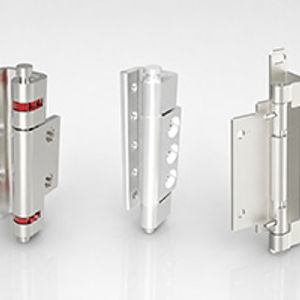
To achieve the aesthetic goal of complete invisibility when a door is closed, concealed hinges must employ a sophisticated kinematic mechanism, often utilizing a 7-axis movement system. Instead of rotating around a single fixed point outside the door's surface, the pivot point of a concealed hinge shifts dynamically as the door opens. This requires a complex assembly of articulated linkages, sliding tracks, and multiple miniature pivot pins that fold compactly into mortised pockets routed into the door and frame.
The mechanical trade-off for achieving this complete invisibility is significant. Because the entire linkage assembly must fit within the narrow profile of the door leaf, the articulating arms must be manufactured with relatively thin cross-sections. This geometric constraint makes them inherently more susceptible to high-stress deformation when subjected to heavy loads. To illustrate this vulnerability with concrete engineering data, we can compare the average cross-sectional area of a concealed hinge's linkage arm versus a solid butt hinge pin. A standard heavy-duty butt hinge typically utilizes a 10mm diameter solid stainless steel pin, providing a continuous cross-sectional shear area of approximately 78.5 square millimeters. In stark contrast, the primary load-bearing linkage arm in a high-end concealed hinge may only measure 3mm thick by 8mm wide, yielding a cross-sectional area of just 24 square millimeters. Furthermore, because the concealed hinge distributes the load across multiple moving joints, the stress is not purely shear; it introduces bending moments across the thin linkages, dramatically increasing the risk of plastic deformation under continuous heavy industrial use.
Which Hinge Bears Heavy Loads Better?
When evaluating butt hinge vs concealed hinge load bearing capacity for heavy doors, butt hinges consistently offer superior strength due to their direct load distribution and thicker metal extrusion.
In the realm of industrial hardware, the ultimate metric of success is load-bearing capacity over time. Heavy doors—such as lead-lined radiation doors, thick acoustic barriers, or oversized solid steel security portals—exert immense continuous static loads on their hardware, compounded by the dynamic kinetic shock of opening and closing. The physics of these forces dictate that the hardware with the most direct load path and the greatest mass of high-tensile material will perform better. While concealed hinges have made significant advancements in recent times, their fundamental architectural constraints limit their ultimate capacity when compared to the unyielding brute strength of a properly engineered butt hinge.
What Materials Handle Industrial Weights?
Heavy-duty industrial applications demand 304 or 316 stainless steel with a minimum leaf thickness of 3mm to prevent structural deformation under continuous static loads.
Material specification is inextricably linked to load capacity, and this is where the differences between the two hinge types become even more pronounced. Traditional butt hinges designed for heavy industrial use are almost exclusively manufactured from cold-rolled or extruded stainless steel, specifically grades 304 or 316. These austenitic stainless steels possess exceptional yield strength, tensile strength, and resistance to fatigue. When ForndLock produces hardware for doors exceeding 100kg, we mandate a minimum leaf thickness of 3mm, often scaling up to 4mm or 5mm depending on the exact moment of inertia calculated for the specific door width and weight.
Conversely, the complex geometry required for the multi-axis linkages in concealed hinges is notoriously difficult and expensive to machine from solid stainless steel. As a result, many concealed hinges rely heavily on zinc alloy (Zamak) die-casting for their intricate internal components. While zinc alloys are excellent for casting complex shapes with tight tolerances, their tensile strength and resistance to material creep under continuous static load are vastly inferior to stainless steel. Furthermore, the physical size constraints of the concealed mortise pockets limit the maximum thickness of the materials that can be used. If the linkages are made too thick, the hinge will not fold flat into the door. This inherent limitation dictates that ForndLock engineers must strictly match specific metal grades to specific operational parameters, and for industrial weights, the thick stainless steel extrusion of a butt hinge remains the only mathematically viable option.
How Do Dynamic Test Results Compare?
Our internal fatigue testing demonstrates that standard butt hinges can sustain over 500,000 cycles with 150kg doors, while standard concealed hinges typically experience significant sagging under the same parameters.
To validate our engineering models, ForndLock conducts rigorous dynamic testing in our quality control laboratories. Static load capacity is only half the equation; how a hinge performs under the kinetic stress of continuous operation determines its real-world viability. We subject both hinge types to automated cycle testing using pneumatic arms connected to 150kg solid steel test doors, measuring the vertical drop at the latch side of the door using precision laser micrometers.
The comparative table below illustrates the sag measurement (in millimeters) after 100,000 continuous opening and closing cycles under a 150kg load:
Hinge Type | Material | Load | Cycles | Sagging Deformation (mm) |
Heavy-Duty Butt Hinge | 316 Stainless Steel (4mm) | 150kg | 100,000 | 0.12 mm |
Multi-Axis Concealed Hinge | Zinc Alloy / Steel Hybrid | 150kg | 100,000 | 3.85 mm |
The concept of "sagging deformation" is critical for OEM clients to understand. When a hinge sags, it is not merely a cosmetic issue; it represents plastic deformation of the metal components. Once the material yields past its elastic limit, the damage is permanent. A sag of nearly 4mm at the latch side will cause a heavy industrial door to scrape against the floor, bind in the frame, and destroy perimeter weather stripping or acoustic seals. Our manufacturing insights confirm that single-axis designs maintain alignment significantly longer under dynamic stress because the wear is distributed evenly along the massive surface area of the central pin and the integrated thrust ball bearings. In multi-axis systems, the wear is concentrated on the miniature linkage pins, causing rapid tolerance degradation that exponentially accelerates the sagging process.
When Are Concealed Hinges More Suitable?
Engineers must carefully consider when to use concealed hinges instead of butt hinges for interior doors by calculating the exact door weight and assessing the aesthetic requirements of the architectural space.
Despite their limitations in ultra-heavy industrial applications, multi-axis hardware occupies a highly valuable and necessary space in modern design. The objective is not to dismiss one technology in favor of another, but to apply the correct engineering solution to the correct problem. Understanding when to use concealed hinges instead of butt hinges for interior doors requires a holistic evaluation of the project's parameters. When visual minimalism, seamless architectural integration, and precise spatial alignment are prioritized over raw load-bearing brute force, concealed hardware provides capabilities that traditional surface-mounted hardware simply cannot match.
What Are The Interior Door Thresholds?
We recommend restricting concealed hinges to interior applications where the door leaf weighs less than 80kg and operates in a controlled, low-impact environment.
Defining the safe operational parameters for multi-axis hinges ensures that they perform flawlessly over their intended lifespan. ForndLock engineers generally advise that the optimal performance envelope for high-quality concealed hinges is found in interior doors weighing between 30kg and 80kg. Within this weight range, the kinetic forces generated during regular operation are well within the yield strength limits of the articulated linkages.
Interior doors, such as those found in executive office suites, luxury residential panels, or high-end hospitality environments, benefit immensely from the unique features of multi-axis hardware. The primary advantage is 3D adjustability. Most premium concealed hinges allow technicians to adjust the door along the X, Y, and Z axes with a simple turn of an Allen key. This micro-adjustment capability is essential for achieving perfect, uniform shadow gaps around flush-fitting architectural doors. However, knowing exactly when to use concealed hinges instead of butt hinges for interior doors means acknowledging the math. Engineers must calculate the hinge-to-weight ratio accurately. If an interior door is exceptionally wide, the center of gravity shifts further from the pivot axis, increasing the bending moment. In such cases, even if the door is under 80kg, the leverage applied to the concealed linkages may necessitate upgrading to a heavier class of hinge or reverting to a traditional single-axis solution to prevent premature mechanical failure.
ForndLock: Heavy-Duty Butt Hinges for Perfect Cabinet Door Alignment!
How Does Installation Impact Long-Term Stability?
Concealed hinges require precise CNC routing for the deep mortise pockets; any deviation in routing depth severely compromises the hinge's multi-axis geometry and long-term stability.
The installation process for multi-axis hardware is highly unforgiving and demands strict adherence to manufacturing tolerances. Because the entire bulky mechanism must fold into the door and frame, deep mortise pockets must be excavated. This requires precise CNC (Computer Numerical Control) routing in a factory setting. If the mortise pocket is routed even a fraction of a millimeter too deep or off-axis, the complex geometry of the 7-axis linkage is thrown out of alignment. This misalignment forces the hinges to fight against each other during the swing arc, leading to rapid wear of the internal pivot pins and eventual catastrophic failure of the hinge body.
Compare this stringent requirement with the relatively straightforward installation of traditional butt hinges. A butt hinge requires only a shallow surface mortise (typically 3mm to 4mm deep) to sit flush with the edge of the door, and in many heavy steel applications, they are simply surface-mounted or welded directly to the frame. This shallow mortise preserves the structural integrity of the door's internal web. Furthermore, environmental factors significantly impact tightly toleranced concealed hinges. In large buildings, structural settling or slight warping of wooden door frames due to humidity fluctuations can easily misalign the deep pockets of a concealed hinge, causing the door to bind. A single-axis butt hinge, with its robust pin and knuckle design, offers a much wider margin of error and can absorb minor structural shifts without compromising the door's operational stability.
How Did We Solve OEM Challenges?
By analyzing the specific failure points of a client's heavy acoustic doors, ForndLock engineers successfully replaced failing multi-axis hardware with custom-engineered heavy-duty butt hinges to restore operational integrity.
Theoretical engineering principles are best validated through real-world application and problem-solving. At ForndLock, our direct engagement with OEM clients frequently involves rescuing projects where hardware specification errors have led to systemic failures in the field. The consequences of selecting inappropriate hardware for heavy applications go far beyond mere inconvenience; they can result in severe safety hazards, compromised product performance, and massive warranty replacement costs. The following case study highlights our analytical approach to hardware failure and demonstrates how returning to fundamental mechanical principles can solve complex industrial challenges.
What Caused The OEM Client Failure?
A European acoustic enclosure manufacturer experienced severe door sagging because they mistakenly prioritized the aesthetic appeal of concealed hinges on 120kg steel doors.
We were recently contacted by a prominent OEM client based in Europe that specializes in manufacturing heavy-duty acoustic enclosures for industrial generator sets. These enclosures are designed to block extreme decibel levels emitted by the machinery, requiring thick, multi-layered steel doors packed with dense sound-dampening insulation. The doors in question weighed exactly 120kg each. Driven by a design directive to create a sleek, modern exterior with no visible hardware, the client's procurement team specified high-capacity multi-axis concealed hinges for the enclosures.
Within three months of deployment in active industrial facilities, the client began receiving critical failure reports. The continuous low-frequency vibration from the generators, combined with the dynamic load of maintenance personnel repeatedly opening and closing the heavy steel doors, overwhelmed the zinc-alloy linkages of the concealed hinges. During a joint site inspection, ForndLock engineers utilized laser diagnostic tools to measure the exact deformation. We observed a catastrophic 4.5 millimeter drop at the latch side of the doors. This sagging caused the doors to scrape heavily against the concrete floor, making them nearly impossible to open. More critically, the structural drop broke the tight compression seal of the acoustic perimeter gaskets, allowing 85dB of machine noise to leak into the surrounding environment, completely invalidating the primary function of the enclosure.
How Did ForndLock Improve The Design?
We engineered a bespoke ball-bearing butt hinge solution featuring reinforced 4mm stainless steel leaves, completely eliminating the structural sag while maintaining tight acoustic seals.
Upon analyzing the failure data, our engineering team determined that no multi-axis hinge on the market could survive the specific combination of the 120kg static load and the continuous vibratory stress of the generator environment. We advised the OEM client that structural integrity must supersede aesthetic invisibility. To resolve the crisis, ForndLock engineered a bespoke heavy-duty butt hinge tailored specifically to their frame dimensions. We utilized 4mm thick 316L exterior-grade stainless steel to completely eradicate any possibility of material yield. To handle the dynamic load and ensure smooth operation, we integrated high-load thrust ball bearings between each precision-machined knuckle, drastically reducing friction and wear on the central shear pin.
The results of this redesign were immediate and definitive. We subjected the newly retrofitted acoustic doors to our accelerated testing protocols. The custom butt hinges passed a grueling 200,000-cycle stress test while being subjected to simulated generator vibrations, yielding zero measurable deformation at the latch side. The acoustic seals remained perfectly compressed, restoring the enclosures to their full decibel-reduction rating. This case study strongly emphasizes the importance of consulting a specialized manufacturer during the early prototyping phase of any heavy-duty project, ensuring that the hardware specification is driven by empirical data rather than purely architectural desires.
How Can You Request Custom Solutions?
By partnering directly with a dedicated manufacturer like ForndLock, purchasing managers and engineers can obtain hardware that precisely matches the rigorous specifications of their most demanding projects.
The engineering consensus remains clear: form must always follow function, particularly regarding heavy load-bearing capacities in industrial environments. While multi-axis concealed hinges offer unparalleled visual elegance and precise 3D adjustability for lighter interior architectural spaces, they cannot defy the laws of physics. When dealing with extreme weights, continuous dynamic cycles, and harsh operational environments, the direct load path, massive shear strength, and unyielding material thickness of heavy-duty butt hinges make them the undisputed choice for long-term industrial reliability. Understanding the mechanical boundaries of your hardware is the key to building systems that last.
Stop guessing with your hardware specifications and risking the integrity of your industrial products. If you are an engineer or purchasing manager facing complex load-bearing challenges, we invite you to leverage our manufacturing expertise. Send your specific project requirements, detailed CAD drawings, or requests for physical testing samples directly to our engineering team at: [email protected]. We will work closely with you to engineer, test, and manufacture the exact pivoting solution your heavy-duty application demands.