What Are the 3-A Certification Requirements for Sanitary Leveling Feet in Dairy Processing?
3-A certification requires sanitary leveling feet to be built from solid, non-porous stainless steel with sealed, self-draining surfaces that leave no crevice for bacteria to hide, and every component must be independently verified against the 3-A Sanitary Standards before it can carry the 3-A symbol.
At ForndLock, we work with suppliers to dairy processing equipment manufacturers, and the question we hear most often during sourcing calls is a simple one: "Will this leveling foot actually pass a 3-A audit?" It sounds like a yes-or-no question, but the honest answer requires unpacking what 3-A certification actually checks, because a stainless steel foot that looks sanitary and one that is verified sanitary are not the same product.
Instead, we want to walk through the specific technical requirements that 3-A auditors examine on leveling feet used in dairy processing equipment, how these requirements differ from the closely related EHEDG standard, and — because certification alone does not guarantee a safe installation — how to size the load capacity correctly for stainless steel conveyor lines. These two decisions, compliance and capacity, are what determine whether a leveling foot performs reliably once it is bolted under a working dairy line rather than sitting in a catalog photo.
What Does 3-A Certification Actually Require for Leveling Feet?
3-A certification for leveling feet centers on four hard requirements — solid non-hollow shanks, corrosion-resistant stainless steel grades, sealed moving parts, and surface finishes smooth enough to resist bacterial adhesion.
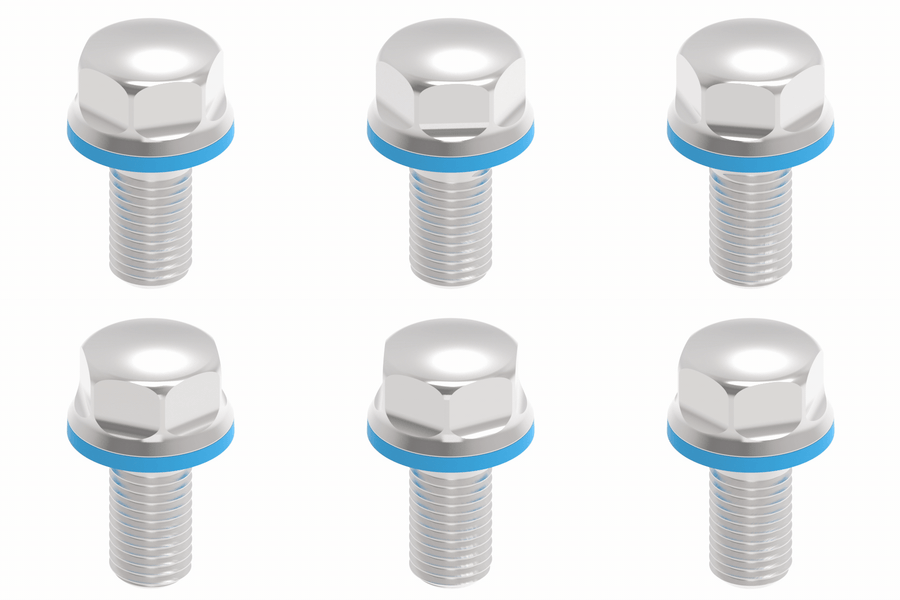
The 3-A Sanitary Standards, including the provisions referenced under 88-01 for equipment supports, do not treat leveling feet as an afterthought component. They evaluate the foot as a piece of process-adjacent hardware that sits directly under a machine handling milk, cream, or cultured products, often within splash range of product residue and cleaning chemicals. That means the standard looks at structural design just as closely as it looks at material grade.
In practice, auditors and testing bodies check four dimensions before a specific model — not just a general product line — earns the right to display the 3-A mark: the base material, the sealing method at every moving joint, the surface roughness on product-adjacent zones, and the drainage geometry of the base plate. A foot that passes on three of these but fails on drainage does not get certified. This is the detail that catches procurement teams off guard: certification is granted per model and per dimension, not as a blanket approval for an entire product family.
Requirement | What 3-A Checks | Typical Acceptable Range |
Shank construction | Solid, non-hollow threaded stem | No internal cavities or exposed threads |
Material grade | Corrosion resistance under washdown | AISI 304 or 316 stainless steel |
Surface finish | Resistance to bacterial adhesion | Ra ≤ 0.8 µm on product-adjacent surfaces |
Sealing | Protection of moving joints from fluid ingress | Continuous seal, no dead space |
What Materials Must Comply With 3-A Standards?
3-A compliant leveling feet must be machined from solid AISI 304 or 316 stainless steel with no exposed threads or hollow cavities that could trap moisture or residue.
The choice between 304 and 316 usually comes down to chemical exposure. 304 performs well in general dairy environments with standard detergent-based cleaning, while 316 — with its added molybdenum — holds up better against chloride-heavy sanitizers common in cheese and whey processing areas. A solid rod body is not a design preference here; it is a compliance floor. Hollow shanks create internal spaces where condensation and cleaning fluid collect and cannot be flushed out during a standard washdown cycle. Elastomeric seals paired with the shank, typically NBR, EPDM, or food-grade polyurethane, must independently meet FDA or EC 1935/2004 requirements, since a compliant steel body paired with a non-compliant seal still fails the overall assembly review.
Hygienic Locking System for Food Industry and Medical Engineering
What Surface and Sealing Criteria Apply?
Product-adjacent surfaces must reach a finish of roughly Ra ≤ 0.8 µm and every moving joint needs a continuous seal so cleaning fluids cannot penetrate internal threads.
A rougher surface gives bacteria more microscopic terrain to attach to, and it also slows down manual wipe-down during shift changes. The base plate geometry matters just as much: a flat-bottomed foot pools rinse water at its perimeter, while a slightly sloped plate lets that water run off before it stagnates. In our own work specifying sealed structural components for food machinery clients, we have found that a double sealing-ring design at the spindle joint — one ring above the adjustment sleeve and one at the base — closes the two gaps that single-seal designs tend to miss. It is a small mechanical detail, but it is usually the difference between a foot that sails through a hygiene audit and one that gets flagged for a hairline gap around the thread.
Why Does Dairy Processing Demand Stricter Compliance Than General Food Standards?
Dairy processing involves frequent CIP/SIP washdowns, high humidity, and dairy residues that are especially prone to bacterial regrowth, so leveling feet in this sector must withstand more aggressive and more frequent sanitation cycles than typical food-grade components.
General food-grade equipment might see a thorough cleaning once or twice per shift. A dairy line running Clean-in-Place and Sterilize-in-Place cycles subjects every exposed component, leveling feet included, to hot caustic and acid rinses multiple times per day. Milk fat and protein residues are notably good at supporting bacterial regrowth if they are left in a crevice for even a few hours, which is why the margin for design error is smaller here than in, say, a dry packaging line.
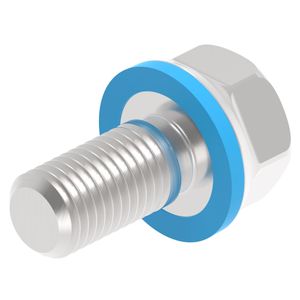
Consider a cheese vat support or a yogurt filler base: these sit in an environment where humidity rarely drops, drainage channels run nearby, and cleaning crews use pressure washdown as standard procedure rather than occasional maintenance. A leveling foot with exposed threads under these conditions accumulates residue in the thread valleys, and cleaning that residue out consistently takes noticeably longer and consumes more water and chemical volume than cleaning a sealed foot with no exposed thread. That gap in cleaning effort compounds daily, and over a year it becomes measurable in water usage, labor hours, and downtime scheduled specifically for deep sanitation. It is one of the quieter costs of choosing an uncertified component that looks similar on a spec sheet but was never built to the same sealing tolerance.
How Do 3-A and EHEDG Requirements Differ for Dairy Equipment?
3-A certification is the benchmark most widely recognized across North American dairy and food plants, while EHEDG is the European standard favored for cleanroom-level sterility, and the two share similar design principles but differ in testing bodies and regional acceptance.
Both standards agree on the basics — solid stainless construction, sealed joints, smooth finishes — but they diverge in emphasis and in who signs off on compliance. 3-A Sanitary Standards, Inc. authorizes use of its symbol after a documented review against its published criteria, and it remains the standard most dairy plants in the United States and Canada expect to see on incoming equipment. EHEDG certification, issued by the European Hygienic Engineering and Design Group, leans toward cleanroom and high-sterility applications and often specifies 316L stainless as a baseline rather than an upgrade option.
Factor | 3-A Sanitary Standards | EHEDG |
Primary region | North America | Europe |
Typical material baseline | AISI 304/316 | AISI 316L |
Testing body | 3-A Sanitary Standards, Inc. | EHEDG-authorized labs |
Common application | Dairy, food, beverage processing | Cleanroom, high-sterility food/pharma |
For a procurement engineer sourcing equipment that will ship to plants across both regions, the practical guidance is to check what the downstream customer's own compliance documentation requires before locking in a supplier. A plant selling into markets that reference EHEDG in their audits will not accept a 3-A-only certificate as a substitute, even though the physical designs often look nearly identical.
ForndLock Stainless Steel Hygienic Latches for Food & Pharma Cabinets
How Should You Select Sanitary Leveling Feet Load Capacity for Stainless Steel Conveyor Lines?
Selecting the right load capacity means calculating the total static and dynamic weight per foot — including equipment mass, product load, and vibration factors — then choosing a leveling foot rated with a reasonable safety margin above that figure.
This is where certification and engineering judgment intersect, and it is also where we see the most preventable mistakes during selection. The basic calculation starts simply: take the total weight of the equipment, divide it by the number of support points, then add an allowance for dynamic load introduced by motor vibration and product accumulation. A conveyor frame that weighs 2,400 kg on eight feet is not evenly distributing 300 kg per foot in practice — uneven floor contact, motor placement, and product buildup at transfer points routinely shift more weight onto some feet than others.
On stainless steel conveyor lines specifically, this matters more than on stationary tanks because conveyors run continuously and experience start-stop cycling throughout a shift. Every stop introduces a brief inertial load spike, and every start does the same in reverse. A foot rated exactly at the calculated static load, with no margin, is being asked to absorb load conditions it was never tested against.
What Load Factors Matter Most for Conveyor Lines?
On conveyor lines, the decisive factors are total line weight distribution, motor-driven vibration, and peak product accumulation during stoppages, not just the equipment's empty weight.
Picture a stainless conveyor moving packaged dairy cartons toward a case packer. Under normal running conditions, load per foot might sit well within rated capacity. But if the downstream packer jams and product backs up on the belt for even ninety seconds, the accumulated weight at that section of the line can climb well past the figure used in the original sizing calculation. Selecting feet based only on the empty or lightly loaded scenario ignores this realistic operating condition, which is exactly the scenario that causes premature failure months after installation rather than during initial commissioning.
How Do You Avoid Under- or Over-Sizing Feet?
Undersizing risks premature thread wear and misalignment, while oversizing wastes cost and space, so the safest approach is matching rated capacity to actual load with roughly a 20–30% safety margin.
Undersized feet show their strain gradually — a slight tilt in the frame, a thread that starts binding during height adjustment, or a foot pad that compresses unevenly compared to its neighbors. By the time these symptoms are visible, the equipment has often been running out of level for weeks, which affects product flow and seal integrity elsewhere on the line. Oversizing avoids that risk but introduces its own inefficiencies: larger feet cost more, take up more floor clearance, and in tight equipment layouts can interfere with cleaning access underneath the frame. A 20–30% margin above calculated peak load tends to absorb realistic vibration and accumulation scenarios without pushing the specification into unnecessary excess.
What Should You Verify Before Purchasing Certified Sanitary Leveling Feet?
Before purchasing, confirm the supplier can provide the actual 3-A certificate for the specific model, documented load ratings, and material traceability — verbal claims of "hygienic design" are not the same as verified compliance.
Three documents should be on your checklist before an order is placed: the 3-A certificate naming the exact model number, a material certification confirming the stainless grade actually used in production, and load rating data that reflects tested rather than estimated capacity. A supplier who describes a product as "hygienic design" without producing any of these three documents is describing an intention, not a verified outcome.
In our experience helping clients cross-check equipment drawings against supplier certification packages, the most common issue is not outright fraud but mismatch — a certificate that covers a similar but not identical model, or a load rating quoted for a different mounting configuration than what appears on the actual purchase order. These gaps rarely surface until an audit, at which point replacing non-compliant feet mid-installation is far more disruptive than catching the mismatch during procurement review.
Building Compliance and Capacity Into One Decision
Certification and load selection are not two separate purchasing checkboxes — they are the two conditions that together decide whether a leveling foot actually performs on a dairy production line rather than just passing inspection on delivery. A foot with a valid 3-A certificate but the wrong capacity rating will still tilt under peak conveyor load. A foot rated correctly for weight but missing sealed joints will still fail a sanitation audit. Both details need to match the specific equipment drawing, not a general product category.
At ForndLock, we approach industrial hardware the same way — matching component specification to the actual mechanical and compliance conditions of a project rather than defaulting to a catalog-standard part. If you are specifying leveling feet for a dairy line and want a second set of eyes on your drawings, load calculations, or certification documentation, send us your project details and we will help you work through the sizing and compliance questions before you commit to an order. Sample requests are also available if you want to verify fit and finish firsthand. For custom configurations or specific mounting requirements, reach us directly at [email protected].
As dairy processing lines move toward higher automation and tighter cleaning cycles, the precision with which feet are matched to both certification requirements and real load conditions will only become a more decisive factor in long-term equipment reliability.