
The Ultimate Guide to Stainless Steel Door Hinges for Engineers
Throughout this comprehensive resource, you will learn exactly how different alloys perform under extreme stress, the precise impact of various environmental contaminants, and the mechanical engineering principles that define heavy-duty capacity. We base our insights not on theoretical assumptions, but on empirical data gathered directly from ForndLock's internal testing labs. In our facilities, we subject our hardware to rigorous cyclic salt spray testing, extreme temperature fluctuations, and relentless dynamic load simulations to replicate the exact conditions our OEM clients face in the field. By leveraging this first-hand manufacturing experience, this guide serves as your definitive reference for making informed, data-driven procurement decisions.

Why Select Stainless Steel Hinges?
You should select stainless steel hinges because they offer unmatched tensile strength and a natural passive chromium layer that stops severe industrial corrosion. This material guarantees continuous, safe operation for heavy equipment doors without requiring frequent maintenance.
When engineering access points for industrial facilities, the baseline material selection dictates the entire trajectory of the equipment's lifespan. Stainless steel stands apart from standard iron or aluminum alternatives due to its unique combination of mechanical resilience and chemical stability. From a mechanical perspective, austenitic stainless steel provides exceptional yield strength, allowing it to bear immense radial and axial loads without suffering from permanent deformation. Furthermore, it maintains its structural integrity across extreme temperature gradients, resisting embrittlement in freezing conditions and maintaining tensile strength in high-heat industrial processing environments.
Inferior materials inevitably degrade when exposed to the harsh realities of industrial facilities. Standard carbon steel, even when coated, is highly susceptible to oxidation the moment its protective layer is scratched or compromised by mechanical wear. Aluminum, while lightweight, lacks the necessary shear strength for heavy-duty OEM machinery and is prone to galvanic corrosion when paired with dissimilar metals in conductive environments. By specifying stainless steel, engineers eliminate these vulnerabilities, ensuring that the hardware remains fully functional and structurally sound regardless of the operational demands placed upon it. The initial investment in superior metallurgy pays dividends by drastically reducing the total cost of ownership through minimized maintenance interventions and extended operational longevity.
What Causes Hinges To Fail?
Industrial hinges typically fail due to galvanic corrosion, insufficient gauge thickness for dynamic loads, or abrasive wear within the knuckle joints. When the wrong alloy is specified for a harsh environment, the structural integrity degrades rapidly.
ForndLock Hinge Product Range
Moisture and chemical exposure are the primary catalysts for the breakdown of non-stainless materials. When standard iron or low-grade steel is exposed to industrial condensation, washdown chemicals, or atmospheric moisture, an electrochemical reaction occurs that converts the iron into iron oxide, commonly known as rust. This oxidation process causes the metal to expand, flake, and lose its load-bearing capacity, eventually leading to the complete seizure or physical shearing of the hinge mechanism.
Beyond chemical degradation, mechanical stress plays a critical role in hardware failure. High-frequency opening cycles on OEM machinery generate immense friction and dynamic loading within the knuckle joints. If the metal lacks the necessary hardness or if the pin is not properly toleranced, this constant friction leads to abrasive wear, elongating the knuckles and causing the door to sag. Furthermore, dynamic loads, such as heavy vibrations from nearby industrial equipment or sudden impacts, can cause metal fatigue in hinges that possess insufficient gauge thickness, leading to catastrophic structural failure.
How Does Chromium Prevent Rust?
Chromium prevents rust by reacting with oxygen to form a microscopic, self-healing passive oxide layer on the metal surface. If the hinge is scratched during operation, this layer instantly reforms to block moisture from attacking the underlying iron.
The defining metallurgical characteristic of stainless steel is its chromium content, which must be a minimum of 10.5 percent by mass. Unlike coatings or paints that sit on top of the metal, this chromium is alloyed throughout the material. When exposed to oxygen in the atmosphere, the chromium rapidly oxidizes to form an incredibly thin, invisible layer of chromium oxide over the entire surface of the hardware. This passive layer acts as an impenetrable barrier, preventing water molecules and oxygen from reaching the vulnerable iron beneath.
This self-healing property is absolutely mandatory for outdoor and maritime applications where mechanical damage is inevitable. In a busy industrial setting, equipment doors are frequently bumped, scraped, and subjected to abrasive forces. If a painted carbon steel hinge is scratched, the exposed iron immediately begins to rust, and the corrosion spreads beneath the remaining paint. However, when a stainless steel hinge is scratched, the newly exposed chromium instantaneously reacts with the surrounding oxygen to regenerate the passive layer, effectively sealing the wound before any corrosive damage can occur.
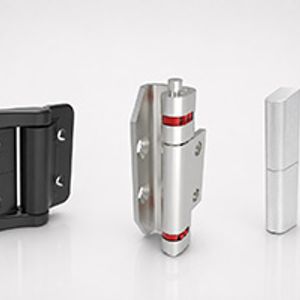
Which Stainless Grade Is Superior?
Grade 316 is generally superior for extreme environments due to its molybdenum content, whereas Grade 304 is highly effective for standard moisture exposure. The best grade depends entirely on your project's specific chemical and atmospheric exposure levels.
The debate between Grade 304 and Grade 316 is one of the most critical discussions in industrial hardware specification. Moving beyond basic definitions, the distinction lies in their precise chemical compositions and how those microstructures react to specific atmospheric threats. Both are austenitic alloys, meaning they are non-magnetic and offer excellent formability and weldability. However, Grade 304 relies primarily on an 18 percent chromium and 8 percent nickel composition. Grade 316, while maintaining similar chromium and nickel levels, introduces 2 to 3 percent molybdenum into the alloy matrix.
This addition of molybdenum fundamentally alters the metal's resistance to localized corrosion mechanisms. ForndLock's internal testing insights reveal a stark contrast in the cost-to-lifespan ratios of these two grades depending on the deployment environment. For standard applications, specifying Grade 316 over Grade 304 introduces unnecessary material costs without providing a tangible increase in operational lifespan. Conversely, utilizing Grade 304 in highly corrosive environments results in rapid hardware failure, making it a financially disastrous choice despite its lower initial procurement cost. To assist procurement officers in making data-driven decisions, we categorize the performance metrics of these alloys based on their Yield Strength, Pitting Resistance Equivalent Number, and ideal use cases.
Specification | Grade 304 | Grade 316 |
Yield Strength | ~205 MPa | ~205 MPa |
Pitting Resistance Equivalent Number | ~18 to 20 | ~23 to 28 |
Ideal Industrial Use Cases | Food processing, indoor manufacturing | Marine infrastructure, chemical plants |
Is Grade 304 Sufficient Enough?
Grade 304 is entirely sufficient for indoor industrial facilities, food processing plants, and environments with standard freshwater humidity. It provides excellent oxidation resistance as long as it is not exposed to high concentrations of chlorides or salt spray.
For a vast majority of standard industrial applications, Grade 304 represents the optimal balance between mechanical performance and procurement efficiency. It is the most widely utilized austenitic stainless steel globally because its chromium-nickel composition provides robust protection against general atmospheric oxidation. In environments such as climate-controlled manufacturing floors, cleanrooms, and food processing facilities where the primary environmental threat is ambient humidity or freshwater washdowns, Grade 304 will perform flawlessly for decades without showing signs of degradation.
However, engineers must strictly recognize the limitations of Grade 304. Its passive layer becomes highly vulnerable when exposed to chloride ions. If deployed in environments subjected to de-icing salts, coastal marine air, or highly concentrated industrial cleaning agents, the chlorides will break down the chromium oxide layer faster than it can regenerate. For common OEM applications like electrical enclosures situated in inland, non-chemical environments, Grade 304 remains the most cost-effective and structurally sound choice available to procurement teams.
Why Pick Grade 316 Instead?
You should pick Grade 316 when your project faces aggressive chlorides, coastal salt spray, or harsh chemical washdowns. The addition of molybdenum drastically increases its resistance to pitting and crevice corrosion in these unforgiving conditions.
Localized corrosion, specifically pitting and crevice corrosion, is the silent destroyer of industrial hardware. Unlike uniform surface rust, pitting corrosion creates deep, microscopic cavities that penetrate the metal, severely compromising its structural integrity while remaining difficult to detect visually. Crevice corrosion occurs in tight spaces, such as between the hinge leaves and the door frame, where stagnant corrosive fluids accumulate and deplete the local oxygen supply, preventing the passive layer from healing. The molybdenum in Grade 316 specifically targets and neutralizes these threats by reinforcing the passive layer against chloride ion attacks.
As a senior metallurgical engineer at ForndLock frequently states during client consultations, specifying Grade 316 is the non-negotiable standard for marine OEMs and chemical processing plants. It is not merely an upgrade; it is an engineering necessity. When designing offshore platforms, wastewater treatment facilities, or pharmaceutical equipment subjected to aggressive sterilization protocols, the superior Pitting Resistance Equivalent Number of Grade 316 ensures that the hardware will not succumb to sudden catastrophic failure due to unseen internal cavities.
What Do Salt Tests Reveal?
Neutral Salt Spray tests reveal that Grade 316 hinges can withstand over 1,000 hours of continuous saline exposure without showing red rust. In contrast, standard Grade 304 hinges typically begin exhibiting surface corrosion much earlier under the exact same laboratory parameters.
Neutral Salt Spray Test
At ForndLock, our quality control laboratory conducts extensive accelerated weathering tests to validate the performance of our hardware. The Neutral Salt Spray test is a standardized method where hinges are placed in a sealed chamber and subjected to a continuous, dense fog of a 5 percent sodium chloride solution at elevated temperatures. These exclusive, irreplaceable experimental conclusions consistently demonstrate the vast superiority of molybdenum-alloyed steel in saline environments.
While laboratory hours do not equate to a direct one-to-one ratio with real-world time, metallurgical correlations suggest that surviving 1,000 hours in a concentrated salt fog translates to many years of reliable performance in harsh coastal zones. When procurement officers review these test results, it becomes empirically clear why Grade 316 is mandated for any application within close proximity to the ocean or in regions where winter road salts create highly corrosive atmospheric conditions.
How Do Environments Impact Lifespan?
Operating environments dictate a hinge's lifespan by determining the rate at which airborne chlorides, industrial chemicals, and extreme humidity attack the metal. Matching the hardware's surface treatment and alloy to the specific atmospheric threat is the only way to ensure longevity.
It is a common engineering oversight to evaluate an industrial facility as a single, uniform environment. In reality, large plants consist of numerous micro-climates that exert vastly different stresses on hardware. A door located near a steam pressure release valve will experience constant high-temperature moisture, while an access panel near a chemical storage vat may be subjected to highly acidic airborne vapors. Connecting metallurgical data to these real-world industrial environments is essential for helping engineers make localized, precise specification decisions.
Furthermore, the importance of surface finishes cannot be overstated when mitigating environmental impacts. A rough metal surface contains microscopic peaks and valleys where moisture, salt, and chemical contaminants can accumulate and stagnate. By applying advanced surface treatments such as electropolishing, ForndLock strips away the outer layer of the metal, removing these microscopic imperfections and leaving an ultra-smooth, chromium-rich surface. This drastically reduces the surface area available for contaminants to cling to, effectively multiplying the corrosion resistance of the chosen alloy and extending the hardware's operational lifespan in aggressive micro-climates.
Does Coastal Humidity Accelerate Corrosion?
Coastal humidity aggressively accelerates corrosion because airborne salt particles settle on the metal, drawing in moisture to create a highly conductive electrolyte solution. This continuous wet-dry cycle rapidly breaks down the passive layer of lesser steel grades.
The challenges of offshore platforms and coastal infrastructure extend far beyond simple moisture exposure. The atmosphere in these regions is heavily laden with microscopic sodium chloride particles. When these particles settle on the surface of a hinge, they act as desiccants, pulling moisture from the humid air even when it is not actively raining. This creates a highly concentrated, localized pool of saltwater that serves as a perfect conductive electrolyte, accelerating the electrochemical transfer of ions that causes metal to degrade.
Wind velocity further exacerbates this threat in coastal zones. High-speed winds drive these corrosive salt particles deep into the mechanical clearances of the hardware, specifically into the knuckle joints and around the central pin. Once trapped inside these tight crevices, the salt crystallizes during dry periods and re-liquefies during humid periods, creating a relentless cycle of expansion and chemical attack that rapidly seizes the pivoting mechanism of standard steel hinges.
How Do Chemicals Affect Hardware?
Industrial chemicals, particularly sulfuric acids and chlorine-based sanitizers, strip away the protective oxide layer and cause rapid pitting. Hardware in these environments requires specialized alloys and ultra-smooth surface finishes to prevent chemical pooling.
In specialized industrial sectors such as pharmaceutical manufacturing, wastewater treatment, and chemical processing plants, hardware is routinely subjected to extreme chemical stress. Chlorine-based sanitizers used for strict hygiene compliance are particularly devastating, as chlorine ions are highly effective at penetrating and dissolving the chromium oxide layer. Similarly, exposure to sulfuric acids or harsh alkaline cleaning agents can cause rapid uniform corrosion across the entire surface of the hinge.
Applications in these environments demand a holistic engineering approach. Not only must the alloy possess high molybdenum content to resist pitting, but the physical design of the hinge must also prevent the pooling of corrosive liquids. Hardware utilized in chemical washdown zones requires ultra-smooth surface finishes and precision-engineered drainage clearances to ensure that harsh chemical agents wash off completely rather than accumulating and concentrating within the joint mechanisms over time.
What Defines Heavy Duty Capacity?
Heavy-duty capacity is defined by the gauge thickness of the metal leaves, the diameter of the pin, and the inclusion of thrust bearings to handle dynamic loads. These engineering factors prevent the door from sagging under immense radial and axial stress.
Shifting the focus from corrosion resistance to mechanical strength is critical for engineers designing heavy industrial infrastructure. A hinge may possess perfect chemical resistance, but if it lacks the mechanical capacity to support the physical load, it will fail just as quickly. Heavy-duty capacity is not a subjective marketing term; it is a measurable set of engineering parameters. To calculate load requirements, engineers must analyze both the total weight of the door and its width, as wider doors exert significantly higher radial stress on the top hinge due to the increased moment arm.
Manufacturing precision plays an equally vital role in heavy-duty applications. If the knuckles are not perfectly aligned or if the pin tolerance is too loose, the load will not be distributed evenly across the bearing surfaces. This uneven distribution causes point loading, leading to rapid abrasive wear and eventual structural failure. By incorporating precision-machined thrust bearings and utilizing tight manufacturing tolerances, heavy-duty hardware ensures that immense dynamic loads are managed smoothly, maintaining perfect door alignment over hundreds of thousands of operational cycles.
Why Does Metal Gauge Matter?
Metal gauge matters because thicker hinge leaves distribute the weight of massive industrial doors more evenly across the frame. Insufficient gauge thickness leads to metal fatigue, bending, and eventual catastrophic failure of the access point.
The relationship between leaf thickness, or metal gauge, and structural integrity is a fundamental principle of mechanical specification. When a heavy industrial door swings open, the entire weight of the panel attempts to pull the top hinge away from the frame while simultaneously pushing the bottom hinge into the jamb. If the gauge of the metal leaves is insufficient to withstand these opposing forces, the material will begin to yield. Over time, this repeated stress causes metal fatigue, resulting in bent leaves, stripped mounting screws, and a door that drags along the floor.
At ForndLock, our manufacturing capabilities are specifically optimized for high-gauge hardware production. Through precision stamping and advanced investment casting techniques, we produce hinges with exceptional thickness and structural density. These high-gauge leaves ensure that the immense torque generated by heavy OEM machinery doors is safely and evenly transferred into the rigid structure of the equipment frame, completely eliminating the risk of leaf deformation under maximum load conditions.
Are Welded Pins More Secure?
Welded pins are significantly more secure because they prevent unauthorized removal of the door while maintaining perfect vertical alignment under heavy vibration. This design is crucial for high-security industrial enclosures and heavy machinery access panels.
The design of the central pin is a critical factor in both the structural stability and the security compliance of industrial hardware. Loose pins are entirely unsuitable for industrial applications, as they can be easily removed or vibrate loose during operation. Non-removable pins utilize a set screw to hold the pin in place, offering a moderate level of security. However, for maximum structural integrity and tamper resistance, welded pins are the absolute standard. By fusing the pin directly to the knuckle, the hinge becomes a single, unified structural component.
This level of security is strictly mandated for utility and telecom enclosures, where unauthorized access can lead to severe service disruptions or public safety hazards. Furthermore, in environments with heavy machinery that generates constant, high-frequency vibration, a welded pin ensures that the vertical alignment of the door remains perfectly static. There is zero risk of the pin walking out over time, guaranteeing that the access panel remains securely attached and fully operational regardless of the mechanical vibrations it endures.
How Did We Solve Challenges?
We solved severe hardware failures for an offshore wind turbine manufacturer by engineering custom 316L stainless steel hinges with a specialized electropolished finish. This direct intervention eliminated their corrosion issues and saved hundreds of thousands in maintenance costs.
To truly understand the value of partnering with an experienced manufacturer, it is essential to examine real-world applications where standard hardware proved insufficient. Recently, ForndLock was approached by a major offshore energy equipment manufacturer operating in the North Sea region. This client was experiencing catastrophic failure rates with their existing access panel hardware. The combination of extreme atmospheric conditions and demanding mechanical requirements created an environment where off-the-shelf solutions simply could not survive. By stepping in as a direct manufacturing partner, we were able to conduct a comprehensive failure analysis and engineer a custom solution that completely resolved their operational crisis.
The metrics of this project clearly illustrate the impact of proper hardware specification. Prior to our intervention, the client was forced to replace the hinges on their turbine access doors every eight months due to severe seizing and structural degradation. Following the implementation of the specific ForndLock solution, the new hardware has been in continuous operation for over four years without a single reported instance of corrosion or mechanical failure, radically extending the lifespan of their equipment.
What Was The Client Problem?
The client faced rapid hinge degradation on turbine access doors due to freezing saltwater spray and high-velocity winds in the North Sea. Their existing hardware was failing within months, causing dangerous access issues and unacceptable maintenance downtime for their technicians.
The environmental extremes of the North Sea present one of the most hostile climates on earth for industrial hardware. The client's offshore wind turbines were constantly battered by freezing saltwater spray, driving rain, and gale-force winds. The existing hardware they had specified was standard marine-grade steel, but the surface finish was inadequate, and the internal knuckle tolerances allowed saltwater to penetrate deep into the pivoting mechanism. Once inside, the saltwater would freeze during temperature drops, expanding and physically distorting the knuckles.
The financial and safety impacts on their procurement and maintenance teams were severe. When a hinge seized, maintenance technicians were unable to access the internal turbine components for routine servicing or emergency repairs. Forcing the doors open often resulted in the hinges shearing completely off the frame, creating a massive safety hazard for personnel operating hundreds of feet above the ocean. The procurement team was trapped in a costly cycle of constantly ordering replacement parts and dispatching specialized maintenance crews via helicopter simply to replace failing door hardware.
How Did ForndLock Fix It?
ForndLock fixed the issue by upgrading the material to marine-grade 316L and applying a custom electropolishing process to remove microscopic surface crevices. We also redesigned the knuckle tolerances to prevent salt crystallization from jamming the pivoting mechanism.
Our engineering consultation began with a thorough metallurgical analysis of the failed components. We immediately upgraded the material specification to 316L, a low-carbon variant of Grade 316 that provides even greater resistance to intergranular corrosion after welding. To combat the accumulation of freezing saltwater, we subjected the newly prototyped hinges to an advanced electropolishing process. This treatment created an ultra-smooth, highly reflective surface that prevented salt particles and moisture from adhering to the exterior of the hardware.
ForndLock Unveiled: Inside Our State-of-the-Art Factory
Furthermore, our design team re-engineered the internal mechanics of the hinge. We adjusted the knuckle tolerances to create a tighter seal that blocked wind-driven saltwater from penetrating the pin cavity, while integrating specialized self-lubricating polymer thrust bearings that could not rust or freeze. The final results were definitive: after extensive field use in the North Sea, the custom ForndLock hardware exhibited zero signs of corrosion or mechanical binding. This engineering intervention not only ensured the safety of their maintenance personnel but also drastically streamlined the OEM's supply chain by eliminating the need for constant replacement part procurement.
How To Request Custom Samples?
You can request custom samples by sending your technical drawings, load specifications, and environmental requirements directly to our engineering team. Partnering with a dedicated manufacturer ensures your hardware is purpose-built for your most demanding applications.
Choosing the right manufacturer for your industrial hardware is the most effective way to guarantee the long-term success and safety of your engineering projects. When you rely solely on generic distributors, you lose the ability to customize the metallurgy, surface treatments, and load capacities required for specialized industrial environments. As demonstrated throughout this guide, the nuances of alloy selection, environmental analysis, and heavy-duty mechanical design require the deep technical expertise that only a direct manufacturer can provide.
ForndLock stands ready to support your next project with our extensive capabilities in custom investment casting, precision stamping, and advanced surface treatments. Whether you require highly specialized marine-grade alloys for offshore platforms, or ultra-high-gauge hardware for heavy machinery enclosures, our engineering team will work directly with your procurement officers to develop the exact solution you need. To initiate a consultation, request custom prototypes, or submit your specific project drawings, please send your requirements directly to our engineering department via email at: [email protected].