Slam Latches: Types, Materials and Industrial Applications
A slam latch is a self-engaging mechanical latch that captures a striker automatically when a door or panel is pushed closed. Its main value lies in fast closing, repeated access, simple operation and reliable mechanical retention without turning a handle or cam. At ForndLock, we evaluate every slam latch selection together with the striker, door geometry, engagement depth, release method, material and operating environment, because the latch body alone cannot determine how a door will actually perform. Vibration, installation space and closing direction all influence the outcome as well. This article explains how slam latches work, the main types available, common materials and how to select the right configuration for machinery doors, equipment panels, vehicle compartments and industrial enclosures.
What Is a Slam Latch and How Does It Work?
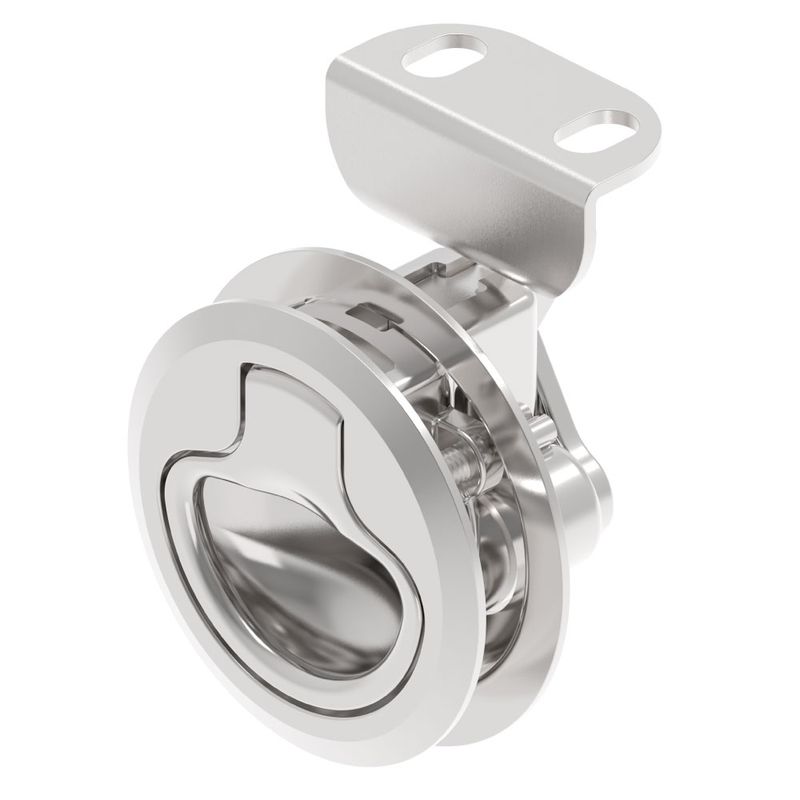
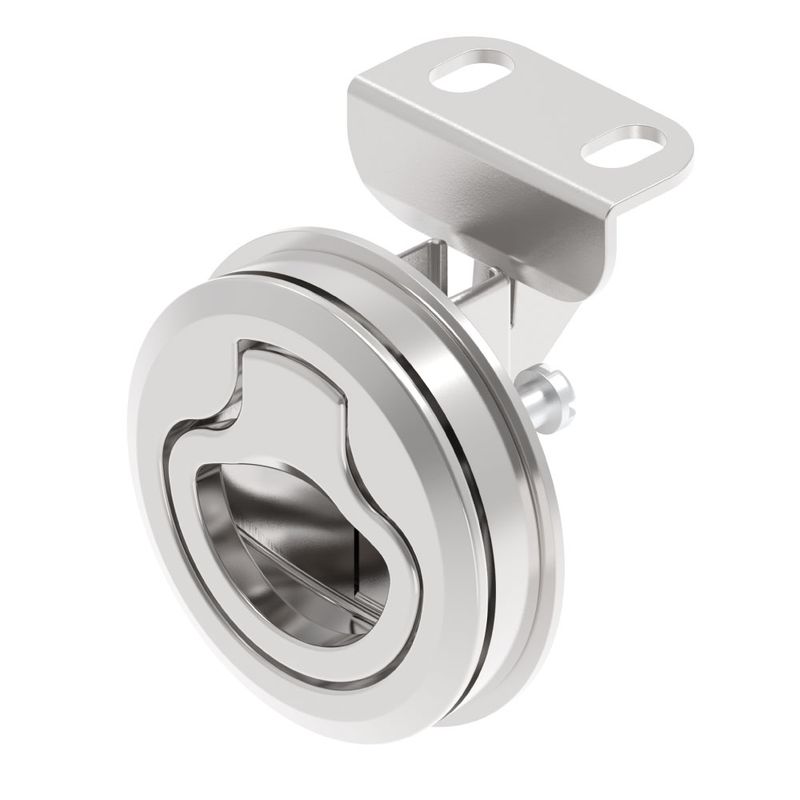
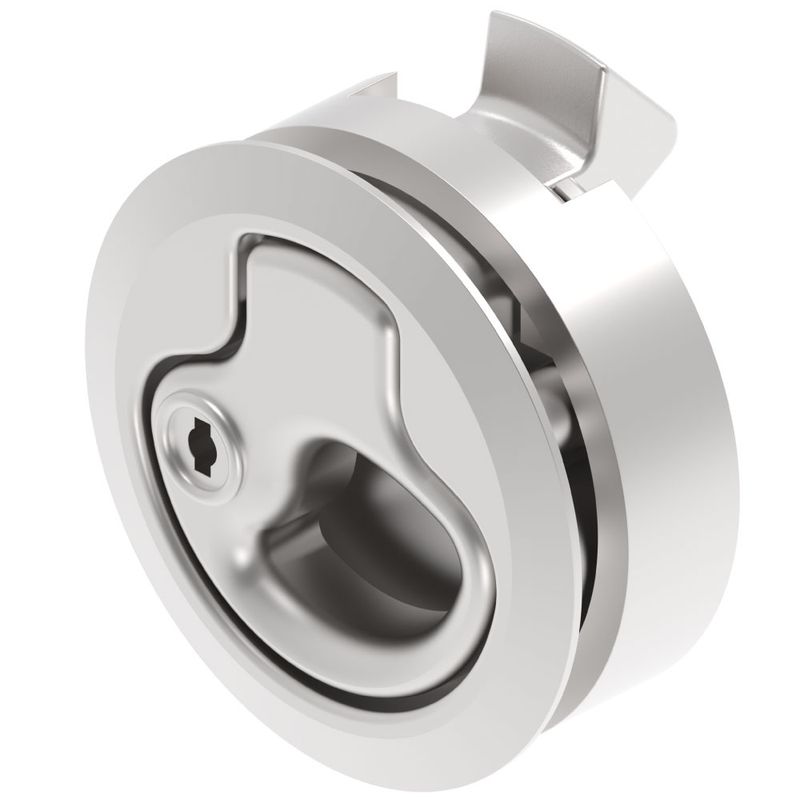
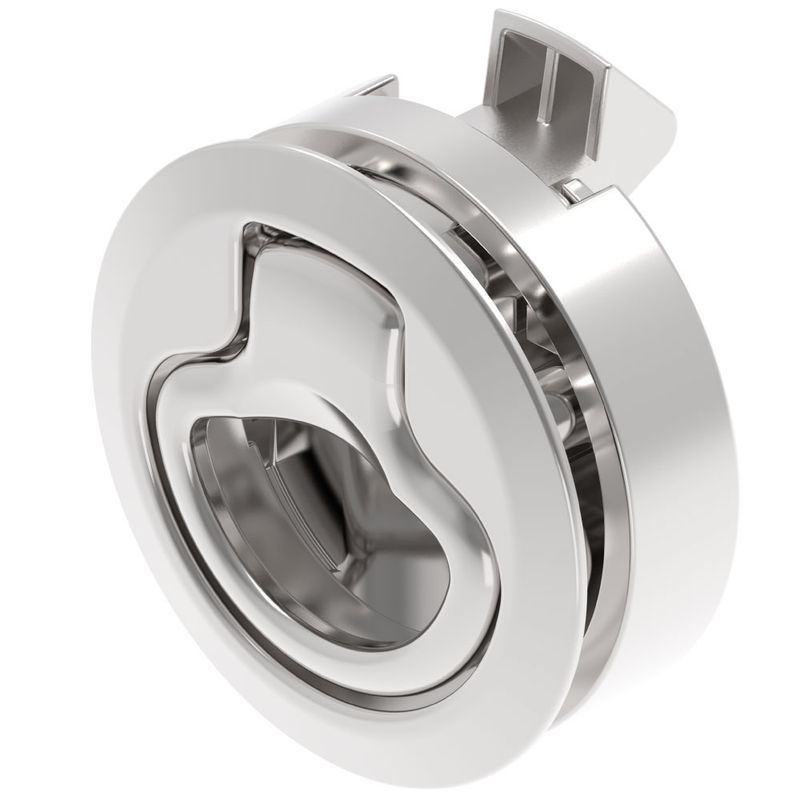
A slam latch is a self-engaging, push-to-close mechanical latch in which a spring-loaded pawl, bolt or rotor automatically retracts and re-engages a striker as the door closes, without the operator turning a cam or handle.
The closing sequence generally follows a consistent pattern across most designs. The door moves toward the closed position, and the latch mechanism contacts or approaches the striker mounted on the frame. As contact occurs, the latch mechanism retracts, pivots or opens briefly to allow the striker to pass into the retention area. Once the striker is seated, the spring-loaded mechanism returns to its engaged position and holds the door closed until the release mechanism is operated.
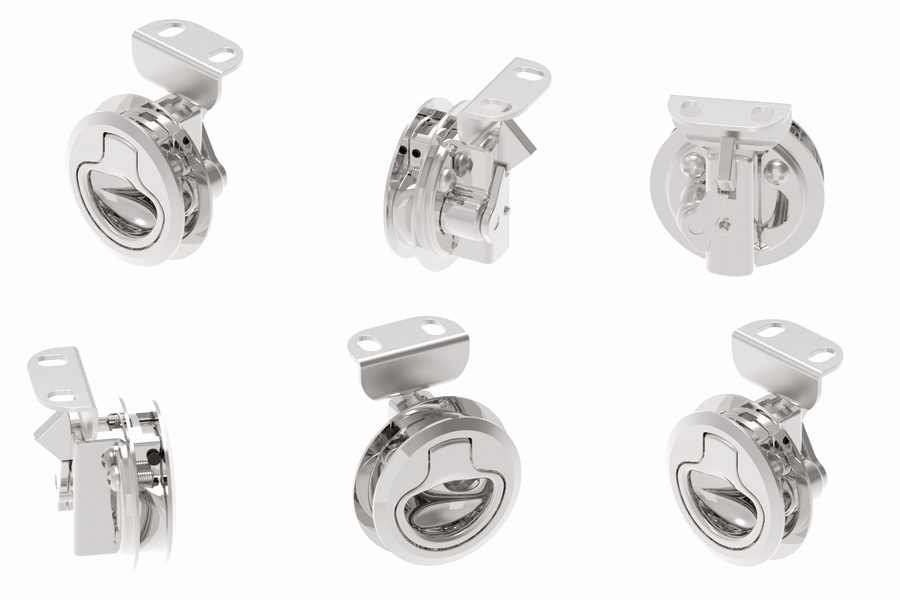
Most industrial slam latches share a similar set of components, even though internal geometry varies by design. These typically include a latch body, a moving element such as a pawl, bolt, claw or rotor, a spring mechanism that drives automatic return, a striker mounted on the mating surface, and a release actuator that disengages the latch when access is required.
The defining characteristic of a slam latch is automatic engagement during door closing. In our experience, this is the feature procurement teams and engineers value most, because operators do not need to turn a cam, rotate a quarter-turn operator or manually hook the latch after closing the door. That said, not every slam latch shares the same internal structure, spring rate or engagement geometry, and this is precisely why we review the application before recommending a specific configuration rather than assuming one design fits every door.
Why Is the Striker Important in a Slam Latch System?
The striker determines whether the latch can fully engage, how smoothly the door closes and how reliably it stays retained, so ForndLock always evaluates the latch and striker as one integrated system rather than separate parts.
A latch body that looks well-built on its own can still perform poorly if the striker is positioned incorrectly, undersized, or mounted on a structure that cannot support it. This is one of the most common oversights we see during drawing review.
Why Does Striker Position Affect Engagement?
Striker position determines whether the latch mechanism can physically reach and capture it, and misplacement directly affects the door's closed position and closing smoothness. If the striker sits too far from the latch travel path, engagement may be inconsistent even when both components are individually functional.
How Deep Should Striker Engagement Be?
Engagement depth must be balanced—too shallow risks partial engagement and door movement, while too deep increases closing force and release difficulty, so ForndLock reviews this against each door's actual geometry rather than a fixed number. Shallow engagement can allow the door to shift or separate slightly under load or vibration, while excessive depth places unnecessary strain on the spring mechanism and makes release harder for the operator.
How Does Alignment Affect Latch Performance?
Poor alignment between latch and striker can cause door rebound, incomplete closure, accelerated wear and difficult release. Even a small angular or lateral offset can prevent the moving element from seating fully, which is often mistaken for a defective latch when the real issue is installation alignment.
Why Does Striker Mounting Strength Matter?
Even a structurally sound latch cannot perform reliably if the striker mounting is weak, the door panel is flexible, or the frame deforms under load. We frequently recommend that customers send us door drawings early in the design process so our engineering team can assess striker mounting strength alongside the latch selection itself, rather than treating them as separate decisions.
What Are the Common Types of Slam Latches?
Industrial slam latches are commonly available as push-to-close, rotary, spring-loaded, paddle-operated, cable-actuated and lockable configurations, each suited to different door structures and access requirements.
What Are Push-to-Close Slam Latches?

Push-to-close slam latches engage automatically with a simple push and are typically compact and straightforward, making them suitable for equipment panels, service doors and machinery covers. They are often selected where installation space is limited and frequent access is required without additional hardware.
What Are Rotary Slam Latches?
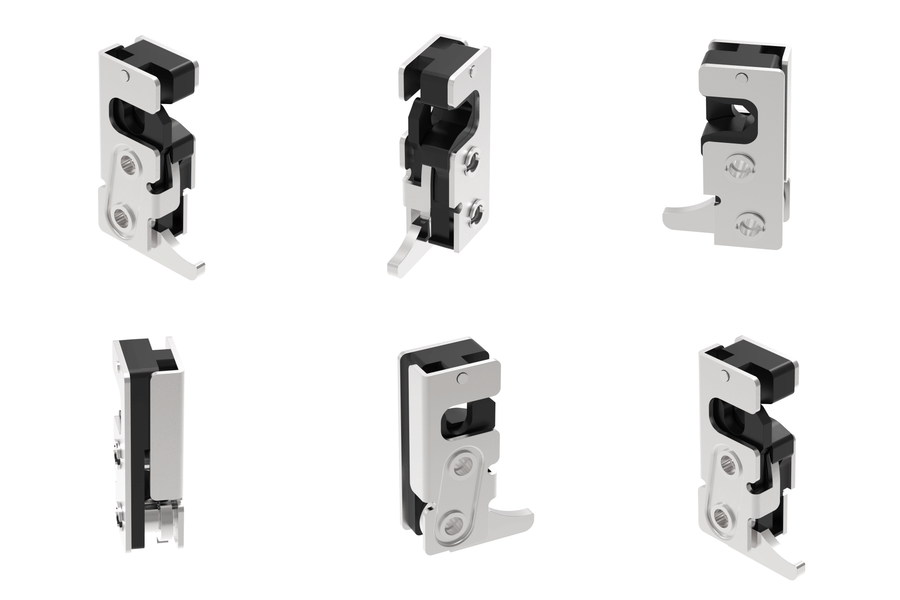
Rotary slam latches use a rotating claw or rotor to positively capture the striker, and some designs support remote actuation, though not all rotary latches share the same structure or capacity. This positive capture action is a common reason engineers choose rotary designs for machinery and vehicle doors where dynamic movement is expected.
What Are Spring-Loaded Slam Latches?

Spring-loaded slam latches rely on a spring-loaded bolt or pawl to achieve automatic engagement, commonly used on compact panels requiring repeated access. These designs favor simplicity and are often specified where the door is relatively light and access frequency is high.
What Are Paddle-Operated Slam Latches?

Paddle-operated slam latches combine an external handle with the release mechanism and latch body, offering convenient one-motion access on equipment compartments and vehicle doors. The paddle design is often preferred where operators need to open the latch with one hand while carrying tools or components.
What Are Cable-Actuated Slam Latches?
Cable-actuated slam latches connect a remote handle or actuator to the latch through a cable, allowing release from hidden or hard-to-reach latch locations.

This configuration is useful when the latch itself is not accessible from the operator's normal working position, or when multiple latch points must be released from a single actuator.
What Are Lockable Slam Latches?
Lockable slam latches add a key-operated feature that restricts normal operation of the latch, but this should not be confused with theft-proof security.

The keyed feature primarily controls who can operate the latch under normal conditions rather than providing an absolute security guarantee, and its effectiveness still depends on door structure and overall access control design.
What Materials Are Used for Industrial Slam Latches?
Industrial slam latches are commonly made from stainless steel, zinc alloy, steel or engineering plastics, and the right choice depends on load, environment and corrosion exposure rather than which material is theoretically strongest.
Why Choose Stainless Steel Slam Latches?
Stainless steel is generally suited to outdoor, moist or corrosive conditions, though the choice between grades such as 304 and 316 still depends on chemical exposure and application-specific corrosion requirements.
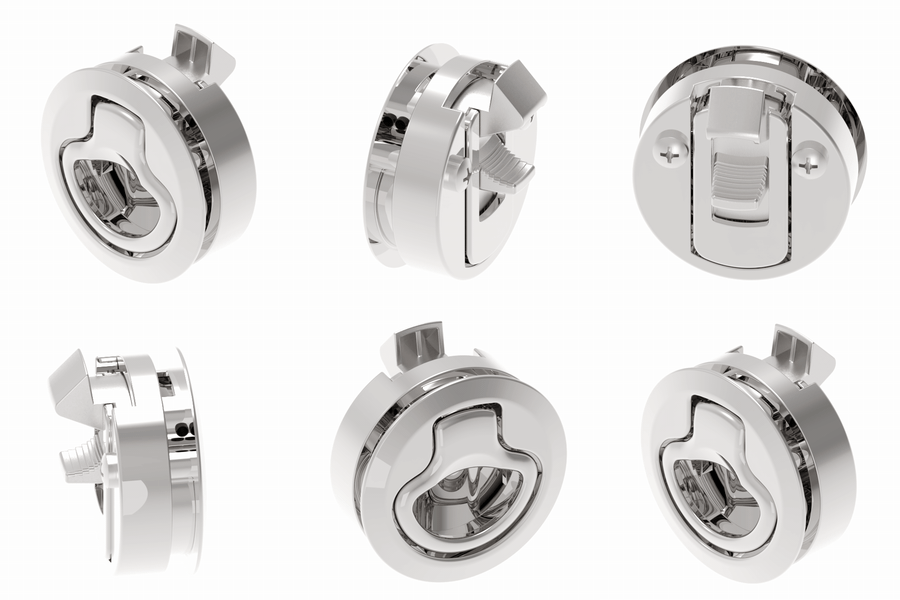
Stainless steel slam latches are frequently specified for equipment operating outdoors, in humid environments, or in washdown areas where suitable, due to their combination of corrosion resistance and mechanical durability. No single stainless grade performs equally well across every environment, so we review chemical exposure and cleaning procedures before recommending 304 or 316.
Why Choose Zinc Alloy Slam Latches?
Zinc alloy allows complex latch housing geometry with good manufacturing flexibility, commonly used in enclosures and machinery doors where corrosion resistance depends on the finish and environment applied. Zinc alloy slam latches are common in general industrial hardware because the material supports intricate housing shapes at reasonable production cost, though the actual corrosion performance still depends on surface finish and the conditions the latch will face in service.
Where Is Steel Used in Industrial Slam Latches?
Steel is frequently used for pawls, strikers and structural internal components where mechanical strength is prioritized, with corrosion protection depending on surface treatment and exposure conditions. Because steel offers strong mechanical properties at moderate cost, it is a common choice for load-bearing internal parts, provided the surface treatment matches the expected environment.
When Are Engineering Plastics Suitable?
Engineering plastics can be used for handles, covers or bushings where the structure allows, but they are not a general substitute for metal load-bearing components. These materials can reduce weight and cost on non-structural elements, though we do not recommend them for components that must carry significant closing or retention loads.
How Should You Choose Slam Latch Material?
Material selection should weigh load, environment, corrosion exposure, operating frequency, weight and maintenance together, not simply which material is the strongest. A latch that performs well in a dry indoor environment may not be the right choice for outdoor or washdown conditions, and the reverse is also true—overspecifying material for a controlled environment adds unnecessary cost without a functional benefit.
Where Are Slam Latches Used in Industrial Applications?
Slam latches are used on machinery access doors, equipment panels, vehicle compartments, transportation equipment, outdoor enclosures and mobile machinery, each requiring a slightly different latch and striker configuration.
Why Use Slam Latches on Machinery Access Doors?
Machinery access doors typically require frequent maintenance access, fast closing and repeated operation over the service life of the equipment. Self-engaging closure reduces the number of manual locking steps compared with cam or bolt operation, which supports faster maintenance cycles. Selection for this application should focus on vibration exposure, door movement, striker alignment and how accessible the release mechanism is to maintenance personnel.
How Do Slam Latches Fit Equipment Panels?
Compact equipment panels benefit from slam latches when repeated access is needed in limited space. Latch size, available mounting depth, engagement geometry and panel stiffness all need to be checked together, since a thin or flexible panel can affect how consistently the latch engages.
Why Use Slam Latches on Vehicle Compartments?
Vehicle compartments, including equipment boxes, service compartments and storage doors, require repeated opening under vibration and dynamic movement during transport or operation. Retention performance, striker rigidity, corrosion resistance and release method are the primary factors we evaluate for this category, since these compartments are rarely stationary in normal use.
How Are Slam Latches Used in Transportation Equipment?
Access doors, service panels and equipment covers on transportation equipment rely on slam latches selected specifically for vibration resistance, mounting strength and material durability under continuous dynamic operating conditions. The mounting structure behind the striker often matters as much as the latch itself in these applications.
How Do Slam Latches Perform in Outdoor Enclosures?
Outdoor enclosures face weather exposure, moisture and corrosion risk, which typically points toward stainless steel or otherwise protected materials along with adequate mounting strength. It is important to note that the slam latch itself does not determine the enclosure's overall sealing performance or IP rating; that depends on the enclosure design, gasket system and overall assembly, not the latch alone.
How Should You Select the Right Slam Latch?
Selecting the right slam latch requires evaluating door structure, closing geometry, striker match, closing force, retention needs, release method, locking requirement, vibration, material and installation space together as one system.
How Does Door Size Affect Selection?
Door dimensions, weight, panel thickness and frame stiffness determine whether a single latch is sufficient or multiple retention points are needed. Large or flexible panels may deflect or move under vibration, which increases the risk of partial engagement even when the latch itself is correctly sized. We do not apply fixed dimensional cutoffs here, since the actual behavior depends on the specific door structure and mounting frame.
How Does Closing Direction Affect Selection?
Door swing, closing path and the relative movement between latch and striker must align correctly. Incorrect closing geometry can cause misalignment, impact damage on repeated closing, or partial engagement that is not obvious during a single test close but becomes apparent after repeated cycles.
How Do You Match the Striker Geometry?
Striker type, position, size, engagement depth and mounting strength must be matched to the selected latch. A suitable latch paired with the wrong striker can still create an unreliable closure, which is why we treat striker matching as a core part of the selection process rather than an afterthought.
How Much Closing Force Is Required?
Closing a slam latch requires enough force to move the mechanism past the striker and into engagement. If spring resistance is too high, alignment is poor, the door is lightweight, or striker geometry is incorrect, the result can be excessive closing effort, door rebound, or incomplete engagement that leaves the door appearing closed when it is not fully secured. We do not quote fixed force values without reviewing the actual door and latch combination, since closing force depends on multiple interacting variables.
How Do You Evaluate Retention Requirements?
Retention capability cannot be judged from appearance alone. It depends on door weight, equipment movement, vibration, dynamic loading and the direction the door opens relative to gravity and motion. A latch that looks robust may still be undersized for a heavy, frequently moved door, while a lighter latch may be entirely adequate for a stable, lightly loaded panel.
How Do You Select a Release Method?
Release method options include a direct lever, paddle, push button, handle, cable or remote actuator. The right choice depends on operator position, accessibility, overall door design and how the release fits into the maintenance workflow for that piece of equipment.
Is Access Locking Actually Needed?
Applications requiring restricted access may justify a lockable slam latch with a keyed actuator, while applications prioritizing fast operational access typically do not need key-controlled locking at all. Adding a lock where it is not functionally required can slow down routine access without providing a meaningful benefit.
How Does Vibration Affect Latch Selection?
Machinery, transportation equipment and mobile equipment applications require particular attention to engagement depth, door clearance, latch retention, striker rigidity and mounting hardware. For applications with higher vibration exposure, we recommend validating the latch and striker performance on the actual assembly rather than relying solely on catalog descriptions, since real-world vibration behavior depends on the complete mounting system.
How Does Environment Affect Material Choice?
Indoor versus outdoor exposure, moisture, salt, chemicals, cleaning procedures and temperature all influence which material and surface finish are appropriate. An environment involving frequent washdown or chemical exposure calls for a different material strategy than a dry, temperature-controlled indoor installation.
Neutral Salt Spray Test for ForndLock Rotary Locks
Is There Enough Installation Space?
Confirming latch depth, striker clearance, handle clearance, mounting hole positions and cable routing (where applicable) in advance prevents installation conflicts later in the design process. This is one of the more common issues we catch during drawing review, particularly on retrofit projects where space is already constrained.
How Does a Slam Latch Compare to Rotary and Compression Latches?
A slam latch describes a push-to-close closing behavior, while rotary and compression latches describe specific mechanisms—so a rotary latch is often also slam-to-close, and the terms are not mutually exclusive.
Factor | Slam Latch | Rotary Latch | Compression Latch |
Closing principle | Push-to-close engagement | Rotary striker capture | Rotation plus axial compression |
Automatic engagement | Typically yes | Typically yes | No |
Striker required | Usually | Yes | Not always |
Gasket compression | Limited | Limited / application dependent | Designed for compression |
Remote release | Possible | Common in some systems | Less common |
Typical applications | Equipment doors and panels | Machinery and vehicle doors | Sealed or vibration-sensitive enclosures |
This distinction matters for procurement and engineering communication. "Slam latch" describes how the door closes—automatically, with a push, without turning an operator—while "rotary latch" describes the specific claw-and-rotor mechanism that achieves the closure. Many rotary latches are, functionally, slam-to-close latches, which is why the two terms often overlap in product descriptions rather than referring to entirely separate categories.
When Is a Slam Latch Not the Right Choice?
A slam latch is not the right choice when strong gasket compression, precise manual clamping, minimal closing impact, or a simple rotating cabinet lock is what the application actually requires.
Is Gasket Compression Required?
When sealing against dust, moisture or electromagnetic interference is critical, a compression latch is generally the better fit than a slam latch, since compression latches are specifically designed to press a gasket against the frame.
Is Precise Manual Clamping Needed?
Applications needing controlled, precise clamping force may be better served by a draw latch or over-center latch, which allow the operator to apply and adjust clamping force directly rather than relying on spring-driven engagement.
Is a Simple Cabinet Lock Enough?
For small cabinets needing only basic controlled access, a cam lock or quarter-turn lock may be a simpler and more cost-effective solution than a slam latch, particularly when automatic engagement is not a functional requirement.
Must Closing Impact Be Minimized?
Sensitive equipment or fragile door structures that require controlled, low-impact closing may call for a different locking mechanism altogether, since the push-to-close nature of a slam latch involves a degree of impact at engagement.
Does the Door Need Multiple Retention Points?
Large or flexible doors may require multiple slam or rotary latches, or a multi-point locking system, rather than relying on a single latch to hold the entire panel. The actual configuration depends on the door structure and how it deflects under load.
What Are Common Slam Latch Selection Mistakes?
The most frequent mistakes involve selecting the latch without evaluating the striker, ignoring alignment or engagement depth, and overlooking vibration, mounting strength or material suitability.
Mistake | Potential Problem | Better Approach |
Selecting the latch without evaluating the striker | Unreliable closure despite a suitable latch | Evaluate latch and striker as one system |
Poor striker alignment | Door rebound, incomplete engagement | Verify alignment during installation |
Insufficient engagement depth | Partial engagement, door movement | Confirm adequate engagement based on door geometry |
Excessive engagement depth | High closing force, difficult release | Balance depth against closing effort |
Ignoring door rebound | Door appears closed but reopens | Test closing under realistic conditions |
Ignoring door stiffness | Panel deflection affects retention | Assess panel and frame rigidity |
Selecting the wrong release mechanism | Poor accessibility for operators | Match release method to operator position |
Ignoring vibration | Loosening or rattling in service | Validate on the actual assembly |
Choosing unsuitable material | Premature corrosion or wear | Match material to environment |
Weak latch or striker mounting | Structural failure under load | Confirm mounting strength |
Insufficient installation depth | Latch cannot be installed correctly | Confirm space before finalizing the design |
Using a slam latch when compression is required | Inadequate sealing against dust or moisture | Evaluate a compression latch instead |
In our experience, several of these issues appear together on the same door: the door reaches the frame but the latch does not fully engage, the striker turns out to be slightly misaligned, and closing force feels excessive to the operator. These symptoms usually trace back to the same root cause—the latch and striker were specified independently rather than as a matched system.
How Should Slam Latches Be Installed and Maintained?
What Should Be Checked During Installation?
Installation should confirm the latch location, position the striker correctly, verify alignment, check engagement depth, and confirm mounting strength before the door is put into service. Testing should include repeated door closing and release cycles, not just a single close, to catch alignment or rebound issues that may not appear on the first attempt. Where cable actuation is used, check the cable routing, avoid excessive bends, and confirm sufficient release travel at the latch end.
What Should Be Checked During Maintenance?
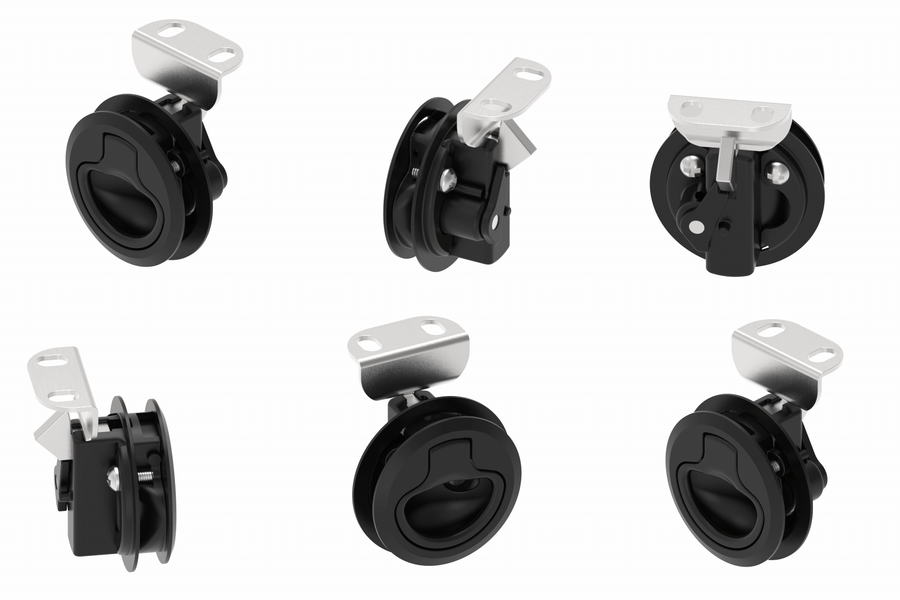
Ongoing maintenance should include checking mounting hardware for looseness, inspecting the latch and striker for wear, checking spring function, checking for corrosion, verifying smooth release operation, checking door alignment, and inspecting cable condition where applicable. We do not recommend a fixed inspection interval in general terms, since actual wear depends on cycle frequency, environment and load, and should be assessed based on the specific application.
How Does ForndLock Support Custom Slam Latches?
At ForndLock, we evaluate the latch, striker, door structure and release method as one complete locking system before recommending a slam latch configuration. Our engineering team reviews door drawings, dimensions, weight and frame geometry to determine whether a standard configuration is suitable or whether structural customization is needed for a specific door.
We support striker matching, material recommendation based on the stated operating environment, and release mechanism evaluation for lever, paddle, push button, cable or remote actuation designs. Where a project requires validation before full production, we support sample evaluation so the latch and striker combination can be tested on an actual door or panel rather than assumed from a datasheet. Customers can share door drawings, dimensions, weight, frame geometry, striker requirements, closing direction, release method preferences, application environment and expected quantity, and we work from that information rather than a generic product listing.
Conclusion
Selecting the right slam latch means matching several variables at once: latch type, striker geometry, door structure, engagement depth, release method, material and the environment and vibration the assembly will face in service. The types covered in this article—push-to-close, rotary, spring-loaded, paddle-operated, cable-actuated and lockable configurations—each suit different door structures and access patterns, and the materials discussed, from stainless steel to zinc alloy, steel and selected engineering plastics, each perform differently depending on load and exposure conditions. Across machinery access doors, equipment panels, vehicle compartments and outdoor enclosures, the underlying principle stays the same: a slam latch's defining strength is self-engaging, push-to-close operation, but how reliably that operation holds up in practice depends on the complete system—the latch, the striker, the door structure and the mounting hardware working together, not the latch body in isolation.
Ready to Select the Right Slam Latch for Your Equipment?
If you are specifying slam latches for machinery doors, equipment panels, vehicle compartments or industrial enclosures, send your door or panel drawings, dimensions, striker requirements, installation dimensions, preferred release method, material requirements, application environment and quantity to [email protected]. Our engineering team can support slam latch selection, striker matching, drawing review, structural customization, material recommendation, sample evaluation and production, based on the specific door and application you are working with.