
Industrial Cabinet Locks: Types, Applications and Selection Criteria
Industrial cabinet locks secure equipment doors, electrical cabinets and industrial enclosures while allowing controlled access for maintenance and operation. At ForndLock, we see cabinet lock selection go wrong most often when a lock is chosen purely on appearance rather than on how it interacts with the door, frame and operating environment. A correct choice depends on door structure, access frequency, security level, grip, sealing, vibration exposure and material — not on the lock alone. This article walks through the common types of industrial cabinet locks, where they are typically applied, and the engineering factors we evaluate when recommending a locking configuration for electrical, control, machinery and outdoor enclosures.
What Are Industrial Cabinet Locks?
Industrial cabinet locks are mechanical locking components or systems used to secure cabinet doors, enclosure panels and equipment housings while supporting controlled maintenance access.

Their function goes beyond simply keeping a door shut. They provide door retention under normal handling and vibration, support enclosure closure against a frame or gasket, and allow authorized personnel to reach internal components without compromising the rest of the structure.
ForndLock Industrial Lock Series
A complete industrial cabinet lock system is rarely just a cylinder. It typically includes a lock body, an operator, a cam or latch, sometimes a handle, a cylinder where keyed access is required, a keeper mounted on the frame, and in larger applications a rod system connecting multiple locking points. Each part contributes to how the door closes and how much force is needed to operate it.
It is worth stating clearly that an industrial cabinet lock is not always a traditional keyed lock. Many industrial enclosures use tool-operated, hand-operated or handle-operated mechanisms instead, depending on how often the cabinet is opened and who needs access. Choosing between these access methods is one of the first decisions in any cabinet door lock selection process.
What Types of Locks Are Commonly Used on Industrial Cabinets?
Industrial cabinets commonly use cam locks, quarter-turn locks, compression latches, swing handles, rotary latches and multi-point locking systems, each suited to a different door structure and access requirement. Selecting among them means understanding how each mechanism engages the door, not just recognizing its shape.
How Do Cam Locks Work?

A cam lock secures a door by rotating a metal cam into engagement with the frame or enclosure edge. As the cylinder or operator turns, the cam sweeps behind the frame lip, pulling or holding the door closed against it. This is one of the simplest and most widely used mechanisms on industrial enclosures because it requires minimal hardware and a small cutout.
Cam locks work well on small cabinets, access panels and simple enclosure doors where the main requirement is basic mechanical retention rather than compression or multi-point closure. When selecting a cam lock, the key variables are grip, cam length, cam offset and the intended access method, since a mismatch in any of these can leave the cam unable to reach or properly seat against the frame.
How Do Quarter-Turn Locks Work?

A quarter-turn lock engages or releases a cabinet door through a 90-degree rotation of the operator, moving a cam or latch quickly between open and closed positions. This makes them a practical choice where doors are opened and closed frequently and a full multi-turn cylinder is unnecessary.
Quarter-turn locks are common on electrical cabinets, control panels and general industrial enclosures. Depending on the application, the operator can be key-operated, tool-operated, or fitted with a wing knob for hand operation. The choice of operator should reflect how much access control the application actually needs, not just operator preference.
When Should You Use a Compression Latch?
A compression latch is used when a cabinet door needs axial compression in addition to rotational locking, which is typical on gasketed enclosures. Unlike a basic cam lock that mainly pulls the door into contact with the frame, a compression latch continues to draw the door inward as it rotates, generating a more consistent clamping force along the gasket line.
This makes compression latches a common choice for gasketed doors, outdoor cabinets and vibration-sensitive equipment. Their core advantage is the ability to help control door compression, gasket compression and panel movement together, rather than relying on the door’s own rigidity to maintain contact with the seal.
When Is a Swing Handle Lock Needed?
A swing handle lock is typically selected for larger or taller cabinet doors that require connection to rods or multi-point mechanisms. The handle itself provides mechanical leverage, which is useful when a single operator needs to drive more than one locking point at once.
Swing handles are common on larger cabinet doors, tall enclosures and any structure using a multi-point locking system, because the handle can connect directly to vertical or horizontal rods. This allows several locking points along the door edge to engage or release simultaneously with one motion, improving consistency compared with operating multiple independent locks.
How Do Rotary Latches Work?
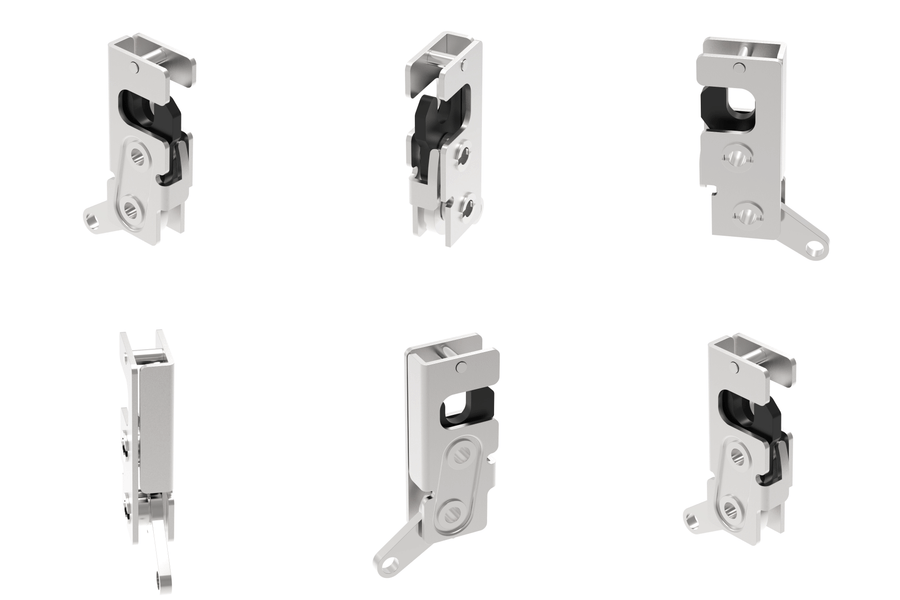
A rotary latch secures a door through latch-and-striker engagement rather than a simple cam rotation, often incorporating a spring-loaded hook or claw that closes around a striker pin as the door shuts. This engagement style tends to tolerate door misalignment and repeated slamming better than a rigid cam interface.
Rotary latches are frequently used on machinery, transportation equipment and equipment access doors where doors are opened and closed often, sometimes without careful alignment, and where a forgiving latch geometry reduces wear on the mounting hardware.
When Is Multi-Point Locking Required?
Multi-point locking is required when a single locking point cannot provide uniform door retention across a large or tall cabinet door. As door height and width increase, a single latch near the handle location leaves the far corners of the door under-supported, which can allow flexing, uneven gasket contact or gaps under vibration.
Distributing locking force across two, three or more points along the door edge helps improve door retention, door alignment and the consistency of gasket compression from top to bottom. Multi-point systems are typically driven by a swing handle or central operator connected to a rod assembly.
Lock Type | How It Works | Typical Application | Main Selection Factor |
Cam Lock | Rotating cam engages the frame edge | Small cabinets, access panels | Grip, cam length and offset |
Quarter-Turn Lock | 90° rotation engages a keeper | Electrical and control cabinets | Access method, panel thickness |
Compression Latch | Rotation combined with axial compression | Gasketed, outdoor, vibration-prone doors | Compression force, gasket type |
Swing Handle | Handle drives a cam or connecting rods | Large or tall doors, multi-point systems | Rod connection, handle clearance |
Rotary Latch | Latch-and-striker engagement | Machinery, transportation equipment | Latch engagement strength |
Multi-Point System | Multiple synchronized locking points | Large, tall or flexing doors | Point spacing, door stiffness |
Where Are Industrial Cabinet Locks Used?
Industrial cabinet locks are used wherever equipment enclosures require controlled access, and the requirements differ significantly between electrical, machinery, outdoor and transportation applications. Listing industries alone does not explain selection, so each application below pairs its functional requirement with the corresponding lock selection consideration.
What Do Electrical Cabinets Require?
Electrical cabinets need controlled maintenance access, a compact locking footprint, and reliable door retention around live components. Selection here focuses on whether tool or key operation is appropriate, how panel thickness affects grip, and how the surrounding enclosure environment influences material choice.
What Do Control Cabinets Require?
Control cabinets are typically opened by technicians on a frequent basis, so reliable closing after repeated cycles matters as much as initial security. Selection should weigh operating convenience against access management needs, and match the lock type to how quickly staff need to get in and out.
What Do Machinery Enclosures Require?
Machinery enclosures are exposed to vibration and repeated operation, both of which stress door retention over time. Latch engagement strength, mounting hardware strength, and the specific vibration conditions of the machine should all factor into the lock decision.
What Do Outdoor Equipment Cabinets Require?
Outdoor cabinets face moisture, dust, corrosion and general weather exposure, which puts more pressure on material choice than indoor applications. Selection should prioritize corrosion-appropriate materials, a sealing design suited to the enclosure, and whether a compression requirement exists for the gasket.
What Do Telecom and Energy Equipment Cabinets Require?
Telecom and energy enclosures often combine restricted access needs with outdoor durability demands and periodic maintenance visits. This points selection toward a defined key or tool system, corrosion-resistant components, and a locking structure that holds up over repeated field service.
What Do Transportation Equipment Cabinets Require?
Transportation equipment enclosures deal with constant vibration, limited installation space and repeated service access along a route or maintenance schedule. Mechanical retention under vibration, a compact lock footprint, and an operator type suited to field technicians are the main considerations.
How Do You Select the Right Industrial Cabinet Lock?
Selecting the right industrial cabinet lock requires evaluating door and cabinet structure, access method, grip, sealing, vibration, material and locking points together, rather than judging the lock on its own. The sections below outline the variables we walk through with engineering and purchasing teams before recommending a configuration.
How Should You Define the Door and Cabinet Structure?
Before comparing lock types, it is necessary to confirm door dimensions, door thickness, panel construction, frame position, door rigidity and available installation space. The same lock model can require a different cam, different grip, different mounting arrangement or a different latch mechanism depending on how the door and frame are actually built.
How Do You Determine the Required Access Method?
Key-operated locks suit applications where access needs to be limited to specific personnel, such as cabinets containing sensitive controls. Tool-operated locks are common on electrical cabinets, utility equipment and maintenance-only panels, where a screwdriver or hex key is enough to discourage casual opening without requiring a managed key system.

Hand-operated options, including wing knobs and handles, suit equipment that is accessed frequently and where restricted access is not the primary concern. In our experience, the right access method is a balance between operating convenience and the level of access control the application genuinely needs — not simply whichever option is fastest to install.
How Do Panel Thickness and Grip Range Differ?
Grip is not the same as panel thickness, even though the two are often confused during selection. Actual grip is influenced by frame position, door geometry, gasket thickness and cam offset, meaning two cabinets with identical panel thickness can require different grip dimensions once the frame and gasket are accounted for.
Choosing the wrong grip has predictable consequences: a door that stays loose after locking, a cam that cannot fully engage the frame, or excessive operating force needed to close the latch. Confirming grip against the full door assembly, not just the panel spec sheet, avoids these problems.
How Do You Evaluate the Required Locking Mechanism?
If the application only needs simple mechanical retention, a cam lock or quarter-turn lock is often sufficient. If the door requires gasket compression, vibration control or a tighter closure than a basic cam can provide, a compression latch should be evaluated instead.
Where the door itself is large, tall or prone to flexing under its own weight, a multi-point locking system becomes the more appropriate starting point, since a single lock cannot compensate for structural flex along the door edge.
How Many Locking Points Does a Large Door Need?
Large cabinet doors should not be selected based on lock strength alone. Door stiffness, frame geometry, door deformation under load, hinge position and locking point spacing all influence how many points are actually needed to keep the door flat and sealed.
Some large cabinet doors may require two locking points, others three-point or full multi-point locking, depending on how the door is built and supported. There is no fixed door size threshold that applies universally — the decision follows the specific door structure rather than a general rule.
How Do Sealing Requirements Affect Lock Selection?
Where a cabinet uses a gasket, selection needs to consider the required compression level, how consistently that compression is maintained along the door, and where the locking points sit relative to the gasket line. A standard cam lock mainly provides mechanical retention and was not designed to manage gasket compression precisely.
If stable, even gasket compression is required, a compression latch or a multi-point compression locking arrangement should be evaluated instead. It is important to note that a single lock does not determine an enclosure’s overall IP rating — that rating depends on the complete door, gasket and enclosure system working together.
How Does Vibration Influence Lock Choice?
For machinery, transportation and mobile equipment, vibration needs to be evaluated in terms of latch engagement depth, the presence of secondary retention features, available compression, and the practical risk of the lock loosening over repeated cycles. Not every industrial cabinet lock is designed with the same vibration tolerance, and it would be inaccurate to claim otherwise.
In our experience, vibration-related complaints usually trace back to insufficient latch engagement or a lock selected without secondary retention, rather than a fundamental flaw in the lock category itself.
Which Material Is Right for Your Environment?
Zinc alloy is common for general industrial applications, complex lock body geometries and cost-effective enclosure hardware where corrosion exposure is limited. Stainless steel is generally preferred for outdoor environments, moisture exposure and corrosive conditions, including some hygienic applications where appropriate.
Steel is frequently used for internal components such as cams, rods and mechanism parts that need strength rather than corrosion resistance on their own. Ultimately, material selection should reflect the environment, the required strength, the level of corrosion exposure, and any surface treatment applied — not a single default material across every project.
What Installation and Cutout Factors Matter?
Cutout dimensions, mounting hole positions, panel thickness, lock orientation, cam position and handle clearance all need to be confirmed before a lock is finalized for a project. Replacing an existing cabinet lock often requires matching the original cutout and locking geometry closely, since a mismatch can mean the new lock cannot be installed without modifying the panel.
Our engineering team regularly reviews cutout drawings before confirming compatibility, since even small differences in cam offset or mounting hole spacing can prevent a direct replacement from working as intended.
What Mistakes Should You Avoid When Selecting Cabinet Locks?
Common cabinet lock selection mistakes include choosing by appearance alone, ignoring grip range, and using a single locking point on a door that actually requires multi-point retention. The table below outlines these recurring issues and how to approach them differently.
Mistake | Potential Problem | Better Approach |
Selecting the lock only by appearance | Wrong grip or poor cam engagement | Match the lock to actual door and frame geometry |
Ignoring grip range | Loose door, inconsistent sealing | Measure real grip, not just panel thickness |
Choosing the wrong cam length or offset | Cam cannot reach or seat against the frame | Confirm cam geometry against the door structure |
Ignoring panel and frame geometry | Inconsistent locking force across the door | Review the complete door assembly, not the lock alone |
Using a basic cam lock when compression is required | Gasket compressed unevenly | Evaluate a compression latch instead |
Using one locking point on a door needing multi-point retention | Door flexes between the frame and the lock | Assess a multi-point locking system |
Selecting the wrong access method | Unauthorized access or inconvenient operation | Match key, tool or hand operation to the application |
Ignoring vibration | Lock loosens or disengages over time | Evaluate latch engagement and secondary retention |
Choosing unsuitable material for outdoor use | Corrosion and mechanism failure | Select material based on actual environmental exposure |
Assuming the lock alone determines IP protection | False sense of sealing performance | Evaluate the lock, gasket and door structure together |
What Should You Know About Installation and Maintenance?
Proper installation and periodic inspection help maintain reliable cam or latch engagement, door alignment and sealing performance over the life of the cabinet. This is not a full installation manual, but a summary of the checks that matter most.
What Should You Check During Installation?
During installation, it is worth confirming the cutout dimensions, verifying the lock orientation, confirming that the cam or latch fully engages the keeper, checking frame alignment, tightening all mounting hardware, and testing the door closure through a few full cycles before the cabinet goes into service.
What Should You Check During Maintenance?
Ongoing maintenance should look for looseness in the mounting hardware, wear on the cam or latch surfaces, visible corrosion, correct key or tool operation, and where applicable, the condition of multi-point rods and their alignment. Confirming that the door still closes flush against the frame is a simple but useful indicator that the locking system is still performing as intended. We do not recommend applying a fixed maintenance interval without validating it against the specific product and application, since duty cycle and environment both affect how quickly wear appears.
How Can ForndLock Support Custom Industrial Cabinet Lock Projects?
At ForndLock, we evaluate the cabinet door, frame and locking geometry as a complete system before recommending a lock configuration, rather than starting from a catalog part number. Our engineering team reviews application details, checks drawings against grip and cutout requirements, and works through cam customization, operator selection and material recommendation based on the specific enclosure and environment involved.
For teams developing a new cabinet or replacing an existing lock, we recommend sharing the cabinet drawing, door dimensions, panel thickness, cutout details, required grip, locking requirements, preferred access method, application environment and expected quantity. This lets us support lock selection, multi-point locking configuration, sample evaluation and production planning with an accurate picture of the actual door structure rather than assumptions.
What Is the Right Way to Select an Industrial Cabinet Lock?
Selecting an industrial cabinet lock requires matching the locking mechanism to the cabinet structure and operating conditions, not choosing a part based on appearance or price alone. The decision runs through lock type, door structure, grip, access method, sealing, vibration, material and the number of locking points needed for the specific door.
For a simple cabinet door with a rigid panel and light access frequency, a cam lock or quarter-turn lock is often enough to provide reliable retention. For doors that are gasketed, exposed to vibration, large, or prone to flexing, a compression latch, swing handle or multi-point locking system is usually the more suitable direction, based on how the door itself is built rather than on the lock category alone.
If you are working on a new cabinet design or need to replace an existing lock, send your cabinet drawings, door dimensions, panel thickness, cutout dimensions, locking requirements, application environment and quantity to [email protected]. Our team can support lock selection, drawing review, cam and grip customization, material selection, multi-point locking configuration, sample support and production for your project.