
How to Choose T Handle Cam Latches for Waterproof Outdoor Electrical Enclosures?
Protecting sensitive electrical components from severe outdoor elements like heavy rain, dust, and corrosive moisture is one of the most critical challenges in industrial infrastructure design. When high-voltage controls, telecommunications routing gear, or automated distribution panels are exposed to the environment, a single point of moisture ingress can lead to catastrophic short circuits, system downtime, and massive liability. This comprehensive guide is designed specifically for electrical engineers, procurement managers, and outdoor enclosure manufacturers who need to evaluate structural hardware requirements, material longevity, and proper installation techniques. By understanding the mechanical principles behind industrial sealing, engineering teams can make informed decisions that prevent costly field failures and extend the operational lifespan of their equipment.
As a dedicated hardware manufacturer, ForndLock brings years of engineering experience in sealing technologies and precision metal fabrication to this discussion. We understand that selecting the right T Handle Cam Latches is not merely a matter of closing a door, but rather engineering a continuous, reliable barrier against the environment. The technical insights shared throughout this article are grounded in our daily work of designing, testing, and manufacturing hardware solutions that secure industrial panels in some of the most unforgiving climates around the globe. Integrating a high-quality T handle cam latch for outdoor electrical enclosure waterproof applications requires a deep understanding of mechanical compression, metallurgy, and precise assembly, which we will explore in detail.
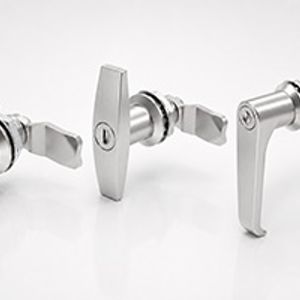
What Makes A Latch Truly Waterproof?
A latch becomes truly waterproof only when its structural design perfectly integrates with industrial-grade sealing gaskets to block all moisture.
Achieving a reliable waterproof seal on an industrial cabinet is a complex mechanical interaction between the hardware, the sheet metal, and the environmental pressure. It is never enough to simply attach a locking mechanism to a door and expect it to repel water. The entire assembly must be engineered to maintain consistent compression across varying temperature ranges and weather conditions. When wind-driven rain hits a cabinet, the kinetic energy of the water forces moisture into any available microscopic gap. A properly designed T handle cam latch for outdoor electrical enclosure waterproof applications addresses this by utilizing a multi-point sealing strategy. This involves sealing the interface between the latch body and the exterior door panel, as well as sealing the internal rotational mechanisms where the handle shaft connects to the locking cam. If either of these barriers fails, capillary action will draw water directly into the electrical housing, bypassing the main door gaskets entirely.
How Does IP65 Protection Work?
IP65 protection works by utilizing tight mechanical tolerances and specialized O-rings to completely prevent dust ingress and resist low-pressure water jets.
In the context of outdoor electrical enclosures, ingress protection ratings define the exact survival capabilities of the hardware. The "6" in IP65 guarantees that the enclosure is completely dust-tight, ensuring that no particulate matter can foul the internal electrical contacts. The "5" signifies protection against water jets directed from any angle. To achieve this, T Handle Cam Latches are manufactured with internal shafts that feature precision-machined grooves. These grooves house heavy-duty O-rings made from specialized elastomers. When the handle is turned, these O-rings maintain constant radial pressure against the internal housing, preventing water from traveling down the spindle via capillary action. Furthermore, the structural design must account for hydrostatic pressure; the internal tolerances between the rotating spindle and the stationary housing are kept incredibly tight so that even when water pools around the handle base, it cannot force its way past the primary mechanical barriers.
Why Do Sealing Gaskets Matter?
Sealing gaskets matter because they fill the microscopic gaps between the metal cabinet door and the hardware, acting as the primary barrier against environmental elements.
Even the most perfectly machined metal surfaces possess microscopic irregularities that water can penetrate. External sealing gaskets, typically placed between the flange of the latch body and the exterior face of the cabinet door, compensate for these imperfections. The choice of gasket material is crucial. EPDM rubber is widely utilized because of its excellent memory retention and resistance to ultraviolet degradation, meaning it will not crack or shrink after years of sun exposure. Polyurethane poured gaskets are also common in high-end manufacturing. However, the effectiveness of any gasket is dictated by its compression limits. Over-tightening the hardware can crush the gasket, destroying its cellular structure and causing it to tear, while under-tightening fails to create the necessary surface tension to block water. The hardware must be engineered to provide a hard stop or specific torque rating that guarantees the gasket is compressed to its optimal functional thickness.
ForndLock Cam Latch Usage Guide
Which Material Survives Corrosive Environments?
High-grade stainless steel and specially coated zinc alloys are the only materials capable of surviving continuous exposure to harsh, corrosive outdoor environments.
Guiding buyers through material selection requires analyzing the specific environmental threats the outdoor enclosure will face. Coastal installations face constant salt spray, industrial zones deal with airborne chemical pollutants, and high-altitude locations endure extreme ultraviolet radiation and temperature fluctuations. The core metal of the latch dictates its structural integrity over time. If the material begins to corrode, the resulting rust or oxidation scale will physically push the sealing gaskets away from the metal door, creating a pathway for water ingress. Therefore, selecting the appropriate base material is not a cosmetic choice, but a fundamental requirement for maintaining the waterproof rating of the entire electrical cabinet over a multi-decade operational lifespan.
Is 304 Stainless Steel Better?
304 stainless steel is significantly better for extreme outdoor conditions due to its inherent resistance to oxidation, heavy rain, and chemical exposure.
The metallurgical benefits of 304 stainless steel make it the premier choice for infrastructure projects demanding zero maintenance. This alloy contains high levels of chromium and nickel, which react with oxygen to form a passive, microscopic layer of chromium oxide on the surface. If the latch is scratched by a technician's tool, this oxide layer instantly reforms, preventing rust from taking hold. ForndLock frequently recommends 304 stainless steel hardware for long-term infrastructure projects, such as solar inverter cabinets and railway signaling boxes, where the durability-to-cost ratio heavily favors spending slightly more upfront to prevent massive replacement costs later. In coastal areas where salt spray acts as a highly conductive electrolyte, standard metals experience rapid galvanic corrosion. Stainless steel effectively resists this degradation, ensuring that the mechanical rotation of the handle remains smooth and the waterproof seal remains uncompromised regardless of the weather conditions.
When Can You Use Zinc Alloy?
You can use zinc alloy when the outdoor enclosure is situated in milder climates or protected areas where extreme corrosion resistance is not the primary concern.
Zinc alloy is a highly versatile and cost-effective material, heavily utilized in industrial manufacturing through die-casting processes. It allows for complex geometric designs and excellent dimensional stability. However, raw zinc is susceptible to white rust when exposed to moisture. To overcome this, zinc alloy latches rely entirely on their surface treatments. Heavy chrome plating or thick industrial powder coating provides a robust barrier against the elements, enhancing the weather resistance of the hardware significantly. When a project needs to optimize its budget, and the enclosures are installed in semi-protected outdoor environments like urban utility alleys or beneath protective architectural overhangs, treated zinc alloy is an excellent choice.
Material Comparison Overview:
Material Type | Primary Advantage | Ideal Environment | Cost Profile |
|---|---|---|---|
304 Stainless Steel | Inherent corrosion resistance | Coastal, heavy industrial, extreme weather | Higher initial investment |
Treated Zinc Alloy | Dimensional stability and cost | Urban, mild climates, semi-protected outdoor | Highly cost-effective |

How To Install On Metal Doors?
To understand how to install T handle cam latch on metal cabinet door properly, you must follow strict alignment procedures and apply the correct torque to ensure a watertight seal.
Even the most highly engineered T handle cam latch for outdoor electrical enclosure waterproof applications will fail if the installation process is flawed. For industrial manufacturers and assembly line workers, establishing a standardized installation protocol is vital for maintaining the IP rating of the final product. The interface between the hardware and the sheet metal is the most vulnerable point of the entire cabinet. Proper installation ensures that the mechanical load of the door is distributed evenly and that the sealing components are activated precisely as designed by the manufacturer.
What Are The Preparation Steps?
The preparation steps involve measuring the panel thickness, drilling the precise mounting hole, and cleaning the metal surface to ensure the gasket sits perfectly flat.
Before learning how to install T handle cam latch on metal cabinet door, engineers must first calculate the exact grip range required. This involves measuring the thickness of the metal door, the thickness of the compressed door gasket, and the distance to the internal frame where the cam will engage. Once the hardware is selected, preparing the metal cutout is the next critical phase. Punching or laser-cutting the mounting hole often leaves micro-burrs or sharp metal flakes on the edge of the sheet metal. It is absolutely imperative to deburr these edges thoroughly. If sharp edges remain, they will slice into the EPDM sealing washer when the latch is tightened, instantly destroying the waterproof barrier. Additionally, the surface must be wiped clean of any cutting fluids or industrial lubricants, as these chemicals can degrade the elastomer seals over time.
How To Secure The Cam?
You secure the cam by positioning it at the correct grip range and tightening the mounting nut to the manufacturer's specified torque without crushing the seal.
The mechanical relationship between the cam's rotation and the compression of the door against the enclosure frame dictates the overall security and weatherproofing of the cabinet. A common mistake when figuring out how to install T handle cam latch on metal cabinet door is over-tightening the base mounting nut. Assembly workers using pneumatic tools often apply too much torque, which strips the internal threads or permanently deforms the external sealing gasket. The nut must be fastened to the exact Newton-meter specification provided by the hardware manufacturer. Furthermore, the cam itself must be aligned perfectly parallel to the door frame. If the cam engages at an angle, it will pull the door unevenly, creating a tight seal on one side while leaving a microscopic gap on the other. ForndLock incorporates specific geometric keyways into our shaft designs, which physically prevents the cam from being installed at the incorrect angle, thereby simplifying the alignment process for assembly line workers and eliminating a major source of human error.
How Did We Solve Real Challenges?
We solved real outdoor enclosure challenges by engineering custom latching solutions that directly addressed severe moisture ingress and salt spray corrosion for our clients.
Theoretical engineering principles must always be proven in the field. Recently, ForndLock partnered with a major telecommunications infrastructure provider operating throughout Southeast Asia. Their regional networks relied on large outdoor control cabinets situated in highly exposed, elevated locations. During the intense monsoon seasons, the client experienced severe water ingress issues. The heavy, wind-driven rains were bypassing the generic hardware previously installed on the cabinet doors, leading to catastrophic short circuits in the routing equipment and causing unacceptable network downtime.

When the ForndLock engineering team analyzed the failed enclosures, we diagnosed a critical issue with panel flex. The high wind loads were causing the large metal cabinet doors to bow slightly outward between the latching points. The existing hardware lacked the mechanical strength and proper grip range to hold the door rigid against the frame gasket. We engineered a targeted solution by supplying a customized 304 stainless steel T handle cam latch featuring an extended, heavy-duty cam and a specialized high-memory EPDM external gasket. The robust stainless steel construction eliminated the flex at the locking point, while the custom grip range allowed the technicians to pull the door tightly against the cabinet frame, restoring the primary door seal. Following the upgrade, the enclosures were subjected to strict IP66 field testing during the following monsoon season. The result was a complete elimination of water leakage, successfully protecting the sensitive telecommunications gear and significantly reducing the client's emergency maintenance call-outs.
How Can We Support Your Project?
We can support your project by providing expert engineering consultations, customized hardware samples, and reliable manufacturing capabilities tailored to your specific enclosure requirements.
ForndLock Unveiled: Inside Our State-of-the-Art Factory
Selecting the appropriate industrial hardware is a critical engineering decision that ultimately dictates the internal safety and operational lifespan of the entire electrical enclosure. Substandard components will inevitably compromise the integrity of the cabinet, leading to equipment failure and costly field repairs. As a dedicated industrial manufacturer, ForndLock is fully equipped to assist procurement teams and engineers with technical selection, custom grip range calculations, and high-volume production of reliable sealing hardware.
We understand that every infrastructure project presents unique environmental and structural challenges. Whether you need to discuss specific waterproof ratings, require detailed technical drawings for your CAD assemblies, or want to request physical hardware samples for your next prototype testing phase, we are ready to collaborate. Send your project requirements, technical specifications, or custom design inquiries to: [email protected].