
How to Choose Heavy Duty Hinges for Industrial Control Cabinets: A Selection Guide
When engineers and purchasing managers design or upgrade equipment, the hardware components they choose often determine how reliable the entire system will be over time. Understanding how to choose heavy duty hinges for industrial control cabinets is not simply a question of looks; it is a serious engineering decision that affects safety, maintenance costs, and how long the equipment stays operational. Standard commercial hardware regularly breaks down under the harsh stresses found in industrial settings, causing doors to sag, seals to fail, and equipment to eventually stop working. For OEM clients, these failures lead directly to warranty claims and a damaged reputation for their brand.
At ForndLock, we have spent many years manufacturing and engineering hardware solutions built specifically to handle extreme industrial conditions. We know that picking the right component means going beyond basic product catalogs to carefully evaluate the specific mechanical and environmental demands of your project. This detailed resource serves as your definitive Hinges for Industrial Cabinets: Types and Selection Guide, giving you a clear path for making decisions. By evaluating key engineering parameters such as dynamic load, static load, environmental resistance, and sealing compression, we aim to give engineers and procurement teams the exact technical criteria they need to specify the right hardware for any heavy-duty application.
Assessing Load and Vibration Resistance
The most important first step in specifying industrial hardware is accurately calculating the physical forces a component must handle throughout its entire working life. Vague definitions of load capacity often result in serious mechanical failures. In heavy-duty applications, engineers must distinguish between static load and dynamic load. The static load refers to the full weight of the cabinet door when it is closed and not moving. However, modern electrical enclosures rarely have simple, lightweight sheet metal doors. They are often fitted with heavy attachments, including built-in cooling units, heat exchangers, heavy-duty display panels, and thick bundles of cabling.
When a technician opens a door carrying all of these components, the static weight turns into a severe dynamic load. The center of gravity shifts outward, acting like a lever that places enormous radial and axial stress on the hinge pins and mounting points. On top of that, industrial cabinets are frequently installed on vibrating machinery, stamping presses, or transportation equipment such as railway cars. Continuous low-frequency vibration can cause standard pins to gradually work their way out or mounting threads to come loose, leading to structural failure even when the static weight rating was technically met.
To prevent these problems, engineers must follow a careful calculation process when evaluating hardware strength:
· Calculate the total mass of the door, including all internally and externally mounted equipment, cooling fans, and human-machine interfaces.
· Determine the exact distance from the hinge axis to the door's center of gravity to understand the leverage force applied when the door is opened.
· Evaluate the required radial load capacity, which prevents the door from sagging downward, and the axial load capacity, which supports the vertical weight.
· Apply a generous safety factor to account for dynamic forces, accidental impacts from factory equipment, and continuous machine vibration.
· Choose hardware with built-in anti-vibration features, such as specialized thread-locking mechanisms or high-friction pins, to ensure long-term stability in high-vibration environments.
Material Comparison for Electrical Enclosures
Selecting the right manufacturing material is arguably the most important factor in determining both how long the hardware will last and what the overall project budget will be. Purchasing managers and engineers must weigh upfront costs against long-term durability. Conducting a thorough stainless steel vs zinc alloy hinges for electrical enclosures comparison is essential for making a well-informed procurement decision. The right choice depends directly on the environmental conditions the cabinet will be exposed to.
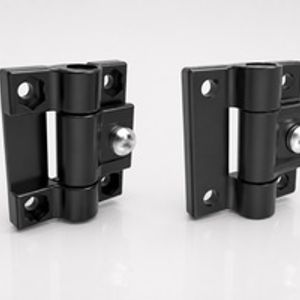
Zinc alloy is an exceptionally cost-effective material that offers excellent dimensional stability and precision through the die-casting process. It provides adequate tensile strength for many standard applications. When treated with high-quality surface finishes like powder coating or chrome plating, zinc alloy hardware performs well in controlled indoor environments, such as standard factory floors, cleanrooms, and basic automation facilities. However, surface-treated zinc alloy has clear limitations when it is constantly exposed to moisture, corrosive chemicals, or extreme mechanical wear, all of which can eventually break through the protective coating and lead to rapid oxidation.
Stainless steel, on the other hand — particularly grades 304 and 316 — is required for harsh and unforgiving environments. Grade 304 offers excellent general corrosion resistance, making it well suited for outdoor applications and washdown environments in the food and beverage industry. Grade 316 contains molybdenum, which significantly improves its resistance to chlorides and harsh industrial chemicals, making it the non-negotiable standard for marine environments, offshore platforms, and chemical processing plants. While the initial purchase cost is higher, the total cost of ownership drops dramatically because the material requires virtually no maintenance and has an extremely long service life.
Below is a detailed stainless steel vs zinc alloy hinges for electrical enclosures comparison to help your engineering and purchasing teams:
Feature/Metric | Zinc Alloy (Die-Cast) | Stainless Steel (304/316) |
Corrosion Resistance | Moderate (relies heavily on surface plating) | Exceptional (inherent material property, especially 316) |
Tensile Strength | High (sufficient for most standard industrial loads) | Superior (capable of supporting extreme heavy-duty dynamic loads) |
Cost Efficiency | Highly economical for large-scale batch production | Higher initial investment, but lowest long-term replacement cost |
Ideal Environments | Indoor automation, dry factory floors, standard IT racks | Marine, chemical plants, extreme outdoor weather, washdown areas |
Manufacturing Method | Precision die-casting for complex geometries | Investment casting, stamping, or CNC machining |
At ForndLock, we subject all our materials to rigorous salt spray testing and mechanical fatigue tests. We provide documented material certifications so that whether you choose an economical zinc die-cast solution or a premium 316 stainless steel component, the hardware will perform exactly to the specified engineering standards.

Maintaining IP Ratings and Sealing
A major concern for OEM clients is making sure that the hardware installation does not weaken the cabinet's environmental protection. Industrial enclosures are strictly rated by IP (Ingress Protection) or NEMA standards to guarantee protection against dust, water, and chemical ingress. Achieving ratings like IP65, IP66, or IP67 requires a perfect, unbroken seal around the entire perimeter of the door. Unfortunately, standard hardware often fails to deliver the mechanical force needed to maintain this seal, which leads to moisture getting inside, short circuits, and serious electrical failures.
The relationship between hinge performance and door gasket sealing is a crucial engineering detail. Heavy-duty hardware must do more than simply allow the door to swing open; it must actively contribute to the sealing mechanism. This is where advanced compression designs become essential. A heavy-duty compression hinge is engineered to pull the door tightly against the cabinet frame as it closes, applying uniform pressure across the weather stripping.
To achieve the best waterproof and dustproof performance, engineers must carefully calculate the compression ratio and the required gasket deflection. If the hardware is too weak or bends under load, the gasket will not compress evenly. This creates microscopic gaps, especially at the corners farthest from the locking mechanisms, allowing wind-driven rain or fine industrial dust to enter the enclosure. At ForndLock, our engineering support team works closely with clients to match specific heavy-duty hardware geometries with their chosen polyurethane or silicone gasket profiles. By making sure the mechanical pull of the hinge lines up perfectly with the elasticity of the gasket, we help OEM manufacturers guarantee that their IP ratings stay intact even under severe environmental stress.
Selecting Installation Styles and Angles
Beyond load bearing and material chemistry, engineers must also work within the physical design constraints of the cabinet enclosure itself. Choosing the correct mounting method and functional geometry determines how easily the equipment can be manufactured, accessed, and maintained in the field. The two main installation styles — concealed and surface-mounted — each offer distinct advantages depending on the requirements of the application.
Concealed hinges are mounted entirely inside the electrical enclosure. This internal placement creates a smooth, clean look on the outside of the cabinet, which is highly desirable in modern machinery design. More importantly, concealed mounting offers better security and vandal resistance, since there are no exposed pins or fasteners that unauthorized people can tamper with. However, concealed designs often require more complex internal sheet metal bending and may have slightly lower maximum load capacities compared to external versions due to space limitations.
Surface-mounted heavy-duty hinges, by contrast, are bolted or welded directly to the exterior frame and door. This style is the industry standard for extreme load-bearing applications. Surface mounting allows for large, robust hardware blocks that can support hundreds of kilograms. It also makes field maintenance easier, since technicians can replace or adjust the hardware without needing to access the potentially dangerous high-voltage interior of the cabinet.
Opening angle requirements also play a major role in the selection process. Engineers must consider the physical space where the cabinet will be installed:
1. 120-Degree Opening: Sufficient for standard access and basic visual inspections where aisle space is not severely restricted.
2. 180-Degree Opening: Essential for control panels that require frequent component replacement, allowing the door to lie flat against the adjacent cabinet.
3. 270-Degree Opening: Required for deep maintenance access in highly confined spaces, allowing the door to swing completely out of the technician's way.
To help with these complex spatial decisions, ForndLock provides comprehensive 3D CAD drawings for our entire hardware catalog, allowing engineers to check for interference, fitment, and movement digitally before committing to physical prototyping.
Case Study: Upgrading Wind Farm Cabinets
To show just how important proper hardware selection is, we can look at a recent project involving a well-known renewable energy equipment manufacturer based in Northern Europe. This OEM client designs and manufactures large control cabinets installed directly inside the base towers of offshore and coastal wind turbines. These environments represent the ultimate test for industrial hardware.
The Background and Problem:
The client was experiencing an unacceptably high failure rate with their outdoor control cabinets. The existing standard hardware was deteriorating quickly due to constant exposure to high-salinity coastal fog and extreme temperature swings. On top of that, the massive wind turbine blades generated severe, continuous structural vibration throughout the tower. This vibration caused the standard hinge pins to gradually work their way out of their barrels and the mounting fasteners to loosen. As a result, the heavy cabinet doors began to sag, losing their critical gasket deflection. With the seal compromised, highly corrosive salt moisture penetrated the enclosures, leading to rapid degradation of the internal electrical drives and triggering costly emergency maintenance shutdowns.
ForndLock's Solution:
The client approached ForndLock looking for a permanent, heavy-duty solution. Our engineering team immediately recognized that standard commercial hardware was not suitable for this dynamic, highly corrosive environment. We began a collaborative engineering process, providing custom sample testing that directly simulated the offshore conditions. We recommended switching to a specialized, heavy-duty 316 stainless steel compression hinge.
This specific component was engineered with a high-friction, captive pin design to completely eliminate the risk of pins backing out under continuous vibration. We also supplied specialized anti-vibration mounting hardware using advanced thread-locking mechanisms. The compression feature of the hinge ensured that even under heavy dynamic loads, the thick polyurethane door gaskets were pulled tightly and evenly against the cabinet frame, maintaining a flawless seal.
The Result:
After the ForndLock solution was put in place, the client subjected the upgraded cabinets to rigorous environmental chamber testing and field trials. The results were clear and definitive. The new hardware completely restored and maintained the IP66 integrity of the enclosures. The 316 stainless steel showed zero signs of corrosion after extensive salt spray exposure, and the anti-vibration design held perfectly firm throughout testing. The client eliminated their maintenance callbacks related to hardware failure and successfully moved to stable, long-term batch delivery for their global OEM production lines, securing their reputation for reliability in the renewable energy sector.
Finalizing Your Custom Hinge Solution
Choosing the best hardware for industrial control cabinets is a precise balancing act that involves dynamic load calculations, careful material selection, and strict adherence to environmental sealing requirements. Whether your project involves standard indoor automation panels or extreme outdoor infrastructure, specifying the correct heavy-duty component is essential for ensuring long-term operational safety and protecting your internal equipment investments.
At ForndLock, we draw on many years of manufacturing expertise to provide solutions that standard catalogs simply cannot match. We take pride in our comprehensive capabilities, offering full OEM/ODM customization to meet your exact mechanical constraints. From rapid sample provision and 3D CAD engineering support to strict quality control and reliable global batch delivery, we are fully equipped to handle the most demanding industrial challenges.
We welcome engineers, purchasing managers, and OEM clients to work with us on their next project. Send your specific load requirements, technical drawings, or requests for custom sample testing directly to our engineering team. Contact us today at [email protected] to secure the ultimate hardware solution for your heavy-duty applications.