
How Does A Torque Hinge Control Lid Opening Angle In Industrial Equipment?
A torque hinge controls lid opening angles by utilizing engineered internal friction mechanisms that generate precise rotational resistance, allowing heavy industrial panels to hold their position securely without relying on external support struts.
Securing heavy industrial lids, access panels, and protective machinery covers presents a significant engineering challenge. Traditional solutions like gas struts, hydraulic cylinders, or mechanical prop rods often consume valuable internal envelope space, require frequent maintenance due to seal degradation, and pose severe safety hazards if they fail unexpectedly. This guide is specifically formulated for mechanical engineers, procurement personnel, and OEM clients who require a deep technical understanding of internal hinge mechanics, torque calculations, and material selection criteria. At ForndLock, our extensive manufacturing experience has shown us firsthand how uncontrolled lid movements can lead to catastrophic equipment damage and operator injury. By eliminating the need for secondary support mechanisms, we help industrial manufacturers streamline their enclosure designs, reduce assembly times, and enhance overall operational safety. The following sections will dismantle the internal physics of these specialized positioning components, providing actionable insights for your next heavy-duty equipment design phase.
What Is An Industrial Torque Hinge?
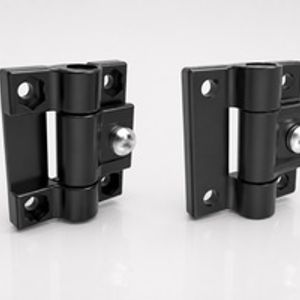
An industrial torque hinge is a specialized mechanical joint that provides constant, engineered resistance to hold heavy doors, panels, or lids securely at any desired angle without requiring external support mechanisms.
When engineering teams ask what is torque hinge technology in the context of heavy machinery, they are looking beyond standard architectural hardware. This component serves as a critical safety and positioning device deployed across harsh environments, including heavy mobile equipment, outdoor electrical enclosures, and precise medical diagnostic machinery. Unlike conventional free-swinging joints, this specialized hardware integrates the pivoting function and the position-holding function into a single, compact unit. This dual functionality is paramount for industrial clients looking to replace failure-prone gas springs and cumbersome mechanical props. Gas struts are notoriously sensitive to temperature fluctuations, losing pressure in extreme cold and risking seal blowouts in extreme heat. By shifting to a purely mechanical resistance system, equipment designers instantly save internal cabinet space and drastically reduce long-term maintenance costs.
The reliability of these components hinges entirely on the utilization of industrial-grade materials. At ForndLock, we manufacture these units using high-grade stainless steel, robust zinc alloys, and specialized hardened carbon steels to ensure long-term structural integrity. Because industrial enclosures frequently operate in environments exposed to corrosive chemicals, heavy dust, and high-pressure water washdowns, the hardware must meet strict IP-rated sealing standards. We subject our designs to rigorous lifecycle testing, ensuring they maintain consistent torque output over 20,000 to 50,000 continuous cycles in simulated harsh environments. This means the resistance you feel on the first day of operation remains virtually identical years later, preventing the dangerous lid droop that plagues inferior hardware.
How Are Opening Angles Precisely Controlled?
The opening angle is controlled through internal friction bands or stacked spring washers that generate precise, continuous rotational resistance against the hinge pin, counteracting the exact gravitational pull of the lid.
To understand how does a torque hinge control lid opening angle, we must examine the micro-mechanics operating inside the hinge barrel. The core architecture relies on an interference fit between the rotating shaft and the stationary housing. This is typically achieved using high-carbon steel clips, engineered polymer friction bands, or a series of Belleville spring washers. These internal elements are compressed during the manufacturing process to exert a calculated, permanent radial force against the hinge pin. As the operator attempts to move the heavy industrial lid, they must apply enough manual force to overcome the static friction generated by these compressed elements. Once in motion, the dynamic friction takes over, providing a smooth, dampened feel. The moment the operator stops applying force, the static friction instantly re-engages, locking the lid indefinitely at that exact angle.
Integrating this understanding of how does a torque hinge control lid opening angle is crucial when calculating the mechanical requirements for a specific enclosure. Engineers cannot simply guess the required resistance; it demands precise calculations mapping the lid's total weight and its exact center of gravity relative to the pivot axis. The torque rating, typically measured in Newton-meters (N-m) or inch-pounds (in-lbs), must perfectly balance the gravitational moment of the panel. If the resistance is too low, the lid will slowly drift downward under its own weight, posing a severe crushing hazard to maintenance personnel working inside the machine. If the resistance is too high, the ergonomic strain on the operator becomes unacceptable, potentially leading to workplace injuries. By carefully selecting the internal spring tension and friction band materials, we calibrate the rotational force vectors to neutralize gravity entirely, creating a zero-gravity feel for the end-user regardless of the panel's actual mass.
ForndLock Friction & Torque Hinges: Industrial Hardware Manufacturing
Why Does Asymmetric Torque Matter?
Asymmetric torque allows a heavy lid to be lifted with minimal effort while providing maximum downward resistance against gravity to prevent accidental slamming.
Asymmetric, or one-way, friction is a sophisticated engineering feature where the internal mechanics provide different levels of resistance depending on the direction of rotation. In heavy industrial applications, a massive steel access panel might require exceptionally high torque to prevent it from falling shut. However, forcing an operator to fight that same high resistance just to open the panel causes extreme ergonomic fatigue. By utilizing specialized one-way clutch mechanisms or differential friction bands, the hinge allows the lid to swing upward freely while instantly engaging full holding power the moment downward motion begins. This dynamic is critical for protecting both the equipment operators from crushing injuries and the sensitive internal electronic components from the shock and vibration of a slamming metal door.
Which Type Holds Position Better?
When analyzing torque hinge vs friction hinge which one holds position better, the engineered torque hinge offers vastly superior and consistent holding power for heavy industrial applications due to its calibrated internal resistance elements.
Procurement personnel and design engineers frequently face a crossroad when selecting positioning hardware, leading to the common debate of torque hinge vs friction hinge which one holds position better for long-term deployment. A basic friction hinge relies on the simple interference between a pin and a tightly rolled metal barrel, or a basic set screw tightening mechanism. While inexpensive, these basic designs are highly susceptible to rapid mechanical wear, galling, and thermal expansion. As the metal-on-metal surfaces grind against each other over time, the interference fit degrades, resulting in an inevitable and irreversible loss of tension. This makes basic friction joints entirely unsuitable for heavy industrial lids that require absolute reliability.
Conversely, precision-engineered hardware utilizes distinct, wear-resistant internal elements isolated from the primary structural load path. When evaluating torque hinge vs friction hinge which one holds position better, the answer becomes obvious when looking at load capacity and cycle life data. Our engineered solutions utilize self-lubricating polymers and hardened steel spring stacks that absorb wear internally without compromising the radial pressure on the shaft. This allows them to maintain their specified holding force over tens of thousands of cycles with less than a ten percent variance in resistance.
Furthermore, environmental factors heavily influence this comparison. Industrial machinery constantly generates severe low-frequency vibrations that act as a catalyst for loosening mechanical joints. A standard friction design will quickly vibrate loose, causing a heavy lid to drop unexpectedly. At ForndLock, we engineer our internal resistance elements to absorb and dampen these specific vibration frequencies.
To illustrate the technical contrast, consider the following performance metrics:
Load Capacity: Basic designs struggle with lids over five kilograms, whereas engineered positioning joints easily manage panels exceeding fifty kilograms.
Lifecycle Consistency: Simple interference fits lose up to fifty percent of their holding power within five thousand cycles, while engineered spring-washer designs maintain ninety percent of their original resistance past thirty thousand cycles.
Vibration Resistance: Basic joints experience micro-slippage under diesel engine resonance, whereas calibrated internal friction bands neutralize vibrational energy, ensuring zero angular drift during active machine operation.

How Do We Solve Client Problems?
We solve complex positioning challenges by engineering custom torque hinges that withstand severe vibrations and harsh environments, ensuring absolute safety and operational efficiency for our industrial clients.
To demonstrate our OEM and ODM manufacturing capabilities, let us examine a recent project involving a European manufacturer of heavy mobile construction equipment. This client faced a critical safety issue with their massive earth-moving excavators. The external steel control panel lids, weighing over twenty-five kilograms, were falling shut during operation due to the extreme low-frequency vibration generated by the primary diesel engines. Their previous hardware could not maintain static friction under these dynamic conditions, endangering field operators who needed to access the hydraulic control valves while the machine was idling. Furthermore, because these excavators operated in highly abrasive, mud-filled outdoor environments, the hardware required exceptional waterproof and dustproof sealing capabilities to prevent internal contamination.
The challenge presented to our engineering team was multifaceted: they needed a hinge that provided exact, unwavering angle control, occupied minimal internal cabinet space to avoid interfering with the hydraulic routing, and offered a reliable IP67-equivalent weather seal. Leveraging our extensive manufacturing experience, the ForndLock engineering team developed a custom stainless-steel positioning joint featuring an asymmetric resistance profile. We integrated highly compressed Belleville spring washers housed within a sealed, O-ring protected barrel. This allowed the heavy steel lid to be lifted with minimal operator effort while providing massive downward resistance that locked the panel rigidly in place.
During the rapid prototyping phase, we subjected the custom samples to rigorous vibration table testing in our facility, perfectly simulating the exact resonance frequencies of their diesel engines. We validated the torque specifications against their exact lid weight and center of gravity geometry. The result was a resounding success. The new custom hardware delivered complete position retention during maximum machine vibration, entirely eliminating the lid droop issue. This precise engineering intervention led to a successful batch delivery, immediate implementation on their assembly line, and the establishment of an ongoing OEM manufacturing partnership that continues to supply hardware for their entire fleet of heavy machinery.
How Can You Start Your Project?
You can start your project by evaluating your lid dimensions and weight, then collaborating with our engineering team to design, test, and manufacture the perfect custom hinge solution for your application.
Achieving precise angle control in heavy machinery requires much more than off-the-shelf hardware; it demands exact torque calculations, superior material selection, and high-quality manufacturing processes. As we have explored, selecting the correct internal friction mechanics is essential for counteracting gravity, neutralizing heavy machine vibrations, and ensuring long-term operational safety. For engineers and procurement personnel, partnering with a dedicated manufacturer prevents costly production downtime and eliminates the risk of catastrophic equipment failure in the field.
ForndLock stands ready to support your most demanding industrial applications through our core strengths in OEM and ODM customization. We pride ourselves on delivering comprehensive engineering support, from initial center-of-gravity calculations and rapid sample testing to reliable, large-scale batch delivery. We understand that every industrial enclosure presents unique spatial, environmental, and load-bearing challenges that require tailored mechanical solutions. If you are designing a new industrial enclosure or need to upgrade your current lid positioning hardware to eliminate safety hazards, send your project requirements, 3D drawings, or requests for custom samples to our engineering team at: [email protected].