
How Does A Rotary Latch Mechanism Work In Automotive Doors?
Understanding the precise mechanical behavior of heavy-duty compartment closures is a critical requirement for industrial engineers, procurement personnel, and OEM clients. This comprehensive guide resolves the technical ambiguities surrounding high-stress access hardware, moving beyond basic commercial definitions to explore exactly how internal cams and pawls function under severe operational loads. By dissecting these dynamic fastening systems, we provide professionals with clear, actionable evaluation criteria regarding load-bearing capacities, vibration resistance, and structural integrity. Whether you are designing enclosures for specialized agricultural machinery, military transport, or large-scale generator housings, mastering the engineering principles behind these closures is essential for ensuring long-term reliability and safety in the field.

What Is A Rotary Latch Really?
A rotary latch is a robust mechanical fastening device that captures a striker within a rotating cam to secure heavy panels and doors.
To fully grasp the engineering value of this component, one must look past simple consumer-grade locks and consider the extreme forces present in industrial environments. What is a rotary latch in this context is a question of structural survival rather than mere convenience. These devices are engineered to absorb massive kinetic energy, withstand continuous mechanical shock, and maintain a secure hold even when the surrounding chassis undergoes severe torsional twisting. As an experienced industrial locks, industrial latches, industrial hinges, industrial handles and access hardware manufacturer, ForndLock approaches the design of these mechanisms with a deep understanding of metallurgy and mechanical physics. We utilize high-grade carbon steel and premium stainless steel alloys to form the core structural components, ensuring that the internal geometry remains intact under heavy payload stress. The housing and internal rotors are typically treated with advanced anti-corrosion coatings, such as zinc-nickel plating or heavy-duty powder coating, to prevent environmental degradation. This meticulous material selection guarantees that the mechanism will not fail when exposed to harsh chemicals, extreme temperature fluctuations, or continuous outdoor weather conditions.
What Are Its Primary Industrial Uses?
Its primary applications span heavy-duty machinery panels, specialty vehicle compartments, and complex access hardware systems requiring secure, vibration-resistant closures.
When procurement teams ask what is a rotary latch and its uses, they are typically evaluating components for highly demanding sectors where failure is not an option. You will find these robust mechanisms securing the heavy engine hoods of construction excavators, the exterior storage compartments of utility service trucks, and the massive acoustic doors of industrial generator enclosures. In these applications, the hardware must do more than simply keep a door shut; it must actively compress weather seals to meet strict waterproof and dustproof standards. OEM clients frequently require these closures to maintain specific IP sealing ratings, ensuring that sensitive internal electronics or engine components remain isolated from external contaminants. The ability of the rotating cam to pull the door tightly against heavy rubber gaskets makes it the definitive choice for environments where dust ingress or water penetration could lead to catastrophic equipment failure.
How Do These Rotary Mechanisms Function?
The system operates by utilizing a spring-loaded rotor that rotates around a striker pin upon impact, locking the door firmly in place.
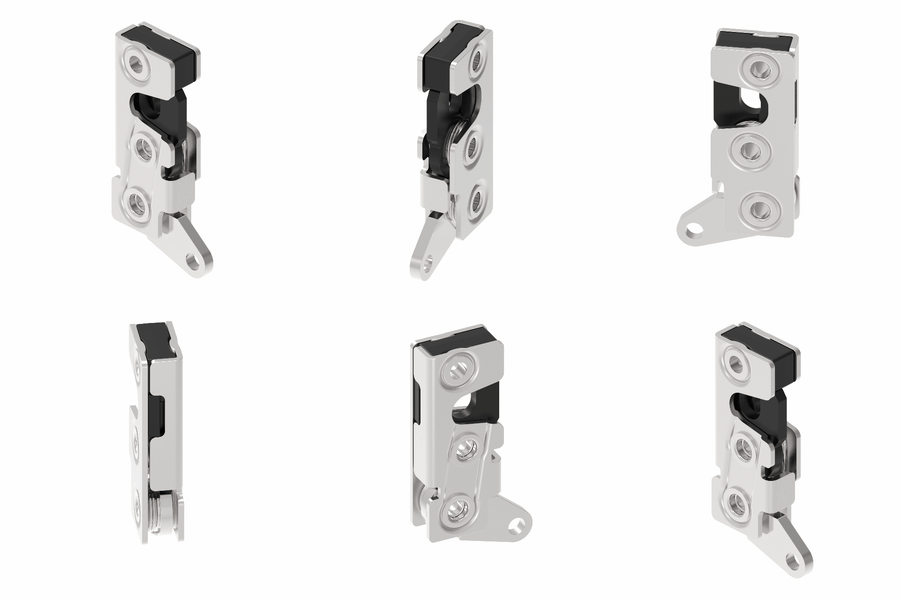
To fully understand the physics of these access solutions, one must look closely at the internal kinematics of the assembly. When engineers design specialized utility vehicles or heavy-duty cabins, they must determine exactly how does a rotary latch mechanism work in automotive doors that are subjected to industrial-grade stress. The process begins the moment the door is pushed closed, driving the stationary striker pin into the open jaws of the latch rotor. As the pin makes contact, the kinetic energy of the closing door forces the rotor to pivot around its central axis. This rotation stretches or compresses internal heavy-duty torsion springs, building mechanical tension within the housing. High-quality systems often feature dual-stage latching capabilities, which is a critical safety requirement in heavy machinery. The first stage acts as a safety catch, preventing the heavy door from flying open if it is not pushed hard enough, while the second stage represents the fully engaged, fully closed position. This two-step locking sequence ensures that even if a primary failure occurs due to extreme chassis flex, the secondary catch will retain the heavy panel, protecting operators from sudden door deployment.
How Does The Engagement Action Occur?
The engagement action occurs when the striker pushes against the rotor jaws, triggering the internal pawl to drop and lock the rotation.
The micro-movements within the housing are a masterclass in mechanical timing and precision engineering. The pawl is a secondary internal lever that acts as the primary locking blockade. As the rotor turns to encapsulate the striker pin, it reaches a specific geometric threshold where a notch on the rotor aligns directly with the pawl. Driven by its own dedicated spring return system, the pawl snaps down into this notch with significant force, physically preventing the rotor from turning backward. This solid metal-on-metal engagement is what provides the massive tensile strength necessary to keep heavy compartments sealed. To release the system, an external force must lift the pawl out of the rotor notch. This is typically achieved through an integrated actuator lever, a remote cable pull system, or a direct push-button assembly. Once the pawl is lifted, the stored kinetic energy in the rotor springs forces the cam to violently spin back to its original open position, actively ejecting the striker pin and pushing the heavy door away from the frame.
Why Is NVH Noise Reduction Important?
NVH noise reduction is critical because it minimizes rattling and vibrations, ensuring a premium feel and preventing long-term mechanical fatigue.
In the realm of heavy equipment manufacturing, Noise, Vibration, and Harshness (NVH) is a primary engineering challenge that distinctly separates premium hardware from low-end alternatives. High-frequency vibrations generated by massive diesel engines or rough off-road terrain travel directly through the vehicle chassis and into the access hardware. If the internal tolerances between the rotor and the pawl are too loose, these vibrations cause the metal components to chatter against each other relentlessly. Over time, this constant micro-impact leads to severe mechanical fatigue, wearing down the precise geometry of the locking notches and ultimately causing premature failure. To combat this, advanced manufacturing processes incorporate specialized rubber bumpers, over-molded catch pins, and ultra-tight machining tolerances. By dampening the kinetic transfer of energy, these anti-vibration features not only protect the structural integrity of the closure but also provide operators with a solid, reassuring acoustic feedback when operating the machinery.
How Do Rotary Latches And Strikers Differ?
While a rotary mechanism actively rotates to capture a pin, a striker plate is the passive anchor point that the latch engages.
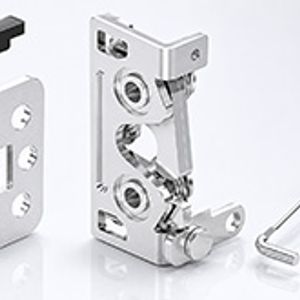
Understanding the relationship between these two components is vital for effective product selection. They are fundamentally two halves of the same closure system, yet they serve entirely different mechanical roles. When evaluating access hardware for a new project, procurement personnel must carefully analyze the rotary latch vs striker plate differences in industrial enclosures to optimize their Bill of Materials (BOM) and assembly line procedures. The latch assembly contains all the dynamic moving parts, including the springs, cams, pawls, and actuation levers. It is the active brain of the locking system, responsible for capturing, holding, and releasing the door. Conversely, the striker is a static, solid piece of metal, usually taking the form of a hardened steel loop, a heavy-duty bolt, or a precisely machined pin. It has no moving parts and relies entirely on its sheer structural rigidity to anchor the door to the vehicle frame.
What Are The Key Structural Contrasts?
The primary structural contrast lies in their movement; the latch houses dynamic springs and cams, whereas the striker remains completely stationary.
The engineering complexity heavily favors the active locking mechanism, which requires precise assembly and lubrication to function reliably over thousands of cycles. Because of its multi-component nature, the active mechanism requires a larger installation footprint and deeper cavity space within the door panel. The static anchor, however, is simply bolted or welded directly to the opposing frame, requiring minimal space but demanding extremely high shear strength to resist the pulling forces exerted by the heavy door. When engineers study the rotary latch vs striker plate differences in industrial enclosures, they must also consider installation tolerances. The dynamic system can often tolerate slight misalignments due to the wide gathering jaws of the cam, whereas simpler slam-latch systems interacting with basic plates require absolute precision to engage correctly. This tolerance for blind-mating makes the dynamic rotor system far superior in heavy manufacturing where perfect alignment is difficult to achieve.
When Should You Choose Each Option?
You should specify rotary systems for dynamic, high-vibration environments, while simple strikers are better suited for static, low-stress cabinet closures.
The decision ultimately comes down to the specific environmental exposure and load-bearing requirements of your project. If you are designing an off-highway vehicle, an agricultural tractor, or a heavy-duty compressor housing that will experience constant motion and severe chassis flex, the active cam encapsulation is absolutely necessary to prevent accidental openings. The ability to pull a door tight against heavy weather stripping to achieve high waterproof and dustproof ratings cannot be accomplished with rigid, passive hardware. However, if your project involves a stationary indoor electrical cabinet or a low-stress internal storage compartment where vibration is virtually nonexistent, utilizing a less complex slam-latch with a basic static plate may be a more cost-effective and space-saving engineering choice.
How Have We Solved Real Engineering Challenges?
We successfully engineered a tailored locking system for a European heavy machinery client by upgrading their materials and optimizing the cam geometry.
Real-world application is the ultimate test of any engineering theory. Recently, a prominent European manufacturer of agricultural and heavy earth-moving equipment approached ForndLock with a critical field failure issue. Their massive engine compartment doors were unexpectedly disengaging during high-intensity soil excavation. The severe field vibrations traveling through the tractor chassis were causing their standard, off-the-shelf access hardware to chatter, which intermittently bounced the internal pawl out of its locking notch. As a result, the heavy doors would swing open during operation, creating a severe safety hazard and allowing massive amounts of abrasive dust to bypass the weather seals, completely compromising the required IP sealing rating of the engine bay.
Our engineering support team immediately initiated a comprehensive root-cause analysis of their existing hardware. We determined that the standard torsion springs lacked the necessary tension to hold the pawl down under such specific, high-frequency kinetic shock. In response, ForndLock developed a custom dual-stage rotary latch specifically tailored to their operational environment. We upgraded the internal mechanism with heavily reinforced anti-vibration springs and redesigned the pawl geometry to create a deeper, more aggressive locking angle that physically could not disengage without direct manual actuation. Furthermore, because these machines operated in highly corrosive agricultural environments exposed to fertilizers and mud, we applied a specialized anti-corrosion zinc-nickel plating to the entire assembly, vastly outperforming standard zinc coatings. The OEM client subjected our custom prototypes to rigorous, multi-axis vibration field testing. The result was a resounding success with zero accidental openings and perfect restoration of their waterproof and dustproof sealing standards. This engineering intervention not only streamlined their volume delivery but also secured our position as their trusted, long-term project support partner.
How Can You Specify Custom Hardware?
You can specify the ideal hardware by evaluating your project load requirements, environmental exposure, and required IP sealing ratings with our engineering team.
Standard off-the-shelf components are rarely sufficient for highly specialized industrial applications. Achieving absolute reliability requires matching the exact OEM specifications of your heavy-duty machinery with purpose-built access solutions. Whether you need specific anti-corrosion treatments for marine environments, custom actuation levers for blind-mating scenarios, or enhanced vibration resistance for off-road utility vehicles, precise engineering alignment is mandatory. We provide comprehensive project support from the initial evaluation of your technical drawings through rigorous physical sample testing and finally to mass production and seamless volume delivery.
If your current access hardware is failing to meet strict waterproof, dustproof, or load-bearing standards, it is time to upgrade your structural components. We invite engineers, procurement personnel, and OEM clients to collaborate directly with our manufacturing experts to solve complex closure challenges. To initiate a technical review, request sample testing, or discuss specialized OEM/ODM customization capabilities, please send your specific project requirements and technical drawings directly to our engineering department at: [email protected].