
Heavy Duty Drawer Locks for Industrial Tool Cabinets Explained
Picture a mid-shift situation that workshop supervisors know well: a technician needs a calibrated torque wrench, opens the drawer, and finds it empty. No forced entry, no visible damage — just a lock that offered just enough resistance to look functional while providing almost none in practice. Or consider the slower failure: a drawer lock that works fine for six months, then starts wobbling, then stops engaging cleanly, then one day the bolt simply shears under the lateral load of a fully loaded drawer being yanked open in a hurry. Neither scenario is dramatic. Both are costly.
Most published content about industrial cabinet security focuses on door latches, cam locks, and enclosure hardware. The drawer lock — particularly in heavy-duty tool cabinet contexts — is consistently underspecified, under-discussed, and under-engineered relative to the actual mechanical demands placed on it. At ForndLock, we manufacture industrial drawer locks specifically built for tool storage environments, and the specification decisions that matter most are rarely the ones buyers focus on first. This guide covers load rating, lock cylinder type, keying system design, and installation compatibility — the four dimensions that determine whether a drawer lock actually holds up in a working workshop.
Why Do Standard Drawer Locks Fail in Industrial Environments?
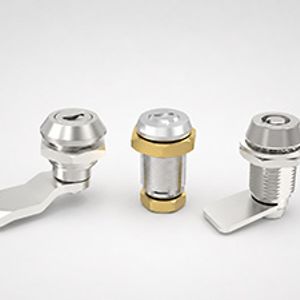
Standard drawer locks are designed for office furniture load cycles and light-gauge sheet metal — they are not engineered to withstand the vibration, lateral stress, and repeated heavy-load cycling that industrial tool cabinets produce daily.
The mechanical differences are significant and specific. Office-grade drawer locks typically use zinc die-cast bodies with wall thicknesses around 1.5–2 mm, lightweight cam bolts with minimal throw depth, and spring-loaded mechanisms that assume gentle, infrequent use. An industrial tool cabinet drawer holding 30–80 kg of sockets, wrenches, and power tool accessories operates in an entirely different physical regime. Opened and closed dozens of times per shift, under load, often with some lateral force applied, these drawers exert stresses that shear lightweight lock bolts and strip cam threads within months of installation.
Vibration is a failure mode that almost never appears in competitor content, but it is one of the most consistent problems we hear about from customers. Workshops running nearby presses, compressors, or CNC equipment introduce continuous micro-vibrations into the cabinet structure. Over weeks and months, these vibrations work loose any lock cylinder that lacks a proper interference fit or locking nut torqued to spec. The result is a cylinder that rotates slightly in its cutout, creating play in the bolt engagement and eventually failing to lock at all — without any single identifiable event that caused it.
Dust and debris ingress compounds the problem. Industrial environments generate metal filings, coolant mist, and fine particulate that infiltrate lock cylinders not designed with proper sealing or dust covers. Internal cylinder wear accelerates significantly under these conditions, reducing key engagement precision and shortening service life. A lock rated for 50,000 cycles in a clean office environment may reach functional failure in a fraction of that under workshop conditions.
The consequence is not only tool theft. For facilities managing calibrated instruments — torque wrenches, measuring gauges, precision tools subject to OSHA or ISO accountability requirements — a failed or compromised drawer lock creates a documentation gap that carries real compliance risk. A lock that looks intact but no longer secures the drawer is arguably worse than a visibly broken one, because it delays the discovery of missing controlled tools.
What Are the Key Specifications for Heavy Duty Industrial Drawer Locks?
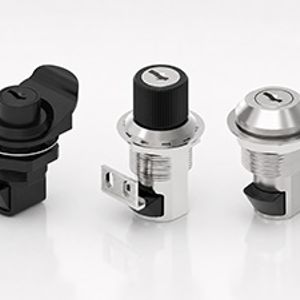
For industrial tool cabinet applications, the specifications that matter most are lock body material and wall thickness, bolt or deadbolt throw length, cylinder type, dust resistance rating, and the mounting cutout compatibility with your cabinet's face panel gauge.
Getting these right at the specification stage is far less expensive than retrofitting or replacing locks after installation.
What body materials and bolt types hold up to heavy use?
Zinc die-cast bodies are adequate for moderate industrial use, but for high-cycle or high-load drawers, solid brass or steel-reinforced lock bodies with hardened steel bolts provide significantly longer service life.
Zinc die-cast is cost-effective and corrosion-resistant, making it a reasonable choice for lower-frequency drawers or secondary storage tiers. However, under sustained impact and lateral load, die-cast bodies can crack at the mounting flange — a failure mode that solid brass or steel-body construction resists substantially better. Brass offers excellent corrosion resistance and machinability, which matters for precise cylinder fitment. Steel-reinforced bodies provide the highest impact resistance for applications where pry attacks are a genuine concern.
On bolt type, deadbolts are the correct choice for tool cabinet drawers in vibration-prone environments. Spring bolts retract under sufficient vibration or lateral pressure — a meaningful vulnerability when the cabinet sits near operating machinery. A deadbolt requires deliberate key operation to retract, which eliminates accidental disengagement entirely. Bolt throw depth should be a minimum of 10–12 mm for steel cabinet face panels; anything shallower creates a pry vulnerability at the drawer face that a determined person can defeat with basic leverage.
Which cylinder type suits an industrial workshop setting?
Pin tumbler cylinders offer the best balance of pick resistance and rekeying flexibility for most industrial tool cabinet deployments, while disc tumbler cylinders remain a cost-effective choice for lower-security storage tiers.
Here is a practical comparison for the most common cylinder types used in industrial drawer locks:
Cylinder Type | Security Level | Rekeying | Best For |
Disc Tumbler | Basic | No | Low-security storage tiers |
Pin Tumbler | Medium–High | Yes | Standard tool cabinet deployment |
Interchangeable Core (IC) | High | Rapid swap | Large multi-cabinet facilities |
Electronic/Keypad | Variable | Remote/software | High-audit environments |
Disc tumbler cylinders are simple, inexpensive, and widely available — but they offer limited pick resistance and no rekeying capability. Once a key is lost or an employee leaves, the entire lock must be replaced. Pin tumbler cylinders address both limitations: they provide meaningfully higher pick resistance and can be rekeyed or integrated into master key and keyed alike systems. For most workshop tool cabinet deployments, pin tumbler is the practical standard.
Interchangeable core cylinders are worth specifying for large facilities managing 20 or more cabinets, where rapid cylinder swap without lock body replacement saves significant labor cost during security reconfigurations. Electronic options exist and are appropriate for high-audit environments, but for most workshop applications, battery maintenance requirements and dust sensitivity make mechanical cylinders the more reliable long-term choice.
Standard cutout sizes for industrial drawer locks are 19 mm and 22 mm diameter, fitting panel thicknesses typically ranging from 1.5 mm to 3 mm steel gauge. Lock body projection depth — the distance the lock body extends behind the panel — typically runs 25–40 mm and must be confirmed against the available clearance behind the drawer face before ordering.
How Does a Keyed Alike System Solve Workshop Key Management Problems?
A keyed alike drawer lock system allows one key to operate multiple drawers across a workshop's tool cabinets — eliminating the key proliferation problem that makes individual-lock setups unmanageable at scale.
Consider the arithmetic of a typical mid-size workshop: six tool cabinets, each with four to six drawers, each drawer independently locked. That is 24 to 36 individual lock points. In a keyed-different configuration, each technician either carries a bulky key ring or loses time hunting for the right key at each drawer. Access bottlenecks accumulate across a shift. Keys get left in locks, lost, or borrowed — and the security the locks were supposed to provide quietly erodes.
Keyed alike systems solve this by configuring all cylinders in a set to the same key cut. One key per authorized user opens every designated drawer. The operational benefit is immediate, but the planning decisions matter.
There are three distinct keying approaches, and choosing the right one depends on how access tiers are structured in the facility:
Keyed alike works best for single-team workshops where all authorized users need equivalent access to all drawers. Every lock in the set shares one key cut, and every authorized technician holds that key. Simple, fast, and effective for environments without internal access hierarchy.
Master keyed systems add a layer: individual keys open specific assigned drawers or cabinets, while a supervisor or tool crib manager holds a master key that opens all of them. This is the appropriate structure when accountability by individual matters — for example, when specific technicians are assigned specific tool sets and responsible for their condition.
Keyed different setups maximize individual accountability and are suited for high-security tool cribs or controlled instrument storage where each lock point needs an independent audit trail. The tradeoff is key management complexity.
When customers come to us planning a new workshop cabinet installation, one of the first questions we ask is whether they want to configure the keyed alike system at the order stage or plan for future expansion. Specifying the key series upfront — and receiving documented key series records with the order — prevents the expensive situation of needing to rekey an entire workshop because the original locks were ordered without a coordinated key plan. For ISO-audited facilities, documented key series records also support key control auditing requirements by preventing unauthorized key duplication.
Retrofitting a keyed alike drawer lock system onto an existing workshop is feasible in most cases, provided the existing locks share the same cylinder format. If the cabinets use mixed lock body types or non-standard cutouts, we assess compatibility during the sample and specification stage before recommending a retrofit path.
ForndLock: Heavy-Duty Compression Locks for Railways
How Do You Ensure Installation Compatibility with Your Existing Tool Cabinets?
The two most common installation failures we see are mismatched cutout diameters and panel thickness falling outside the lock's grip range — both are avoidable with three measurements taken before ordering.
Those three measurements are: the face panel cutout diameter (standard industrial locks use 19 mm or 22 mm; some heavy-duty cabinet brands use non-standard sizing that requires an adapter bushing), the panel thickness (the lock's grip range must accommodate the cabinet's steel gauge, typically 1.5–3 mm for standard industrial tool cabinets, though some heavy-gauge cabinets run thicker), and the drawer face depth clearance for the lock body behind the panel.
The grip range specification is frequently overlooked. A lock with a grip range of 1–10 mm will not seat correctly on a 2 mm panel if the tolerance stack from the mounting nut and washer pushes it outside that range. Confirming the grip range against actual panel thickness before ordering eliminates this entirely.
Retrofit installations on existing cabinets sometimes require adapter bushings when the existing cutout diameter does not match standard lock sizing, or face panel drilling when no cutout exists. New-build OEM projects allow us to specify the lock body and cutout geometry together, which eliminates fitment ambiguity from the start. For OEM cabinet manufacturers integrating our locks into a production line, we provide complete dimensional drawings and can adjust lock body projection depth to match the specific drawer face construction.
Mounting orientation is worth confirming as well. Some heavy-duty drawer locks are orientation-specific — the bolt throw direction (vertical vs. horizontal) must align with the cabinet's drawer frame geometry and strike plate position. Installing a vertically-oriented bolt lock in a horizontal application will result in either poor engagement or no engagement at all.
Finally, during installation, the lock body must seat flush against the panel face with no gap. Any gap between the lock body flange and the panel surface creates a debris entry point that accelerates internal cylinder wear. Proper torque on the mounting nut — not overtightened to the point of distorting the panel — ensures both a clean seal and a stable lock body that resists the micro-vibration loosening described earlier.
What Should You Ask a Supplier Before Ordering at Volume?
Before placing a volume order, the questions that prevent the most costly mistakes are: Can you supply keyed alike sets to a documented key series? What is the tested cycle life of this lock body? And can the lock be customized to match our panel gauge and finish requirements?
On cycle life: ask for documented test data, not catalog claims. A quality heavy-duty drawer lock for industrial tool cabinet use should be rated for a minimum of 100,000 operating cycles. Locks rated below this threshold are typically designed for office furniture and will show premature wear under industrial load frequency. We test our locks to this standard as a baseline, with higher-cycle ratings available for specified high-use applications.
On keying documentation: a reputable supplier should be able to provide a key series record with every keyed alike order. This record allows you to reorder replacement cylinders to the same key cut in the future and supports key control auditing. If a supplier cannot provide documented key series records, key control at scale becomes unmanageable.
On customization: panel thickness variations, finish options — zinc plating, nickel plating, powder coat — and OEM part-number or brand marking are all relevant for cabinet manufacturers integrating locks into a production line. We support all of these at volume, and we strongly recommend requesting a physical sample for evaluation against your actual cabinet before committing to a production run. Testing a sample against the real panel gauge, drawer face clearance, and operational load takes less than a day and eliminates the most common ordering errors.
Lead time and minimum order quantity transparency matter equally. Volume procurement requires reliable lead time commitments, not catalog estimates that shift when production capacity is constrained. These are straightforward questions to ask, and the answers reveal a great deal about a supplier's manufacturing depth.

At ForndLock, our position is straightforward: industrial drawer locks are a small component with an outsized impact on workshop security, tool accountability, and operational continuity. They deserve the same specification rigor as any other safety-critical hardware in the facility — not a default selection from a general hardware catalog.
We design and manufacture heavy duty drawer locks for industrial tool cabinets with configurable cylinder types, keyed alike drawer lock systems for workshop cabinets, and full OEM customization capability. Every lock we produce is engineered for the mechanical realities of industrial tool storage, not repurposed from an office furniture specification.
If you are working on a new cabinet project, a workshop retrofit, or an OEM specification that requires a reliable industrial drawer lock partner, send your project requirements, drawings, or sample requests to [email protected]. We will respond with a specification recommendation or arrange a sample evaluation — whichever moves your project forward faster.
FAQ
Q1: What is the standard cutout size for heavy duty drawer locks on industrial tool cabinets?
The most common cutout diameters are 19 mm and 22 mm. Before ordering, always measure your existing panel cutout or confirm the specification with your cabinet manufacturer. Some heavy-duty cabinet brands use non-standard sizing that requires an adapter bushing, and ordering without this measurement is the single most common cause of installation delays.
Q2: Can I retrofit a keyed alike system onto an existing workshop cabinet setup?
Yes, in most cases. If your current locks share the same cylinder format — for example, all 19 mm pin tumbler — ForndLock can supply replacement cylinders keyed alike to a single documented key series. If the cabinet uses mixed lock body types or non-standard cutouts, we assess compatibility during the sample and specification stage before recommending a retrofit path.
Q3: How many operating cycles should a heavy duty industrial drawer lock be rated for?
For tool cabinet applications with regular daily use, we recommend a minimum cycle life rating of 100,000 operations. Locks rated below this threshold are typically designed for office furniture and will exhibit premature wear under industrial load frequency and vibration conditions.
Q4: What is the difference between a keyed alike and a master keyed drawer lock system?
In a keyed alike system, every lock in the set opens with the same key — appropriate for single-tier access where all authorized users need equal access to all drawers. A master keyed system uses individual keys per lock or cabinet, plus a master key held by a supervisor that opens all of them. Master keying suits workshops where access tiers matter and individual accountability needs to be maintained alongside supervisory override capability.
Q5: Does ForndLock offer custom finishes or OEM marking on industrial drawer locks?
Yes. We support zinc plating, nickel plating, and powder coat finishes, as well as custom part-number or brand marking for OEM cabinet manufacturers integrating our locks into their production lines. Send your specification requirements to [email protected] to discuss options and request a sample.