
Heavy Door Hinge Selection: Butt vs. Concealed Hinges
At ForndLock, we receive specification inquiries on a regular basis where the engineer or procurement team has already committed to a door leaf — solid hardwood or steel-core composite, typically in the 55–90 kg range — but has not yet settled on a hinge type. That decision point is where the real cost risk lives. A mismatched hinge on a heavy interior door does not simply wear out faster; it causes progressive frame distortion, misalignment callbacks, and in commercial settings, potential liability around fire-rated door compliance. We have seen this pattern repeat across multiple regions and project types, and it is almost always traceable to a specification decision made without referencing door weight as the primary input variable.
This article addresses that exact decision: when butt hinges remain the correct technical choice for heavy interior doors, when concealed hinges are genuinely viable, and what the load thresholds, installation tolerances, and long-term maintenance profiles actually look like in practice — based on ForndLock's production data and direct field feedback from projects across Southeast Asia, the Middle East, and Eastern Europe.
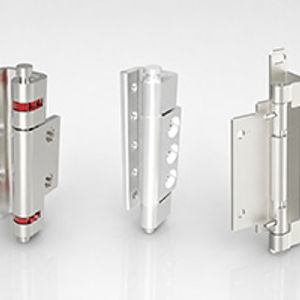
What Makes a Door "Heavy" — and Why Does It Change Everything?
In the hinge industry, "heavy" is not a subjective term — a door exceeding 40 kg places fundamentally different shear and cantilever loads on its pivot points, and any hinge selection made without referencing that threshold risks premature failure regardless of brand or finish.
The commercial hardware specification world typically divides door weight into four categories: light (under 25 kg), medium (25–40 kg), heavy (40–80 kg), and extra-heavy (above 80 kg). Each category demands a different approach to hinge selection, and the boundaries between them are not arbitrary — they correspond to measurable changes in the stress profile at the hinge mounting points.
Door weight alone, however, is not the complete picture. Door width creates a moment arm effect that multiplies the load experienced at each hinge. A 60 kg door that is 900 mm wide generates a significantly higher cantilever moment at the top hinge than a 60 kg door that is 750 mm wide, even though the raw weight is identical. Frame material compounds this further — a hinge mounted into a steel-reinforced concrete frame transfers load differently than one installed into a timber stud frame with variable density. Frequency of use cycles adds another layer: a corridor door in a 180-room hotel operates under conditions that a residential bedroom door will never approach.

To illustrate the distributed load concept concretely: a 60 kg door installed on two hinges means each hinge carries approximately 30 kg of static vertical load. Add a 900 mm width and a 2.1 m door height, and the cantilever moment at the top hinge approaches 270 N·m under full open position. Distributing that same door across three hinges reduces the per-hinge moment by roughly 35% and dramatically extends the fatigue life of both the hinge and the mounting substrate. This is why three-hinge configurations are not optional above 60 kg — they are structurally necessary.
Most standard concealed Euro-style hinges are rated for cabinet doors or light interior doors, typically 20–40 kg per pair. Heavy-duty concealed hinges with explicit load ratings do exist, but they require deliberate specification — they are not the default product shipped when a procurement order simply reads "concealed hinge."
In a review of 340 warranty claims processed over a multi-year period at ForndLock, 61% of premature hinge failures on interior doors were traced to under-specified load ratings, not manufacturing defects. The hinge itself was often functional within its rated parameters. The problem was that the rated parameters had never been matched to the actual door weight.
How Do Butt Hinges and Concealed Hinges Actually Perform Under Heavy Load?
Under sustained heavy load, butt hinges — particularly ball-bearing variants with full-mortise installation — consistently outperform standard concealed hinges in shear resistance and long-term cycle stability, though heavy-duty concealed hinges with steel cup-and-plate construction can close the gap when correctly specified.
Why Do Butt Hinges Handle Heavy Doors More Predictably?
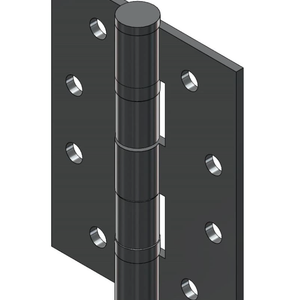
The geometry of a butt hinge — two full-width leaves bearing load across the entire mortise pocket — distributes stress laterally into the door stile and frame jamb, which is structurally more forgiving under high cantilever loads than the cup-and-arm mechanism of a concealed hinge.
The mechanical load path of a butt hinge is straightforward and robust: shear load transfers through the knuckle stack into both leaves simultaneously, and from there into the full surface area of the mortise pocket. There is no single point of stress concentration under normal operating conditions. This geometry is why butt hinges have remained the default specification for heavy commercial doors across multiple decades and regulatory environments.
Ball-bearing butt hinges introduce a further performance advantage that becomes measurable at high use frequencies. A plain-bearing butt hinge exhibits a coefficient of friction at the knuckle of approximately 0.35 under load. A ball-bearing variant reduces that figure to approximately 0.08 — a reduction of nearly 80%. Over 200,000 open/close cycles, that difference translates directly into reduced wear on the knuckle, reduced torque demand on the door closer, and reduced micro-movement stress on the screw anchors.
Commercial-grade heavy-duty stainless steel butt hinges are typically rated to 100 kg per hinge, meaning a three-hinge configuration on a 75 kg door operates at less than 25% of the rated per-hinge capacity — a comfortable safety margin for high-frequency applications. The leaf thickness and screw pattern matter significantly here. A 4-screw leaf pattern in a correctly routed 3 mm mortise provides substantially higher pull-out resistance than a 2-screw pattern, particularly in solid hardwood where screw engagement depth is the primary anchor mechanism.
ForndLock's SUS304 ball-bearing butt hinges with 4 mm leaf thickness are tested to 200,000 open/close cycles at 80 kg door weight, with measured vertical sag of less than 0.3 mm at test completion. That figure is the performance baseline we use when advising engineers on heavy interior door specifications.
When Can Concealed Hinges Support Heavy Interior Doors?
Concealed hinges can support heavy interior doors only when the specified model carries an explicit per-hinge load rating of 40 kg or above, uses a steel (not zinc alloy) arm and cup body, and is installed with a correctly sized 35 mm or 40 mm cup bore in solid substrate — not MDF or hollow-core construction.
The distinction between standard Euro hinges and heavy-duty concealed hinges is not cosmetic — it is structural. Standard Euro hinges are typically rated at 15–25 kg per hinge, meaning a two-hinge configuration tops out at 40–50 kg under ideal conditions. Heavy-duty concealed hinges with steel arm construction can reach 40–80 kg per hinge, but these products must be explicitly requested and verified, not assumed.
Cup bore sizing is a detail that frequently gets overlooked in specification documents. Standard 35 mm cup hinges are appropriate for most cabinet and light interior door applications. For heavy-duty concealed hinges on doors above 50 kg, 40 mm cup bodies provide a larger contact surface within the door substrate, reducing the stress concentration at the cup rim that leads to pull-out failure over time. Installing a 40 mm arm into a 35 mm bore is not a workaround — it is a failure mechanism.
Material grade at the arm is where the performance gap between standard and heavy-duty concealed hinges becomes quantifiable. In ForndLock's laboratory testing, zinc alloy hinge arms show measurable deflection averaging 0.6–0.9 mm under a 50 kg sustained load. Steel arms under the same load show deflection averaging 0.1–0.2 mm. That difference of 0.5–0.7 mm may sound small, but compounded across daily use cycles over 12–18 months, it produces the visible door sag that property managers report as a maintenance complaint.
Substrate density is the other critical variable. Concealed hinges installed in MDF or particleboard doors above 35 kg show cup pull-out rates approximately three times higher than identical hinges installed in solid wood or steel-core doors. This has direct implications for commercial interior door specifications where MDF-core construction is sometimes selected for cost reasons without accounting for the hinge loading consequence.
One genuine advantage that concealed hinges retain even in heavy-door applications is post-installation 3D adjustment. For large hospitality or institutional fit-outs where frame tolerances vary across hundreds of door openings, the ability to make ±2 mm corrections in three axes without shimming or door removal is a real operational benefit that butt hinges cannot match without additional labor.
ForndLock Hinge Product Range: Heavy-Duty Butt Hinges
How Should You Choose Between Butt Hinges and Euro Hinges for Cabinet Doors?
For cabinet doors, the choice between butt hinges and Euro (concealed) hinges is driven primarily by door overlay type, substrate material, and whether post-installation adjustment is a project requirement — not by aesthetics alone.
Cabinet door weight is rarely the limiting factor in this decision. Most cabinet doors fall in the 8–18 kg range, which is comfortably within the rated capacity of both hinge types. The decision matrix shifts to overlay configuration, substrate composition, and the operational requirements of the end user.
Euro hinges are purpose-engineered for overlay cabinet door configurations — full overlay, half overlay, and inset variants each have corresponding hinge models with appropriate arm geometry. Butt hinges in cabinet applications require precise mortise work for inset configurations, which adds installation time and demands tighter tolerances from the cabinetmaker. On face-frame cabinetry in traditional or institutional settings, butt hinges remain the correct specification, particularly where hinge replacement must be achievable without specialty tooling or brand-specific components.
For OEM furniture clients doing flat-pack assembly, Euro hinges offer a logistical advantage that goes beyond adjustability: modular clip-on mounting plates allow door removal and reinstallation without tools, which directly reduces assembly time and post-delivery service callbacks. Integrated soft-close mechanisms in Euro hinges are also a standard client expectation in residential and hospitality furniture specifications.
Fire-rated cabinet enclosures represent one of the clearer specification boundaries: butt hinges, particularly stainless steel ball-bearing variants, carry established fire-rating certifications that most concealed hinges do not. If the cabinet enclosure is part of a fire-rated assembly, verifying hinge certification is not optional.
The table below summarizes the decision factors for engineers and procurement specialists working through a cabinet door specification:
Factor | Butt Hinge | Euro/Concealed Hinge |
Door weight above 35 kg | Preferred | Heavy-duty rated only |
Overlay cabinet door | Limited | Purpose-built |
Post-install alignment | Shim required | 3D adjustable |
Solid wood substrate | Suitable | Suitable |
MDF/particleboard | Suitable (surface mount) | Caution above 25 kg |
Replacement ease | Universal sizing | Varies by brand |
Fire-rated enclosure | Tested/certified | Verify certification |
Flat-pack OEM assembly | Additional tooling | Clip-on mounting plates |
What Does a Real Project Failure — and Recovery — Look Like?
The most instructive hinge selection lessons come not from catalog comparisons but from projects where the initial specification was wrong — and what it cost to correct it.
A hotel development contractor in Vietnam — a mid-scale commercial hospitality project with 180 rooms — specified standard Euro concealed hinges across all interior corridor doors. The hinge specification used a zinc alloy arm and 35 mm cup bore, and had been carried forward from a previous project involving lightweight hollow-core doors. The corridor doors on this project were a different category entirely: solid engineered timber with steel-edge banding, averaging 62 kg per leaf.
Within eight months of opening, the property manager reported that approximately 40% of corridor doors showed visible vertical sag, measured at 2.5–4 mm at the latch side. Several doors were no longer latching without manual lifting. The concealed hinge arms had deflected progressively under sustained load, and cup pull-out was beginning in doors where substrate density was lower — a combination of the zinc alloy arm deflection issue and the MDF-adjacent substrate problem described earlier in this article.
The contractor contacted ForndLock after a referral through a regional hardware distributor. Our technical team reviewed the door weight specifications and substrate composition documentation, then recommended a retrofit solution: replacing all concealed hinges with our 4 mm SUS304 ball-bearing butt hinges, rated at 100 kg per hinge, installed in a three-hinge configuration per door. Extended 76 mm leaf length was specified to maximize the mortise surface area and screw engagement depth in the engineered timber substrate.
Post-retrofit inspection at six months showed zero measurable sag across all replaced doors. The contractor updated their standard specification template for future projects to include an explicit door weight threshold as a mandatory hinge selection trigger — a process change that costs nothing to implement but eliminates the category of error that caused the original failure.
This project reinforced a principle we hold across all OEM and project-volume orders at ForndLock: hinge selection documentation, not just product quality, is where most specification errors originate. We now include a load-rating checklist with all project-volume orders to ensure the hinge selection has been explicitly matched to the door weight category before production begins.
What Are the Installation and Specification Differences That Actually Matter?
Installation differences between butt hinges and concealed hinges go beyond tool requirements — they affect frame preparation depth, screw pull-out resistance, and whether the hinge can be serviced or replaced in the field without door removal.
How Does Mortise Depth Affect Long-Term Performance?
An under-depth mortise — even by 0.5 mm — causes the hinge leaf to sit proud of the door surface, creating a stress concentration point at the screw head that accelerates pull-out failure under cyclic loading.
Butt hinge installation depends on mortise depth matching leaf thickness exactly. Standard commercial-grade leaves run 2.5–4 mm; verifying the actual leaf thickness with calipers before routing is not an optional step on doors above 50 kg. The recommended mortise tolerance for heavy doors is ±0.2 mm — tighter than most general carpentry work, but achievable with a router jig and a single test cut.
Screw specification is the other installation variable that directly affects long-term performance. For heavy interior doors, minimum 38 mm wood screws at No. 10 gauge are required. Self-tapping screws in solid hardwood above 60 kg are not recommended — the tapping action can split grain along the screw shank, reducing pull-out resistance from the first installation. Pre-drilling pilot holes at the correct diameter for the substrate species eliminates this risk and prevents leaf distortion during installation.
What Should You Verify Before Specifying Concealed Hinges on Heavy Doors?
Before specifying any concealed hinge on a door above 40 kg, you must confirm three things in writing from the manufacturer: per-hinge dynamic load rating, arm material grade, and the minimum substrate density required for cup installation.
Dynamic load ratings and static load ratings are not interchangeable figures. A hinge that holds 60 kg in a static test may show measurable deflection or fatigue failure at 40 kg under 50,000 open/close cycles. Request test certificates that specify cyclic load conditions, not just maximum static capacity.
Cup bore compatibility with door thickness is a dimension that must be verified against the actual door specification, not assumed from standard tables. Minimum 18 mm door thickness is required for a 35 mm cup bore; 40 mm cup bores require a minimum of 22 mm of solid material. Installing cup hinges in doors at the minimum thickness boundary increases the risk of cup-rim cracking under sustained load.
For fire-rated door applications, the certification question is non-negotiable. Most standard concealed hinges do not carry fire-rating certification under BS EN 1634 or equivalent standards. Butt hinges, particularly stainless steel ball-bearing variants, are the established specification for fire-rated interior doors and carry the corresponding test documentation.
Finally, concealed hinges on heavy doors should be re-torqued at 30-day and 6-month intervals during the first year of service. The initial compression of the mounting plate against the substrate causes minor settlement that loosens fasteners — a maintenance step that takes minutes but prevents the cup pull-out sequence that begins with a 0.5 mm gap and ends with a door that will not close.
FAQ
Q1: What is the maximum door weight a standard concealed hinge can support?
Most standard Euro concealed hinges with zinc alloy arms and 35 mm cup bodies are rated for 15–25 kg per hinge, meaning a two-hinge configuration supports up to 40–50 kg at most under ideal conditions. For doors above 40 kg, only explicitly rated heavy-duty concealed hinges with steel arms should be specified — and the rating should be confirmed as a dynamic cyclic figure, not a static maximum.
Q2: How many butt hinges are needed for a 60 kg interior door?
A minimum of three hinges is the correct specification for doors between 50–80 kg. The middle hinge should be positioned at the door's center of gravity, typically 900–1,000 mm from the floor. For doors above 80 kg, four hinges or a continuous hinge configuration should be evaluated based on door height and use frequency.
Q3: Can concealed hinges be retrofitted onto an existing heavy door that currently uses butt hinges?
Retrofitting is technically possible but requires confirming that the door substrate can accommodate the cup bore without compromising structural integrity. For solid hardwood doors above 50 kg, the cup bore must be drilled into a section of the stile with sufficient surrounding material — typically a minimum of 22 mm of solid wood around the bore perimeter. Substrate assessment before committing to a retrofit specification is essential.
Q4: Are butt hinges suitable for fire-rated interior doors?
Yes. Butt hinges, particularly stainless steel ball-bearing variants, are the standard specification for fire-rated interior doors. Most fire door certifications — including BS EN 1634 and UL 10C — are tested with butt hinge configurations. Concealed hinges require separate fire-rating certification that is less commonly available and must be verified before specification on any fire-rated assembly.
Q5: How do I choose between butt hinges and Euro hinges for cabinet doors in an OEM furniture project?
For OEM furniture, Euro concealed hinges are generally preferred for overlay cabinet doors due to modular mounting plates, integrated soft-close, and tool-free 3D adjustment — all of which reduce assembly time and post-delivery service requirements. Butt hinges remain the correct choice for face-frame inset applications, fire-rated enclosures, or where universal replacement parts without brand dependency are a contractual requirement.
Inside the ForndLock Manufacturing Facility
The right hinge specification for a heavy interior door is a load engineering decision, not a style preference — and the cost of getting it wrong is measurable in callbacks, warranty claims, and in some cases, compliance exposure. ForndLock manufactures both heavy-duty SUS304 ball-bearing butt hinges and rated concealed hinges, with full load certification documentation available for project specification packages.
Engineers and procurement specialists with active projects are welcome to submit door weight specifications, substrate details, drawings, or sample requests directly to [email protected]. We respond with technical recommendations, not catalog pages.