
FDA Compliant Stainless Steel Hinges for Food Processing Equipment
Introduction to Hygienic Hinge Selection
When mechanical engineers and procurement managers source components for commercial mixers, meat slicers, and industrial packaging machines, the working environment shapes every design decision. Standard industrial hardware almost always fails in food processing facilities. These environments are notoriously tough, facing daily aggressive cleaning routines, extreme temperature swings, and constant moisture exposure. We at ForndLock understand that choosing the right components is not just about mechanical function — it is about absolute hygiene and following regulations. Food plant environments need hardware that will not harbor bacteria, rust under chemical exposure, or sag under the heavy weight of insulated access doors. Identifying the correct for food processing equipment is a critical engineering challenge that directly affects the overall reliability and sanitary compliance of the entire machine. Our manufacturing experience has shown that off-the-shelf hinges lack the specific tolerances, material grades, and crevice-free designs that this industry demands. OEM clients need purpose-built hardware that guarantees long service life and passes strict sanitary audits without exception. By working directly with a specialized manufacturer, equipment designers can remove the guesswork entirely. In this detailed technical guide, we will break down the exact engineering parameters, material specifications, and load dynamics required to select and implement truly hygienic, heavy-duty hinges for your next food machinery project.
ForndLock Heavy-Duty Hinge Product Range
FDA Compliance and Sanitary Hardware Design
Designing machinery for the food and beverage industry requires strict adherence to FDA and USDA sanitary design guidelines. The core principle behind these regulations is the complete elimination of spots where microbes can hide and grow. Every surface, joint, and gap must be easy to clean and resistant to the buildup of food particles, moisture, and cleaning chemicals. When engineering heavy duty stainless steel hinges for food processing equipment, material selection is the most important first step. While 304-grade stainless steel is common in general manufacturing, the harsh chemical foams and high-temperature sanitizers used in food plants often require 316 or 316L-grade stainless steel instead. The addition of molybdenum in the 316 alloy provides superior resistance to pitting and crevice corrosion, especially in chloride-rich environments like meat and dairy processing facilities.
Beyond the base material, surface finish plays a critical role in preventing bacterial growth. Standard brushed finishes contain microscopic peaks and valleys where pathogens like Listeria and Salmonella can thrive. We at ForndLock address this by using electropolishing techniques. Electropolishing removes the outer layer of the metal on a microscopic level, producing an ultra-smooth, passive surface that significantly reduces surface roughness and prevents protein from sticking. This treatment not only improves the corrosion resistance of the hardware but also ensures that high-pressure washdowns effectively remove all organic matter.
To further meet sanitary requirements, the physical shape of the hinge must be carefully engineered. Traditional hinges often feature exposed pins, open knuckles, and overlapping metal joints that trap debris. Our sanitary hinge designs focus on seamless integration.
· Standard hinge designs typically feature exposed hinge pins that trap moisture and bacteria.
· Sanitary hinge designs utilize concealed, sealed pins or lift-off mechanisms that allow for complete disassembly and thorough cleaning.
· Standard finishes leave microscopic abrasions from the machining process, providing an anchor for biofilm formation.
· Electropolished finishes create a mirror-like, passive surface that actively repels water and organic contaminants.
· Standard mounting configurations use countersunk screws that leave small gaps around the fastener head.
· Sanitary mounting configurations utilize welded studs or specialized hygienic seals and gaskets to ensure a completely flush, watertight fit against the equipment housing.
The design must also take into account splash zones and direct food contact zones. Hinges located in these critical areas require an even higher level of scrutiny. Sloped surfaces are often built into the hinge body to ensure that water and cleaning solutions drain away quickly, preventing contaminated liquid from pooling. Additionally, the absence of metal-to-metal friction is vital. Metal galling can introduce microscopic shavings into the food stream, which represents a catastrophic food safety failure. We use specialized, FDA-approved polymer thrust bearings or self-lubricating bronze bushings that operate smoothly under heavy pressure without releasing any particles. This careful attention to the fine mechanics of the hinge ensures long-term operational integrity and uncompromised food safety.
ForndLock Unveiled: Inside Our State-of-the-Art Factory
Load Specs for Heavy Washdown Environments
While sanitary compliance governs the surface and material properties, the mechanical demands of food processing equipment determine the structural engineering of the hardware. Food processing equipment doors — such as those found on industrial smokers, large vacuum chilling chambers, walk-in freezers, and heavy-duty ovens — are exceptionally heavy. These doors are often built from thick, insulated double-walled stainless steel to maintain stable internal temperatures. Supporting this immense weight while keeping precise alignment over thousands of opening and closing cycles is a significant engineering challenge.
When calculating load capacities for these applications, engineers must account for dynamic forces, not just static weight. A heavy door swinging open places severe radial and thrust loads on the hinge knuckles and pins. If the hinge gauge is too thin or the pin diameter is too small, the hardware will eventually warp, leading to door sag. Door sag destroys the integrity of the environmental seals, causing energy loss, temperature fluctuations, and potential contamination entering the system. We engineer our heavy duty stainless steel hinges for food processing equipment to withstand these extreme mechanical stresses through reinforced gauge thicknesses and precision-machined heavy-duty pins.
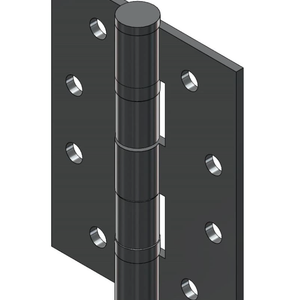
Furthermore, these facilities operate in IP69K washdown environments. This rating means the hardware is exposed to high-pressure, high-temperature water jets used for daily sanitation. The hydraulic forces produced by an 1160 PSI water jet at 80 degrees Celsius can literally tear inferior hardware from its mounting points or force water into unsealed bearing surfaces, causing premature internal failure. When selecting Hinges for Industrial Applications, particularly in wet processing plants, the hardware must have the structural rigidity to resist these hydraulic impacts without bending or loosening.
To help equipment designers specify the correct hardware, we have developed a baseline matrix for hinge selection based on door weight and environmental severity.
Door Weight (kg) | Recommended Hinge Gauge | Material Grade Requirement | Washdown Resistance Level |
Up to 50 kg | 2.0mm - 2.5mm | 304 Stainless Steel | IP66 (Standard Washdown) |
50 kg - 120 kg | 3.0mm - 4.0mm | 316L Stainless Steel | IP69K (High-Pressure Jet) |
120 kg - 250 kg | 4.5mm - 6.0mm | 316L with Polymer Bearings | IP69K (Caustic/High-Temp) |
Over 250 kg | Custom Machined Block | 316L / Duplex Alloy | IP69K (Extreme Environment) |
Proper specification requires analyzing the door width-to-height ratio, since wider doors exponentially increase the lateral stress on the top hinge. The physics of hinge stress dictate that the top hinge bears the majority of the horizontal pull, while the bottom hinge supports the vertical weight. In heavy washdown environments, even the smallest deflection in these components can allow high-pressure water to penetrate behind the hinge leaf, leading to hidden bacterial growth. By using heavy-duty thrust bearings and optimizing the mounting hole patterns for maximum load distribution across the equipment frame, we ensure that the structural integrity of the machinery stays intact, even under the most demanding operational and cleaning conditions.
Client Case: Upgrading Meat Packaging Lines
To illustrate the critical importance of purpose-built hardware, we can look at a recent collaboration with a well-known meat processing equipment OEM based in Germany. This manufacturer specialized in high-capacity vacuum packaging lines used in industrial abattoirs. They came to us with a serious recurring failure in their flagship packaging chambers.
*The challenges were twofold. First, the massive, transparent acrylic and stainless steel chamber doors were exceptionally heavy, causing their existing off-the-shelf hinges to sag after only three months of operation. This sagging compromised the vacuum seal, leading to rejected product batches and serious operational inefficiencies. Second, the daily sanitation routine in the abattoir involved highly caustic alkaline foaming agents followed by high-pressure hot water rinses. The standard 304 stainless steel hinges they were using began showing aggressive pitting corrosion and rust bleeding down the pristine equipment panels. Most critically, the overlapping knuckles of their old hinges trapped meat proteins, resulting in failed swab tests during unannounced local hygiene audits.*
The OEM needed an immediate, permanent solution to protect their reputation and prevent further equipment returns. We at ForndLock quickly launched a custom engineering project. By analyzing their door geometry and the specific chemical makeup of the abattoir's cleaning agents, we determined that standard hardware was fundamentally inadequate for the job.
We engineered a custom set of heavy duty stainless steel hinges for food processing equipment specifically designed for their vacuum chambers. We upgraded the base material to premium 316L stainless steel, completely eliminating the vulnerability to chloride-induced pitting from the caustic foam. To address the severe load and sagging problems, we increased the hinge leaf thickness by forty percent and integrated oversized, FDA-compliant polymer thrust bearings. These bearings easily handled the extreme radial load of the heavy doors while providing smooth, frictionless operation that would never require external lubrication.
Furthermore, we redesigned the hinge profile to be completely crevice-free. We used a sealed-pin architecture and an electropolished finish, ensuring there were zero harborage points where meat proteins or bacteria could hide. The mounting interfaces were engineered to accept sanitary gaskets, creating a flush, watertight seal against the machine frame.
The implementation of our engineered hardware delivered transformative results for the German OEM. Following the retrofit, the packaging lines achieved zero equipment downtime related to vacuum seal failures, as the doors maintained perfect alignment over millions of cycles. Scheduled maintenance intervals for hinge replacement were completely eliminated. Most importantly, the end-users easily passed all subsequent sanitary inspections, with swab tests consistently returning negative for microbial contamination around the hinge zones. The engineered hardware not only resolved the immediate crisis but also became the standardized component specification for all their future machinery lines, significantly reducing their long-term warranty claims and strengthening their market competitiveness.
Enclosure Solutions for Processing Facilities
Beyond the direct food handling zones and massive chamber doors, modern food processing facilities rely heavily on complex automated control systems. The electrical control cabinets and HMI enclosures that operate this machinery are typically located on the plant floor, directly exposed to the same harsh wet environments and high-pressure washdowns.
Protecting these sensitive electronic components is absolutely essential. If water or caustic cleaning chemicals get inside an electrical enclosure, it can cause catastrophic short circuits, major plant downtime, and serious safety hazards for workers. Therefore, the hardware securing these cabinet doors must perform flawlessly at all times.
For these applications, we strongly recommend utilizing corrosion resistant piano hinges for industrial enclosures. Also known as continuous hinges, they run the full length of the cabinet door. This continuous design provides outstanding, even weight distribution, preventing the door from warping or bowing between mounting points.
When a cabinet door stays perfectly rigid and uniform, the perimeter gaskets can compress evenly against the enclosure frame. This even compression is the key factor in maintaining NEMA 4X or IP69K ratings.
By implementing corrosion resistant piano hinges for industrial enclosures, engineers ensure that there are no weak points in the cabinet's seal. The continuous barrier prevents moisture, dust, and chemical vapors from entering the electrical housing during aggressive plant washdowns.
Just like our primary heavy-duty hardware, these continuous hinges are manufactured from high-grade 316 stainless steel to withstand the corrosive atmosphere of the processing floor. Providing a complete hardware solution ensures every aspect of the machinery — from the mechanical doors to the electrical control systems — remains secure and compliant.
Partner with ForndLock for Custom Hardware
Navigating the strict requirements of the food and beverage manufacturing sector leaves absolutely no room for compromise in component selection. As we have explored throughout this guide, successfully engineering machinery for these environments requires pairing the correct material grade, such as 316L stainless steel, with careful sanitary design principles. From eliminating microbial harborage points with crevice-free geometries to ensuring structural rigidity under extreme dynamic loads, every hardware detail matters.
We at ForndLock take pride in our deep manufacturing expertise and our ability to solve complex mechanical challenges for industrial clients around the world. As a direct manufacturer, we do not simply supply off-the-shelf components — we partner with your engineering teams to develop purpose-built solutions that perfectly match your operational demands and regulatory compliance requirements. Whether you are designing heavy-duty vacuum sealers, commercial smokers, or automated packaging lines, we have the technical capability and production capacity to deliver hardware that guarantees longevity and consistent performance.
Do not let inferior hardware compromise the integrity, safety, or efficiency of your food processing equipment. We invite mechanical engineers, procurement managers, and OEM clients to collaborate with us on their next critical project.
> To discuss your specific project needs, submit technical drawings for review, or request physical samples and custom fabrication details, please contact our engineering team directly by sending an email to [email protected].