
Engineering Guide: How to Choose the Right Cabinet Hinge Type for Overlay Doors
Solving Industrial Enclosure Challenges
Designing strong industrial enclosures requires careful attention to mechanical details, especially when working with heavy gauge sheet metal, dynamic loads, and strict environmental sealing requirements. Overlay doors create a unique engineering challenge because the door panel sits entirely on the outer face of the cabinet frame. This structural setup creates an offset between the mounting surface and the pivot point, which means specific hardware movement is needed to keep the door operating smoothly without binding. When engineers fail to choose the correct hardware, the resulting door sag, vibration loosening, and weakened ingress protection can cause serious failures in critical machinery or electrical control panels.
As an experienced industrial locks, industrial latches, industrial hinges, industrial handles and access hardware manufacturer, we at ForndLock understand that selecting the appropriate articulation mechanism is not simply about looks. It is a core engineering decision that determines the lifespan, security, and reliability of the entire equipment enclosure. In this detailed guide, we will give engineers, mechanical designers, and purchasing managers practical methods for choosing the correct hardware. You will learn how to assess load-bearing capacities, understand how material science applies to harsh environments, and tell apart specialized damping and hidden kinematic mechanisms so you can get the best results for your next industrial enclosure project.
Basics of Industrial Overlay Doors
To build a strong foundation for hardware selection, we must first define the structural mechanics of overlay doors in industrial applications. Unlike flush or inset doors that sit inside the cabinet frame and require tight interior tolerances, overlay doors are designed to overlap the outer edges of the enclosure. This design is widely preferred in industrial manufacturing because it allows for a continuous, uninterrupted gasket seal along the perimeter of the cabinet face, which maximizes waterproof and dustproof performance. However, because the door sits proud of the frame, the pivot mechanism must handle a specific dimensional offset to allow the door to swing open without the inner edge hitting the cabinet body.
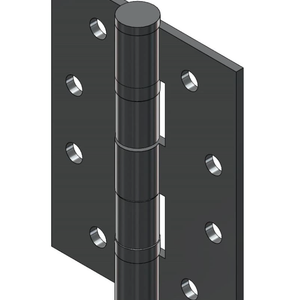
When evaluating an enclosure design, engineers often ask: What are the types of cabinet door hinges? The structural options for heavy-duty overlay designs generally fall into several distinct industrial categories. External leaf hinges are surface-mounted components that provide exceptional shear strength and are ideal for large industrial access panels where exterior visibility is not a security concern. Offset pin hinges feature an asymmetrical design specifically built to bridge the gap between the frame and the overlapping door panel, ensuring a smooth rotational axis. Heavy-duty block hinges use thick, solid metal profiles and oversized pivot pins to handle extreme radial and axial loads, making them well suited for heavy machinery doors that face constant vibration and impact. Understanding these basic mechanical categories is the first step in matching your hardware selection to the physical demands of your industrial equipment.
Key Factors for Hinge Selection
Understanding how to choose the right cabinet hinge type for overlay doors requires a systematic review of mechanical forces, environmental exposure, and how often the door will be used. Moving away from general aesthetic preferences, industrial hardware specification relies entirely on performance metrics and material science. We approach every OEM project by analyzing the exact physical stresses the hardware will face during its operational life.
Analyzing Load Capacity Requirements
The most important factor in hardware specification is managing the complex forces placed on heavy sheet metal doors. Engineers must calculate both radial load, which is the horizontal force pulling the hardware away from the frame, and axial load, which is the vertical downward force created by the weight of the door. In addition, the width-to-height ratio of the overlay door significantly affects load distribution. If a door is wider than it is tall, the center of gravity shifts further away from the pivot axis, greatly increasing the moment arm and the radial stress on the upper mounting points. In these situations, we regularly advise our OEM clients to upgrade to high-torque block designs or use a multi-point installation strategy to spread the kinetic forces evenly across the cabinet frame.
Environmental Sealing Protocols
In industrial environments, maintaining an IP65 or IP67 rating is often required to protect sensitive internal electronics from water, dust, and chemical ingress. The hardware you select plays a direct role in keeping this seal intact. For overlay doors, the hardware must provide adequate and consistent compression against the perimeter weather stripping. If the pivot mechanism lacks the necessary structural rigidity, the door will flex outward under internal pressure or wind loads, breaking the gasket seal and allowing moisture to enter the enclosure.
Material Science and Corrosion Resistance
Selecting the right material is essential for ensuring long-term reliability in demanding industrial environments. The table below shows how different industrial-grade materials perform under various environmental stressors, providing a clear reference for purchasing managers and mechanical designers.
Material Specification | Salt Spray Resistance | Chemical Washdown | Extreme Temperatures | Ideal Industrial Application |
Zinc Alloy (Die Cast) | Moderate (Requires powder coating) | Low | Good | Indoor machinery, standard electrical panels |
304/316 Stainless Steel | Exceptional | Exceptional | Exceptional | Marine equipment, food processing, medical devices |
Industrial Polyamide (Nylon) | Excellent (Immune to rust) | Good | Moderate | Lightweight chemical enclosures, telecom boxes |
Vibration Control Mechanisms
Industrial machinery, such as generators, compressors, and stamping presses, produces continuous mechanical resonance. Standard hardware can experience pin migration or loosening of mounting screws under constant vibration. Choosing hardware with integrated friction pins, nylon inserts, or anti-vibration mounting hardware is essential to prevent structural wear over time.
Soft Close vs Concealed Hinges
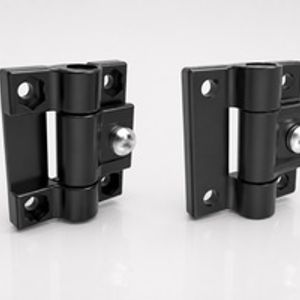
When improving the user experience, security, and acoustic profile of modern industrial equipment, engineers often face a choice between specialized functional hardware. Understanding the difference between soft close and concealed cabinet door hinges is essential for optimizing both the internal protection and the operational feel of the enclosure.
Concealed hardware is built to be mounted entirely on the inside of the enclosure, staying completely hidden from the outside when the overlay door is closed. In an industrial setting, this provides maximum security against vandalism and tampering, since there are no exposed pins or leaves that can be targeted by unauthorized personnel. In addition, hiding the articulation mechanism creates a clean, seamless exterior appearance, which is highly valued in modern machinery design. Because they are enclosed inside the cabinet, these mechanisms are also naturally protected from outside weather conditions, corrosive airborne particles, and accidental impact from factory floor vehicles. The movement of hidden hardware often involves complex multi-link sliding mechanisms designed to push the overlay door outward before swinging it open, making sure the door clears the thick enclosure frame.
On the other hand, soft close hardware integrates hydraulic damping cylinders or specialized friction mechanisms designed to absorb kinetic energy during the closing cycle. In heavy-duty industrial applications, these are typically used in sensitive equipment sectors. For example, medical testing machines, precision optical sorting cabinets, and calibrated laboratory enclosures cannot handle the sudden shock and vibration caused by a heavy metal door slamming shut. The integrated dampers slow down the mass of the door, ensuring a controlled, quiet, and vibration-free closure.
Evaluating the difference between soft close and concealed cabinet door hinges ultimately comes down to deciding whether to prioritize maximum exterior security and environmental protection, or to prioritize kinetic energy management and vibration reduction for sensitive internal components. In some advanced OEM projects, we engineer custom hybrid solutions that combine hidden interior mounting with integrated hydraulic damping to meet both requirements at the same time.
Real-World Industrial Case Study
To show the critical importance of proper hardware specification, we can look at a recent engineering partnership with an outdoor telecommunications equipment manufacturer based in Germany. This project highlights how customized mechanical solutions directly resolve serious field failures and ensure long-term infrastructure reliability.
The Engineering Challenge
The client was designing a new generation of 5G infrastructure cabinets deployed in harsh coastal and mountainous regions. These enclosures featured massive dual-layer overlay doors made from thick aluminum to protect sensitive routing equipment. However, during early field trials, the client experienced serious structural failures. The significant weight of the dual-layer doors, combined with extreme wind loads, caused traditional surface-mounted hardware to deform. This deformation led to severe door sag. As a result, the door panels no longer lined up correctly with the cabinet frame, breaking the compression seal on the perimeter gaskets. Rainwater and salt mist bypassed the weather stripping, leading to catastrophic short circuits in the telecommunications hardware.
The Hardware Solution
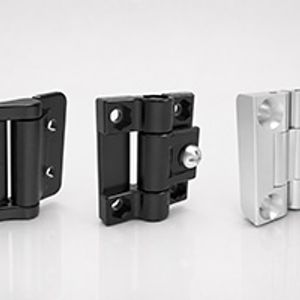
After reviewing their CAD files and environmental testing data, our engineering team determined that standard off-the-shelf components could not sustain the required axial loads while maintaining gasket compression. We engineered a customized heavy-duty concealed hardware solution specifically designed for their overlay door geometry. Machined from 316 stainless steel to resist coastal salt spray, the custom mechanism featured an adjustable compression cam. This unique mechanical feature allowed field technicians to manually increase the inward pulling force of the hardware, ensuring the heavy door was pulled tightly against the weather stripping even if the gasket material degraded slightly over time. Furthermore, mounting the mechanism internally eliminated any external access points for vandals.
The Final Result
The implementation of this customized articulation system completely eliminated the door sag issue. The enclosures were put through rigorous third-party testing and successfully achieved a certified IP65 waterproof and dustproof rating under extreme wind load simulations. In addition, the custom mechanism passed a demanding 50,000-cycle life test without any loss in structural integrity or compression force. This engineering success allowed the client to move forward with their infrastructure rollout, resulting in a smooth bulk delivery of thousands of hardware sets that perfectly matched their aggressive manufacturing schedule.
OEM Customization and Testing Standards
Delivering reliable access hardware for industrial applications requires a manufacturing infrastructure built on strict quality control and advanced testing protocols. We do not simply cast metal; we engineer precision components verified by rigorous scientific testing. Every batch of hardware intended for heavy-duty overlay doors goes through extensive validation to ensure it meets or exceeds international industrial standards.
Our testing facilities are equipped to simulate the harshest operational environments. We conduct continuous Salt Spray Testing to verify the corrosion resistance of our protective coatings and stainless steel alloys, ensuring long life in marine or chemical processing environments. Tensile Strength Testing is used to measure the exact yield point of our pivot pins and mounting leaves, guaranteeing they can handle the massive radial and axial forces placed on oversized industrial doors. Furthermore, our Cycle Life Testing machines run hardware through tens of thousands of continuous opening and closing motions, simulating years of factory floor usage to identify any potential wear patterns or friction-induced failures.
Beyond standard production, our true strength lies in our OEM and ODM capabilities. We understand that standard hardware rarely fits perfectly into highly specialized machinery designs. If an off-the-shelf component does not match your specific overlay door profile, our engineering team works directly with your mechanical designers. We can quickly modify pivot offsets, change mounting hole patterns, adjust compression ratios, or upgrade material specifications based directly on your CAD drawings, moving from digital concept to physical rapid prototyping with impressive speed.
Start Your Engineering Project Now
Mastering how to choose the right cabinet hinge type for overlay doors is a critical balancing act involving load distribution, environmental sealing, material durability, and specialized functional requirements like hidden kinematics or kinetic damping. Choosing the correct hardware early in the design phase prevents costly field failures, ensures strict IP ratings, and guarantees the long-term reliability of your industrial enclosures.
Whether you are designing a heavy-duty control panel, a sensitive medical device enclosure, or outdoor telecommunications infrastructure, our engineering team is ready to provide precise, data-driven hardware solutions tailored to your exact manufacturing requirements. We welcome industrial engineers, purchasing managers, and OEM clients to take advantage of our extensive manufacturing expertise.
To discuss your specific project requirements, request detailed 3D CAD drawings for your assembly models, or secure physical samples for your own internal testing protocols, please send an email directly to our engineering support team at: [email protected]. Ensure your next industrial enclosure is built on a foundation of absolute reliability.