
Engineering Guide: How to Choose the Right Torque Value for Friction Hinges
Choosing the right hardware for heavy-duty industrial enclosures and control panels is a critical engineering challenge that directly affects equipment safety and how long it lasts. When design teams misjudge load requirements or pick the wrong positioning hardware, the risks grow quickly. These risks range from complete panel failure and equipment damage to serious operator injuries caused by falling doors. This guide is written specifically for industrial engineers, procurement professionals, and OEM clients who need to make accurate, dependable design decisions without relying on guesswork.
Throughout this document, we will walk through the precise engineering logic needed to select torque ratings, ensure reliable angle hold, and prevent early mechanical wear in demanding environments. Understanding how to choose the right torque value for friction hinges is the essential first step in designing safe and user-friendly access points for complex machinery. We will cover the core physics of constant resistance, lay out step-by-step calculation methods for heavy loads, and offer practical guidance on material selection for tough environments. By mastering these principles, engineering teams can remove uncertainty, sharpen their hardware specification process, and ensure that every control panel or heavy access door operates with properly calibrated resistance and consistent, long-term reliability. Getting the specification right ultimately lowers maintenance costs and raises the overall quality of the finished industrial product.

Understanding Torque in Industrial Applications
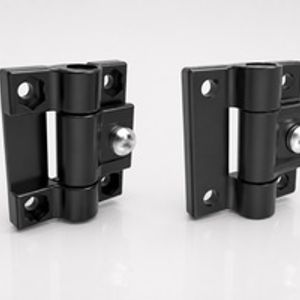
To properly specify hardware for heavy enclosures, engineers must first answer a basic question: What is a Friction / Torque hinge? In an industrial setting, this is not simply a pivot point for a door. It is a carefully engineered mechanical component designed to provide constant, controlled resistance throughout its entire range of motion. This constant resistance allows a heavy door, monitor, or access panel to stay firmly in place at any desired angle without needing secondary support mechanisms like gas struts, prop rods, or locking levers. The internal mechanism depends on tightly controlled interference fits, specialized friction bands, or stacked spring washers to generate precise rotational resistance, providing positioning control while absorbing operational vibrations.
As an experienced industrial locks, industrial latches, industrial hinges, industrial handles and access hardware manufacturer, we understand that industrial environments demand far more than basic functionality. Our engineering teams regularly see standard off-the-shelf hinges fail quickly in high-cycle industrial applications. These conventional products often lack the internal wear resistance and environmental sealing needed, which leads to a loss of tension, position drift, and eventual mechanical failure. Purpose-built torque hinges, however, are made with hardened steel components, specialized anti-galling treatments, and integrated O-ring seals to maintain consistent performance even under continuous machine vibration and exposure to airborne contaminants. When designing for harsh conditions, factors such as anti-vibration properties, sealing performance against dust and moisture, and thermal stability become just as important as the base load rating. Selecting the right component requires a solid understanding of both the dynamic forces involved and the specific environmental stressors the equipment will face throughout its working life.
The difference between commercial-grade and industrial-grade positioning hardware comes down to how predictable the friction coefficient remains over tens of thousands of cycles. Industrial machinery, outdoor telecom enclosures, and heavy transportation equipment require hardware that will not break down when exposed to extreme temperature swings or corrosive cleaning agents. By incorporating advanced damping greases and corrosion-resistant alloys, manufacturers keep rotational resistance stable. This stability is what ultimately protects operators from sudden panel drops and shields sensitive internal electronics from impact shocks.
Calculating Torque for Heavy Panel Loads
The most important phase of hardware specification is performing accurate load calculations. To ensure safe and reliable operation, engineers must determine the exact rotational force applied by the enclosure door. The core formula for this calculation is straightforward: Torque equals Force multiplied by Distance. In this context, Force refers to the total weight of the panel, and Distance refers to the horizontal measurement from the hinge axis to the panel's center of gravity.
However, dynamic industrial applications require a more careful approach. The center of gravity shifts relative to the hinge axis depending on the opening angle of the panel. The maximum torque requirement always occurs at the worst-case position, which is typically when the panel is held completely horizontal. At this zero-degree or ninety-degree horizontal orientation, gravitational pull exerts the greatest possible leverage against the hinge mechanism. Therefore, all engineering calculations must be based on this maximum horizontal extension to confirm that the hardware can safely support the load without sagging or failing.
Before reaching out to a hardware manufacturer for custom solutions or standard specifications, engineering teams must gather and verify several key variables:
· Total weight of the door or access panel, including all internally mounted components, displays, and wiring.
· Exact dimensions of the panel, specifically the height and width relative to the intended mounting axis.
· The precise location of the center of gravity, which may not be the geometric center if heavy components are mounted unevenly.
· The desired number of hinges to be installed, which determines how the total calculated load will be shared across the hardware.
· The required safety factor, typically a multiplier of 1.5 to 2.0, to account for dynamic loading, operator misuse, or environmental variables like wind shear.
To help OEM design teams and procurement professionals with early-stage estimates, we have put together a reference matrix showing typical load scenarios and their corresponding requirements.
Panel Weight (kg) | Center of Gravity Distance (mm) | Total Required Torque (N.m) | Recommended Hinge Rating (N.m per hinge, assuming 2 hinges) |
5 | 200 | 9.8 | 5.0 - 6.0 |
10 | 250 | 24.5 | 13.0 - 15.0 |
15 | 300 | 44.1 | 23.0 - 25.0 |
20 | 400 | 78.4 | 40.0 - 45.0 |
30 | 500 | 147.0 | 75.0 - 80.0 |
By carefully calculating these values and referencing established engineering guidelines, design teams can confidently specify hardware that guarantees smooth operation and complete structural integrity.
ForndLock Friction & Torque Hinges
Adjusting Torque for Panel Weight Demands
While precise mathematical calculations provide a strong foundation for specification, real-world applications often introduce variables that require flexibility in the field. This is where the capability for friction hinge torque adjustment for panel weight and angle hold becomes an extremely valuable feature for industrial designers. Adjustable positioning hardware uses specialized internal mechanisms, such as finely threaded set screws that compress hardened spring steel bands or conical washers against the central pivot shaft. By tightening or loosening these adjustment points, technicians can precisely calibrate the rotational resistance to match the exact feel required for the application, or compensate for panel weight changes that come up late in the design process.
Engineers must carefully consider when to specify adjustable mechanisms versus pre-set constant torque hardware. Pre-set hinges work best for high-volume OEM production where panel weights are tightly controlled and tamper-proof operation is needed. On the other hand, adjustable models are better suited for prototype development, custom machinery, or applications where end-users may add modular equipment to the access panel over time, which would shift the center of gravity. In addition, achieving reliable friction hinge torque adjustment for panel weight and angle hold requires careful thought about the operating environment.
Industrial environments expose hardware to extreme conditions that can change mechanical performance. For example, severe temperature swings can temporarily affect the kinetic friction coefficient of internal lubricants and friction materials, potentially causing a small change in holding force. Proper material selection is essential for reducing these environmental effects. Specifying components made from marine-grade stainless steel rather than basic zinc alloys ensures long-term resistance to harsh chemical washdowns and salt spray. Additionally, incorporating advanced surface treatments, such as electrophoretic deposition or heavy-duty passivation, combined with strictly rated waterproof and dustproof O-ring seals, ensures that the internal friction surfaces stay protected from outside contaminants. This careful approach to environmental protection keeps the calibrated resistance consistently smooth and reliable throughout the entire working life of the heavy-duty machinery.
The use of specialized damping greases inside the sealed friction chamber further stabilizes performance across wide temperature ranges, preventing the hardware from seizing in freezing conditions or losing tension in high-heat industrial processing facilities. Ultimately, matching the adjustment mechanism and material composition to the specific environmental profile is just as important as the initial load calculation.
Engineering Case Study: Medical Equipment Enclosures
To show how these engineering principles work in practice, we can look at a recent collaboration with a well-known medical equipment manufacturer based in Germany. The client was developing a next-generation diagnostic imaging machine that featured heavy, articulating monitor panels. They faced a serious safety and usability problem: the existing commercial-grade hinges were failing to hold their angle. Continuous low-frequency machine vibration, combined with frequent and rapid angle adjustments by medical operators, caused the original hardware to lose tension quickly, resulting in monitors drifting downward during sensitive procedures.
Our engineering team carried out a thorough failure analysis. We found that the previous hardware lacked sufficient internal damping and had been underspecified for the dynamic load shifts involved. ForndLock engineered a custom hardware solution that started with precise torque calculations based on the monitor's extreme horizontal extension. We incorporated proprietary anti-vibration damping materials and specialized heavy-duty friction bands into a compact stainless steel housing.
The resulting custom component delivered perfectly smooth friction hinge torque adjustment for panel weight and angle hold, allowing technicians to fine-tune the resistance on the factory floor. We put the prototypes through a rigorous 50,000-cycle life test in our laboratory, simulating accelerated wear and continuous vibration. The custom hinges passed with zero torque degradation and maintained strict positioning control throughout. This successful project highlights our OEM and ODM customization capabilities, our commitment to thorough sample testing protocols, and our ability to deliver reliable, high-volume batch orders for critical industrial applications. By working closely with the client's design team, we turned a serious safety weakness into a highly reliable, ergonomic feature of their flagship diagnostic equipment.
Partnering for Custom Access Hardware Solutions
In the highly demanding field of industrial manufacturing, understanding exactly how to choose the right torque value for friction hinges is not simply a matter of mechanical convenience. It is a fundamental requirement for ensuring equipment safety, ergonomic operation, and long-term structural durability. As we have explored, successful hardware specification requires careful mathematical calculations, a solid understanding of dynamic center of gravity shifts, and the thoughtful selection of materials that can handle harsh environmental stressors and continuous operational vibration.
At ForndLock, we draw on decades of specialized manufacturing experience to help engineering and procurement teams work through these complex design challenges. Our capabilities cover everything from initial load analysis and custom OEM design to thorough sample testing and dependable, large-scale batch delivery. We are committed to providing the technical engineering support needed to ensure your heavy-duty enclosures and access panels operate reliably under the most extreme industrial conditions.
If your design team is currently developing new industrial machinery, or if you are looking to upgrade the positioning hardware on existing equipment, we invite you to work with our specialists. Please send your specific project requirements, detailed CAD drawings, or requests for custom testing samples directly to our engineering team at [email protected]. We look forward to engineering a precise, reliable access hardware solution built to your exact specifications.