
Concealed Hinges vs Butt Hinges: Weight Capacity and Load-Bearing Guide
As a seasoned hardware manufacturer, ForndLock frequently consults with industrial engineers and procurement specialists who are tasked with specifying hardware for complex architectural projects. While many buyers initially focus on the visual aesthetics of door hardware, professionals understand that the true engineering challenge lies in the difference of concealed hinge and butt hinge regarding load-bearing capacity and long-term sagging deformation. Specifying the wrong hardware for a massive, oversized door can lead to catastrophic mechanical failures, compromised acoustic seals, and expensive post-installation maintenance.
To prevent these field failures, engineers must thoroughly analyze the concealed hinge vs butt hinge weight capacity interior door dynamics before finalizing their blueprints. By understanding the fundamental physics of how different hinge mechanisms distribute vertical and lateral loads, OEM customers can make informed, data-driven decisions that balance architectural design requirements with uncompromising structural integrity.
How Does Weight Capacity Differ?
The difference of concealed hinge and butt hinge lies primarily in their structural movement, where butt hinges use a rigid single-axis for higher loads, while concealed hinges use a multi-axis mechanism that requires careful weight calculation to prevent sagging.
When evaluating door hardware from a purely mechanical standpoint, the primary metric of concern is how the hinge transfers the kinetic and static weight of the door leaf into the stationary door frame. Every door exerts a downward vertical force due to gravity and a lateral pulling force, known as a bending moment, especially at the top hinge position. The architectural structure of the hinge determines how efficiently these forces are absorbed and dissipated. A traditional exposed hinge relies on a singular, unbroken axis point, which inherently offers a highly efficient path for load transfer. Conversely, an invisible hinge must fold into itself, requiring a complex geometry of moving parts that alters the load distribution pathway. Understanding this fundamental mechanical divergence is the first step for any procurement specialist looking to optimize their hardware selection for heavy-duty applications.
Why Do Multi-Axis Structures Sag?
Multi-axis concealed hinges rely on multiple moving linkages that create mechanical leverage, making them more susceptible to micro-deformations under heavy static loads.
To achieve a completely flush and invisible appearance when a door is closed, concealed hinges typically employ a complex 7-axis or multi-link kinematic mechanism. This intricate network of laminated steel or zinc-alloy plates is connected by a series of micro-pins. While this design is an engineering marvel for aesthetic purposes, it introduces significant structural vulnerabilities when subjected to extreme weight. Each pivot point within the multi-axis system acts as a miniature fulcrum. When a heavy interior door applies a constant downward and outward force, these multiple linkages create a mechanical leverage effect, multiplying the stress on the internal micro-pins.
Over time, and especially after thousands of opening and closing cycles, this compounded stress can cause the metal linkages to experience micro-flexing or elongation. Even a structural deformation of just a fraction of a millimeter within the hinge body will translate into a highly noticeable drop at the furthest edge of the door leaf. This sagging not only ruins the visual alignment of the architectural lines but also causes the bottom of the door to scrape against the floor or frame. For engineers, this means that the safety factor when specifying multi-axis hardware must be significantly higher than when working with traditional single-axis hardware.
How Does Single-Axis Prevent Sagging?
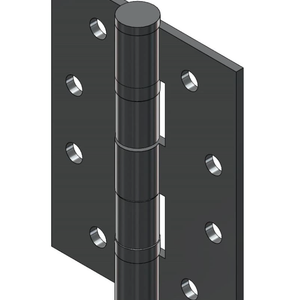
A single-axis butt hinge transfers the door's weight directly down a solid central pin, eliminating leverage points and providing superior vertical load resistance.
In stark contrast to the complex folding mechanisms of invisible hardware, the traditional butt hinge operates on the simplest and most robust mechanical principle available: a single, fixed pivot point. The construction consists of two solid metal leaves that interlock via alternating knuckles. A single, thick cylindrical pin—often machined from hardened stainless steel—is driven through these knuckles to join the leaves together. Because the pin is perfectly aligned with the vertical axis of the door's rotation, the downward gravitational force is transferred straight down the barrel of the hinge and dispersed evenly into the reinforced door frame.
There are no secondary linkages, no folding arms, and no internal leverage points to bend or flex under pressure. The shear strength of a solid stainless steel pin is exceptionally high, allowing it to support massive interior doors with virtually zero risk of internal deformation. Furthermore, the broad, flat leaves of the hinge provide a large surface area for the mounting screws to anchor deeply into the wood or metal frame, preventing the hardware from pulling away under heavy lateral loads. This direct, uncompromising load path is exactly why heavy-duty industrial and commercial doors have relied on this single-axis design for decades.
When Should You Use Concealed Hinges?
You should use a concealed hinge instead of a butt hinge for heavy doors when the architectural design demands a flush, invisible finish, provided you calculate the exact weight limits and install additional hinges to distribute the load.
Despite the inherent load-bearing advantages of traditional hardware, modern architectural trends frequently dictate that door hardware must be completely invisible to maintain clean, uninterrupted interior lines. For procurement teams and engineers, knowing when to use concealed hinge instead of butt hinge for heavy doors is a critical balancing act between aesthetic desires and physical constraints. You should opt for invisible hardware when working on luxury residential projects, high-end corporate boardrooms, or premium marine cabins where visual perfection is a strict project requirement. However, this decision cannot be made lightly. It requires a rigorous engineering approach to ensure that the chosen hardware can withstand the specific environmental and operational demands of the space without compromising the door's functionality over its expected lifespan.
What Is The Weight Limit?
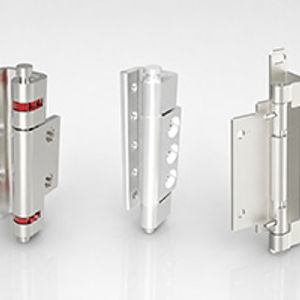
Standard concealed hinges typically max out at lower weight thresholds than butt hinges, requiring engineers to consult specific load charts before specifying them for heavy interior doors.
Determining the exact weight limit for invisible hardware is not a matter of simply looking at a single maximum capacity number. The true capacity is highly dependent on the door's width-to-weight ratio. As a door becomes wider, the center of gravity moves further away from the hinge pivot point, which exponentially increases the bending moment and the lateral pull exerted on the top hinge. A hinge that can easily support a 100-kilogram door that is 800 millimeters wide might catastrophically fail if that same 100-kilogram door is widened to 1200 millimeters.
When evaluating the concealed hinge vs butt hinge weight capacity interior door specifications, engineers must rely on comprehensive load charts provided by the manufacturer. At ForndLock, we provide our OEM customers with detailed nomograms that plot door width against door weight, allowing for precise hardware selection. It is essential to understand that while heavy-duty invisible hinges exist, their maximum safe working loads are generally lower than their exposed counterparts. Exceeding these carefully calculated thresholds will inevitably lead to linkage stretching, frame damage, and severe sagging.
How To Reinforce Heavy Doors?
To reinforce heavy interior doors using concealed hardware, engineers must decrease the vertical spacing between hinges and increase the total hinge count per door leaf.
When a project absolutely requires invisible hardware but the door weight approaches or exceeds the capacity of a standard two-hinge or three-hinge setup, engineers must employ specific reinforcement strategies. The most effective method is to alter the hinge geometry by increasing the total number of hinges and strategically adjusting their placement. Because the top hinge bears the vast majority of the outward pulling force, installing two hinges relatively close together at the top of the door significantly increases the system's resistance to lateral tearing and sagging.
Furthermore, the mortise pockets cut into the door and frame must be structurally reinforced. Invisible hinges require deep pockets that remove a substantial amount of material from the door edge, which can weaken the structural integrity of the door itself. Engineers should specify high-density blocking within the door core around the hinge pockets and utilize longer, heavier-gauge mounting screws that penetrate past the door jamb and directly into the structural wall studs. This comprehensive approach ensures that the multi-axis hardware is supported by an unyielding foundation.
How Did We Solve Sagging Issues?
ForndLock engineers solved severe door sagging for an OEM client by analyzing their load requirements and upgrading their multi-axis hardware to a reinforced concealed hinge system designed specifically for heavy interior doors.
Theoretical engineering principles must always be validated by real-world applications. As a dedicated manufacturer, ForndLock frequently intervenes when standard off-the-shelf hardware fails to meet the rigorous demands of specialized industrial environments. Our approach goes beyond simply supplying parts; we engage in deep technical troubleshooting to understand the root cause of mechanical failures. By analyzing failure points, calculating dynamic stress factors, and prototyping custom solutions, we bridge the gap between aesthetic requirements and heavy-duty performance. The following case study illustrates how we applied our manufacturing expertise to resolve a critical hardware failure in a highly demanding sector.
What Was The Engineering Challenge?
A European marine vessel manufacturer experienced continuous sagging deformation on heavy interior cabin doors because their standard concealed hinges could not handle the dynamic structural loads.
The client, a prominent OEM in the European luxury marine industry, was constructing a series of high-end vessels that required completely flush interior cabin doors to meet their premium design language. To achieve acoustic privacy, the interior doors were constructed with a dense, solid core, bringing the total weight of each door leaf to approximately 120 kilograms. Initially, the manufacturer installed standard multi-axis invisible hinges rated for static loads of 100 kilograms, assuming a three-hinge setup would provide a sufficient safety margin.
However, they failed to account for the dynamic loads unique to the marine environment. As the vessel pitched and rolled at sea, the heavy doors exerted violent, unpredictable lateral and vertical forces on the hinges. This dynamic stress far exceeded the static load rating, causing the internal linkages of the standard hinges to warp and stretch within just a few months of operation. The resulting sagging caused the heavy doors to scrape aggressively against the deck floors and jam within their frames, creating a significant safety hazard and a severe maintenance issue for the vessel operators. The client needed to know exactly when to use concealed hinge instead of butt hinge for heavy doors under dynamic conditions, and they urgently required a drop-in replacement that would not alter their existing door frames.
How Did ForndLock Fix It?
We provided a customized high-strength concealed hinge solution with enhanced load-bearing linkages, successfully eliminating the sagging while maintaining the required invisible aesthetic.
Upon receiving the failed hardware samples and the structural blueprints from the client, the ForndLock engineering team immediately conducted a failure analysis. We determined that the standard zinc-alloy linkages were shearing under the dynamic bending moments. To solve this, we engineered a custom heavy-duty invisible hinge utilizing marine-grade SUS316 stainless steel for the primary load-bearing linkages, significantly increasing the tensile and shear strength of the internal mechanism.
In addition to upgrading the material alloy, we increased the thickness of the linkage plates by 2.5 millimeters and redesigned the micro-pins to distribute the lateral forces more evenly across the hinge body. We also integrated a 3D adjustability feature that allowed the installation technicians to perfectly align the heavy doors along the X, Y, and Z axes even after the doors were hung. After subjecting our custom prototype to a rigorous 200,000-cycle test under simulated marine dynamic loads, the hinges exhibited zero measurable sagging deformation. The client successfully retrofitted their entire fleet with the ForndLock solution, permanently resolving the maintenance issue while preserving their flawless interior design.
Which Hinge Fits Your Industrial Door?
The right hinge for your industrial door depends entirely on your priority between maximum load-bearing efficiency offered by butt hinges and the seamless aesthetic provided by concealed hinges.
Ultimately, selecting the appropriate hardware for an industrial or commercial project is an exercise in prioritization. Engineers and procurement specialists must weigh the mechanical advantages against the visual outcomes. If the project involves utility doors, heavy traffic areas, or environments where maximum durability and ease of maintenance are the absolute highest priorities, the traditional single-axis hardware remains the undisputed champion. However, if the project is defined by high-end architectural aesthetics where visible hardware would disrupt the design intent, invisible multi-axis hardware is the necessary choice. Making this decision correctly at the blueprint stage prevents costly revisions and ensures that the physical infrastructure performs exactly as intended.
Is Installation Complexity A Factor?
Yes, concealed hinges require precise 3D routing and deeper mortising into the door frame, whereas butt hinges offer a straightforward surface mortise installation.
When evaluating the total cost of ownership and the impact on manufacturing assembly lines, OEM customers must strongly consider the installation complexity associated with different hardware types. Traditional hardware requires relatively shallow, simple mortise cuts on the edge of the door and the face of the frame. This can be accomplished quickly with standard templates and basic routing tools, making it highly efficient for high-volume production lines.
Invisible hardware, by contrast, demands absolute precision. The deep, complex pockets required to house the bulky multi-axis mechanism must be cut using advanced CNC machining. If the routing is off by even a millimeter, the complex folding linkages will bind, preventing the door from closing properly and putting immense strain on the hardware. Furthermore, the deep pockets remove a significant amount of the door's structural material, which may necessitate additional internal blocking during the door manufacturing process. Procurement teams must factor these increased machining times, specialized tooling requirements, and tighter quality control tolerances into their overall project budgets.
How To Evaluate Long-Term Durability?
Engineers must evaluate long-term durability by calculating the door's width-to-weight ratio and testing the hinge's cycle life under maximum specified loads.
To guarantee the success of a heavy door installation, professionals must move beyond basic weight ratings and conduct a holistic evaluation of the hardware's expected lifespan. The core of understanding the difference of concealed hinge and butt hinge is acknowledging that multi-axis linkages wear differently than solid pins. Engineers must demand cycle-test data from their hardware manufacturers that accurately reflects the specific dimensions and weight of their doors.
When analyzing the concealed hinge vs butt hinge weight capacity interior door data, always account for environmental factors such as high usage frequency, potential abuse, and dynamic sheer forces. If the calculated loads push an invisible hinge to its absolute maximum rated limit, it is highly advisable to either increase the number of hinges per door or transition to a heavy-duty single-axis hinge to ensure an adequate safety margin. Durability is not just about holding the door up on day one; it is about maintaining perfect alignment and smooth operation after a decade of continuous use.
What Are Frequent Technical Questions?
The following section addresses specific engineering inquiries regarding structural differences, load calculations, and hardware selection for complex industrial door projects.
During our consultations with OEM customers and structural designers, the ForndLock engineering team frequently encounters recurring questions regarding the mechanical limitations of door hardware. Clarifying these technical details is essential for ensuring that procurement specialists specify the correct components for their specific load-bearing requirements. Below, we address some of the most critical engineering queries related to hardware selection and performance optimization.
Can Butt Hinges Be Hidden?
Traditional butt hinges cannot be completely hidden because their central barrel and pin must remain exposed outside the door frame to allow the leaves to pivot properly.
The fundamental geometry of a single-axis hinge dictates that its pivot point must sit outside the physical plane of the door and the frame. If the knuckle were recessed completely into the gap between the door and the jamb, the edges of the door would instantly bind against the frame the moment it began to open. While certain specialized variations, such as olive knuckle hinges or highly recessed designs, attempt to minimize the visual footprint, the central rotational axis must always protrude. This mechanical absolute is the exact reason why multi-axis folding mechanisms were invented for projects demanding total invisibility.
Why Do Hinges Fail Early?
Hinges typically fail prematurely when the door's width-to-weight ratio creates an excessive bending moment that exceeds the shear strength of the hardware's internal pins or linkages.
Premature hardware failure is rarely caused by a direct vertical overload; rather, it is almost always the result of excessive lateral torque. When a door is too wide for its specified hardware, it acts as a massive lever, pulling the top hinge away from the frame and pushing the bottom hinge into the jamb. In multi-axis hardware, this outward pull stretches the micro-linkages and shears the internal pins, leading to rapid sagging. In traditional hardware, it can bend the central pin or rip the mounting screws out of the wood. Ensuring the hardware is rated for both the weight and the specific width of the door is the only way to prevent this mode of failure.
How To Calculate Hinge Loads?
To calculate hinge loads accurately, you must multiply the door's total weight by its width, then divide by the distance between the top and bottom hinges to determine the lateral pull.
Engineers use this specific formula to determine the bending moment and the resulting lateral forces acting on the top hinge. The vertical load is simply the weight of the door divided by the number of load-bearing hinges. However, the lateral pull is the critical metric. By increasing the distance between the top and bottom hinges, you effectively lengthen the resisting moment arm, which significantly reduces the outward stress on the top hardware. Understanding this calculation allows structural designers to optimize hinge placement, thereby maximizing the lifespan and load capacity of the entire door system regardless of which hinge style is ultimately selected.
How To Secure Your Next Door Project?
Specifying the correct hardware early in the design phase prevents costly post-installation failures, ensuring your heavy interior doors operate flawlessly over their intended lifespan.
Navigating the complex engineering requirements of heavy-duty interior doors requires more than just a basic understanding of hardware types; it demands a rigorous analysis of load distribution, material strength, and specific environmental stressors. Recognizing the exact difference of concealed hinge and butt hinge allows procurement specialists and designers to align their architectural visions with unyielding mechanical realities. Whether your project demands the absolute load-bearing supremacy of a solid single-axis pin or the flawless, invisible aesthetics of a reinforced multi-axis system, partnering with an experienced manufacturer is the key to long-term success.
At ForndLock, we leverage our deep manufacturing expertise to help you solve your most complex load-bearing hardware challenges. To ensure your heavy interior doors operate flawlessly without sagging, send your project requirements, technical drawings, or requests for custom samples to our engineering team at: [email protected].