
Compression Latch Selection Guide for Industrial Cabinets & Enclosures
Solving the core engineering problems of outdoor infrastructure demands total reliability, yet standard locking hardware often puts the internal electronic components at risk. When engineers, procurement specialists, and OEM clients ask how to choose compression latches for outdoor electrical enclosures, they are not simply looking for a mechanical fastener. They are searching for a complete, fail-safe sealing system. Standard latches regularly break down in harsh environments because they cannot hold steady gasket pressure against constant wind loads, moisture penetration, and wide temperature swings. This article is a detailed technical reference written specifically for industrial professionals who need uncompromising quality. We lay out the key decision-making criteria needed to achieve long-term waterproof sealing, strong vibration resistance, and lasting structural durability. At ForndLock, our deep manufacturing experience tells us that choosing the right hardware is a precise science involving calculated torque values, specific material grades, and thorough environmental testing. We go beyond basic overviews to deliver practical engineering insights, making sure your next infrastructure project stays secure, compliant, and fully operational no matter what the outside conditions throw at it.
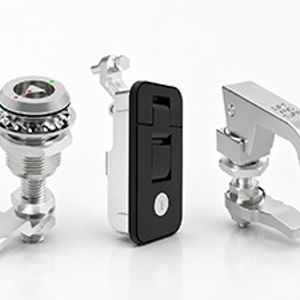
Overcoming Outdoor Enclosure Sealing Challenges
Understanding the specific environmental stressors that shape hardware specifications is the first and most important step in any Compression Latch Selection Guide. Before looking at dimensional specifications or material grades, engineers must evaluate the dynamic forces acting on cabinet doors in exposed environments. We consistently see that basic weatherproofing concepts fall completely short for industrial applications. The mechanical relationship between temperature changes, gasket wear, and the need for steady clamping force cannot be emphasized enough. When designing for exposed environments, three main threats must be carefully addressed to protect the internal components over the long term.
· Moisture and particulate ingress: Rain, snow, and airborne dust are relentless natural forces that actively look for structural weak points. A standard cam latch simply holds a door shut, while a compression mechanism actively pulls the door tightly against the frame. Without this active pull, capillary action and wind-driven rain will get past the sealing gasket, leading to serious electrical shorts and corrosion inside the cabinet. The latch must provide enough continuous pressure to eliminate microscopic gaps.
· Mechanical vibration and wind loading: Outdoor infrastructure, especially in the telecommunications or renewable energy sectors, faces constant dynamic loading. High winds and nearby operating machinery create low-frequency vibrations that travel through the enclosure chassis. Our manufacturing testing at ForndLock shows that non-compression latches gradually loosen under these conditions. The constant small movements cause the locking cam to back off, reducing gasket pressure and opening pathways for moisture. A properly designed compression latch isolates the locking mechanism from these vibrations, keeping a secure seal in place.
· Extreme temperature variations: Thermal expansion and contraction seriously affect sealing integrity and mechanical alignment. As temperatures drop, rubber and polyurethane gaskets harden, losing their elasticity and ability to spring back. On the other hand, extreme heat can cause permanent compression set in lower-quality gasket materials, meaning they will not expand back to their original shape. A properly specified latch mechanism compensates for these dimensional changes by providing a reliable, adjustable grip range that forces the hardened or deformed gasket to keep its protective barrier against the enclosure frame.

Addressing these challenges requires a shift in thinking, from viewing latches as simple closing devices to recognizing them as critical parts of the overall enclosure sealing strategy. The hardware must overcome the natural wear of the gasket and the relentless physical forces trying to breach the cabinet. By thoroughly analyzing these environmental factors, OEM clients can set a baseline for the technical specifications needed to protect their sensitive internal control systems over many decades, cutting maintenance costs and preventing unexpected system downtime.
Torque and IP Rating Requirements
A critical yet frequently overlooked aspect of industrial enclosure design is the direct connection between mechanical clamping force and Ingress Protection ratings. Achieving an IP65 or IP67 certification does not depend solely on choosing a high-quality gasket material. It depends entirely on the precise mechanical force applied by the hardware to compress that gasket. This brings us to the crucial importance of understanding compression latch torque and IP rating requirements for control panels. Without the correct torque, even the most advanced and expensive silicone seal will fail to keep water out during a high-pressure washdown or a severe storm.
Engineers must calculate and specify torque limits to ensure the gasket reaches its optimal compression ratio without being damaged. Typically, achieving a reliable and long-lasting environmental seal requires compressing a standard closed-cell sponge gasket by twenty to thirty percent of its original resting thickness. If the applied torque is too low, the compression ratio falls short, resulting in under-compression and inevitable leaks when exposed to wind-driven rain or dust storms. Conversely, too much torque leads to serious over-compression. Over-compression causes permanent deformation, known in the industry as compression set, meaning the gasket loses its ability to spring back and will no longer expand to fill microscopic gaps when the metal door shifts during thermal expansion.
At ForndLock, we actively guide purchasing managers and design engineers through the complex details of compression latch torque and IP rating requirements for control panels to prevent these common and costly field failures. The internal mechanism of the latch must be expertly engineered to translate the rotational force a user applies into linear pulling force efficiently, ensuring that the final closed position locks the gasket at exactly the specified compression percentage. This mechanical advantage, often achieved through precision-machined cams and threaded shafts, is what separates true industrial-grade hardware from lightweight commercial alternatives.
To illustrate the detailed relationship between these mechanical factors, we use specific engineering metrics during the product design phase. The following data outlines the typical parameters required to maintain enclosure integrity across different protection levels.
Required IP Rating | Recommended Gasket Compression Percentage | Typical Latch Torque Impact | Environmental Suitability |
IP54 | 10 to 15 Percent | Low to Moderate torque required; prevents basic dust accumulation and splashing water ingress. | Sheltered outdoor environments, urban infrastructure, indoor industrial zones. |
IP65 | 20 to 25 Percent | Moderate to High torque required; ensures a tight, continuous seal against low-pressure water jets. | General outdoor industrial enclosures, telecom cabinets, railway side-boxes. |
IP67 | 25 to 30 Percent | High precision torque required; demands heavy-duty mechanisms to survive temporary complete submersion. | Marine environments, heavy washdown areas, extreme weather zones, flood plains. |
Navigating compression latch torque and IP rating requirements for control panels ensures that the mechanical hardware works in perfect structural harmony with the chosen sealing material. By specifying latches with finely adjustable grip ranges, manufacturers allow field technicians to recalibrate the clamping force as gaskets naturally age and settle over the years, significantly extending the effective lifespan of the entire installation and protecting the internal electronics.
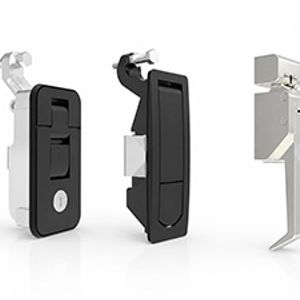
Material Selection for Weather Resistance
Choosing the right raw material and surface treatment is just as important as the mechanical design when specifying hardware for highly exposed environments. Material degradation is a leading cause of mechanical failure in outdoor infrastructure, often triggering secondary failures such as water ingress. When guiding OEM clients through material selection, we focus heavily on the specific geographic and atmospheric conditions where the equipment will be used. The choice usually comes down to balancing upfront cost savings with long-term survival against aggressive corrosion and constant ultraviolet degradation.
For standard urban outdoor environments where exposure to corrosive elements like salt or industrial chemicals is minimal, zinc alloy components treated with high-quality powder coating or electrophoretic deposition can provide very adequate protection. These coated zinc alloys offer a cost-effective solution while maintaining strong structural rigidity and mechanical strength. However, their lifespan depends entirely on the ongoing integrity of the surface coating. If the protective coating gets scratched during installation or worn down over time, the underlying zinc is immediately exposed to oxidation. This oxidation can spread quickly beneath the coating, causing it to flake off and ultimately weakening the structural integrity of the locking mechanism.
In contrast, coastal, marine, and heavy industrial environments demand superior material properties. For these demanding applications, we strongly recommend the use of 316 stainless steel. Unlike coated materials, the outstanding corrosion resistance of stainless steel comes from within the alloy itself, specifically because of the addition of molybdenum, which greatly increases resistance to chloride-induced pitting and crevice corrosion. Even if the surface of a 316 stainless steel component is deeply scratched or gouged by heavy machinery, it will not rust or break down in salt-heavy coastal air, ensuring the latch stays fully functional.
ForndLock Self-Adjusting Compression Latch Series: Product Introduction
Our manufacturing protocol at ForndLock involves rigorous, documented salt spray testing to validate these material choices before mass production. While standard zinc alloy latches might survive a few hundred hours in a concentrated salt spray chamber before showing signs of red rust, our electropolished stainless steel versions are engineered to endure thousands of hours without any measurable degradation. We also carefully evaluate the internal hidden components, such as compression springs, retaining rings, and threaded shafts, making sure they are made from compatible corrosion-resistant alloys to prevent galvanic corrosion inside the mechanism itself. Purchasing managers must closely examine these material specifications, because using inferior metals in harsh environments will guarantee early failure, leading to costly emergency maintenance and potential serious damage to the internal electrical systems.
Real-World Industrial Cabinet Case Study
To show the practical, high-stakes application of these engineering principles, we can look at a recent project that highlights our problem-solving abilities for industrial clients working in some of the most extreme climates on the planet. Theoretical specifications and catalog numbers must always translate into reliable, dependable field performance. This scenario clearly illustrates the enormous financial and operational costs of overlooking critical environmental factors during the initial enclosure design phase.
> The Challenge
An OEM client based in Northern Europe, operating extensively in the renewable energy sector, came to us with a critical and recurring failure issue in their wind farm control panels. These large outdoor units were located on highly exposed coastal plains, subjecting them to relentless high-velocity freezing rain, corrosive salt spray, and long stretches of sub-zero temperatures. The client reported significant water ingress leading to serious electrical shorts and unacceptable turbine downtime during the harsh winter months. After thoroughly analyzing their existing hardware setup, we found that they were using standard quarter-turn latches paired with basic polyurethane gaskets. As temperatures dropped well below freezing, the polyurethane gaskets hardened significantly, completely losing their necessary elasticity. The existing latches lacked the mechanical torque multiplication needed to compress this hardened material, resulting in a microscopic but fatal gap between the door and the frame. The freezing rain was easily driven through this tiny gap by the strong coastal winds, completely bypassing the intended seal and pooling inside the electrical chassis.
> Our Solution
Understanding that a complete overhaul of the sealing architecture was urgently needed, our engineering team developed a customized hardware configuration built specifically for this unforgiving climate. We engineered a heavy-duty compression latch made entirely from premium 316 stainless steel to permanently address the aggressive coastal salt exposure. Importantly, we integrated an extended, finely adjustable grip range and an enhanced internal torque mechanism. This specialized design allowed the latch to apply significantly higher linear pulling force without requiring excessive manual effort from maintenance technicians wearing heavy winter gloves. To perfectly complement the new hardware, we advised the client to completely replace the failing polyurethane seals with a specialized wide-temperature silicone gasket, which retains its critical compressibility and ability to spring back even in extreme sub-zero conditions.
> The Result
The rollout of this highly engineered, customized solution produced immediate, measurable, and lasting improvements. By combining the high-torque mechanical advantage of our custom stainless steel latch with the appropriate aerospace-grade gasket material, the client achieved a stable, verifiable, and long-lasting IP67 rating for their control panels. Over the following harsh winters, the wind farm operators reported zero instances of water ingress or electrical shorts related to enclosure sealing failures. Furthermore, the adjustable grip range significantly simplified the client's factory assembly process, allowing their production line to easily handle minor manufacturing tolerances in the heavy sheet metal doors without compromising the final seal. This project highlights the real value of partnering with a manufacturer who truly understands the complex relationship between mechanical force, material science, and environmental extremes.
ForndLock: Heavy-Duty Compression Locks for Railways & Transit Vehicles
Engineering Support and Custom Solutions
Protecting outdoor electrical enclosures from unpredictable elements is a highly complex engineering task that goes far beyond picking a standard, off-the-shelf part from a catalog. The long-term reliability and safety of your critical infrastructure depend heavily on the precise alignment of mechanical torque, material durability, and environmental resistance. Choosing a dedicated manufacturing partner with deep, proven industry expertise ensures that these complex variables are carefully managed from the initial design phase all the way through to final field installation.
At ForndLock, we take great pride in our robust OEM and ODM customization capabilities. We understand that every industrial application comes with unique dimensional restrictions and environmental challenges that standard hardware simply cannot solve. Our dedicated engineering support team works closely and collaboratively with your designers to develop tailored locking mechanisms that meet your exact and demanding specifications. From initial CAD modeling, rapid 3D prototyping, and thorough sample testing in our state-of-the-art environmental chambers to ensuring reliable, high-volume batch delivery, we maintain strict quality control at every stage of production. We provide all the necessary technical data, structural analysis reports, and physical prototypes needed for your engineering and procurement teams to make confident, well-informed decisions.
Protecting your sensitive control systems and expensive electronics requires uncompromising, intelligently designed hardware solutions. Whether you are upgrading existing failing infrastructure or designing a completely new line of outdoor industrial cabinets, our experienced team is ready to help you reach the highest possible levels of ingress protection and mechanical durability.
Take the next important step in securing your industrial enclosures against the elements. We actively invite engineers, purchasing managers, and project leaders to reach out directly to discuss specific application requirements and environmental challenges. Submit your project details, request a physical sample for evaluation, or send your technical drawings to our engineering department at: [email protected]. Let us engineer the perfect, fail-safe sealing solution for your most demanding outdoor environments.